Last Thursday, a plane crashed in Ahmedabad. In just a moment, 274 lives were lost—people on board and on the ground. As the news scrolled across my screen, something stirred deep inside me. A long-healed scar began to ache again. In that moment, I was transported back 25 years—to another plane crash, another tragedy, another unbearable loss.
It was July 17, 2000.
We had lost one of our own.
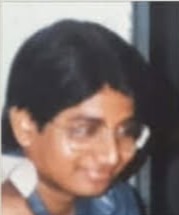
Dr. Sandeep Kumar Dey—MGIMS alumnus, paediatrician, teacher, thinker—was among the twelve people who perished when Alliance Air flight CD 7412 crashed while attempting to land in Patna.
He was just 36.
That morning, he had boarded his flight from Kolkata with quiet determination. He lived in Salt Lake City. The night before, he’d shared a meal with his wife, Rupa—a gynaecologist at National Medical College—and his mother-in-law. Over dinner, he had animatedly explained the purpose of his trip: he was heading to a WHO meeting on end-of-life care. It was a topic close to his heart—how Indian doctors need to understand, and be trained for, the final chapter of a patient’s life.
He spoke of death not with fear, but with conviction. Of how dignity in dying was as important as care in living.
The next morning, he left early for the airport. No one knew it would be the last time they’d see him.
I remember Sandeep not just as a brilliant paediatrician, but as a student. He was part of the 1981 batch at MGIMS, and I had the privilege of teaching him. Thoughtful, sincere, and always a little intense, he embodied the very ideals we hoped to nurture in our students. He completed both his MBBS and MD in Paediatrics from our institute. For a year or two, he returned to teach, standing now where he had once sat, speaking to young students with the same seriousness and sincerity that had once defined his own student days.
But Sandeep was never just a clinician. He was a scholar—authoring over a dozen papers in respected journals. He thought deeply, not just about the science of medicine, but about its soul. About the ethical dilemmas we face. About the silence between suffering and relief. About the things we often shy away from discussing—pain, death, and what it means to leave this world well.
Just a few weeks before the crash, he visited Sevagram.
He came to meet his teachers. He came to meet me.
We sat and talked for hours—about life, about dying, about what we, as doctors, owe to our patients in their final days. He spoke of palliative care not as a branch of medicine, but as a moral responsibility. He wove together science and spirituality, clinical care and emotional support. He spoke of the financial burdens families face, the helplessness of patients, and the need for humility among doctors.
He had a vision. He had a mission. His heart was fully in it.
Neither of us knew that conversation would be our last.
Three months later, I saw his name in the pages of Indian Pediatrics. His editorial had been published posthumously, in the October 2000 issue. He had submitted it just before he died. It began with words that now feel achingly prophetic:
“𝐸𝑎𝑐ℎ 𝑜𝑛𝑒 𝑜𝑓 𝑢𝑠 𝑤𝑖𝑙𝑙 𝑑𝑖𝑒 𝑠𝑜𝑜𝑛𝑒𝑟 𝑜𝑟 𝑙𝑎𝑡𝑒𝑟. 𝑆𝑜𝑚𝑒 𝑤𝑖𝑙𝑙 𝑑𝑖𝑒 𝑐𝑜𝑚𝑓𝑜𝑟𝑡𝑎𝑏𝑙𝑦. 𝑀𝑜𝑠𝑡 𝑤𝑖𝑙𝑙 𝑑𝑖𝑒 𝑤𝑖𝑡ℎ 𝑎 𝑔𝑟𝑒𝑎𝑡 𝑑𝑒𝑎𝑙 𝑜𝑓 𝑠𝑢𝑓𝑓𝑒𝑟𝑖𝑛𝑔.”
Sandeep didn’t get the chance to die comfortably. He didn’t get to say goodbye. His passing was sudden, cruel, and heartbreaking. But he left behind his words, his work, and his unwavering belief that the final days of life should be treated with care, compassion, and dignity.
When I heard about the Ahmedabad crash, the helplessness I had once buried came flooding back. I imagined the families waiting at airports, staring at screens, clinging to threads of hope. And I thought of Sandeep—his voice, his vision, the conversations we shared.
Plane crashes take lives in an instant. But they also bring back memories—vivid, painful, and unexpectedly meaningful.
That’s why I remember Dr. Sandeep Kumar Dey today.