This morning an old man stepped into my office, his jacket sagging, a faded muffler loose around his neck. His wooden tulsi beads had deepened in colour with age. He studied me, then joined his palms with a shy, familiar smile.
It took me only a second.
“Gabbar,” I said. “So you have come.”
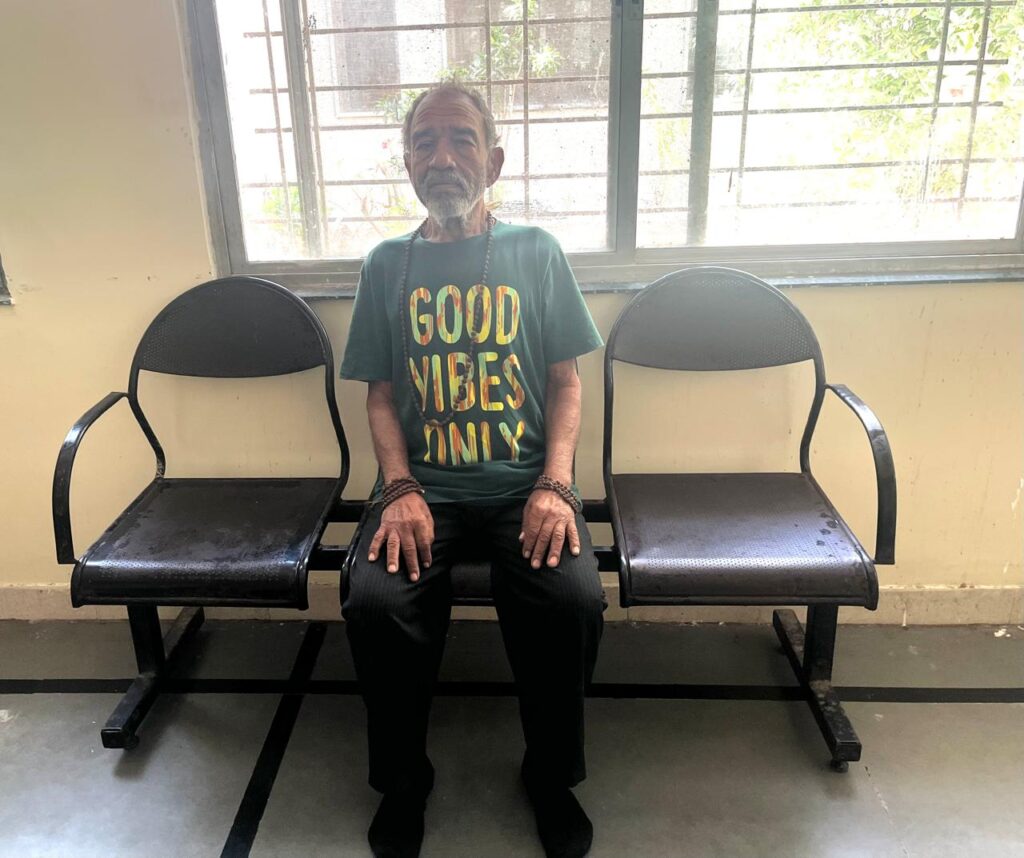
His name was Ramprasad Upadhyay, but nobody in Sevagram ever used it. He had come from Satna in 1974, a sturdy twenty-year-old who preferred the akhara to the classroom. He first worked as a guard at Gandhi’s Ashram, then moved to the medical college, where his legend began almost by chance.
In those days bicycles ruled the road, and the postman’s arrival created a small stir. Into this quiet world Gabbar would ride down the Sevagram street on a restless horse, wearing a heavy jacket that instantly reminded the medical students of Amjad Khan in Sholay. The film had just been released, and the moment he appeared on horseback the boys nudged one another and shouted, almost in delight, “Gabbar aa gaya”.
Yet once he dismounted, the drama dissolved. Unlike the movie villain, Sevagram’s Gabbar was polite and courteous. The name stayed; the villainy never did.
Gabbar worked with endless energy. At the Gobar Gas Plant, his first job on the MGIMS campus, he lifted dung with his bare hands, loaded it onto a bullock cart, and emptied it into a pit he had dug himself. He kept that plant running year after year. He liked to recall the day he cleared fourteen hundred feet of wild, thorny shrubs for a few annas. By evening he had earned three rupees and fifty paise, enough for a good meal, and walked around the hostel feeling like a king who had finally earned his place.
But his true calling came with a single gas cylinder. A telephone operator’s kitchen had gone silent, and Gabbar borrowed a bicycle, rode to Wardha, and returned with a full cylinder tied to the carrier. It was a small errand, but it marked the beginning of a steady, dependable partnership between him and every kitchen in Sevagram.
He soon built a bicycle of his own from orphaned parts. The frame came from Dadarao Shingare, the carrier from someone else, and the rims from a third donor. Ropes held together what metal could not. Once he climbed onto it, the odd-looking cycle seemed ready for work. He loaded five full cylinders at a time, tightened the ropes with practiced flicks of his wrist, and set off along the broken road between Wardha and Sevagram.
He made five trips a day and carried hundreds of cylinders each week. He kept at it for seventeen years.
In those days housewives did not check the newspaper each morning. They checked the flame. If it died, they did not call a maid, argue with her, or wait for her mood to improve. They walked straight to Patel Hostel, certain Gabbar would sort it out. A decade later, when telephones arrived, they simply called him. One call was enough.
Today maids decide their hours, their holidays and their tempers, and households fall in line. In the 1970s, Sevagram ran on a simpler idea. A maid was optional. Gabbar was essential.
His colleagues eventually pooled money to buy him an autorickshaw, and Sevagram gained its first dependable gas service. The yellow auto soon became part of the village’s everyday rhythm. It rattled past courtyards at daybreak, and women waited for it the way people now wait for their maids. Children waved at it like a festival cart, and dogs gave chase until his laughter stopped them.
And he did all this outside his regular eight-hour duty in the engineering section. At work he pleased everyone with his work ethic, discipline and quiet commitment.
He retired in 2014 and went back to the fields he had always worked with his own hands. Time has chiselled him down, but his eyes still shine. Sitting before me, he recalled old doctors and nurses with the easy fluency of a teenager playing kabaddi.
A new generation may walk past him unknowingly. Yet for forty years, no kitchen in Sevagram lit a stove without the quiet assurance that Gabbar would come clattering down the road.
When he rose to leave today, he folded his hands with the same gentle smile of 1974, as if he had paused only briefly between one delivery and the next.