Yesterday morning, the MGIMS campus was very quiet. It was Badi Behenji’s death anniversary. We gathered around her samadhi in the garden—students and staff sat on the grass, and the elders took the chairs. The Sevagram winter air was sharp and clear.
The Friday prayers had just ended. Usually, we leave after the readings from the Gita, Quran, Bible, and Guru Granth Sahib. But yesterday, the silence felt different. We were waiting for something.
Then, an old tape recording began to play.
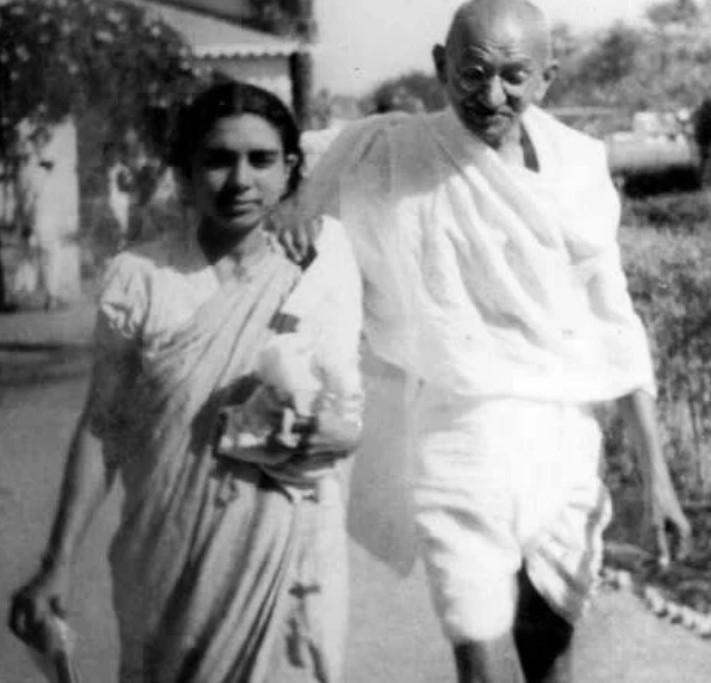
It was Badi Behenji’s voice. It sounded exactly as I remembered—soft, firm, and plain. There was no grand speech. It felt as if she were sitting right there with us, perhaps adjusting her glasses as she spoke about duty and how we should live.
She led us through the 15th and 16th verses of the Upanishads. These were the same verses once recited in Gandhi’s ashrams at Sabarmati and Sevagram:
तू विश्वपोषक है तथा तू ही निरीक्षक एक है।
तू कर रहा नियमन तथा तू ही प्रवर्तन कर रहा।
पालन सभी का हो रहा है तुझसे प्रजा की भाँति।
निज पोषणादिक रश्मियाँ तू खोलकर मुझको दिखा।
फिर से दिखा—एकत्र त्यों हो जोड़ करके तू उन्हें।
अब देखता हूँ रूप तेरा तेजयुक्त कल्याणतम;
वह जो परात्पर पुरुष है—मैं हूँ वही।
Her voice was steady. She had a gift for making difficult Sanskrit ideas feel simple and real in Hindi. She spoke about how brief life is and how the आत्मा eventually merges with the परमात्मा. She didn’t use fancy words; she just spoke from the heart about living a life of love and compassion.
I closed my eyes, feeling the winter sun on my face. She was so many things—a doctor, a leader, the builder of this place. But in that moment, the titles faded away. What remained was just the woman herself: deeply rooted in her spirit.
The tape hissed and stopped, but no one moved. We then walked to her samadhi to pay our homage, offering flowers and bowing in silence. The garden did not feel empty. Long after we went back to our work, her voice stayed with me. Calm and clear.
My eyes are filled with tears. Badi Bahenji: “The Legend.” My respectful homage. 𝗢𝗠 𝗦𝗛𝗔𝗡𝗧𝗛𝗜
We feel truly blessed to have spent time with her and to carry her blessings with us.
We have such fond memories of her classes in the anatomy hall and community medicine. We used to travel with her all the way to Nagpur, and we truly became doctors because of her. She taught us out of the goodness of her heart, without ever asking for fees. Regards
Thank you for sharing these beautiful memories and bringing her presence back to us once more.
Very little is known of her parents. She was born in the Gujarat district of present-day Pakistan, yet how she managed to secure admission and complete her MBBS in Delhi during that era remains a mystery.
From there, she descended straight upon Sewagram—mysterious indeed. She remained unmarried, choosing instead to give birth to MGIMS. What is also lesser-known is her pivotal role in protecting the late Professor K.N. Udupa, and through him, fostering the growth of the newborn Institute of Medical Sciences at Banaras Hindu University.
There was also a globally renowned gastroenterologist among the founders of PGI Chandigarh, Prof. P.N. Chuttani. He, too, had migrated from what is now Pakistan and remained a lifelong unmarried friend of ‘Bahenji.’ My 1970 batch was fortunate to have our formal inauguration marked by his lecture, with Bahenji herself presiding.
She remains a great soul, guiding us quietly and steadily, as if her presence never left us
A moment of silence for her selfless service.
सुर्ख़रू होता है इंसान ठोकरें खाने के बाद,
रंग लाती है हिना पत्थर पे पिस जाने के बाद।