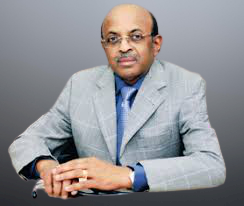
The train from Kerala moved north through the green fields, and Madhavan Govinda Pillai sat with an envelope in his lap.
Inside it was a letter from Shri U.N. Dhebar — former Chief Minister of Saurashtra, former President of the Indian National Congress, and since 1962 the Chairman of the Khadi and Village Industries Commission. Dhebar had written it to Dr. Sushila Nayar, addressing her by first name, and the letter said, in its essential substance, this: If I have any moral right to recommend anyone for their passion for khadi, villages, and contribution to the freedom struggle, it is Madhavan Govinda Pillai — the son of a small farmer, from a family that has lived Gandhiji’s values.
The letter was precise about what it was: not a demand, not a favour called in, but a claim based on moral right.
Madhavan had already paid five thousand rupees in tuition fees to Davangere Medical College in Karnataka, where two seats had been reserved for him through the intervention of Mr. Nijalingappa, the Chief Minister of Karnataka. Then his brother had heard about a new medical college in a village called Sevagram, and his father — a farmer from Mavelikkara in Kerala — had called U.N. Dhebar. Madhavan put the letter in his pocket and watched the fields pass.
From Mavelikkara to Wardha
He was born on 9 October 1950 in Mavelikkara, a quiet town in Kerala’s Alleppey district — the town that had given India the painter Raja Ravi Varma, whose canvases still hung in the palaces of Baroda and Mysore. His family lived in a large joint household surrounded by paddy fields and coconut trees. His father was a farmer, but the home was also a political and intellectual crossroads — Congress leaders passed through, Khadi board members stopped in. Even before he came to Sevagram, khadi was woven into the texture of Madhavan’s daily existence.
From Wardha station, he took a tonga driven by Motilal Ganvir of Sevagram village to Mahadev Bhavan, where the interviews were being held. Dr. Sushila Nayar stood in the courtyard, surrounded by a panel assembled from the high architecture of Indian public life: Shriman Narayan, the Governor of Gujarat; Dr. Jivraj Mehta, the Chief Minister of Gujarat; Santoshrao Gode, the President of Wardha Zilla Parishad; Narayandas Jajoo.
Madhavan handed over the letter. Dr. Nayar read it carefully, word by word, and then passed it to Shriman Narayan. “Shrimanji,” she said, “take charge of this boy.” His marks were, as he later put it, thankfully excellent. The interview was over in minutes.
The Bicycle and the Batch
There was one bicycle in the batch. It belonged to Madhavan Govinda Pillai. He guarded it with three chains. One night, persons unknown broke all three chains, disassembled the bicycle completely, and disappeared. Madhavan did not speak for several days. The bicycle was eventually reassembled — the perpetrators were never identified — but the incident entered the mythology of the 1969 batch as a precise illustration of the inventive mischief that Sevagram’s social pressure-cooker reliably produced.
In the 1969 batch, there were only two South Indians: T. Pushpam from Kerala, and Madhavan. Jolly Mathew would come from Kerala too, and they would share a room with Balkrishna Maheshwari — learning each other’s languages and food habits, becoming family. He walked to Wardha station in the evenings, those first months, because the Kerala part of him needed, occasionally, to find something familiar. The coconut-flavoured curries of home were not available in Sevagram. The walks were the modest homesickness of a person who was adapting well and knew it.
The Wilson’s Disease
The final-year posting at Government Medical College, Nagpur, under Dr. B.S. Chaubey brought the moment that stayed with Madhavan longest. Dr. Chaubey allocated a case to Madhavan and Gopal Gadhesaria independently — two students, one patient, no consultation between them. Both came back with the same diagnosis: Wilson’s disease. A rare inherited disorder of copper metabolism.
Dr. Chaubey looked at the two answer sheets and could hardly believe what he was reading. That day, his respect for Sevagram’s training changed register.
The final MBBS examinations confirmed it. Madhavan Govinda Pillai won the gold medal in Medicine, placing first in Nagpur University. Dr. Chaubey, who had once been quietly condescending about the village college, summoned him for a retest — certain there had been an error. There had not been.
The Promise Kept
He moved to Mumbai after MBBS. He entered Obstetrics and Gynaecology before finding his true direction in Cardiology. The DM examination he failed on the first attempt and passed on the second. He noted this without embarrassment: perseverance was a value Sevagram had installed, and he had needed to draw on it.
In January 1986, he became the first cardiologist in India to perform a coronary angioplasty. He was also the first to perform a selective cardiac catheterisation on a right coronary artery arising from the left main trunk. He recorded these achievements, and then returned to the daily work that had preceded them: the practice of medicine in a Mumbai consulting room.
Device companies came to him with expensive stents. He told them: give it free to the poor, or I will blacklist your company for two years. Patients paid what they could. He did not ask for more. This was not a policy. It was a habit formed in Sevagram and never revised.
He thinks, when he thinks of Sevagram, of the coconut groves of Mavelikkara and the dusty lanes of Wardha district and the distance between them. And even after fifty-six years, he has said, the values of that place continue to guide every beat of his heart — which is, for a cardiologist who knows exactly what the heart does and why, perhaps the most precise thing anyone in this archive has said about what Sevagram gave them.
Dr. Madhavan Govinda Pillai completed his MBBS from MGIMS, Sevagram, winning the gold medal in Medicine and placing first in Nagpur University in the final examinations. He proceeded to specialise in Cardiology, completing his DM after initial postgraduate training in Mumbai. In January 1986, he became the first cardiologist in India to perform a coronary angioplasty. He practised interventional cardiology in Mumbai for several decades, maintaining the ethical commitments to accessible medicine that he first encountered at MGIMS. He was born in Mavelikkara, Alleppey district, Kerala. He lives in Mumbai.