What This Volume Is
Between 1969 and 1980, the first twelve batches of students entered the Mahatma Gandhi Institute of Medical Sciences in Sevagram — a rural medical college founded in the shadow of Gandhi’s own ashram, on principles of simplicity, service, and Gandhian discipline. They came from Bihar and Kerala, from Punjab and Gujarat, from small towns and smaller villages, many of them the first doctors their families had ever produced.
This volume gathers their stories. It draws upon personal recollections shared in interviews, written memoirs, letters, and conversations conducted over several years. Each profile traces a life: the childhood that preceded medicine, the journey to Sevagram, the years of study in a college that was still finding its own form, and the decades of practice that followed. Together, the profiles create a portrait not only of individuals but of an institution — one that was, in those first years, shaped as much by its students as it shaped them.
One hundred and fifty-three profiles are gathered here, arranged by batch and roll number. They span twelve years and nearly every corner of India. Read in sequence, they form a collective memory. Read individually, each is the record of a singular life.
The archive from which these profiles are drawn continues to grow at https://sp.kalantri.co.in/mgims/alumni/.
Alumni by Batch
Batch of 196926 profiles
Batch of 19708 profiles
Batch of 197115 profiles
Batch of 19728 profiles
Batch of 19735 profiles
Batch of 197412 profiles
Batch of 197510 profiles
Batch of 197611 profiles
Batch of 197715 profiles
Batch of 197813 profiles
Batch of 197914 profiles
Batch of 198013 profiles
Dr Anil Kumar Kaushik
He was born on 4 March 1951, the fourth child in a family rooted in the soil of Uttar Pradesh. His earliest world was Gajraula, a town in Amroha district where the lanes smelled of fresh earth after rain and the sky at dusk turned the colour of ripened wheat. His father, Rameshwar Dayal, was a man who had inhaled Gandhian values so thoroughly that they had become a kind of second nature — he wore khadi with the quiet dignity of one who genuinely believed in its message, not because an institution demanded it.
Anil lost his father at thirteen. The loss left a wound that never entirely closed, but it also clarified something. His uncle, Rama Shankar, had worked alongside Jayaprakash Narayan and Ram Manohar Lohia, and would eventually become a Member of Parliament and a minister. Another uncle, Dr. Ravi Shankar Sharma, had gone to Sevagram in 1946 and joined Vinoba Bhave’s Bhoodan Andolan in Bihar, later returning to care for leprosy patients at Dattapur near Sevagram. It was through this uncle, living and working in the orbit of Gandhi’s village, that Anil first heard of the Mahatma Gandhi Institute of Medical Sciences.
Amroha, Moradabad, and the Long Road
Amroha itself was a place of quiet distinction. It had given India the filmmaker Kamal Amrohi — whose Pakeezah would become a classic of Urdu cinema — and was known for its mango orchards, its dholak-makers, and the delicacy of its woodwork. Delhi was several hours away in those years; the world outside felt genuinely distant.
Anil did his schooling at Gajraula, then Hasanpur, and went on to Hindu College in Moradabad for his twelfth and first year of B.Sc. The distance from these places to Sevagram was not merely geographical. It was a journey from one India to another — from the Gangetic plains with their particular texture of language and kinship to the flat red earth of Vidarbha.
In 1969, the MGIMS selection process was singular. There was no entrance examination. Selection was by interview, by recommendation letters, and by the candidate’s family background — specifically their connection to the freedom struggle, to khadi, to the Bhoodan Andolan and the Gandhian social movements. For Anil, with his uncle at Dattapur and the family’s deep embeddedness in the same world that had produced MGIMS, the fit was almost pre-ordained.
He travelled alone from Gajraula to Dattapur, carrying a suitcase and his uncle’s faith. Dr. Sushila Nayar knew the uncle well. His name had already reached her desk. The interview asked what it always asked: why medicine, what is swadeshi, what does khadi mean? He answered from truth, not from preparation. He was selected.
A Room That Was Mini-India
From his second year, he shared a three-seater room with Balkrishna Maheshwari and Rajendra Deodhar — both Gandhian, both from modest backgrounds, both Marathi-speaking. They taught him Marathi with the patient generosity of people who understood that language is a form of welcome. He learnt.
The 1969 batch was, as he would say for the rest of his life, a mini-India: Maharashtra and Gujarat, Punjab and Uttar Pradesh, Delhi and Bihar, Kerala and Tamil Nadu — different religions, many languages, no barriers that time and proximity did not dissolve. Caste was never a topic. It was simply not the currency of the place.
Days began before dawn with the Sarva Dharma Prarthana, a warden rapping on doors at five in the morning. After prayers came shramdan — sweeping, cleaning, scrubbing the sandas. They carried their own utensils to the mess, washed them afterwards, and headed to class. The assigned village for community work was close to the Ashram.
At night, sometimes, they joined filariasis detection camps, bending over microscopes looking for the nocturnal movement of parasites on slides. Vidarbha was heavily infested. MGIMS regularly sent surgical teams into the field. As students, they assisted in hydrocele and cataract surgeries conducted in makeshift operating theatres under canvas tents in village courtyards.
Babulal, the Harmonium, and the Cine Club
There were no games facilities at first. His batchmate Subhash Srivastava changed that, persuading his father — a contractor in Nagpur — to donate ₹10,000 for cricket equipment. Soon there were matches against Science College Wardha and teams from Nagpur. A table tennis board arrived in Jawaharlal Hostel not long after, and became the evening destination for anyone who needed to stop thinking about medicine for an hour.
The annual functions were the social peak of each year. Principal I.D. Singh played the harmonium at these evenings. Dr. M.D. Khapre accompanied him on tabla. Students discovered in themselves capacities they had not suspected — for singing, for acting, for verse. The Wardha district magistrate attended. The world outside Sevagram briefly entered, and was impressed.
A Cine Club was founded and became popular. One year, a junior student sang Jhoom Barabar Jhoom Sharabi in front of Dr. Sushila Nayar. She stopped the function immediately and gave the organisers a very precise dressing-down. Sevagram’s idea of culture was not, as it turned out, infinitely flexible.
The Lecture on Gait
In the lecture halls, some teachers became legends by the sheer quality of their teaching. Dr. M.L. Sharma’s pharmacology lectures sparkled with well-timed humour. Dr. S.P. Nigam, their medicine professor, was a master of the clinical hour. Anil would remember for the rest of his life a lecture Nigam gave on gait — the different ways disease inscribes itself in the way a person walks — in which the professor performed each gait with theatrical flair, becoming before the class a man with Parkinson’s, with cerebellar ataxia, with foot-drop. It was a performance so precise and so illuminating that it turned a topic in a textbook into something a young doctor would recognise instantly at a bedside thirty years later.
Dr. O.P. Gupta joined as a medicine lecturer in the second year — gentle, sincere, from Chirgaon near Jhansi. Dr. Ravinder Narang took surgery, his wife Dr. Pratibha Narang pathology; Dr. Vishwanath Chaturvedi ENT, his wife Dr. Pushpa Chaturvedi paediatrics — both from AIIMS Delhi. The college was assembling, teacher by teacher, into something real.
Anil was counted among Professor Nigam’s favourite students. When internship came, it felt natural to begin in medicine.
The Road from Sevagram to Jhansi
In February 1975, he was selected by Safdarjung Hospital in Delhi. He completed rotations in medicine and paediatrics, then appeared for several postgraduate entrance examinations. An offer came first from Banaras Hindu University, where he briefly joined MD Paediatrics. In April 1977, an offer from Delhi University changed course again. He joined Lady Hardinge Medical College, completed his MD in Paediatrics in April 1979, and eventually made Jhansi his home — a city where his professional life took root.
After a senior residency at Kalawati Saran Children’s Hospital and a short lectureship at JN Medical College Aligarh, he was selected for the UP Medical Services and joined MLB Medical College, Jhansi, as a Lecturer. He remained there until his retirement in 2020 — a span of decades in the same institution, watching the city change around him while the wards remained, season after season, the same mix of suffering and recovery.
His wife, Dr. Sadhna Kaushik, joined the Department of Pharmacology at MLB Medical College in 1985 and rose to become its Principal, retiring in 2020. They were two MGIMS alumni who had found each other and built a life in Jhansi, in a medical college far from Sevagram but shaped, still, by what Sevagram had made of them.
What Sevagram Left Behind
Looking back, Anil Kaushik describes Sevagram not as a college but as a crucible — the word several of his batchmates reach for, independently, when they try to explain what the place did to them. Friendships were made there that have lasted sixty years. Values were absorbed, not taught. The discipline of prayer and shramdan was not something a student agreed to — it was something that entered the body through repetition and became part of the way one moved through the world.
Medicine, he learnt in those years, was not a profession entered at nine and left at five. It was a way of life with obligations that extended into the evening and the midnight and the early morning. The filariasis camps, the village surgeries under canvas, the patients who came barefoot with more hope than money — these were not supplementary experiences. They were the education.
The mini-India of his three-seater room — three languages, three backgrounds, one small space — was in some ways the best preparation for a career in a public hospital in UP, where a doctor sees, on any given morning, the full range of what the country is.
Dr. Anil Kumar Kaushik completed his MD in Paediatrics from Lady Hardinge Medical College, Delhi. He served as faculty at MLB Medical College, Jhansi, from the 1980s until his retirement in 2020. His wife, Dr. Sadhna Kaushik, retired as Principal of the Pharmacology Department at the same institution. They live in Jhansi.
Dr Balkrishna Maheshwari
The khadi shirt did not belong to him.
It had been lent by Dr. Ulhas Jajoo — then a second-year student at GMC Nagpur, whose family knew the Maheshwaris through their shared native place of Erandole — and Balkrishna had put it on that morning in 1969 with the particular care of someone wearing borrowed confidence. He had heard the rumour, as everyone had: Dr. Sushila Nayar had a soft corner for candidates who came in khadi. He did not own any. The Jajoo family, who had already done him one good turn by sending the application form through Shri Narayandas Jajoo, had now clothed him for the occasion as well.
He walked into the interview room at Sevagram in that shirt and trousers, carrying a handwritten letter from Shri Shivaji Bhave — younger brother of Vinoba Bhave — who wrote warmly of his father’s involvement in the Bhoodan Andolan and the family’s long-standing Gandhian ties. The note was on a torn piece of paper, the handwriting deliberate, the sentiments simple. When Dr. Jivraj Mehta and Dr. Sushila Nayar read it, something shifted in the room. He would remember their expressions for the rest of his life — not the expressions of administrators evaluating a candidate, but of people recognising something they already knew and trusted.
He answered a few questions about Gandhi and rural India. Then it was over.
What he could not have known, walking out of that room into the Sevagram afternoon, was that getting through the interview was only the first of several obstacles between him and a seat in the inaugural batch of MGIMS. The second was already being constructed, in an office somewhere, by a clerical error that would very nearly cost him everything.
Born in a Goshala
He was born on 11 November 1950 — not in a hospital or clinic, but in a cowshed in Dhulia. The goshala was run by Shivaji Bhave, who still lived in Dhulia before his move to Paonar. It was a simple, open shelter, and the birth that took place within it was unremarkable except for the fact that the man who would later write a letter on his behalf was present in the same building.
His father, Narayan Navalram Maheshwari, had come from Erandole in Jalgaon district — the first freedom fighter from his village. His grandfather had been a wealthy landowner and moneylender. His father turned his back on all of it. He chose khadi, simplicity, and the Gandhian life. He worked for Khadi Gramodyog in Dhulia without accepting so much as a government rupee, and he died in 2011 at ninety-three, content and dignified in his chosen poverty.
There were four siblings. A younger brother became a radiologist, one sister an orthodontist, the other a teacher. All of them grew up learning, by necessity and by the particular instruction of their household, to live with little. Money was always short. On Sundays in Erandole, Balkrishna sold tea. During Shravan, on Mondays, he sold coconuts. Outside the school gate, he traded used notebooks. These were not odd jobs. They were necessities. He had been raised with strong values — honesty, hard work, and the absolute prohibition against begging or borrowing — and those values had to coexist, in that household, with the daily arithmetic of scarcity.
He studied Class 1 in Dhulia, then returned to Erandole for Class 2 through 11 at Ramnath Trilok Chand Kabre Vidyalaya. For his first year of science, he joined Pratap College in Amalner. After that came Bombay — a significant leap for a boy from Erandole. He stayed at the Marwadi Hostel in Mulund and set his sights on JJ Hospital Medical College. He studied hard. And then, in the way of many young men in those years who had done everything correctly, a single administrative detail undid him: he did not have a permanent Bombay address, and the admission was refused on those grounds.
The dream did not die. It simply needed another door.
The Clerical Rescue
The advertisement appeared in The Times of India. A new medical college was starting in Sevagram — no entrance exam, admission by interview, sixty seats, a founding anchored in Gandhian principles. The application was brief and cost something he could manage to pay. He applied, almost on impulse.
And then the clerical error happened.
His name was Balkrishna Narayan Maheshwari. His address was Erandole, District Jalgaon — in the pre-PIN code era, when addresses were approximations and office staff at newly founded institutions were doing their best with limited training. Another applicant, Subhash Maheshwar Shrivastava from Nagpur, had also applied. The office conflated the two names, and Subhash Shrivastava received not one admission letter but two — one correctly addressed to him, the other meant for Balkrishna, misdirected under the name “Maheshwari S.S.”
Balkrishna heard nothing.
It was Shri Narayandas Jajoo — professor of economics at G.S. Commerce College, Wardha, father of the same Ulhas Jajoo who had lent his khadi shirt — who noticed the inconsistency and understood what had happened. He accompanied Balkrishna’s father to the principal’s office. They sorted it out. The seat was confirmed.
The Jajoo family had now intervened in his admission twice: once by sending the application form, and once by rescuing the seat from a bureaucratic accident. It was a debt Balkrishna would carry with pride and affection for the next fifty-five years, long after the shirt had been returned and the form had yellowed and the college had become a different kind of place from the provisional institution that had admitted him.
When he finally joined in September 1969, there was no room in the transit hostel. He shared a small cottage behind the Mahadev Bhavan with Rajendra Deodhar. Meals were served in a hut opposite Dr. Sushila Nayar’s guesthouse — the students sat cross-legged in khadi, brought their own plates, ate simple vegetarian food, and washed their utensils under a shared tap. Only after a follow-up visit by Dr. Jivraj Mehta did the arrangement improve: dining tables appeared, chairs were found, and — most welcome of all — eggs arrived for breakfast. It was the kind of institutional evolution that happens not by planning but by someone of authority noticing what is missing and quietly ensuring it arrives.
Improvisation and Passion
Sevagram in those first months was a world held together by improvisation. Four buses a day ran from Wardha, eight kilometres away. The grocery shop opened for two hours and carried barely enough. Babulal’s canteen — a bamboo hut shared with a tailor, its menu limited and its atmosphere irreplaceable — was the only gathering place the students had. It functioned not only as a canteen but as a social institution, a lending office, and a refuge for anyone who had nowhere else to be.
Classes took place across makeshift venues: the Mahadev Bhavan, a lecture hall above the Physiology lab, the Adhyayan Mandir. The Adhyayan Mandir would later receive Prime Minister Indira Gandhi; in those first months, it received the first batch of MGIMS, working through Anatomy and Physiology and Biochemistry in rooms that smelled of fresh whitewash and institutional possibility.
The teachers were passionate. The practicals were conducted seriously. Clinical training happened regularly at Civil Hospital and Kasturba Hospital. The multi-faith prayers — morning and evening — punctuated the days with a rhythm that most students eventually stopped noticing, which is the surest sign that something has been absorbed.
Corridors of Connection
In 1972, something happened that had nothing to do with anatomy or ward rounds but stayed with Balkrishna for decades.
A woman named Mrs. Nanda Mehta was admitted to the Medicine ward under Dr. S.P. Nigam. Her husband, Dhirubhai Mehta, came to be by her side and remained for nearly a fortnight. Balkrishna, doing his rounds, shared meals with Dhirubhai in the way that proximity and illness create their own intimacy. At the time, Dhirubhai Mehta was unaffiliated with the Kasturba Health Society — a man visiting his wife in a hospital bed, ordinary in his grief and his waiting.
He later became President of the Kasturba Health Society and played a major role in the growth of MGIMS.
Balkrishna thought of this often in later years — how the formative encounters of an institution’s early life are almost never the ones announced on notice boards. They are the ones that happen in hospital corridors and makeshift canteens, between people who do not yet know what they will mean to each other.
The years at MGIMS also brought the kind of public health work that distinguished a Sevagram training from any other. They built compost pits in villages. They conducted health check-ups in the surrounding districts. They organised hydrocele surgery camps — painstaking, unglamorous, necessary work that taught them, more reliably than any lecture, that medicine practiced without public health is medicine practiced on a fraction of the need.
The student magazine — Sushruta — gave the batch a voice, a record, a small assertion that they were not merely passing through. The annual sports day, the cultural gatherings, the cine club that emerged once it became clear that no other entertainment was available — all of these were student-made solutions to the problem of being young in a place that offered almost nothing by way of diversion.
And through all of it, Babulal’s canteen remained the fixed point. The bamboo walls, the tailor in the corner, the man himself — generous with credit and quieter than you expected him to be — who fed the students when they were short of money and sat with them when they needed someone to sit with.
The Borrowed Shirt Fits
Balkrishna Maheshwari completed his MBBS and went on to pursue his MD in Paediatrics, after which he spent five decades practising in Mumbai. He moved far from Erandole and from the borrowed khadi shirt and from the Sunday mornings selling tea at the village crossroads. But the distance was only geographical. The values his father had chosen over prosperity, the discipline of scarcity, the particular gratitude of someone who knows precisely how many interventions were required before he could take his seat — these things did not travel poorly. They were what made him the doctor he became.
When he thinks of the Jajoo family now, he thinks of a khadi shirt that did not belong to him and a seat that had been nearly lost before it was found. Two debts, he has said, that no professional achievement could fully settle. And perhaps the right response to a debt like that is not to settle it but to carry it forward — into every consultation room, every child patient, every question answered at a teaching hospital bedside.
The borrowed shirt, he often thought, fit better than anything he owned.
Dr. Balkrishna Maheshwari completed his MD in Paediatrics and built a sustained clinical practice in Mumbai over five decades. He remained engaged with paediatric education and professional networks throughout his career. His family’s Gandhian roots — his father’s lifelong commitment to Khadi Gramodyog, his birth in a cowshed where Vinoba Bhave’s brother lived — shaped the values he carried into medicine. He lives in Mumbai
Dr Bhakti Dastane
A Library That Still Stands
There is a library in Sevagram that Bhakti Dastane’s father built.
The Gandhi Seva Sangh library — its shelves holding the records and writings of a movement that had made the village famous — was established partly through the work of Shri Dattoba Dastane, a teacher and linguist who had come to Sevagram under Vinoba Bhave’s guidance and spent his working life in the service of Gandhian education. He taught in Sevagram, in Gopuri, in Wardha, and was later called to Varanasi to serve the Gandhi Seva Sangh’s publication division. A gifted linguist, a man who had absorbed the disciplines of Nai Taleem — the Gandhian system of education through labour, craft, and community rather than through books and examinations alone — he laid the foundation of the library as an act of institutional faith: a collection of documents and ideas that the village would need long after the generation that had created them was gone.
The library still stands.
When Bhakti Dastane arrived at MGIMS Sevagram in 1969 as a first-year MBBS student, she was arriving at a place her father had helped build. The red earth, the neem shade, the smell of the ashram in the early morning, the bhajans rising before sunrise — none of this was foreign to her. She had grown up with these things as the texture of daily life. Where other students in the inaugural batch arrived at an unfamiliar institution in an unfamiliar village and spent their first months in the slow work of adaptation, Bhakti Dastane arrived home.
A Household Shaped by History
Her father’s story was woven into the larger story of the freedom movement in ways that most children learn only later, if at all. Dattoba Dastane was the son of the Marathi poet Annasaheb Dastane, and he had come to the Gandhian life not through accident but through deliberate choice — the choice to embrace simplicity, to live and teach according to the principles of Nai Taleem, to spin and farm and educate in the Gandhian manner rather than in the manner of institutions that separated learning from living.
Her mother, Malti Dharmadhikari, carried a different but equally serious history. Born in Kolhapur in 1924, she had lost her father early and moved to Wardha at the age of twelve, where she entered Mahila Ashram — the women’s institution that operated within the orbit of Gandhi’s ashram and offered its students an education that merged learning with spinning, weaving, farming, and meditation. She had been in the presence of Gandhi himself, which in the Wardha of the 1930s was not an extraordinary circumstance for someone living within the ashram’s community, but which nonetheless left its mark. She later taught at Mahila Ashram and married Dattoba Dastane in Bhusawal in 1940.
Bhakti was born into this. The freedom struggle was not, in her household, history — it was the air the family breathed, the reason for the choices her parents had made, the invisible architecture within which daily life was conducted. Her relatives had gone to prison for the country. Her father went to work each morning to maintain a library that held the record of those struggles. Her mother had sat in the presence of the man whose ideas were now being translated, in a new medical college in the same village, into a particular vision of what doctors should be and how they should live.
The Student Sevagram Had Been Waiting For
When Dr. Sushila Nayar convened the selection committee for the inaugural batch of MGIMS in 1969, she and Dr. Jivraj Mehta were looking for students who carried certain values — not as abstractions learned from books but as lived realities absorbed from family and community. Did their parents wear khadi? Had they worked with Bapu? Did they believe in Gram Swaraj, in the dignity of village life, in the idea that medicine practised among the poor was medicine practised at its most essential?
By every one of these measures, Bhakti Dastane was the student the institution had been designed to find.
She had worn khadi since childhood, not as a political statement but as what clothing looked like in her household. She had heard satyagraha discussed not as a tactic from a history lesson but as a memory still fresh in the minds of the adults around her. She had grown up in Wardha, within walking distance of the campus where she would study medicine, in a family whose roots in the Gandhian project ran deeper than those of most students who would arrive in the inaugural batch.
She did not flinch at the morning prayers at Bapu Kuti, because she had been attending morning prayers at Bapu Kuti since she was a child. She did not struggle with the charkha sessions, because the charkha had been present in her home as long as she could remember. The shramdan — the manual labour that other students accepted as an institutional imposition — was simply, for her, the way things were done.
Other students in the inaugural batch carried Gandhian values at one remove, absorbed from parents who had participated in the movement or from the institutional culture of a college that had been deliberately designed around those values. Bhakti Dastane carried them at the source. Shyam Babhulkar, born in Sevagram Hospital and raised in Wardha, shared something of this quality — as did Girish Mulkar, whose family had deep roots in the region. But even among students who arrived already shaped by the Gandhian world, Bhakti’s formation was unusually complete.
The Hostel Years
The early years of MGIMS were modest in the material sense and rich in almost every other. Hostels were still being built when the first batch arrived; electricity was unreliable; textbooks had to be shared. The girls’ hostel, a short walk from Dr. Sushila Nayar’s own modest home, gathered the fourteen women of the batch into the daily rhythms of pre-dawn prayers, cleaning duties, and the long evenings of study interrupted by the particular friendships that form when people live together in constrained circumstances and have no other option but to know each other well.
Bhakti moved through these years with the ease of someone who had been prepared for exactly this. The austerity was not new. The community was not strange. The expectation that a student would sweep her own floor, wash her own utensils, take her turn at the communal tasks of the campus — these were the same expectations her parents had lived by, and their parents before them.
What was new was the medicine itself: the anatomy hall, the Physiology lectures, the first encounters with patients in the wards of Kasturba Hospital, the gradual understanding that the knowledge in the textbooks was preparation for something that no textbook could fully contain. She learned it as her batchmates learned it — through the teaching of faculty who had chosen a village college over more comfortable postings and who brought to their work a conviction that had something personal in it. Through ward rounds where the patient before you was not a case number but a person from a village not unlike the village where you were living and studying. Through the slow accumulation of clinical experience that transforms a student into a doctor not at any single identifiable moment but through the gradual settling of responsibility.
A Career of Quiet Constancy
After her MBBS, Bhakti Dastane built a career in Obstetrics and Gynaecology — the branch of medicine most directly concerned with the lives of women, with the passages of birth and risk and survival that had been at the centre of Kasturba Hospital’s mission since Dr. Sushila Nayar had first brought her vision of rural medicine to Sevagram. It was not, perhaps, an accidental choice of specialty for a woman raised in a household where her mother had taught women to weave and spin and farm, where the dignity of women’s lives had been taken seriously before she was old enough to articulate why.
She practised without fanfare. She did not chase the appointments or the awards that mark certain careers as exceptional in the public sense. She served — which is, in the context of a life shaped so completely by the Gandhian tradition, precisely the right word. She brought to her patients the same quiet attentiveness that her parents had brought to their work: the teacher who built the library, the woman who had learned to spin in Mahila Ashram and had never stopped believing that the skills she learned there were connected to the skills she would later teach others.
What the Library Holds
The Gandhi Seva Sangh library in Sevagram still stands. It holds the documents and writings of a movement — the records of people who believed that India’s freedom was inseparable from the dignity of its villages and the health of its poor, and who organised their entire lives around that belief.
Bhakti Dastane did not write herself into those records. She did not seek monuments. She was her father’s daughter in this as in everything: a person who understood that the most important work is often invisible, that the doctor who delivers a child safely in a rural hospital at two in the morning leaves no permanent record of the act, that the teacher who builds a library in a village is remembered, if at all, by the library itself.
The library stands. The children she brought into the world are alive. The students she trained are practising medicine somewhere. The thread of the Gandhian project — from the Mahila Ashram where her mother learned to spin, to the Gandhi Seva Sangh where her father built his shelves, to the medical college that rose in the same village on the same principles — runs through her life and her work as continuously as it runs through the landscape of Wardha district itself.
She came to Sevagram as the daughter of one of its builders. She left as one of its doctors. The two things were never, for her, very different.
Dr. Bhakti Dastane completed her MBBS from MGIMS, Sevagram, with the inaugural batch of 1969, and went on to a career in Obstetrics and Gynaecology. Her father, Shri Dattoba Dastane, was a Gandhian educator and linguist who helped establish the Gandhi Seva Sangh library in Sevagram. Her mother, Malti Dharmadhikari Dastane, taught at Mahila Ashram, Wardha, and had been in the presence of Mahatma Gandhi. Dr. Bhakti Dastane lives in Maharashtra.
Dr Dev Krishna Gupta
A Map and a Mystery
When the telegram arrived from the principal’s office at Sevagram, Dev Krishna Gupta did something that would have puzzled most of his future classmates.
He spread out a map of India and looked for the place.
He was seventeen and a half, born in Sangat village in Bathinda district, Punjab, and raised in a world whose edges had not yet extended beyond the city of Bathinda itself. He had not been to Delhi. He had not been to Bombay. Central India was not a region he had thought about with any particular attention. He ran his finger across the map until he found it — somewhere near Nagpur, deep in Maharashtra — a small dot carrying a name that meant nothing to him yet and would, within a few years, come to mean almost everything.
He packed a bag and set off.
The journey from Bathinda to Wardha required a change in Delhi, and at Delhi station something happened that Dev Krishna has thought about often in the decades since. He met a boy barely a year younger than himself who assessed the situation — the GT Express, the full platform, the imminence of departure — with the practical clarity of someone accustomed to navigating crowds. Train bhari hoti hai, he said. Jaise aaye, chadh jaayein. As soon as the train pulled in, he leapt aboard and reserved a seat.
Dev Krishna had arrived at Delhi station knowing no one. He left it with a reserved seat and a small, unasked-for demonstration of the kind of generosity that asks nothing back — which was, as it turned out, a reasonable preview of the institution he was travelling toward.
From Sangat to Sevagram
He was born on 4 January 1952, the middle child of seven in an Agrawal Bania household in Sangat. His father ran a large business in the town. The family was vegetarian, observant, and disciplined — no eggs, no alcohol, a household whose routines were established and whose expectations of its children were clear. Dev Krishna had studied at the local government school in Sangat, passed his matriculation, and moved to Rajendra College in Bathinda for his pre-medical studies. He was considered good at English, which at Rajendra College in those years was a distinction worth having.
The newspaper clipping that changed everything had been found not by his father but by his uncle — Dr. Brij Lal Gupta, a leading cardiac surgeon in Bombay, a man whose professional life represented one possible answer to the question of what a doctor could become. The uncle read the advertisement, cut it out, and sent it by post. Dev Krishna’s elder brother filled out the application on his behalf. The admission process that followed — telegram, interview, result — was conducted with the minimal infrastructure of an institution still assembling itself in a village in Vidarbha.
After the interview — conducted by Dr. Jivraj Mehta and Dr. Manimala Chaudhary, in English and Hindi, questions he answered as best he could — Dev Krishna did not take the train home to Bathinda to wait. He went to Bombay and spent a few days with his uncle. It was the right decision, emotionally if not logistically: the uncle who had started this chain of events was the right person to wait with. The telegram confirming admission arrived there, in the cardiac surgeon’s home in Bombay, and Dev Krishna received it in the company of the man who had made it possible.
His father travelled with him to Sevagram for the admission. He stayed a few hours — long enough to pay the fees and settle his son into the hostel — and then took the long train back to Bathinda. The 36-hour journey was one he would not need to repeat; his son was now, in some essential way, somewhere else entirely.
The Language, the Dust, the Prarthanas
He was allocated a room in the boys’ hostel and shared it with Shaikh Wasif Ahmed and Yogendra Paul. A few weeks later, Manoj Verma from Amla joined them. He had khadi stitched locally — there was no khadi shop in Sevagram, so students either cycled to Wardha or found a tailor willing to work with the cloth. The vegetarian food, the morning prayers, the shramdan, the daily discipline of the campus — none of these troubled him. He had been raised in a household where such things were not foreign.
What took time was everything else. The language — Marathi threading through daily life, Hindi in the hostels, English in the lecture halls, the whole multilingual texture of a campus that had gathered students from every corner of India into a small village in Vidarbha. The dust itself — Wardha district in the dry months, the particular quality of the heat. The prarthanas, sung at dawn in the ashram, which took on meaning slowly, the way all morning rituals do, becoming inseparable from the act of beginning the day.
And then, gradually, Sevagram grew on him.
The teachers were the largest part of this. Dr. M.G. Kane and Dr. Indurkar in Anatomy, Dr. Khapre in Pharmacology, Dr. Trivedi, Dr. Ingle, Dr. S.P. Nigam in Medicine — they did not merely instruct. They demonstrated. They examined patients in front of students, explained their reasoning aloud, showed the difference between examining someone and interrogating them. The lesson was technical and it was also ethical, and at Sevagram the two were not kept in separate compartments.
Prof. I.D. Singh’s Physiology lectures left a particular residue. There was a chart he drew during one lecture on iron metabolism — bold lines, careful proportions, the kind of diagram that a teacher makes when he knows the material well enough to render it visual without preparation. Dev Krishna can see it still: the chart on the blackboard, the chalk moving with confidence, a map of the body’s internal economy as clear and useful as any map he had ever consulted.
He had arrived in Sevagram staring at a map of India, trying to find the place. He left it carrying, among other things, a map of the human body drawn by a principal who loved sport and Physiology in equal measure, and who believed that a well-taught student was a well-made doctor.
The First Postgraduate
He completed his MBBS and internship and went to Bombay for his MS — returning, as if by instinct, to the uncle who had set the whole journey in motion. He believes he was the first postgraduate from his batch at Sevagram. Madhavan Pillai probably came second. It was a distinction that mattered not for the ranking it implied but for what it said about the preparation: that a student from a provisional institution in a village without a proper hostel in its first year, taught by faculty who had been posted there from GMC Nagpur and had faced derision for the transfer, had been trained well enough to proceed immediately to postgraduate study in Bombay.
After his MS, he moved to the United Kingdom. He has been there for forty-seven years.
This is not the ending that Dr. Sushila Nayar had in mind when she selected students for the inaugural batch — she was building doctors for India’s villages, not for England’s hospitals. But Sevagram’s training was not, it turned out, a preparation exclusively for rural Maharashtra. It was a preparation for medicine practised anywhere, under any conditions, with any patient population. What it installed in its students was not a regional specification but a way of being a doctor: attentive, humble, present, incapable of treating a patient as a number.
Dev Krishna Gupta carries this in England the way his batchmates carry it in Nagpur and Mumbai and Nanded and Kozhencherry — not as a conscious philosophy but as a habit so old it has become invisible. He never forgets a patient’s name. He explains the diagnosis slowly. He does not turn away a patient because they cannot pay, in the National Health Service where payment is not the question, but the instinct that the instinct runs against is the same instinct his teachers at Sevagram were running against fifty years ago, in wards where patients arrived barefoot with more hope in their eyes than money in their pockets.
What the Map Could Not Show
He was the boy who had never been beyond Bathinda. He is, now, the doctor who has spent nearly five decades in England and still walks his hospital corridors with the particular quality of attention that a village in Vidarbha taught him in the early 1970s.
The map he stared at in Bathinda showed him where Sevagram was. It could not show him what Sevagram was — that a place could be physically small and professionally formative in inverse proportion, that the absence of infrastructure could produce, paradoxically, a richness of human attention between teachers and students that larger and better-resourced institutions had found ways to avoid.
The boy on the platform at Delhi station — the one who leapt onto the GT Express and reserved a seat for a stranger — was, in miniature, the whole of Sevagram: the readiness to make room, to help without being asked, to treat the person beside you as someone whose journey matters.
Dev Krishna Gupta has been making room for patients in English hospitals for forty-seven years. The habit started on a train platform in Delhi, was consolidated in a village in Maharashtra, and has not stopped since.
Dr. Dev Krishna Gupta completed his MS from Bombay following his MBBS and internship at MGIMS, Sevagram, where he is believed to have been the first student from the 1969 batch to proceed to postgraduate training. He moved to the United Kingdom after his postgraduation and has practised medicine there for forty-seven years. He was born in Sangat village, Bathinda district, Punjab. His uncle, Dr. Brij Lal Gupta, was a cardiac surgeon in Bombay.
Dr Dilip Chotai
Everyone else, it seemed, had arrived with someone.
The Gujarati students had found each other on the train from Ahmedabad — seven young men in new khadi, converging from Kalavad and Junagadh and Anand and Somnath, forming a cohort before they had even reached Wardha. Others had come with brothers, with fathers, with local guardians waiting at the station. The campus in those first weeks had the texture of people finding each other, assembling into the groups that would carry them through five years of shared examinations and shared meals and shared bewilderment.
Dilip Chotai had come alone.
He had boarded the train to Wardha with his suitcase and the particular self-possession of someone who has not waited for company before beginning a journey, and who does not expect arrival to feel like reunion. He was nineteen, from Veraval on the Gujarat coast, and he knew no one at Sevagram. What he carried was not the anxiety of the solitary but something quieter — the confidence of a boy raised in a household where medicine was not a dream to be reached for but simply what the family did, generation after generation, for as long as anyone could count.
His first friend at MGIMS was Gopal Gadhesaria — another Gujarati, arriving from a village in Jamnagar district with a newspaper clipping and a pair of new khadi trousers. The friendship formed quickly, in the way of people who recognise in each other a kindred seriousness. From Gadhesaria, Dilip discovered that there were seven Gujarati students in the batch. The seven became, for most of those years, a small republic of mutual support — sharing dictionaries, pooling strategies, translating textbooks line by line into a language they were learning as they went.
Dilip did not need the translation work. Unlike most of his Gujarati batchmates, he had never struggled with English. The language of instruction that arrived as a locked door for the others was, for him, already open. He slipped into the academic rhythm of MGIMS without the particular anguish of the language barrier, and quietly got on with his studies.
A Lineage of Twenty-Seven
He was born on 17 December 1950 in Veraval — known also as Somnath, the coastal city that anchors the southwestern tip of Gujarat, where the Arabian Sea arrives against a shoreline of considerable historical weight. Until 1947, the town had been part of the princely state of Junagadh, and even after its merger with India the traces of the old Nawabi heritage persisted in the streets and buildings — a palimpsest of administrations visible to anyone who knew how to look.
His family ran a business in Agmark ghee — a trade that required hard work and produced, in a large joint household of brothers who could nearly field a cricket eleven, the particular vitality of a home always in motion. Medicine ran through the family like a professional vocation transmitted across generations: twenty-seven doctors, by his count, across three generations. For Dilip, the question of what he would become had been answered before it was asked. The only question was which door would open first.
He did his schooling in Veraval and moved to Jamnagar for college — a six-hour journey that constituted, in those years, a significant displacement. It was there that his friend Jitendra Adhia, who had been tracking the possibility of a new medical college in Sevagram, said: “Let’s try our luck there.” Something in the suggestion carried conviction. Dilip applied, obtained a letter of recommendation from a member of the Gandhi family — the name has since blurred with time — and arrived at Wardha station alone, as he had departed from Veraval.
The interview is a blur too. He remembers being asked about the code of conduct — the khadi, the prayers, the commitment to rural service, the Gandhian compact that every incoming student was expected to acknowledge. He nodded with the sincerity of a boy who had seen enough of hardship at close range to know that simplicity was not a deprivation but a discipline. His name appeared on the list.
The Methodical Student
The first year was spent in the nursing hostel while the boys’ hostel was completed. Students carried their own steel thalis, katoris, and spoons. They swept their rooms and cleaned the neighbourhood. Morning and evening prayers bracketed the days. Three other Gujarati students shared Dilip’s room, and in the close quarters of that small space — the smells of khadi and kerosene, the sounds of pages turning late at night, the particular fellowship of people adapting together to conditions none of them had anticipated — friendships formed that would outlast the college years by half a century.
He was not, by his own candid admission, the sporty or cultural type. The table tennis tournaments, the badminton courts, the dramatic productions that absorbed so much of the social energy of his batchmates — these were not his territory. He was content with his books. In a campus that celebrated the well-rounded student, the full participant, the person who could dissect a cadaver in the morning and deliver a performance on stage in the evening, this was a minor eccentricity. His batchmates remember him as the quiet Gujarati who showed up reliably for everything that mattered and had no interest in being noticed for it.
What he was, beneath the quietness, was thorough. He studied with the methodical attention of someone who knows that the work is the point, and that the work, done consistently, is sufficient. The seven Gujarati students who arrived not knowing the word for oesophagus in English went on, collectively, to produce results that astonished the GMC Nagpur professors who had been quietly condescending about the village college. Dilip was among them.
From KEM to Mozambique
After MBBS, he went to Mumbai — the obvious next step for a surgical career, and the city that offered the best training available. He worked as a house officer at Cooper Hospital, then pursued his MS in General Surgery at KEM Hospital. KEM in those years was formidable: enormous wards, complex trauma cases, a pace that did not slow for the inexperienced and a culture that expected you to find your footing quickly or not at all. He found his footing.
After completing his MS, he worked for a year as a trauma registrar at KEM. The work was demanding and instructive and did what good surgical training does — it showed him the full range of what the human body could survive, and what it could not, and trained his hands in the gap between the two.
Then came Mozambique.
The posting was through the government — a medical officer assignment in a country that had gained independence from Portugal in 1975 and was in the early, difficult years of building its own health system from the residue of a colonial one. Dilip spent two years there, operating in conditions that were, by any measure, more constrained than KEM Hospital but also more clarifying. The surgery required in a post-independence African hospital is surgery stripped of the auxiliary infrastructure that allows a surgeon in Mumbai or Nagpur to defer difficult decisions. It asks you to make do with what is present, to improvise within the bounds of safety, to hold the patient’s welfare as the fixed point while everything else is variable. It was, in a register he had not anticipated, the Sevagram education continuing itself in a different latitude.
The Geography of Vocation
He returned to Gujarat, to the Junagadh district where his family had roots, and built a surgical practice. Unlike the Mozambique years, this was the long work — the accumulation of a clinical reputation in a community that would come to know him over decades rather than months. He became associated with the neurosurgery department at Rajkot Medical College, extending his practice into the collaborative institutional life that good regional medicine requires.
In 1980, he married. His wife became a gynaecologist in Rajkot. Their daughter followed the family vocation into the third generation — not in Gujarat, and not in the general surgery that had been her father’s discipline, but in dermatology, practising in Manchester. Twenty-seven doctors across three generations had become, in the space of one more life, twenty-eight, and the count’s geography had expanded to include England.
He has thought, in the years since Sevagram, about what it meant to arrive alone.
Not with distress — he was not a man given to revisiting decisions — but with the particular reflectiveness of someone who has watched, from a slight distance, the way the gregarious ones formed their friendships fast and loudly, and knows that his own friendships formed more slowly and have lasted just as long. The seven Gujarati students who pooled their dictionaries and refused the private tutors and sat up translating Guyton line by line — he was among them, contributing his English fluency to the collective enterprise as quietly as he contributed everything else.
He had come alone on the train from Veraval. He had arrived at an institution still assembling its fee register and found, in its incompleteness, something that felt like an invitation — to a place that was still becoming what it intended to be, that needed students willing to help build it, that asked for commitment in return for the chance to be part of something that had not yet found its shape.
Fifty-five years later, it has its shape. And somewhere in that shape is the quiet surgical precision of a boy from the Gujarat coast who arrived with his suitcase and his family’s long history of medicine and the self-sufficient steadiness of someone who had always known that you do not need company to begin a journey, only the willingness to board the train.
His daughter operates now in a hospital in Manchester, her hands trained in a discipline her father never practised, in a country he never lived in, carrying forward a vocation that began in a cowshed ghee business in Veraval and was given its professional form in a makeshift hostel in Sevagram where the fee register was still being drawn in hand-ruled columns when the first students arrived.
Dr. Dilip Chotai completed his MS in General Surgery from KEM Hospital, Mumbai, following house jobs at Cooper Hospital. He served as a trauma registrar at KEM and subsequently spent two years as a government medical officer in Mozambique. He returned to practice surgery in Junagadh district, Gujarat, and became associated with the neurosurgery department at Rajkot Medical College. His wife is a gynaecologist in Rajkot; his daughter practises dermatology in Manchester. He lives in Gujarat.
Dr Girish Mulkar
But nobody called him that. From the time he was old enough to remember, friends, neighbours, and the girls in the lane outside his home in Wardha had called him Girishbhai — as is the custom in Gujarati households, where affection attaches itself to a name before the name has quite settled on a person. His father’s close friend had begun using it casually, early on, and it stuck with the particular permanence of nicknames given in childhood, before anyone thinks to object.
The surname came later, and carried a different weight. His grandfather had migrated from Surendranagar in Gujarat to a small town called Mule in what is now Gadchiroli district — arriving, as many migrants do, with almost nothing and with everything still to prove. In his memory, and as a tribute to the land that had received him, the family renamed themselves Mulkar. It was not an erasure but a declaration: this is where we belong now; this place made us.
So Pravin Shah became Girish Mulkar — officially, gradually, without drama. By the time he reached Sevagram in 1969, the old name had been so thoroughly replaced that even he rarely thought of it. He was Girishbhai, and then he was Dr. Mulkar, and those two names between them contain the whole story: the Gujarati boy from Wardha who became a village doctor who became an industrial physician who became, over thirty-two years in a cement plant in Chhattisgarh, something harder to name and more important than any of those titles.
He was born on 1 March 1948, the son of Principal M.M. Shah — a scholar of economics with a PhD in labour and urban problems from Pune, who had come to Wardha to succeed Shriman Narayan as Principal of G.S. Commerce College. It was a household where learning was the furniture of daily life, where books were present before children were old enough to read them, and where the question of what you would become when you grew up was taken seriously from an early age.
Girish, for most of his school years, had a clear answer to that question. He would serve in the army.
He studied at Buniyadi Vidyalaya in Wardha until Class 4, then moved to Craddock High School for Class 5 through 11. Some of his schoolmates — Ullas Jajoo, Abhay Bang, Prasad Trivedi, Shyam Babhulkar — would later find their own ways into medicine. At the time, none of them were thinking about stethoscopes. Girish was thinking about parades.
From Parades to Physiology
He joined the NCC and took to it with the particular enthusiasm of a boy who finds, in drill and discipline, a shape for energy that has no other obvious outlet. By his early teens, he was commanding a troop of forty cadets on the dusty grounds of Wardha — Saavdhan! Vishram! — baton in hand, khaki shorts, the dry heat of Vidarbha pressing down from above. He earned the rank of battalion sergeant. He represented Wardha at the Republic Day celebrations in Delhi. He wanted to wear a uniform for the rest of his life.
Then his father began to speak.
He did not insist. He was not that kind of man. He spoke often, and patiently, in the quiet register of someone who has thought carefully about what he wants to say and has decided that the argument will work better if it never becomes an argument. “You want to serve the nation,” he said, more than once. “So do I. But there are many ways to serve. A doctor in a village cures not just illness but despair. That too is desh seva.”
The words took root slowly, the way his father probably knew they would. Girish did not abandon his ambitions so much as redirect them — from the uniform of a soldier to the khadi of a doctor in training, which was, at Sevagram, its own kind of discipline.
He had not scored high enough for Government Medical College, Nagpur, or Indira Gandhi Medical College. He enrolled at Janaki Devi Bajaj College of Science, completed his B.Sc., and waited. His father knew Dr. Sushila Nayar personally. When the advertisement for MGIMS appeared in 1969, he obtained the form, filled it in, and nudged his son toward Sevagram.
The interview lasted five minutes. Fifty-five years later, Girish could not recall a single question that was asked. What he remembered was the panel, the room, and the quality of attention in it — and then, the next day, his name on the merit list.
The Three-Way Room
He arrived in Sevagram and was given a room shared with Shyam Babhulkar and Shivaji Deshmukh — Bhau, as everyone already called him. It was a three-way arrangement that would produce, over the following months, the kind of friendship that forms when people are young and in a constrained space together and have no option but to become essential to one another. The three of them studied together, ate together, argued and reconciled and argued again. Two years later, when single-seater rooms became available in the new hostel block, the allocation of separate quarters felt, briefly, like a loss.
He wore khadi every day — not reluctantly, but without internal debate. His father would have accepted nothing else, and in any case the wearing of khadi at Sevagram was not the imposition it might have seemed to students arriving from more comfortable circumstances. For a boy raised in a household shaped by Gandhian Wardha, it was simply what clothing looked like.
The five years of MBBS at Sevagram were, as he understood later, less a medical education than a re-education in what medicine was for. The village postings, the health camps, the encounters with farmers who had walked three hours for a consultation — these were not supplements to the curriculum. They were the curriculum. The Physiology lectures and the Anatomy practicals gave him the science; the red-earthed lanes of Wardha district gave him the reason.
He completed his MBBS and did short stints in surgery and paediatrics. He spent a year in private practice in Raipur. It did not suit him. The transactional texture of a private clinic — the arithmetic of consultation fees, the managed distance between doctor and patient — was at odds with something in him that Sevagram had either placed or uncovered. He was not certain which.
Then came Baikunth.
Basant Kumar Birla’s cement factory at Baikunth — then called Century Cement, later renamed as Ultratech Cement Limited, Baikunth Cement Works — was looking for doctors. Both Girish and his wife, a graduate of Indira Gandhi Medical College, Nagpur, were offered positions: she as Medical Superintendent, he as Chief Medical Officer.
Neither of them knew industrial medicine. Sevagram had not taught occupational health or labour law or the particular epidemiology of a cement plant, where silicosis and pneumoconiosis move through a workforce the way any communicable disease moves through a community, invisibly and with long incubation. They would have to learn it from the work itself.
What they arrived to find in Baikunth was a settlement in active conflict. The factory had its share of unrest — strikes, labour disputes, the sedimented mistrust of workers who had reason to believe that management did not see them clearly. The unions and management were permanently at odds, each side treating the other as an obstacle. The medical staff, in this arrangement, could easily have become management’s instrument.
Girish had a different idea.
He proposed health camps in the surrounding villages. “Let us screen people,” he said, “talk to them, treat them. Let them know we care.” Management was sceptical. The villagers were hostile, they said; one mistake and it could backfire; the factory had enough problems without creating new ones in the surrounding landscape.
He asked for one chance.
The first camp was tentative. Villagers came hesitantly, watching the doctors the way people watch anyone who arrives with something to offer when experience has taught them that offers carry conditions. Blood pressures were checked, medicines distributed, questions about nutrition answered without condescension. His wife spoke to women about immunisation and family health — conversations that most medical visits in those villages had never made room for.
The camp worked. Word moved through the surrounding area in the way that trust, once established, travels faster than distrust. More camps followed. Ten villages were eventually adopted, with the sarpanch informed in advance, health care made regular and reliable rather than occasional and contingent. Radio talks went out — Girish’s voice over the airwaves, discussing silicosis, hygiene, pneumoconiosis, the invisible dangers of the work the men around him did every day.
The labour unrest did not end overnight. But something changed in the register of the conflict. A doctor who comes into the village and sits with the farmer’s wife and weighs the children and returns next month is not management’s instrument. He is something else — something that labour unions do not quite know how to oppose, because opposition requires an argument, and generosity does not give you one.
Over thirty-two years at Baikunth, Girish Mulkar learned more about humanity, he said, than any textbook had managed to teach him. He completed a diploma in Personnel Management. He counselled workers, negotiated between factions, sat at tables where the conversation was about wages and safety and dignity, and brought to those tables the particular quality of attention that Sevagram had trained him in: the willingness to hear what was actually being said, rather than what the situation suggested he should hear.
There are four brothers and a sister in the Mulkar family. The eldest brother became the principal of an agricultural college. Another became a professor at Lady Shri Ram College in Delhi. The third rose to prominence in the corporate world. The sister settled in Washington, D.C. Girish was the only doctor among them — the one who took his father’s argument about the village and the stethoscope and spent a working life proving that it held.
When he thinks of Sevagram now, he does not think first of the lecture halls or the examination results. He thinks of the bhajans sung in the evening, cross-legged in the Ashram. The village cleaning drives. The professors who treated students not as an audience for their knowledge but as people in formation. The insistence, woven into every aspect of life in that place, that medicine without service is merely technique.
He had arrived in Sevagram wanting to command parades. He left understanding that the harder discipline — the one that requires more patience, more attention, more willingness to be changed by what you encounter — is the work of sitting with a person who is ill and making yourself genuinely useful to them.
His father had been right, as fathers sometimes are when they speak quietly and wait.
Desh seva took many forms. In Baikunth, it took the form of a health camp on a hostile frontier, and a doctor who showed up again the following month, and the month after that, until the hostility had nothing left to sustain it.
Dr. Girish Mulkar completed his MBBS from MGIMS, Sevagram, with the inaugural batch of 1969. He and his wife — both doctors — served for thirty-two years as medical officers at Century Cement (later Ultratech Cement Limited, Baikunth Cement Works) in Chhattisgarh, where he established community health programmes across ten surrounding villages and held the position of Chief Medical Officer. He lives in retirement, carrying, as he has always said, Sevagram not as a memory but as a way of life.
Dr Gopal Gadhesaria
The envelope was thin and had travelled from Pune.
Inside was a folded piece of newsprint and a short note in Gujarati, in handwriting Gopal recognised immediately: it was from Meghnibhai, a friend from his school days in Jamnagar who was now studying at the Agriculture College in Pune and whom he had not seen in years. Below the advertisement — for a new medical college opening in a place called Sevagram, in Maharashtra, founded on Gandhian principles — Meghnibhai had scribbled three words: Apply. It’s a medical college… Gandhian style.
Gopal read the clipping slowly, folded it again with the care of someone handling something that might be important, and then set it down and forgot about it.
He was, at that moment in 1969, a student at the veterinary college in Anand. He had enrolled there not from any particular interest in animal medicine but because the dream he had actually held — becoming a doctor — had run into the arithmetic of Gujarat’s medical education system and come up short. Medical seats were few. The chances for a boy educated entirely in Gujarati medium, from a village of fewer than a thousand people in Kalavad taluka, without coaching classes or connections or any of the machinery that smoothed other people’s paths — were, by any honest calculation, slimmer than slim. He had applied everywhere in Gujarat. Nothing had opened. He had put the dream away and enrolled in veterinary college and was trying, without full conviction, to make peace with it.
Then a telegram arrived. His father — who could not read — asked a village boy to bring it to him in Anand. It said: You are called for an interview at Sevagram Medical College.
Gopal stared at it for a long time.
The Khadi and the Truth
There was one detail in the prospectus that required attention: students at MGIMS were expected to wear khadi. Gopal had never owned a piece of it in his life. He walked to the khadi shop near Anand bazaar, bought a plain white shirt and trousers — stiff, unfamiliar against the skin — and stood before the mirror in his room looking at a version of himself that seemed, if not quite convincing, at least earnest.
His journey to Sevagram began from Ahmedabad. A change at Bhusaval, then on to Wardha. On the train, he found six other young men from Gujarat — all of them, he would discover, also wearing brand-new khadi for the first time, all carrying the same mixture of hope and uncertainty. Jitendra Adhia, Dilip Chotai, Ashok Hingwasia, Madhav Panara, Kaushik Patel, H.N. Patel. They did not know yet that they would spend the next five years together, pooling dictionaries and translating textbooks and refusing private tutors and, one by one, ascending the university examination results until the professors in Nagpur who had underestimated them were forced to revise their assumptions.
The interview panel sat like characters from a history book: Dr. Sushila Nayar — whom the Gujarati students would come to call Badi Behenji — Manimala Chaudhary, Dr. Jivraj Mehta, and a young woman named Pratibha Patil, then a member of the Maharashtra cabinet.
Dr. Sushila Nayar looked at Gopal with the directness of someone who has read a great many people across a great many interview tables and finds it unnecessary to disguise the fact.
“Do you wear khadi every day?” she asked.
He hesitated. His palms were damp. The shirt stiff against his shoulders.
“No, ma’am,” he said. “This is my first time — just for the interview.”
The room filled with warm laughter. Dr. Nayar smiled.
“I’m impressed by your courage to speak the truth,” she said.
It was the response of a woman who had built an institution on the premise that honesty was more useful than presentation, and who recognised, when she encountered it in a nervous young man from a village in Kalavad taluka, the exact quality she had been looking for. A few days later, a second telegram arrived at his father’s house. He had been admitted. On 12 August 1969, Gopal Gadhesaria stepped into MGIMS wearing the same khadi shirt in which he had told the truth in that interview room — carrying no certificates of influence, no letters from politicians, no family connections to the freedom movement.
Only honesty, a friend’s newspaper clipping, and whatever it was that Dr. Sushila Nayar had seen across the table.
The Language and the Work
He was born on 28 December 1948 — approximately. In villages like Sanara, where his family farmed the same land his ancestors had tilled, birth registration was not always precise. His father Kadavabhai and his mother Ganga Ma were both illiterate and both, in his reckoning, among the wisest people he had ever known. He was one of five siblings; only the youngest would find a different path, becoming an Ayurvedic doctor. The others remained tied to the soil.
When Gopal arrived at MGIMS, the English textbooks were, as he put it, foreign scripts. The students from Delhi and Bombay — convent-educated, fluent, at ease in the language of instruction — did not always conceal their amusement at the Gujarati students’ hesitant speech and uncertain grammar. The college administration offered private tutors.
The seven Gujarati students said no.
They bought Gujarati-Hindi-English dictionaries, pooling what money they had. They sat together in the evenings and translated their textbooks sentence by sentence, word by word, building their English from the inside out rather than receiving it from above. It was slow and it was exhausting and it was, as it turned out, exactly the right method — because a language learned through effort rather than inheritance becomes, in a way that inherited fluency does not, genuinely yours. Within a year, they were no longer behind. Within two, they were among the top performers in the batch.
The first MBBS examinations in the winter of 1970 were a reckoning for the entire batch. Nagpur University held its standards without concession; roughly half the students across the affiliated colleges failed. Of the original sixty at MGIMS, many were detained. Only thirty-three passed. Two students were suspended for a year after being caught cheating in the theory paper. Five others had been barred before the examinations for disciplinary reasons. The atmosphere in the days before the results was, by any description, tense.
Gopal passed. He stood second in the class, behind Balkrishna Maheshwari.
The boy who had arrived not knowing the English word for oesophagus had, within a year of careful, dictionary-assisted, self-directed work, placed second in a university examination.
The Patient Who Changed Everything
By the time the final MBBS examinations came in November 1973, the batch had thinned considerably. From sixty, thirty-three remained. Of those, only twenty-three cleared all three professional examinations on their first attempt. In Medicine, the university results placed Madhavan Pillai first, Balkrishna Maheshwari second. Gopal Gadhesaria stood fourth in Nagpur University.
It was a result that required no explanation and admitted no qualification. The veterinary college student from Anand, the boy in the new khadi shirt, the young man who had said no to private tutors and yes to the dictionary — had finished fourth in the university.
Dr. B.S. Chaubey, the legendary Professor of Medicine at GMC Nagpur who had once been among those underwhelmed by the village college, saw something in Gopal and offered him a postgraduate seat in Medicine. Dr. Kamath, a visiting examiner from KEM Hospital in Mumbai, remarked that some of the MGIMS students already had the makings of MDs.
But the moment that stayed with Gopal longest from those final years was not an examination result or an examiner’s compliment. It happened during their clinical posting at Government Medical College, Nagpur, under Dr. Chaubey. He allotted a case to Gopal and Madhavan Pillai independently — two students, one patient, separate assessments, no consultation between them. Both came back with the same diagnosis: Wilson’s disease, a rare inherited disorder of copper metabolism that most clinicians in those years would not have encountered more than once or twice in a career.
Dr. Chaubey looked at the two answer sheets. He could hardly believe it.
It was a small event, in the administrative sense — one case, one clinical posting, two students who had done their work. But it carried a weight that Gopal understood even at the time: it was evidence that what MGIMS had built in its students, out of stiff khadi and Gujarati dictionaries and kerosene-lit evenings of translation, was not approximation but the real thing. Sevagram’s doctors could diagnose Wilson’s disease. Sevagram’s doctors could stand before the professors of GMC Nagpur and give them nothing to condescend to.
The Father at the Gate
There is one memory from the Sevagram years that Gopal returns to more than any other.
His father never came to Sevagram. Kadavabhai remained in Sanara, in that far-off village in Gujarat where he had spent his entire life farming the same land, moving with the seasons, the rains, the sowing and the harvest. He could not read, and his world had been bounded by the village, the fields and the familiar rhythms of rural life. Yet one can imagine how proud he must have felt when he heard that his son was studying at MGIMS, living among doctors, teachers and students in a place so far removed from the life he himself had known.
His son was the first MBBS doctor from their entire taluka.
Gopal watched his father looking at the campus and understood, without needing words, what he was looking at. Not the buildings — those were ordinary enough. He was looking at the distance between Sanara village and this place, and understanding that his son had crossed it. He was looking at something he had not had a name for when his son was born, on an approximate date in December 1948, and had not been able to imagine fully until he was standing in front of it.
The pride in his father’s eyes was, as Gopal has said more than once, something that no poet can quite put into words. It was the kind of pride that comes from generations of quiet work, recognising itself unexpectedly in a son in a white coat in a Vidarbha village, with a stethoscope around his neck and a university examination result that placed him fourth in Nagpur.
All because a friend in Pune thought of him. All because he told the truth about a khadi shirt. All because, on a particular afternoon in 1969, Gopal Gadhesaria folded a newspaper clipping reverently and, a few weeks later, unfolded it again.
Dr. Gopal Gadhesaria completed his MBBS from MGIMS, Sevagram, with the inaugural batch of 1969, placing fourth in Nagpur University in Medicine in the final examinations. He pursued postgraduate training in Medicine and went on to a sustained clinical career. He was the first MBBS doctor from Kalavad taluka in Jamnagar district, Gujarat. His father, Kadavabhai, and his mother, Ganga Ma, were both farmers; neither could read or write. Now retired, Dr. Gadhesariya is enjoying life and spending quality time with his family in Ahmedabad. His son, Parag, serves as a gastrointestinal, bariatric, laparoscopic, and robotic surgeon at Shalby Hospital, where Parag’s wife, Dr. Rupal, also practices as a gynecologist.
Dr Hardial Singh
The Bhangra
The room fell silent.
Dr. Sushila Nayar leaned forward across the interview table, her eyes carrying the particular warmth of someone who has just had an idea and is quietly delighted by it. The boy standing before her was tall and lanky, seventeen years old, wearing a khadi kurta-pyjama so new that the creases were still announcing themselves. She tilted her head slightly and smiled.
Toh phir karke dikhao.
Well then. Show us.
Hardial Singh blinked. This was his interview for admission to India’s first rural medical college. The panel before him included people who had walked with Gandhi, who had shaped Indian public health policy, who had built institutions from nothing in the service of the rural poor. He had been asked to dance bhangra.
When a woman who once served as Gandhi’s personal physician asks you to dance, you do not hesitate.
He shot his hands up. His feet hit the floor. He swirled with the particular joy of a teenager performing for the first time before a room full of professors, and the panel — Dr. Sushila Nayar, Dr. Jivraj Mehta, the assembled founders of MGIMS — burst into laughter. He was thanked and politely asked to leave. The next day, his name was on the final list.
He was going to be a doctor.
Three Sardars in Khadi
He was born on 7 July 1950 in Amritsar, though the family had scattered by the time he was old enough to understand geography. His father had moved years earlier to Warora, a small town in Vidarbha, where he worked as a forest contractor. The rest of the family had stayed in Delhi, and it was in Delhi that Hardial did his schooling — up to the eleventh grade at Sri Guru Tegh Bahadur Khalsa College in Dev Nagar, Karol Bagh. A year followed in Udhampur with his elder brother, an army man, where he completed his college studies.
His father had a strategy for his children that was practical and unambiguous: one son would become a lawyer, one an engineer, one a businessman, one a doctor. The doctor’s slot fell on Hardial. Most decisions in that household were not the children’s to make, and he accepted the allocation without argument. It was not, as it turned out, a poor fit.
His father was in Warora when the news of MGIMS reached him — barely sixty kilometres from Sevagram, close enough for the information to arrive as something concrete rather than a rumour. Dr. Sushila Nayar had entrusted the admission process to Dr. Jivraj Mehta, who had a vision for what the inaugural batch should look like: half from Maharashtra, half from the rest of India, drawn from villages and from families touched by the freedom movement, students who came from the kind of India the college intended to serve. Two from Kashmir, two from Kerala, two from Punjab. Hardial had no recommendation letter, no political résumé, no family connection to the ashram. He had a khadi kurta bought for the occasion, borrowed confidence, and a boyish smile.
And, as it turned out, good feet.
In the hostel, he was placed with Amarjeet Singh and Avtar Singh — three Sardars in khadi, marooned cheerfully in a sea of Maharashtrian, Tamil, Bengali, and Gujarati faces. There was an innocence to those early weeks, a quality of people discovering, in the constrained and communal life of a new institution, what they were made of and who they could become. The college was too new for hierarchy, too various for clique, too serious in its founding purpose for the usual social stratifications to take hold. What formed instead were friendships — unexpected, durable, and cut across every line of language and region that the India outside the campus would have insisted on maintaining.
Loyal Friends and Inventive Mischief
Hardial was not, by his own accounting, a sportsman. He was a loyal friend — which at Sevagram, where the social bonds formed in those years have held without interruption for more than five decades, was a different and equally important thing. Mangalsingh Rajput, Vinod Ughade, and Vilas Kanikdale became his closest companions. Mangal was the class comedian, constitutionally incapable of passing a situation without seeing what could be made funnier. Hardial watched his exploits with the affectionate resignation of someone who knows the friend beside him is going to do the thing regardless and has decided to be present for it.
The bucket of frogs left outside the girls’ hostel made headlines across the campus for days. Hardial had been nearby. He was usually nearby.
The hostel moved, over the years, from the converted tin-roofed barracks of the first months to proper rooms, and with the improvement in accommodation came the establishment of rituals. Every month, a group of seven or eight boys would take the bus to Nagpur. The ritual never varied: a film, a plate of chicken curry, the late train back. It was the reliable punctuation of a life that was, in most other respects, austere — the monthly allowance of the ordinary that made the extraordinary discipline of Sevagram sustainable.
The 1969 girls, by informal consensus, were dubbed Santara Bazaar. The 1970 girls were Meena Bazaar. These were nicknames of the era — playful, affectionate, entirely of their time — and they were used within the close quarters of a campus where boys and girls attended the same lectures and ate in the same mess and developed, under the Gandhian eye of the institution, the particular camaraderie of people who are not quite allowed to be friends in the usual sense and become, as a result, something more like family.
Ragging, though officially prohibited, was part of the ecosystem. Never violent, always inventive. When the 1973 batch arrived — loud, wild, and apparently unacquainted with the concept of decorum — a group of seniors took corrective action after a particularly undisciplined evening in the auditorium. Heads were shaved, courtesy of the local barber Chintamani. The message was clear. The 1973 batch, their initial wildness disciplined into something more manageable, became, in time, some of the closest friends the 1969 batch would keep.
Teachers Who Demonstrated
The teachers settled into Hardial’s memory as a collective of dedicated and exacting people who understood that their job was not to produce graduates but to produce doctors. Professor I.D. Singh, who ran the institution with the focused dual energy of a man who loved both Physiology and cricket and saw no contradiction between them. Dr. Deshkar, Dr. Sharma, Dr. Mahajan, Dr. Trivedi, Dr. Hariharan, Dr. P. Nayar, Miss Banerjee — and Dr. R.V. Agrawal, the Pathology teacher, whose no-nonsense approach to the subject was the expression of a conviction that medicine practised without rigour was not medicine at all. They were tough and they were just, and the combination produced, in students who were paying attention, the professional conscience that would carry them through fifty years of clinical practice.
What Hardial absorbed in those years was not a body of knowledge so much as a way of being present with patients. He watched his teachers demonstrate: they examined, listened, explained. They treated the patient before them as a person whose story mattered, not a condition to be processed. The lesson, absorbed so thoroughly that it became reflex, was that compassion and competence were not in competition. The best doctors were both, and the insistence on one without the other was a form of professional failure.
The Last Smallpox
After graduation, three of them — Amardeep, Avtar Singh, and Hardial — joined a smallpox eradication project funded by the World Health Organisation.
The disease was still present in pockets of rural Bihar, whispered about in villages with the particular dread reserved for afflictions that have been part of the landscape so long they feel permanent. The three doctors travelled across Nalanda and Tripura and Katchha, often in jeeps, sometimes on foot, staying in government rest houses that varied from functional to merely available. They vaccinated children, traced contacts, sat with families who needed the fear addressed before they would accept the needle. They recorded cases and filled registers and did the methodical, unglamorous work that public health requires: not the dramatic intervention of a single life saved in a single moment, but the slow accumulation of a disease’s retreat, village by village, district by district.
Smallpox is gone now — entirely gone, from the entire planet. Hardial Singh was part of the campaign that accomplished that. He was twenty-three years old, trained in a village in Vidarbha, working in Bihar under WHO supervision, vaccinating children in a country that would, within a few years, be declared free of a disease that had killed and disfigured for millennia.
He boarded a Delhi-Patna flight for the first time in his life on that posting. The allowance was decent, and the work was the most consequential thing he had ever done, and he understood both of these facts clearly.
Thirty-Four Years in One Place
He returned to Delhi and joined ESI Hospital as a houseman. What followed was not the peripatetic career of many of his batchmates — the overseas postings, the subspecialty fellowships, the institutional migrations across continents. It was something rarer and, in its way, more demanding: sustained commitment to a single institution across a working life.
Thirty-four years at ESI Hospital. From houseman to Medical Superintendent, through every intermediate rank, watching the institution change and staying to help it change well. In 1992, he completed an MBA in hospital administration — a recognition that running a hospital required a different set of skills from practising medicine in one, and that he was willing to acquire them. He saw thousands of patients, mentored hundreds of students, and retired with what he described as peace in his heart.
The peace was earned. Thirty-four years in one place, with one patient population, within one institutional culture — this is not the career of someone marking time. It is the career of someone who understood, early, that the work of medicine is partly the work of being present: returning to the same building, the same corridors, the same community, year after year, until the continuity itself becomes a form of care.
Sevagram, with its morning prayers and its shramdan and its insistence that the doctor is part of the community rather than a visitor to it, had been teaching him this since his first year.
The Silent Toast
He is seventy-five. His hair has thinned and the beard has gone grey, but every time he meets his 1969 batchmates — in Delhi, in Igatpuri, wherever the reunions take them — he becomes, briefly, the seventeen-year-old in the new khadi kurta who shot his hands up and danced bhangra before a room full of professors because Dr. Sushila Nayar asked him to and he had no reason not to.
Thirteen of that batch are no longer around. Each year, when the remaining members gather, they raise a silent toast to the absent ones. Time has taken its toll, as it takes its toll on every generation that lived and studied and quarrelled and became inseparable in a particular place during a particular decade. But what Sevagram gave them — the friendships, the values, the professional conscience, the habit of showing up for the patient before you — has not diminished with time. If anything, it has clarified.
Somewhere in a dusty file in the MGIMS archives, if such records still exist, is the admission list for the founding batch. It contains the name of a boy from Delhi who danced bhangra in his interview and was admitted on the strength of it — or, more precisely, on the strength of what the bhangra revealed about him: the readiness to be present, the willingness to be seen, the complete absence of the defensive self-consciousness that makes a person small.
That readiness never left him. It was what Sevagram had always been looking for.
Dr. Hardial Singh completed his MBBS from MGIMS, Sevagram, with the inaugural batch of 1969. He participated in the WHO smallpox eradication programme in Bihar following graduation. He joined ESI Hospital in Delhi as a houseman and served there for thirty-four years, rising to the position of Medical Superintendent. He completed an MBA in Hospital Administration in 1992. He lives in Delhi. He is seventy-five years old.
Dr Jolly Mathew
He had come expecting a medical college.
What he found, stepping off the bus from Wardha on a hot afternoon in 1969, was a quiet one-storey building called Kasturba Hospital — its corridors unhurried, its wards nearly empty, a thin trickle of patients sitting without urgency under a neem tree in the compound. He stood at the entrance with his small suitcase and looked at it for a long moment. This was where he had travelled a thousand miles from Kerala to arrive. He had imagined multi-storied buildings, wards buzzing with patients, doctors in white coats moving with the particular purposeful speed of people who have too much to do. He had imagined the visual grammar of a functioning medical institution.
This was not it.
He almost turned back.
Instead, restless and uncertain, he walked across to Gandhiji’s Ashram.
He spent three hours there — talking to the people who lived and worked within it, reading Gandhi’s writings in the stillness of the reading room, breathing the simplicity of a place that had been built on the deliberate refusal of everything he had assumed was necessary. Something shifted in him during those three hours, though he could not have named it precisely at the time. By the time he walked back across to the hospital, Sevagram no longer seemed like a mistake. It seemed like a place that required something of you — a willingness to look past the surface of things and find what was actually there.
He was willing. He stayed.
He was born on 3 May 1951 in Puri, a small village in Thiruvananthapuram, Kerala — the sixth of nine children in a large, warm, perpetually noisy household where life organised itself around school, prayer, food, and the competing claims of four brothers and five sisters. His father was a businessman. His mother ran the household with the focused efficiency of someone who has learned, through necessity, to make a large enterprise function on limited resources. Two of the siblings found their way into medicine independently — an elder sister became an anaesthesiologist, a brother a gynaecologist. The seeds, perhaps, were already in the soil.
Jolly did his primary schooling in Thiruvalla, then moved to a boarding school near Kottayam from the fifth standard through the twelfth. He was sixteen when the idea of becoming a doctor settled on him — not through a single formative moment but through the gradual accumulation of inclination and example that shapes most vocational decisions made before full adulthood. Friends told him about St. Francis de Sales College in Nagpur, where serious pre-medical students went to prepare. He left Kerala and travelled north — nearly a thousand miles, from the coconut groves and backwaters of Thiruvananthapuram to the dry heat of Vidarbha, where the air tasted different and the signs on shops were in a script he could not read.
He studied hard at St. Francis De Sales College, Nagpur. His marks, when they came, were not enough for Government Medical College, Nagpur. He heard, then, of a new college in a village called Sevagram — fifty miles south of Wardha, admission by interview, sixty seats, founded on principles associated with Gandhi. He had never heard of Sevagram. He boarded a bus to Wardha, curious rather than convinced, and arrived at a one-storey building with almost no patients under its neem trees.
The interview, when it came, is now lost to him. Fifty-five years have taken the specific questions, the faces of the panel, the precise words of his answers. What remains is the fact of it — and then his name on the list, and the beginning of five years that would turn out to be nothing like what he had imagined and entirely like what he needed.
Most hostel rooms were already allocated by the time he arrived. He was placed, along with Subhash Srivastava and Varun Bhargava, in modest rooms near Mahadev Bhavan. There was no mess yet. They carried their own plates, katoris, and spoons, ate together wherever the meal was being served that day, and washed their own utensils under a shared tap. The khadi was mandatory. The morning prayers were mandatory. The vegetarian meals were non-negotiable. The daily shramdan — sweeping, cleaning, the physical maintenance of the campus — was simply what you did before the day’s other work began.
It all felt alien at first. He had not come to a village in Vidarbha to sweep courtyards at dawn. He said as much, under his breath, on more than one occasion. But slowly, almost without his noticing, the strangeness wore away and something else took its place. Sevagram was not trying to produce doctors who had heard about rural India. It was trying to produce doctors who had lived in it, even briefly, and who knew from that living what textbooks could not convey — what it meant to arrive at a dispensary having walked three hours, what it cost a family to lose a working day to illness, what kind of medicine was actually possible in conditions of scarcity.
By the second month, he had stopped noticing that he was sweeping. By the third, he had stopped noticing that he was wearing khadi. The habits of the place had become, in the way that all genuine habits do, invisible.
A table tennis table near the hostel became, in those first months, his anchor.
He had played before, casually, the way most boys play games at school — for the pleasure of the thing, without ambition. At Sevagram he played with increasing seriousness, and within a year was captaining the MGIMS team. Then fortune intervened in the form of Neeraj Bajaj.
The Bajaj family’s roots ran deep in Wardha — the same Bajaj family whose association with Gandhi had made their name synonymous with the region’s particular combination of commerce and conscience. Neeraj, who would go on to become the national table tennis champion, visited Sevagram from time to time, and Jolly began cycling to his home in Wardha, where a proper table awaited and a proper teacher was willing to sit with him.
Neeraj coached him with the focused generosity of a champion who finds in a willing student a pleasure beyond competition. He taught Jolly to read an opponent’s wrist — to watch the angle of the paddle in the half-second before contact and predict where the ball would go. He taught him to disguise his own shots, to introduce the unexpected into a rhythm the opponent had begun to trust. “Surprise is your best shot,” he said, with the satisfaction of someone passing on a principle rather than merely a technique.
For a boy a thousand miles from home, those sessions in Wardha gave him both skill and a tether — a recurring appointment with someone who treated him as worth teaching, in a town that was beginning to feel, incrementally, like somewhere he belonged.
Among the teachers who settled into his memory most deeply were Dr. R.V. Agrawal and Dr. S.P. Nigam in Medicine.
Dr. Nigam’s clinical rounds were of the kind that students describe, decades later, in the present tense — as if the man is still at the bedside, still speaking. He could read a case from across the room, it seemed: something in the patient’s posture, the colour of their skin, the quality of their stillness told him things before the chart was opened. His voice during rounds was calm, his manner precise, his corrections delivered without cruelty but without softening either. He was not interested in what students thought they had observed. He was interested in what was actually there.
“Always listen to the patient,” he would say, tapping his stethoscope with one finger. “This instrument is secondary.”
It was a statement that contained, in nine words, the entire Sevagram philosophy of medicine — the conviction that technology serves attention, not the other way around, and that the primary instrument of a doctor is the quality of their listening. Jolly stood at bedsides in those years and learned, slowly, to hear what the stethoscope confirmed rather than letting it tell him what to hear.
Those lessons did not leave him when the clinical years ended. They became the framework within which everything subsequent was practised.
In his final year, a choice presented itself. Ophthalmology interested him — the precision of the work, the dramatic recoveries possible in a field where a single procedure could restore what a patient had believed permanently lost. A seat in Delhi was offered. He held the possibility in his mind, turned it over, considered it seriously.
And then he set it down.
Medicine was his first love. He had known this from Dr. Nigam’s bedside, from the cases that kept him awake not from anxiety but from the particular alertness of a student who finds the work genuinely compelling. He stayed faithful to it, in the way of people who, having once found what they actually want, distrust the attraction of alternatives.
He completed his MBBS, did house jobs in Medicine and Paediatrics at Sadar Hospital alongside Balkrishna Maheshwari — who chose Medicine, as he did — and Anil Kaushik, who chose Paediatrics. He pursued a diploma in chest diseases at Vallabhbhai Patel Institute in Delhi, and eventually earned his MD in Medicine from Kottayam Medical College. He returned to Kerala, to the landscape of coconut groves and backwaters where the journey had begun, and joined Muthoot Medical Centre in Kozhencherry, Pathanamthitta — a well-established multispecialty hospital where he built a practice rooted in the clinical attention that Sevagram and Dr. Nigam had trained him in.
He married a gynaecologist trained at CMC Ludhiana. Their elder daughter, Dr. Nissy, completed her MBBS, MD, and FRCA from the Royal College of Anaesthetists in London, and now practises as a consultant anaesthetist in the United Kingdom. Their younger daughter, Hepsy, holds a B.Tech and an MBA in Finance and lives in Canberra, Australia. The children of a Kerala boy who had once stood outside a quiet hospital in Vidarbha, suitcase in hand, nearly turning back — now scattered across three continents, each carrying a piece of the life he built from that moment of hesitation and its resolution.
He has thought, over the years, about those three hours in Gandhi Ashram. What they gave him was not an argument for staying — not a reasoned case that this particular college, however modest its buildings, would give him what he needed. What they gave him was something quieter and more durable: the experience of a place that had been built on the conviction that simplicity was not a privation but a form of clarity. He had arrived expecting grandeur and found purpose instead, which is, as he understood it later, the better of the two things to find at seventeen when you are choosing how to spend your working life.
The stethoscope, Dr. Nigam had said, is secondary. The listening comes first.
Jolly Mathew had been listening since the afternoon he walked across to the Ashram and let Sevagram explain itself to him. He had not stopped since.
Dr. Jolly Mathew completed his MD in Medicine from Kottayam Medical College, Kerala, following postgraduate training that included a diploma in chest diseases from Vallabhbhai Patel Institute, New Delhi. He has practised for several decades at Muthoot Medical Centre, Kozhencherry, Pathanamthitta — one of Kerala’s established multispecialty hospitals. He lives in Kerala with his wife, a gynaecologist. His elder daughter is a consultant anaesthetist in the United Kingdom; his younger daughter is based in Australia.
Dr Madhavan Govinda Pillai
The Letter
The train from Kerala moved north through the green fields, and Madhavan Govinda Pillai sat with an envelope in his lap.
Inside it was a letter from Shri U.N. Dhebar — former Chief Minister of Saurashtra, former President of the Indian National Congress, and since 1962 the Chairman of the Khadi and Village Industries Commission. Dhebar had written it to Dr. Sushila Nayar, addressing her by first name, and the letter said, in its essential substance, this: If I have any moral right to recommend anyone for their passion for khadi, villages, and contribution to the freedom struggle, it is Madhavan Govinda Pillai — the son of a small farmer, from a family that has lived Gandhiji’s values.
The letter was precise about what it was: not a demand, not a favour called in, but a claim based on moral right.
Madhavan had already paid five thousand rupees in tuition fees to Davangere Medical College in Karnataka, where two seats had been reserved for him through the intervention of Mr. Nijalingappa, the Chief Minister of Karnataka. Then his brother had heard about a new medical college in a village called Sevagram, and his father — a farmer from Mavelikkara in Kerala — had called U.N. Dhebar. Madhavan put the letter in his pocket and watched the fields pass.
From Mavelikkara to Wardha
He was born on 9 October 1950 in Mavelikkara, a quiet town in Kerala’s Alleppey district — the town that had given India the painter Raja Ravi Varma, whose canvases still hung in the palaces of Baroda and Mysore. His family lived in a large joint household surrounded by paddy fields and coconut trees. His father was a farmer, but the home was also a political and intellectual crossroads — Congress leaders passed through, Khadi board members stopped in. Even before he came to Sevagram, khadi was woven into the texture of Madhavan’s daily existence.
From Wardha station, he took a tonga driven by Motilal Ganvir of Sevagram village to Mahadev Bhavan, where the interviews were being held. Dr. Sushila Nayar stood in the courtyard, surrounded by a panel assembled from the high architecture of Indian public life: Shriman Narayan, the Governor of Gujarat; Dr. Jivraj Mehta, the Chief Minister of Gujarat; Santoshrao Gode, the President of Wardha Zilla Parishad; Narayandas Jajoo.
Madhavan handed over the letter. Dr. Sushila Nayar read it carefully, word by word, and then passed it to Shriman Narayan. “Shrimanji,” she said, “take charge of this boy.” His marks were, as he later put it, thankfully excellent. The interview was over in minutes.
The Bicycle and the Batch
There was one bicycle in the batch. It belonged to Madhavan Govinda Pillai. He guarded it with three chains. One night, persons unknown broke all three chains, disassembled the bicycle completely, and disappeared. Madhavan did not speak for several days. The bicycle was eventually reassembled — the perpetrators were never identified — but the incident entered the mythology of the 1969 batch as a precise illustration of the inventive mischief that Sevagram’s social pressure-cooker reliably produced.
In the 1969 batch, there were only two South Indians: T. Pushpam from Kerala, and Madhavan. Jolly Mathew would come from Kerala too, and they would share a room with Balkrishna Maheshwari — learning each other’s languages and food habits, becoming family. He walked to Wardha station in the evenings, those first months, because the Kerala part of him needed, occasionally, to find something familiar. The coconut-flavoured curries of home were not available in Sevagram. The walks were the modest homesickness of a person who was adapting well and knew it.
The Wilson’s Disease
The final-year posting at Government Medical College, Nagpur, under Dr. B.S. Chaubey brought the moment that stayed with Madhavan longest. Dr. Chaubey allocated a case to Madhavan and Gopal Gadhesaria independently — two students, one patient, no consultation between them. Both came back with the same diagnosis: Wilson’s disease. A rare inherited disorder of copper metabolism.
Dr. Chaubey looked at the two answer sheets and could hardly believe what he was reading. That day, his respect for Sevagram’s training changed register.
The final MBBS examinations confirmed it. Madhavan Govinda Pillai won the gold medal in Medicine, placing first in Nagpur University. Dr. Chaubey, who had once been quietly condescending about the village college, summoned him for a retest — certain there had been an error. There had not been.
The Promise Kept
He moved to Mumbai after MBBS. He entered Obstetrics and Gynaecology before finding his true direction in Cardiology. The DM examination he failed on the first attempt and passed on the second. He noted this without embarrassment: perseverance was a value Sevagram had installed, and he had needed to draw on it.
In January 1986, he became the first cardiologist in India to perform a coronary angioplasty. He was also the first to perform a selective cardiac catheterisation on a right coronary artery arising from the left main trunk. He recorded these achievements, and then returned to the daily work that had preceded them: the practice of medicine in a Mumbai consulting room.
Device companies came to him with expensive stents. He told them: give it free to the poor, or I will blacklist your company for two years. Patients paid what they could. He did not ask for more. This was not a policy. It was a habit formed in Sevagram and never revised.
He thinks, when he thinks of Sevagram, of the coconut groves of Mavelikkara and the dusty lanes of Wardha district and the distance between them. And even after fifty-six years, he has said, the values of that place continue to guide every beat of his heart — which is, for a cardiologist who knows exactly what the heart does and why, perhaps the most precise thing anyone in this archive has said about what Sevagram gave them.
Dr. Madhavan Govinda Pillai completed his MBBS from MGIMS, Sevagram, winning the gold medal in Medicine and placing first in Nagpur University in the final examinations. He proceeded to specialise in Cardiology, completing his DM after initial postgraduate training in Mumbai. In January 1986, he became the first cardiologist in India to perform a coronary angioplasty. He practised interventional cardiology in Mumbai for several decades, maintaining the ethical commitments to accessible medicine that he first encountered at MGIMS. He was born in Mavelikkara, Alleppey district, Kerala. He lives in Mumbai.
Dr Mangalsingh Rajput
The questions, when they came, had nothing to do with medicine.
He was sitting before a panel that included Dr. Sushila Nayar, Ms. Manimala Choudhary, Santoshrao Gode, Narayandas Jajoo — and Mrs. Pratibha Patil, then Health Minister of Maharashtra, who happened to be his mother’s cousin and who, upon recognising him, leaned forward and said, “I’ll take over.” For the next fifteen minutes, she asked him about bananas.
How many trees per acre? What fertiliser? Which pests troubled the crop? Where did they sell, and at what price? How did they water the plantation — motor or channel? What did an acre yield in a good season?
Mangalsingh answered each question carefully, drawing on the knowledge of a boy who had grown up around farms in Jalgaon and Dhule. Not once did the conversation touch Physics, Chemistry, Biology, or anything else that the word “medical college interview” might reasonably suggest. When it was over, he walked out into the Sevagram afternoon wondering, not for the last time in his association with MGIMS, whether some fundamental confusion had taken place.
It had not. A few days later, his name appeared on the admission list.
That was how Mangalsingh Rajput — born in Nimgul village in Dhule district, the third of six siblings, son of an agriculture officer, a young man who had been enrolled in a BAMS course in Bombay half-heartedly and without conviction — entered the inaugural batch of MGIMS Sevagram on the strength of his knowledge of banana cultivation.
He would spend the next several years providing the college with memories it has not forgotten.
His childhood in Nimgul and Jalgaon was uncomplicated by ambition. His father worked in agriculture. No one in the family had worn a stethoscope or contemplated doing so. Mangalsingh studied at Adarsh Vidya Mandir and then Sarvajanik Vidyalaya in Jalgaon with the application of a decent student who has not yet found a reason to be exceptional. After his first year of B.Sc. at Ruia College in Bombay in 1969, he tried for a seat in one of the city’s medical colleges. Nothing came of it.
He and a friend named Babu Maheshwari — disappointed in equal measure — enrolled together in a BAMS course at Podar College. It was not what either of them wanted. They attended classes without enthusiasm, kept one eye on other possibilities, and waited for something to change.
Then, one evening, Mangalsingh’s father came home holding a prospectus and an application form. Narayandas Jajoo had sent them from Wardha — a new medical college, Gandhian principles, admission by interview. Mangalsingh filled out the form with the unhurried attention of someone who does not yet believe the form will amount to anything, and returned to his BAMS classes.
The interview letter arrived. He packed a small bag and travelled to Sevagram alone. He knew no one on the panel. He had no letters of recommendation, no political connections, no family association with the freedom movement. He had his mother’s cousin, who happened to be on the selection committee, and a thorough knowledge of banana farming.
It was, as it turned out, enough.
Sevagram received him and he received Sevagram, though the terms of the exchange were not immediately apparent to either party.
The mandatory khadi did not trouble him philosophically, but it troubled him aesthetically. The Wardha khadi was plain and coarse — functional, undeniable, and entirely without distinction. Mangalsingh and a few co-conspirators took the bus to Bombay, bought designer khadi in finer weaves and more considered cuts, had it stitched to their specifications, and returned to campus as what they privately considered the best-dressed batch of Gandhi-inspired medical students in the country.
He settled into hostel life with his roommates Vinod Ughade and Hardayal Singh, and quickly established the reputation that would follow him through all five years of his MBBS: if something mischievous had happened in the college or the hostel, Mangal was either behind it or nearby.
This was not entirely fair. It was also not entirely wrong.
In 1970, when the second batch arrived, the first batch welcomed them in the manner that had become, at institutions across India, an unofficial orientation ritual. The ragging was thorough. Juniors were reduced to tears, classes came to a halt, and the disruption continued long enough to reach the desk of Principal I.D. Singh.
He sent telegrams to the parents of the principal offenders. His tone was grave: Your son has been rusticated.
Mangalsingh’s father arrived from Jalgaon with the expression of a man who has been preparing for bad news and has now received confirmation. “What did my son do?” he asked Principal Singh.
The principal explained, at some length, the nature and extent of the disruption.
Mangalsingh’s father listened. Then he said, with the particular composure of a parent who has been living with the source of the problem rather longer than the institution has: “You are disturbed for eight hours. He has been disturbing me for four months. Let me just take him home.”
He was preparing to do exactly that when Vinod Ughade ran in, breathless, with news of a lightning strike. The batch had decided, in the improvised democracy of hostel corridors, to go on strike in solidarity. The strike lasted nine days. The Visar Council eventually relented. The rustication was revoked. The batch returned to class.
Mangalsingh’s father went back to Jalgaon.
Among the minor comedies that Sevagram provided, two achieved the status of legend.
The first concerned Professor Ramvishal Agrawal, the Pathology teacher — a quiet man, not given to theatrical gestures. One evening, around half past nine, there was a knock at Mangalsingh’s hostel door. He opened it to find Dr. Agrawal standing in the corridor.
“May I come in?” the professor asked.
He entered, looked briefly at the floor, and then — before Mangalsingh could understand what was happening — bent down and touched his student’s feet.
“Sir — what are you doing?” Mangalsingh stepped back, genuinely alarmed. “You are my teacher. I should be touching your feet.”
Dr. Agrawal straightened up, composing himself. He had a proposition. The Pathology practical examination was approaching, and he wanted a clean record — a hundred percent pass rate from his students. Mangalsingh’s presence in the examination hall was, he had calculated, incompatible with this ambition.
“Could you,” Dr. Agrawal enquired, with the careful dignity of a man asking something he knows he has no right to ask, “perhaps not appear for the exam?”
Mangalsingh laughed until he had to sit down.
The second legend concerned the Anatomy practical — and a train that arrived two and a half hours late.
Dr. Kadasne had recently been promoted to Civil Surgeon of Jalgaon and appointed as external examiner for the university Anatomy practicals. Some weeks before the examination, he had encountered Mangalsingh’s father near Jalgaon railway station. The conversation was brief and unremarkable, ending with the father mentioning his son’s roll number — twenty — and Dr. Kadasne noting it on a slip of paper and tucking it into his pocket.
On the day of the practical, the train from Jalgaon arrived at Wardha two and a half hours behind schedule. By the time Dr. Kadasne reached Sevagram, it was half past eleven in the morning. Dr. Kane — the Anatomy professor, a man of strictly maintained impatience — had already begun the viva in the old hospital’s dissection hall, working through students at his usual pace.
Dr. Kadasne entered. “Roll number twenty!” he called, across the hall.
Mangalsingh rose.
“Describe the anatomy of the palm,” Dr. Kadasne said.
He began. Behind Dr. Kadasne, Dr. Kane, seated at his table, closed his eyes and within moments was audibly asleep.
Dr. Kadasne, unaware of or indifferent to this development, leaned forward. “So — you are Mangal Rajput.”
“Yes, sir.”
“Your father met me. Your mother always talks about me.” He patted Mangalsingh on the shoulder with the warmth of a man who has been carrying a social obligation and is pleased to discharge it. “How are you, beta?”
And that was the entirety of the Anatomy viva. No bones named, no muscles traced, no nerves mapped. Dr. Kadasne marked him the highest in his section. Even had Dr. Kane harboured intentions in the other direction, the arithmetic would have saved him.
Mangalsingh cleared his first MBBS Anatomy practical without being asked a single question about anatomy.
The episode that entered deepest into Sevagram mythology, however, took place in 1970, and required a half-bottle of rum, a DYSP with a grievance, and a lawyer’s clerk glimpsed at a railway station.
The student union elections had produced a victory for Mangalsingh’s group, and five friends — himself, Amarjeet, Hardayal, Avatar Singh, and one other — went to Monika Hotel in Wardha to celebrate. A bottle of rum was ordered. They were halfway through it when a friend appeared with urgent news: Principal Ishar Dayal Singh was coming.
The bottle was handed to the Sardar waiter. “Keep this. If anyone asks, say nothing.”
They left the hotel at speed. The principal’s jeep arrived. The waiter, confronted with authority, handed over the bottle and provided a full account of events.
Principal Singh returned to campus, typed rustication letters for all five, and filed the bottle as evidence.
The five students convened in a state of panic and strategic deliberation. Someone suggested a lawyer. They travelled to Nagpur to find Advocate Manohar, celebrated for his sympathies with students in difficulties. They waited all day. A clerk told them he was leaving for Bombay on the 5:30 train. They ran to the railway station, bribed the conductor, and climbed into the advocate’s compartment without tickets and without breath.
Manohar heard them out, shook his head, and declined the case. But he wrote a note on a slip of paper addressed to DYSP Sharma — Please help these students — and handed it over.
They disembarked at Badnera, reached Wardha by night, and knocked on Sharma’s door at half past nine.
He read the note. He listened. He burst out laughing. “Come tomorrow at five,” he said.
The next evening, Sharma arrived at Principal Singh’s residence with four constables. He knocked. Was this the principal of Sevagram Medical College? Did he have a licence to store liquor? He produced a search warrant. He seized the half-bottle of rum. He informed Principal Singh, in the tone of a man performing an official function without personal animus, that he could arrest him on the spot but would exercise restraint on account of his position.
He left. The evidence left with him.
At the rest house at five o’clock, Sharma handed the bottle back to the five students with a grin. “Your principal cannot take action against you now.”
They opened it and celebrated.
“Why did you help us?” Mangalsingh asked.
Sharma leaned back. Six months earlier, he said, Prime Minister Indira Gandhi had visited Sevagram. His wife had wanted a front seat. At the last moment, Dr. Singh’s staff had displaced her to the back row for a group of VIPs. She had been furious.
“Yesterday,” Sharma said, “I saw a chance to get even.”
He had taken it. The students had provided the occasion.
Mangalsingh Rajput completed his MBBS, eventually, with the cheerful tenacity of a man who has survived rustication letters, failed examinations navigated by the intervention of friendly examiners, and a principal whose patience with him was a testament to something — possibly the Gandhian value of forbearance, possibly the simple recognition that a batch of sixty students contains multitudes and not all of them are Balkrishna Maheshwari.
He went on to practice medicine in Maharashtra, carrying with him from Sevagram what everyone carried from Sevagram: the understanding that medicine is practised among people, not above them, and that the quality of attention you bring to a patient has nothing to do with how many questions you answered correctly in your Anatomy viva.
When he thinks of Sevagram now, he thinks of bananas and a minister’s questions, samosas at Babulal’s, telegrams from the principal to worried parents, a half-bottle of rum that outlasted its usefulness as evidence, and a Pathology professor standing at a hostel door, willing to touch a student’s feet rather than see his record spoiled.
Some places teach you medicine. Sevagram taught him that too — and also, along the way, that life will offer its absurdities freely and without warning, and that the correct response is to remain resourceful, keep your friends close, and never underestimate what a farmer knows about bananas.
Dr. Mangalsingh Rajput completed his MBBS from MGIMS, Sevagram, with the inaugural batch of 1969. He went on to medical practice in Maharashtra. He was born in Nimgul, Dhule district, and grew up in Jalgaon. He lives in retirement.
Dr Manohar Chaudhary
The kerosene lamp hissed behind the curtain, casting long, unsteady shadows on the mud wall. Deshpande Sir, sweating in the front row, cupped his hands and barked: “Louder, Manohar! You are not speaking to the buffaloes of Borgaon. You are in front of an audience!”
He straightened, brushed the sweat from his brow, and stepped into the lamp’s circle. “Doctor Saheb,” he said, with the gravity of a man twice his age, “this is not a patient. This is a soul waiting for truth.”
A silence fell over the hall. Then it erupted — students clapping, whistling, pounding the wooden benches. His co-actors looked at him with something that resembled awe.
That night, after the last curtain call, someone in the audience muttered: “The heroine keeps changing, but Manohar remains the same. Without him, there is no play.”
It was true. Year after year, through Doctor Salamat to Rogi Pachas, Kaka Kishacha, Teen Chouk Tera, Manohar was the constant. The heroines rotated — Chhaya one year, Aruna the next — but the boys knew: if Manohar was on the bill, the hall would fill.
Two Names, One Boy
He was not always Manohar. Once, in a village called Borad in what is now Nandurbar district, he was Subhash Patil.
His father, a farmer with a B.Sc. degree, had been preparing for an M.Sc. when the Quit India Movement intervened. In 1942, he raised slogans, went to jail, and came out to find that the world had moved on without waiting for him. The M.Sc. became a cold dream. He took a government job and raised his children in the knowledge that books could be interrupted by bars of iron.
When Manohar was ten, his maternal grandfather adopted him. Subhash Patil became Manohar Chaudhary. Two names, two lives, one boy. Teachers still called him Subhash; elders called Manohar across the courtyard. For years he answered to both, never quite certain which shadow was his own.
A Restless Schooling
His education was as restless as his father’s government transfers. Rungta High School in Nashik. Then Pune, at Nutan Marathi Vidyalaya, founded by the educationist Datta Vaman Potdar — a school where precision mattered, in Marathi prose and in mathematics and in the careful observation of a dissected leaf. When his father moved again, to Sangli and then to Aurangabad, the thread broke. At Sangli they chased rats in the biology lab. In Aurangabad, they thrust frogs at students without apology.
His marks suffered. He dropped a year. He repeated his first B.Sc. He returned to Pune, to SP College, to steady himself. Then his grandfather — the man who had given him his new name and his new lineage — died. As the legal heir, he found himself suddenly managing property and business disputes that should have been someone else’s problem. His elder brother was already a medical student in Aurangabad. The burden fell on Manohar. Two years slipped away between classrooms and courtrooms.
By the time he looked up again, medicine seemed nearly out of reach. A family friend in Nagpur said: “Why not try Sevagram? A new medical college is opening. Very few know of it.”
The Interview and the Banana Questions
He filled a form, boarded a train, and walked into the interview room at Sevagram. The tall figure of Pratibha Patil, then Maharashtra’s Education Minister, studied him from across the table.
“What is the name of your village?”
“Borad, madam. In Dhule district.”
“What crops do you grow there?”
“Sugarcane. Banana. Jowar.”
“What is the barter system? Have you seen it?”
“Yes, madam. We gave jowar to the barber, and he cut our hair. The carpenter made our plough, and we paid him in grain.”
She leaned forward. “And your father? He went to jail?”
Manohar nodded, producing the yellowing freedom fighter’s certificate. “In 1942. During Quit India.”
Her gaze softened. She looked at the room, then back at him. “You will study here.”
And so he walked into Sevagram in 1969 — a college without proper buildings, without a hostel, without a hospital, only the old Birla House creaking with history. The first batch were like saplings planted in bare soil.
The Lambretta and Jugnu
He shared quarters in those early, hostel-less months with Subhash Srivastava — whom the entire batch called Jugnu — along with Anil Kaushik and Rajendra Wagh. Three different snoring patterns, one kerosene stove, and the endless debate about whether Sevagram would ever become a real medical college.
One morning he arrived at the hostel with his pride: a grey Lambretta scooter, registration MHZ 4554. It was the only two-wheeler in the entire batch. For everyone else, it was a machine. For him, it was freedom.
“Arre Manohar,” Jugnu said one evening, “let’s go to Wardha for tea.”
They sped off, the scooter rattling. On reaching Wardha, Jugnu said: “Shall we go to Nagpur instead?” Nagpur was seventy kilometres away. Before common sense had a chance to intervene, they were on the road, the scooter coughing in protest, Jugnu humming film songs at full volume. They stayed two or three days at a stretch in Nagpur, in Jugnu’s family home in Sadar, returning only when they remembered they were medical students.
Jugnu’s parents received Manohar like a second son — their own son and their guest shared the same first name, Subhash, which only deepened the affection. When Manohar decided to marry Chhaya Chengede, it was Jugnu’s parents who intervened gently on his behalf, telling Chhaya’s family with a mischievous smile: “If you do not say yes, we will take matters into our own hands and marry Subhash to Chhaya ourselves.”
The General Secretary and the Strike
Politics arrived in the first year. Girish Mulkar became president of the Student Association; Manohar was elected General Secretary. By 1971 he was Sevagram’s University Representative, and the Nagpur University elections had drawn him into a world of genuine turbulence — students were kidnapped, ministers interfered, money and muscle ruled. His friends urged him to contest for president or vice-president. Jugnu, the wisest of the group, put a hand on his shoulder: “You are in your third term. You will not survive medicine if you get dragged into Nagpur’s politics. Stay away.”
He listened. He was elected executive member instead, with the second-highest votes. They celebrated with samosa, aloo bondas, and the Badshahi Chai at Babulal’s canteen — the currency of all Sevagram celebration.
The Stage and the Prizes
Theatre was his most serious pursuit and his greatest pleasure. Under Sudhakar Deshpande’s direction — a Nagpur theatre director who travelled to Sevagram every Saturday evening without charging a rupee — Manohar played doctors, madmen, philosophers, and lovers. Each production required Deshpande Sir to coax, bully, and inspire a cast of medical students who had other claims on their evenings. He did it with ferocious dedication.
The production of Kaka Kishacha on 6 February 1974 became one of the memorable evenings of the decade. Sudhir Deshmukh, Alhad Pimputkar, Shyam Babhulkar, Meena Kurundwadkar, and Vrunda Khandare all played their parts. The real revelation of the evening was a shadow play — Raju Chaudhary, Yadunath Telkikar, and Sheelmohan Sachdeva working behind the curtain to bring historical figures to life. The audience gave a standing ovation. Manohar won the best actor award from the Wardha Zilla Parishad, as did Alhad Pimputkar, Narayan Dawre, and Shyam Babhulkar.
He also performed a monoact with one of the longest titles in Sevagram theatrical history — a meditation on an artist whose upside-down painting silently observed its spectators until, at last, he rose, straightened the frame, and walked away as Guru Dutt’s haunting Jala do jala do filled the hall. It was remembered for years.
The Artist
Before medicine, before theatre, there had been drawing. In 1964, at school, he had sketched John F. Kennedy with a dove of peace — a portrait that won him his first real praise. He had also done a rangoli portrait of Shivaji Maharaj, judged by Babasaheb Purandare himself, who gave him first prize and signed his certificate. That signature felt, he would say, like a piece of history.
At MGIMS, an observant junior named Ajitpal Singh noticed him sketching one afternoon and suggested he enter a painting in the art exhibition the following day. He had never used oils. He stayed up through the night with brushes and colours, hands uncertain but determined. By morning, Kashmir ki Kali looked back at him from the canvas — his first oil painting, which won first prize. “Doctor or painter — decide, Manohar!” his friends teased for weeks.
From the Stage to the Eye Camp
Beneath all the laughter and all the prizes, his studies suffered. Too many nights rehearsing lines. Too many days lost in Nagpur. In his first MBBS he was detained along with several others — six months behind, a bitter pill in a place that kept careful records of such things.
When internship ended, he left for Pune and earned a diploma in Ophthalmology from B.J. Medical College. That was where his real calling declared itself. Eye camps in dusty towns, tents on barren fields, hundreds of villagers streaming in with the white fog of cataracts across their eyes. “Operate, operate, operate,” his teacher Dr. Mahashabde told him. “Skill comes only from sweat.” He took the instruction literally.
He travelled for years — Bihar, Gujarat, Odisha, Maharashtra — carrying his scalpel and his confidence, honing his hands not in air-conditioned theatres but under lantern light, on charpoys, in village courtyards. When the bandages came off and light flooded a patient’s eyes, their tears made the fatigue irrelevant.
In 1985 he settled in Vashi, and with Chhaya — his Sevagram sweetheart from 1972, whom he had finally married in 1978 — built a maternity and eye hospital. He returned to rural camps every year. The scalpel had become a form of devotion.
Subhash Patil Becomes Manohar Chaudhary
More than fifty-five years after he walked into an interview room and answered questions about bananas and barter systems, the sepia Sevagram rises before him when he closes his eyes. The old Birla House. The Lambretta rattling toward Nagpur. The stage lights. Babulal’s canteen. The smoky hostel rooms that echoed with laughter so persistent it seemed to inhabit the walls.
He was young, the college was young, the nation was young. In that raw, unfinished soil, something took hold — friendships that have not loosened in six decades, values that did not require periodic renewal because they had been absorbed before they could be examined.
The boy from Borad who answered to two names and was uncertain which shadow was his own found, in Sevagram, a third identity that subsumed both — not Subhash Patil, not Manohar Chaudhary, but a doctor who had been made by a particular place, at a particular moment, in ways that could not be replicated and have not been forgotten.
Dr. Manohar Chaudhary completed his Diploma in Ophthalmology from B.J. Medical College, Pune. He performed thousands of cataract surgeries in rural camps across India before establishing an eye and maternity hospital in Vashi, Navi Mumbai, with his wife Dr. Chhaya Chaudhary. He continues to hold rural eye camps. He lives in Vashi.
Dr Pushpam Chakupurakal
She was standing before a class of restless third-graders in Thrissur, chalk in hand, trying to hold their attention, when her father appeared at the doorway. He was panting. He had run all the way from the post office.
“You have been selected,” he said, his voice trembling. “Medical college. Sevagram.”
In that moment, in a schoolroom that smelled of chalk dust and small children’s tiffins, the life of Pushpam Chakupurakal changed direction.
A Temple Town Childhood
She was born on 3 February 1948 in Thrissur, in a home not far from the Vadakkunnathan temple, where the annual Pooram festival fills the streets with twenty-one caparisoned elephants and the air with the thunder of percussion. Her father ran a small pet shop. Her mother, quiet and strong, raised six children — four daughters and two sons — with the practical economy of a woman who understood that love and resources were not the same thing.
Almost her entire childhood unfolded behind convent walls. Primary school at the local sisters’ convent. High school at St. Antony’s, where she lived in the hostel. Parents dropped their daughters at the gate at the start of term and collected them only in the vacations. The world outside — its streets, its films, its unguarded conversations — did not exist for the girls inside. The bell, the rosary, the dormitory, and the classroom were the universe.
Later she moved to St. Mary’s College, Thrissur, another all-girls institution. When she finally arrived in Sevagram in August 1969, it was the first co-educational institution she had ever attended. At twenty-one, she was walking into a world of men for the first time.
A Mother’s Instruction
The ambition to become a doctor had a specific origin. Her mother had spent years in quiet submission to a domineering mother-in-law, and had watched that submission narrow her world to the dimensions of a kitchen. “Study hard, Pushpam,” she would whisper. “Be independent. Don’t let anyone dictate your days and nights.” The instruction carried the weight of everything her mother had not been allowed to do.
Her father, though not formally educated, supported her in his own undemonstrative way. And then there were the doctors at the government hospital near their home — a couple who moved through the neighbourhood with a settled authority that seemed to her, as a child, like the most admirable thing a person could possess. They became her models without knowing it.
She had just finished her B.Sc. when her father spotted a small advertisement in a local Malayalam newspaper — not The Hindu, not The Times of India, but a local paper, the kind that rarely carried news of consequence. A new medical college was starting at Sevagram. The family had never heard of the place. He insisted she apply.
The Journey and the Forgotten Word
The journey to Sevagram from Thrissur was her first real encounter with a country larger than Kerala. She and her father travelled to Madras, then boarded the Grand Trunk Express to Wardha East. Her father knew no English and very little Hindi; she knew Hindi as a school subject but had never spoken it aloud with any confidence.
At a station somewhere along the route, he asked her to get water from a shop. She froze. The word — the simplest word — had gone entirely from her mind. Pani. She could not remember it. They laughed about it later, but in the moment it was a small humiliation that sharpened her sense of how far she was from home.
From Wardha station they took a tonga, the horse-drawn carriage jingling along dusty roads lined with tamarind trees. She had never ridden in one before. She felt that she had stepped not merely into another state but into another era.
At the interview, she was asked: why do you want to become a doctor? She spoke of the convent education — its discipline, its emphasis on compassion and selfless service. She spoke of her poor parents and their encouragement. She spoke of her dream to serve. It was everything she had. It was enough.
A Village Unlike Any Convent
Sevagram in 1969 was austere in ways that might have defeated a girl less prepared by years of institutional life. The students rose before dawn for the Sarva Dharma Prarthana — an all-faith prayer that moved through Sanskrit, Urdu, and English without pause. Khadi was compulsory. Meat was discouraged. The shramdan — sweeping, cleaning, the physical work of maintaining a campus — was expected of everyone, boys and girls alike.
For Pushpam, none of this was foreign. The convent had already given her prayer, service, and discipline. Sevagram felt less like an imposition and more like an extension, only simpler, more austere, and set in the red earth of Vidarbha rather than the rain-washed green of Kerala.
What was new was the company. She was one of fourteen girls in a batch of sixty, and her closest companion through all five years was Saroj Taksande, with whom she shared a room from the first week. They shared clothes, worries, notes, and the specific domestic intimacy that forms between two people who have slept in the same room through five monsoons and three professional examinations.
The other girls became her world: Jayashree Deshmukh, Rajani Rane, Lata Chaudhuri, Bhakti Dastane. Bhakti, a Wardha girl, would disappear on Friday afternoons to spend weekends at home and return on Monday mornings carrying news of the outside world. For the rest, the college was the world.
Wardha on Sunday
The height of excitement in those years was a Sunday film at Durga Talkies in Wardha. The journey itself — on foot, by bus, through the flat Vidarbha landscape — was half the pleasure. Once, she and Jayashree Deshmukh walked to Wardha at dawn, drank coffee at a small roadside stall, and took the bus back. A morning’s adventure that cost almost nothing and was remembered for decades.
Once, they bunked an anatomy session to catch a matinee. It was, she would concede later, perhaps not the most responsible use of their time. But the memory of sitting in the dark of Durga Talkies, watching a film while their classmates bent over cadavers in the dissection hall, had a flavour that no responsible choice could have provided.
Within two years, she had learnt enough Marathi to converse with patients in the wards. For a girl who had once forgotten the word for water in Hindi, it was a quiet triumph.
From Sevagram to Zambia
After internship, she went to GMC Nagpur for a diploma in gynaecology and obstetrics, then returned to Thrissur to work at the newly founded Amla Cancer Hospital. In August 1978 she married. Her husband had been posted to Zambia, and by December of that year she was living in Lusaka — a city and continent she had not imagined when she stood in a Thrissur classroom watching her father run across the courtyard with a yellow telegram.
The Zambia years were shaped by an epidemic. HIV moved through the population with a speed and brutality that overwhelmed every system. She watched it enter families through husbands returning from the mines, pass to wives, transmit to newborns. Death was not an occasional visitor to the wards; it was a resident. Those years left marks that would not fade.
In 2004, she completed a public health degree at Johns Hopkins, focusing on HIV treatment and prevention. That same year, she lost her husband. She stayed in Zambia, which had by then become home in the fullest sense — a place she had arrived at as a stranger and had remade, year by year, into somewhere she belonged.
The Long View
She finds it difficult now to attend the annual reunions of the 1969 batch, though she longs to. The distance is real; so is the passage of time. But when she closes her eyes and returns to 1969, she finds it still vivid — the seventeen-year-old girl from Kerala who arrived in Sevagram not knowing what pani meant, who had never shared a classroom with a boy, who had learnt everything about prayer and nothing yet about the country she was living in.
Sevagram gave her medicine. It also gave her, at twenty-one, her first clear encounter with India as a whole — its languages, its conflicts, its affections, the particular quality of human warmth that she found between people who came from everywhere and found themselves, by some mixture of idealism and accident, in the same dusty village trying to become doctors.
She carried that warmth into Zambia. She carried it through the epidemic. She carries it still.
The red soil after the first monsoon rain — fragrant, briefly cool — remains the image she reaches for when she thinks of Sevagram. Some memories, she says, do not fade. They deepen.
Dr. T.R. Pushpam completed her Diploma in Gynaecology and Obstetrics from GMC Nagpur. She practiced at Amla Cancer Hospital, Thrissur, before moving to Zambia, where she spent decades working in women’s health and HIV medicine. In 2004 she completed a Master of Public Health from Johns Hopkins University, with a focus on HIV prevention. She continues to live in Zambia.
Dr Rajendra Deodhar
Not in the way that most of his classmates had been — passing through on a school excursion, or reading about it in a history textbook, or carrying in their minds the blurred image of a village associated with a great man. Raju Deodhar had actually been here, as a six-year-old boy, staying with his father’s cousin Dr. Anant Ranade, wandering the sun-drenched paths of the ashram while the adults talked about medicine and freedom and the particular obligations that the one imposed on the other. He had listened without understanding, watched without comprehending, absorbed without knowing he was absorbing. Now, in the summer of 1969, twenty-one years old and standing outside the principal’s office waiting to see if his name was on the merit list, he recognised something in the red earth and the neem shade and the unhurried pace of the place. He had been here before. In some sense that he could not quite articulate, he had never entirely left.
The Legacy of the Charkha
To understand Raju Deodhar, you have to understand his father first.
Keshav Ganesh Deodhar was not a doctor or a politician but something rarer — a man who had made his convictions the organizing principle of his entire life, without drama and without deviation. He had walked alongside Gandhi in the salt march of 1930, coordinating logistics for the Dandi campaign as part of the Arun Group. Later, he had done something that changed the lives of handloom weavers across rural India: he introduced the Ambar charkha, a more efficient spinning wheel that allowed village women to earn more in less time. Where Gandhi had given spinning its symbolic weight, Keshav Deodhar gave it a better mechanism. He had introduced Dr. Anant Ranade to Gandhiji personally, steering him toward the nascent Kasturba Hospital at Sevagram, where Ranade would spend his working life.
Raju was born on 22 May 1948 in Nashik. His childhood was shaped by this father — a man who travelled constantly across India promoting the Ambar charkha, who lived by the Gandhian calendar of khadi and simplicity and service, who brought home not gifts from his journeys but stories and convictions and the quiet authority of someone who has chosen his life deliberately. As a boy, Raju would accompany him sometimes on visits to Sevagram. He stayed with Dr. Ranade, listened to conversations he was too young to follow, and walked the ashram paths in the particular way of children who are not quite sure whether they are guests or belong.
He grew up knowing that Sevagram was a place his family had helped build. Whether that knowledge felt like a weight or a gift probably depended on the day.
A Dream Deferred
In 1968, Raju was sitting for his Inter-Science examinations at Ramnarayan Ruia College in Matunga, Bombay. His father was travelling, as he always was, somewhere across India with his charkhas and his cause. Then word came: Keshav Deodhar had fallen ill. He was admitted to JJ Hospital. Raju went to him, but his father did not recover. He died before Raju had finished his practical examinations — before the son could complete the last formal step between himself and the future his father had always assumed he would have.
He was seventeen. His younger brother was in the seventh grade. The family had no obvious income beyond what his father had earned, and what his father had earned had never been the point. The dream of a medical career, which had felt natural and proximate and almost inevitable a few weeks earlier, now seemed presumptuous. He had no idea how to afford it even if the marks had been sufficient. He enrolled in a pharmacy course in Jalgaon — not quite medicine, not quite surrender, a practical choice made by someone who had not yet given up but could not see the path forward clearly.
He stayed in Jalgaon for a year. He studied pharmacy without great enthusiasm. He kept his father’s absence in a quiet corner of his mind, visiting it but not living there.
The Return to the Red Earth
Then the news came from Sevagram.
A new medical college was opening — sixty seats, selection by interview. The institution was to be called Mahatma Gandhi Institute of Medical Sciences. It would be built on Gandhian principles. It would serve the rural poor. Its founders included Dr. Sushila Nayar, Dr. Jivraj Mehta, people whose names Raju had heard at the dinner table since childhood.
He did not need to think about it for very long.
He wrote to Dr. Ranade — his father’s cousin, his childhood host in Sevagram — and asked to stay with him while he attended the interview. Dr. Ranade said yes, as he always had. Raju came to Sevagram, walked again the paths he had walked as a six-year-old, and sat before a panel that read, as he put it later, like a roll call from the freedom movement: Dr. Sushila Nayar, Dr. Jivraj Mehta, Anna Saheb Sahasrabudhe, Manimala Choudhary, Santoshrao Gode.
They did not ask him about Gandhi. They did not test his commitment to rural service or probe his understanding of Gandhian economics. They already knew his family. They asked him, gently, why he had not simply gone to a medical college in Bombay.
He answered honestly. He told them about his father’s death, the interrupted examinations, the pharmacy course in Jalgaon. He told them he had come back to Sevagram because it was the only medical college in India that felt, in some unargued way, like his.
When the list was pinned up, his name was on it.
The Monastery and the Charkha
The early weeks were a controlled improvisation. There were forty-six boys and fourteen girls, and no hostel to put them in. Students were scattered across Sevagram in whatever spaces the village could offer. Raju was billeted with Smt. Dhotre — whose husband, Raghunath Dhotre, had been among the founding members of the Kasturba Society — along with classmates Balkrishna Maheshwari and Anil Kaushik. It was a simple house, with the particular warmth of a home that has made room for people it was not obliged to accommodate.
The mess was makeshift and entirely egalitarian. Boys and girls brought their own thalis, katoris, floor mats. They sat cross-legged together, ate simple food, washed their utensils at a shared tap, and walked back to wherever they were sleeping. There was no ceremony. The institution was too new for ceremony; it was still finding out what it was.
Mornings began at 5:30 with Sarv Dharma Prarthana — the all-religion prayer. Laxman Radakrishna. Pandit ,[ populrly called L.R.Pandit] austere and punctual, ensured no one missed it. After prayers came campus cleaning and soot katai — cotton spinning, a daily half-hour at the charkha that was simultaneously practical, symbolic, and, for most students, mildly baffling. The Gandhian routine unsettled many. One boy from Gujarat, who had arrived speaking only Gujarati and found himself unable to follow the English textbooks or the Hindi prayers, packed his bag in the middle of the night and tried to leave. “This isn’t a college,” he said, to no one in particular, “it’s a monastery.” He was persuaded, somehow, to stay. Six months later, Gopal Gadhesaria — one of the seven Gujarati students who had arrived that first week knowing no Hindi — ranked second in the university.
Principal I.D. Singh, who also taught Physiology, understood early that the most useful thing he could do for these students was to sit with them in their rooms in the evenings and teach them, in whatever combination of Hindi and English they could manage, the material that the textbooks were conveying in a language they did not yet fully possess. He did this quietly, without making it a programme or a policy. It was simply what needed doing.
Lessons from Babulal and Indurkar
There was a bicycle in the batch. One. It belonged to Madhavan Pillai from Kerala, and he guarded it with three chains and the vigilance of a man who knows that what he has is irreplaceable in the current circumstances. One night, someone broke all three chains, disassembled the bicycle entirely, and vanished. Pillai did not speak for several days. The bicycle was eventually reassembled; the three chains were never adequately explained.
There was Babulal.
In his ever-creased khadi kurta and pyjamas, Babulal ran the college canteen with a combination of practical generosity and total informality that made him, over the five years of an MBBS degree, into something more than a canteen owner. He lent money to students who had run short before the end of the month, kept no record of what he was owed, never asked. If you were hungry, he fed you. If you were homesick and sat down at one of his tables at an odd hour with no particular intention of buying anything, he would eventually appear with tea. Raju Deodhar said, many years later, that in Babulal you could find a bit of Gandhi — not the historical Gandhi, but the practical daily one, the man who believed that a person in need in front of you was a complete and sufficient claim on your attention.
The teachers arrived from GMC Nagpur and elsewhere, and many of them had been warned that posting to Sevagram was a professional backwater — a village college, a Gandhian experiment, a place for idealists and the insufficiently ambitious. Some came reluctantly. Several came and discovered, to their own surprise, that what the institution lacked in facilities it made up in something harder to name. Dr. Govind Manohar Indurkar in Anatomy once found a group of students outside Babulal’s canteen at ten o’clock at night, having walked back from a film in Wardha to find the mess shut. He took them home without discussion. His wife set a pan on the stove. The chapatis arrived hot. The six students ate with the gratitude of the young and famished, and the meal was never mentioned again by any of the parties involved, because in Sevagram it was simply what you did.
Raju Deodhar watched all of this and understood something that his father had tried, in a different register, to teach him: that an institution is not its buildings or its facilities or its formal procedures. It is the sum of what the people within it are willing to do for one another, without being required to.
A Career of Systems and Service
The final examinations came in 1974. The batch of 1969 had spent five years becoming something, and they demonstrated it clearly. Balkrishna Maheshwari — who had arrived that first week as one of the seven Gujarati students without Hindi — topped the university. Gopal Gadhesaria came second. Madhavan Pillai, the man with the bicycle, won the gold medal in Medicine. Dr. B.S. Chaubey, the professor of Medicine from Nagpur who had once dismissed the village college with the particular confidence of someone who has not yet been proved wrong, summoned Pillai for a retest. He was certain there had been a mistake. There had not been.
The skeptics were, for a time, quiet.
After MBBS, Raju Deodhar’s path diverged from the one his younger self might have drawn on a map. He moved into a career in healthcare administration and public health — work that was less visible than clinical practice but, in its accumulated effect, no less significant. He served across institutions, carrying with him the Sevagram understanding that medicine is not only what happens between a doctor and a patient, but what a system does or fails to do for the people it is meant to serve.
He carried something else too: a habit of thought that had been his father’s before it was his. The sense that the village, the rural poor, the person without access — these were not peripheral concerns. They were the centre. Everything else was arrangement.
He sometimes thinks about the six-year-old boy on the Sevagram paths, listening to conversations he could not yet follow. He wonders what that boy would have made of the knowledge that he would one day study medicine in those same red-earthed lanes, sleep in rooms a few hundred metres from the ashram where Gandhi had once walked, eat cross-legged on the floor of a makeshift mess and call it home.
He thinks the boy would have understood. He was always more at home in Sevagram than anywhere else. It just took twenty years and a pharmacy course in Jalgaon and the death of an extraordinary father to find his way back.
Dr. Rajendra Deodhar completed his MBBS from MGIMS, Sevagram, with the inaugural batch of 1969. He went on to a career in healthcare administration and public health, working across institutions with a sustained commitment to rural and community medicine. He remains connected to the values and friendships that Sevagram gave him.
Dr Rajendra Prasad
“Ladka khadi mein khara hai,” said Pratibha Patil, her voice carrying the unmistakable lilt of Marathi-accented Hindi.
He was standing in front of the interview panel in Sevagram, sweating inside a brand-new khadi shirt and trousers. The stitches still itched against his skin. He had bought the cloth only the day before from the Khadi Bhandar in Wardha, had it hurriedly stitched overnight, and here he was, trying to look as though he had always lived in Gandhiji’s village.
“Yes, madam,” he said. “Kal hi banwaya hai.”
The panel chuckled. As he turned to leave, he heard Patil whisper, “This boy has never worn khadi before. He only stitched it to impress us.”
There was a pause. Then Dr. Sushila Nayar’s voice rang out, warm and firm: “So what? At least he is telling the truth. Gandhiji always valued truth above appearance. Let us appreciate that.”
That one remark, Rajendra Prasad would say many years later, sealed his fate. Honesty — not khadi — had brought him into MGIMS.
A Village in Gaya, a Train to Wardha
He was born on 26 March 1951 in Naada, a small village in Gaya district, Bihar — a place of quiet lanes and the clatter of monsoon rain on tin roofs. His father, Binda Singh, was a station master with the Eastern Railway, a man whose life moved in rhythm with timetables and transfers, from one small station to another across the Bihar plains. There were four brothers; Rajendra was the eldest.
Schooling began in the village, in Hindi medium. Later came Bihar National College in Patna — popularly called B.J. College — for his pre-university and first year of B.Sc. It was his first encounter with English as the medium of instruction, and he struggled. But struggle, he had already learnt, was not the same as defeat.
There were no doctors in the family. Yet, from early childhood, he had noticed something: wherever a doctor went, heads turned. Respect followed the stethoscope like a shadow. Somewhere in that observation, a decision took root. He too would become a doctor.
He could not get into Patna Medical College — the only one in the city — on his B.Sc. marks. Just as the dream seemed to close over, an uncle in Maharashtra wrote with news: a new medical college was opening in Sevagram, Gandhi’s village, and it was selecting its first batch by interview rather than marks alone. The uncle’s letter was brief: Rajendra must apply.
And so, one summer morning in 1969, he and his father set off from Bihar for a place neither of them had ever seen, staying at the Annapoorna Hotel near Wardha station.
The Telegram, the Thali, and the Room
The admission process in those founding years was nothing like the streamlined machinery of today. What he received first was a telegram confirming his selection, followed by a list of items he must bring: khadi clothes, bedsheets, a bucket, a mug, a plate, bowl, spoon, tumbler, and of course a hold-all. The admission fee for six months was ₹565 — a considerable sum for a railway stationmaster’s family.
The journey from Bihar to Wardha was an odyssey in itself: Patna to Gaya, Gaya to Itarsi, Itarsi to Nagpur, and finally the slow Nagpur–Bhusawal passenger train that deposited him at Wardha junction. He arrived carrying a suitcase, his honesty, and a fresh set of khadi.
The hostels were not yet ready when the 1969 batch assembled. For the first year, Rajendra shared accommodation with Varun Bhargava, a Nagpur boy who would become a lifelong friend. It was only two years later, when a block of the Jawaharlal Nehru Bagh hostel was completed, that he got a single-seated room — his first real space of his own.
The batch itself was Sevagram in miniature: Gujarati boys who knew no Hindi, Haryanvis, Mumbaikars, North Indians still feeling the strangeness of the Vidarbha heat. Rajendra fell into the category he himself called “cool and complacent” — he did not seek trouble, did not resist the rhythms of the place, and gradually, almost without noticing, Sevagram’s dust became familiar under his feet.
The Stolen Money
One incident stayed with him across the decades, more instructive than any lecture.
A Gujarati classmate had suggested one afternoon that they go to Wardha together. They set off, but at the bus stand the friend told him to wait while he went back for something. What Rajendra did not know was that the friend had quietly made a duplicate key to his hostel room. He went in, took the cash Rajendra had saved, and returned with a calm face.
That night, unable to bear the weight of what he had done, the friend confessed in a whisper. “I needed the money desperately. I’ll return it, I promise.”
Rajendra was torn. The next morning, on his walk, he encountered Dr. Sushila Nayar and Principal I.D. Singh together in the corridor. Singh stopped him. “Rajendra, don’t lie to protect anyone. We know someone has stolen money. Be truthful.”
Dr. Nayar herself later called for an open confession before the class. The friend admitted his mistake. And then — instead of punishment — she forgave him.
“This is Gandhiji’s college,” she said. “We believe in reform, not retribution.”
Rajendra had walked into Sevagram with honesty and been admitted because of it. Now he watched that same honesty ripple outward, absorbing a theft and returning grace. It was not a lesson he ever forgot.
Studies, Literature, and the Hindi World
While many of his batchmates were detained in the first MBBS examinations — distracted by sports, theatre, politics, and the general intoxication of new freedom — Rajendra kept his head down. He cleared all three professional examinations in the first attempt.
But books were not his only world. From childhood, he had been drawn to Hindi literature — to its rhythms, its arguments, its warmth. He read voraciously and wrote with the same appetite. In 1969 and 1970, articles he wrote found their way into Sudha, the respected Hindi literary magazine. A classmate named Agarwal wrote poetry of real quality; together, in the evenings, they gave the batch a literary flavour that balanced the science of the dissection hall.
The teachers, too, were memorable. Dr. Sushila Nayar moved through the campus in white khadi, her voice gentle but precise whenever she spoke about values. Principal Singh, on his brisk morning walks, asked questions that cut to the bone. The support staff became part of the fabric of life: Babulal at his canteen, the hostel warden Mr. L.R. Pandit — who, in his quiet way, was an institution in himself.
A Wedding in the Middle of Internship
Life in Sevagram was not only medicine and philosophy. Personal lives took their own course, quietly and without fanfare.
Rajendra got married in the middle of his internship. The logistics were delicate: he needed leave at precisely the right moment, when postings and duty rosters allowed. Professor Dhawan, the Head of Ophthalmology, proved generous. He rearranged things so that a young intern could begin a marriage without losing his footing in medicine. It was characteristic of the easy human kindness that distinguished Sevagram from more impersonal institutions.
Bihar, Smallpox, and a Life of Service
After MBBS in 1974, Rajendra returned to Bihar and joined government service. His first posting was as a medical officer in a Primary Health Centre in Gopalganj, a district of flat plains and flooded roads in the monsoon. Not long after, he found himself part of one of the great public health campaigns of the twentieth century: the smallpox eradication programme. He travelled from village to village across Bihar with vials and needles, part of a historic effort that would, within a few years, remove smallpox from the planet.
He pursued an MD in Paediatrics at Darbhanga Medical College in 1980–81. Clinical work, teaching, and administration all became part of his journey. He served as Deputy Superintendent of a district hospital, and later as Principal of a medical college in Bihar. Unlike Maharashtra, Bihar permitted private practice alongside government service, and so after duty hours he also saw patients privately. His life was busy, but shaped by a sense of purpose that had its origins in a sweaty interview room in Sevagram in the summer of 1969.
What Remains
When Rajendra Prasad looks back across fifty years, he does not see a career. He sees a series of choices, each made in the light of something absorbed in Sevagram — that truth is not merely a virtue but a practice, that medicine is service before income, that a man who has once known genuine teaching never forgets what it felt like.
He remembers learning to eat the local food — jhunka bhakar, the coarse flatbread of Vidarbha, and the simple dals of the mess — and finding, after initial resistance, that he came to like them. He remembers the hostel evenings: debates about cricket and politics and literature, friendships formed in the gaps between examinations and across the barriers of language and state.
He remembers Dr. Nayar’s voice in that interview room, warm and firm, choosing truth over khadi. It was, he has always felt, the most accurate description of what the place was trying to do — not make students dress correctly, but make them be correctly. The khadi could be stitched overnight. The honesty had to come from somewhere deeper.
For a boy from a village in Gaya district who arrived in Wardha with a newly tailored shirt and a borrowed confidence, Sevagram gave back something more durable than a degree. It gave him a way of being in the world.
Dr. Rajendra Prasad completed his MD in Paediatrics from Darbhanga Medical College, Bihar. He served in the Bihar government medical services, including a posting in the WHO-led smallpox eradication campaign, and rose to become Principal of a medical college. He lives in Bihar.
Dr Ratnamala Golhar
The Vidarbha Cricket Association ground in Sadar was strung with fairy lights that evening, and the air smelled of marigold and something fried and sweet. Classmates from the 1969 and 1971 batches had come in their best clothes, and the laughter was the particular kind that fills a space when people are genuinely glad to be in it. But behind the celebration, if you had looked carefully, were the shadows of months of argument and ultimatum and the long, exhausting work of standing firm against people who love you and are wrong.
Ratnamala Golhar had not arrived at this reception easily. The man beside her, Subhash Shrivastava, was from Nagpur — a different caste, a different language, a different world by the reckoning of her family in Deoli. His family had given their blessing without hesitation. Hers had threatened to sever ties. They had not been idle threats. The months before the wedding had contained real grief, real silence, real doors that might not open again.
She had stood firm anyway.
Those who knew her well were not surprised. She had form. Years earlier, when her father died and her mother said softly, your father wanted you to become a doctor — that was his last wish — Ratnamala had abandoned mathematics, turned to biology, and rebuilt her entire academic direction around a sentence spoken once by a woman still deep in grief. She was not the kind of person who heard something important and then negotiated with it. She heard it, and she moved.
A Legacy of Practical Dignity
She was born on 16 February 1952 in Delhi Taluka of Wardha district, the daughter of Shyam Raji Golhar, an engineer trained at Banaras Hindu University. Engineering in those years carried none of the prestige it would later acquire; the government salary was modest, and her father had returned to their ancestral village of Deoli to tend the family land. It was a life of practical, unspectacular dignity — the kind of life that leaves children with a clear sense of what things cost and what they are worth.
When Ratnamala was in the ninth standard, her father died. The house fell quiet in that peculiar way families do when the person who held everything together is suddenly gone. Conversations became shorter. Meals were eaten in silence. The future, once taken for granted, now had to be negotiated day by day.
She was already an exceptional student, always among the top girls in the district, but her path had not yet taken final shape. Drawn to the elegance of numbers and the certainty of equations, she chose Physics, Chemistry and Mathematics in the science stream. At that stage, she imagined herself in research, not medicine.
In the tenth board examination, she stood tenth in merit and emerged as the top-ranking girl in Wardha district. She received a gold medal and, in a moment she never forgot, was presented a bicycle by Santoshrao Gode — the same man who would later help Sushila Nayar establish Mahatma Gandhi Institute of Medical Sciences. Years later, his two sons, Dilip from the 1971 batch and Shirish from the 1972 batch, would become her juniors at MGIMS.
Her brilliance opened doors. Scholarships carried her through school, college and medical college, sparing her family the burden of fees. But she was never only a student bent over books. She ran on the sports field, acted on stage, and moved through school with the confidence of someone who seemed able to do everything well.
Even after fifty years, Subhash’s face still changes when he speaks of those years. His eyes brighten. He remembers not only her marks and medals, but the young girl who seemed equally at ease in the classroom, on the running track and under the stage lights.
Then her mother spoke.
Your father wanted you to become a doctor. That was his last wish.
That was enough. She abandoned Mathematics, took up Biology, and began again. She did not resent the pivot. She understood it as a form of faithfulness — to her father, to her mother, to the particular weight that a dying man’s wish carries in a household where very little is taken lightly.
She joined J.B. Science College in Wardha for her pre-university and B.Sc. Part I, and it was here that the English problem announced itself. All through school, she had studied in Marathi. The curriculum now demanded fluency in a language she could read haltingly but could not yet think in. She approached it the way she approached most obstacles — methodically, without complaint. Dictionary in hand, sentences repeated until they came naturally, vocabulary assembled word by word over months. Within two years, the door that had seemed locked had opened. She found her footing.
She was athletic too. Kho-kho, track events, sprints — she brought the same competitive energy to sport that she brought to everything else. At MGIMS, she would throw herself into whatever was offered: volleyball, handball, discus. The pleasure of testing what the body could do was not separate from the pleasure of testing what the mind could do. They were the same impulse.
Her seniors at J.B. Science College included names that would later resonate across Indian public health — Shyam Babhulkar, Girish Mulkar, Raju Choudhary, who would become part of MGIMS lore, and Ulhas Jajoo and Abhay Bang, who went to GMC Nagpur. She moved among them without intimidation. She had been told she was capable, and she believed it, which is rarer than it sounds.
The Medal and the Admission
The story of her admission to MGIMS is one she still cannot fully explain.
The first batch had no premedical entrance examination. Selection was by B.Sc. Part I marks and an interview. Candidates who came before the panel were questioned — about Gandhi, about rural service, about their willingness to wear khadi and live simply in a village. The panel wanted to know what kind of person was walking through the door.
Ratnamala was never asked a single question.
She sat before the panel, which included Santoshrao Gode, the Zilla Parishad president of Wardha. Years earlier, when she had topped her district in the 10th board examinations, Santoshrao Gode had presented her with a medal and a bicycle at a public ceremony. Whether he remembered her in that interview room, whether some recognition passed across his face, she cannot say. She was not called. She was not questioned. And yet, when the admission list was posted, her name was on it.
She has always thought of it as destiny. Given everything that came before and everything that came after, it is hard to argue with her.
Sanctuary in the Library
In the hostel, she found her world expanding. She shared rooms across the years with Sophia from Nagpur, then with Sanjeevani Gole and Meena Savarkar from the 1971 batch. Mornings began with Nalini Ranade’s voice rising at five o’clock in Vaishnava Janato, the hymn filling the corridor before the day had properly begun. You could resist it or you could let it become part of the rhythm of waking. Most people, after a while, let it become the rhythm.
The Mahadev library was her sanctuary. Its shelves held more than the medical curriculum — history, mythology, biography, the great epics. She read the Ramayana and the Mahabharata cover to cover, moved through the Bhagavad Gita not as a religious obligation but as a reader looking for something that held up under scrutiny. She found, in those texts, the same thing she found in medicine at its best: a rigorous attention to the question of how a person should live. The library became the place where the day’s smaller frustrations dissolved into something larger and more patient.
Her teachers impressed her variously. Dr. S.M. Patil, barely in his late twenties, taught bedside medicine with a clarity that outran his age. Dr. Sudershan Dhawan in ophthalmology — and his wife beside him — were meticulous and encouraging. It was Dr. Dhawan who said to her once, watching her work: Your hand is steady and precise. Ophthalmology suits you. She held that observation for a long time, turning it over. Had circumstances been different — had the Sitapur posting for postgraduate ophthalmology been possible — her career might have taken an entirely different direction. She has wondered about it, occasionally, without regret.
The Smile Across the Table
In 1970, during her first MBBS year, she noticed Subhash Shrivastava.
He was from Nagpur, Hindi-speaking where she was Marathi, from a different community and a different world by the accounting that mattered to families in that era. The attraction was immediate and mutual and, for both of them, uncomplicated in itself. The complications were entirely external.
For Subhash, his family was straightforward: if you are sure, you have our blessing. His mother, his uncles, his aunts — they received her without reserve. For Ratnamala, the opposite was true. Her family saw the caste and language difference and could not see past it. The arguments ran for months, through the final years of MBBS and into the internship. There were threats. There was the genuine possibility of a break that would not heal.
She did not waver.
She had, after all, already learned — from her father’s death, from the mathematics she had abandoned, from the biology she had chosen in its place — that the important decisions in her life had been made by listening to a voice that knew what was true and then following it without revision. The voice that said marry this man was the same voice that had said become a doctor. She trusted it.
The reception at the Vidarbha Cricket Association ground was crowded and warm and filled with the kind of joy that arrives after difficulty has been passed through rather than around.
People who ask why Subhash chose anaesthesia and Ratnamala chose gynaecology receive an answer that is both honest and slightly disarming. They didn’t know what they were choosing. They were newly married, young, and bewildered by the landscape of post-MBBS options. Subhash encouraged her toward gynaecology because it would keep them in the same operating theatre — him on one side of the drape, her on the other. We’ll meet every day, he said. It may have been the most pragmatic career decision in the history of Indian medicine. It worked.
A Career of Service and Change
She completed her DGO in Nagpur and joined MGIMS as faculty, remaining until 1983. She registered for her MD in Gynaecology at BJ Medical College in Pune, where she encountered something that took her some time to name precisely: the studied indifference of an institution toward outsiders. Examiners who marked harshly, who made their preferences visible, who had decided before the viva began how seriously they were going to take a candidate who had not trained among them. After repeated attempts, she withdrew from the MD programme and returned to Nagpur. The decision was practical, not defeated — she had a practice to build and patients who needed her.
Her two sons, Sangeet and Amit — both born in the MGIMS years, one in Sevagram and one in Nagpur — watched their parents closely enough to make a clear-eyed decision. They became engineers. They live in the United States. She understands why. She has sat with them over the years, explaining emergencies and late nights and the texture of a professional life in which patients do not observe weekends, and she has seen the quiet calculation in their eyes. They were not wrong. She does not ask them to have chosen differently.
What she does carry, with a directness that does not soften with age, is a grief about what the profession has become. Medicine, as she first encountered it at Sevagram — austere, purposeful, bound by an ethic of service that was simply assumed — has, in too many places, become something else. Investigations ordered for revenue rather than need. Procedures recommended for margins rather than patients. The Hippocratic oath recited at graduation and then, quietly, set aside. She has watched this happen over decades. She has, at one point, become its victim herself — subjected, she believes, to a cardiac intervention that was not warranted.
The profession she chose because of her father’s last wish deserved better than this. She still believes it is capable of better. The believing is harder now than it was in the Mahadev library at five in the morning, with Nalini Ranade’s voice in the corridor and the whole future still unwritten.
When she closes her eyes and reaches back toward Sevagram, she does not find the lecture halls or the ward rounds. She finds red earth after rain. A hostel room full of the sound of someone singing. Friends bent over books in the library at a late hour, the lamp drawing a small circle of warmth in the dark.
She finds a boy from Nagpur smiling at her across a dissection table, and the life that followed from that smile — complicated, full, and entirely her own.
Sevagram gave her a degree, a vocation, and a marriage. It gave her, more than anything, the evidence that a single sentence, heard at the right moment by someone prepared to act on it, can be enough to build a life on.
Her father had known that. She learned it in his absence.
Dr. Ratnamala Golhar completed her MBBS from MGIMS, Sevagram, with the inaugural batch of 1969, and her DGO from Nagpur. She served on the faculty at MGIMS until 1983 before establishing a gynaecological practice in Nagpur. She lives in Nagpur with her husband, Dr. Subhash Shrivastava, anaesthesiologist and fellow alumnus of the batch of 1969.
Dr Rohit Agrawal
The letter was brief and the handwriting was deliberate, the kind that carries the weight of a man accustomed to being taken seriously. Rafiq Zakaria, Minister for Urban Development in the Maharashtra cabinet, had written it personally: I know Rajendra Agrawal’s father well. They come from a reputed family. If he could be accommodated, I’d be grateful. It was 1969, Rohit Agrawal was seventeen years old, and the piece of paper tucked into his shirt pocket was about to change everything.
A Household of Verses
He had been born on Christmas Eve, 1951, in Aurangabad — a city of tombs and gardens, where Mughal grandeur meets the flat horizons of the Deccan. His father, Chandmal Chandr Agrawal, was not a civil servant or a physician but a poet — and not merely an amateur one. He moved in the company of Hindi literary giants: Balkavi Bairagi, Santosh Anand, Pradeep Chaubey. At home, verses circulated as freely as conversation. Rohit grew up in the particular atmosphere of a household where language was attended to, where a well-turned line mattered, where the difference between the exact word and the approximate one was a genuine concern. He absorbed all of this without quite knowing he was absorbing it, in the way children absorb what surrounds them before they have words for what they are learning.
He studied from Class 1 to 10 at Saraswati Mahavidyalaya in Aurangabad, then moved to Government College for the science stream. He was a good student, though not an exceptional one — good enough, he had assumed, for Government Medical College, Aurangabad. When the results came, he had missed the cutoff by a single mark. One mark. The waitlist inched forward slowly, and the politic thing would have been to wait it out. Seventeen-year-olds are not, as a rule, patient. He was not. Then his father heard something: a new medical college was opening in Sevagram, founded on Gandhian principles, with admission by interview rather than rank alone. No entrance exam. Just marks and a conversation with the selection committee. And, in this particular case, a letter from a minister.
The Efficient Interview
The principal’s office at MGIMS was modest — a room that smelled of fresh whitewash and purpose. Dr. Jivraj Mehta was there, a man whose name was already associated with the highest levels of Indian public life. There were others on the committee. Rohit walked in, the letter in his pocket, and the proceedings were brief. She read the letter. A look passed between the principal and Dr. Mehta. That was all. He was in.
Later, he would joke about it — admitted without a single question asked, no interrogation about Gandhi’s relevance or his commitment to rural service, no test of his ideals. He had simply carried a letter into a room and walked out a medical student. It was the most efficient interview of his life.
What met him in Sevagram was a world he had not prepared for. The campus was spare, the village smaller than he had imagined, and the distance from Aurangabad was not merely geographical. He had grown up in a city of considerable history and social texture. Sevagram was quieter, more elemental, built on a different set of assumptions about what mattered and what didn’t. The first nights were hard. Homesickness settled in like humidity — pervasive, difficult to locate precisely, impossible to simply decide against.
His local guardian was Shri Narayandas Jajoo, an old acquaintance of his father’s, which helped. But the real lifeline was his sister’s family in Nagpur. She had married Ratan Lal Agrawal, owner of Vidarbha Paper Mills, and the couple — childless, warm, and generous — treated Rohit as their own. Every other weekend, he would take the bus to Nagpur, eat until he was satisfied, sleep in a proper bed, return with his spirits restored. The city was close enough to be a refuge, far enough that returning to Sevagram always felt like re-entering something — a discipline, a commitment, a particular way of being that the village imposed on everyone within its borders.
Roommates and Resilience
He was allotted a room in the boys’ hostel — a modest triple-seater, as were all of them. His roommates were Laxmikant Anantwar and Vijaykumar Misuriya. Later, Ashok Hingwasia joined them. The khadi uniform, at first, was an annoyance — rough against the skin, designed for principle rather than comfort. He wore it because he had to. Within a few months, he wore it because everyone did, and then because it had become simply what you wore. Peer pressure, in Sevagram, had a way of aligning with something deeper and calling itself conviction.
The friendships came faster than the conviction. By the second year, a group of six had cohered — boys from different corners of the country, different languages, different habits — and the bond was of the kind that only forms when people are young and in a place together that requires them to rely on one another. They played, argued, laughed to the point of tears. By the third year, none of them wanted to go home during vacations. Sevagram had become, without anyone announcing it, the place they belonged.
Sports gave the days their rhythm. Rohit opened for the college cricket team, arriving at the crease each match with an opener’s particular combination of responsibility and licence. He and Jolly Mathew played table tennis until midnight, sometimes until the hours when the campus had gone completely quiet and the only sounds were the table, the ball, and the two of them. When the institute could not afford sports equipment — and this happened, in those early years — Subhash Srivastava’s father stepped in and gifted the college bats, balls, gloves, and pads. The gesture was noted. In Sevagram, generosity of that kind was not taken for granted.
The Poet’s Son on Stage
Rohit was his father’s son in ways he did not always recognise. The literary instinct, the feel for language, the ease in the company of poets, the pleasure of standing before an audience — none of these disappeared because he was studying Anatomy and Physiology. They remained in the background, waiting for their moment.
He had grown up in a house where poetry was not an ornament but part of daily life. His father was a poet himself and knew Bal Kavi Bairagi personally. Through that friendship, some of the best-known names in Hindi poetry and film lyrics drifted in and out of their world. As a boy, Rohit heard their verses long before he saw them in person.
By 1972, he was in final MBBS at MGIMS. Sevagram was still a small medical college in a village, far removed from the literary circuits of Delhi, Bombay, or Bhopal. Cultural programmes were modest affairs. Big names did not come to places like Sevagram. But Rohit’s father managed what few others could. Through his literary connections, he brought both Pradeep Chaube and Santosh Anand to MGIMS.
It was Santosh Anand’s visit that caused the bigger stir. He had just written the songs of the film Shor, and his lyrics were everywhere — on radio stations, in tea stalls, in college hostels, in buses carrying students home for the holidays. When word spread that he was coming to Sevagram, the campus buzzed for days.
Rohit organised and anchored the programme “Nagma-e-Nisha.” The auditorium filled long before the event began. Santosh Anand sat in the front row while his songs, words, and presence held the audience spellbound. In a village where little out of the ordinary happened, this felt extraordinary.
For weeks afterwards, people spoke about the evening and about Rohit. In that brief season, he was no longer just another final-year student. He was the boy who had brought Santosh Anand to Sevagram.
The moment mattered not because it fed his ego, but because it revealed something Sevagram had quietly been building in him all along: a confidence that did not need family name or pedigree to justify itself, and a willingness to stand up and be seen that had nothing to do with marks, ranks, or merit lists.
Rigour and Reach
He completed his MBBS and pursued his MD in Paediatrics at GS Medical College and KEM Hospital in Mumbai — one of the best training grounds in the country for the specialty. KEM in those years was formidable: enormous wards, complex cases, a pace that did not slow for sentiment. It sharpened him in ways Sevagram had not needed to. Sevagram had given him values and friendships and a way of being a doctor. KEM gave him the clinical rigour to match.
The decades that followed were spent in clinical practice and, increasingly, in the larger life of the profession. He became involved with the Indian Academy of Paediatrics, contributing to the shaping of national vaccination policy, speaking at medical forums across India and abroad, working on teaching texts that would reach doctors he would never meet. A practitioner’s work is, in one sense, confined to the patients before him; in another sense it extends, through teaching and policy and the slow accumulation of evidence, far beyond any single consultation room.
He remained active in practice well into his later years. And he remained, with a consistency that his friends found unsurprising, a person in whom the cultural ease of his father’s household was entirely intact — the man who had sung before Santosh Anand still visible inside the senior paediatrician.
When he closes his eyes and reaches for Sevagram now, what comes back is not the curriculum or the examinations. It is the crack of a cricket bat on a Sunday morning on a campus still cool from the night. It is Jolly Mathew across a table tennis table at midnight, the ball crossing between them in the lamplight. It is Pradeep Chaubey’s voice filling an auditorium in a village that most of literary India had never heard of. It is the hostel corridor, six friends who could not be separated, laughing at something whose specifics have long since blurred but whose warmth has not.
Some memories don’t fade, he has said. They grow deeper, like roots. And Sevagram was where mine took hold.
The poet’s son became a doctor. The doctor remained, in some essential way, the poet’s son. Sevagram had room for both.
Dr. Rohit Agrawal completed his MD in Paediatrics from GS Medical College and KEM Hospital, Mumbai. He built a sustained clinical practice in the city while remaining closely engaged with the Indian Academy of Paediatrics, contributing to vaccination policy, postgraduate education, and paediatric teaching materials. He has spoken at medical conferences across India and internationally. He continues to practise in Mumbai.
Dr Saroj Taksande
It was already past eight in the evening when the clerk found the missing form.
He looked up from the files with the expression of a man who has located something he was not certain still existed, set it on the desk between them, and said — with the particular exhaustion of someone who has been searching for longer than he should have needed to — “Come tomorrow. We’ll fit you in.”
Saroj was seventeen years old, alone in the Sevagram guesthouse, and had already missed admission to Government Medical College, Nagpur by a single seat. The waiting list there had not moved. She lay awake that night listening to the crickets in the Sevagram dark and turning the day over in her mind — the missing form, the clerk’s tired face, the morning still ahead. She was not, by temperament, a person who spent long with uncertainty. She had come this far. She would come back tomorrow.
The interview, when it happened, was brief. Two questions.
“Why do you want to become a doctor?”
She did not hesitate. Since childhood, she said, this had been her only aim. There was no profession as noble or as genuinely satisfying.
“Done any social work?”
She described the village fairs in Chandrapur, the health activities she had helped organise, the small part she had played in them.
That was all. The panel thanked her. She walked out into the morning.
What she did not know — and would only piece together later — was that Mr. Narayan Taksande, Dr. Sushila Nayar’s trusted aide, had likely spoken her name in the right ear before she entered the room. Ishwar Taksande, also working at the college, may have done the same. In Sevagram, as in most institutions finding their feet, the formal and the informal worked in close collaboration. The interview was the official mechanism. The whispered word was the human one. Both were real.
Her name appeared on the admission list. She was in.
The Rhythm of the Railing
She was born on 9 February 1952 in Chandrapur — then still called Chanda — the youngest of three children. Her father ran a cloth and fruit business. Her brother, a born teacher, had drilled English into her before she was five years old, with the focused ambition of an elder sibling who has already decided what his younger sister will become. “You must become a doctor,” he told her, in the tone that brooks no reasonable argument. She grew up with that sentence in her ear, and at some point — early enough that she could no longer locate the moment — it became her own.
She tried for GMC Nagpur in 1969 and missed by a seat. The waiting list moved as waiting lists do — slowly, and not in her direction. Then Mr. Narayan Taksande appeared at her brother’s shop one afternoon with an application form for a new medical college in Sevagram, handed it over, and said: “Fill it. Give it back to me today.” Her brother did not argue. He attached her photograph and sent it off.
The rest was the missing form, the clerk at eight in the evening, the cricket-filled night, and two questions that changed everything.
The girls’ hostel at Sevagram was a modest building near the nursing hostel, a short walk from Dr. Sushila Nayar’s home. Fourteen girls in the batch, from different corners of the country, assembled in a building that would contain their friendships, arguments, late-night studies, and formative years with the impartial efficiency of four walls and a shared bathroom.
Saroj’s roommate was T.K. Pushpam — a quiet girl from Kerala with large, thoughtful eyes and an even temperament that complemented Saroj’s more animated one. That pairing, assigned by administrative lottery on the first day, lasted all six years. They shared rooms, clothes, secrets, and eventually each other’s family weddings. It was the kind of friendship that forms when two people are placed together by circumstance and discover, over time, that circumstance got it exactly right.
The days in Sevagram began before sunrise. Their warden, Mrs. Nalinitai Ranade, had a reliable method of ensuring no one slept through the morning: the iron railing at the end of the hostel corridor, struck at 4:30 a.m. with something metallic and without apology. Fifteen minutes later, the girls stood in the hostel veranda — bleary, khadi-clad, eyes not yet entirely open — reciting the Sarva Dharma Prarthana. The all-faith prayer moved from Sanskrit to Urdu to English without pause, which meant that fluency in any one language was not a prerequisite for participation. Then came cleaning duty: bathrooms, verandas, the courtyard’s fallen leaves.
Nalinitai Ranade also sang. Each morning, her voice rose in Vaishnava Janato before the railing had stopped ringing, filling the corridor with the hymn’s particular quality of unhurried certainty. After enough mornings, the sound became inseparable from the act of waking — you heard it and your eyes opened, the way a habit, once formed, runs ahead of intention.
A Campus of Ownership
The campus had a rhythm of VIP visits that the students came to treat as a form of irregular festival. When a political leader was expected, they swept the Adhyayan Mandir floor until it reflected, plucked flowers for garlands, decorated the pathways with rangoli. Nobody ordered them to do this. They did it because the college was theirs, and the guests were therefore theirs too — a sense of institutional ownership that Sevagram, with its insistence on student participation in every aspect of campus life, had carefully cultivated.
Indira Gandhi came. They sat cross-legged on the floor of the Adhyayan Mandir, so close that the distance between a student and a prime minister was the length of an ordinary room.
Classes had begun in an old hospital building — wooden stools, no desks, a cloth blackboard, and Dr. Indurkar and Dr. Kane drawing chalk diagrams with the precision of men who believe that a well-drawn diagram is itself a form of argument. Later, the new Anatomy and Physiology lecture halls were ready, and the formal infrastructure of a medical college assembled itself around the students who had managed without it. Those early months in the repurposed spaces had their own accidental charm — the kind that institutions lose when they become comfortable, and that the people who were there remember with disproportionate fondness.
Friendships formed with the speed that shared difficulty produces. Jayashree Deshmukh, Shalini Kohade, Lata Chaudhary, Safia Hussain, Shobha Deshmukh, Sushila Nangia — names that would echo across fifty years of reunion letters and anniversary gatherings. Table tennis in the mess-side recreation room, played past study hours with Nalini’s daughter and Menon Sir. Sitar lessons from Gajanan Ambulkar — the Anatomy department’s artist who had somehow also become its musician, offering lessons to any student who turned up and was willing to sit with the instrument.
The Standard of Non-Negotiation
Her teachers settled into her memory at different depths.
Professor R.V. Agrawal in Pathology carried a medical library in his head and proved it daily. After the batch cleared Second MBBS, he invited the entire Maitri group — their close circle — to dinner at his home. Varan, bhat, bhaji, papad. The menu was simple. The gesture was not. A professor who invites his students to his table has decided, consciously or not, that the relationship between teacher and student has a dimension that the lecture hall cannot contain.
Dr. S.P. Nigam was a different kind of teacher — the kind whose standard is visible in his face when it hasn’t been met. He scolded her sharply after the Medicine prelims. She had underperformed and he told her so, without softening it. She went back, studied with the focused intensity of someone who has been told plainly that they can do better and has chosen to believe it, and scored high in the finals. The look of quiet approval on his face when the results came was worth more to her than the marks themselves.
She understood, from both men, something that Sevagram was trying to teach in every register available to it: that the relationship between a doctor and the standards of medicine is not negotiable, and the teacher’s job is to make that non-negotiation feel like a gift rather than a demand.
After her internship, she entered GMC Nagpur for her MD in Obstetrics and Gynaecology, training under the esteemed Dr. Rani Bang. Rani Bang departed soon after, securing a doctorate in public health from Johns Hopkins before settling in Gadchiroli in 1984. There, with her husband Dr. Abhay Bang, she earned the Padma Shri for transformative work among Maharashtra’s tribal communities near Gadchiroli. Bound by shared Chandrapur roots, Rani embraced her young protégé with the quiet generosity of a senior who discerns and safeguards rare promise. Those three years of residency tested her resolve deeply. Midway through, she married an IPS officer.
His transfers became the geography of her career. She served at Dufferin Hospital Amravati, JJ Group Mumbai, Civil Hospital Ratnagiri, Civil Hospital Jalna, Government Medical College Nagpur, Aurangabad, BJMC Pune. Each posting was a new institution, new colleagues, new patient populations, new administrative cultures to navigate. The IPS officer moved; she moved with him, and built a practice at every stop, and built it well. Eventually she became Medical Superintendent of a four-hundred-bed hospital in Mumbai — an administrative as much as a clinical role, requiring the particular combination of systemic thinking and human attention that Sevagram had always argued were inseparable.
On the night of 26 November 2008, she was Medical Superintendent of Cama and Albless Hospital — a 367-bed institution in the heart of Mumbai.
She had retired to her quarters when the phone rang. Mass casualty at Victoria Terminus. She dispatched her medical officers. Within minutes — before the full shape of what was happening had become clear to anyone — the terrorists entered the hospital itself.
What followed was six hours that she has described with the precise, undramatic language of a doctor who knows that panic is not a clinical option. She told her staff to switch off the lights and stay low. Two servants and six policemen lost their lives within the building. Grenades rolled down corridors. The air smelled of smoke and something else, the particular compound of fear and gunpowder that has no name in a medical textbook.
She stayed at her post.
At 3:30 in the morning, the commandos declared the hospital safe.
She had been trained, in Sevagram, in the foundational proposition of medicine: that the patient before you is the claim on your attention, and that claim does not pause for your own fear. She had spent thirty-five years practising that proposition in hospital wards and OPDs and surgical theatres. On the night of 26 November, she practised it in the dark, with grenades in the corridor, and it held.
She received multiple awards for her conduct that night, including the Tilak Smarak Award. She accepted them with the composure of someone who knows that courage, when it arrives, feels less like a choice than a continuation of everything that came before it.
She retired in 2010, then served for eight more years as a rural health consultant under Maharashtra’s 104 toll-free health service — training ANMs, ASHAs, and medical officers, working on the slow, unglamorous work of reducing maternal mortality in districts where every improvement is earned over years.
When she thinks of Sevagram now, she reaches for the 4:30 a.m. railing and Nalinitai’s voice in the corridor. Pushpam’s quiet presence across a shared room for six years. The sitar under Ambulkar’s instruction. Dr. Nigam’s expression when the final results came in. A campus swept clean for guests who were also, in some sense, their own guests.
Sevagram had given her more than a medical education. It had given her a way of understanding what medicine was for — not the management of conditions in comfortable hospitals, but the presence of a doctor where presence is needed, at whatever hour, under whatever conditions, without waiting to be certain it is safe to begin.
The 4:30 railing had taught her something about that. So had everything that followed it.
Dr. Saroj Taksande completed her MD in Obstetrics and Gynaecology from Government Medical College, Nagpur. She served as Medical Superintendent of Cama and Albless Hospital, Mumbai, and received multiple awards for her conduct during the 26 November 2008 terrorist attack on the hospital. She subsequently served for eight years as a rural health consultant under Maharashtra’s 104 toll-free health service. She lives in retirement in Maharashtra.
Dr Shalini Kohade Deshmukh
A Phone Call Not Meant for Her
The iron bell beside the landline was the hostel’s nervous system.
When Babaji struck it and called a girl’s name across the courtyard, everything stopped — briefly, in the way that only a phone call from home could stop things in Sevagram in the early 1970s, where there were no mobile phones, no letters that arrived reliably, no other thread connecting the world inside the campus to the world outside it. The black telephone mounted on the wall near the prayer hall was the single point of contact between seventy students and everyone they had left behind. A call was rare. It meant something had happened, or someone was thinking of you, or both.
When Babaji called her name, Shalini ran.
She picked up the receiver. “Hello?”
A boy’s voice said: “May I speak with Shivaji Deshmukh?”
She said, flustered: “Wrong number. This is the girls’ hostel.” And hung up immediately, cheeks burning.
She did not know — could not have known — that the wrong number would turn out to be the right one. That the boy who had dialled incorrectly was a classmate she had not yet spoken to. That the call that was not meant for her would become, over the following years, the beginning of everything.
A Household of Khadi and Freedom Fighters
She was born on 28 October 1948 in Raipur, the daughter of Venkatesh Raghav Kod — a dedicated worker in the Khadi and Village Industries Commission who managed not only the local unit but also operations in Jabalpur and Rewa. Wooden handicrafts, handmade paper, mustard oil, handspun cloth: khadi was not, in her father’s household, a symbol or a political position. It was the substance of daily life, the material from which the family’s livelihood and identity were woven together.
Her father had gone to jail for two years during the 1942 Quit India Movement. This was not, in the Raipur of her childhood, an unusual distinction — the freedom struggle had passed through that household as it had passed through many households of that generation, leaving its mark in the form of a prison sentence served and a conviction confirmed. The men and women who came through the family’s door — Annasaheb Sahastrabuddhe, L.R. Pandit — were not historical figures but family friends, people who sat at the dining table and were fed by her mother with the warmth of a woman who had decided that the people her husband believed in were people worth feeding.
Her mother was a graduate in English literature who had chosen to be a homemaker — a choice that, in the context of that household, was not a retreat from the world but a particular form of engagement with it: the maintenance of a home where ideas circulated freely and visitors were welcome and the values of the freedom movement were kept alive in the daily texture of hospitality.
Shalini studied at Salem Girl’s Higher Secondary School in Raipur from Class 1 through 11 — an all-girls institution, sheltered in the particular way of girls’ schools of that era, her world bounded and simple and entirely without the complication of boys. After 11th came the pre-professional year, the bridge to higher studies, and the first real decisions about direction.
The decision about Sevagram was not, strictly speaking, hers.
Annasaheb Sahastrabuddhe — the family friend, the freedom fighter, the man who had helped her father through years of political work — came to their home one day and asked: why don’t we make this girl a doctor? Her father hesitated; he did not have the means. Annasaheb said: don’t worry, we will take care of it. And they did. He and L.R. Pandit were deeply connected with Dr. Sushila Nayar, and through those connections Shalini found herself walking into the doors of India’s first rural medical college — not through a competitive examination, but on the strong shoulders of Gandhian camaraderie and the quiet, reliable generosity of people who believed that a good girl from a good family should be given the chance to become a doctor.
Group A and Group B
She arrived in Sevagram in handspun cotton, as most of the girls did. The campus was small enough that everyone knew everyone within weeks, but the institutional architecture kept boys and girls in carefully managed proximity: separate hostels, a shared mess, the prayer hall at the centre, and the unspoken understanding that the Gandhian eye of the institution was always, in some sense, watching.
Shivaji Deshmukh was in Group A. Shalini was in Group B. They did not see each other during the first year in any meaningful sense — a face glimpsed across the mess, a name heard in passing, the ordinary anonymity of a large class divided into sections. It was at evening prayers, sometime in the second year, that their eyes met for the first time.
Not a word was exchanged.
Just glances. Curious, shy, hesitant — the vocabulary of attraction in a place that did not officially sanction it, between two people who had been raised in households where the expression of feeling was conducted with a certain deliberateness.
The first conversation came after the second-year vacations, two brief sentences, nothing more. There were no dates, no hand-holding walks, no trips to Wardha together in the cover of a group outing. Sevagram did not permit it. Her upbringing did not permit it. The courtship, if it could be called that, was conducted entirely in the register of the restrained — meetings so careful they barely announced themselves, affection so contained it was almost indistinguishable from friendship.
Almost.
The Secret
When Annasaheb Sahastrabuddhe learned that Shalini had developed feelings for a boy in her batch, he was furious.
“I brought you here to study, not to fall in love,” he thundered.
Dr. Karunakar Trivedi, the stern Associate Professor of Surgery — also from Raipur, also connected to the network of people who had brought her to Sevagram — was equally displeased. The weight of their disapproval was real and not easily dismissed: these were not distant authorities but people who had invested in her, who had arranged her admission, who felt that their trust had been complicated by a development they had not anticipated.
She did not end it. She was not, at her core, someone who abandoned a conviction because it had become inconvenient. She was an introvert, yes — quiet, self-contained, more comfortable with books than with crowds, more at ease in her own company than in the social performance that college life sometimes demanded. But the quality of her inwardness was not passivity. It was the stillness of someone who had decided something and was waiting, without drama, for the world to catch up.
The affection remained. It remained hidden. It remained for the full duration of the MBBS years — five years of shared lectures and separate hostels and carefully managed proximity — and emerged into the open only when the degree was in hand and the institutional eye had, for the first time, looked elsewhere.
Shivaji and Shalini were the second couple from their batch to marry. Mala Golhar and Subhash Srivastava were the first.
The Introvert’s Sevagram
She has described herself, without apology or qualification, as someone who stayed to herself, spoke little, and preferred her own company. Her closest friend was Shubha Deshmukh from Gwalior — a friendship built on a shared fluency in Hindi and a shared set of values, the particular ease of two people who do not need to perform for each other. She did not like crowds. She did not go to parties. She preferred simple food and home-cooked meals and quiet corners.
This was not a limitation. It was a temperament, and Sevagram, for all its emphasis on community and collective life, had room for it. The library was always open. The study hours were genuinely for studying. The morning prayers, which might have been experienced as an imposition by someone more resistant, were for Shalini simply the natural beginning of a day — a rhythm continuous with the rhythms of her childhood home, where L.R. Pandit had been a family friend and the prayer hall had never felt foreign.
The campus was spartan in ways that the students of later generations would find difficult to imagine: no fans, no coolers, no television, no vehicles. For the first months, they cleaned their own toilets, swept their hostel floors, learned to stitch and spin cotton under the guidance of women from the Ashram. The daily discipline of shramdan, the prarthanas at four in the morning, the warden Ratnabai’s watchful consistency — these were the framework within which the MBBS years took place. The 1969 girls, Shalini among them, followed every rule.
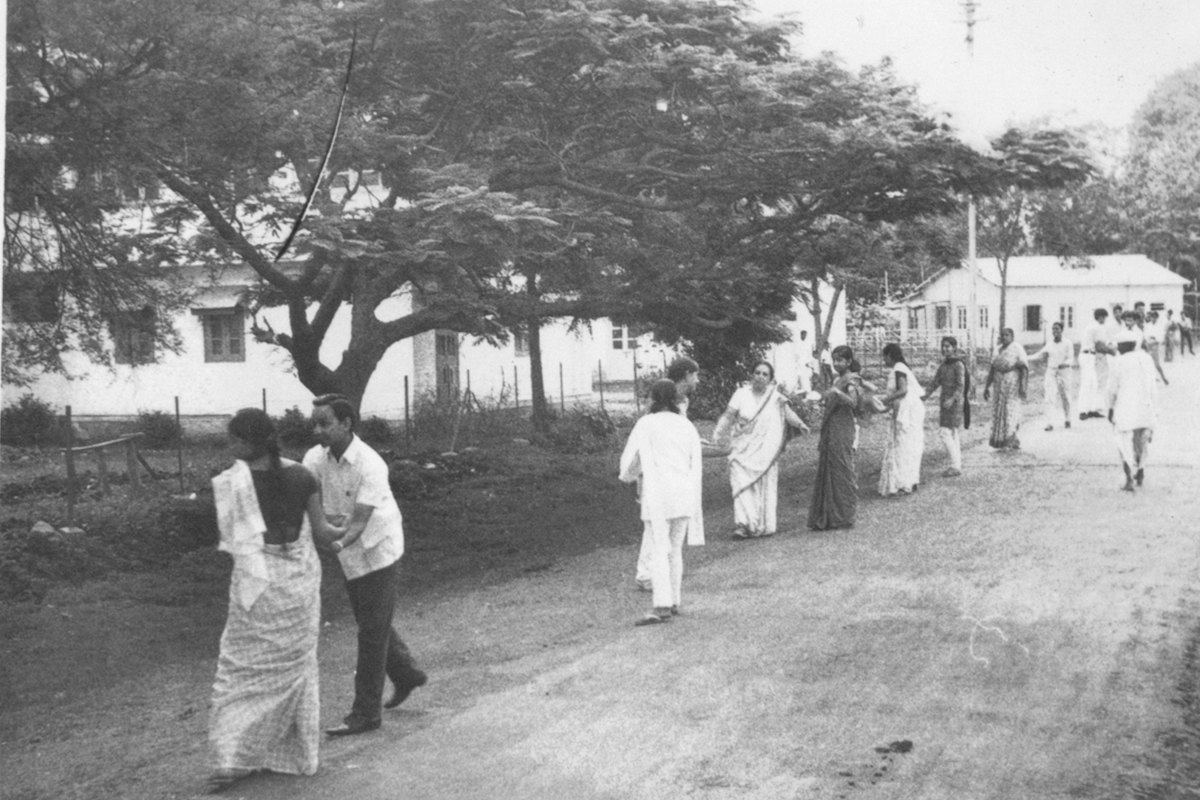
She has said, fifty years later, that the routines and the austerity were not burdens. They were foundations. They grounded her, humbled her, made her resilient in the particular way that genuine simplicity makes a person resilient — not by hardening them but by showing them, early and reliably, how little was actually necessary.
What the Wrong Number Gave Her
She practised medicine after her MBBS, carrying with her the clinical training and the Gandhian ethics that Sevagram had instilled with the particular thoroughness of an institution that understood formation rather than merely instruction. The details of those years — the specialty, the postings, the institutional affiliations — are hers to carry, and the archive holds them lightly.
What the archive holds more firmly is this: that she arrived at MGIMS on the strength of other people’s belief in her, and left having justified that belief in full. That she loved carefully and waited without complaint for the world to catch up. That she built a life with Shivaji Deshmukh — Bhau, as everyone called him — in which the values absorbed in Sevagram ran as a continuous thread through everything they did and were.
More than fifty years have passed since the iron bell rang beside the telephone near the prayer hall, and Babaji called her name across the courtyard, and she ran forward and picked up the receiver and heard a boy’s voice asking for someone else.
She has thought about that moment often. The wrong number that became a marriage. The call that was not meant for her and led her to everything that was.
It may have been the most useful mistake Sevagram ever produced.
Dr. Shalini Kohade Deshmukh completed her MBBS from MGIMS, Sevagram, with the inaugural batch of 1969. She married Dr. Shivaji Deshmukh — Roll No. 08, the benchmark profile of this archive — her classmate and lifelong companion. They are approaching their golden wedding anniversary. Her father, Venkatesh Raghav Kod, served in the Khadi and Village Industries Commission and participated in the 1942 Quit India Movement. She lives in Mumbai.
Dr Shivaji Deshmukh
The hour was late, the village asleep, and six hungry medical students were standing in the dark outside Babulal’s canteen, banging on a door that would not open. They had walked back from Wardha after a film, and the mess had long since shut. Sevagram in the early 1970s offered few consolations after nine o’clock. It was Dr. Indurkar who found them there — the Anatomy professor, out for a night walk, his eyes sharp in the dim corridor light.
He took in the scene: the sheepish faces, the empty stomachs, the hour. “Come,” he said, and turned back toward his house. Ten minutes later, they were sitting cross-legged on his floor while his wife, without a word of complaint, set a pan on the stove. The chapatis arrived hot, the bhaji steaming, and the six students ate with the particular gratitude of the young and famished. No one spoke much. There was nothing to say. The kindness was self-evident. Shivaji Deshmukh would remember that evening for fifty years. Not because it was unusual — it was not, at Sevagram — but because it was so completely usual. The boundary between teacher and student, between a professor’s home and a student’s hunger, was simply not there. That porousness, that human ease, was what Sevagram was.
A Suitcase of Transfers
He was born on 30 May 1949 in Pandharakwada, a village of dusty roads and unhurried mornings in Yavatmal district. His father had entered government service under the British as a Nayab Tehsildar and risen slowly through the ranks — collector of Amravati, Yavatmal, Nagpur, Akola, in turn. Childhood, for Shivaji, was a suitcase of transfers. Pusad for Class 4, Dharampur High School for three years, Manibai Gujarati High School in Amravati, then Yavatmal for Class 10 and 11. Each posting brought a new school, new classmates, new dialects. It was not a stable childhood, but it was a wide one.
By 1968, the family had moved to Akola, and Shivaji joined Government College for his Pre-University year. He was, by his own admission, a mediocre student. The cut-off for medical college that year was 62 percent. He had 50. The dream of medicine, which had settled quietly in him without his quite knowing when, seemed already foreclosed.
Then, in the summer of 1969, his father heard something. A new medical college was being established in Sevagram — Mahatma Gandhi Institute of Medical Sciences — under Dr. Sushila Nayar. It would be unlike any other. Selection, for the first batch, was by interview rather than rank alone. His mother did not hesitate. She thought of a man named Vasantrao Naik. Years earlier, when Naik — then a young law graduate, not yet in politics — had married a woman from a different community, he had been ostracized by his own. Shivaji’s parents had stood by the couple, offered their home, their loyalty, their quiet support. Naik had not forgotten. By 1969, he was Chief Minister of Maharashtra. Shivaji’s mother picked up the telephone. “Shivaji is appearing for an interview,” she said. “Don’t worry,” Naik replied. “I will call Dr. Sushila Nayar.” The Chief Minister’s office held a quota of five seats. Shivaji was among those five.
The Interview and the Bicycle
On 8 August 1969, he took a train to Sevagram with Gandhi’s life and teachings freshly read, braced for searching questions. The interview, when it came, was almost comically brief. What is your name? Where are you from? Why do you want to become a doctor? He answered honestly and politely, said yes to everything he was asked, and walked out into the afternoon sun. His father had raised him never to lie. He had brought that principle into the room and nothing else.
Outside the interview hall, he noticed a boy arriving on the rear seat of his father’s bicycle — collar buttoned to the top, a shy but self-possessed smile, the air of someone who had thought carefully about this day. His name was Shyam Babhulkar. They started talking. Within minutes, a friendship had begun that would last a lifetime. Most of those who entered Sevagram that August came from small towns, from families shaped by the freedom movement, from rural struggles they recognised in the dust of Gandhi’s village. The temporary hostel with its leaking roof and shared taps did not disturb them. They had not come expecting comfort. They had come, most of them only half-understanding it at the time, because somewhere in the idea of medicine practised in a village, in the spirit of Gandhian service, something in them had answered yes.
Khadi, Cricket, and Shared Conviction
Every Friday, the students walked to Gandhi Ashram for all-religion prayers. They spun the charkha. They swept the campus. Khadi was not optional. The shramdan — manual labour as daily discipline — was not imposed so much as absorbed, the way habits take hold when everyone around you shares them. Sevagram asked nothing of its students that it did not ask of itself. The teachers were a particular gift. Dr. Indurkar and Dr. Kane in Anatomy, Dr. K.N. Ingley in Physiology, Dr. Sharma and Dr. Khapre in Pharmacology, Dr. R.V. Agrawal in Pathology — many had been posted from GMC Nagpur and had faced derision for choosing a village college. They did not waver. They taught with a conviction that had something personal in it, as if proving something, and their students absorbed that energy without quite knowing they were doing so.
Principal I.D. Singh loved sport as much as he loved Physiology. During inter-college cricket matches, he stood at the boundary and called out advice — bowl the outswinger, trap him at first slip — and more often than not, it worked. He was telling his students something beyond cricket, though none of them could have said precisely what. Academically, Shivaji was still average. His Surgery practical, in the final year, loomed over him. Dr. Ravinder Narang was to examine him. Before the viva began, Narang walked over to the external examiner. “He’s our institute’s top sportsman,” he said. When Shivaji was called, the examiner held up a bone. Name it. He answered. Very good. You may go. That was the entirety of his Surgery practical. He understood that Sevagram’s idea of a doctor was larger than the sum of his examination scores.
The Stone Near the Hill
There was a large stone near the hill where the guest house now stands. In the evenings, the neem trees caught the last light, and the air carried the particular stillness of Vidarbha at dusk. It was here that Shivaji and Shalini Kohade began to meet. She had come from Raipur, the daughter of a small farmer and freedom fighter who had gone to jail during the Quit India Movement. Dr. Sushila Nayar had known her father, respected him, and Shalini had found her way to Sevagram partly through that connection. She and Shivaji were classmates, batch of 1969. Their friendship deepened slowly, in the way things deepened in Sevagram — without hurry, in the gaps between lectures and practicals, on walks to Wardha and evenings in the common room.
The stone near the hill became so well known among the junior batches that they joked about it: couples who sit there end up married. For Shivaji and Shalini, the joke was simply true. Nobody in Sevagram called him Shivaji. He was Bhau — the name that came from somewhere in those early days and never left. Even now, after five decades, it feels more like him than his given name. Some names are given at birth. Others are given by the places and people that make you who you are.
Instincts Carried Forward
After MBBS, he moved to Mumbai. New rules under Pratibha Patil, then Health Minister, reserved MD seats for doctors who had served in rural areas. He completed his MD in Medicine at KEM Hospital. Later, he joined IIT Powai — then a sleepy village, not yet the institution it would become — as its medical officer. Patients paid what they could: twenty rupees, sometimes nothing. He did not ask for more. The ethics absorbed in Sevagram — service before self, medicine as vocation — were not principles he had to remind himself of. They had become instinct.
In those early years, he sometimes thought of a classmate named Raju Choudhary, who had missed the 1969 batch by a single act of ordinary human weakness: he had spent the forty rupees meant for the MGIMS application form on a new pair of shoes, and had to wait a year. The story stayed with Shivaji not as a cautionary tale but as a reminder of how thin the line was between one life and another, how much of what we call destiny is simply timing, small decisions, and which way the wind blew on a particular afternoon.
More than fifty-five years have passed since Shivaji Deshmukh stepped off a train at Sevagram and walked into an interview room with nothing but his father’s honesty in his pocket. The batch of 1969 has scattered across continents, grown old in the work they chose, lost classmates and teachers to time. But the friendships formed in those years — forged in shared prayers and shared hunger, in the dust of the campus and the warmth of a professor’s kitchen — have not loosened.
When he thinks of Sevagram now, he does not reach first for the wards or the lecture halls or the examination results. He reaches for the stone near the hill. The neem trees in evening light. The sound of a principal’s voice on the boundary rope, calling out about an outswinger. Six students sitting cross-legged on a kitchen floor at ten o’clock at night, eating chapatis made by a woman who had not been asked and had not hesitated. Medicine, he learned in that village, is not only what you do in the clinic. It is how you live — how much you are willing to give, and to whom, and at what hour, and without being asked. Sevagram taught him that early. It never left him.
Dr. Shivaji Deshmukh completed his MD in Internal Medicine from KEM Hospital, Mumbai. He served for many years as a physician at IIT Powai, where he built a practice rooted in the values of accessibility and service he had first encountered at MGIMS. He lives in Mumbai. He is still called Bhau.
Dr Shyam Babhulkar
There is a particular irony in being born in the hospital where you will one day train as a doctor. Shyam Babhulkar entered the world on 17 August 1949 at Sevagram Hospital — the same compound, the same red earth, the same neem-shaded lanes he would walk two decades later in a white apron and a khadi kurta. Whether this amounted to destiny or mere coincidence, he could never quite decide. Perhaps in Sevagram, the two were not so different.
His father, Keshaorao Babhulkar, worked in the Gandhian institutions of Wardha — the Khadi Bhandar, the Swarajya Bhandar, the Oil Ghirani at Kakawadi. He did not preach values; he lived them, which is a different and harder thing. His mother, Pramilatai, taught in government schools scattered across the district, her sari always carrying the faint smell of chalk dust and warm afternoon air. And there was his uncle, Shankarrao Babhulkar — fiery, resolute, a man who had spent five years in jail during the freedom struggle.
As a child, Shyam had not fully understood what those years in jail had meant. He came to understand it slowly, as you understand most important things: not all at once, but by degrees. That was his world — frugal, principled, and rooted in the particular dignity of those who have chosen simplicity not because they cannot afford otherwise, but because they believe in it.
The Discipline of the Rifle
He studied at Buniyadi Vidyalaya, then New English High School, then Craddock High School in Wardha. Among his classmates were Abhay Bang and Ulhas Jajoo — names that would later carry weight in Indian public health. He was athletic from early on, and one of his accomplishments was unusual: he had topped an All-India rifle shooting competition and earned a university colour. Precision, stillness, the held breath before the trigger — these were disciplines that had nothing to do with violence and everything to do with concentration. He would discover, later, that they had a great deal to do with surgery as well.
At J.B. Science College in Wardha, he made an impulsive switch from Mathematics to Biology. It may have been fate, or it may simply have been the way things happen when you are nineteen and standing at a fork in the road without a map. He spent two years there — pre-university and B.Sc. Part I — and applied for GMC Nagpur. He missed the seat by a single mark.
One mark. Had it fallen the other way, he would have sat beside Abhay Bang and Ulhas Jajoo once more in Nagpur, and the story would have been a different one entirely. It was a sultry afternoon when he saw the advertisement in Tarun Bharat. A new medical college, it said, was beginning at Sevagram. Mahatma Gandhi Institute of Medical Sciences. He read it, set the paper down, picked it up again, then got on his bicycle and pedalled the dusty road to Sevagram to buy the prospectus. The application form cost forty rupees — money saved from small tutoring and errands.
The Interview and the Irony
The interview call came a few weeks later. That morning, he wore an ironed khadi kurta, still faintly scented with starch. He carried a folder of press clippings and certificates — rifle shooting, football, cricket, basketball — each neatly arranged. The panel that received him was formidable: Dr. Sushila Nayar, Dr. Jivraj Mehta, Dr. Narayandas Jajoo, Dr. Santoshrao Gode, Dr. Manimala Chaudhary. His palms, he admitted later, were sweating.
“Tell us about rifles,” someone said.
He blinked. Rifles. At a Gandhian institution committed to non-violence, the first question concerned a firearm. He took a breath and spoke — about precision, about breath control, about patience, about the inner stillness required to hit a target. He did not try to explain away the irony. He let it stand. He thought they saw both the irony and the discipline beneath it.
Mr. Gode and Mr. Jajoo knew his father, knew the family — the man who walked to the Khadi Bhandar each day in the same worn chappals, who never asked for more than his share. They may also have remembered his uncle: the man who had spent five years in a jail cell alongside history. What they saw in Shyam Babhulkar that morning was, perhaps, a continuation of something they already knew and trusted. He was admitted to the inaugural batch.
The Inaugural Days
The first day brought its own gift. Outside the interview hall, he saw another boy — arriving on the rear seat of his father’s bicycle, collar buttoned to the top, a shy but self-possessed smile. His name was Shivaji Deshmukh. They started talking, and within minutes a friendship began that would last, without interruption, for the rest of their lives.
There was no hostel ready that first year, no orientation camp, no elaborate ceremony. Students were told to bring their own plates, spoons, and bowls from home. Each meal was eaten cross-legged on the floor of the dining hall, thalis carried from room to dining table and back, washed under a shared tap. They slept on their own mats. They sang bhajans in the ashram at dawn. They performed shramdan — manual labour — every day.
There was no khadi shop in Sevagram, so students rode bicycles to Wardha to buy the mandatory khadi. Shyam’s father worked at the Wardha Khadi Bhandar, and soon every student in the batch knew him by name. “Uncle,” someone would murmur, short of funds, “we’ll pay next month.” And Keshaorao Babhulkar would nod, smile, and say: no hurry, beta. Trust was the currency then. Simplicity was not imposed at Sevagram so much as it was woven into the texture of daily life, until you could no longer feel the thread.
The Dust of Mundhari
He was an athlete in Sevagram as he had been before it. He threw the javelin and the discus, cleared the high bar, stretched for the long jump, and — in one of Sevagram’s more characteristically eccentric competitions — mastered the art of slow cycling. He won gold medals in each.
In his third year came the Mundhari camp — a medical outreach posted at a village twenty miles from Bhandara. Dr. Karunakar Trivedi, who headed Surgery, summoned four students one morning: “You boys will come with us. There is a camp. Be ready.” Shyam went with Vilas Kanikdale, Yadunath Telkikar, and Rajendra Deodhar. They piled into a jeep — with Dr. A.D. Ranade, Dr. K.K. Trivedi, Dr. S.P. Shirolkar, Dr. S.P. Nigam, and Chinamma the staff nurse, whom everyone called Mausi — and rattled down unmade roads in a cloud of dust.
When they arrived, the village square had been transformed into a makeshift hospital. Straw mats were laid, villagers waited in patient rows. The first operation began under a kerosene lamp. The four students stood wide-eyed, their rubber gloves too large for their hands, learning to be still when they wanted to tremble. When the day ended, Shyam understood something that no lecture hall had yet taught him: that medicine, taken out of the hospital and placed in a dusty village courtyard, changed in nature. It became more urgent, more intimate, and somehow more itself.
The Spotlight and the Magazine
Theatre came to him through Professor K.N. Ingle, the Physiology teacher, who believed that students who could not perform could not truly teach. Between 1971 and 1975, Shyam was a constant presence on the Sevagram stage. He played the lead in Doctor Salamat to Rogi Pachas, written by Prof. Madhukar Keche, which won first prize at an Inter-Rotary competition in Wardha. He was given the Best Actor award. Later came Awkashachi Pokali Ani Khamb by Vijay Tendulkar, and Teen Chauk Tera. Each play left its residue — the voices, the missed cues recovered, the applause from a hall that smelled of dust and kerosene.
He also edited the Marathi section of Sushruta, the college magazine. M.L. Panara edited the English section, M. Govinda Pillai the English columns, Shivani Bharagava the Hindi section. They got it printed at Babanrao Kahate’s press in Ramnagar, Wardha. It was a small thing, perhaps, but it was theirs — proof that the batch of 1969 had something to say and knew how to say it.
A Life of Precision
The final MBBS exams came and went. Balkrishna Maheshwari topped the university. Gopal Gadhesaria came second. Madhavan Pillai took a gold medal in Medicine. The skeptics in Nagpur who had dismissed the village college were, for a time, quiet.
After MBBS, Shyam Babhulkar pursued his MS in Surgery, then devoted the decades that followed to neurosurgery — a field that requires the same patience and precision he had first learned on a rifle range in Wardha. He built a career of sustained clinical achievement, earning recognition both within Maharashtra and in national surgical circles. He remained, throughout, the kind of doctor his parents had embodied without ever having held a stethoscope: someone for whom service was not a philosophy to be argued but a habit too deep to examine.
He eventually returned to Vidarbha, building a distinguished practice in Nagpur that spanned several decades. Throughout his career, he remained a pillar of the professional medical community, contributing extensively to postgraduate training and the leadership of various surgical bodies. Yet, for all his professional acclaim in the city, his “Sevagram cord” remained remarkably intact.
His connection to his alma mater is not merely one of memory, but of active, weekly service. As a member of the Kasturba Health Society and a visiting neurosurgeon to MGIMS, he travels back to the campus every Thursday. To the students and residents, he is a senior consultant; but to the red earth of the campus, he is simply a son of the soil coming home.
This legacy of service has now moved into the next generation. His daughter, Snehal, followed his footsteps to the same campus, joining the MGIMS class of 2003. When he thinks of Sevagram now, he thinks of more than just his own youth; he thinks of a shared family history rooted in the same wards and the same values.
He continues to live and practice in Nagpur, but a part of him—the part that understands medicine as a vocation of the heart—stays permanently in Sevagram.
When he thinks of Sevagram now, he thinks of his father standing behind a counter at the Khadi Bhandar, nodding at a student who could not yet pay. He thinks of Mausi in a village square at dusk, scolding four young men into competence. He thinks of a bicycle ride on a sultry afternoon, a newspaper advertisement, forty rupees carefully saved, and the strange logic by which a missed mark at GMC Nagpur became a life in Sevagram. He was born here. Perhaps, in some sense, he never left.
After completing his house posts in General Surgery under Dr. Rajkumar, Dr. K. Trivedi, Dr. Saboo, Dr. Belsare and Dr. Belokar, he trained in General Medicine under Prof. Nigam and Dr. O.P. Gupta.
In January 1976, he moved to Mumbai for advanced training in Neurosurgery at King Edward Memorial Hospital under Prof. Sunil Pandya, one of the legends of Indian neurosurgery. Whenever possible, he sought opportunities to work with Dr. Bhagwati, Dr. Vengsarkar and Dr. Ramani.
He credits these teachers, along with Dr. G.M. Taori, a pioneer neurophysician, and his elder brother Prof. Sudhir Babhulkar, for shaping his career. In 1981, he became the first neurosurgeon to begin independent practice in the region, at a time when neither CT scans nor MRI were available.
Based in Nagpur, Dr. Shyam Babhulkar continues to serve as a member of the Kasturba Health Society and visits MGIMS every Thursday to provide neurosurgical services. His daughter, Sneh, is also an alumna of MGIMS from the Batch of 2003. She went on to obtain an MD in Psychiatry from her alma mater.
Dr Varun Bhargava
There was no notice board. No reception desk. No office with a fee register waiting on the counter.
When Varun Bhargava and his brother arrived at Sevagram in August 1969, following a letter that invited him to join the first batch of a new medical college, they found a modest house on the main road and a local villager who pointed them toward it. Varun knocked. A tall, dignified man in dhoti-kurta opened the door, took in the two young men on his step, and said — with the composed unhurriedness of someone who has been expecting something like this — “I think you are looking for a medical college.”
He was Panditji, who would later become rector of the boys’ hostel. He explained that they did not yet have a fee register. Come back tomorrow.
The next day, Varun’s brother went to Bharat Medical Stores in Wardha, borrowed a register, and drew the first columns in it by hand. Varun Bhargava’s admission was recorded in that register — one of the first entries in an institution that was, in August 1969, still assembling itself around its own idea.
He would spend the next five decades assembling things from whatever materials were available, in circumstances that consistently failed to provide what the situation seemed to require. It became, without his quite planning it, the method of his life.
He was born on 14 September 1951 in Haridwar — the second of five brothers, son of Dr. Chandra Prakash, a physician trained at Indore Medical College who had practised in Lahore before Partition. Ten days before Independence, on 5 August 1947, the family crossed to Firozpur. His younger brother was born a day later, wrapped in a bori rather than a hospital blanket. His father had left everything behind in Lahore — money, property, the accumulated substance of a professional life — and arrived in India with nothing but the determination to begin again.
That quality — the willingness to begin again from nothing — was the inheritance Varun received, though he would not have named it as such when he was a boy learning to take his father’s pulse in Class 9. His father was often unwell. Varun became his first patient, in the particular way that children of ill parents become attuned to the body’s signals before they have any formal reason to be. His father died when Varun was seventeen, in May 1969, just as he was preparing for the medical entrance examinations.
He had studied in Hindi medium and passed the UP Board’s twelfth examination with first class — a rare result in Saharanpur district. He applied to GMC Nagpur. The application was rejected: a mismatch between the UP and Maharashtra board mark evaluations made him ineligible by the state’s reckoning. He wrote a letter to Prime Minister Indira Gandhi. An acknowledgement came. No remedy followed.
He enrolled in B.Sc. Part I at Dhanwate National College, Nagpur, was promptly promoted to Part II on the grounds that the UP Board’s twelfth standard was equivalent. Nagpur was steeped in English and Marathi; he knew only Hindi. He was navigating a new city, a new language, a new academic culture, in the year his father had died, with the particular loneliness of someone who has arrived somewhere without a map and cannot yet ask for directions in the local tongue.
Then his brother heard about a new medical college in Sevagram that welcomed students from outside Maharashtra.
Sevagram did not offer Varun Bhargava the social texture that it offered students who arrived with friendships already forming, with languages in common, with the communal ease of shared regional backgrounds. He was a loner, and he knew it. He did not sing, dance, act, or join festivals. He found his consolation in textbooks and in the particular self-sufficiency of someone who has learned early that need is not always met by asking.
From his first year, he wanted to be a surgeon. He rose at four in the morning to read Bailey and Love — the canonical surgical textbook — before the rest of the hostel was awake. He topped all three terminal examinations in surgery. Dr. Rajkumar, the Head of Surgery, was a stern man who had trained in the UK and held his department to exacting standards. He noticed.
One morning, he invited Varun for breakfast. It was not a summons Varun had been expecting, and he arrived with the nerves of a student uncertain whether he has done something right or wrong.
Dr. Rajkumar was gentle. He said: you are unwell often, and no one yet knows why. Go to Delhi for a full workup. Do not become a surgeon. The stress would be too much. Your heart may not take it.
A single breakfast conversation redirected a career. Varun turned to internal medicine.
What Dr. Rajkumar had observed from across the ward was a truth Varun had been managing quietly since childhood. He had lived with recurrent syncope — episodes of loss of consciousness that arrived without warning and departed without explanation. Palpitations accompanied him through his student years. In his second MBBS, he skipped an evening clinic because he was unwell. His Medicine teacher noticed his absence and remarked, in front of the class: “Should I have sent an ambulance?” After that, Varun stopped mentioning his symptoms to anyone. He managed them privately, as he managed most things.
He was hospitalised before the final examinations, short on attendance. Permission to sit the exam was obtained with difficulty. He took the surgery viva from a hospital bed. When the results came, he was told he had topped the university — and then told, a moment later, that he had been declared second. He accepted the correction without complaint.
During internship, he underwent cardiac catheterisation. The diagnosis came back: two abnormal heart valves. The heart that Dr. Rajkumar had worried about over breakfast was, it turned out, a heart that had been working harder than it should for as long as anyone could remember. It continued working. Varun Bhargava continued working. The valves, like the man, did not stop simply because the conditions were suboptimal.
He completed his MD in Medicine at PGIMER, Chandigarh, one of India’s premier postgraduate medical institutions. When the All India DM entrance examination was announced, his Head of Department advised him not to appear. The timing was not ideal, the preparation was limited, and the chances of success appeared uncertain.
He let the opportunity pass. Then, two days before the examination, a friend encouraged him to reconsider.
With little preparation and modest expectations, he decided to take the examination.
The result was a pleasant surprise. He performed exceptionally well and demonstrated the depth of knowledge and clinical understanding he had acquired during his years of training.
He performed exceptionally well in the examination. Yet life had other plans. Rather than pursue a super-specialty career, he continued in internal medicine, a path that would eventually prove deeply rewarding.
Looking back, the episode became less a story about an examination and more a reminder of a principle that would guide him repeatedly: opportunities may appear unexpectedly, but one must be willing to step forward when they do.
Money was tight in the years that followed with a constancy that would have defeated someone less accustomed to scarcity. Twice, at two o’clock in the afternoon, he had no hundred rupees in his pocket. He waited until five, when patients came and fees arrived, and then he ate. He recorded this not as complaint but as fact — the arithmetic of those years, precise and unsentimental.
In 1980, he came to Nagpur with seven hundred rupees and started practice. It grew quickly, which surprised no one who had watched him work. After four years, he left — tired of what he described as the grind, seeking something more purposeful — and went to work with Dr. Khalilullah at GB Pant Hospital in Delhi. He returned to Nagpur in 1988, worked at CIIMS for four years, then at Ekvira Hospital. In 1991, he opened Varun Hospital — a simple outpatient setup, his name on the door, the accumulated experience of twenty years of medicine behind the desk.
Then, in 2004, he had an idea that most sensible people would have called impractical.
He telephoned twenty-two friends — none of them doctors. He explained that he wanted to build a hospital. They became investors. He had identified a building near Panchsheel Square in Nagpur — the Radhika Hotel, a structure that had been intended for hospitality rather than medicine and that arrived with its own complications: labourers protesting unpaid wages were blocking the entrance on the day he took possession. He had paid fifty-four lakhs. It took fifteen months to gain access to the building he had already paid for.
He converted it. A 105-bed hospital emerged from what had been a hotel, staffed initially by Kamal Bhutada, Ram Ghodeswar, Rajesh Singhvi, Nita Kochar, and his wife, Alka. Ganga Care Hospital — named for the river at Haridwar, the city where he was born, the city that had given him his first understanding of what it meant to begin with nothing and build steadily toward something. The hospital eventually joined the large Care group based in Hyderabad.
He borrowed money from well-wishers to launch it, and was prepared to sell property to repay them. In the early months, before seeing a patient, he read the relevant textbook pages to ensure his prescriptions were current. People laughed. He had no regrets.
Late in his career, Varun Bhargava built something that had nothing directly to do with medicine and everything to do with what Sevagram had given him.
He called it PEACE — the Programme of Ethics and Continued Education. He and a group of friends, including Randhir Jhaveri, Mamta Joshi, Vipul Seta, and Lalita Agrawal, took ethics education into sixty schools in Nagpur. Debates, dramas, songs, posters — the tools of the classroom and the assembly hall, deployed in the service of the same values that L.R. Pandit had enforced at morning prayers in Sevagram half a century earlier. The idea was not that schools lacked ethics instruction. The idea was that ethical habits, like all habits, require practice — repeated, visible, embedded in daily life rather than delivered as a lecture and then set aside.
Dr. Sushila Nayar had understood this about medicine. Varun Bhargava understood it about education. The understanding came from the same place.
His wife Alka has said, with the affectionate precision of someone who has observed a person closely for decades, that his middle name should be Trouble. Varun Trouble Bhargava. He laughs when she says it. The laughter of a man who knows exactly what she means and does not entirely disagree.
He came to Sevagram in 1969 with a borrowed fee register and a first entry drawn in columns by his brother’s hand. He left, five years later, with a medical degree and the particular resilience of someone who has been formed by an institution that asked nothing of him that it did not ask of itself — that woke before dawn, swept its own courtyards, lived within its means, and kept going.
The Ganga runs through Haridwar as it always has. The hospital named for it stands near Panchsheel Square in Nagpur, built from a hotel by a man with seven hundred rupees and twenty-two friends and the unshakeable habit, formed over a lifetime of impossible arithmetic, of showing up anyway.
Dr. Varun Bhargava completed his MD in Medicine from PGIMER, Chandigarh. He founded Varun Hospital in Nagpur in 1991 and, in 2006, established Ganga Care Hospital — a 105-bed facility that later joined the Care group based in Hyderabad. He also founded PEACE (Programme of Ethics and Continued Education), bringing ethics education to sixty schools in Nagpur. He practised cardiology in Nagpur for several decades despite living with two abnormal heart valves diagnosed during his internship. He lives in Nagpur with his wife, Dr. Alka Bhargava, a practising gynaecologist.
Dr Vilas Kanikdaley
When Principal I.D. Singh’s voice floated across the Sevagram evening — gentle, unhurried, entirely accustomed to being obeyed — asking for Chhotu, there was only one place to point. The badminton court. And within minutes, Vilas Kanikdale would appear, racket still in hand, slightly breathless, heart doing something between anticipation and nerves. Singh-saab would already be on the court, smiling, bouncing lightly on his feet in the way of men who have never entirely stopped being athletes. The game would begin.
Vilas played well. He also, on certain evenings, played carefully — dropping a point here, letting a rally extend a beat longer than necessary, managing the score with the delicate diplomacy of a student who has understood that some victories are better left to the person holding the other racket. Not that Singh-saab needed the charity. He was an excellent player, fit and sharp-eyed, a man who brought to sport the same brisk precision he brought to Physiology. But Vilas was twenty, and Singh-saab was the Principal, and in Sevagram the line between teacher and student was not so much observed as it was negotiated, evening by evening, on a dusty court under an open sky.
The nickname had arrived naturally, as nicknames do — from his height, or the lack of it. Chhotu. It followed him through five years of MBBS, outlasted his internship, and has survived, with great affection and no embarrassment, for more than fifty years. He answers to it still.
A Legacy of Silent Resolve
He was born on 8 April 1952, into a family already shaped by medicine, though shaped by it the hard way.
His father, Dr. Prabhakar Dajiba Kanikdale, had earned his LMP — Licentiate in Medical Practice — from Robertson Medical School in 1937. He had barely finished his training when the world changed direction entirely. The Second World War broke out, and he was drafted into the British Army as a medical officer. For six years, he was gone. His wife and daughter remained in India, knowing almost nothing of where he was or whether he was alive. Letters were rare, telegrams rarer. The silence of those years was a particular kind of suffering — not the sharp grief of confirmed loss, but the grinding uncertainty of waiting without a horizon.
In 1947, the year India became itself, Dr. Prabhakar Kanikdale came home. He carried with him a soldier’s discipline, a doctor’s resolve, and the particular self-possession of a man who has been away long enough to understand what he values. He joined Mayur Hospital in Imal, later specialised in Radiology, and eventually worked at Indira Gandhi Medical College until his retirement in 1972. He did not talk much about the war. He did not need to. What those years had made of him was visible in everything — the straight back, the economy of movement, the habit of arriving before he was expected.
Vilas was the fourth of five children. Three brothers, two sisters. None of the others chose medicine. Perhaps the stethoscope was always going to find its way to him — the one who watched his father most closely, who absorbed without being told, who understood that what Dr. Prabhakar had brought back from six years of war was not just survival but vocation.
The Monsoon Interview
He schooled at Kurve Model School, then New English High School in Sitaburdi, then moved to Hislop College in Nagpur for Pre-University and first-year B.Sc. He applied to GMC Nagpur, as most serious science students in his circle did. He fell short by a few marks. A dental college seat was offered. Dentistry did not interest him. He stared at the letter for a while, weighing options that all felt slightly wrong.
Then a small advertisement caught his eye. A new medical college was starting at Sevagram, founded on Gandhian ideals. Sixty seats. Selection by interview. The college was named after Mahatma Gandhi.
Something stirred. He applied.
The day of the interview, the monsoon arrived without warning. By the time he reached Sevagram, he was soaked through — shirt plastered to his back, water running from his collar, shoes making small sounds with each step. He walked into the interview hall smelling of wet earth and damp cotton. The panel received him without comment.
The questions were straightforward: Where are you from? Would you wear khadi? Have you worked in villages? What would you do after MBBS? He answered without flourish. He had no ministerial letter in his pocket, no family connection to the ashram, no freedom-fighter grandfather to invoke. What he had was his father’s service record as a military doctor, a folder of sports certificates, and the unshowy sincerity of someone who has thought carefully about what he wants and decided this is it.
His father knew Dr. Kane and Dr. Keshav Narayan Ingle from Nagpur. That may have helped. A few days later, the letter came. He was in. He was going to Sevagram. He was going to be part of the first batch.
Thalis and Scorpions
There was no hostel ready when they arrived. Students were distributed across whatever the village could offer. Vilas shared a room with Vinod Ughade and Mangal Singh Rajput in temporary accommodation that was functional, unglamorous, and, within weeks, entirely comfortable. The campus had a strict code: khadi, prayers at dawn, manual labour, self-reliance. None of this troubled him. At home, he had grown up doing his share — washing vessels, sweeping floors, helping his mother without being asked. Sevagram’s expectations were not foreign. They were simply formalised.
Meals were communal and egalitarian. Students brought their own thali, katori, chammach. They sat cross-legged on the floor, ate simple food, washed their utensils under a shared tap. Someone in the batch had a theory that banging thalis together loudly on the walk back from the dining hall kept snakes away. They did it every night with considerable enthusiasm, until someone pointed out that snakes are deaf. The banging continued anyway. Old habits and good theatre are hard to give up.
One evening, a scorpion made the case for Sevagram’s hazards more forcefully than any orientation lecture could have. Vilas felt the sting on his hand — a sharp, precise pain that spread quickly up his arm and kept him awake through the night. His hand swelled. By morning, the worst had passed. He filed it under experience and moved on. Sevagram toughened you, as it intended to, though it did not always announce in advance which form the lesson would take.
The Stage and the Field
He found theatre the way many things found you at Sevagram — through a teacher who believed students should be more than the sum of their examination results.
Professor K.N. Ingle taught Physiology with the focused intensity of someone for whom the subject held deep personal importance. He invited Sudhakar Deshpande, a director from Nagpur, to work with the students. Dr. M.D. Khapre, who taught Pharmacology and shared a passion for music and drama, knew Deshpande personally. The result was Dr. Salama Raje—a Marathi drama rehearsed in the stolen moments between lectures and practicals, performed on a bare stage with borrowed costumes and lights. Vilas starred in it. To his own surprise, he discovered not just that he could stand before an audience, but that he felt genuinely at ease there.
More plays followed. Madavi. Others whose titles he reaches for now across fifty years of distance and finds still within reach. The bond those rehearsals built — boys and girls learning lines together, missing cues together, finding the rhythm of a scene after the tenth attempt — was a different kind of closeness than the one formed in lectures or dissection halls. It persisted. When the batch meets now, the first stories that surface are often from those rehearsals. The dialogue half-remembered. The laughter at what went wrong. The inexplicable pleasure of having made something together.
On the badminton court, they called him Chhotu. On the athletics track, he unleashed his spear in the javelin, spun the discus like a whirlwind, soared over the high-jump bar, devoured the long-jump sandpit, powered through slow-cycle races, and exploded off the blocks in the sprints. He captained the badminton team in his final year. Principal I.D. Singh patrolled the boundary of every sports field with the hawk-eyed focus he brought to the lecture hall—bellowing encouragement, dissecting a jumper’s knee bend mid-air, erasing any line between physical and intellectual rigor because, to him, none existed.
Lessons from Mundhari and Patna
In his third year, Dr. Karunakar Trivedi crooked a finger at four students. “Medical camp. Mundhari village. Twenty miles. Be ready.” No more words. None expected.
They piled into a jeep—Vilas, Raju Deodhar, Yadunath Telkikar, Rajendra Kumar, and the doctors—and jolted down rutted roads through the rising dust of a Vidarbha dawn. In the village square, straw mats lined up under a sagging shamiana. Villagers queued in ragged rows: milky cataracts clouding eyes, pus-weeping wounds, limbs ballooned with infection—the silent toll of miles from any hospital.
The first surgery flickered to life under a hissing kerosene lamp. Students fumbled in oversized rubber gloves, hands trembling as they swabbed skin, held retractors, passed scalpels—useful before they felt ready.
Mausi—Chinamma, the staff nurse—glided through the frenzy in her starched white sari, dust be damned. “Hold steady, beta—firmer!” she barked at one, then nodded to another: “Suture here.” She mothered and mentored in equal measure, forging young doctors in the fire.
That evening, rumbling back through the dark, Vilas gripped the jeep’s side. Medicine, yanked from sterile halls into a dusty courtyard, shed its skin and breathed true.
The Science of Seeing
Internship delivered the assignment that lodged deepest in him.
Five others—Raju Deodhar, Rajendra Kumar, Hardayal Singh, Avtar Singh, Arijit Singh—joined Vilas for thirty-five days in Patna, thrust into the WHO’s global smallpox crusade. Pockets of rural Bihar still harbored the pox, a specter villagers whispered of in huts, as if naming it might summon the fevered pustules.
Village by village, they pressed on. Vilas pinned squirming children to his lap, needle flashing: “Bas, beta—one prick, then sweet.” They mapped fever trails on crumpled charts, knocked on thatch doors to find pocked faces, crouched by charpoys soothing mothers’ sobs—”It won’t take your little one, aunty, we swear it”—before arms extended for the jab.
Dust-caked, bone-tired, they tallied the days. Smallpox vanished from Earth because of hands like theirs. Vilas doesn’t boast. He carries it silent.
After MBBS, he eyed Paediatrics. KEM Hospital offered a seat, but it paid nothing. Three years without income didn’t fit his family’s needs. He chose DMRD—Diploma in Medical Radiology and Diagnosis—in Nagpur, then MD in Radiology at BJ Medical College, transferring to GMC Nagpur. His father had specialized in Radiology when it was new in India. The son found it fit him: precise work, reading images, spotting what others missed.
In 1981, he started private practice in Nagpur with other radiologists. They built one of the city’s first full diagnostic centers. They added X-rays, ultrasound, CT, then MRI as technology came.
Then things changed.
Referrals turned into deals. Doctors asked for cuts or percentages. Radiology became more about money than medicine. Vilas remembered his father: X-raying patients in a village hospital, focused only on helping. Seeing medicine shift in a growing city disappointed him. He had expected it, but it still hurt.
Three Generations in Radiology
In 2010, a chance came from Dubai: a teaching hospital linked to a medical university. Vilas went there, took over as Head of Radiology, and stayed thirteen years. The place ran on discipline and fairness, qualities he had not seen much back home.
From 2005 to 2015, he went to Africa each year for two months, helping with scans in local hospitals. Those trips brought back the reason he chose medicine: to help people, not just make money.
In 2023, he came back to India and settled in Pune. His wife, Swapnali—a chartered accountant—runs their home with the steady hand his father once had. Their daughter, Devanti, became a radiologist, third in the family to do so. Their son, Devashish, picked IT and made his own way.
Looking Back at Sevagram
It has been over fifty-five years since Vilas joined Sevagram with the first batch. His teachers’ faces still come clear: Dr. K.N. Ingle with his sharp Physiology lessons, Dr. M.D. Khapre and his talk of drugs mixed with music, Dr. R.V. Agarwal, Dr. Sudershan Dhawan. They looked like any men in kurtas, but they burned with a quiet fire for their work.
Sevagram did more than give him a degree. It gave lifelong friends scattered across India, nights with scorpion bites and borrowed stage lights, the clang of thalis in the dark mess hall, and a Principal’s voice calling out, “Chotu!”
Some memories slip away. Sevagram’s never will.
Dr. Vilas Kanikdale completed his DMRD and MD in Radiology from GMC Nagpur. He established a comprehensive diagnostic practice in Nagpur before serving as Head of Radiology at a teaching hospital in Dubai for thirteen years. He contributed to radiology services in sub-Saharan Africa over a decade of annual visits. His daughter Devanti followed him into radiology — the third generation of the family in medicine. He lives in Pune.
Dr Vinay Barhale
The night was late, Sevagram was asleep, and six hungry medical students were standing in a dark lane outside Babulal’s canteen. They had walked back from a film in Wardha and the mess had long since shut. Vinay Barhale was among them — sheepish, famished, beginning to wonder whether the walk had been worth it.
Then Dr. Indurkar appeared.
The Anatomy professor was out for his night walk, and he took in the scene with the unhurried calm of a man who has seen hungry students before and considers it no great crisis. “Come,” he said simply, and turned back toward his house. Ten minutes later, they were sitting cross-legged on his kitchen floor, eating chapatis and bhaji that his wife had made without complaint or ceremony, feeding six students she had not known were coming.
Nobody said very much. There was not a great deal to say. The chapatis were hot and the kindness needed no explanation. Vinay would carry that evening with him for the rest of his life — not as an extraordinary event but precisely because it was not one. At Sevagram, a professor’s home and a student’s hunger occupied the same world. The boundary between them was not there. That was the thing about the place.
A Childhood of Questions
He was born on 27 October 1950 in Nanded, into a home where no one was a doctor but everyone — family, neighbours, the general current of expectation in that household — had decided, without quite consulting him, that he would become one. It was not an unusual arrangement in those years. The path to medicine was one of the few paths that combined social respect with the possibility of doing something genuinely useful, and parents in small towns understood this with a clarity that their children sometimes took longer to reach.
His own childhood was shaped by an absence. His father, Subhash Hanumantrao Barhale, suffered from seizures and psychosis — conditions that in those years were poorly understood and barely treatable. Psychopharmacology had not yet taken root in India; psychiatrists were rare and regarded with a mixture of suspicion and helplessness. What his father endured was real and visible, and what medicine could offer him was almost nothing.
Vinay was fifteen when his father died. The loss settled in him not as bitterness but as a question — a slow, unresolved inquiry into why the mind could break so completely and leave those around it so without recourse.
From Shopkeeper to Stethoscope
His uncle, Laxmikant Barhale, who owned a small shop, took over his upbringing with quiet steadiness. Alongside him was Dr. Bajaj, the family’s paediatrician — a man Vinay had known since childhood, whose bag he had carried on home visits as a boy. He could still picture Dr. Bajaj arriving at a door, the particular way he listened, the calm that he brought into rooms where people were afraid. Two men, one a shopkeeper and one a doctor, had between them given him the model of a life worth living.
He had tried for Aurangabad Medical College and missed. Fate, in this as in several other matters, had a different itinerary in mind. Then a neighbour mentioned an advertisement for a new medical college in Sevagram — a Gandhian institution, selection by interview, a place built on principles rather than rank alone. He applied, was called, and arrived for his interview not quite knowing what to expect.
The panel asked him about Gandhi’s thoughts. It was a reasonable question to ask at a college founded in Gandhi’s shadow, in Gandhi’s village, by people who had walked with Gandhi. Vinay answered as honestly as he could — which was, as it turned out, well enough. A few weeks later he was holding his letter of admission. Not to a conventional medical college, but to what felt, from the first days, more like a gurukul — a place of instruction in living as much as in medicine.
The Gurukul Experience
Principal I.D. Singh taught Physiology and broke down complex ideas into explanations of crystalline simplicity. Dr. Indurkar and Dr. Kane in Anatomy, Dr. R.V. Agrawal in Pathology — they were not merely teachers; they were guides, and on bad days, something closer to parents. The particular gift of Sevagram’s faculty was that they held both roles without confusion. A professor might scold you sharply for a poor performance, then sit with you the following day for an hour, quietly dismantling your fear and helping you rebuild your preparation. L.R. Pandit did this for Vinay once, and he did not forget it.
Sevagram was a small village, Wardha eight kilometres away and almost no transport between them. No cars. No motorcycles. One bicycle in the entire batch, owned by M.G. Pillai from Kerala, who guarded it with three chains and the vigilance of a man protecting something irreplaceable. One night, someone broke all three chains and dismantled the bicycle. Pillai did not speak for days. The thief was never identified. The bicycle was reassembled, eventually, but the three chains told a story about the ingenuity of boredom, which was one of Sevagram’s recurring minor themes.
Transistors and Tapping Feet
Wednesday nights at eight o’clock were sacred. All roads in the hostel led to Yogendra Pal’s transistor radio — a scuffed little box that ruled for exactly one hour. Ameen Sayani’s voice rose above the crickets, warm and unhurried, and the hostel breathed as one. Bindiya Chamkegi drifted over heads bent toward the speaker. Zindagi Ek Safar Hai Suhana set feet tapping on stone floors. Dum Maro Dum broke the night’s quiet with laughter. Books, exams, and the dusty walk back from Wardha vanished. For one hour, there was only the music, the night air, and that small radio holding seventy students in its orbit.
Hostel life was a patchwork of cultures — students from different states, languages, habits, and cooking traditions, assembled in a single building and expected to become something coherent together. Seven Gujarati classmates had arrived knowing no Hindi, let alone English, and faced their first year of textbooks in a language they could barely read. They studied with a ferocity that shamed the more comfortable students.
Balkrishna Maheshwari, one of the seven, faced an external examiner in Surgery who was openly skeptical — a student from a village college, a student who had struggled with the language of instruction — and proceeded to answer every question with such precision that the examiner left shaking his head in a different kind of disbelief.
The Road Less Chosen
Vinay was watching all of this, taking it in. And something else was growing in him, slowly, in the background of lectures and practicals and hostel evenings — something he had been circling since his father’s illness. He was thinking about psychiatry.
Everyone around him thought it was a mistake. Psychiatry was not a serious specialty; it was an afterthought, a field for those who could not manage something else. Some friends pleaded. Others mocked. His classmate Shyam Babhulkar — who had become one of his closest friends in those Sevagram years, who knew exactly how stubborn Vinay could be — hid his bag to stop him leaving for Bombay to begin the MD Psychiatry programme at KEM Hospital.
Vinay left anyway.
At KEM, under Dr. B.R. Doongaji, Dr. V.N. Bagdiya, and Dr. L.P. Shah, he discovered not only the science of psychiatry but its particular humanity — the way it required you to listen differently, to hold a person’s inner world with a care that other specialties could sometimes do without. Dr. Shah, who was almost completely blind from retinitis pigmentosa, was the most striking of his teachers. He lived and worked among the fully sighted without concession, carrying his visual disability with a composure that went beyond courage. Watching him work recalibrated what Vinay believed to be possible.
Returning to Aurangabad
The question his father’s suffering had lodged in him — why could the mind break so completely — had, by the end of his training, found at least a partial answer. He returned to Aurangabad, the city where he had once missed a seat at the medical college by a margin too thin to measure, and built his practice from nothing. Over the years, what began as a clinic became a hospital, recognised eventually as one of the finest psychiatric centres in Maharashtra. The state’s Best Psychiatrist Award followed — an acknowledgement that the road less chosen had led somewhere.
More than fifty-five years on, memories of Sevagram return without being summoned. The Shrikhand Puri that Akka Dhotre made during those first weeks when the hostels were not yet ready. Dr. Padma Agrawal making tea for a group of students who had turned up at her door for no particular reason and been welcomed with no particular fuss.
And always, the evening with Dr. Indurkar — six students on a kitchen floor, chapatis arriving hot, a woman who had not been asked setting a pan on the stove without breaking stride. Vinay Barhale had gone to Sevagram looking for a medical education and had found, among other things, a demonstration of what it meant to live generously. He spent the rest of his career trying to repeat it.
Dr. Vinay Barhale completed his MD in Psychiatry from GS Medical College and KEM Hospital, Mumbai. He returned to Aurangabad, where he established a psychiatric hospital that became one of the leading centres for mental health care in Maharashtra. He received the Maharashtra state award for Best Psychiatrist. He continues to practise in Aurangabad.
Dr Yadunath Telkikar
The plane was already on the tarmac when the jeep screeched in.
Dr. K.N. Ingle — Associate Professor of Physiology at the newly founded MGIMS, Sevagram — climbed out with an envelope in his hand and the particular urgency of a man who has calculated, correctly, that he has very little time. The list of students selected for the inaugural MBBS batch had been finalised, signed, and was being carried to Delhi for official approval. The man carrying it was about to board. Ingle reached him, handed over the envelope, and spoke quickly. There had been a change. One name needed to be added: Yadunath Telkikar.
The name was added. The plane departed. The list, amended at the last possible moment on a runway at Nagpur airport, travelled to Delhi and returned as official sanction.
Yadunath Telkikar — born in Nanded, son of a freedom fighter and parliamentarian, a young man who had wanted to be an engineer, had settled reluctantly for BAMS, and had never even sat before the MGIMS interview panel — became part of the founding batch of MGIMS Sevagram without facing a single question from the selection committee.
He would spend the next five years proving that the last-minute addition was the right one.
To understand how a young man from Nanded came to be on that plane’s passenger list without an interview, you have to understand his father first.
Shankarrao Telkikar was a lawyer by training and a freedom fighter by conviction, and the two vocations were not, for him, in any tension. In the years when Nanded was under the Nizam’s rule, he had refused to decorate his shop on the Nizam’s birthday — “Why celebrate the man who oppresses us?” — been reported, arrested, and sent to prison for three and a half years. He returned, resumed his work, joined the Arya Samaj, led the Shetkari Samaj, participated in the 1938 Congress Satyagraha, and earned another three-year prison sentence for sedition. In 1952, he was elected as the first Member of Parliament from Nanded.
Yadunath’s early childhood unfolded in Delhi, in the shadow of Parliament, while his father attended to the business of the new nation. They were five siblings — one brother would become a surgeon, another an engineer who eventually settled in America. The family carried, in its bones, the particular seriousness of people who have paid for their convictions and consider that a reasonable price.
He schooled at a Zilla Parishad school in Kandhar village, everything in Marathi, and then spent two years at Yogeshwari Mahavidyalaya in Ambajogai — not by choice, but because his elder brother was posted there as a medical officer. He loved science but hated biology. The smell of dissected frogs was, he said, unbearable. He dreamt of engineering. His brother sat with him one evening and made the pragmatic argument of the era: engineers were struggling, many taking jobs as clerks, medicine was the better path. Younger brothers in that household did not argue with elder brothers who were already doctors. He swapped Mathematics for Biology and pointed himself toward medicine.
He missed Government Medical College, Aurangabad, by two marks. He enrolled in the BAMS course in Nanded — reluctantly, as a holding position rather than a destination.
Then a friend of his brother’s, studying veterinary medicine in Nagpur, mentioned a rumour: Dr. Sushila Nayar was opening a new medical college in Sevagram. He did not know the deadline. He did not know the details. “Apply,” he said.
Nagpur newspapers did not reach Nanded in those days. There was no telephone to make enquiries and no internet to search. Yadunath packed his certificates, took a bus to Wardha, and booked a bed at Annapurna Hotel for two rupees. Sevagram was eight kilometres away. He tried to rent a bicycle; the shopkeeper refused — he did not know the boy. The hotel owner intervened, vouching for him, and Yadunath pedalled to Sevagram under the Vidarbha sun, filled out the form, paid the fees, and returned.
No interview letter came. His uncle insisted they enquire in person. His father went to Sevagram and found Dr. Nayar, who recognised Shankarrao Telkikar immediately — the MP from Nanded, the man who had gone to prison twice for the country. She listened to the situation with sympathy. The interviews were over, she said gently. The list had been signed and sent to Delhi. Wait for next year.
And then Dr. Ingle ran across the tarmac at Nagpur airport.
A few days later, a telegram arrived: Join by August 1.
The first hostel was a Khadi Gramodyog training centre, pressed into service for the incoming batch. By evening, the mosquitoes established their own position on the matter. Malaria was common in Sevagram, and every bed had its own mosquito net — a macchardani — and every student quickly learned the ritual of its assembly. Two long bamboo poles wedged at opposite ends of the bed, crossed overhead, the net draped and then tucked under the mattress with care on all sides, every corner secured, because a single loose edge meant a night of scratching and the particular misery of waking to discover that the enemy had found the gap you missed. Inside the net, the air was still and warm and smelled faintly of cotton. Outside, you could hear the slap of someone’s palm against their own arm, the rustle of another net being tucked in, the sound of fifty students improvising sleep.
Meals were simple and egalitarian. Each student brought their own plate, spoon, and katori. They sat cross-legged on the floor, ate, washed their utensils at the shared tap, and stacked them away. Mornings began with all-faith prayer, followed by shramdan — sweeping verandas, cleaning bathrooms, clearing the campus of whatever the night had deposited. They visited Gandhi Ashram. They joined village cleanliness drives. They learned to live with little, which, for most of them, was not a great departure from what they had known at home.
Yadunath shared a room with Vijay Mutha and Vinay Barhale, and later with Sharad Gadre. By second MBBS, the luxury of a single room arrived — an unimaginable privilege when set against the dormitory conditions of that first year, and one he received with the gratitude of someone who has not taken private space for granted.
There was euphoria in that first year — the particular, slightly giddy relief of someone who had nearly not arrived at all and now finds themselves precisely where they want to be. It was, he later reflected, perhaps too much euphoria. The early months were not spent with the focused application that the opportunity warranted. Some in the batch believed it would not matter greatly if the course took a year or two longer than scheduled. The first MBBS results, when they appeared in the newspaper, confirmed that this calculation had been wrong: nearly a third of the batch had failed. Yadunath was among those who passed the first time, which he recorded without pride and with the quiet acknowledgement that he had come closer to the other result than he might have preferred.
He captained the table tennis team. He acted in hostel dramas. These were not decorative activities at Sevagram — they were the social fabric of a campus that had almost no other diversions, and the bonds they produced were the lasting ones.
But if any single memory from those years shines brightest — and he said this without hesitation, fifty years later — it is the drama stage.
In his first year, a modest one-act play brought together Shyam Babhulkar, Vilas Kanikdale, Jayashree Deshmukh, and Yadunath himself. The applause was still in their ears when, the following year, Dr. M.D. Khapre — Pharmacology teacher and in charge of cultural activities — announced something more ambitious: a full three-act Marathi drama. His relative, Mr. Deshpande, was a director of reputation in Nagpur. Thanks to Khapre’s persuasion, he agreed to direct without charging a fee.
Every Saturday evening, Deshpande would travel from Nagpur and be at the hall by six o’clock. Yadunath, as drama secretary, was responsible for mustering the cast — knocking on hostel doors, calling across corridors, collecting boys and girls from their rooms and getting them into the rehearsal hall before Deshpande arrived and found an empty stage. Rehearsals ran from six in the evening until eleven at night, five hours of lines and gestures and pauses repeated until they became second nature. The tube lights cast a pale yellow glow. Outside, the air cooled as the night deepened. Inside, they sweated through their costumes, lost in the world of the play.
Hunger struck reliably at around nine o’clock.
It was at this point that Babulal’s generosity became, year after year, the unannounced subsidy of the entire cultural programme.
Babulal ran the campus canteen — the bamboo hut, the tailor sharing the space, the limited menu, the air of a place that has become essential without quite intending to. He was, to the students, something more than a canteen owner: a friend, a lender, a source of sustenance in both the literal and the figurative sense. When hunger struck at nine, Yadunath would slip away from the rehearsal, walk to the darkened canteen, and find the keys where Babulal had left them — because Babulal left them, always, with the instruction that was also a statement of trust: “Jo chahiye, le lo.” Take what you need.
Jars of biscuits, packets of farsan, pots of tea assembled from the shelf. The cast ate between cues, crumbs on their costumes, cups balanced on the edge of the stage. Babulal never kept a ledger. He never asked how much had been taken or when the money was coming. He never, in any of the years that the students used his canteen as their rehearsal-night commissariat, made the transaction feel like a transaction.
Years later, after his MBBS, Yadunath was working in Mumbai. He made a special trip to Sevagram. He had borrowed five hundred rupees from Babulal at some point in his student years — the exact occasion had blurred, but the debt had not — and he came to repay it.
Babulal looked at him with the expression of a man confronted with a memory he has genuinely lost. “Arey, tujhe bhi yaad hai?” he said, laughing. You actually remembered?
He had no recollection of it. The money had never been the point.
Many in the batch had their own quiet debts to him, each repaid in time, each met with the same laughter and the same bafflement that anyone had kept track. The greater debt — the one that no one could repay — was for the trust, the keys left available, and the freedom given to students who needed to be treated, occasionally, as people whose word was sufficient.
After internship, Yadunath left for Bombay. House jobs in medicine and paediatrics. By 1976, he had his DCH. His father had retired and money was tight. He returned to Nanded, set up an OPD, then a ten-bed paediatric nursing home, and eventually expanded to a PICU and NICU with colleagues. It went well. At sixty-five, with his children settled in Pune, he sold the practice and moved.
In Pune, restlessness arrived before he expected it. He went to the Dean of KEM Hospital.
“Full-time paediatrics will be too taxing at your age,” the Dean said, with the candour of someone who has assessed the situation and decided that honesty is kinder than encouragement. “How about Blood Bank Officer?”
Yadunath took the role. It was not what he had planned for his sixties. It was also not nothing. He brought to it the same quality of attention he had brought to everything else — the attention of a man who has known, since a jeep screeched onto a Nagpur tarmac in 1969, that his presence anywhere is the result of a fortunate accident, and that the correct response to a fortunate accident is gratitude expressed through effort.
When he thinks of Sevagram now, he thinks of a mosquito net tucked with care in a converted training centre, the bamboo poles wedged and the cotton draped just so, because one loose corner would cost you the night. He thinks of Deshpande arriving from Nagpur each Saturday, the tube lights yellowing through the rehearsal hours, the smell of biscuits and farsan eaten between scenes on a bare stage. He thinks of Babulal’s keys, and the instruction that was also a philosophy: take what you need.
He thinks, above all, of what it meant to be the name added at the last moment — to have arrived by a margin so thin that a jeep arriving five minutes later would have changed everything. He did not take that knowledge lightly. He carried it into every ward round and every consultation room and every late-night OPD in Nanded, and it reminded him, without requiring words, that the practice of medicine is a privilege earned by accident as much as by merit, and that the correct response to privilege is to stay useful for as long as the work allows.
The list, amended on a runway at Nagpur airport in the summer of 1969, had been right.
Dr. Yadunath Telkikar completed his DCH and built a paediatric practice in Nanded over several decades, eventually establishing a nursing home with PICU and NICU facilities. After relocating to Pune in his later years, he served as Blood Bank Officer at KEM Hospital. His father, Shankarrao Telkikar, was the first Member of Parliament from Nanded and a veteran of the freedom struggle. Dr. Telkikar lives in Pune.
Dr. Subhash Shrivastava
The quarrel had started over a brick.
One afternoon in Sevagram, as the sun beat down on the half-built walls of the college, two students were locked in a heated argument. Gopal Kesariya spoke only Gujarati. Rajendra Wagh spoke only Marathi. Neither had a word of the other’s language, but both had opinions and were not shy about them. The subject — the quality of the bricks being used in the construction — was, in itself, not particularly important. The argument, however, had grown magnificent.
Finally, exasperated, Kesariya bent down, picked up a red brick, and shouted: “Aa che!” At exactly the same moment, Wagh picked up another and replied: “Ho aahe!” They glared at each other. A beat. Then the crowd of students watching burst into laughter. The two bricks, raised like trophies of conviction in languages that had no overlap, had somehow said the same thing. The argument dissolved.
That was Sevagram in 1969 — classrooms under construction, hostels still makeshift, and yet the spirit of the place already forming in the gaps between disagreements.
A Nagpur Boyhood
Subhash Srivastava was born on 7 January 1949 in Nagpur. His father, Maheshwar Prasad, was a civil engineer of unusual integrity who had built the Nagpur airport and several government museums, and who had trained at Roorkee. He shunned private contracts, stuck to government work despite the financial cost, and eventually started his own business. He had been a fine hockey goalkeeper in his youth, and he passed his love of sport on to his son, if not his engineering sensibility.
Subhash did his schooling at Bishop Cotton School through the eighth grade, then at St. Francis de Sales College for ninth to eleventh, and went on to SFS for his B.Sc. He missed GMC Nagpur by two marks. He tried Banaras Hindu University. He missed there by one. Fate, he would say later, seemed to enjoy the precision of its cruelty.
Then came the news about Sevagram — a new medical college, on Gandhi’s own soil. He applied, appeared for an interview that has since entirely faded from memory, and found himself among the founding sixty of the 1969 batch.
Pioneers in Dust and Cement
His first hostel was a small hut opposite Mahadev Bhavan, shared with Anil Kaushik. Later he moved into a three-bedroom house with mud floors and wobbly ceiling fans, sharing it with Subhash Patil and Rajendra Wagh — the same Wagh of the brick incident. The lamps they studied by smoked the ceilings black. The fans, when they worked, pushed the heat around without diminishing it.
But there was a quality to those years that no comfort could have replaced. The first batch was literally building the college alongside their education. The anatomy lab needed cleaning — they cleaned it. The physiology lab needed arrangement — they arranged it. The dissection hall needed design — they sketched it. By evening, shirts smelled of formalin and cement dust in equal measure.
The teachers were posted from GMC Nagpur and had come despite the mockery of colleagues who thought a village college was beneath them. They taught with the energy of people proving something. Dr. B.S. Chaubey once held up a theory paper written by G. Pillai in a medicine lecture and took it to GMC Nagpur to show his own postgraduate students how an answer should be written. The pride in Sevagram that day was palpable.
The Cricket Captain
If medicine occupied the mornings, cricket claimed the evenings. Subhash was captain of the college cricket team in the very first year — an opening fast bowler who also batted at number three. His opening partner in pace was Shivaji Deshmukh, known to the whole batch as Bhau, who bowled fierce yorkers from the other end. With Vinod Ude, Vilas Kanikdale, and Raju Deodhar in the eleven, they fielded a team of genuine spirit, if not always of sufficient skill.
Some of the team members were chosen less for ability than for filling the numbers — Kaushik and Patel struggled with bat and pads alike — but no one said so, and their enthusiasm was real. The team was eliminated in early rounds more often than not, but their principal, I.D. Singh, who loved cricket as much as he loved Physiology, stood at the boundary at every match offering tactical advice. Bowl the outswinger. Trap him at first slip. More often than not, it worked.
His father, visiting the campus, was moved enough to donate a cricket kit to the college, along with ₹2,000 — a generous sum in those years. It was the kind of gesture that said something about what the place had already become: not just a college but a cause worth contributing to.
He also captained the badminton team, playing doubles with Vinod Ude and Vilas Kanikdale in the long Sevagram evenings. The clatter of shuttlecocks in the dust is among the sounds he reaches for first when Sevagram comes back to him.
Dr. Indurkar and the Stage
He had not thought of himself as an actor. Dr. Indurkar, the anatomy professor, thought otherwise. Indurkar had a gift for seeing things in students that they had not yet seen in themselves, and one afternoon he simply told Subhash that he would be appearing in a Hindi drama — Loki Kiki — at the annual function.
He appeared. The audience laughed at his dialogue. He was genuinely surprised — he had been certain his delivery was poor. But the laughter was warm, and the experience of standing on a stage and finding that a crowd of people was with you rather than against you was not something he forgot.
The drama circle in Sevagram was a world of its own, with its own loyalties and its own stars. Manohar Chaudhary, his batchmate with the Lambretta scooter, was its constant lead. But Subhash had his evenings of it too, and they gave him a confidence in the open that the dissection hall, however formative, never quite could.
Ratnamala
It was in his second year that he first saw Ratnamala Golhar, a soft-spoken girl from Deoli near Wardha. He would say, without any apparent embarrassment, that it was love at first sight. The Sevagram air — carrying the fragrance of neem and the weight of Gandhi’s memories — also carried, for him, something more personal: a quiet certainty that this was the person he would marry.
His proposal, made in that same air, was accepted. Three years later, in November 1974, they married at the Vidarbha Cricket Association ground in Sadar, Nagpur, with classmates from the 1969 and 1971 batches gathered in festive clothes. The reception had the easy warmth of a party thrown by people who had already lived through something important together.
Ratnamala’s family had initially resisted the match — she from a Marathi family, he from a Hindi-speaking one, different castes and different cultural worlds. It was one of the quiet inter-community marriages that Sevagram, perhaps without intending to, produced with some regularity, in a place where people were too busy becoming doctors to maintain the comfortable distances of ordinary life.
Anaesthesia and After
MGIMS did not offer postgraduate courses in those years, and like most of his batchmates Subhash went outward for further training. He pursued a Diploma in Anaesthesiology in Nagpur, then lectured for five years before returning to Sevagram for his MD under Dr. Shetty, a demanding and inspiring head of anaesthesiology. His thesis examined how hyperbaric bupivacaine in spinal analgesia affected post-spinal headache.
By 1983, he left Sevagram and set up as a freelance anaesthesiologist in Nagpur, serving several private nursing homes. Freelancing gave him independence — the ability to work across institutions, to set his own terms, to carry the Sevagram discipline of simplicity and sincerity into environments that did not always share those values.
His two children, Sangeet and Amit, were born in Sevagram and Nagpur. Both became engineers, both settled in the United States. They would say, with a directness he respected, that watching their parents rush to emergencies at midnight and work through weekends had persuaded them that medicine was a beautiful vocation and one they preferred to admire from a distance.
What the Village Built
More than fifty-five years have passed since the hut days. The batch has scattered — to Nagpur and Mumbai, to Delhi and beyond, to continents they had not heard of when they sat in the shade of Babulal’s canteen arguing about cricket and bricks and whether Sevagram would ever become a real medical college.
It became one. More than one — it became a template, a standard, a particular proof that medicine practised in a village and rooted in values could produce doctors of the highest calibre. The skeptics from GMC Nagpur were silenced, one by one, by the results.
Subhash Srivastava was not Sevagram’s most academic student. He was its captain, its badminton player, its reluctant actor, its fast bowler. He was the boy who donated his father’s cricket kit and fell in love in a village where love had nowhere to hide. He was part of a family — not a metaphorical one, but a real one, forged in the real conditions of shared austerity and shared aspiration — that time has not managed to dissolve.
The brick quarrel was never really about bricks. It was about the fact that sixty people from different corners of India, with no common language between some of them, had somehow ended up in the same dusty field trying to build something together. That they managed it at all was Sevagram’s particular achievement.
Dr. Subhash Srivastava completed his MD in Anaesthesiology from MGIMS Sevagram under the supervision of Dr. Shetty. He practised subsequently as a freelance anaesthesiologist in Nagpur, working across several private nursing homes. He lives in Nagpur.
Dr Pramod Gupta
A Village Boy in a Roomful of City Students
The first memory that rises, like the scent of wet earth after rain, is not of his childhood in Chirgaon but of Sevagram in 1970.
He sees himself standing awkwardly at Annapoorna Hostel — a village boy in a roomful of confident city students. Subhash Jain’s family had garlanded him at the railway platform before he boarded the train. Pramod had arrived alone, clutching a small suitcase, his heart heavy with both fear and excitement. The Jhansi boys, smart and self-assured, clustered together. He was the odd one out — the lad from Chirgaon.
But he carried something they did not: an unspoken bond with Dr. Sushila Nayar, whom the world called Badi Behenji but whom his family called Buaji. She had contested Lok Sabha elections from Jhansi and visited them often. Two years earlier, she had told his father she was starting a medical college in Sevagram, Maharashtra, based on Gandhian principles. They had nodded politely, assuming it was one of those grand ideas that vanish in the air between cup and lip.
By 1970, the college was real. And Pramod Gupta was in it — through two lies and one stubborn heart.
From Chirgaon to Gwalior to the Grain Business
He was born on 4 January 1950 in Chirgaon, a town in Bundelkhand, Uttar Pradesh. The town had its own quiet distinction: it was home to Maithili Sharan Gupt, the poet they called Dadda, whose wife was his father’s aunt. Poetry, in that household, was a family matter.
His childhood schooling was a patchwork — a government primary school with classes spilling under a neem tree, a headmaster who renamed him Pramod on the spot because Ghanshyamdas sounded like an old man’s name, and who fixed his birthday to a round January date because the Hindu calendar meant little to the school register. In one morning, identity was rewritten: new name, new birthday.
For college, he went to Government Science College in Gwalior, a city famous for its temples and its Chambal dacoits in roughly equal measure. After his B.Sc., he returned home and joined his father and brothers in the grain business — selling wheat and pulses wholesale, spending evenings counting cash until his fingers ached, attending evening law classes under Agra University. Two years into his LLB, life seemed set.
Then the debate at home became fierce. His brothers were already doctors — one in Meerut, another in Gwalior. They saw no need for a third. His family asked: why throw away law after coming this far? But his heart tilted toward medicine. Law and business filled his pockets; they did not fill his soul.
He resisted all persuasion. He would sit for the exam.
The Interview and the Two Lies
The entrance test was held at AIIMS Delhi. He cleared it and was called to Sevagram for interview.
He travelled with four others from Jhansi — Subhash Jain, the late Rajendra Jasoria, Rakesh Agrawal, and Suresh Jain. They were city boys, sons of well-connected families. On the day of departure, Subhash’s family came in full force: cousins, uncles, aunts, garlands, sweet boxes. Pramod had a small steel trunk and a tiffin from his mother. Someone in the crowd whispered: Yeh gaon ka ladka kaise chalega? He heard it. He smiled.
At the interview, the panel had Dr. Sushila Nayar, Dr. L.P. Agrawal, and government officials. She asked why he had left law for medicine.
He lied without shame. “To serve the poor.”
She pressed: “What social work have you done?”
Another lie. “We built a temple in our village and opened it to Harijans.”
She seemed satisfied.
Thus, through two lies and one stubborn heart, Pramod Gupta entered MGIMS. He has never hidden this — he states it plainly, with the equanimity of a man who understands that the lies were, in their way, sincere. He did want to serve. He did believe in the ideal. The lies were not inventions so much as accelerations — the truth of what he intended, stated before he had done it.
The Ghazal at Pavnar
Six of them formed a group in those first months — not by choice but by hunger and circumstance: four from Jhansi, Dr. Puri from Jalandhar, and Pramod from Chirgaon. They had an unspoken rule at Babulal’s canteen: the bill would be split six ways, whether you ate or not.
The ragging by the 1969 batch was a rite of passage — they made the newcomers write their practical notebooks, asked them to sing, dance, mimic. The newcomers resented it briefly and soon discovered that what was happening, beneath the surface of the mischief, was brotherhood. Within months, the two batches were bound like Ram and Lakshman.
It was in Pavnar, during their first social service camp, that something else happened — something softer and more lasting than any formal instruction. They dug soak pits, none of them having wielded a spade before. Girls balanced baskets of mud on their heads, laughing at the boys’ clumsy efforts. And in the evenings, Praveen Gill sang.
Her voice rose into the warm Pavnar air — Shiv Kumar Batalvi’s haunting ghazal, in Punjabi, about beauty and longing and the slow passage of time.
मैनु तेरा शबाब लै बैठा,
रंग गोरा गुलाब लै बैठा।
किन्नी पीती ते किन्नी बाकी है,
मैनु ऐहो हिसाब लै बैठा।
Your youthful beauty has been my undoing,
Your fair, rose-like complexion has been my undoing.
How much have I drank, and how much is left?
This very calculation has been my undoing.
Decades later, even as she married into the civil service and lived a life far away, that ghazal remained lodged in Pramod’s memory, sharper than any anatomy lecture. Pavnar had seemed not a dusty village but a stage touched by poetry. These things — the mud, the song, the evening light — were what Sevagram was actually teaching, beneath the lectures and the examinations.
A Career of Unlikely Elevation
He completed his MBBS under a contract binding him to rural service. He was posted to Pithoragarh in the Himalayas, twenty kilometres from town. The compounder welcomed him warmly: Doctor sahib, do not worry, we have four doctors here, you need only come once a week. He did not visit even that once, yet drew his salary for three years. Bureaucracy, like God, worked in mysterious ways.
After Sevagram, he went to BJ Medical College, Pune, for his MD in Medicine. They were outsiders — the Sevagram boys. No one said it aloud, but it was understood. Dr. G.S. Sainani was his professor — respected, feared, clinical, prone to correcting mid-sentence: This is not Sevagram. Read more. He studied harder, slept less, rewrote every lecture, and passed. Not because he was brilliant, but because he endured.
Then Delhi called. The Modi group of industries sought doctors for their new pharmaceutical venture. He became medical director, introducing three molecules — radiopaque dyes, dazazole, and aminocor. His first patient was Sheikh Abdullah, the Lion of Kashmir, suffering intractable heart failure. Pramod stood by his bedside — awed and nervous — and did what Sevagram had prepared him to do: he was present, attentive, and useful.
He went on to work in Saudi Arabia for fourteen years as a medical consultant in Tabuk — the first non-Muslim in such a role. He returned to India, settled in Noida, and continued with Modi Pharma. Their product Betadine reached every hospital shelf in the country. Before Covid, he travelled twenty days a month, conducting CMEs in Bangladesh, lecturing in Kenya and Tanzania.
At seventy-six, he keeps a quieter routine: two hours of chamber practice, no emergencies, and the peace of knowing he has walked a long road.
The Thread from Chirgaon to Sevagram
Looking back, he sees a thread running from the neem tree in Chirgaon, where he sat cross-legged as a boy listening to Dadda’s verses carried on the air, to the neem-shaded hostels of Sevagram. He sees jalebis sweetening his primary school admission, lies smoothing his medical college interview, ragging forging his friendships, a ghazal haunting his evenings in Pavnar. He sees the hesitant boy who counted grain coins become the man who stood at Sheikh Abdullah’s bedside. And through it all, he sees Dr. Sushila Nayar’s vision — the audacity of planting a medical college in a village — that changed not just one Chirgaon boy’s life but the lives of generations.
If there is nostalgia, it is not only for youth or friendship, but for the faith placed in small beginnings. In Sevagram, under the humblest roofs, they built not only a college but also themselves. Half a century later, those bonds remain the truest wealth.
Dr. Pramod Gupta completed his MD in Medicine from BJ Medical College, Pune. He served as Medical Director with the Modi group of industries, introducing pharmaceutical molecules to the Indian market. He worked for fourteen years as a medical consultant in Tabuk, Saudi Arabia, as the first non-Muslim in such a role. He oversaw international divisions of Modi Pharma across twenty-seven countries. He lives in Noida.
Dr Santosh Kumar Gupta
The interview room hummed with authority.
At the centre sat Dr. Sushila Nayar — physician, public health champion, and the heartbeat of MGIMS. Beside her sat Maharashtra’s Public Health Minister, Mrs. Pratibha Patil, long before the nation would know her as its first woman President.
Dr. Nayar asked the first question. Did he do social service? Yes — every fortnight his father took them to a nearby village. They volunteered and helped however they could. She nodded, her gaze steady.
Then Mrs. Patil leaned forward. Was he interested in sports?
Yes. He played cricket.
She narrowed her eyes with curiosity. “How many runs did Gundappa Viswanath score in his debut Test?”
Santosh Gupta did not hesitate. “Zero and 137, Madam. Kanpur Test against Australia. Last year.”
A smile flickered across her face. She did not check the newspaper. She did not need to.
“You may go,” she said.
He walked out, his heartbeat louder than his footsteps.
Days later, the letter arrived: he had been selected. Three marks had once kept him out of a medical college. In Sevagram, they found him through a batsman’s silken wrists and a cricket score recalled without flinching. Strange as it sounds, a boy from Gondia found his way into MGIMS because of a moment of elegance at the Kanpur Test.
That, too, is the quiet magic of second chances.
The Three Marks
He was born on 5 December 1950 in Gondia, the eldest of six — three brothers, three sisters — growing up in a bustling joint family. His father, Gokul Prasad, taught at a middle school. His mother, Shyama Devi, anchored the home, her frail heart quietly foreshadowing a fragility that would mark her life.
In 1968, he missed admission to Indira Gandhi Government Medical College, Nagpur — by just three marks. He buried his disappointment and enrolled in a B.Sc. programme at Dhote Bandhu Science College, Gondia, with no intention of giving up.
Two years later, fate knocked again. Banaras Hindu University announced the Pre-Medical Test for MGIMS, Sevagram. He had heard only fragments about MGIMS — how it blended modern medicine with Gandhian values, how it sat in the village where Gandhi had lived, how the selection favoured character as much as marks. That was enough. He registered without hesitation, cleared the written test, and was called for interview in Wardha.
He did not know then that those few minutes in the interview room — specifically, those few seconds when Pratibha Patil asked about Gundappa Viswanath — would stay with him for the rest of his life.
A Batch Unlike Any Before
The 1970 batch arrived at Sevagram with a particular demographic character that shaped its texture from the first week.
Of sixty students, thirteen came from Delhi, four each from Haryana and Punjab, six from Uttar Pradesh — most from Jhansi. A full third of the batch traced its roots to Delhi, Punjab, and Haryana. The rest came from across Maharashtra, with a scattering from other states.
The differences showed early and were more than geographical. There was a theatrical contrast between the students from Punjab-Haryana-Delhi and those from Maharashtra — in the way they dressed, the sharply tailored trousers and bright dupattas against the modest cottons of the Vidarbha plains; in the way they spoke, Punjabi’s rolling rhythm and Delhi’s clipped Hindi against the softer, singsong Marathi; in the food they craved, parathas dripping with ghee versus poha light as air, rajma-chawal steaming against humble varan-bhaat.
Even their mannerisms bore the stamp of origin. Some were louder, quicker to laugh and argue; others quieter, with a politeness that wrapped every sentence. In those first months, the lines were sharp enough to observe in the hostel mess, in the lecture halls, and on the playing fields.
Sevagram’s genius — and it was a genuine institutional genius — was that it did not try to erase these differences. It created conditions in which the differences became, over time, the material of friendship rather than division.
What Sevagram Was
He arrived to find a campus that was small, intimate, and almost familial. There were more ideals than equipment, and the ideals were not decorative — they were operational. The morning prayers, the khadi, the shramdan, the expectation that students would clean their own spaces and contribute to the community around them — these were not impositions. They were the structure of daily life, and daily life, conducted in a particular structure long enough, shapes the person conducting it.
He was trained in the understanding that a good diagnosis begins with asking good questions and a diligent bedside examination — that history-taking was not a formality before the tests but the most important clinical act of all. The teachers who delivered this understanding were not famous. They were dedicated and disciplined and present, in the way that presence — sustained, consistent, personally invested — produces more than brilliance.
He formed friendships in the Karva Group — a loose circle of classmates who called themselves a caravan, who studied together and argued and supported each other through the years of MBBS. In a campus with no other entertainment and no vehicles, the friendships formed of necessity became the friendships of choice.
After Sevagram
He completed his MBBS and went on to build a medical career in Maharashtra, contributing to clinical practice and eventually to the broader public health architecture of the state. The details of those years — postings, institutions, specialities accumulated — are the long work of a life in medicine, less dramatic than the interview room but more substantial.
What he carries from Sevagram is the understanding that medicine is not only what happens in the clinic. It is also what happens in the structure of a day — the rhythm of early rising, the attention to the person before you, the willingness to stay with a difficult question until you have answered it correctly. These were not things Sevagram taught in lectures. They were things it taught by being the kind of place it was.
He thinks of Gundappa Viswanath, who did not just win Test matches but won hearts. His debut innings of zero and 137 at Kanpur may have sealed his place in Indian cricket. It also, in one of the archive’s most charming coincidences, opened a door for a boy from Gondia who had been kept out of medicine by three marks and was let back in by a question in an interview room in Wardha, answered without pause, with the confidence of someone who has loved cricket long enough to know the scores by heart.
The silken wrists. The quiet confidence. The zero before the 137.
That, too, was a kind of lesson.
Dr. Santosh Gupta completed his MBBS from MGIMS, Sevagram, with the second batch of 1970. He was born in Gondia, Maharashtra, the eldest of six children. He missed admission to GMC Nagpur by three marks in 1968 before finding his way to Sevagram two years later. He lives in Wardha.
Dr Vijay Gedam
The Patient the Americans Could Not Diagnose
On his first day at St. George Hospital, Mumbai, the senior doctors left him to manage the OPD alone.
In the second hour, a case arrived that no one had been able to solve.
An Indian man who had been working in an American shipyard had developed fever and unconsciousness abroad. He had been seen by senior physicians in the United States without a diagnosis being reached. He had returned to India, believing he might die there. He came to St. George Hospital, and the case landed in front of a fresh MBBS graduate from a village in Nagpur district.
Vijay Gedam took a thorough history. He examined the patient carefully. He noted neck stiffness. He suspected meningitis. With the help of a new staff nurse, he performed a lumbar puncture and found the cerebrospinal fluid to be turbid, with high protein and elevated lymphocytes. He ordered basic investigations, noted a high ESR, and made a bedside diagnosis: tubercular meningitis. He started the patient on anti-tuberculosis therapy.
Over the following weeks, the patient recovered completely. When he was discharged, he wept with gratitude. The entire hospital was astonished — not merely that the diagnosis was correct, but that it had been made by someone who had graduated from medical college just months earlier, from an institution in a village that most of them had barely heard of.
The following day, Grant Medical College held a clinical meeting to discuss the case. Vijay Gedam received a standing ovation for his diagnosis.
He told them it was because of his training at Sevagram, where they had learned the value of bedside skills, clinical judgment, and patient-centred care.
He was not wrong.
A Village Boy, a Freedom Fighter’s Son
He was born on 19 July 1951 in a small farming village in Narkhed Taluka of Nagpur district. His father was a farmer and a freedom fighter who had worked underground against British rule, and who had ensured from Vijay’s earliest years that Gandhiji’s thoughts and values were ingrained in him — not as abstract principles but as the texture of daily life.
His early education was humble. There was no school in the village, so he learned under the neem tree in their courtyard before moving to Model High School, Sitabuldi, Nagpur, for Class 5 through 8. Later, he joined Patwardhan High School — a reputed institution in Nagpur — for Class 9 through 11. He completed his B.Sc. Part I from SFS College, Nagpur.
MGIMS Sevagram had just opened in 1969, while he was in the first year of his B.Sc. In those days, there was no PMT. Admission notices appeared in small newspaper advertisements, and candidates were called directly for interviews. He appeared for the interview in 1969 and was not selected. He stayed in Nagpur and continued his studies.
In 1970, MGIMS conducted its PMT alongside AIIMS Delhi and BHU Banaras. He appeared again. He was drawn to Sevagram — inspired by Gandhiji and by the mission of rural service that his father’s sacrifices had made tangible rather than theoretical.
During the interview, the selection board sat before him: Dr. Sushila Nayar, Manimala Chaudhary, Pratibha Patil, Santoshrao Gode, and Professor I.D. Singh. The questions they asked were not about physics or biology. They asked about his family, their land, what they cultivated, where he wished to serve after MBBS. Looking back, he understood they were assessing something more important than academic preparation: background, socioeconomic reality, and the depth of commitment to rural health care.
His name appeared on the list of selected candidates.
Sevagram: Learning to Ask and to Listen
As part of their orientation, the 1970 batch spent a fortnight at Gandhiji’s Ashram, guided by L.R. Pandit and Manorama Bai Pandit. Since the hostels were not yet ready, they stayed in old barracks, boys and girls nearby, sharing meals in a common mess. Two years later, the hostels were built and they shifted to their respective blocks.
The campus was small — sixty students per batch, teachers and students living as neighbours, no vehicles and no entertainment beyond the company of one another. What this produced, almost without anyone intending it, was an unusually deep engagement between students and teachers, and between students and the clinical material that Kasturba Hospital provided.
Sevagram taught the art of history-taking and physical examination with a seriousness that distinguished it from institutions where technology had begun to replace bedside skill. The lesson was ingrained so deeply that when a complex case arrived years later, Vijay’s instinct was not to order tests first but to talk to the patient first, examine him carefully, and let the examination generate the hypothesis that the tests would then confirm.
He shared a room with Rajendra Tidke and the late Subhashchandra Bharad. They called themselves the Karva Group — a caravan — and the group expanded to include Yadaorao Suryavanshi, Rajiv Hivre, Bandu Dhamne, Vijay Sonone, and Santosh Gupta, becoming a close and united community within the larger batch. In the fiercely contested student council elections of those years, their group often played the role of kingmakers — a function that, in the particular politics of the Sevagram campus, required both diplomatic skill and genuine relationships.
Mumbai, Ministers, and the Long Public Health Career
He completed his MD from Grant Medical College, building a reputation that extended beyond the wards and into the offices of administrators and ministers. He became the treating physician for several ministers, including the then Chief Minister Vasantdada Patil, whose insulin he would administer personally — a detail that speaks to the trust that clinical competence and professional steadiness can generate over time.
He served five years at St. George Hospital before joining the public health system as a Class II officer, working in Konkan and later at Virar. When a Maharashtra State Minister, Nashikrao Tirpude, learned of his transfer to Virar, he personally called the Director of Health Services to request Vijay’s return to Mumbai. In 1993, he was transferred to Nagpur as Civil Surgeon, serving there until 2000, then five years in Bhandara. He was promoted to Deputy Director of Health Services in 2007 and retired in 2009.
Even after retirement, the teacher in him remained. For the last sixteen years, he has taught at a dental college in Nagpur — passing on what Sevagram taught him to students who have not seen the institution but carry its methods in every patient encounter he helps them learn to conduct.
What the Neem Tree Gave
It has been fifty-five years since he entered MGIMS as a boy from a Marathi-medium school in a small Nagpur village. He was born in a house where Gandhiji’s name was not invoked ceremonially but lived practically. He came to medicine by failing the first interview and succeeding the second. He became a doctor by learning, at a small institution in a village, to take a history so thoroughly that a case that had baffled American specialists yielded its diagnosis in an afternoon.
Perhaps it was destiny. Perhaps it was the Sevagram culture — the culture of asking before ordering, listening before concluding, sitting with the patient long enough for the patient to tell you what is wrong. Whatever it was, it produced a standing ovation in a Grant Medical College clinical meeting, and a patient who wept with gratitude at discharge.
At seventy-five, he looks back at those days with deep gratitude to the institution that gave a small village boy the opportunity to grow, serve, and flourish — and which gave him, more than any technology or pharmaceutical advance, the habit of looking at the person in front of him and asking what they were trying to tell him.
That habit began under a neem tree in a Nagpur village. It was confirmed in the wards of Kasturba Hospital. It was proved on a first day at St. George.
Dr. Vijay Gedam completed his MD from Grant Medical College, Mumbai. He served in Maharashtra government medical service for several decades, including as Civil Surgeon of Nagpur, reaching the rank of Deputy Director of Health Services before retiring in 2009. He has taught at a dental college in Nagpur for sixteen years post-retirement. He was born in Narkhed Taluka, Nagpur district. He lives in Nagpur.
Dr. Akil Taherbhai
Two Shortest Players at the Crease
The sun hung low over Bombay, turning the cricket field into a canvas of gold and shadow. He walked to the crease, bat in hand, the smell of wet grass mixing with the tang of sea breeze drifting in from Marine Drive. Across the pitch, Sunny adjusted his gloves — compact, calm, already studying the bowler with the quiet precision that would make him a legend.
They were the two shortest players in the XI. They didn’t talk much out there. Cricket was their shared language — a blend of rivalry and trust. Sunil Gavaskar would send the next delivery skimming past midwicket; Akil Taher would manufacture a run somewhere off the edge. They ran in sync, stealing singles, their classmates cheering from the boundary.
This was St. Xavier’s High School, Bombay, before either of them knew what their lives would become.
Akil could never have guessed that his next innings would unfold on the red soil of Sevagram — far from Bombay’s noise and sea breeze, in a place where khadi was compulsory, meat was forbidden, and discipline was woven into daily life.
The Choice That Wasn’t Quite a Choice
He had grown up in Bombay, studied at St. Xavier’s, then completed his B.Sc. Part I at St. Francis de Sales College in Nagpur. His father, Mohamed Taherbhai, and his mother, Salma Taherbhai, kept their home grounded in values and hard work. His sister was in the UK, helping her husband run a grocery store. His brother was in the US, pursuing engineering. Two cousins were doctors who had moved to Germany.
In those days, if you didn’t have rich parents, you became either an engineer or a doctor. He chose medicine. A small newspaper advertisement for MGIMS caught his eye. He took the train to Wardha, appeared for the entrance test and interview, and left feeling he had not performed as well as he’d hoped.
He was selected anyway.
When he joined MGIMS in 1970, it was not out of devotion to Gandhian ideals. The truth was simpler and, he has always insisted, less noble: most of them ended up there because they hadn’t secured admission elsewhere. He states this without embarrassment, with the equanimity of someone who has long since concluded that the origin of a journey matters less than where it leads.
He broke every rule he could. The khadi requirement, the vegetarian meals, the prohibition on alcohol — all were circumvented with the cheerful ingenuity of someone who considers rules a challenge rather than a framework. Whenever the opportunity arose, they smuggled in non-vegetarian food and alcohol like contraband. In the first year, the restrictions felt so suffocating that the batch staged a quiet protest: the boys scattered to their hometowns across India, while the girls showed up for the internal exam without pens or pencils, rendering themselves unable to write a single answer.
The Man Who Slept Eight Hours
His closest companion was Shankar Raman — the most brilliant student in the batch, by general consensus, and the one who appeared to study the least. While the rest of the batch burned the midnight oil before examinations, Shankar calmly took his eight hours of sleep, arrived fresh in the morning, and outperformed them all. He also owned a Royal Enfield motorcycle — a significant social asset in a campus where most students walked or cycled to Wardha — and together he and Akil spent countless hours roaring through the dusty roads of Sevagram and into the town.
Akil was engaged to Nafi during his MBBS years. She visited Sevagram often and would ride pillion on Shankar’s motorcycle. One day, lost in his own thoughts, he failed to notice she had fallen off somewhere along the road — until locals flagged him down and asked him to stop. This story, told at reunions for fifty years, has been improved neither in the telling nor by time.
He was the first in the batch to marry — during final MBBS, a fact his batchmates teased him about relentlessly. First MBBS, then shaadi, they said. He replied: first bride, then MBBS. The wedding was in Bombay, at the Oberoi Sheraton. His batchmates arrived wide-eyed in the city’s glitter and spent the reception marveling at a world that felt very far from their hostel rooms in Sevagram.
What the Campus Was
The campus was a genuine melting pot — half the students from Maharashtra, half from across India. Punjabis, Gujaratis, Bengalis, Keralites, Tamil speakers. They learned each other’s languages and food habits and traditions, forging bonds that Akil considers among the most durable of his life.
Holi was the one festival when all barriers dissolved — students and teachers together, bhang consumed, wet and dry colours flung indiscriminately, the whole campus becoming one noisy, chaotic family for a day. It was the rare moment when the hierarchy of the institution simply did not apply.
Among the memorable personalities was Nanabhai, who was at Sevagram for social work and was married to a Japanese woman. One evening, he invited a small group including Akil to dinner. Someone asked Nanabhai’s little daughter what she wanted to be when she grew up. Without hesitation, she said: a sweeper.
Nanabhai looked at her and said: then be the best sweeper in the world.
That sentence — delivered without pause, without irony, without any of the discomfort that most adults would have felt at such an answer — has stayed with Akil for fifty years. It contained a life philosophy more complete than anything taught in a lecture hall.
In 1970, while the campus was still under construction, a building collapsed. Several labourers were critically injured and some died. As grim as it was, the surgeon on site remarked that this would be the best hands-on training the students would ever receive. It was a stark and sobering introduction to the realities of medicine — and to the realities of the era, when patient rights, informed consent, and privacy had not yet acquired the weight they now carry.
The Return to Gavaskar
He carried the Sevagram formation — discipline, camaraderie, the habit of clinical attention learned in wards that were inadequately equipped and therefore required actual clinical skill — into a medical career in the United States, where he has lived and practised for decades.
Three years ago, destiny brought Akil and Sunil Gavaskar together again. Both were invited as keynote speakers at the American Association of Physicians of Indian Origin. They had some heartfelt conversations. His wife asked Gavaskar what went through his mind when facing the towering West Indian fast bowler Wes Hall. Without a pause, Gavaskar said: Concentration. I only looked at the ball, never at how menacing he looked. Then he smiled and added that even in a noisy, crowded room, he could immerse himself in a book without distraction.
That focus and calm under pressure had defined Gavaskar as one of the greatest batsmen the world had ever seen. It had also, Akil thought, described what Sevagram at its best had tried to produce: the doctor who, when the clinical situation is frightening, looks only at the patient, not at how menacing the circumstances appear.
When he looks back at MGIMS, he does not see it through the reverential lens that some of his batchmates apply. He came without idealism and was formed anyway — by the discipline he resisted, by the friendships he did not plan, by the mischief that became brotherhood, and by a campus that, for all its rules he broke, gave him something that no amount of rebellion could undo.
What began as a reluctant choice turned into one of the most transformative experiences of his life. He is quite clear about this. He is also clear that he broke every rule he could.
Both things are entirely true.
Dr. Akil Taherbhai completed his MBBS from MGIMS, Sevagram, with the second batch of 1970. He received his postgraduate medical training in the United States and has practised medicine there for several decades. He was born and raised in Bombay, where he played cricket alongside Sunil Gavaskar at St. Xavier’s High School. He lives in the United States.
Dr. Bajrangprasad Pandey
His father had been transferred from Yavatmal to Wardha. The family packed up, moved into a new house, and settled into the awkwardness that follows every transfer. One afternoon, Bajrang was handed a tin of wheat and sent to find a flour mill.
He walked through the lanes of Wardha listening for the heavy, familiar thump of a chakki. It was an ordinary errand, the sort that vanishes from memory by evening.
Instead, it changed his life.
The year was 1969. Bajrang had never heard of Sevagram.
He had been heading in a completely different direction. Mathematics was his strength in Higher Secondary, and he had topped the merit list for admission to the Visvesvaraya Regional College of Engineering. Rank One. For most boys, that would have settled the matter.
But his father, a police inspector with a stern manner and an iron sense of purpose, wanted a doctor in the family.
So Bajrang abandoned engineering and enrolled for First Year BSc Biology at the Institute of Science, Nagpur. He never quite felt at home. Biology was unfamiliar territory. He stumbled through the year, sat for the examinations, and waited.
Then came the transfer to Wardha.
At the flour mill, while standing in line with the wheat tin in his hand, he spotted a familiar face from Nagpur. There was the usual exchange of surprise, laughter and hurried questions.
Then the classmate asked, almost casually, “Did you apply for MBBS at Sevagram?”
Sevagram?
Bajrang had not even known there was a third medical college in Vidarbha. His marks — 60.4 percent — were not enough for admission to the medical colleges in Nagpur. He had already accepted that. But now, suddenly, another door seemed to be standing half-open.
“Last date must be close,” the classmate warned.
Bajrang ran home and told his father.
The next morning, his father put on his police uniform and took him straight to the MGIMS office at Sevagram. The last date for applications had already passed. But after speaking to Principal I. D. Singh, a late application was allowed.
Bajrang filled the form on the spot, paid the late fee of one hundred rupees, and walked out holding an admit card.
The entrance examination was only nine days away.
There was one problem.
He had not studied Physics at all.
On the day of the examination in Nagpur, the Physics paper looked incomprehensible. He later said it might as well have been written in Sanskrit. He could not finish it. He walked out convinced that he had failed.
He ranked fifth in the country.
A Name Shaped by Faith
Bajrangprasad Pandey was born on 24 March 1953 at Muir Memorial Hospital in Sitabuldi, Nagpur.
Before his birth, his father had gone to a Maruti temple on the banks of the Kanhan River near Mauda and prayed for a son. When the prayer was answered, he named the child Bajrang Prasad, after Lord Hanuman.
The name carried more than devotion. It carried gratitude.
His childhood unfolded across eastern Maharashtra, shaped by his father’s frequent transfers in the police service. He studied in one school after another: Umrer, Kohmara, Dauniwada, Gondia, Bhandara, Babhulgaon and Pusad.
Each move meant a new classroom, unfamiliar teachers, different dialects, new textbooks and the slow work of beginning again. By the time he was a teenager, he had already learned how to enter a room full of strangers, make friends quickly and adjust before the ground shifted once more.
But in Pusad, he drifted.
His father was posted to Jawala, a village without a high school, so Bajrang stayed in a hostel. Away from home and supervision, he fell into bad company. He became involved in Worli Matka gambling, stayed up late, and created enough trouble for the hostel authorities to throw him out.
He moved into an empty apartment near the Poos River. The building stood close to a cremation ground. It was lonely, unsettling and silent after dark.
His father, angry and disappointed, refused to arrange meals for him.
Bajrang had to fend for himself.
Yet that bleak period altered him. Friends began dropping by, first out of curiosity, then out of companionship. They sat together in the empty apartment, studied late into the evening and pulled him back towards discipline.
He returned to his books.
When the Higher Secondary results were declared, he stood first in the district.
That recovery — from hostel troublemaker to district topper — became the first sign of the resilience that would define much of his life.
The MGIMS Interview
The entrance examination was only the beginning.
For the interview, Bajrang’s cousin in Nagpur sought help from Rajendra Shukla, a committed communist and family friend. Shukla arranged testimonials from social activists such as Saroj Khaparde and Mr. Purohit and coached Bajrang on how to speak about social service.
The interview itself took place not in a formal hall but in a modest house opposite the college gate.
Inside sat an extraordinary panel: Principal I. D. Singh, Dr. Sushila Nayar, Manimala Chaudhari, Santoshrao Gode, Rafique Zakaria, Pratibha Patil and several Gandhian elders.
They asked him why he wanted to join MGIMS.
Bajrang decided not to invent an answer.
“My father wants me to become a doctor,” he said. “This is my last chance.”
The panel looked through his testimonials.
Someone asked what exactly he had done during the Mominpura communal conflict.
“Whatever Rajendra Shukla asked me to do,” he replied.
Then Pratibha Patil leaned forward.
“What does your father do?” she asked.
“He is a police inspector.”
She smiled.
“That is social service, boy.”
The room burst into laughter.
A few days later, Bajrang was in Hinganghat, where his father had been posted. They were staying inside the police station premises and eating whatever Pathak Aunty cooked in the rear quarters.
Then the postman arrived with a telegram.
PROVISIONALLY SELECTED.
The entire police station erupted. Sweets were distributed. Someone joked that even a policeman’s son could become a doctor.
Bajrang stood quietly with the telegram in his hand, hardly able to believe what had happened.
He had made it.
Sevagram and Beyond
Bajrang joined MGIMS with the second batch of 1970.
The five years in Sevagram shaped him in ways that went far beyond medicine. Hostel rooms were cramped, plaster peeled off the walls, ceiling fans made more noise than breeze, and nights stretched late with laughter, gossip and whispered conversations after the warden’s rounds.
In 1972, he shared a room with Rajeev Chaudhari. The two remained close friends for decades and still joke about where they stood academically in the batch.
Life in Sevagram was simple and disciplined. There were morning prayers, community work, Gandhian values and a sense that medicine was not merely a profession but a form of service.
MGIMS taught him how to examine patients, prescribe medicines and think scientifically. But it also taught him humility, frugality and compassion.
After MBBS, he moved to Banaras Hindu University for MD in Pharmacology. He remained deeply interested in the science behind medicines and went on to complete not one but two PhDs.
The first explored the medicinal properties of Picrorhiza kurroa, a Himalayan herb used in traditional medicine. The second examined the history of medical thought in ancient Indian medicine and neuroscience.
He spent the rest of his academic life at Banaras Hindu University and eventually retired as Professor of Pharmacology.
Looking back, the journey still seems improbable.
A boy who wanted to become an engineer. A student who knew no Physics. A teenager expelled from his hostel. A young man sent to a flour mill with a tin of wheat.
One chance encounter in a queue changed everything.
Not planned. Not predicted. But unforgettable.
Dr. Bajrangprasad Pandey completed his MBBS from MGIMS, Sevagram, with the second batch of 1970. He pursued MD in Pharmacology and two PhDs from the Institute of Medical Sciences, Banaras Hindu University. He retired as Professor of Pharmacology from BHU. Born in Nagpur and raised across eastern Maharashtra, he now lives in Varanasi.
Dr. Mankesh Lal Gambhir
The Father’s Plan
Shri Manohar Lal Gambhir had a plan for his children, and he stated it with the cheerful confidence of a man who has not yet consulted the children.
“All my daughters will be doctors,” he told his friends, “and my son will be an engineer.”
It was not merely ambition. It was his mission. He was a mathematics and economics teacher who had become the principal of Government Higher Secondary School, Karnal. His wife, Mrs. Shanta Gambhir, taught English literature, history, and geography, and was principal at the Government Girls Higher Secondary School in Rohtak. Between them, they had produced a household so thoroughly devoted to education that even the furniture seemed to carry the smell of chalk and examination papers.
The plan, at first, unfolded perfectly. The eldest daughter secured admission to Dayanand Medical College, Ludhiana. The second eldest joined Lady Hardinge Medical College in Delhi in 1963. Two daughters, two white coats, exactly as declared.
Then Mankesh reached Class 9 and dutifully took Physics, Chemistry, and Mathematics — the engineering stream, as his father had directed. He applied to engineering colleges. And then a grim statistic circulated in the kind of earnest, worried conversation that ran through middle-class families in early 1970s India: nearly two lakh engineers were unemployed.
His father pivoted without sentiment. I don’t want my son to become another unemployed engineer. He would become a doctor, just like his sisters.
Mankesh agreed. He knew it meant losing a year — he would need to clear the additional biology paper and then sit the pre-medical course. He did both. He cleared them. He began applying to medical colleges across the country.
The engineering ambition was set aside. The medical journey, circuitous and unplanned, had begun.
A Punjabi Boy Hears of Sevagram
He was born on 11 May 1952 in Jalandhar, Punjab. His earliest memories were not of playgrounds or toys but of classrooms — the blackboard’s chalk dust, the smell of freshly bound books, the ringing of the school bell. Education ran in the family’s blood so thoroughly that it had become simply the texture of daily life, unremarkable and omnipresent. He had begun his schooling at Junior Model School in Abohar, moved through Government Higher Secondary School in Karnal, and completed his pre-medical studies at Dyal Singh College in Karnal in 1970.
The name Sevagram, when it arrived, sounded faraway — almost exotic to his Punjabi ears. His uncle — his Taya ji — walked in one afternoon with a copy of The Tribune and tossed it onto his lap, pointing to an advertisement for MGIMS Sevagram. His father immediately told him to inform his classmate Yogendra Nath Mathur, who lived nearby and whom he greatly admired. Both applied.
On 1 June 1970, they took the entrance examination at AIIMS Delhi — MGIMS held its pre-medical test jointly with AIIMS in those years. After the exam, Mankesh shifted his attention to Aligarh Muslim University and Banaras Hindu University. On 15 July, he was in Banaras for the BHU PMT. He had also, still caught between medicine and engineering, applied for engineering courses at BHU — a hedge against all possibilities failing simultaneously. He attended counselling at Rohtak Medical College and was placed on the waiting list.
And then a telegram arrived from MGIMS — an invitation for interview. It arrived at the same time as the news that he had been selected for engineering at BHU.
Playing safe, he rushed back to Banaras, paid the engineering fees, and then boarded a train toward Wardha — with no time, as he put it, to lose.
The Journey to Wardha
What followed was a journey of considerable logistical improvisation.
At Banaras station, the crowd was crushing. He grabbed a second-class ticket to Allahabad. At Allahabad, he took a tonga from the metre gauge station to the broad gauge station — a detail that speaks to an era when Indian railways were a geography lesson unto themselves — and stood in the third-class queue to buy a second-class ticket to Nagpur.
By the time he reached Nagpur, it was seven in the evening. He caught a passenger train to Sevagram. And then the skies opened. It was raining heavily when he finally reached the hall where other candidates were staying. Inside, drenched and exhausted, he found Yogendra Nath Mathur already seated, talking with Jasmeet Singh. He introduced himself, changed out of his wet clothes, and slept.
His father had separately arrived in Sevagram the previous day from Karnal. Not finding Mankesh, he had gone back to Nagpur — and then returned again in the morning. At Sevagram, Mankesh also ran into Dr. Sheel Mohan Sachdev, his old classmate from Class 7 and 8 in Kaithal, who had arrived for the same interview.
Of the interview itself, he remembers almost nothing. A commanding presence at the centre of the panel — Dr. Sushila Nayar. Other distinguished figures around her. Five minutes that are now a blur of impressions rather than specific exchanges.
He returned to Karnal with little hope. He had seen too many closed doors already.
The telegram arrived. He had been selected.
When he called Mathur, the telegram had come there too. They were both in.
On the 31st of July
On the 31st of July 1970, three of them set off together for Sevagram: Yogendra Nath Mathur, Ajay Raj Kamra, and Mankesh. Kamra and Mankesh travelled in the unreserved general compartment, jostled by the crowd yet buoyed by anticipation. Mathur, ever the planner, had secured a berth in a three-tier coach.
They arrived — Roll No. 33 (Kamra), Roll No. 42 (Mathur), Roll No. 51 (Sachdev), Roll No. 16 (Gambhir) — as the MGIMS Class of 1970, the institute’s second batch. A new chapter had begun, and the Punjab mustard fields were very far away.
Sevagram was unlike any place Mankesh had known — simple, humble, purposeful. Under its neem trees, in its wards and lecture halls, the boy who had been pointed toward engineering and redirected toward medicine began his real transformation: not from student to doctor but from a person shaped entirely by other people’s plans into someone capable of making his own.
The campus was small and intimate. There were more ideals than equipment. The 1969 batch occupied Dharmananda Hostel, and the new batch entered their orbit — learning, adjusting, discovering that the seniors who had seemed intimidating from a distance were, up close, something closer to elder siblings. Within months, the two batches were bound in the particular friendship that forms when people are young and in a place together that demands something of them.
Five Children, Five White Coats
He completed his MBBS and went on to postgraduate training, building a medical career in the years that followed. His two younger sisters would also join the profession. All five Gambhir siblings became doctors.
His father, who had once declared his daughters would be doctors and his son an engineer, found himself with five children in medicine and none in engineering. He had to revise his dream. He did not, by any account, revise his pride.
When Mankesh thinks of that original plan — the one announced to friends with such confidence, the one that began collapsing the moment a grim statistic about unemployed engineers made its way into a family conversation in Karnal — he sees it not as a failure of planning but as evidence that the lives of children routinely exceed the plans made for them. His father understood this, eventually, and was grateful for it.
The journey from Karnal to Sevagram — via AIIMS Delhi, via Banaras, via Allahabad’s tonga between gauge stations, via a night of rain and a floor in a stranger’s hall — was a journey that could not have been planned. It was assembled from chance, persistence, and his father’s willingness to change his mind when the facts changed.
That willingness, as much as any formal education, was the thing worth inheriting.
Dr. Mankesh Lal Gambhir completed his MBBS from MGIMS, Sevagram, with the second batch of 1970. He was born in Jalandhar, Punjab, the only son in a family of educators. His father and mother were both school principals in Haryana. All five Gambhir siblings became doctors. He lives in Punjab.
Dr. Rajeev Chaudhari
A Steel Trunk and a Folding Cot
His father paid the fees and they walked together to the newly built hostel, carrying a steel trunk and a folding cot between them. The hostel faced the principal’s office, close to the tennis court, near the girls’ hostel. From the dining hall came the aroma of dal and rice, mixed with the scent of neem from the trees outside. Evening prayers had already begun somewhere across the campus, the chants echoing as the sun dipped behind the Sevagram trees.
Rajeev Chaudhari had arrived at MGIMS.
He had been born eleven years earlier two kilometres away — in Waghada, a tiny village a stone’s throw from Sevagram, dusty lanes and mud homes and mango trees swaying under the sun. He had taken his first breath in a small clinic where Sister Talpade, the nurse who owned the place, had helped bring him into the world. His father was a freedom fighter and a small farmer, tilling fifteen acres and, over the years, supplying grain to the institutions of Sevagram — sacks of jowar, wheat, pulses, and groundnuts loaded onto a bullock cart and driven to the college. The people on the interview panel knew his father. They knew his family’s honesty and struggle.
When Rajeev walked into MGIMS in 1970, he was not discovering a new world. He was arriving at a place that had grown up alongside him.
The Shooter Who Preferred Sports to Books
He was born on 14 October 1949, the second year of independent India. He was never, by his own admission, a topper. He loved sports more than books — a preference that never entirely reversed itself, even through five years of MBBS and the decades that followed.
His early years were spent in Waghala. For high school, he walked to Wardha and studied at Craddock High School, the pride of the district, with its red-tiled building, stern teachers, and sun-baked playgrounds. There, he shared classrooms and dusty playing fields with boys like Ulhas Jajoo and Abhay Bang — then a year or two behind him, names that would later carry considerable weight. Ulhas would become Professor and Head of Medicine at MGIMS. Abhay would win national admiration for his pioneering work in rural Gadchiroli.
At school, Major Chaturvedi spotted Rajeev’s shooting ability during NCC drills. Soon, he and his friends Shyam Babhulkar, Pawar, and Saklecha had formed a shooting team. They won local and university championships. At nationals, a lack of training and guidance held them back — a frustration that taught him early that talent without support arrives only partway.
In 1970, MGIMS announced its entrance test. It was only the second year of the college. The exam was held jointly for MGIMS, AIIMS, and BHU, with no paper on Gandhian thought for this batch. Rajeev cleared it and was called for interview.
Before the interview, his father visited Santoshrao Gode — a freedom fighter, Zilla Parishad president, and a man who knew Dr. Sushila Nayar well. Gode’s assessment was frank: there were too many VIP candidates this year. Perhaps try next year. His father only smiled. “We will try our luck.”
The interview was conducted first in Hindi. Seeing the boy stumble, they shifted to Marathi. Dr. Sushila Nayar was there, and Mrs. Pratibha Patil, and Manimala Chaudhary — the same Manimala Chaudhary who had loaded grain onto a bullock cart at their house in Vaghada. They asked the usual question: Why do you want to become a doctor?
He did not have a rehearsed answer. He told them: I live close to Sevagram. Villagers need doctors. I want to come back and serve them.
It was true. There was no drama, no borrowed dream.
He got in.
The Hostel, the Humour, and the Elections
Dr Rajeev Chaudhari completed his MBBS from MGIMS, Sevagram, with the second batch of 1970. Born in Waghala, a village neighbouring Sevagram, he grew up in the home of a freedom fighter-farmer, in surroundings that were simple, disciplined, and deeply rooted in rural life.
When he entered MGIMS, he found himself in a world that was at once austere, chaotic, and unforgettable. In 1972, he shared a small, dimly lit hostel room with Bajrang Prasad Pandey, an endlessly patient roommate who tolerated Rajeev’s pranks with remarkable calm. The plaster had begun to peel from the walls. The ceiling fan groaned louder than it spun. Nights stretched late into the darkness, with whispered conversations, laughter, and the sound of footsteps fading after the warden’s rounds.
Rajeev had a favourite joke about their academic standing in the batch: “Hum dono first aate hain — ye upar se, aur main neeche se.” The room would erupt in laughter, loud enough for someone in the corridor to bang on the door.
Hostel life carried its own rituals and rebellions. During the Ganpati festival, only bhajans were allowed over the loudspeakers. Film songs were strictly forbidden. Yet every year, a few “filmy bhajans” somehow found their way into the programme. Chits would appear in the names of teachers such as Dr M. L. Sharma and Dr S. P. Nigam, though the teachers themselves had no idea their names were being used. Picnics, too, were banned, but after much pleading, the warden, Nalinitai Ranade, finally relented and allowed the students to go to Tadoba. On examination mornings, the girls would gather outside the boys’ hostel with bowls of curd. Each boy had to stop, eat a spoonful, and leave with a chorus of good wishes ringing in his ears.
The Strike That Changed MGIMS
Some events in an institution’s history arrive through formal decisions. Others arrive through the stubbornness of particular people at particular moments.
The opening of postgraduate programmes at MGIMS was the second kind.
Dr. Sushila Nayar and her chief advisor from AIIMS Delhi, Dr. L.P. Aggarwal, held a principled position: Sevagram should create family doctors for villages, not specialists. Postgraduate seats would produce people who left rural medicine for urban hospitals. The students of the early batches held a different view. Jobs were scarce. Village practice was difficult without advanced training. The argument was not abstract — it was about the futures of sixty young doctors per batch who had given five years to the institution and needed somewhere to go.
It was Rajeev Chaudhari from the 1970 batch, Vinod Ughade from 1969, and Asha Ramachandran from 1973 who led the protest.
Asha, fierce and fearless, made the argument as personally as it could be made: she placed her bangles on the table and said, if you cannot fight, wear these. Her words burned in them. They pushed. They persisted. They did not stop until the 1973 batch became the first to receive PG admissions at Sevagram.
It was a structural change that transformed the institution — one that every subsequent batch benefited from. It had been forced not by administrators but by students who refused to accept that the situation was fixed.
From the Boy Who Failed to the Professor Who Taught
He failed more times than he could count during MBBS. This is not a detail he conceals — he states it plainly, with the equanimity of a man who has made his peace with how things actually were and what they actually produced.
Not all of Rajeev’s student memories were warm. He failed more times than he cared to count during MBBS. One memory stayed with him for years. He walked out of the Preventive and Social Medicine examination convinced he had done enough to pass. When the results came, his name was missing. He later learnt that the professor was upset because he had not purchased the textbook he had written. Even Dr Sushila Nayar argued on his behalf, but the decision stood.
Yet the student who struggled through examinations eventually found his way. He completed his MD in Forensic Medicine from Indira Gandhi Medical College and moved to Mumbai, where he built a distinguished academic career. In April 1995, he was appointed through the MPSC as Professor in the Department of Forensic Medicine and Toxicology at KEM Hospital and took charge as Head of the Department, with Dr Walter Vaz serving alongside him as Lecturer. Among the students of the 1970 batch, he was the first to rise to the rank of professor.
Perhaps because he knew failure so intimately, Dr Chaudhari was drawn to students who had almost stopped believing in themselves. They sat quietly in the back rows, avoided eye contact, and carried the weight of repeated disappointments. He would call them aside, spend extra hours with them, test them patiently, and keep encouraging them until they began to regain confidence. Many of those same students eventually passed their examinations. He would often say with a smile, “Send me donkeys and I will turn them into horses.” His students knew he meant it.
The barefoot boy from Waghala, the NCC shooter who loved sport more than textbooks, the student who stumbled through his interview in Hindi and was rescued by the examiners shifting to Marathi, the young man whose father had loaded grain onto a bullock cart for the same people who were sitting across the table from him — this was the boy who eventually headed a department at KEM.
He owes this, he has said, to MGIMS: to its teachers who pushed, its culture that nurtured, its spirit that never allowed you to give up.
That is how a barefoot boy from Waghala walked into Sevagram and found his way into the world. The distance between them was two kilometres. The journey took a lifetime.
Dr Chaudhari married Dr Kamlesh, who completed her MD in Obstetrics and Gynaecology. Their elder son, Dr Kushagra, completed his MD from K. J. Somaiya Medical College, specialised in Pediatrics, and now lives in Detroit. Their younger son, Aroop, completed an MBA and works in Mumbai.
Dr. Sheelmohan Sachdev
The Mass Bunk
It was Shankar Raman who said it first, with the particular sparkle of mischief that his batchmates had learned to recognise as the beginning of something inadvisable.
“Arrey yaar, let’s all vanish for a few days. Mass bunk. We’ll go home.”
The idea spread through the hostel with the speed of ideas that are terrible in obvious ways and irresistible in the ways that matter to teenagers. That night, they smuggled their luggage out in twos and threes to Wardha railway station. By morning they strolled back to college with empty hands, pretending nothing was planned. At noon they slipped away and boarded trains to their respective homes.
The girls had a different arrangement. They came to the exam. They sat in their seats. They had simply not brought pens or pencils.
Four days later, telegrams arrived at parents’ homes across India: Your child has broken discipline. He will be rusticated if he does not return immediately. Families panicked. The students were packed off to Sevagram at once.
They returned sheepishly, only to discover that the punishment would involve a week of shramdaan at Karanji Bhoge village, three kilometres from Sevagram, diverting the course of a drain with pickaxes and shovels under the blazing Vidarbha sun. What was designed as punishment turned into the peculiar joy of hard labour in good company. They laughed, sang, teased each other in the mud and water. The sunburn faded. The memory did not.
Sheelmohan Sachdev lay in bed that evening, amused and slightly muddy, and thought: so this was how medical college taught discipline. Not through threat alone, but by making the punishment something you would later remember with affection.
From Kaithal to Ahmednagar to Sevagram
He was born in Kaithal, Haryana, in March 1951 — the eldest among six siblings. His father dealt in chemicals, a small business that kept them adequately afloat without excess. Childhood in Kaithal was simple: dusty playgrounds, school under ceiling fans that groaned more than they spun, evenings filled with the smell of burning dung cakes in mud stoves.
In 1966, his father shifted to Ahmednagar, Maharashtra. Sheelmohan moved with him, finished his pre-degree and B.Sc. Part I there, and dreamt of studying medicine. His first attempt at admission in Pune failed. That rejection could have been definitive. Instead, one day in Ahmednagar, a small advertisement in a local newspaper caught his eye: Mahatma Gandhi Institute of Medical Sciences, Sevagram — Admissions Open. He had never heard of the place. On a whim, he applied.
The entrance test was clubbed with AIIMS. He did well enough to be called for interview in Sevagram.
He arrived alone at Wardha station, clutching a steel trunk and his aspirations. He had bought a khadi shirt and trousers from Ahmednagar, a deliberate gesture toward what he understood to be Dr. Sushila Nayar’s preferences. During the interview, her sharp eyes rested on his attire. She smiled — the knowing smile of someone who has read this particular calculation many times and finds it endearing rather than calculating. The panel asked the standard question about why he wanted to be a doctor. He gave the most overused answer in the world — to serve humanity — and meant it. The dream had been declared by his grandmother at his birth: this child will become a doctor. That prophecy had followed him like a shadow until it became, in Sevagram in 1970, simply true.
Having grown up in Ahmednagar, he spoke Marathi reasonably well — a distinction in a batch where most North Indians were starting entirely from scratch with the language. This helped him bond across the regional lines that the campus’s geography of loyalties tended to draw.
The Quieter Gifts
In a campus where loud talent attracted attention — the debaters who filled halls, the cricketers who won intercollegiate matches, the actors who commanded the stage — Sheelmohan found his own register.
He wrote short stories. Two years running, the college magazine carried his work, each time earning first prize in English writing. He photographed: sunlight slanting across Sevagram’s mud paths, the play of shadows under neem trees, the unguarded smile of a friend caught between exams. His photographs won awards, as did the watercolours he brushed onto rough sheets — the stillness of the Ashram, the energy of the hostel courtyard. His solace was Indian classical music, which remains his companion even today.
His batchmates are vivid in his memory. Shankar Raman — brilliant, mischievous, the owner of a powerful Royal Enfield motorcycle, the man who slept eight hours before every exam and outperformed everyone who had burned the midnight oil. Akil Taher from Bombay, who had opened the batting at St. Xavier’s with Sunil Gavaskar, and whose wedding during final MBBS took them all to Bombay — wide-eyed village boys suddenly lost in the city’s glitter. Akil had married first among the batch, and when they teased him — first MBBS, then shaadi — he replied with a grin: first bride, then MBBS.
Wardha was their only escape. Three theatres — Durga, Vasant, Rajkala — were the landmarks. He mostly stayed away from the films. The glamour of cinema never held him. He preferred to walk, to observe, to find the frame of things that others passed without noticing.
He had cleared the ECFMG exam during his MBBS years — an act of preparation whose significance he could not have fully anticipated.
Two Days Before the Deadline
After MBBS and internship, he chose ENT. He took up a job at an ENT hospital in Bombay. Barely two months later, he was shown the door — the position had been earmarked for a politician’s relative.
He was newly married. He had no job, no security. Only his wife’s trust.
He went to the US Embassy. The deadline for doctors to travel to America without stringent new requirements was 9 January 1977. He made it by two days.
That is how he arrived in New York — carrying one suitcase and the memory of a Sevagram campus that had taught him, among other things, to survive misdirection and keep moving.
After a year in New York, he moved to Wilmington, Delaware, where he settled permanently. He completed a three-year residency in family medicine, became board-certified, and later specialised in hospice and palliative care — the discipline of accompanying people through the end of life with dignity and without unnecessary suffering. For nearly seventeen years, he served patients at the end of their lives, helping them die free of pain, surrounded by love rather than machines.
What Remained
From Kaithal to Ahmednagar, from Sevagram to Maryland and Delaware — it is a long way. What remains constant, across all the distance, is the fragrance of those years in Sevagram. The hostel jokes, the morning bhajans, the mass bunk and its aftermath in the mud of Karanji Bhoge village, the nervous interview before Dr. Nayar, the knowing smile at the khadi shirt, the quiet hours spent writing stories and developing photographs while others rehearsed their lines.
Sevagram shaped them. They were not just taught medicine — they were taught how to live simply, serve sincerely, and carry a part of Gandhi wherever they went.
When he learned that Sevagram had started its own palliative care services, his heart swelled. The same campus where they had once dug pits in villages was now offering morphine to the suffering, sparing families from the financial ruin and loneliness of ICU deaths. Next time he visits Sevagram, he has told himself, he must see this with his own eyes.
The bhajans that rose at dawn in the prayer hall all those years ago. The quiet hands of the dying people he accompanied in Philadelphia. Between them, a life.
Dr. Sheelmohan Sachdev completed his MBBS from MGIMS, Sevagram, with the second batch of 1970. He completed his residency in family medicine in Wilmington, Delaware, USA, and specialised in hospice and palliative care, serving patients at the end of life for nearly seventeen years. He is a writer, photographer, and watercolourist. Throughout a prolific career spanning 42 years, Dr. Sachdev practiced medicine across Maryland and Delaware. He eventually specialized in Hospice and Palliative Care, a field he has dedicated himself to for nearly seventeen years. Although retired from full-time practice, he remains active in the medical community, currently serving as the Medical Director for a local hospice.
Beyond his clinical contributions, Dr. Sachdev is a versatile artist and storyteller, finding expression through writing, photography, and watercolors. He resides in Newark, Delaware, with his wife, Dr. Madhu Sachdev.
Dr Dilip Gode
The year was 1971. I was sitting nervously outside the Dean’s office at MGIMS Sevagram, waiting for my MBBS interview. I had grown up barely two miles away—in Karangaon village—and yet, that morning, the air felt different. My father, Santosh Rao Gode, was a man of immense stature in the community and sat on the interview panel, but the moment my turn came, he quietly stepped out to ensure there was no shadow of bias. Inside, the faculty smiled; they knew me as “Santoshrao’s son.” A few questions later, I was told I had been selected as the Government of Maharashtra nominee. Just like that, I stepped into the place where my life would change in ways I could never have imagined.
But my Sevagram story had begun much earlier than that nervous morning. I was actually born right here, on 26 April 1953, in Kasturba Hospital itself. I was delivered by Manimala Choudhary, the chief staff nurse who, years later, would become the secretary of the Kasturba Health Society. The hospital corridors were as familiar to me as the fields around my village; my family often came here for treatment. In many ways, returning for my MBBS felt like coming home to the very place that had brought me into the world.
The Disciplined Days of Satara
My journey to medicine was shaped by the bugle calls of Satara. Following the advice of the then Defence Minister, Yashwantrao Chavan, my father sent me to the Sainik School. Chavan believed that every politician should send his child to a good school to learn the discipline required to serve the country. Those years in Satara were the crucible where I was forged. The day began before dawn when the bugle’s piercing call sliced through the cool, misty air. Groggy but obedient, we tumbled out of our narrow beds, the polished floor cold under our bare feet. Outside, the red laterite soil was still damp from the night’s dew, and the distant Sahyadri hills were wrapped in a faint silver haze.
On the parade ground, we stood in neat rows, our breath rising in white puffs as the PT instructor barked commands. Push-ups, sprints, and endless rounds of jogging left our legs aching, yet there was a quiet pride in keeping in step. By the time the first light spilled across the hills, we were already on our way to the mess hall for steaming poha. Classes began promptly, with mathematics and science filling our mornings. Afternoons brought rifle drills under the unforgiving sun, the wooden stock warm against my palm. I dreamed of the day I would march out of those gates in the olive green of the National Defence Academy. However, a flatfoot condition eventually crushed that military dream. I returned home, telling myself: “If not a soldier, I’ll serve as a doctor.”
Ragging the Professors and Campus Politics
By the time I joined MGIMS, I already knew many seniors from the 1969 and 1970 batches—Bhau Deshmukh, Shyam Babhulkar, and the Chaudharys. We had shared cultural events back when I was in JB Science College, Wardha. Now they were my seniors, and Sevagram was my playground. Hostel life began in Sardar Patel Hostel. We were a mischievous lot, always looking for a laugh. We soon spotted two new, young faces—O. P. Gupta and Hariharan—whom we mistook for freshers. Plans for a proper ragging were quickly hatched in the corridors. We were seconds away from cornering them when someone ran in, breathless: “Stop! They’re not students—they’re our new teachers in Medicine and Dentistry!” We dropped our plans instantly, but the memory of nearly ragging our own professors still brings a smile to my face.
Sevagram in the early ’70s was alive with student politics. Three factions dominated elections—the North Indian group, the Maharashtrian group, and the Jhansi group. In 1972, I contested as part of the Jhansi alliance and won the secretary post. The campaigns were fiery and the debates were fierce. Post-election nights sometimes ended in fistfights at Wardha after movies and drinks, but by the morning prayer at the ashram, the animosity had vanished. We were all friends again, unified by the shared struggle of medical school.
The Transistor and the Basketball Court
When the 1971 India–Pakistan war broke out, the campus felt the weight of the nation’s tension. Only one student in our class owned a transistor radio. Every evening, we crowded around it in a tiny hostel room, ears glued to the crackling updates, cheering every victory. It was a time of deep camaraderie. Sports also shaped my life significantly. I played basketball, football, and cricket, representing the university. In those days, we didn’t wait for the administration to provide facilities. With the help of two Burmese classmates, Kuljeet Sharma and Bhaskar Swaroop, I physically helped build the basketball court right in front of the Principal’s office. Seeing my name on the college’s Colour Holders list remains one of my proudest moments.
My father lived in Wardha, but I rarely went home, cycling there only every fortnight. He was a man of ironclad principles. His official Ambassador car was strictly off-limits for personal use. “Principles first,” he would say, reminding me that privilege must never be abused. When I did go home, my friends often came along, knowing my mother’s warm hospitality and her delicious home-cooked food awaited them. She had a way of making every student feel like her own son, and those meals were a welcome break from the repetitive hostel mess food.
Teachers, Mentors, and the Emergency Marriage
Our teachers were characters of great influence. Dr. K. N. Ingley was a superb physiology teacher and a sportsman who understood the balance we tried to maintain. Dr. Surender Dhawan and his wife Chanchal, both ophthalmologists, were pillars of support. They eventually helped my wife and me find accommodation during our post-graduation days in Pune. It was Dr. Dhawan who advised my wife, Surindar Bajwa—from my 1971 batch—to choose obstetrics and gynaecology instead of ophthalmology. It was a piece of career advice that proved to be visionary.
We married during the Emergency, a time of strict social restrictions. Government rules allowed no more than 35 guests and mandated simple food. My politician father, accustomed to weddings with thousands of attendees, watched as guests were served just potato wafers, a sweet, and tea. Even Dr. Sushila Nayar was there, witnessing our simple union. The same austerity followed at our Wardha reception, but in the spirit of Sevagram, nobody complained. Those were unusual times, and we embraced the simplicity.
The Midnight Vasectomy Camps
One of the more difficult memories from my internship involves the Emergency-era vasectomy camps. At the Anji Primary Health Centre, the pressure to meet targets was immense. Police would bring in villagers—sometimes young, sometimes elderly, and occasionally those who were not even married—often by force. From midnight until dawn, we interns performed one vasectomy after another under flickering lights. The ethics of those nights troubled me deeply in later years, reflecting on the lack of informed consent, but at the time, we were simply following the orders of a relentless national system.
I began my house job in medicine, mentored by Dr. S.M. Patil, whose passion for cardiology inspired me. However, department politics eventually pushed me toward surgery. I swapped jobs with Mohan Atalkar, a move that felt like a setback at the time but turned out to be the making of my career. I soon found my way to BJ Medical College, Pune, for my MS in Surgery, setting the stage for my future in the operating room.
A Laparoscopic Fire and Final Reflections
Years later, while visiting our classmate Dr. Jyotsna Walia in the USA, a single observation changed my professional life. I watched a morbidly obese woman undergo laparoscopic surgery one afternoon and saw her comfortably sipping coffee the very next morning. That lit a fire in me. I returned to India, trained extensively, and performed over 15,000 laparoscopic procedures, including the first such surgery at MGIMS. I eventually rose to become the President of the Association of Surgeons of India, elected unopposed—the only person to achieve that since Independence.
Yet, when I close my eyes, it’s not the titles or the presidencies I see. It’s the basketball court we built under the hot sun. It’s the crackle of the transistor radio during the war. It’s the smell of my mother’s cooking and the laughter in the Sardar Patel hostel. Sevagram gave me more than a medical degree; it gave me my identity and the woman who walked beside me through it all. For every dusty lane and every difficult lesson, I remain forever grateful to Sevagram.
Dr Karuna Thapar
The Flour on My Hands and the Miracle in My Heart
It was a Sunday afternoon in Jalandhar, a day that felt like any other in a household where rest was a luxury we couldn’t always afford. I was kneeling on the floor beside my mother, kneading dough for the evening rotis. The rhythmic press of my palms into the flour was a grounding task, yet my mind was miles away, wandering through the dusty corridors of a dream that seemed to have slammed shut.
Suddenly, the silence was shattered. My father came rushing into the courtyard on his bicycle, his face flushed with an urgency I had never seen. He dismounted so quickly the cycle nearly clattered to the ground. “Hamari kismat jag gayi, Karuna!” he shouted, his breath coming in ragged gasps. “A seat has opened up. Your admission is confirmed!” I froze, my hands sticky with pale dough, my heart thudding against my ribs like a trapped bird. Just minutes earlier, I had been whispering a quiet prayer to Baba Sodal—a prayer of surrender, asking for the strength to try again next year. And yet, here it was: my miracle, arriving with the smell of bicycle grease and the dust of Jalandhar’s streets.
A Family Forged in Hardship
My name is Karuna Thapar, born on February 24, 1951. I grew up in a family that knew hardship more intimately than comfort. My father, Ratan Chand, was a man of many small labors—an army contractor and a printer—while my mother, Dayawati, was the silent engine that kept our home running. We were seven siblings, and in a house of nine, money was a constant shadow. Even affording a single rupee for school admission often felt like a mountain too steep to climb.
I studied at Sain Dass Anglo Sanskrit Girls High School, a modest Arya Samaj institution where the values of simplicity and truth were woven into our daily lessons. I later moved to KMV College for my B.Sc. I was a sincere student, not because I was naturally brilliant, but because I was acutely aware that education was the only rope I had to pull my family out of the depths of poverty. I appeared for every medical entrance exam I could scrape together the fees for—AIIMS, AFMC, BHU—and failed every single one. It was Dr. Maninder Puri, a relative and gynecologist, who first whispered the name “Sevagram” to us. “It is a place of Gandhian values,” he said. “A place where a girl like you might find her path.”
The Long Journey and the Sunset Rejection
We were so poor that I had to travel to the interview alone. Draped in a simple cotton saree, clutching a small cloth bag, I boarded the train for a journey across India to a place I couldn’t even find on a map. The interview at MGIMS was daunting for a shy, unpolished girl from a small Punjab town. I remember the sunset outside the Principal’s office that day. Shri Bhausaheb Deshmukh, the Administrative Officer, climbed onto a stool to read the list of the fifty selected candidates.
I listened, holding my breath. He reached Roll Number 49. Then he paused. He cleared his throat and read Roll Number 51. My number—50—had been skipped. Something inside me didn’t just break; it shattered. I wept quietly in the shadows of the building, alone in a land where I didn’t speak the language, with no shoulder to lean on. I packed my bag that night and took the long, lonely train ride back to Delhi, feeling like I had failed not just myself, but my father’s hopes.
The Letter of Truth to Dr. Sushila Nayar
Back in Jalandhar, I tried to return to my B.Sc. studies, but my spirit was restless. I felt an inexplicable conviction that a “Truth” had been overlooked. I sat down and poured my heart into a long, emotional letter addressed to Dr. Sushila Nayar. I don’t remember if it was in Hindi or English, only that it was written with the raw honesty of someone who had nothing left to lose.
I took the letter to a disciple of Vinoba Bhave who lived near us. He read it aloud, his eyes softening. He scribbled a note across the top: ‘An injustice has been done to this girl. Please ensure justice is done.’ Whether it was that note or the sheer sincerity of my plea, the letter reached “Behenji.” Weeks later, as I was again helping my mother at the Baba Sodal temple, the miracle finally manifested. My father’s bicycle ride that day wasn’t just a delivery of news; it was the delivery of a new life. Dr. Sushila Nayar had personally intervened to ensure I received the seat vacated by another student.
Forty Days Late and a Lifeline Found
The admission fee was ₹1,024—a fortune we did not have. My mother, without a second thought, took off her gold earrings—her only jewelry—and sold them for ₹300. My brother cancelled his hard-earned booking for a Bajaj scooter and handed me his savings of ₹3,000. Their sacrifices were the fuel for my journey. By the time I reached Sevagram, I was forty days late. The orientation camp was over, and the “1971 Batch” had already become a family.
I was placed in a room with Megha Kulkarni and Devi Sen Naskar. Though I had missed the ashram stay, I quickly adopted the lifestyle. We swept the campus with jhaadu and tokri and sang the Sarva Dharma Prarthana every morning. I still have that small ₹5 prayer book. Its pages are yellow and frayed at the edges, but to me, it is more valuable than any medical textbook I ever owned. Soon after, the UNICEF scholarship arrived—a true lifeline that covered my education and removed the crushing burden of debt from my father’s shoulders.
From the Dissection Hall to the Gold Medal
My first few weeks were a struggle against my own shyness. On my second day, I entered the dissection hall to find I was the only girl among six boys, facing a naked male cadaver. I was so overwhelmed that I hid behind my Cunningham’s Manual of Anatomy, barely peeking out. But in the Physiology labs, I found my voice. I stayed late, asked endless questions, and discovered a fierce academic hunger within myself.
I eventually missed the Community Medicine gold medal by just a single mark, but I earned a bronze in Obstetrics and Gynaecology. The village postings at Kharangana Gode were not a hardship for me; they were a homecoming. Living in mud houses and fetching water from wells felt familiar. It wasn’t just training; it was a lesson in humanity that no city hospital could ever provide. I remember my 20th birthday, when Megha ordered an eggless cake from Wardha just for me. That simple gesture of friendship in a foreign land remains one of my most cherished memories.
The Turning Point of a Life
Sevagram changed the very architecture of my soul. It took a shy, conservative Punjabi girl and gave her the courage to become a pioneer. I eventually became a pediatrician, heading the Department of Pediatrics at a medical college in Amritsar and receiving international honors. But through every accolade, I remained the girl who had once missed the list by a whisker.
When Dr. Sushila Nayar passed away in 2001, I wept for hours as if I had lost my own mother. In a way, I had. She had seen a letter from a stranger and decided to change a destiny. MGIMS was never just a medical college to me; it was the place where I learned that if you hold onto faith and truth, the world will eventually wait for you to catch up—even if you are forty days late.
Dr Parveen Ansari
I am Parvin Khalda Ansari, born on 1 November 1953. I grew up in a family of four sisters and one brother — I was the second child. My father, G. R. Ansari, worked as an executive engineer in the Rural and later the Irrigation Department of Uttar Pradesh. My mother was a homemaker, and in those days, the centre of our world. My elder brother had just started his B.Sc., and my younger sisters were still in school. There wasn’t a single doctor in the family then — though I knew, deep inside, that I was going to be one.
My early schooling was a patchwork of towns, thanks to my father’s transferable job. I began in Raebareli, in a little English-medium school started by a British lady, Miss Parsal, who had chosen to stay back in India after Independence to run her school. I can still see her — erect, kind-eyed — and remember how we would greet her sister when she came visiting from London. From Raebareli, I moved to Mahoba for my secondary schooling, and then to Balrampur, UP for higher secondary and intermediate. By the time I finished twelfth, I wasn’t even seventeen, so I enrolled in B.Sc. Part I at Rajkiya Mahila Vidyalaya, Lucknow.
Early Years & The Road to Medicine
Becoming a doctor was never really a “decision” — it was simply the only thing I ever imagined for myself. Perhaps it was those visits to hospitals with my mother, the gleaming white coats, the quiet confidence of the nurses, the smell of antiseptic in the air — all of it made a lasting impression.
In those days, the AIIMS and MGIMS entrance exams were combined. I took the test in Delhi, and also sat for the UP CPMT. I prepared with friends, not knowing until I reached the exam hall that Gandhian Thought would be part of the process.
MGIMS was where I finally landed — though it wasn’t exactly part of some grand plan. To be honest, it was more about securing admission anywhere. We were, after all, “Papa’s dolls,” as I like to say, not entirely in charge of our destinies. My father spotted the MGIMS advertisement in the newspaper, and that set the journey in motion.
For the interview at Sevagram, my father and I made a sudden, almost emergency trip — he even had to borrow money for it, something that filled me with guilt at the time. We got down at Wardha station and my father asked a coolie where we could stay. He took us to Hotel Annapoorna, but it was full. They directed us to a big dormitory near the station. My father explained, “I have my daughter with me, we can’t sleep in the open with everyone else.” Someone took pity on us and opened a room that must have been shut for months — cobwebs everywhere. They scrubbed it clean, washed it down, opened the windows, and made it habitable. I sat on a holdall, hungry, but when I saw that little room, it felt like Jannah.
The next morning we reached Sevagram. The first thing I said to my father was, “Abbu, sans kitni achchi aa rahi hai.” The air felt light, as if it carried less weight than in Lucknow.
The Journey to Sevagram
The interview was unforgettable. The panel asked,
“Who is the Prime Minister of India?”
“Mrs. Indira Gandhi,” I replied.
“Where are you from?”
“Raebareli.”
“Who is the MP from Raebareli?”
I hesitated. “I… don’t know.”
All eleven of them burst into laughter. Suddenly, I blurted, “Oh! Our PM, Mrs. Indira Gandhi!”
One of them chuckled, “Ab to ho gaya…” and I could only grin.
We hadn’t received the postcard that informed candidates about the Gandhian Thought component or the requirement to pay fees immediately if selected. So I walked into the interview without any preparation for those questions. But somehow, it worked out.
Abbu hadn’t known we would have to deposit the admission fee on the spot if I got selected. When the clerk mentioned the amount — eleven hundred rupees — Abbu’s face stiffened. He leaned over the counter, speaking softly, almost pleading, “Give me a little time. I’ll bring it.” The clerk shook his head, eyes fixed on his papers. After some murmured discussion, they granted him one day.
We left Sevagram that afternoon, boarding an unreserved coach. The carriage was a crush of bodies and luggage, the air thick with the smell of iron rails and sweat. At Lucknow, Abbu drew the money together. He was an engineer, but he lived so honestly that even this sum needed gathering. That memory still tightens my throat.
We boarded again — thirty-six hours from Lucknow to Sevagram in another unreserved compartment. At night, Abbu persuaded the ticket conductor for a single berth. “You sleep,” he told me, tucking the shawl around my shoulders. “Wake me at midnight. Then I’ll rest.”
I curled up, lulled by the rocking of the train, the rhythmic clatter of wheels. When I opened my eyes again, sunlight was spilling through the dusty window. My father was asleep on the bare floor, one arm bent under his head, his face turned towards the cold steel wall of the train.
Life at MGIMS
Sevagram had its own code of conduct — wearing khadi, joining the all-religion prayer, cleaning the campus, and abstaining from meat. I took to khadi easily, and the prayers felt natural; after all, I was already used to reciting namaz daily. Years of my father’s frequent transfers had often placed us in Hindu neighbourhoods and among Hindu family friends. Out of respect for their sentiments, we had long given up meat. So the strict vegetarian fare at Sevagram was no adjustment at all — it felt almost like home.
My first year in Sevagram was the hardest. Homesickness clung to me like a shadow, and more than once I found myself weeping quietly in Gandhi Ashram, missing the familiar rhythm of home. One day, Surinder Bawja fixed her eyes on me and said, with a firmness that cut through my tears, “Stop crying. This will not take us anywhere. We’ve got admission to a medical college — now we have to face life on our own.” Her words stayed with me.
Language was another hurdle. I had come from Lucknow, steeped in its own culture, customs, and lilting Urdu-Hindi. The local Marathi was unfamiliar, and for weeks it felt like I was always half a beat behind in understanding conversations. Slowly, I began to catch the flow of it — but the cultural divide was harder to bridge.
Our batch was strikingly heterogeneous, drawing students from across India and even beyond. While exactly half of the class—30 students—hailed from Maharashtra, the rest came from a diverse array of non-Maharashtrian states: Chandigarh (2), Delhi (5), Gujarat (1), Haryana (2), Madhya Pradesh (2), Mysore (1), Punjab (6), Uttar Pradesh (1), and West Bengal (9). Adding to this mix were one foreign student and two repatriates from Burma. Interestingly, despite this geographical variety, there were no students from the southern states of India, making the lone student from Mysore the only representative from that region.
In our batch of sixty, twenty were girls — and, interestingly, thirteen of us were from North India. Most of the boys, however, were local; only fourteen of the remaining forty came from outside Maharashtra.
Among the girls from North India, we often sensed an unspoken divide between the Maharashtrian and non-Maharashtrian students. In subtle ways — a certain tone in conversations, a look that lingered too long — there was an air of superiority from some Maharashtrian peers. At times, even teachers seemed swayed by these undercurrents, their biases slipping through in who got extra classes, or in the tone of examination questions.
The local boys, too, were often awkward around girls who came from more cosmopolitan, co-educational backgrounds. Sarcasm, sharp jokes, and sly comments sometimes replaced easy conversation. But as months passed, the edges softened. Friendships formed, misunderstandings faded, and we learned to live — and laugh — together.
Soon after, I attended the orientation camp at Gandhi Ashram. I made friends quickly and enjoyed the sessions, though sleeping on the floor took some getting used to. In the ashram stood a great banyan tree, planted by Mahatma Gandhi himself, its vast canopy offering shade even at night. On warm nights, we girls would spread our bedding on the gravel beneath it, breathing in the cool, refreshing air. But sometimes, a sudden hissing sound would jolt us awake — a cobra gliding past, blissfully unaware of our presence. Those moments were enough to send a chill down the spine, even under Sevagram’s starlit sky.
After the orientation camp, I moved into the Old Girls’ Hostel — a place many today might not have seen at all.
In 1971, MGIMS did not yet have a proper hostel for students; the new buildings were still under construction. We girls were placed in a makeshift hostel, where I shared a room with two seniors from the 1969 batch — Ratnamala and Safiya Hussain. This Old Girls’ Hostel stood barely a hundred metres from Kasturba Hospital, housing both nurses and medical students under the same roof.
Our batch adopted Kharangna Gode, Kutki and Karanji Bhoge villages. I became close friends with Medha Kulkarni, Sanjeevani Gole, Debi Sen, Dilip Jobanputra and Dilip Raichura. There was also a small cinema — films screened in the lecture hall, with benches for seats. I loved being part of the Hindi drama every year at the annual function. Those were simple days — the food, the hostel chatter, the smell of earth after rain. Sevagram had its challenges, but it also gave me friendships, memories, and the air that felt just a little easier to breathe.
A Royal Encounter
It was 1972, and the campus buzzed with anticipation — Prime Minister Mrs. Indira Gandhi was visiting Gandhi Ashram and then our medical college. I was serving as the Ladies’ Representative that year, and to my delight, I had been chosen to garland her.
The ceremony was in the Adhyayan Mandir — the old lecture theatre, the only one in the medical college then. Mrs. Gandhi stood on a wooden platform, elegant and poised, while I, small in stature, stood barefoot on the floor below. After placing the garland around her neck, I applied a tilak to her forehead, then, as tradition demanded, gently tossed a pinch of rice over her head.
But my short reach had its mischief — instead of showering down, a few grains flew straight into her eyes. She blinked rapidly, caught off guard, and for a moment, the solemn air dissolved into laughter. Even the dignified Dr. Sushila Nayyar joined in, her eyes crinkling in amusement. I stood there, a little embarrassed, but also secretly pleased that I had brought an unexpected sparkle to the occasion.
During our Sevagram days, the four of us — Dilip Raichura, Dilip Jobanputra, Debi Sen, and I — became inseparable, like rakhi brothers and sisters. By the time internship came around, Raichura and Debi had moved elsewhere, leaving just Joban and me in Sevagram. Many afternoons, we would ride his Bajaj scooter to Hinganghat, where his mother — a gentle, devout Gujarati lady — would welcome us with steaming plates of fragrant, home-cooked vegetarian fare. I must have eaten at her table dozens of times, each meal tasting of warmth and kindness.
Joban’s family had a tradition of hospitality. Whenever Dr. Dhawan, the hospital ophthalmology head, organised an eye camp, they would open their home to our entire batch and the teachers. After long hours at the camp, we would gather for a lavish Gujarati lunch — fresh, generous, and unforgettable. Even today, the memory fills me with gratitude, and I can never thank Joban enough for those moments of care and camaraderie.
Beyond the Gates of Wardha
By the time I completed my MBBS, my father had been transferred to Aligarh, Uttar Pradesh. After finishing my internship, I left Sevagram and began my house job at J.N. Medical College and Hospital, Aligarh Muslim University — six months each in Obstetrics and in Gynaecology. I later enrolled in the DGO program. Between the house job and DGO, I got married and had my son, which created a brief gap in my training.
I was married on 4th November 1978. After completing my DGO, I joined Dr. RML Hospital in New Delhi, working in the Department of Gynaecology and Obstetrics — first as a Medical Officer, and later as a Senior Medical Officer. I served there until 1995, when I resigned to move to Saudi Arabia with my husband and children. In Riyadh, I worked for five years as a Gynaecologist at the Military Base Hospital, Al-Kharj.
New Horizons in Canada
In 2000, we applied for Canadian immigration and, upon receiving it, returned to India briefly before relocating to Canada. In June that year, we moved to St. John’s, Newfoundland, where my husband had a close friend and a former professor at the university. That marked the beginning of a new struggle.
I initially enrolled in a Master’s in Community Health, but later switched to a Diploma when I realised the field did not match my expectations — my real interest lay in Epidemiology. At the same time, I began preparing for the Canadian medical licensing pathway, which required passing the Evaluating Exam, then Qualifying Part I, and later, during residency, Part II. I passed the Evaluating Exam while also completing an MPH from the University of Waterloo, Ontario.
For my MPH practicum, I travelled to Labrador — home to the Inuit and Innu peoples. I lived among them through temperatures as low as –50°C and –60°C, working at a primary health centre and sub-centre. Their way of life, traditions, and resilience left a deep impression on me — a story in itself.
Despite these efforts, I could not secure a medical position in Canada. Perhaps it was fate. I turned instead to extensive volunteer work, continuing to serve in whatever capacity I could.
When I moved to Newfoundland and Labrador in 2000, my husband was working there as a government engineer. I lived in St. John’s from 2000 to 2011, but with limited job opportunities in NL — and my son having already settled in Calgary in 2005 — I relocated to Calgary in 2011. My husband joined us after his retirement, and since then, Calgary has been home.
Finding the Artist Within
It was only later in life that I first picked up brushes and a canvas. The moment I began to paint, I discovered the depth of what I could create. From that day to today, my journey has taken my paintings into art galleries, and I have even earned a Diploma in Art Therapy.

Dr Ravindra Kolte
The Department of Perpetual Studies
One of the first things that struck me—and fascinated me endlessly—about Sevagram was the sheer diversity of its students. For a small, quiet medical college tucked away in rural Maharashtra, our batch seemed to have gathered the map of India within its walls. Half the batch came from towns and cities scattered across Maharashtra, while the rest formed a colorful mosaic from every corner of the country. There were two from the bustling streets of Chandigarh, five from the political heart of Delhi, and a quiet, thoughtful classmate from Gujarat. Punjab sent us six spirited souls, Uttar Pradesh sent nine, and we even had a patriot from Burma, whose stories carried the scent of another land.
In the hostel corridors, you could hear Marathi mixing with Punjabi and Bengali drifting into Hindi. Meals were a geography lesson in themselves; one day, someone offered you thepla from Gujarat, and the next, an aloo paratha dripping with ghee from Punjab. This diversity reached its peak in Room 17 of Patel Hostel. We had a rotation that never allowed the lights to dim. At nine sharp, Kulkarni would start his anatomy notes, demanding silence from my Mukesh songs. Three hours later, Sharma would take over with his ritual of black tea and deep breaths. Finally, at 3:00 AM, I would rise. The others called me a madman, but I loved those hours when the whole campus—the cows, the neem trees, and the wards—was whispering secrets only I could hear. We were the “Department of Perpetual Studies,” and that yellow bulb was our lighthouse.
Roots in Nagpur and the Shadow of Anatomy
My name is Ravindra Kolte, and my story begins with my father, Dr. Damodar Kolte. He was among the rare few from Nagpur who secured a seat at the Kolkata Medical College during a time when seats were incredibly scarce. He specialized in Anatomy and eventually retired as Dean from Miraj Medical College. When I was in my second year of MBBS, destiny played a trick: he joined Sevagram as the Professor of Anatomy and Warden of the boys’ hostel. By then, I had already passed my first-year exams, so I was spared the awkwardness of dissecting cadavers under his direct gaze.
However, his presence was my silent shield. Ragging was an unofficial sport in Sevagram back then. Seniors invented ingenious torments, like performing mock surgeries on banana peels or giving absurd medical definitions while standing on one leg. But an anatomy professor carried immense power—he could pass or fail a student with a stroke of a pen. Consequently, while others were made to do frog jumps across the corridor, the seniors usually let me off with a smile. Medicine was our family’s second language; both my sisters followed the calling, one becoming a gynecologist and the other a physician in the United States.
The Path Through Pune and the Vows of Sevagram
My entry into medicine was not a straight line. I initially missed admission to BJ Medical College in Pune by a single, cruel mark. My father briefly arranged a seat in Solapur, but I lasted only a month there before the combined PMT for AFMC and MGIMS changed my life. At the interview, the panel didn’t ask about chemistry; they asked about Gandhi and non-violence. They wanted to know if a boy from Pune could survive in a small village. I nodded vigorously to every vow—khadi, morning prayers, village service—not realizing then how deeply those promises would shape my character.
The first fifteen days were spent in the village of Khar Nandavari for orientation. At first, the “Nagpur boys” and the “North Indians” eyed each other like strangers on a train platform, snickering at accents and slang. But as we sat together around kerosene lamps in the smoky evenings, hunger and laughter melted the distance. By the end of that fortnight, we weren’t just students; we were comrades. Sevagram in the 1970s was a world of phenyl-scented wards and red mud, guided by a pantheon of teachers like Dr. Kane, Dr. K.N. Ingley, and Dr. S.P. Nigam.
The Unforgiving Eye and Dr. Dhawan’s Mantra
It was under the mentorship of Dr. S. K. Dhawan that I found my true calling in Ophthalmology. He had a sharp eye and an even sharper tongue. After I once bungled a refraction case, he pulled me aside and said: “Kolte, the eye does not forgive carelessness. You can bluff in the chest or the abdomen, but the eye will expose you.” That lesson in clinical honesty stayed with me forever. I topped the subject in my final MBBS and stood third overall, which gave me the courage to pursue my MS in Pune.
In Pune, Dr. Dhawan continued to be my guiding star. He had a rare philosophy for a senior professor; he wanted his students to surpass him. “Don’t just repeat what I’ve done,” he would say in the operating theatre. “Go beyond. Read the books, try the techniques, and teach me what I don’t know.” This empowerment was intoxicating. It transformed me from a trembling postgraduate into a confident surgeon who wasn’t afraid to challenge the status quo.
From New York Subways to the Eye Bank
Encouraged by Dr. Dhawan, I pursued a fellowship in corneal surgery in New York in the mid-1980s. The speed of America was a shock—the subways and the surgeries moved faster than anything I had seen in Nagpur. In the cornea department, I watched surgeons perform grafts with an elegance that made me feel like a novice again. When a senior surgeon asked if I could take this technology back to India, I replied that I would plant it where it would grow best.
Upon my return, I helped establish an eye bank at Sassoon Hospital. We began harvesting corneas and counseling families, giving the gift of sight to those who had lost hope. Between 1995 and 2000, as a visiting surgeon at Tulasi Eye Hospital in Nashik, I expanded into oculoplasty. I remember a case where a farmer’s child had lost part of an eyelid to a bullock cart. The father wept as the child opened his eye after surgery. I told him, “Don’t touch my feet. Take care of his eyes. That is the real worship.” This was the Sevagram spirit in action, thousands of miles from the campus.
Reflections on a Life in Light
My wife, Neelam, a pathologist from the BJMC class of 1976, has been my partner in this journey for over four decades. Our sons, Akshay and Siddharth, chose paths outside of medicine—perhaps tired of our dinner-table case discussions. But for me, medicine was never just a job. It was an identity forged in late-night studies and shared “watery dal” that was always spiced with laughter.
I recall sitting by Dinesh Sharma’s cot in Patel Hostel when he had a high fever, fanning him with a copy of Gray’s Anatomy in the dark. He later joked that the book’s proximity saved him. Our teachers, from Dr. Kane’s stern lectures to Dr. Trivedi’s surgical precision, taught us to be human beings first. Dr. Dhawan once told me, “Patients tell you their diagnosis in the first five minutes. Learn to listen.” Five decades later, those words are still the compass for my practice. The yellow bulb outside Room 17 may be gone, but the light of those “Perpetual Studies” has never truly gone out.
Dr. Alhad Pimputkar
The Seed of a Rural Doctor
I was the younger sibling in my family. Both my parents were government servants, and in our household, there was no room for idleness. My elder brother and I had to share many chores, taking turns with everything from cleaning to errands. More often than not, he found clever ways to pass his duties on to me. Perhaps that early training in self-help and resilience proved useful later in Sevagram, where self-reliance was not just a suggestion, but a way of life.
I studied at Modern High School in Pune, one of the city’s top institutions, and completed my Interscience from M.E.S. College. I was determined to pursue medicine, but the competition in Pune was staggering—only 200 seats were available for the entire city. When I heard that MGIMS offered 60 seats through its own entrance test, I resolved to give it my best shot. For the compulsory paper on Gandhian thoughts, I purchased a small rapid reader meant for SSC students. After all, the subject was not unfamiliar to me—or to any Indian. Munnabhai may have discovered Gandhiji’s philosophy later in the movie sequel, but I read about it before starting my MBBS—and for the sake of my MBBS.
Luckily, I was called for the interview. I was among the first few candidates, and I remember answering without any pretension. My rural background was genuine; my grandmother lived in a village where she was both a farmer and a social worker. She had established a rural hospital, which she later handed over to the government. During my childhood, I stayed with her, and in later years I visited her during every vacation. That hospital, and her tireless example, may well have been the seed that grew into my desire to become a doctor.
The Interview with a Future President
During the interview, Mrs. Pratibha Patil—who later became the Honorable President of India—asked me about the problems in my village. I mentioned two: “country liquor” and “moneylenders’ clutches.” She asked if these moneylenders were licensed. I replied in the negative and explained how, in return for small loans, farmers were forced to give away grain worth ten times the borrowed amount. She next asked about the commonest disease in my area. I replied, “Naru… sorry, I don’t remember its English name.” Immediately, Badi Behenji intervened and supplied the answer: “Guinea worm.”
The next question was to name another waterborne disease, and I replied, “Cholera.” After that, I was asked about the Green Revolution. My interview went on longer than usual. As I left the room, I overheard someone remark that they needed to hurry up, which confirmed my impression that my session had been unusually long. Two or three nail-biting days later, I received the much-awaited telegram announcing my admission. The next couple of days passed in a haze of packing, rushing to the bank for a demand draft, and preparing to leave for Sevagram.
The Ashram and the Anatomy of Wisdom
We began with a month-long orientation camp in the Ashram. Prayers, shramdaan, sitting cross-legged on the ground for food, and self-help in every aspect became our way of life. Cleaning toilets as part of shramdaan was the least popular task, but I accepted it without complaint. Ironically, when our batch reunited after 25 years, everyone was deeply absorbed in the Ashram prayers and atmosphere. Nostalgia, perhaps!
Throughout our four years, we were fortunate to be guided by dedicated teachers. Of the basic sciences, I liked Physiology the most. It was a subject of body functions, with a logical sequence of events. Anatomy, in contrast, was rigid and difficult for me to grasp. Yet it was our anatomy teacher, Dr. Indurkar, who left a lasting impression. Once, when he came to know that I had made a lighthearted remark to his junior colleague, he called me aside and advised me firmly: “In medical life, it doesn’t matter if you aren’t in someone’s good books. But remember, never be in someone’s bad books.”
Years later, when he visited my home, he told my wife, “Life is like a flowing river. You see many pebbles and stones in the flow, but very few gems and pearls—and your husband is one of them.” Hearing this filled me with a sense of deep fulfillment.
Sevagram Days
Hostel life formed another unforgettable chapter. It is impossible to capture all its memories here—one would need a separate book. The friendships forged then still endure, and I am fortunate that these friends remain just a phone call away. Festivals were celebrated with enthusiasm. Holi, in particular, was eagerly awaited and brought staff and students together in joyous abandon. Dr. Sharma, with his endless jokes, always stole the show at Madras Hotel after the festivities. Ganesh Utsav was celebrated with equal fervor.
The annual gatherings were a highlight, full of performances and appreciation. Every year featured a Marathi play, a Hindi play, and our own orchestra. The Marathi play was my domain. Acting before a packed house gave me immense satisfaction, while the backstage management was equally exciting. As cultural secretary, alongside Dilip Gode as General Secretary, I once managed to organize carpenters to build a folding stage set in record time—a most rewarding experience.
Recreational outings also had their charm. With only a handful of theatres in Wardha, every movie trip had to be planned carefully, complete with college-hired transport. The Cine Club provided welcome relief, with reels arriving by train and the title of the film revealed only at the last moment. I still remember the thrill when it turned out to be Teesri Manzil. Being a diehard Shammi Kapoor fan, I had already seen it twenty times, courtesy of my friend Dilip Ksheersagar, whose family owned theatres in Rajnandgaon. I knew every line by heart and even helped our technician Jaipal Yelwatkar with interval timings, describing scenes in detail.
Friendship extended beyond campus life too. Dilip Ksheersagar and Dnyaneshwar Deotare often welcomed us into their homes in Nagpur and Selu, where we celebrated weekends and festivals. The bonds created then continue to this day. And who can forget Babulalji and his canteen? His aloo bondas sustained us for years, while his generous lending hand made him an unofficial ATM for many of us.
Grassroots Medicine and the Protein Triad
Dr. R.V. Agarwal, Professor of Pathology, was another memorable teacher. My friend Ksheersagar and I often slipped away to Nagpur, until Dr. Agarwal made us sign an undertaking not to do so without permission. Later, when I planned a trip to Nepal, he even postponed a pathology exam so I could go. Dr. M.D. Khapre, our Pharmacology professor, was a maestro of both medicine and music. Despite his lenient attitude, he commanded immense respect.
Our PSM professor, Dr. B.K. Mahajan, had his own unique style. He had written a textbook dedicated to his late son Lalit, who perished in an Air India crash that also claimed the life of Dr. Homi Bhabha. Dr. Mahajan emphasized the agent–host–environment triad and often remarked: “The principal source of proteins in the Indian diet is cereals, cereals, cereals!”
He insisted that we work at the grassroots level, follow up OPD cases, and keep careful journals. I proudly showed my journals to the external examiner during my final viva, which eventually led to my winning the Nagpur University gold medal in PSM.
He pushed us to work at the grassroots, making home visits and keeping meticulous journals. It was this rigor that eventually led me to win the Nagpur University gold medal in PSM. Our Surgery professor, Dr. R. Narang, also left a lasting mark. When our batch won a cricket match, I was one of the players and managed to keep my wicket intact. The next day, Dr. Narang praised my batting, which marked the start of a warm bond. In the final surgery exam, however, I blundered badly in a viva with the external examiner. When I came to Dr. Narang, still tense and fumbling, he asked the reason. After hearing me out, he reassured me, urged me to focus on the rest of the exam, and restored my confidence. The remainder of my viva went smoothly thanks to his kindness.
The Magic of Kaka Kishyacha
The annual gatherings were a highlight, featuring Marathi and Hindi plays. The Marathi play was my domain. Acting before a packed house gave me immense satisfaction. In 1974, we staged Kaka Kishyacha. I played “Kaka” myself. The responsibility weighed on me. The play opened with my long dialogue, a philosophical yet playful reflection on life. Even today, I can recite those lines by heart:
हे स्त्रिये, हे संसार सरिते,
हे संसाराच्या सात संग्राम वर सरस्वी,
सत्ता सांगणाऱ्या सर्वशक्तिमान स्त्रिये,
ये आणि पंचप्राण होऊन
प्रियकराच्या प्रेमाळ प्यालातील
पिठुळ पायस पिऊन टाक।
The cultural life of Sevagram was centered around the Adhyayan Mandir, a multipurpose hall that hosted everyone from visiting dignitaries like Indira Gandhi to our own student plays. As Cultural Secretary, the stage became my second home. In 1974, we staged the Marathi play Kaka Kishyacha. I played “Kaka,” and I still remember the long, philosophical opening dialogues that I had to explain to my non-Marathi speaking batchmates on the hostel steps.
When I first rehearsed it, the juniors would stare at me wide-eyed. Many didn’t know Marathi, and soon I found myself explaining the meaning—to curious boys and girls from all over India. Professor Sudhakar Deshpande from Nagpur was our lifeline. Once, during rehearsal, an irritating echo bounced from the walls. Deshpande Sir calmly walked up to the speakers, turned them 180 degrees to face the audience, and said, “Now let the sound waves get absorbed where they should.” Instantly the echo vanished.
Remembering Narayan Daware and Bappa
My 1971 batchmate, Narayan Daware, was “Joshi.” He could never pronounce the Marathi “ळ” sound and would often exclaim “Oh my God!” with mock despair. He was a master of mimicry, keeping us in splits with imitations of our professors. But one evening, he stunned us by reciting a poem with seasoned grace:
सुमन फुलले दगडावरी, सान्द्र निलिमा झाकते आकाश
बगळा पांढरा नजर काळी, काळी काळी ओरड ऐकू ती आली…
Our cast was a tapestry of the college’s soul. Shirish Gode played “Suman Mungi” with incredible subtlety, while Narayan Daware, with his quicksilver wit and “Oh my God!” catchphrase, became a campus star.
Sudhir Deshmukh from the class of 1970 carried a different charm. In one scene during the Ganpati festival, he stood on stage with an aarti plate—plump and dignified. Someone whispered, “बाप्पाच्या समोर बाप्पा!” From that day, he was “Bappa.” He went on to become a cardiac surgeon, serving Latur with skill. Narayan passed away in 2018, and Sudhir Bappa Deshmukh a few years later. They live on in our hearts as friends who filled Sevagram with laughter. In my mind, the curtains are still up, and the applause for their performances is still ringing through the Sevagram night.
A Sudden Departure and a Second Calling
My departure from Sevagram was sudden. Just before completing my internship, I lost my father. His loss changed my priorities. I decided not to pursue postgraduate studies and entered general practice 48 years ago. However, when my daughter was in her second year of MBBS, I was drawn to law. Under my wife Alka’s guidance, I earned my LLB.
The Mark of Khadi
Sevagram left a lifelong mark on me: self-help, simplicity, and equality. Khadi placed everyone—principal and peon—on the same level. These values proved invaluable during the COVID-19 lockdown, when the absence of helping hands did not matter. Life may take us out of Sevagram, but it can never take Sevagram out of us.
Dr. Debi Sen Naskar
The Thread of Destiny from Kharagpur
“You must come to Wardha,” said Savarkar, handing my father a medical college application form. “A new medical school has just opened in Sevagram—it’s different. It will suit Devi.” It was a quiet afternoon in Kharagpur when Savarkar—one of my father’s former students—suggested the idea. My father, Dr. Parimal Sen, was a professor in the Department of Chemical Engineering at IIT Kharagpur, and Savarkar had known me since I was a child. He was a frequent visitor to our home, someone who shared tea in terracotta cups on our front verandah while discussing the world with Baba.
At the time, I didn’t give the suggestion much thought. I simply filled out the form, and before I could process the magnitude of the change, I was boarding a train with Baba to appear for an entrance test at a little-known institute in rural Maharashtra. It was 1971, and I was about to leave behind everything I knew for a destination I could barely find on a map.
Escaping the Fire of the Naxalite Movement
I was born on October 11, 1954, in Kolkata, but my formative years were spent in the intellectual cocoon of the IIT Kharagpur campus. However, outside those gates, West Bengal was burning. The Naxalite movement had taken a violent hold of the state’s heart. Strikes, murders, and political unrest were the daily bread of the news. The education system was in shambles; paper leaks made exams a mockery, and the brightest teachers were fleeing for their lives.
“You want to become a doctor, don’t you?” Baba asked me one evening, his voice heavy with the weight of the era. “Then West Bengal is not the place for you right now.” My dream of medicine had been sown years earlier during my mother’s long illness. In those days, there were no doctors in Hijli or Kharagpur who could perform a simple surgery; we had to travel miles for basic care. That sense of helplessness had stayed with me. I wanted to be the person who filled that void. To protect that dream, Baba sent me to Jabalpur to study Home Science while we waited for a medical seat. It was there that the thread of destiny finally pulled me toward Wardha.
The Interview and the Question of Peace
I must have performed well in the Sevagram entrance test, for I soon found myself sitting across from Dr. Sushila Nayar for my interview. Her calm, piercing eyes scanned my records—Kolkata, Kharagpur, Jabalpur. She saw the journey of a girl trying to outrun a revolution. Then, she looked up and asked a question that has echoed in my mind for fifty-four years: “What are your views on the Naxalite movement? And how do you think this unrest can be resolved?”
I don’t remember my exact words, but I remember the feeling behind them. I had lived through the fire. I had seen neighbors whisper in fear and classmates vanish into the night. I spoke from the heart about the need for stability and the healing power of service. Perhaps it was that raw honesty that secured my place. I was selected, and the girl from Bengal was about to become a student of Gandhi.
Chants and Puranpolis at Paunar
The first fortnight at Sevagram was a cultural metamorphosis. We stayed at Vinoba Bhave’s Paunar Ashram for our orientation. It was a world of khadi, dawn prayers, and communal chores. We recited the second chapter of the Bhagavad Gita every morning. At the time, I didn’t understand a word of the Sanskrit—I simply memorized the sounds. But the rhythm stayed with me. When I finally went home for a break, I bought a Bengali translation to understand what I had been chanting. The Gita became my quiet companion, a manual for living that has guided me through every delivery and every difficult clinical decision since.
Because our formal hostels weren’t ready, we were housed in modest village homes. I shared a room with Medha Kulkarni from Pune and Karuna Thapar from Punjab. This was the magic of the 1971 batch—we were a melting pot of India. Our “local boy,” Dilip Jobanputra, became our lifeline. Every weekend he would return from Hinganghat, and his mother—whom we all called Baa—would send back tins of laddoos, bhakris, and steaming puranpolis. Those Sundays, piling into a jeep to visit his home, were the happiest days of our youth. Sevagram wasn’t just a college; it was a community that replaced competition with camaraderie.
From the Railway Hospital to Retirement
After passing my MBBS and completing my internship at MGIMS, I returned to Kolkata to specialize. I pursued my DGO and MD in Obstetrics and Gynaecology. It was during my residency that I met my life partner. We were both training in the same high-pressure department—he was the calm to my storm. We married in 1979 and embarked on a shared career in the Indian Railways.
For thirty years, we served side by side at the Chittaranjan Locomotive Works Hospital. It was a deeply satisfying life. We cared for railway families through generations, often delivering the babies of women we had once brought into the world ourselves. It was the ultimate fulfillment of the dream I’d had as a child in Kharagpur—to be the doctor who was there when someone was in need. Interestingly, our daughters chose not to follow us into medicine, perhaps tired of a household where obstetric emergencies were the primary topic of dinner conversation. They both became successful lawyers, finding their own way to serve society.
The Soil of Sevagram
Now that I have retired to Baruipur, the pace of life has slowed, but the memories of Wardha remain vivid. I often think back to the unplastered walls of the hostel, the scent of neem leaves, and the warm hands of Baa feeding us puranpolis. I marvel at the odds of it all—how a student of my father’s led me to an unheard-of village in Maharashtra, and how that village gave me the roots I needed to survive the storms of life.
Sevagram did more than just grant me a degree; it gave me a moral center. It taught me that healing is as much about the spirit as it is about the body. Whether I am reciting the Gita or reflecting on my decades of practice, I know that the girl who left a burning Bengal found her peace in the red soil of Sevagram. For that grace, and for the friendships that continue to bloom today, I am eternally grateful.
Dr. Dilip Jobanputra
From Hinganghat to Sevagram: A Story of Second Chances and Serendipity
The interview board was formidable, a crescent of intellectual and moral authority sitting within the historic walls of Mahadeo Bhai Bhavan in 1971. I was nervous—that familiar, cold flutter in the stomach—but I was also anchored by a stubborn sense of hope. I had stood before a similar board in 1970 and had been turned away. This time, I hadn’t come with better marks, but I had come with a fuller folder. Tucked inside were two certificates that I hoped would speak for my character: one as the secretary of the English Literature Society at Mohota Science College, and another for volunteering at a rural eye camp.
Dr. Sushila Nayar—Badi Behenji—leaned forward, her eyes scanning my credentials. She had a way of looking at a candidate that made you feel she was searching for your soul, not just your grades. She pointed to the literature certificate. “What did your society organize?” she asked. I took a breath and replied with a bluntness that perhaps bordered on the risky: “Only the inauguration function, Ma’am.” She didn’t scold me; she laughed, a soft, indulgent sound that broke the tension in the room. She moved to the eye camp certificate. “And what exactly did you do there?” I told her, with a quiet but genuine pride, that I had helped elderly patients find their way to the operating theater.
The Wit that Opened the Door
The interview took a turn toward the technical, then the personal. One interviewer scrutinized my B.Sc. marks. “Fifty percent,” I stated. He adjusted his spectacles, looking at the decimal points. “It’s actually 49.7%,” he corrected. I simply nodded; in the face of such precision, there was no room for argument. Then came the questions about Mahatma Gandhi, the spiritual anchor of the institute.
“How many sons did Gandhiji have?” the professor asked. I didn’t know the names of Harilal or Manilal at that moment, but an old patriotic refrain flashed through my mind. I looked at the board with a mischievous smile and answered, “Forty crores,” referring to the entire population of India at the time. The room erupted in laughter. It was the kind of answer that wouldn’t pass a history exam, but it perfectly captured the spirit of the institution. When they followed up by asking if I knew anything about his real biological sons, I met them with a respectful, complete silence. I had no reply.
A few days later, the news arrived: I had been selected. Roll number 27. I hadn’t made it through stellar academic standing—my 49.7% was a humble figure—but through a combination of sincerity, a quick wit, and a touch of serendipity. I was a boy from Hinganghat, a merchant’s son, about to become the first doctor in a family that valued trade but revered service.
Roots in Hinganghat and the Pull of Nagpur
I was born on 25 March 1951 in Hinganghat, a bustling market town in Maharashtra known for its cotton and its close-knit community. My father was a respected merchant, a man who understood the rhythms of the market but wanted something different for his children. We were a traditional Gujarati family—three sisters and a brother—living a life where education was respected but professional medicine was a foreign territory.
My schooling was entirely local, right up to my matriculation in Hinganghat. But since the town lacked a college, my father made the significant decision to send me to Nagpur. I moved from the familiar streets of my childhood to the sprawling academic environment of Mohota Science College. It was there, while studying for my B.Sc., that I first heard whispers of a new medical college opening in the very village where Mahatma Gandhi had spent his final years. By 1970, MGIMS was no longer just a rumor; it was a beacon for those who wanted to practice medicine with a conscience. My first attempt to enter its gates had failed, but that failure only sharpened my resolve to return in 1971.
The Ashram and the Pranami Connection
Once admitted, we were ushered into a two-week orientation camp at the Gandhi Ashram. It was a rigorous introduction to a lifestyle that many modern students would find alien. Shri L.R. Pandit, the camp organizer, and his wife treated us with a warmth that was truly parental. They didn’t just teach us about Gandhiji; they showed us how to live his values. I remember the intellectual fire of Shri Shriman Narayan, the then Governor of Gujarat, and his wife Madalsa Narayan, whose oratory skills were as legendary as her lineage.
For me, adapting to the ashram’s code of conduct felt strangely natural. I belong to the Pranami sect—also known as the Nijanand sect—a unique Hindu tradition from Gujarat. It is a faith that worships Lord Krishna but incorporates profound influences from both Hinduism and Islam, preaching a message of universal equality and harmony. Coincidentally, Gandhiji’s mother, Putlibai, was also a devout Pranami. The emphasis on simple living, prayer, and the rejection of caste barriers was something I had grown up with. While some of my classmates from the North struggled with the mandatory khadi and the vegetarian simplicity of the mess, for me, it felt like a spiritual homecoming.
Raakhi Bonds and Village Serendipity
The friendships formed in those early years were not mere professional associations; they were kinship. A group of us—Alhad Pimputkar, Dilip Raichura, Parvin Ansari, Debi Sen, and Medha Kulkarni—formed a bond so deep that we became Raakhi brothers and sisters. In a time before the internet and mobile phones, our world was small, focused, and incredibly innocent. We shared our notes, our anxieties about exams, and the simple joy of a shared meal. These bonds have remained unfrayed by the passing of fifty years.
Being a “local boy” from the region, I often found myself acting as a bridge between the college and the surrounding villages. My father, eager to support the institute’s mission, would often host the Ophthalmology and Gynaecology screening camps in our family’s small dharamshala. I remember watching Dr. Dhawan and his dedicated team performing cataract surgeries and fitting spectacles right in the verandahs of the building. It was a theater of service that lacked the sterile glitz of a city hospital but possessed a raw, life-changing power.
Gode Aunty’s Dinner and the Male Gynaecologist
These camps were a family affair. While the doctors worked through the heat of the day, my mother would be busy in the kitchen. She believed that no one should serve the community on an empty stomach. After the last patient was seen, she would serve the medical team a hearty Gujarati dinner—steaming dhoklas, kadhi, and rotlis—her own way of participating in the healing process.
I also recall the presence of Dr. Kasturi Lal, who was something of an anomaly in the rural landscape—a male gynecologist. In the conservative villages of 1970s Maharashtra, this could have been a barrier, but his gentle skill and undeniable dedication won over the local communities. Watching these pioneers work in the field, away from the comforts of the campus, taught me more about the “Art of Medicine” than any textbook ever could. For a boy from Hinganghat with a straightforward tongue and modest marks, Sevagram became more than a college; it became the place where I learned that medicine, at its best, is a form of hospitality.
Dr. Dilip Raichura
The Dilip Department of 1971
There were no fewer than four Dilips in the class of 1971—Dilip Gode, Dilip Jobanputra, Dilip Kshirsagar, and Dilip Raichura. It wasn’t a mere coincidence; it was a cinematic conspiracy. Back then, Dilip Kumar reigned supreme as the undisputed king of Hindi cinema, and judging by the attendance register at MGIMS, he clearly ruled the baby-naming charts too. With hits like Jogan, Babul, Deedar, and Aan playing in theaters across the country, Dilip Kumar didn’t just break hearts—he inspired a whole generation of parents to christen their sons after him. While other classes might have a single Ramesh or a Rajesh, the MGIMS 1971 batch had a full-blown Dilip Department. Rumor has it, if you yelled “Dilip!” in the hostel corridor, at least three heads would turn, and at least one of them would inevitably ask, “Which one?” Bollywood wasn’t just entertainment back then; it was a cultural compass that guided parents right down to the naming of their future doctors.
My own journey to Sevagram began far from the silver screens of Mumbai, in a small village named Talala, nestled near the legendary Gir Forest in what is now the Gir Somnath district of Gujarat. I joined MGIMS in 1971 after clearing my Inter-Science examination from Bombay University, but the roots of that achievement were planted in the dusty soil of my village school. My schooling began in a government primary school where lessons were taught entirely in Gujarati. Until the eighth standard, I had never studied English. When it finally entered my life, it did so hesitantly, as if it were a stranger—strange words, strange sounds, and unfamiliar spellings. But I welcomed it, sensing even then that this foreign tongue was the key to wider worlds that my village could not yet offer.
The Banyan Tree and a Boy’s Promise
Our village did not even have a high school when I completed the seventh standard in 1965. I still remember the elders of the Gram Panchayat gathering in the deep shade of a banyan tree, debating the fate of our children’s education with an intensity usually reserved for the harvest. Finally, they decided to rent a small house and start classes themselves. The first year it was only eighth standard, the next year ninth, then tenth, and eventually the eleventh. The classrooms were cramped and the blackboards were chipped and grey, but for us, they were doorways to possibilities we had never imagined.
The aspiration to study medicine had been planted in me much earlier by my father, who spoke of doctors with a mixture of admiration and hope. By the time I was ten years old, in the fifth standard, I began to see myself as a future physician. On the labels of my notebooks, after writing my name, I would add in clumsy, determined handwriting: “MBBS, FRCS.” My classmates found it amusing and sometimes teased me about my lofty titles, but to me, it was a quiet, private declaration of intent—a boy’s promise to himself. That promise carried me through the dusty classrooms of Talala and through the cramped hostel rooms of Mumbai, and finally, in 1971, it brought me to Sevagram where the dream began to take on real flesh and bone.
From the Gir Forest to the Mumbai Trams
I passed my SSC examination in 1969 from that small village school in Talala. Leaving home at that age was a wrenching experience, but I knew that if I wanted to chase my dream, I had to step out of the familiar. With a small metal trunk, a few sets of clothes, and a heart filled with a volatile mix of nervousness and excitement, I moved to Mumbai. I stayed in a hostel and joined Khalsa College in Matunga. Mumbai was a different world altogether. The suffocating crowds, the clattering trams, and the endless, frantic rush of people felt overwhelming to a village boy. Yet, within that chaos, I found a rhythm.
The hostel became my anchor, and Khalsa College my training ground. I studied hard, often burning the midnight oil under a dim bulb, determined not to waste the opportunity my parents had struggled so significantly to give me. When the Inter-Science results were declared and I saw I had secured a first class, it felt like the gates of the world had flung open. I sat for several medical entrance examinations with my hopes high but my heart anxious. When the selection letter finally arrived from MGIMS Sevagram in 1971, the relief was palpable. It was the first true step toward fulfilling the dream I had scribbled on my fifth-standard notebooks.
The Struggle with the Tongue of the Land
The transition to Sevagram was not without its own unique set of struggles. If English had been a stranger in my childhood, Marathi was a mystery when I first arrived in Wardha. I knew not a single word of the local language, and most of the patients and villagers spoke nothing else. I remember standing helplessly during my first clinical postings, listening to a patient pour out his suffering in rapid, rhythmic Marathi. I could only catch a few stray words and had to guess the rest from the expression on his face.
At times, I felt embarrassed, even small, unable to communicate with the very people I was there to help. But Sevagram teaches you patience. Slowly, through observation and the kindness of my batchmates, I began to learn. Gestures, smiles, and a genuine eagerness to understand eventually carried me through until the words themselves became my allies. By the time I completed my MBBS in 1975 and began my internship, the language barrier had been replaced by a profound sense of purpose.
Medals as a Reassurance of Identity
To my own surprise and immense joy, my time at MGIMS was marked by significant academic success. I was awarded a bronze medal for standing second in Physiology, silver medals for topping Pathology, Pharmacology, Forensic Medicine, and Preventive and Social Medicine, and eventually the gold medal for standing first in merit in the Final MBBS. These medals were precious, but what they gave me in return was far more enduring than the metal they were cast from: they gave me a quiet, unshakable confidence.
They were a reassurance that a boy from a tiny village near the Gir Forest, who had only learned English in the eighth standard and had struggled to understand his first patients in Marathi, could stand tall in the demanding, elite world of medicine. Yet, as I quickly learned, academics were only one part of the gift Sevagram gave to its students. The other, perhaps more lasting gift, was the moral compass it installed within us. Sevagram was not merely a medical college; it was a school for the soul. In its corridors, we learned the dignity of labor, the beauty of simplicity, and the absolute duty to serve those who had nothing.
Lessons in the Dust of Bhidi
Between 1972 and 1975, during our PSM postings and rural internships, I visited villages that were heartbreakingly poor. I still remember walking through the lanes of Bhidi, where most families survived on a diet of coarse rotis and salt. One afternoon, a frail farmer with eyes full of weariness folded his hands before me and whispered, “Doctor saab, paisa nahin hai.” His voice carried no shame—only a flat, devastating helplessness.
I looked at him and replied gently, “Don’t worry about the money. Just take the medicines and get well.” That simple exchange stayed with me through every decade of my career. It humbled me and solidified a resolve that I would carry into my private practice in Mumbai: I would never charge postmen, schoolteachers, policemen, soldiers, or the poor. It was a vow born in the red dust of a Wardha village, and it is a vow I continue to honor even today in the heart of a commercial metropolis.
Surgical Rigor and the Choice for Family
After completing my internship, I returned to the bustle of Mumbai in 1977. I joined Nanavati Hospital as a junior resident in Pediatric Surgery under Dr. Subhash Dalal, earning a meager salary of ₹250 a month. It was barely enough to cover rent and basic food, but the experience was invaluable. I learned patience in the long, quiet night shifts and resilience in the face of pediatric emergencies. I eventually secured a seat for my MS in General Surgery at LTMG Hospital, Sion. Those years were intense—endless hours in the operation theater where fatigue felt heavier than my surgical apron.
In December 1980, I married Shobha, whose companionship would shape my life in ways I could never have imagined. At the time, I was a senior resident at Jaslok Hospital, a prestigious institution. However, Jaslok did not provide quarters for married residents. I was faced with a choice between the prestige of a high-profile hospital and the need to begin a life with my wife. Reluctantly, but without a single regret, I resigned. It was a decisive step that reaffirmed my belief that life is not a race for positions, but a journey where values, dignity, and family must always come first.
Building a Sanctuary in Kandivali
Together, Shobha and I found our footing at a private nursing home in Kalyan before opening our own facility in Kandivali in May 1982. At that time, Kandivali was a rapidly expanding suburb with a desperate need for quality healthcare. We started with modest means but an abundance of faith. We soon realized the critical absence of intensive care in the region; families were forced to rush across the city in the middle of the night to seek life-saving treatment.
With whatever resources we could gather, we established the first Intensive Care Unit (ICU) in the north-western suburbs. It was deeply satisfying to fill that vital gap. Later, we added a dedicated maternity home, ensuring that young mothers from humble backgrounds had a safe and dignified space for delivery. For decades, our patients in Kandivali became more than just names on a medical register; they became families whose lives were inextricably intertwined with our own.
The Heritage of the 1971 Batch
Amidst these responsibilities, our family grew too. We were blessed with two children—a daughter and a son. Our daughter, Shruti, followed the path of medicine with quiet determination. She completed her MBBS, went on to earn a diploma in gynaecology and obstetrics, and later married Dr. Ketan Nikam, an ophthalmologist. Together, they chose to practice in Mangaon, a small town in Raigad district. It fills me with pride that they decided to serve in a place where doctors are scarce, where the doctor–patient ratio remains woefully poor. In choosing Mangaon, they chose service over glamour, much like the ideals I had absorbed during my formative years in Sevagram.
Our son, Nirav, too walked into medicine, but with a different calling. After his MBBS, he trained in ophthalmology and completed his DNB. His pursuit of excellence took him to Sankara Nethralaya, Chennai, where he did a fellowship in orbit and oculoplasty. He married Dr. Drushti, also an ophthalmologist and retina surgeon trained at Sankara Nethralaya. Together, they embody not only professional skill but also the humility and service that I have always held dear. In 2023, Nirav and Drushti fulfilled another milestone for our family: the opening of a multi-speciality ophthalmology clinic in Kandivali. For me and Shobha, it was a deeply emotional moment—to see the next generation carry forward not only our profession but also the values that had guided us all our lives.
Looking back, I realize that the ethics of Sevagram—the simplicity, the dignity of labor, and the compassion for the vulnerable—did not end with my graduation. They became the heritage of my entire family. Success in medicine is not measured in the silver and gold medals that once lined my shelves. It lies in the quiet satisfaction of knowing that you served with honesty and never denied care to someone in need. As I see the next generation carrying this light forward, I am content. The values of the 1971 batch live on, and the promise I once scribbled on a notebook in a village school has been fulfilled a thousand times over.
Looking back, I realise that what Sevagram had instilled in me—the ethics of medicine, the simplicity of living, the dignity of labour, and above all, compassion—has stayed with me throughout. These values did not end with me; they became the heritage of my family. We have tried, in our own way, to live up to those ideals and to pass them on to our children.
Success in medicine, I have learnt, is not measured in medals, awards, or titles. It lies in the quiet satisfaction of knowing that you served with honesty, that you never denied care to the needy, and that you stood by your values even when circumstances made it hard. Shobha and I have walked this path together, and as I see Shruti, Nirav, Ketan, and Drushti carrying the torch forward, I feel content that the values of Sevagram live on—not just in me, but in those who come after me.
Dr. Jyotsana Bhambri-Walia
“Patil, yeh khana insaan ka hai?” I remember saying—half in exasperation, half in laughter—as he served us watery bhindi and shriveled rotis in the hostel mess. The food was, by any standard, terrible. Rajma paired with arhar dal in an unholy alliance, rice so overcooked it clumped into sad little lumps, and rotis that could easily pass for papads. I hated bhindi for years after that. I would march to Mrs. Pandit, our rector, and complain. “I’ll have another dish cooked for you, beta,” she would say. “No,” I would insist, “I don’t want special treatment—what about the other girls?” Little did I realize then that this was not some peculiar Sevagram curse. Messes across India ran exactly the same way. But in that dusty little village, we learnt to laugh at what we couldn’t change. My parents never let me go without—even if my mother had to skip buying a sari or my father new shoes, I always had enough pocket money.
Beginnings: From Delhi to Sevagram
I was born in New Delhi, delivered by a caesarean section under local anesthesia at Dr. Khera’s Nursing Home—a novelty in 1953. “Was I exchanged?” I would tease my parents in later years, for I was the only one in the family with darker skin. “No chance,” they would laugh. “You were the only baby born in that nursing home that day, at that exact hour.” It was all in jest, but the story became a family refrain.
My father, Mr. Satya Dev Bhambri, was an Indian Administrative Service officer of formidable reputation. Over the course of his career, he served as Chief Secretary of Haryana, working with three Chief Ministers. His position gave him extraordinary power, yet he never touched a dishonest paisa. Honesty for him was a personal creed. His integrity was so well known that even decades after his retirement, when he passed away at the age of 94 in 2019, the then Chief Minister of Haryana came in person to attend his cremation. He could have been a wealthy man, but chose instead to live simply, valuing probity over privilege.
My father’s younger brother was Jagdev Bhambri, the actor, producer, and director. Once, when visiting me in the Sevagram girls’ hostel, he casually asked for a glass to pour some alcohol he had brought in his bag. One of my roommates obligingly handed him one—and the entire room instantly turned into a conspiracy of silence. In Sevagram, especially under the watchful eye of Dr. Sushila Nayar, alcohol on the campus was unthinkable.
Growing Up: Schools and Cities
My father’s career meant frequent transfers—Barnala, Sonepat, Sangrur, Patiala, Chandigarh. In the late 1950s, he was transferred to Delhi as Deputy Secretary in the Ministry of Petroleum and Chemicals, where he was instrumental in founding Indian Oil Corporation. At the time, foreign giants like Burmah Shell dominated the Indian market. My father’s vision helped establish Indian Oil as a state-owned counterweight—a name he himself chose.
My schooling started in Delhi with the nuns at Carmel Convent. When he was posted to Bombay, I studied there between 1966 and 1969, before returning to Delhi. My final school years were at St Joseph’s Convent, and then I joined Dyal Singh College for pre-medical studies. My sister, Suneela, found her joy in the arts, but I was captivated by the precision of science. This was my first taste of hostel life and co-education. For a girl raised in traditional Punjabi surroundings, it was a cultural shift—exhilarating and unsettling.
The Crossroads and the Interview
From my early childhood, my father dreamed of having a doctor in the family. But a bureaucratic technicality intervened: I had no domicile for Punjab or Haryana, and could not apply to the medical colleges in those states. I sat for the AIIMS entrance and missed out on MAMC. I enrolled in English Honours in Delhi, carrying my father’s dream quietly. Then came an application for the Mahatma Gandhi Institute of Medical Sciences. I took the joint entrance test, and in the summer of 1971, a telegram arrived from Sevagram for an interview.
My mother, Savitri, had never heard of Sevagram and balked at the idea. “Beti ko itne door nahi bhejna,” she pleaded. But my father was resolute. “She’ll go,” he said simply. I set off by airplane to Nagpur—a rare luxury. The interview room held Dr. Sushila Nayar herself, alongside Dr. Manimala Chaudhari. My answers, delivered in confident English, seemed to take them aback—a soft, collective “Wow!” that I can still hear.
First Impressions and the Ashram Hum
The first month I lived in the ashram. For a city-bred girl, it was an awakening. I slept on the cool floor. Our mornings would start with a soft hum of voices gathering for the Sarv Dharma prayer. We sat cross-legged in the Gandhi Ashram chanting prayers. Among them was the Japji Sahib, composed by Guru Nanak Dev Ji. We chanted in unison—“Ad sach, jugad sach, hai bhi sach, Nanak hosi bhi sach”—True in the beginning, true through the ages, true now, forever true shall Nanak be. The words sank deep; I realized its significance a decade later when I married Harinder Walia, a Sikh.
Life in the 1970s Hostel
We wore khadi saris to clinics. Dr. O.P. Gupta was strict, but we’d sometimes “pretend” a sari was khadi. In our batch, Delhi girls wore bell-bottoms, shocking Wardha’s sensibilities. At the cinema, locals expected girls to sit in the “ladies section,” but we took balcony seats, laughing at the disapproving stares. Each term, I would lose nearly ten pounds during my stay in Sevagram due to the food, only to regain it when I went home to my mother’s cooking.
One day, Bhuvaneshwari, a senior, told me a friend had been stealing—shampoo, a watch, even trinkets. The whole hostel knew—except me. The watch was hidden in a Bourn Vita tin. Her father once came with a gun, furious. She was transferred out. It was my first taste of betrayal. Despite these hurdles, we Delhi girls often travelled together in the GT Express, turning the long journey into a festival of laughter. As the train’s whistle blew in Delhi, our mothers would cry, but I would tell them, “Don’t cry! Before we reach Nizamuddin station, we’ll be giggling.” And true enough, the tears would vanish, replaced by gossip and snack packets.
Teachers and the “Lal Stetho”
Dr. S.P. Nigam, head of medicine, nicknamed me “lal stetho wali” for my bright red Littmann from the USA. “History first, examination next,” he’d insist. He taught us to think like physicians. During internship we went to Warora where we learnt from patients at Dr. Amte’s leprosy colony—women with deformed hands cooking for us with dignity. Unlike many of my batch-mates found buried in books in the library, I rarely stepped inside except to borrow a book. My room was my sanctuary. I valued the balance between work and play, knowing that medicine needs a dose of joy.
I never learnt Marathi, yet somehow managed with batch-mates’ translations. English, however, was my stronghold. I prided myself on my command of the language and took care to write with precision. I was blessed with a calligraphic hand; when Dr. M. L. Sharma taught pharmacology, I would record his lectures almost verbatim. My neat, meticulously prepared and beautifully written notes travelled far and wide before exams.
Friendships, Proxies, and Gode’s Biryani
During our Sevagram days, friendship was pure. We accepted each other at face value. We—Delhi girls and those from the 1970 batch—were often called the “fast girls” for the English we spoke and the bell-bottoms we wore. I was Roll No. 11, and Surinder was Roll No. 10. I would often skip afternoon PSM theory classes, and Surinder would mime my presence and mark my proxy attendance. During final exams, Dr. B.K. Mahajan confronted me about my attendance. I replied in chaste Punjabi, knowing it would melt his demeanor—and it worked.
We played cricket in Kharangana Gode, plucking amrud straight from trees and relishing Gode Aunty’s unforgettable biryani. Holi was celebrated with buckets of water, and our teasing knew no mercy. Surinder Bajwa was a steadfast friend, and so was Dilip Gode. I still remember helping Dilip polish his English speeches at the Madras Hotel until midnight. Sevagram taught me to be independent—to cook, wash, and mend. No work was too small; I learned that no honest work was beneath me.
Sevagram: The Final Legacy
I married Harinder Walia, a dentist, in June 1980, and moved to the USA. My son and daughter followed in our footsteps, and joined the dental profession. Today, I am blessed with four granddaughters who light up my life. Sevagram—with its dusty lanes, the clang of the mess bell, the smell of khadi, the patient dignity of villagers—shaped me quietly, like water shapes stone. Those friendships, those teachers, those long summer afternoons… they remain with me, glowing softly in the corner of my heart.
Dr. Madhu Sachdev (Sethi)
From Hindi Stories to Healing Hands
“Why don’t you wear khadi?” The question came as soon as I entered the interview hall at Sevagram in 1971. I stood there, clutching my file nervously. My short-cropped hair, the steel kada on my wrist, and my neatly pressed chudidar dress made me look nothing like the quiet village girls in handloom sarees that the college usually admitted. Principal Dr. I.D. Singh peered at me with a mixture of curiosity and academic sternness.
“Sir,” I said, steadying my voice, “I had only three days to pack and come from Saharanpur. Between collecting transfer certificates and making travel arrangements, I couldn’t even think of buying khadi. What I wear is just what I had.” He looked at my wrist and asked about the steel bangle. I smiled. “That’s the fashion now, sir. I wear it because I like it. No other reason.” For a moment, the room was silent. Then Dr. Singh leaned back, eyes twinkling. “This girl is honest,” he declared to the panel. “She doesn’t pretend.” And that was my interview. No long sermons on rural healthcare or probing about my ambitions. Just an honest defense of a steel bangle. Yet, it decided the rest of my life.
Roots in Deoband and a Quiet Rebellion
I was born in the small town of Deoband, in the Saharanpur district of Uttar Pradesh. We were five children—four sisters and a brother—raised by a father who served as the general manager of a sugar factory. He was a dignified man who held a singular, firm belief: education was the only inheritance worth giving. He didn’t build mansions; he built minds.
I attended Dayal Bagh School in Meerut and later studied science at R.J. Inter College. In those days, for girls like me in North India, the world offered a binary choice of respectable professions: engineering or medicine. Very few women became engineers then, and I certainly didn’t want to be tied to the household chores and the kitchen forever. Medicine represented a “mind of my own.” There was no family tradition of doctors to follow; it was simply my way of ensuring my independence.
The joint entrance test for AIIMS, Banaras, and MGIMS was a grueling hurdle. I didn’t make the first list and spent weeks living in a state of agonizing suspense on the waiting list. Then, the telegram arrived: “Admission at MGIMS. Report in three days.” My father, usually the pillar of calm, became restless. He had never flown before, but time was our enemy. We rushed to Delhi and boarded a flight to Nagpur. I still remember the feeling of that first flight—the world shrinking below us, mirroring how my own world was about to expand beyond Saharanpur.
The Sisterhood of the GT Express
Because of my late admission, I missed the fortnight-long orientation camp at Gandhiji’s Ashram. While my batchmates were forming bonds over scrubbing utensils and sweeping courtyards, I was just trying to find my bearings. I still regret missing that immersion into community living, though I took a small, selfish comfort in the fact that the ragging season had ended by the time I arrived.
I shared my first room with Sanjeevani Gole and Nirmala, with neighbors like Surinder Bajwa and Jyotsna Walia. We soon realized that a significant number of us were “outsiders” from North India—Delhi, Punjab, and Haryana. This shared geography forged a sisterhood. During vacations, we traveled home together by the GT Express. Berths were rarely available for such a large group, so we traveled unreserved. We would spread newspapers on the floor and huddle together, playing antakshari for hours. At Bhopal station, we once even organized a brief sarva-dharma prarthana (all-religion prayer) right on the platform, much to the bewilderment of the other passengers.
The homecoming was always cinematic. As the train rolled into Delhi, our parents would be waiting, scanning the windows with anxious eyes. Mothers would rush forward, and fathers would hoist our heavy luggage as if we were visiting dignitaries. Yet, the return journey was the opposite; the same mothers who cheered our arrival would cry openly as the train pulled away. But for us girls, homesickness was a fleeting thing. Somewhere between Mathura and Agra, the tears were replaced by gossip about movies we’d seen, the sweets we’d brought from home, and the new dresses we’d had stitched.
Writing in Hindi and Struggling in English
While many of my friends were talented dancers or debaters, I found my expression in the written word. I wasn’t a performer, but I was a storyteller. I poured my heart into long Hindi stories—emotional tales of village life and the human condition. Some were published in the college magazine, and even decades later, my batchmates remind me of those stories.
However, my love for Hindi made my medical studies a double challenge. Having studied in a Hindi-medium school, I struggled immensely with the complex medical terminology in English. My spellings were poor, and I had to work twice as hard just to translate the concepts in my head into English during exams. I often ran out of time, my pen racing against the clock. It was a slow, persistent climb, but eventually, I learned to navigate both the language of medicine and the language of my new home.
Lessons from the Neem Trees
Our teachers at MGIMS were giants in their fields. Professor I.D. Singh taught physiology with a passion that bordered on the spiritual. He would be transported into another world, his chalk flying across the blackboard to draw action potentials while his voice trembled with excitement. Then there were Dr. M.L. Sharma in pharmacology and Dr. Nigam in medicine, who taught us that a doctor’s greatest tool wasn’t a pill, but a way of thinking.
Not every memory was sweet, of course. I recall an anatomy demonstrator who harbored a sharp bias against women in the field. He once remarked in front of the whole class that “girls become doctors only to find good husbands.” It was a stinging comment designed to belittle our hard work. Ironically, while I did find my husband at MGIMS, it wasn’t because I was “looking” for one—it was because our lives were intertwined in the corridors of Kasturba Hospital. During my second MBBS, I grew close to Sheelmohan Sachdev. Our friendship blossomed quietly over shared jokes during dissections and late-night walks under the neem trees.
Across the Atlantic: Geriatrics and Grace
After my MBBS, I returned to Saharanpur for my internship, while Sheelmohan moved to New York. For four years, we maintained a long-distance relationship through letters—thick envelopes that took weeks to arrive and carried the weight of our future. We eventually married, and I moved to America.
My professional journey in the US was an evolution. I initially tried psychiatry but found the psychoanalytical approach of that era—before the boom of modern pharmacology—to be unfulfilling. I switched to Family Practice, completing a three-year residency. Over forty years of practice, I treated thousands of patients, but it was the elderly who taught me the most. Geriatrics became my calling.
In America, I saw a healthcare system that often prioritized machines over people. I often thought back to the simplicity of Sevagram. In my practice, I chose a path of gentle care. I learned that many old people didn’t want more tubes or monitors; they wanted warmth and dignity in their final days. My education in a Gandhian village gave me the perspective to offer compassion over technology, providing a “good death” when a “long life” was no longer possible.
What a Journey: The Full Circle
A patient once gifted me a poster. On one side, she had painted a map of India; on the other, America. In the middle, she wrote simply: “What a journey.” Looking back, she was right. From a Hindi-medium girl in Deoband to a four-decade career in the United States, the road has been long and improbable.
If I ask myself what made this bridge possible, the answer always leads back to MGIMS. That small college in a rural Maharashtrian village, with its mandatory khadi and evening prayer bells, provided the roots for my life’s tree. I still hear the strains of the ashram prayers and the clatter of the GT Express in my dreams. I smile because I know that the steel kada I wore to my interview wasn’t just a fashion statement—it was a symbol of the honesty and resilience that Sevagram allowed me to keep
Dr. Madhugandha Patwardhan-Karandikar
The Girl Who Arrived in Wardha Alone
I still remember the creaking, heavy halt of the train at Wardha station. It was 1971, a year that felt poised on the edge of a new era. I was seventeen years old, a bundle of nerves and excitement, clutching a small suitcase and a head full of dreams that felt almost too large for my slight frame. My father had sent a letter to Advocate Khare to announce my arrival, but in those days of slow post, the letter hadn’t reached him. That didn’t stop me. I climbed into a horse-drawn tonga, the rhythmic clop-clop of hooves on the dusty road marking the beat of my new life. I asked the way to Laxmi Narayan Temple and showed up at the Advocate’s doorstep unannounced.
He looked at me with a mixture of mild surprise and deep fatherly concern. “You’ve come all this way alone?” he asked, peering over his spectacles. “Yes, for the MGIMS interview,” I replied, straightening my back and trying to look more confident than I felt. He didn’t hesitate; he opened his home to me that evening, and the next morning, I rode another tonga to Sevagram. The interview room felt vast, with several board members seated behind a long wooden table. Dr. Sushila Nayar was among them, her presence commanding yet maternal. They spotted a detail in my form I had almost forgotten—I had been a hockey player since the sixth grade. The tension broke instantly. “Tell us about India’s Olympic wins,” someone asked. I don’t know if my sports history was perfect, but my honesty was. The next day, the Advocate’s son brought the news from the notice board: “Tumcha naav ahe!” (Your name is there!). I was officially Roll No. 40.
Roots in Jabalpur and the Call of Magan Wadi
I was born in Jabalpur and raised across a map of shifting cities—Secunderabad, Pune, and Nagpur—following my father’s transferable job in the Controller of Defence Accounts. We were a Maharashtrian Brahmin family, our lives steeped in the middle-class simplicity of the time, where books and values were more precious than possessions. My father often spoke with a nostalgic glow about Wardha; he had worked for Magan Wadi in his youth and held the Gandhian experiments there in high regard. It felt as though Sevagram was a silent heritage calling me back to a place my father had already loved.
My schooling journey took me from the disciplined halls of St. Helena’s near Pune station to the bustling environment of Wadia College. Ferguson College was the ultimate dream for any Pune student, but it was deemed too far for a protective father to send his teenage daughter. I always knew I wanted to be a doctor. In our circles, it was a profession that commanded an almost sacred respect, even though no one in my immediate family had ever worn a stethoscope. When I missed the BJ Medical College cut-off by a whisker, the “whisper” of a new college in Wardha—one built on the foundations of the Mahatma’s thought—reached us. There was no Gandhi Thought paper that year, just the pure sciences, and I walked into the exam with a small copy of the Bhagavad Gita and a heart full of prayer.
Neem Trees and the Lessons of the Bhagavad Gita
The orientation for our batch was held within the hallowed grounds of Gandhiji’s Ashram. Strange as it sounds to many city-bred students, I never felt out of place there. My father had taught me the first chapter of the Bhagavad Gita by heart when I was a child, and the spiritual discipline of the ashram felt like a natural extension of my home. I would often sit under the sprawling neem trees of Sevagram, reading a few verses of the Gita to find my center amidst the rigors of medical study. The 4:00 AM prayers, the rough texture of khadi, and the shared labor of the campus didn’t feel like a burden; they felt like a homecoming.
In those founding years, we had no formal hostel buildings. I moved through a series of temporary homes—first at the nurses’ hostel with Madhuri Tembe and Medha Kulkarni, then sharing quarters with Manju Sachan and Lalita Bareja. These shifting rooms were where our deepest friendships were forged. We shared our notes, our meager snacks, and our anxieties about the daunting syllabus. Without the distractions of modern campus life—no canteens, no cafes—we turned to each other for entertainment, playing badminton near the hostel or facing off across the TT table in the mess after a long day in the wards.
The Sparkle in the Eyes at Dattapur
One of the most transformative lessons of my medical education happened outside the anatomy lab. It was during our visit to the Leprosy Centre in Dattapur. Before that day, ‘leprosy’ was just a word in a textbook, associated with fear and stigma. But at Dattapur, we saw the reality: rows of patients with clawed hands, sunken noses, and feet disfigured by a cruel disease. Yet, the most striking thing wasn’t their deformity; it was their eyes. They sparkled with an incredible light when they saw the young student-doctors.
That visit shattered our youthful ignorance. We realized these were not “lepers”—a term we quickly discarded—but people who had been broken by biological misfortune and were being held together by the glue of human care. This encounter with the “barefoot healer” philosophy of Sevagram taught me that a doctor’s hands must be skilled, but their heart must be even stronger. This was followed by a visit to Vinoba Bhave’s Ashram in Paunar. I remember the embarrassment of being scolded by the ashram elders because we city girls struggled to sit cross-legged on the floor in our churidars. But as we sat in the silence, listening to the wisdom of Vinoba, the air itself seemed soaked with a simplicity that stay with us long after we left.
The Transformation into the Khadi Saree
By the time we reached our second year of MBBS, we had entered the clinical wards, a transition that brought a new level of professional discipline. Dr. S.P. Nigam, the solemn and highly respected head of medicine, took one look at our colorful salwar suits during rounds and frowned. “You are going to be doctors,” he said firmly. “Patients look up to you for a certain dignity. Wear sarees.”
From that day on, we transformed. We traded our kurtas for Khadi sarees. I remember the effort of pinning the pallus and ensuring the pleats were neat before walking into the wards. It wasn’t an act of submission to a dress code; it was a psychological shift. Draped in khadi, we felt the weight of our responsibility. We weren’t just students anymore; we were the future of Indian medicine. This sense of identity followed me even when I left Sevagram. While pursuing my DGO in Aurangabad, I met Dr. Kardekar. We were colleagues first, then friends, and eventually companions for life.
A Legacy Practiced and Passed On
My professional life led me to Seva Sangh in Nagpur for five years before I opened a small nursing home in Western Nagpur. My husband’s career in government service took us across the landscape of Maharashtra—from Aurangabad to Amravati—but we always maintained our anchor in our shared work. Today, our daughter practices alongside us, continuing a legacy of care that began on the dusty roads of Wardha.
Looking back across more than fifty years, I often marvel at the journey of that seventeen-year-old girl who arrived unannounced at a stranger’s door. Sevagram was more than a medical college; it was a crucible that took the values of modesty and faith I was raised with and tempered them into a life of service. The scent of the neem leaves in the Sevagram morning breeze remains as fresh in my mind as it was in 1971. MGIMS taught me that to heal a body, one must first respect the spirit, and for that lesson, I am eternally grateful.
Dr. Manju Sachan
The Chorus at Bapu Kuti
The bhajan still rings in my ears—slow, soft, unhurried—floating in the evening air of Sevagram. We sat cross-legged in Bapu Kuti, our voices uneven and our claps sometimes falling out of rhythm, yet there was a strange beauty in that chorus. “Why are you singing so softly?” a senior would ask with mock sternness. “Sing like you mean it! Bapu himself should hear you.”
The orientation camp in the summer of 1971 plunged us into an unfamiliar rhythm. Mornings were for shramdaan—cleaning pathways, carrying buckets of water, or sweeping the endless carpet of dry neem leaves. By noon, we were sweaty and tired, but the cool water from the ashram well always tasted like a reward. I was a girl from the restless, dusty towns of Uttar Pradesh—Jhansi, Mathura, Gorakhpur—suddenly dropped into Gandhiji’s village. In Sevagram, silence stretched long, but life pulsed with a different, more intentional intensity.
Childhood Wanderings and the Dream of Jhansi
My father, Babu Lal Sachan, was an Income Tax officer whose career was a series of transfers. My childhood was scattered like beads across the map of Uttar Pradesh. There were no doctors in our family; my eldest brother was buried in engineering books, and my younger brothers were still wrestling with schoolbags. The dream of medicine was my father’s gift to me. He would say, “Manju, you should serve people. Become a doctor.”
I initially tried a conventional path, studying Maths, Zoology, and Botany at Bipin Bihari Degree College in Jhansi. But equations weren’t enough. I wanted the white coat. I heard of MGIMS through the reputation of Dr. Sushila Nayar, who was also from Jhansi. When the call for the interview came, my father and I traveled to Sevagram on a scorching summer day. I remember fumbling when a professor asked what Gandhiji would do if he were alive today, but they must have seen a spark of sincerity behind my hesitation. Soon, I held the admission letter that would change my life.
Whispers Under the Mosquito Nets
After the orientation camp, I moved into the women’s hostel. The rooms were bare—just two cots, a table, and a grudgingly whirring ceiling fan—but they quickly filled with life. My roommate, Madhugandha Patwardhan, became a lifelong friend, alongside Sanjeevanee Gole, Karuna Thapar, and Renu Ghai. We whispered under our mosquito nets late into the night, our sentences punctuated by giggles and the shared secrets of seventeen-year-olds.
One of our earliest and most profound duties was the community adoption program. Our batch adopted Kharangna Gode, the home village of our classmate Dilip Gode. Walking there under the relentless sun and listening to the villagers’ struggles was the first time medicine walked out of the textbooks for me. We weren’t just learning anatomy; we were learning the social fabric of health.
The Bow of a Pathologist and the Energy of Pharmacology
If the hostel shaped our hearts, the classrooms shaped our discipline. Dr. R.V. Agarwal of Pathology was a brilliant teacher who carried himself with a gentle, almost shy dignity. If you greeted him, he would bow his head in return, a gesture of humility that we all admired. His slides were precise, and his logic was impeccable.
In contrast, Dr. M.L. Sharma filled Pharmacology classes with an explosive energy. I remember times when we would sigh with relief as the bell rang, only for Dr. Sharma to smile and open a new chapter because there were five minutes left. “Why waste time?” he would say briskly. His passion left no room for laziness, and he taught us that a doctor must always be ready to learn.
Dosa Competitions and the Qawwali Incident
Life in Sevagram had its small rebellions and “canteen adventures.” We held legendary dosa-eating competitions where plate after plate arrived, each larger than our appetites. But not all entertainment was so innocent. I remember an evening when Mukund Oke sang Jhoom Barabar Jhoom Sharabi. Dr. Sushila Nayar, seated in the front row, stiffened and walked out in protest of the “drinking song.” The hall froze, and for a day, the campus buzzed with fear for poor Mukund. Thankfully, after some apologies and the intervention of senior professors, her anger softened.
Badi Behenji’s presence was everywhere. Her room was just outside our hostel, and she would often remind us to wear khadi. “Girls, wear khadi,” she would say. “This is Gandhiji’s place.” During my internship, I remember the stir of a student protest against her. It was a time of questioning authority across India, and even the quiet lanes of Sevagram were touched by that restless spirit.
Weaving the Quilt of the 1971 Batch
Decades later, the fragments of those years shine more brightly than ever. The bows of Dr. Agarwal, the relentless lectures of Dr. Sharma, and the dust of the walk to Kharangna Gode have become pieces of a lifelong quilt. I took it upon myself to create our batch’s WhatsApp group, painstakingly tracking down members across oceans and decades. Finding everyone was like hunting for lost treasure in a dusty bazaar.
When we finally gathered online, the years melted away instantly. If someone asks me what I gained from MGIMS, I tell them it taught me to belong to something larger than myself. I was the daughter of an officer from UP with no medical background, but Sevagram claimed me and gave me a way of seeing the world. Late at night, I can still hear that chorus from Bapu Kuti—faint, imperfect, but eternal.
Dr. Narayan Ingole
In June 2016, while visiting his sister in Nagpur, Dr. Narayan Ingole sat on a garden swing. Without warning, the chain snapped. The fall was sudden, the impact localized to his neck. What followed was the terrifying silence of paralysis—arms and legs refusing the commands of a brilliant mind. For four years, his life became a grueling cycle of physiotherapy, anchored by the constant, patient care of his wife, Jyotsna.
Throughout the long, slow return of partial mobility, he never once asked “Why me?” To those who knew him during his thirty-four years at MGIMS, this was not surprising. “Life unfolds as predestined,” he would say, his faith in Lord Vitthal and Rukmini providing a grounded orientation that harbored no bitterness. It was a grace earned through a career defined by methodical work, institutional loyalty, and the ability to find a calling in circumstances others might have viewed as setbacks.
Nagpur, an Engineering Dream, and a Grandfather’s Sigh
Narayan Shyam Rao Ingole was born on October 11, 1953, in Nagpur, the second of six children. His childhood was shaped by the industrious spirit of his parents; his father brokered deals in the local paan market by day and prepared Ayurvedic herbal remedies by evening, while his mother, Shashikala Bai, managed a bustling household. Young Narayan walked to primary school in Itwari and attended New English High School in Mahal, where he excelled in mathematics and harbored dreams of becoming a chemical engineer.
The trajectory of his life shifted in a hospital room at Indira Gandhi Medical College. He watched his grandfather—frail and weakening—heave a long sigh and whisper: “There should be a doctor in the family.” That single sentence settled deep within him. Narayan traded his calculus textbooks for biology and enrolled in the Institute of Science, Nagpur, to begin the long climb toward medicine.
A Clerical Mix-up and a Fortune Declined
In 1971, the call for an interview came from MGIMS. The panel was intimidating, presided over by Dr. Sushila Nayar and including Maharashtra’s Health Minister, Pratibha Patil. However, a clerical error had already assigned Narayan’s selection papers to another candidate by mistake. Dr. Nayar was furious at the staff’s confusion and stepped out to recover her composure, leaving the rest of the panel to conduct the interview.
A lawyer on the panel, Mr. Kakade, questioned him on the harms of smoking. When Narayan admitted he didn’t know all the specific harms but promised, “If you give me a chance to study medicine, I will find out,” the panel saw a flash of the honesty that would define his career. Despite the initial confusion, a telegram arrived a week later while he was already enrolled in engineering: he had been accepted at MGIMS. At the admission office, a stranger offered him ₹5,000—a fortune in 1971—to give up his seat for another boy. Narayan declined, paid his own fees, and became Roll No. 22 of the Class of 1971.
From the Ashram to the Pathology Lab
His medical education began with a full month of orientation at Gandhi’s ashram. It was a rigorous introduction to Sevagram life: prayers at 4:00 AM, voluntary labor, and khadi spinning. Interestingly, his batch was the only one to undergo the full month; subsequent years were shortened to two weeks after faculty complained about lost classroom time. Narayan moved through the standard Sevagram progression from Patel Hostel to the new boys’ hostel, forming the deep friendships that sustain the ’71 batch to this day.
Though he was fascinated by surgery and completed house jobs in orthopaedics and surgery, the lack of paid postgraduate seats at MGIMS forced a difficult choice. Unwilling to burden his family with three years of unpaid study in Pune, he stayed in Sevagram and enrolled in Pathology. It was a choice born of necessity that quickly transformed into a passion. In 1978, he joined the department as a Demonstrator. It was an era of flickering lights and manual blood smears, where histopathology slides were stained in simple glass trays and faculty sketched microscopic findings on blackboards because teaching slides were so scarce.
The Trial of the External Examiner
In 1981, Narayan sat for his MD examination. The external examiner, Dr. Shridhar Agrawal, was a legendary figure known for his severity. It was whispered that Agrawal believed it was fundamentally impossible for a candidate to pass their MD on the first attempt. He proved his own theory by failing almost everyone across three different medical colleges that year, including Narayan.
Undeterred, Narayan returned in October 1981. With a different panel of examiners at GMC Nagpur, he passed with flying colors. He had already set a personal rule: no marriage until the MD was complete. True to his word, he married Jyotsna Pokale on January 12, 1983. His professional life at MGIMS then began in earnest, as he began the slow, methodical climb from Lecturer to Professor.
An Unusual Institutional Grace
One of the most remarkable chapters of Dr. Ingole’s career involved his relationship with his junior and former student, Dr. Nitin Gangane. When a single professorship was advertised, Dr. Ingole’s senior, Dr. S.M. Sharma, chose not to apply. Out of deep deference to his senior, Ingole also refrained. This left the path open for Dr. Gangane, who was seven years his junior, to be appointed Professor.
For nearly a decade, Ingole served in a department formally headed by his former student. In many institutions, this would have led to a fracture, but Narayan allowed no bitterness to take root. Dr. Sushila Nayar, recognizing the awkwardness, created an independent professorship in haematology for Ingole, preserving his seniority. Because of his humility, the department continued without a single visible strain. His camaraderie with both Sharma and Gangane remained a point of pride for the institution until his retirement.
Building the Blood Bank and Mentoring the Future
Dr. Ingole mentored twenty-five postgraduate students, instilling in them the “method of the era”: patience, scrutiny, and methodical cross-checking. As the head of the blood bank, he transformed a struggling service into a robust lifeline for Kasturba Hospital. He developed a year-round donation calendar, famously traveling to Warora every March. Under his leadership, the bank’s annual collection grew from a handful of donations to over 4,000 units by the time he retired.
His working philosophy was simple: accuracy through repetition. He spent hours over slides and consulted with mentors in Nagpur whenever a case remained uncertain. He lived by the words of his mentor, Dr. Agrawal, who taught him that a well-trained pathologist could do more with a microscope than any machine. For thirty-four years, Narayan demonstrated the truth of that statement, ensuring that the diagnostic backbone of the hospital remained unshakable.
The Legacy of Roll No. 22
Dr. Ingole retired in October 2015, leaving behind a department that had moved from manual staining trays and borrowed Nikon cameras to automated cell counters and molecular diagnostics. He had built the bridge between the old world and the new, slide by slide and student by student. His legacy continued through his son, Abhishek, an MGIMS alumnus who also completed his MD at the same institution.
Today, he lives in his own house on the Wardha-Sevagram road, just three minutes from the hospital that was his second home. Though the accident on the swing changed the physical landscape of his life, it did not change the landscape of his soul. He remains a man of deep peace, carrying no regrets and harboring no bitterness. He is the quiet architect who helped build the department not with flamboyance, but with the steady, methodical accuracy that is entirely, uniquely his.
Dr. Sanjeevanee Gole Kelkar
I still remember that August afternoon when I stepped into Kasturba Gandhi’s hut for the first time. The floor was freshly coated with cow dung, giving off a damp earthy smell that seemed to ground the very air we breathed. A line of brass thalis shone in the corner, scrubbed to a mirror finish, waiting for the evening meal. Outside, the neem trees swayed lazily in the hot breeze, their shadows dancing across the courtyard. At that moment, the distance between the world I knew and this sanctuary felt vast.
“Are we really in a medical college?” Surinder, my classmate from Delhi, whispered while fanning herself with a notebook. I looked around at the simplicity of our surroundings and replied, half amused and half bewildered, “Or in an ashram.” That was my first real lesson at MGIMS—at Sevagram, the two were indistinguishable. Here, medicine was not merely a matter of stethoscopes and scalpels; it was a philosophy rooted in humility, discipline, and the quiet dignity of service.
The Daughter of an Honest Officer
I was born in Nagpur on 25th January 1954, the eldest of three siblings. My childhood was a nomadic one, shaped by the career of my father, a police officer of unbending honesty. Because he refused to engage in the corruption that oiled the wheels of many departments, he was transferred almost every year. “A man who doesn’t bribe,” my mother would sigh as she pulled the trunks out yet again, “is never allowed to stay in one place.” We children became experts at packing quickly; thirteen different schools across Maharashtra became the stepping stones to my education.
The dream of medicine, however, was an ancestral one. My grandfather had been a respected doctor in Vidarbha, and though he passed away early, his legend was a staple of our family tales. My uncles would describe how he could diagnose a patient just by looking at the clarity of their eyes. They dreamt that I would wear his mantle one day. When I sat for the MGIMS entrance exam, I felt the weight of that legacy. During the interview, a professor asked why I wanted to be a doctor. “To serve the poor,” I answered, “and because I believe Gandhiji’s ideals are still alive in Sevagram.” When I stepped out, my father squeezed my hand. “Even if I have to take a loan,” he told my mother, “I’ll make sure she becomes a doctor.” That vow became the invisible lamp by which I studied through many long, exhausting nights.
Shramadaan and the Equality of the Hammer
The girls’ hostel at Sevagram was a world governed by its own rhythm. At dawn, we walked to the prayer ground, often yawning and fighting the urge to crawl back into bed, but the moment the Ramdhun began, a strange, cooling calm descended over us. This spiritual start was followed by shramadaan—the physical labor of hauling mud, digging soak pits, or smearing cow dung on the floors to maintain the campus.
One morning, shovel in hand, I joined the boys in breaking stones for a kachcha road. They looked at me and laughed. “Arrey Sanjeevanee, this is men’s work!” I didn’t back down. “Then hand me a bigger hammer,” I retorted. “I believe in equality.” They stopped laughing when they saw the sweat streaming down my face and dust streaking my hair as I swung the hammer again and again. That grit was what Sevagram demanded. Yet, life wasn’t all toil. On Raksha Bandhan, we tied rakhis to classmates who became our surrogate brothers. During Ganesh Chaturthi, the campus became a miniature India, with Marathi aartis blending into Rabindra Sangeet and Punjabi dhol.
A Heartbreaking Lesson in Poverty
The village posting at Kharangana Gode remains etched in my heart as the moment my medical education turned into a social awakening. My allotted family lived in a state of desperate poverty that I had never witnessed up close. Once, while treating the children, I prescribed chloroquine for malaria. The mother looked at the pills and asked softly, “Madam, should we take it with water? We have no milk.”
The realization hit me like a physical blow—they didn’t even have the basic nourishment to sustain the treatment. That night, I could not eat. I carried my untouched dinner plate to their hut. For two weeks, I gave them my share of the mess food, ignoring my friends’ confused protests. When Surinder asked how many families I could possibly feed like that, I had no answer. I only cried quietly under my blanket, finally understanding that a doctor’s greatest challenge in India isn’t just the disease, but the hunger that often precedes it.
Trials in Anatomy and Physiology
Anatomy brought its own set of trials. I remember the first day in the dissection hall; the cadaver lay rigid under the harsh fluorescent lights, and the overwhelming smell of formalin burned our eyes and throats. My hand trembled as I took the scalpel. “Take the scalpel like this,” instructed Dr. Kane, his calm voice acting as an anchor. By the end of the week, the shivering had stopped. I realized that anatomy was shashwat—eternal. Human bodies had not changed in millennia, and there was a profound peace in that constancy.
Physiology, however, was a different story. The first time I was required to pithe a frog for an experiment, I fainted. When I came to, I begged Dr. Ingley to cut my marks, explaining that I could not kill a living creature, even for science. He chuckled and asked, “And you want to be a surgeon?” That question haunted me. That night, I resolved to toughen my spirit. I realized that if I wanted to save human lives in the future, I could not let the life of a frog decide my destiny.
Extraordinary Teachers and Lighter Moments
The faculty at MGIMS were more than just lecturers; they were mentors who lived the values they taught. Dr. Indurkar and Dr. Kane explained the complexities of anatomy as if they were narrating epic stories from the Mahabharata. In the physiology labs, Dr. I.D. Singh and Dr. K.N. Ingley spoke with such infinite patience that even the most difficult concepts became clear to us. Their dedication seeped into our minds like monsoon rain into parched soil.
There were, of course, moments of pure mischief that balanced the academic rigors. I remember a legendary morning when a student tied a goat to the bed of our strictest hostel warden. At dawn, the goat’s loud bleating woke the entire block. The warden stormed out, absolutely furious, while we girls buried our faces in our pillows to smother our giggles. Beyond the pranks, sports gave me immense joy. Whether it was volleyball, badminton, or throw-ball, the cheers of my batchmates during the district championships still echo in my ears.
From Sevagram to the Surgical Table
As internship approached, I began to see the divide in the medical profession. I noticed that many doctors seemed to prioritize the building of a private practice over the care of the patient. I told myself firmly that medicine must remain a service, not a trade. Because post-graduation wasn’t available at Sevagram at the time, I moved to B.J. Medical College in Pune to pursue an MS in Surgery.
In the operating theaters of Pune, the scalpel finally became my friend. With each meticulous stitch and every careful cut, I gained the confidence I had lacked in the physiology labs of my youth. And yet, throughout my surgical training, I never forgot the mud floors of Sevagram or the bhajans at the ashram. I carried with me the image of those poor families in Kharangana Gode who had absolutely nothing, yet would offer a glass of water with folded hands and a sincere smile.
A Life of Charitable Commitment
My life after graduation was defined by a commitment to the underserved. I spent twelve years working with NGOs in charitable hospitals, and decades more in similar service. Not once did I open a private clinic. Not once did I doubt the path I had chosen as a young girl standing in Kasturba’s hut.
Even today, when a patient whispers a tearful “Dhanyavaad, Doctor,” I do not take the credit for myself. I feel that I am merely a vessel for the values that were poured into me during those founding years. When they thank me, they are really thanking Sevagram, the memory of Gandhiji, and the realized dream of Dr. Sushila Nayar.
Dr. Surinder Bajwa-Gode
The Dakshin Express screeched to a halt at Wardha station. I craned my neck out of the window, the warm smell of coal smoke and dust filling my nose. My classmate Sarbjit and I jumped down with our fathers, clutching our suitcases. “So this is Wardha?” I asked, scanning the quiet platform with its sleepy tea stall.
A bullock cart and a couple of cycle rickshaws waited outside. We hired a tanga, and the horse clopped along a road that seemed to disappear into endless fields. “How far is Sevagram, Papa?” I must have asked ten times. He only smiled, “Bas, aa gaya… just ahead.” But “ahead” took forever. The road narrowed, tall trees leaned in like silent spectators, and the world felt far from Delhi’s noise.
By the time we saw the simple sign — Mahatma Gandhi Institute of Medical Sciences — I had already decided this was a different world. The red-tiled roofs peeked from behind neem and tamarind trees. Somewhere, a cow lowed.
The next day was the interview. But my journey here had started much earlier…
From the Capital to the Cotton Fields
I was born on 5 October 1953, a tiny, underweight baby in Nani’s home. But like many intrauterine growth-retarded babies, I caught up fast, becoming chubby enough for relatives to visit just to pinch my cheeks. My father, Bhagwant Singh, served as Under Secretary — first in the Defence Ministry, later in Food and Agriculture. My mother, Daler Kaur, came from a village in Haryana. She was the only one of seven children to survive infancy, so her parents named her “Daler” — brave. She became a Hindi teacher and my greatest cheerleader.
School life in Shyama Prasad Vidyalaya, in Lodhi Estate, Delhi was full of colour — Saraswati Puja decorations, debates my mother coached me for, sports meets where I sprinted for my house team. I still remember the smell of marigolds on stage during our Kabuliwala play, where I was Mini, watched by none other than Dr Zakir Hussain. I loved winning — whether it was debates, fancy dress, or sports. But life had its own way of humbling me later.
Fast forward to my first attempt at medical entrances. I’d always topped school, so the shock came when I didn’t make Delhi Medical Colleges — short by just five marks. My friends who had taken tuition had an advantage; their tutors were also the examiners in practicals. My father and I were both puzzled, but I knew one thing — I’d try again.
The next year I attacked the books, joined PMT coaching at DPS Karol Bagh, and took every entrance exam in sight — AIIMS, JIPMER, AFMC. AFMC’s interview was an experience. Ten uniformed officers sat across from me, the only girl in the room. “How does the southwest monsoon move?” one asked. I tried, failed, and left thinking it was over.
The Road to Sevagram
One day at AIIMS, while filling the entrance form, a kindly clerk said, “A new college has opened in Sevagram. Fill this form too. First 50 go to AIIMS, the next 25 to Sevagram.” My father shrugged, “Why not?” and signed. I didn’t know then that this was the ticket that would change my life.
I took the combined entrance exam, wrote the exam well enough to get a call for the interview. My father and I got into the Dakshin Express, got down at Wardha east station, climbed into a tonga and it would take eternity to reach Sevagram. It was dark and deserted and barren land and the first impression of Sevagram was a rude shock to me.
Back in Sevagram, the admission formalities began. Mr. L.R. Pandit was checking certificates. I realised my originals were still in my Miranda House file — yes, I had even joined Physics Honours there for a week. “Incomplete,” Pandit scribbled on my form, not even looking up. My heart sank.
But somehow, despite the missing papers, destiny nudged me forward.
Internship days rolled on like a river in flood — unpredictable, exhausting, but full of lessons. I learned to rush from ward to ward with case sheets under my arm, to snatch meals in ten-minute gaps, and to stay awake through the night without losing patience with a sick child or a worried mother. Dilip, always calm in the OT, had a way of making even the tensest moments feel under control. “Steady hands, steady mind,” he’d say, and I tried to remember it each time I scrubbed in.
When we left Sevagram for Pune — Dilip for his MS in Surgery and I for my own postgraduate studies — I felt a strange ache. It wasn’t homesickness exactly, but the feeling you get when you leave behind a place that shaped you. The banyan tree near the anatomy block, the rhythmic clang of the mess bell, the morning sight of nurses cycling to the hospital… they stayed with me.
Later, Nagpur became our home. Dilip joined Gandhi Medical College, and I built my private practice. Forty years in that city, and yet whenever I meet an old Sevagram face, the years fall away like they never existed. We are back in those hostel corridors, teasing each other over whose turn it was to clean the shared iron, borrowing notes before exams, or singing the all-religion prayer in a crowded train compartment.
Sevagram taught me medicine, yes — but it also taught me friendship, independence, and the quiet dignity of service. And somewhere between the physiology lectures, the village postings, and the mess dinners I never quite got used to, it also gave me Dilip — my partner in work, in life, and in laughter.
Even today, when I close my eyes, I can hear the temple bell from the ashram, smell the earth after the first rain, and see my younger self — a nervous girl from Delhi chasing a tonga, calling out “Papa, don’t go!” — not knowing then how much this little village in Maharashtra would give her.
Lessons Beyond the Classroom
Those first mornings at the ashram remain among my clearest memories. A single bell would cut the dawn and we would gather for the all-religion prayer. We learned to fold our hands together the same way, whether we were from Delhi, Punjab, or Wardha. I would close my eyes and sing with my whole chest. The sound of those voices — low, steady, ordinary — felt like home. The prayer filled the empty places inside me that city life had left raw.
Orientation was simple and plain. We lived in the hostel, ate at the mess, and learned the rules of Sevagram which were more felt than written. Food was the first shock: thick brown rice, oil-floating vegetables and the local arhar dal I had never seen at home. I missed basmati rice and my mother’s light dals, but I learned to eat without complaining. What I loved most was the prayer and the slow evenings under the neem trees when we would talk and laugh until the mess bell called us in.
Village Life and Community Spirit
A few weeks into term we were sent to the village for community postings — a month living with local families to learn public health from the ground. Kharangana Gode village was just two miles from Sevagram and our batch was allotted this village. The allotment system had its surprises. Many of the girls from Delhi were lodged in a godown with a trench latrine that made our city mouths gasp. I remember the sight and smell; I remember thinking none of this could be fixed quickly. We knocked on doors, begged for use of a proper toilet, and asked for an extra room where four of us could sleep. People surprised us with their generosity. Dilip Gode’s uncle opened his home to us. He had a solid house; he let us bathe and store our small things. Those small kindnesses taught me that hospitality can happen even where poverty lives.
Village life was a lesson in contrasts. In Punjab the fields I had known were noisy with tractors and machines; here, people worked with their hands. Women in Punjab spun yarn at home and sold it to the Khadi Bhandar. I remember the roughness of that yarn in my fingers and the pride with which Dadi gave me a small bundle of handspun daris. I still keep those pieces somewhere safe. I also noticed how people in Sevagram could sit long hours by the roadside, smoking or chatting — a world away from the constant bustle and industry back home. I told my father that perhaps the lack of mechanisation explained some of the poverty. He only smiled and ruffled my hair; he had come to accept that different places work differently.
A day after I was admitted to the college, my father said he would go back home. He hired a tonga near Gandhi ashram, climbed into the tonga and as his tonga started crawling towards Wardha, I ran towards him, loudly crying, : Papa, do not go.”
Friendships grew fast. We were eleven girls in my batch and in the early days we would all cry together — not from sorrow, just because everything felt new and fragile. I found Sanjeevanee, Madhu, Megha, Nirmala, Jyotsna and others who would stay as anchors through the years. From the older batches came Jaya Deshmukh, Lata Chaudhary and Shalini; from 1970, Kamaljeet, Madan, Anu, Kuldeep and Renu — many from Delhi, many who shared my long trips back to the city.
The Rigors of Medical Training
The MBBS years were hard in a way I had not known before. Anatomy and physiology and biochemistry arrived like waves — beautiful, huge, and merciless. I had always trusted my memory, but Gray’s Anatomy taught me humility. I read and read and felt the facts slip away. Before the first MBBS exams I was a bundle of dread. I told my father I might fail — partly to soften the blow for him. He only put his hand on my cheek and said, “Beta, MBBS is a long road. A stumble is not the end.” The results were posted in the local paper. I remember the walk to Maharashtra Emporium with my father; when I saw my roll number there, I shouted, “Papa — I passed!” He tried to hide his joy with a small, steady nod. That nod meant everything.
We learned from our teachers much more than medicine. Dr. M. L. Sharma taught pharmacology like an artisan at his craft. His notes, written in a precise and clipped style, were models of clarity. He showed us how to present answers — bullet points, neat headings, crisp diagrams. I still pass on that very method to my own students.
Dr. R. V. Agrawal seemed to breathe pathology. After I failed a practical in the term exam, he called me into his chamber and asked gently, “What’s wrong?” I admitted that I had grown a little casual after passing my first MBBS. “If I start now, will I pass?” I asked. “Why not?” he reassured me. “You are such a good student — of course you will.”
His faith in me worked like a jolt of energy. That very evening I began studying at seven and rose from the chair only at six the next morning. I slept in short bursts, returning again and again to my books. By the time the exam came, I was ready — and I cleared pathology with very good marks.
Simple Pleasures and Hostel Bonds
Money was tight. My father sent a monthly money order of ₹200. The mess bill was only a part of it — maybe eighty rupees — leaving the rest for clothes, soap, snacks and the occasional movie in Wardha. We learned to be careful and clever. Joshi’s shop near A1 Taylor, at Sabzi Mandi became famous among us for samosas; Nirmal Bakery meant bread and eggs; simple pleasures that cost little and tasted like freedom.
Transport was another small adventure. There was only one tonga in town. No rickshaws, no autos. The college ran a weekly jeep to Wardha; all the eleven girls from our batch would crowd in, pay a small fare of 90 paise per girl and go to see a movie, buy groceries or just breathe city air for a day.
Train journeys became our theatre of youth. We would travel to and from Delhi in a pack — Jyotsna, Mamta, Vasundhara, Madhu and I — and in the evenings we would sing the all-religion prayer taught at the ashram — loud, off-key, and unabashed. Once a passenger shouted, “Girls, stop that singing!” We only laughed and sang a little louder. It made the hours pass. It was how we kept fear and homesickness from swallowing us.
The parcel culture was another joy of hostel life. Parents from Delhi often brought food and sweets, and when a parcel arrived, everyone pounced before it was even opened. My mother would send me dry mutton, carefully packed in a five-litre Dalda tin, which I gladly shared with all the girls in the hostel. I can still picture Anita Chadha’s parcel vanishing into a dozen eager hands before she even reached the hostel gate.
What Sevagram taught me
Sevagram taught me three quiet lessons and they stuck. It taught me to decide — trunk calls would take hours to mature and letters could take days, and you had to act without asking permission. It taught me to be independent — to cook, wash and mend. And it taught me that no work is too small; I learned to scrub plates and clean toilets and I’ve never thought any honest work beneath me since.
Final MBBS brought a different pressure. I loved clinical subjects — medicine, surgery, paediatrics — and was less eager for social medicine. In the PSM final theory paper, a question on the applied nutrition programme landed like a trap. I had little idea what they meant; I wrote from what little common sense I had and feared the worst. For the practical, Dr Sushila Nayar — whom we all called “Behenji” with affection and a bit of awe — was the internal examiner. She sat across the table and asked me about my theory paper. I admitted my fear about the nutrition question and then answered, steady and clear. Her face softened. Later she gave me grace marks that helped me pass that subject. I will never forget that moment: her look turned my fear into a small, bright certainty.
Surgical wards taught me courage. Dr Chhabra was the one who took my hand in the Ob Gy theatre and taught me to make a bold incision. The first time she let me perform a Caesarean section alone, she waited outside the operating theatre, calm and trustful. “You know what to do,” she told me. I did — and I remember the baby crying and the flood of relief that ran through me.
By the time internships ended, the place that had once frightened me felt like family. Every corridor, every clatter of plates, every late-night case carried its memory.
A Life Transformed by Wardha
And in that living, breathing college I found Dilip. Dilip Gode to be more exact, for there were four Dilips in our class. The small, steady ways in which we shared work and jokes and tired evenings made us certain. We married simply, with both families’ blessings, and later moved for studies and work — to Pune, to Nagpur. We built lives there, but Sevagram never left us.
The day we decided to marry, Sevagram looked different to me. The red laterite paths we had walked for years together seemed to smile knowingly. The neem trees that lined the road from the hostel to the hospital swayed gently in the warm evening breeze, as if giving their blessings. By then, Dilip and I had spent enough time together to understand each other’s silences. There were no dramatic proposals, no flowery speeches — just a quiet certainty that we belonged together.
“You realise,” Sanjeevanee teased, “if you marry a local boy, you’ll never get away from Sevagram!”
I laughed, but inside I knew she was right. Sevagram had already stitched itself into my life — in the early morning prayer songs, the dust-streaked corridors of the hospital, the taste of thick brown rice in the mess, and the long jeep rides to Wardha for groceries and samosas.
Our wedding was simple, almost like the college’s ethos itself. No pomp, no grandeur — just friends, laughter, and that peculiar sense of family that Sevagram gave its students. Both our families, despite coming from such different worlds — my Sikh roots in Punjab and Dilip’s Maharashtrian upbringing — accepted us without hesitation. There was warmth in that acceptance, a blessing without conditions.
Even after decades of practice and ordinary life, I sometimes close my eyes and hear the ashram bell. I smell the dust after rain, the oil from the mess, and the ropey handspun yarn Dadi gave me. I remember running after my father’s tonga and shouting, “Papa, don’t go!” — and I know now which of those moments shaped the rest of my life. Sevagram gave me medicine, yes. More than that, it gave me independence, endurance, and the person I married — and for that I remain forever grateful.
Dr. Ashish Kulkarni
A Life Interrupted Too Soon
At the stroke of midnight on 12 August 2005, MGIMS lost one of its most admired alumni. Dr. Ashish Kulkarni, beloved physician, teacher, and friend, died in Aurangabad after suffering an acute myocardial infarction and undergoing angioplasty a few hours earlier. His death at such a young age stunned everyone who knew him. He had spent his life practising medicine with honesty, restraint, and compassion, and for many of his colleagues, he represented the kind of doctor they hoped to become.
Those who knew him remember not only his sharp clinical mind but also his moral clarity. In an age when medicine was becoming increasingly commercial, Ashish stood apart. He lived simply, worked quietly, and remained deeply committed to the idea that medicine was a calling rather than a business.
Childhood in Jalgaon and Nanded
Ashish was born in Jalgaon on 6 October 1954 into a family of teachers. His childhood unfolded across several towns in Maharashtra, each leaving its own mark on him. He spent much of his early life in Nanded, a town that would later become central to his personal and professional life.
Friends remember him as a restless boy with large, bright eyes and an endless curiosity about the world around him. He moved through the lanes of Nanded carrying a school satchel that looked too large for his small frame, wandering between school, home, and the dusty streets where children spent long evenings at play.
Later, he moved to Hinganghat for his ninth and tenth standards. Those years marked the beginning of a more serious intellectual life. He had started reading beyond his textbooks and had begun to imagine a future that stretched beyond the boundaries of the small towns where he had grown up.
For his pre-university course and BSc Part I, he returned to Nanded, where he lived with his aunt, Mrs. Lele. Nanded remained an emotional anchor through those formative years, with its slow trains, familiar neighbourhoods, and the reassuring presence of extended family.
Entering MGIMS Sevagram
In 1972, Ashish entered MGIMS Sevagram as part of the MBBS batch of that year. The institution was still young, but it had already developed a distinctive identity. It expected students not only to excel academically but also to embrace simplicity, discipline, and social responsibility.
Ashish thrived in that atmosphere. He was a serious student who combined intelligence with quiet determination. By the time he completed his MBBS, he had already earned gold medals in Obstetrics and Gynaecology as well as Preventive and Social Medicine.
Yet, despite his academic achievements, one disappointment awaited him. At that time, MGIMS did not offer postgraduate seats. Like many of his classmates, he had to leave Sevagram and look elsewhere for further training.
He went to Pune, where he joined B.J. Medical College and completed a Diploma in Child Health. Although he benefited greatly from his training there, Sevagram remained close to his heart.
The Fight to Return to Sevagram
A few years later, MGIMS introduced an MD program in Medicine. For Ashish, this was more than an academic opportunity. It was a chance to return to the institution that had shaped him.
By then, however, the year was 1982, and the new MD program was admitting students from the 1977 MBBS batch, five years junior to him. Ashish applied anyway.
He had excellent marks, an outstanding academic record, and the confidence that merit would prevail. But when he met the Dean, Dr. K.S. Sachdev, he was told that the rules would not allow him to compete with students from later batches.
The decision deeply disappointed him. He had been denied a postgraduate seat earlier only because none existed. Now, when seats had finally been created, he was being told that he was too senior.
Standing in that modest office in Sevagram, with a ceiling fan turning slowly above him, Ashish argued his case with dignity.
“Sir,” he said, “when I completed my MBBS, MGIMS had no postgraduate program. That was not my fault. My marks then were weighed in gold, and that gold still glitters today.”
When persuasion failed, Ashish decided to fight.
He took the matter to court.
His lawyer assured him that the merit in his case was so obvious that it would prevail in a single hearing. That is exactly what happened. The court ruled in his favour, recognising the unfairness of denying him an opportunity simply because he had completed his MBBS too early.
Ashish returned to Sevagram as an MD student in Medicine. Importantly, he did not displace anyone else. An additional seat was created, allowing both him and Dr. Samir Mewar to join the program together.
His batchmates in the MD program included Dr. K.P. Madhusudanan, Dr. Rakesh Sood, and Dr. Samir Mewar, who would later become a cardiologist in the United States.
Ashish’s struggle was not driven by ambition alone. It reflected his deep belief that merit deserved recognition and that unfair systems should be challenged. By fighting for himself, he also opened a path for others who might otherwise have been denied a fair opportunity.
Building a Practice in Nanded
After completing his MD, Ashish settled in Nanded and built a flourishing practice in internal medicine. Over the next two decades, he established himself as one of the most respected physicians in the Marathwada region.
He developed a special interest in airway disorders and became known for his sharp diagnostic skills. Patients trusted him because he listened carefully, thought deeply, and never rushed to conclusions.
Yet his reputation rested on more than clinical excellence. What truly distinguished him was his unwavering commitment to ethical medicine.
He never believed in ordering unnecessary tests, prescribing expensive drugs without reason, or exploiting the anxieties of patients and families. He practised medicine in a manner that was scientific, rational, and deeply humane.
At a time when private healthcare was becoming increasingly commercial, Ashish showed that it was still possible to build a successful practice without compromising one’s principles.
A Family of Values and Service
Ashish’s values did not emerge in isolation. They were shaped by the family into which he was born and the people with whom he built his life.
His father was deeply influenced by the teachings of Vinoba Bhave and wrote books on Vinoba’s philosophy. From him, Ashish inherited a belief in simplicity, service, and moral courage.
His wife, Dr. Meera Joshi, was herself a distinguished doctor. A graduate of GMC Nagpur from the 1976 batch, she practised as a gynaecologist and shared Ashish’s belief that medicine should remain patient-centred and ethical.
Together, they created a life built on common values. They showed that one could remain professionally successful without surrendering to the pressures of commercialisation.
Meera’s father, Dr. Nana Joshi, had spent nearly fifty years working for leprosy eradication and community education around Wardha. After his death in 1998 following a disabling stroke, Meera and her sister wrote a moving biography that captured his extraordinary life.
Surrounded by such people, Ashish remained firmly rooted in ideals of selfless service and social commitment.
A Friend Remembered
For those who worked with Ashish, memories of him remain deeply personal.
He was just a year senior to me. When he joined the Department of Medicine at MGIMS as a postgraduate student, we became friends almost immediately. Over the years, that friendship deepened.
Whenever I visited Nanded, we would sit together for hours, talking about medicine, ethics, books, family, and life itself. There was never any pretence in him. He spoke with warmth, clarity, and humour.
I had planned to call him again for one of those long conversations that we both enjoyed. But fate intervened before I could.
Even now, years after his death, it is difficult to think of him without feeling the weight of that loss.
The Legacy He Leaves Behind
Dr. Ashish Kulkarni’s life offers a powerful reminder of what a doctor can be.
He was academically brilliant, clinically sharp, and professionally successful, yet what people remember most is his integrity. He believed that medicine should be guided by science, compassion, and fairness. He believed that doctors should live by the values they preach to others.
That is why the title fits him so well.
He practised what others preached.
His patients remember him with gratitude. His colleagues remember him with admiration. His friends remember him with affection.
Though he is gone, the example he set continues to endure.
Dr. Jagdish Prasad Sharma
The Choice at R.K. Puram
I was born on 25 October 1954 in Bahadurpur Jat, a village in the Bijnor district of Uttar Pradesh where the horizon was defined by swaying fields of sugarcane. My father was a small-scale farmer, and my mother was the quiet force that held our modest home together. Like every child in Bahadurpur, my education began in the local Hindi-medium school. However, our village school ended at the fifth grade, a common ceiling in those days. To continue, I had to move to Seohara, 30 kilometers away, where I completed my tenth and twelfth grades at RSP and NQ Inter Colleges.
My path to medicine was paved with narrow misses and sudden turns of fate. In my first attempt at the UP PMT, I was disqualified not by my marks, but by a mere 25 days—I was too young for the age requirement. Unwilling to waste a year, I headed to the hills of Nainital and enrolled in a BSc at DSB College. It was there, amidst the cool mist of the mountains, that a friend changed my life. “Sharma, there’s a medical college in Wardha taking students next month. You should apply.” I had never heard of Wardha, and when he told me the deadline had passed, I put it out of my mind. A week later, he returned with a form his brother had sent from home. He refused to take a single paisa for it.
The real test of destiny came on exam day in Delhi. I stood in the hall ready for the AIIMS entrance, only to be told that the Wardha exam was scheduled for the exact same time. “You must choose,” the invigilator said. I stood there, a boy from a village school, weighing the prestige of AIIMS against a place I barely knew. I chose Wardha. I sat for the exam in R.K. Puram, a decision that felt like a leap into the dark.
The Sugarcane Interview
Days later, a letter arrived: I had cleared the written test. My father and I boarded a train for Wardha. We were people of modest means; we could not afford a hotel, so we spent the night in a humble dharamshala. The next morning, as we walked toward the Sevagram campus, we saw 150 students vying for just 30 seats. My father, looking at the crowd with simple, unwavering hope, said, “You are among these 150. You will get it.” I looked at the polished students around me and felt a pang of doubt.
Inside the interview room, I found myself face-to-face with Dr. Sushila Nayar. She looked at me over her spectacles and asked my name and origin. When I replied “Bahadurpur, Bijnor,” she immediately switched to Hindi, sensing perhaps that my comfort lay in my mother tongue.
“Pitaji kya karte hain?” (What does your father do?) “Kisan hain,” (He is a farmer) I replied. “Kya ugate hain kheton mein?” (What do they grow in the fields?) “Ganna.” (Sugarcane)
She nodded and began asking about the sugar factory in Seohara. There were no complex questions about cricket or current affairs in English. It was a conversation about the earth and the people who tend it. Outside, I heard other students whispering that one needed “connections” to get into MGIMS. I had none. I was the son of a man who grew sugarcane. Yet, when the list was pinned to the notice board the next morning, my name was ranked fourth.
Khadi and the Red Soil of Sevagram
My father’s eyes shone with a pride that words couldn’t capture. Before leaving, he took me to Gandhiji’s Ashram. Panditji, the guardian of the dormitory, took my hand and told my father, “Bapu, leave your son here. We will take care of him.” My father bought me my first few sets of Khadi clothes, hugged me tightly with tears in his eyes, and began the long journey back to Bijnor.
I loved Sevagram from the moment I arrived. It was a village, just like Bahadurpur, and the red soil felt familiar under my feet. I didn’t just study medicine; I lived it in the Gandhian spirit of service. After my MBBS and internship, I completed house jobs in Medicine and Pediatrics, often working late shifts alongside my dear friend Ashish Kulkarni. We were a generation of doctors who learned to diagnose with our hands and hearts as much as with our stethoscopes.
The Dual Life in Pune
When the time came for post-graduation, MGIMS did not yet offer an MD program. Ashish and I headed to BJ Medical College in Pune. While four of our classmates joined the Public Health Services through the Short Service Commission and began earning a comfortable salary, I remained a full-time student with no stipend and no income. To survive, I took a part-time job at a new hospital started by Dr. L.P. Joshi near Kamla Nehru Park.
For nearly eight hours a day, I balanced the rigors of my MD studies with private hospital duty. It was a blessing in disguise. I had the extraordinary opportunity to work under Pune’s clinical legends—Drs. Hanumant Sardesai, Mama Telang, and Shivdeo Bapat. I was exposed to everything from Urosurgery to Obstetrics. This “moonlighting,” born of necessity, broadened my clinical horizons in ways a standard residency never could. It laid the foundation for the versatile physician I was to become.
Returning to the Roots
In 1981, I earned my MD and returned to Sevagram as a senior resident for two years. But the pull of Bahadurpur and Seohara was too strong. In 1983, I went back to the people I had left behind as a young boy with a steel trunk. For the next 42 years, Seohara became my laboratory of service. I have seen thousands of patients, delivered babies in the middle of stormy nights, and comforted families through their darkest hours.
Looking back, I realize that for a boy from a Hindi-medium village school with no “connections,” my journey was guided by destiny and the unique vision of MGIMS. Sevagram didn’t just give me an MD; it gave me a soul. Even today, as I walk into my clinic in Seohara, I feel the spirit of Sevagram walking beside me. It is a reminder that medicine is not a business, but a sacred trust between a farmer’s son and the community that raised him.
Dr. Mukunda Oke
The Legal and Musical Roots of Nagpur
I was born and raised in Nagpur, a city of oranges and deep intellectual traditions. My father was a man of fierce convictions—a labor lawyer who didn’t just practice law but lived it as a founding member of the Indian Labor Organisation. He worked shoulder-to-shoulder with the legendary trade union leader, Dattopant Thengdi, often taking up the cases of destitute laborers without charging a single paisa. My mother, a senior translator and interpreter at the Nagpur bench of the Mumbai High Court, provided the linguistic precision that balanced my father’s revolutionary fire.
I studied at Hadas High School and Mohata Science College, where I initially felt the sting of overconfidence. In 1971, I was certain that the gates of GMC or IGMC Nagpur would swing open for me. When they didn’t, the disappointment was a sharp wake-up call. The following year, I turned my sights toward a different kind of institution: the Mahatma Gandhi Institute of Medical Sciences. At that time, it was a combined entrance with AIIMS Delhi, and the focus was purely on science—there was no “Gandhi Thought” paper yet to act as a buffer. I cleared the hurdle and found myself in the top 60 candidates in India.
The Interview and the Family Connection
Coming from a non-medical background, I arrived at the Sevagram interview with no “street-smarts” or rehearsed answers. The panel was a gallery of the institute’s founders: Dr. Sushila Nayar, Manimala Chaudhary, Dr. Jivraj Mehta, and Principal I.D. Singh. I already had a tenuous connection to Manimala Chaudhary through my aunt, Nalinitai, the wife of Dr. Anant Ranade. But family ties were no shield against the panel’s probing.
Because of my father’s profession, they grilled me on the ethics of labor exploitation. Then, the conversation shifted to my own passions. Dr. Khapre, who had heard me sing in inter-collegiate competitions, mentioned my voice to the panel. Before the interview, I had already spent time at the Sevagram Ashram, singing Sudhir Phadke’s Geet Ramayan during evening gatherings. I often wonder: was it my views on labor law that secured my seat, or was it the resonance of my voice? Regardless, I was selected for the Class of 1972.
The Orientation and the D-Block Days
We began with the mandatory month in the Gandhi Ashram, a period of cultural osmosis where we interacted with elders like L.R. Pandit and Pandey Guruji. From the ashram, we moved into the newly constructed D-Block hostel. In those days, “ragging” was a gentle affair; for me, it usually meant being cornered in a corridor and asked to sing a song. It was a time of intense camaraderie, supported by a faculty that felt more like a collection of mentors than mere lecturers.
We were taught by the giants of the era—Drs. Kane, Indurkar, and M.L. Sharma. Their dedication was absolute, but the atmosphere was also one of strict moral boundaries. In Sevagram, the “Code of Conduct” wasn’t just a document; it was the air we breathed. This was the backdrop for the night that would become a legend in MGIMS history—the night I chose the wrong song.
The Qawwali That Shook MGIMS
It was the annual gathering, and the campus was alive with the glow of lanterns and the hum of anticipation. I had performed many times—Hindustani classical, ghazals, even the Friday morning bhajans. But that night, I wanted something electric. I stood before the microphone, the harmonium soaring and the tabla thundering behind me, and let out the first line of a legendary qawwali:
“Jhoom barabar jhoom sharabi…”
The audience was hooked, clapping and swaying to the rhythm. But in the front row, Badi Behenji—Dr. Sushila Nayar—sat like a statue. To us, it was a metaphor for spiritual intoxication; to her, it was a direct eulogy to alcohol, a substance she considered a moral poison. Suddenly, she stood up, her voice cutting through the music like a blade: “Ask this student to leave my college! How dare he eulogize alcohol before me?”
The music died instantly. The hall was plunged into a terrifying silence. Panic erupted backstage. For a week, my future hung by a thread. Faculty members like Dr. M.L. Sharma and Manimala Chaudhary went on a “rescue mission,” pleading with her, reminding her that I was a bhajan singer and a top student. She did not yield easily. For her, angur ki beti (the daughter of the grape) had no place on a Gandhian campus. It took countless apologies and the intervention of the entire senior faculty before the ice finally cracked.
From Expulsion to the Highest Honor
I resumed my classes a week later, a much quieter and more careful student. The incident, however, refused to die. It was retold in every mess hall and whispered in every corridor, often growing more exaggerated with each telling. I continued my studies, eventually focusing on Ophthalmology, which led me to B.J. Medical College in Pune for my specialization.
But the story had a final, unexpected twist. Years later, I stood on that same MGIMS stage. This time, there was no qawwali. I was there to receive a special award that had never been given to a student from the previous four batches: “The Most Disciplined Student of MGIMS.” And the person handing me the certificate? Dr. Sushila Nayar herself. She smiled—a warm, graceful smile that held no trace of the fury of that night. She didn’t say a word about the qawwali. In that silence, I realized that she had taught me the ultimate lesson in discipline: it isn’t about never making a mistake; it’s about how you carry yourself afterward.
The Legacy of the Voice
Looking back, Sevagram was the forge that tempered my voice and my character. The discipline I learned there—sometimes through painful lessons—stayed with me throughout my career in Pune and beyond. The “qawwali incident” is now a piece of heritage, a reminder of a time when values were held so dearly that a song could start a revolution.
Today, as I think of the lantern-lit stage of 1972, I realize that Dr. Sushila Nayar wasn’t just a founder; she was a guardian. She pushed us to be our best selves, even when it meant standing against the music. For the degree, for the music, and for the discipline that continues to guide me, I remain forever grateful to MGIMS.
Dr. Punam Kohli Tyagi
The Groan of the Train and a Mother’s Wish
I was eighteen when the train groaned to a heavy, metallic halt in the middle of what felt like nowhere. There was no platform to greet us, no bustling porters—just wild bushes, jagged rocks, and a hot Wardha wind that slapped against our faces as my mother and I stepped down, clutching our steel trunks. This was my introduction to Sevagram in 1972.
My mother was the silent architect of this journey. She was a woman of immense quiet strength, working as a PA to the President of Escorts in Delhi. She had carried our family through the devastating loss of my father while I was still in school. It was her singular, burning wish that I become a doctor. At the time, I wasn’t sure what I wanted. In the Delhi of the early seventies, choices for girls were often narrow, dictated by tradition and parental hope. I sat for the combined medical entrance test after my pre-medical studies at Delhi University, certain that I had performed poorly. I tried to push the memory of the exam out of my mind.
Then, one evening, Ma came home with a look of quiet triumph. “Pack your bags. We leave for Sevagram tomorrow,” she said. As we prepared for the long journey south, she handed me a book on Gandhian philosophy, knowing the interview panel would test my soul as much as my science. I took the book, but in the restlessness of my youth, I never opened it. I didn’t realize then that I wouldn’t need to read about Gandhi; I was about to live his ideals.
The Dusty Road to the Interview
The rickshaw ride from Wardha East station to Sevagram felt like a journey to the edge of the world. The road was a series of bone-rattling bumps that seemed never-ending under a harsh, white sky. As the dust coated our clothes, I looked at my mother and wondered what kind of place she was bringing me to. We stayed in a modest hostel with a gray cement floor and a khatiya that creaked with every movement. I hardly slept that night, the weight of the upcoming interview pressing down on me in the unfamiliar silence of the Maharashtrian night.
The next day, after a quick lunch, I walked into a room where eight people sat in a formidable row. I recognized “Badi Behenji,” Dr. Sushila Nayar, immediately. Beside her were the pillars of the institute: Principal I.D. Singh, Manimala Chaudhary, and Santoshrao Gode. Behenji looked at me over the rim of her glasses, her gaze both sharp and kind. “If you get selected, you must give up non-vegetarian food, wear khadi, and live simply,” she stated. It wasn’t a question; it was a covenant. I nodded, the weight of my mother’s dreams keeping my head high.
When the inevitable question on Gandhiji came, I took a deep breath and chose honesty over a rehearsed answer from the book I hadn’t read. “I don’t know much about Gandhiji’s philosophy,” I admitted, “but wherever I go, I promise to do something, in my small way, for society.” The interview lasted only twenty minutes. I stepped out into the heat, my stomach sinking, absolutely certain I had failed the test of character they sought.
The Handwritten List and the Ashram Month
The next morning, a simple handwritten list was pinned to the board outside the Principal’s office. My eyes scanned the names, trembling, until I saw it: Punam Kohli. We were to join on August 1st, 1972, beginning with a mandatory month-long orientation at the Gandhi Ashram.
Those first few days were painfully slow for a girl used to the pace of Delhi. We spent our mornings in shramdan—sweeping floors, cleaning toilets, and helping in the communal kitchen. We debated philosophy and sat for hours in prayer. But by the second week, something shifted. The boredom was replaced by a sense of belonging. We laughed during the bhajans, argued fiercely in our evening discussions, and felt a strange, vibrant life pulsing through the simple chores. It was here that the “city girl” began to fade, replaced by a student of Sevagram.
Formalin, Steel Trunks, and Shramdan
The transition to medical school was marked by the overwhelming smell of the dissection hall. The scent of formalin hit us like a physical blow the moment we stepped inside. We sat on high wooden stools next to the cadavers, clutching our copies of Cunningham’s Anatomy, pretending to study while the chemical fumes burned our eyes and clung to our clothes. That first evening, I couldn’t bring myself to eat; the boundary between the living and the dead felt too thin.
Since the girls’ hostel wasn’t yet finished, we lived three to a room in the nurses’ hostel. It was a lesson in shared existence. We made space where there was none, sharing notes, clothes, toothpaste, and the inevitable tears that came when we missed home. Every Friday, we performed Shramdan. We cleared a rough patch of land between the J.N. Boys’ Hostel and the college block with our own hands, pulling weeds and picking up stones. We were building the campus as much as we were building our futures.
Barbadi Village and a Life Partner
In our first term, we were assigned to “adopt” Barbadi village. We were expected to visit every fortnight to learn about rural health and community dynamics. I must admit, I was not the most diligent visitor; I skipped many of those dusty trips. However, destiny has a strange sense of humor. The boy who consistently covered for me during those absences, filling in my reports and making sure my lack of attendance wasn’t noted, would later become my life partner, Dr. Tyagi.
As the years passed, the harrowing tension of exams was balanced by the immense moral support of our teachers. Dr. R. V. Aggarwal and Dr. S. Chhabra didn’t just teach us medicine; they treated us like their own children. I remember a rainy afternoon when a group of us cycled to Wardha East just for the thrill of the weather and a cup of chai at the station. Dr. Kolte, the Warden and Head of Anatomy, found out. He didn’t punish me; he called me to his home and spoke to me with the gentle correction of a concerned father. That was the essence of MGIMS—a family of healers.
The Trial by Fire: Punam’s Great Viva Escape
Puman took the Final MBBS examination in 1975. Her viva was less an academic assessment and more a piece of high-stakes theater. For years, the senior-student lore had painted a grim picture: the viva room was described in hushed, dramatic tones as the place where confidence went to die. When the morning finally arrived, Punam stood outside the door dressed in the medical student’s battle armor—a crisp white coat and a stethoscope—with a pulse so frantic it was almost audible to the rest of the candidates.
The waiting area resembled a weary battalion before a charge. Rows of future doctors sat with glazed eyes, chanting the causes of clubbing and differential diagnoses like a desperate litany. But by the time the dreaded call of “Next” echoed through the hall, Punam had reached a state of Zen-like emptiness.
Inside, the examiners sat like a silent tribunal, their expressions famously unreadable. One particular professor looked over his glasses with a gaze that could freeze water. The questioning began with the deceptive gentleness of a summer breeze—a simple prompt on the mechanics of jaundice. Punam started fluently, definitions and classifications flowing with the elegance of a practiced orator. Then, without warning, the brain simply “left the chat.”
The ensuing silence was a physical thing, heavy and suffocating. When an examiner leaned forward to ask, “Anything else?” the question felt less like an invitation and more like an indictment. Punam did what every medical student in history has done: began to speak in slow motion, desperately hoping that inspiration might catch up with the voice.
Fate, however, shifted gears. A hypothetical patient arrived in an imaginary casualty ward, gasping for breath. Moving from textbooks to the bedside, Punam’s answers suddenly regained their professional polish, navigating “clinical correlations” and “differentials” with renewed vigor. When an examiner offered a solitary, subtle nod, the resulting rush of serotonin was enough to carry the day through the remainder of what felt like a geological era.
The trial ended not with a flourish, but with three cold words: “You may go.” There was no smile to offer comfort, no hint of whether the family name had been saved or doomed—only the vast, terrifying unknown.
Punam emerged into the hallway like a soldier returning from a long campaign—dazed, dehydrated, but strangely exhilarated. As the friends pounced with a flurry of panicked questions about ECGs and “grilling” externals, Punam was instantly transformed. No longer the nervous candidate, but the seasoned survivor, Punam looked at the anxious crowd with the gravity of an old monk and offered the only wisdom that mattered: “Be calm.”
It is a lesson that has lasted a lifetime. If one can survive that MGIMS viva, they are prepared for anything—be it the chaos of the wards, the exhaustion of night duties, or the persistent curiosity of grandchildren asking why the sky is blue.
A Legacy Woven in Khadi
Today, when I look back at those years, I know they were the best part of my life. The influence of Sevagram didn’t end with my graduation. The Gandhian philosophy we absorbed—simplicity, honesty, and service—stayed with us. Both Dr. Tyagi and I still proudly adorn khadi today, a quiet tribute to the place that shaped us.
MGIMS gave me more than a degree; it gave me the friends who still guide me, teachers who became my peers, and the partner who has walked beside me through every ward and every challenge. It was in the dust of Sevagram that I learned to stand on my own feet and live a life of simple purpose. For that, I will always remain grateful to the “nowhere” that became my everything.
Dr. Sharad Martand Badole
The Unexpected White Coat
I am Dr. Sharad Martand Badole, the son of a disciplined assistant postmaster and a mother whose quiet strength was the mortar of our home. We were five siblings, raised in a household where frugality was a necessity and discipline was a given. At that time, the medical profession was a distant, almost mythical world to us. No one in our family had ever carried a stethoscope; my eldest brother was a dedicated educator in the villages of Gondia, and my other brothers sought stability in banking and the sciences.
My own schooling began in Tahsil Brahmpuri, in the Chanda district, eventually leading me to Gondia. While I gravitated toward science, my heart was elsewhere. I spent my teenage years immersed in the philosophy of Mahatma Gandhi. His thoughts on truth, non-violence, and the village economy stirred my soul more deeply than any biological diagram ever could. Medicine was never my dream; it was a path suggested by my father. One afternoon, he simply asked me to appear for the entrance exam at MGIMS Sevagram. It was the only medical exam I ever sat for, prepared for with a casual curiosity rather than a burning ambition.
A Door Opened by the July Rains
I remember the day of the interview vividly, though the specific date has faded. It was the monsoon of July 1972. The air in Sevagram was thick with the scent of wet earth and the hum of a campus that lived by the rhythm of the spinning wheel. Walking onto the campus with my father, I felt an inexplicable sense of calm—a quiet, internal conviction that this was where I belonged. The interview panel remains a blur of faces and soft-spoken questions, but when the news of my selection arrived, it felt as though a door had opened to a room I hadn’t even known existed.
Joining the Class of 1972, I found myself in an environment that perfectly balanced my father’s desire for my professional success with my own internal leanings toward Gandhian thought. Sevagram was not just a place of study; it was a crucible of character. We learned anatomy and physiology, yes, but we also learned the value of the 4:00 AM prayer and the dignity of manual labor. This foundation would later prove vital when life took a turn toward the spiritual.
The Science of Sleep: A Career in Anaesthesia
After completing my medical training at MGIMS, I specialized in anesthesia. My career took me to the industrial heart of Bhilai, where I joined the main hospital in Sector 9. Anesthesiology is a unique specialty; it is the art of maintaining the delicate balance between life and a state of profound unconsciousness. It requires a calm temperament and a deep understanding of human physiology—traits that I had begun to cultivate during my years in Wardha.
I eventually returned to Sevagram to complete my diploma, a homecoming that allowed me to sharpen my clinical skills among the mentors who had first taught me the “white coat” was a mantle of service. I spent decades in Bhilai, meticulously monitoring the breath and heartbeats of thousands of patients on the operating table. I became an expert in the science of sleep, never realizing that life was preparing me for a journey into a very different kind of awareness.
The Fragility of Existence and the Diagnosis
My life was anchored by my wife, Dr. Pushpalata Badole. She was a force of nature—a practicing physician who ran her own pathology lab in Bhilai with clinical precision and immense empathy. We built a life of routine, service, and family. However, on 24 April 2005, our world was fractured. Pushpalata was diagnosed with ovarian cancer.
Watching someone you love navigate a terminal illness is a profound education in the fragility of existence. As a doctor, I knew the clinical progression; as a husband, I felt the hollow ache of helplessness. Yet, even in her final stages, Pushpalata walked the path of Dhamma with an iron determination. She didn’t just endure her illness; she observed it. Her courage was the first true seed of my own spiritual awakening. When she finally passed away, the silence she left behind was deafening. My world collapsed, and I found myself wide awake to a suffering that no medicine could dull.
Finding Solace in Vipassana
In the wake of my grief, I sought solace at the Vipassana center in Igatpuri. I went there seeking an escape from the pain, but what I found was a path back to myself. Vipassana, the ancient technique of “seeing things as they really are,” became my lifeline. I had spent my life as an anesthesiologist, managing the unconscious states of others, but through this practice, I began the long process of managing my own consciousness.
The practice steadied me. It taught me to observe the sensations of grief without being overwhelmed by them. I realized that the “Anaesthesia of Life”—the way we numb ourselves to reality through routine and distraction—was no longer enough. I became a founding member of the All-India Vipassana movement, traveling extensively across India and abroad to share this transformative technique. The clinical precision I once applied to the operating room was now applied to the observation of the mind.
The Dhamma Gond Centre and the Legacy of Awareness
Returning to my roots in Gondia, I helped establish the Dhamma Gond Vipassana Centre. Here, we teach the meditation tradition of Sayaji U Ba Khin, as popularized by Shri Satyanarayan Goenka. It is a place where others can find the same healing that saved me from the depths of despair. My youngest brother remains at MGIMS as the Head of Orthopaedics, and the family connection to the institution continues through my nephew, Shailesh, but my own “practice” has moved from the hospital ward to the meditation hall.
Looking back, my life appears as a series of monumental doors. MGIMS opened the first, leading me into a career of medical service that supported my family and community for decades. My wife’s tragic illness and death opened the second, stripping away my illusions and carrying me into the light of Dhamma. Neither journey was one I would have charted for myself, but both were essential. I am no longer just the doctor who puts people to sleep; I am a teacher dedicated to helping them wake up
Dr. Shirish Gode
Born Into the Story of Sevagram
For Dr. Shirish Gode, Sevagram was never merely a place where he came to study medicine. It was woven into the very fabric of his life long before he entered the gates of MGIMS.
He was born in Kasturba Hospital, Sevagram, in 1954. The doctor who delivered him was none other than Dr. Manimala Choudhary, who would later go on to become the Secretary of the Kasturba Health Society. It is difficult to imagine a more symbolic beginning for someone whose life would remain so deeply connected with Sevagram.
He spent his childhood in Kharangana Gode, a village barely three kilometres from Sevagram. His earliest years were shaped by the rhythms of village life, the closeness of rural communities, and the quiet presence of Gandhian institutions that surrounded him.
He attended the local village school for his primary education before moving to Wardha for high school. There, he studied first at Craddock High School and later at Swavalambi Vidyalaya. By the time he reached college, he joined J.B. Science College in Wardha and completed his B.Sc. Part I in 1971.
Although many students discovered Sevagram only when they came for the entrance examination, Shirish had lived with its influence from birth.
A Family Deeply Linked to MGIMS
Shirish’s connection with Sevagram extended beyond geography. It was also rooted in family.
His father, Santoshrao Gode, was then the President of the Wardha Zilla Parishad and later went on to become a Member of Parliament from Wardha district. During the early years of MGIMS, when the institution was still struggling to establish itself, Santoshrao Gode played an important role in supporting Dr. Sushila Nayar.
He helped secure land, obtain deficit grants for Kasturba Hospital, and navigate the complicated paperwork required with the state government. He and Dr. Nayar shared not only a close working relationship but also a deep belief in Gandhian ideals, public service, and rural healthcare.
Growing up in such a household, Shirish witnessed first-hand the effort, commitment, and political will that went into building MGIMS in its infancy. He saw how strongly his father believed that rural India deserved high-quality medical care and how deeply Dr. Sushila Nayar was committed to that vision.
In those early years, the admission process itself reflected the institution’s unique identity. Out of the thirty seats reserved for Maharashtra candidates, two were allocated to central government nominees, two to Maharashtra government nominees, and one seat was reserved for the Wardha Zilla Parishad. The remaining seats went to students from across the country.
Cracking the Sevagram Entrance Test
In 1972, Shirish appeared for the Sevagram PMT in Nagpur.
The examination was unlike any other entrance test. Instead of multiple-choice questions, it demanded long essay-type answers in physics, chemistry, biology, and Gandhian thought. For students who had grown up with an interest in Gandhi’s life and philosophy, the paper on Gandhian thought offered an important advantage.
Shirish prepared carefully for that section because he knew it could make the difference between selection and rejection.
Soon after the written examination, he was called for the interview at Sevagram. The panel included Dr. Sushila Nayar, Dr. Manimala Choudhary, Principal Dr. Ishar Dayal Singh, the President of the Wardha Zilla Parishad, and a representative of the Maharashtra government.
The questions reflected the values of the institution. He was asked about Gandhiji’s philosophy, his views on health, his role in the freedom movement, and the challenges of bringing healthcare to rural India.
Shirish answered with confidence because these were not unfamiliar subjects. He had grown up in an environment where Gandhian thought was part of everyday conversation.
Soon afterwards, he was selected.
Discovering the Spirit of MGIMS
Before formal classes began, the new students attended a fortnight-long orientation camp at Gandhiji’s Ashram.
For many students, it was their first real introduction to Sevagram’s way of life. The camp was led by Shri L.R. Pandit, while Pandey Guruji conducted the morning prayers. Nirmalaben Gandhi, Gandhiji’s daughter-in-law, would come every morning and evening to meet the students. Anantramji Mishra looked after the kitchen and ensured that everyone received simple but nourishing meals.
Those two weeks left a deep impression on Shirish and his classmates.
Some students found it difficult to adjust to village life, the austere atmosphere of the Ashram, the khadi dress code, and the strict discipline enforced by the Principal. For many, Sevagram felt very different from the cities and towns from which they had come.
For Shirish, however, the atmosphere felt natural and familiar. He had grown up in a village not far away. The simplicity of Sevagram did not feel like a burden to him. It felt like home.
Looking back, he realises that the orientation camp did more than simply introduce students to the institution. It brought the batch together and gave them a sense of identity that would remain with them long after they graduated.
The First Batch in the New Building
The 1972 batch occupied a special place in the history of MGIMS because it was the first batch to move into the new college building on the hill.
The earlier batches had studied in the old hospital building, attended lectures in Adhyayan Mandir, and performed their dissections in makeshift facilities. By the time Shirish’s batch arrived, MGIMS had begun to expand.
The students attended lectures in spacious halls, worked in better-equipped laboratories, and performed dissections in a new dissection hall. It was a sign that the institution was growing.
The hostel system too had become more organised. Hostel A housed the 1969 batch, Hostel B the 1970 batch, and Hostel C the 1971 batch. Shirish’s batch moved into Hostel D. Hostels E and F were still under construction, while Hostels G and H were reserved for girls.
From his own college, J.B. Science College in Wardha, only two students joined the MGIMS batch of 1972: Shirish Gode and Vinayak Wankhede. Later, Vinayak chose a different path, joining the Indian Army after MBBS and eventually retiring as a Lieutenant Colonel.
The Night He Became Suman Mungi
Although lectures, ward postings, and hostel life formed an important part of student life, Shirish remembers one particular event more vividly than almost anything else.
On 6 February 1974, the students staged a Marathi comedy called Kaka Kishacha.
The play revolved around a hostel student trying to get married. In order to impress the girl’s father, he persuades three friends to pretend to be his wealthy uncles. What follows is a delightful series of misunderstandings, lies, and comic confusion.
In the middle of the story appears an unusual character named Suman Mungi, a person with feminine mannerisms and a soft voice who moves into the hostel and gradually steals from everyone around him.
That was the role Shirish played.
At first, he was reluctant to accept it because it was not the sort of role that most young men would eagerly volunteer to perform. Yet his friends persuaded him.
The performance turned out to be unforgettable.
The audience loved him. They laughed, applauded, and cheered. Overnight, he became one of the stars of the college.
Years later, Alhad Pimputkar from the 1971 batch recalled that the biggest challenge had been finding someone willing to play Suman Mungi. After several students refused, he finally approached Shirish.
“For you, yes,” Shirish replied. “For anyone else, I would have refused.”
According to Alhad, Shirish played the role with such subtlety and conviction that the audience forgot they were watching Shirish Gode and saw only Suman Mungi.
The irony, of course, was that the role could not have been more different from his real personality.
Even now, Shirish remembers the cast clearly: Sudhir Deshmukh, Alhad Pimputkar, Shyam Babhulkar, Subhash Patil, Meena Kurundwadkar, Vrunda Khamndare, Narayan Dawre, and himself.
That evening was more than a performance. It captured the spirit of friendship, creativity, and youthful energy that defined life at MGIMS.
Returning to Where It All Began
Looking back now, Dr. Shirish Gode sees a certain poetry in the course his life has taken.
He was born in Sevagram, raised in a nearby village, educated in Wardha, and then returned to MGIMS as a medical student.
For him, Sevagram was not an accidental destination. It was always part of his journey.
The institution gave him much more than a medical education. It reinforced the values with which he had grown up: simplicity, service, discipline, and a commitment to rural India.
In many ways, his life came full circle.
He was born in the shadow of Sevagram, and he carried its spirit with him ever after.
Dr. Tarvinder Bir Singh Buxi
Dr. Vidyadhar Ranade
Roots in Ahmednagar
Dr. Vidyadhar Ranade grew up in Ahmednagar, a town whose quiet streets carried the memory of India’s freedom struggle. Ahmednagar Fort had once held some of the nation’s tallest leaders behind its stone walls. It was there that Jawaharlal Nehru wrote The Discovery of India, Maulana Azad compiled Ghubar-e-Khatir, and Acharya Narendra Dev reflected on Buddhist philosophy. Babasaheb Ambedkar too wrote Thoughts on Pakistan in Ahmednagar. For a young boy growing up in that atmosphere, history did not feel distant. It lived in stories, in books, in the conversations of elders, and in the pride of the town itself.
His father, Dr. Shriram Ranade, embodied that spirit of patriotism and public service. After studying in Ahmednagar and Fergusson College, Pune, he chose not to join Grant Medical College because it was run by the British. Instead, he entered GS Medical College and KEM Hospital in Mumbai, institutions closely associated with the nationalist movement. There, he completed his MBBS and later specialised in Obstetrics and Gynaecology.
The Ranade household was steeped in Gandhian values, simplicity, and a strong sense of social responsibility. Vidyadhar grew up hearing stories of the freedom struggle and of his father’s work as a doctor. One story remained etched in his mind. During the freedom movement, when Pandit Jawaharlal Nehru was imprisoned in Ahmednagar Fort, he refused treatment from a British doctor. Dr. Shriram Ranade was called instead. Years later, when Nehru returned to Ahmednagar as Prime Minister, he broke protocol and told officials, “Let my doctor receive me.”
For young Vidyadhar, medicine was never simply a profession. It was part of a larger tradition of service.
A Natural Pull Towards Sevagram
Long before he joined MGIMS, Dr. Ranade had already heard of Sevagram through another student from Ahmednagar, Dr. Sheel Mohan Sachdev, who had entered MGIMS in 1970 and later moved to the United States. The values of MGIMS resonated deeply with his family. A medical college built around Gandhian ideals, rural service, and simplicity felt like the natural destination for someone raised in a household where those values were lived every day.
Before coming to Sevagram, he studied at Sacred Heart Convent in Ahmednagar, later moved to a Marathi-medium school, and then completed B.Sc. Part I at Mission College, Ahmednagar. He studied on a scholarship of ₹400 per year, a modest amount even then, but one that reflected his academic merit.
In 1972, he appeared for the common entrance examination conducted jointly for AIIMS Delhi, BHU Banaras, and MGIMS Sevagram. The examination was very different from today’s multiple-choice tests. It consisted of two essay-type papers that demanded not only knowledge but also clarity of thought and the ability to express oneself.
When the Maharashtra merit list was announced, he stood third. Only Dr. Parvathi Narayanswamy and Dr. Rajendra Phulgaonkar ranked above him. It was a remarkable achievement and one that confirmed he was ready for the demanding academic journey ahead.
The Interview That Opened the Door
The interview at Sevagram remains vivid in Dr. Ranade’s memory even after so many decades. The panel included Dr. Sushila Nayar, Manimala Chaudhary, Santoshrao Gode, and several others.
Santoshrao Gode, then the President of the Zilla Parishad, asked where he came from. When Vidyadhar replied that he was from Ahmednagar, Gode immediately asked whether he knew Balasaheb Bharde, the prominent Gandhian leader, Speaker of the Maharashtra Legislative Assembly, and an influential figure in Khadi Gramodyog, Harijan Sevak Sangh, and Maharashtra Gandhi Smarak Nidhi. Vidyadhar knew of him well. Balasaheb Bharde was a respected figure in Ahmednagar, and his father often spoke highly of him.
Dr. Sushila Nayar then asked whether he knew about Mahatma Gandhi’s contribution to health. Vidyadhar answered that Gandhi had organised the Natal Indian Ambulance Corps in South Africa around 1899. When Dr. Nayar asked where he had learnt this, he explained that during his school years, his headmaster would teach students about Gandhi every Sunday. Those lessons carried marks in the examination, but more importantly, they gave him a detailed understanding of Gandhi’s life and ideals.
He was asked several other questions, many of which he no longer remembers, but he left the interview with a quiet sense of confidence. He had done well in the written papers and in the interview, and soon he found himself admitted to the MBBS batch of 1972.
Discovering the Spirit of Sevagram
Soon after admission, the new students attended the orientation camp at Gandhiji’s Ashram. Chimanbhai oversaw the Ashram, while Panditji managed the camp. For many students, it was their first close exposure to Gandhian philosophy, rural life, and the values that shaped MGIMS.
The days were filled with discussions, lectures, and shared experiences. Dr. Ranade remembers listening to Dada Dharmadhikari with particular admiration. His speeches left a lasting impression. They were not merely lectures but reflections on life, morality, and public service.
Life at Sevagram in the early 1970s was remarkably simple. The admission fee was only ₹1,200. Mess charges were around ₹60 per month. Students lived with few comforts but with a strong sense of purpose. There was little distraction and much camaraderie.
The environment of Sevagram was unlike that of any other medical college. Students were constantly reminded that medicine was not only about acquiring knowledge and skills but also about understanding the lives of ordinary people. They were encouraged to think about rural communities, poverty, and the social realities that shaped illness.
For Dr. Ranade, whose family already valued simplicity and public service, Sevagram felt less like a new world and more like a continuation of what he had learnt at home.
Teachers Who Left a Lasting Mark
Dr. Ranade speaks with deep respect about the teachers who shaped his years at MGIMS. He remembers Dr. Indurkar, Dr. Kane, Dr. Kolte, Dr. R.V. Agrawal, Dr. M.L. Sharma, Dr. M.D. Khare, and Dr. S.P. Nigam among many others.
These teachers were rigorous, disciplined, and deeply committed to their students. They demanded hard work and precision, but they also taught with sincerity and passion. They represented a generation of medical teachers who believed that training a doctor was about much more than completing a syllabus.
The academic standards at Sevagram were high. Students were expected to think critically, examine patients carefully, and understand the science behind medicine. They were taught not to take shortcuts.
When Dr. Ranade later joined Government Medical College, Nagpur, for his residency in Obstetrics and Gynaecology, he realised just how strong his foundation from Sevagram had been. The knowledge and discipline he had acquired there helped him stand out. He was able to impress Professor Shastrakar, the respected Head of the Department, because of the rigorous training he had received at MGIMS.
That experience confirmed what he had always believed. Sevagram had prepared him exceptionally well, not only in medicine but also in the habits of careful thinking, hard work, and humility.
Carrying Sevagram Forward
Even today, decades after leaving MGIMS, Dr. Ranade carries Sevagram within him. He remains deeply grateful to the institution that shaped his career and values.
He sees his life as part of a larger story that began with his father’s commitment to medicine and public service. His father’s example, the Gandhian atmosphere of his home, and the years spent in Sevagram all flowed together to shape the doctor he became.
For Dr. Ranade, MGIMS was not simply a place where he studied medicine. It was where he learnt what it meant to serve people with sincerity, humility, and compassion. It taught him that medicine is not only about curing disease but also about standing beside people in moments of fear, pain, and uncertainty.
The gratitude he feels toward Sevagram remains undiminished. The institution gave him knowledge, confidence, values, and lifelong friendships. More importantly, it gave him a sense of purpose.
That purpose continues to guide him even today.
He chose Obstetrics and Gynaecology largely because he secured a house job in the specialty. His father and elder sister were both gynaecologists, and the family ran a small hospital in Ahmednagar, now Ahilyanagar, which further shaped his interest in the field. Although he had been good at Medicine, postgraduate training had not yet started at Mahatma Gandhi Institute of Medical Sciences during his house job. He therefore applied to Government Medical College Nagpur, where he was selected for MD in Obstetrics and Gynaecology. Dr. V. D. Shastrakar Madam was his postgraduate guide.
He worked for many years in the government health services, including at the Civil Hospital in Ahmednagar, now Ahilyanagar, and also served at several other postings following transfers. He retired from government service in 2011. After retirement, he has been working for the past 14 years as a consultant gynaecologist at the Health Advice Call Centre, Aditi, under the Government of Maharashtra and the National Health Mission, Government of India, through the Maharashtra State toll-free helpline 104.
During the COVID-19 pandemic, he was also associated with the Government of India’s helpline 1075, which became one of the most important sources of information and advice for people seeking guidance on COVID-related problems. Through this service, he counselled and advised callers not only from India but also from countries in the United States, Europe and elsewhere.
His wife, Dr. Shubhada Ranade, is an MD physician and also holds a Diploma in Child Health. She completed her MBBS from Pt. J. N. Medical College, Raipur. She obtained her MD in Medicine from B. J. Medical College under the guidance of Dr. Pradeep Diwate, and later completed her DCH from Mumbai. She is originally from Bhilai. He lives with his family in Pune.
Dr. Avinash Shankar
The Mantle of a Doctor: From Nalanda to Wardha
My father, Avinash Shankar, was born on a day when the horizon of Bisai Bigha—a small, quiet village in the Nalanda district of Bihar—seemed to stretch only as far as the local fields. He grew up in a home defined by the modest, honest labor of the land. My grandfather, Chamari Ram, farmed a small plot of earth, while my grandmother, Gulabi Devi, anchored the family of six children. My father was the second of three sons. It was his elder brother, Kishori Ram, a schoolteacher, who became the architect of my father’s future. Kishori Ram was more than a brother; he was a mentor and a father figure who ensured that the poverty of the village never became a poverty of the mind.
While his brothers went into engineering and his sisters attended local schools, my father was the first to feel the weight and the honor of the medical mantle. His early education took place in Warisaliganj at SGBK Sahu High School, where Kishori Ram taught. He later moved to Sardar Vallabhbhai Patel College in Bhabua, encouraged by a village professor who recognized his potential.
Medicine was not a childhood dream—in Bisai Bigha, such dreams were luxuries—but after his intermediate studies, he moved to Patna to join the Bose Coaching Academy. When the results of the combined PMT arrived, he faced a choice: the prestige of BHU or the modest experiment in rural medicine at Sevagram. He chose MGIMS. The scholarship offered there made the impossible possible, and he would later tell me that this single decision was the pivot upon which his entire life turned.
The Solo Journey and the Simple Promise
In 1973, my father left Bihar for the first time in his life. He traveled alone, a young man with a steel trunk and a nervous heart, heading toward a village in Maharashtra he had only seen on a map. He stayed at the Gandhi Ashram, overwhelmed by the scale of the world outside his home state. He often recalled with deep gratitude a stranger in the Dean’s office who saw his confusion and gently helped him find his way.
When he finally stood before the interview panel, the questions were not about his mastery of science, but about his commitment to the soil. “You have come from so far,” they noted. “Will you stay or will you leave?” My father looked at them and gave the only answer he knew to be true: “I will stay.”
Sevagram was an awakening. The orientation camp at the Ashram introduced him to a mosaic of India—classmates from every corner of the country whose backgrounds were as diverse as the languages they spoke. He often described himself as “naive” during those early days, but he felt profoundly lucky. He found that MGIMS was the perfect confluence of rigorous medicine and deep humanity. Teachers like Dr. Swarnalata Samal didn’t just instruct him; they cared for him like family, providing the warmth he needed to bridge the gap between rural Bihar and professional medicine.
A Restless Pursuit of Knowledge
If Sevagram gave my father his moral compass, his post-Sevagram years revealed a man of extraordinary, almost restless, intellectual hunger. He didn’t just want to be a doctor; he wanted to master every facet of human healing. After leaving the red soil of Wardha, he embarked on a clinical and academic odyssey that few could replicate.
He completed his post-graduation in Internal Medicine, but his curiosity led him to the sub-specialties. He earned a DM in Endocrinology from AIIMS under the legendary Dr. Ahuja, followed by a DM in Critical Care Medicine from SRM Chennai. But my father’s vision of healing was not confined to Western medicine alone. He sought to understand the ancient roots of his culture, eventually earning a PhD in Ayurveda.
He understood that medicine existed within a social and legal framework, which led him to pursue an LLM in Forensic Science and Criminology. He was a man who lived by the pledge he made to “Behenji,” Dr. Sushila Nayar. He famously turned away from a potential engineering career at IIT Kharagpur because he believed his true calling was to stand beside the rural population.
The 2014 Email: A Life in His Own Words
In late 2014, my father sent an email to Dr. Kalantri that served as a rare moment of reflection. Even in his own words, his humility and drive are evident:
Dear Dr Kalantri, I am very much thankful to know that someone likes to know about me. After leaving Sevagram, I spent my time developing and establishing my career and fulfilling the ambition of my mentor Behen jee, as I left my Engineering career at IIT Kharagpur only to serve the rural population.
I did my post-graduation in Internal Medicine, DM in Endocrinology from AIIMS under Dr Ahuja, and further DM in Critical Medicine from SRM Chennai. After Sevagram, my passion has been acquiring qualifications, publishing research papers and medical books, and keeping my pledge. In addition, I did a PhD in Ayurveda and an LLM in Forensic and Criminology.
Regarding my family, my wife is a housewife. Both my son and daughter, as well as my in-laws, are postgraduates in various fields of clinical medicine. Presently, I am heading six organizations and am the author of nine books and 250 original papers.
With the blessings of my heavenly mentor, I am and will always be committed to rural health.
Sincerely yours, Avinash Shankar
The Legacy of Discipline
As his son, I grew up in the shadow of this incredible discipline. To the academic world, he was Dr. Avinash Shankar—the author of nine books and over 250 original research papers. But to me, he was the man who woke up before the sun to read, who spent his evenings writing by the light of a desk lamp, and who never turned away a patient who couldn’t pay.
He taught me that medicine is not a business or even a career; it is a way of life that demands everything you have. He carried Sevagram in his heart until 26 October 2020. His final wish for me was that I, too, should study at MGIMS—a wish he described as “non-negotiable.” He wanted me to breathe the same air and learn the same empathy that had transformed a boy from Bisai Bigha into a healer for the world. He was a man of his word, a man of his soil, and a man of the MGIMS spirit.
Dr Abhishek Shnkar is a MGIMS 1999 batch alumnus who after graduating from MGIMS obtained MD in Radiation Oncology. He serves as a faculty at AIIMS, New Delhi.
Dr. Baijnath Gupta
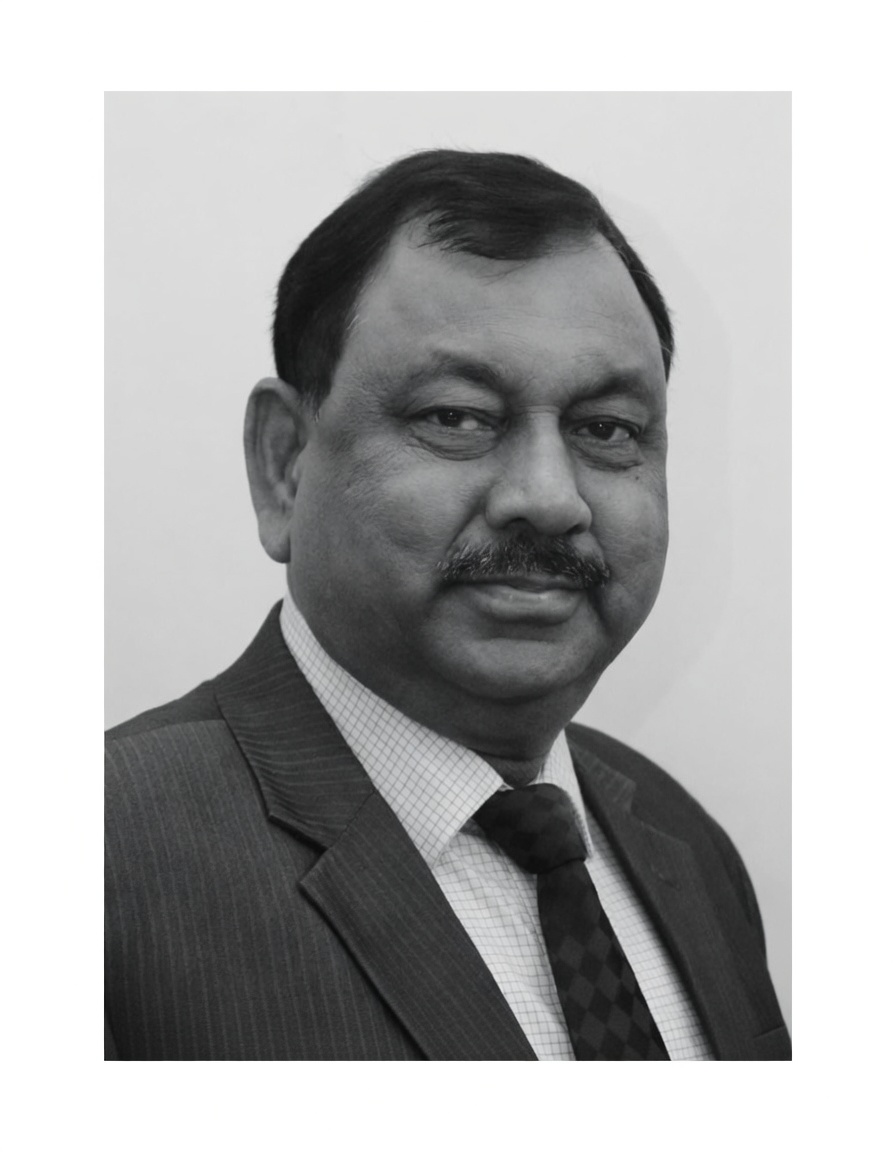
The Vision of the PHC Doctor
I was born on August 23, 1953, in Barsoi, a small town in the Katihar district of Bihar. My father, Sri Sarju Prasad Gupta, was a businessman, and my mother, Smt. Uma Devi, managed our home with a steady hand. Ours was not a medical lineage; beyond a distant cousin, the stethoscope was a foreign object in our household. I grew up alongside two younger brothers, Vishwanath and Dilip, and my sister, Veena, all of whom were still navigating their school years while I began to look toward the horizon.
My schooling at Barsoi High School was conventional, but my aspirations were shaped by a singular observation. In our local Primary Health Centre (PHC), there was only one doctor. He was a man who commanded an almost spiritual respect. In a town where many voices competed, people fell silent to listen to him. He was needed, and in that necessity, I found my calling. I wanted to be that person—the one who stood between a community and its suffering. Encouraged by a teacher who saw my potential, I moved to TNB College in Bhagalpur to pursue my B.Sc., focusing on the sciences that would eventually lead me to the gates of Wardha.
The Persistence of 1973
My path to MGIMS was not a single stride, but a two-year marathon. I first appeared for the entrance exam in 1972, accompanied by my school teacher. I cleared the written test, but the interview proved to be my undoing. I returned to Bihar disappointed but undeterred. In 1973, I doubled my efforts. I attended coaching in Patna and immersed myself in the books on Gandhian thought recommended by my mentors. That year, I sat for several exams—AIIMS, BHU, AFMC—and achieved a monumental milestone by topping the Bihar PMDT (Pre-Medical Dental Test).
Despite being the state topper in Bihar, the pull of Sevagram remained uniquely strong. There was an honesty in the newspaper advertisement for MGIMS that resonated with my rural roots. I traveled back to Wardha, this time alone, and checked into Annapurna Lodge across from the junction. The second interview was a starkly different experience. Dr. I.D. Singh and Badi Behenji questioned me on the natural calamities of Bihar, testing my awareness of the world I came from. Then came a question that broke the ice: “Who is your favorite playback singer?” I answered “Mukesh,” and for a few minutes, we weren’t discussing pathology or physics, but the soulful melodies that defined an era.
Room 36 and the Taste of Goras Paak
The orientation at the Gandhi Ashram remains an unforgettable sensory tapestry. Coming from Bihar, the Maharashtrian flavors were entirely new—the spicy poha, the comforting dalia, and the legendary Goras Paak (a local dairy sweet). We participated in shramdaan, clearing the land and learning that a doctor’s hands should not be afraid of the soil. It was here that I met Anand Kumar and Radha Mohan Arora. We were three nervous strangers who clicked instantly, forming a bond that has now weathered over five decades.
After the camp ended, I was allotted Room No. 36 in F Block. I remember walking in and realizing the room was brand new; I was its very first occupant. There is a specific kind of pride in being the first to inhabit a space intended for learning. The first day of class felt surreal. I sat in the lecture hall, looking at the blackboard and the faces of my professors, gripped by the disbelief that a boy from Barsoi had actually made it.
The Lessons of Mhasala and the Mentors
Our batch was assigned the village of Mhasala for our community-based programs. This wasn’t just a clinical posting; it was an immersion. We learned that healthcare in rural India is often a battle against environment and infrastructure as much as it is against pathogens. This experience grounded our medical knowledge in a way that city-based rotations never could.
We were fortunate to be shaped by teachers who were as invested in our character as they were in our grades. Prof. R.V. Agarwal in Pathology taught us precision; Dr. A.P. Jain in Medicine taught us empathy; and the Dhawans and Samals provided the parental guidance that students far from home desperately needed. They didn’t just teach us how to diagnose a heart murmur or a malarial parasite; they taught us the value of the person behind the patient.
Five Decades of Gratitude
Looking back from the vantage point of fifty years, the distance from Barsoi to Sevagram seems much shorter than it did in 1973. MGIMS gave me more than a degree; it gave me an identity. The friendships I formed—with Ajay Vyas, Arvind Saili, Ashok Sinha, and others—have been the steady background music of my life.
I am proud to be a product of an institution that valued the “Mukesh” fan as much as the state topper. We were taught that medicine is a meaningful life, not just a successful career. As I reflect on those days in Room 36, I realize that the “meaningful something” I went searching for in Bhagalpur was found in the red soil of Sevagram. For the mentorship, the values, and the brothers-in-arms I found there, I remain deeply and eternally grateful.
After graduating from MGIMS, Dr. Baijnath Gupta pursued an MS in Ophthalmology at Rajendra Institute of Medical Sciences, Ranchi. He later settled in Dhanbad, where he continues to practise. Outside medicine, he enjoys music and travel. Even after all these years, he fondly remembers Dr. Mrs. Samal and Dr. A.P. Jain, who taught him during his undergraduate days in Sevagram. Both are no longer alive, but their influence remains with him.
Dr. Meena Kurundawadkar
“Lily, Lily, Lily!”
The chant came from behind the curtains. My heart pounded louder than the drum that beat backstage. It was February 6, 1974, and the open theatre had been transformed into a stage. The play was Kaka Kishacha, directed by Mr. Sudhakar Deshpande from Nagpur and our own Professor M.D. Khapre. I, a first-year student of MGIMS Sevagram, had been chosen as the heroine.
Mr Sudhir Deshmukh played Lavange, Alhad Pimputkar played Kishya, Shyam Babulkar played Balya Bapat, Subhash Patil played Madhu Raje, Narayan Daware played Joshi, Shirish Gode played Suman Mungi and Vrunda Khandare played Tongaonkar bai in the drama.
As the spotlight fell on me, I could see rows of familiar faces—batchmates, seniors, teachers—waiting to see whether I, usually buried in books, could transform into Lily, the character who had been rehearsed into my bones for weeks. I took a deep breath, uttered my first line, and the hall erupted in applause.
Years later, at reunions, people would still call me Lily, sometimes forgetting my real name. Even our Dean, Dr. Nitin Gangane, also a MGIMS alumnus, once laughed and said, “I may not recall every detail, but I’ll never forget that Lily you played.”
That evening on stage did not just give me a role; it gave me a place in Sevagram’s memory.
Growing Up in a Family of Doctors
I was born on 7 March 1955 in Yavatmal, at my grandmother’s house. My grandmother, Dr. Krishna Kurundwadkar, was a legend in her time—an alumna of Grant Medical College, Bombay, who had topped every examination she ever wrote, bagged five gold medals, and carved out a flourishing practice. To me, she was not just a grandmother but a symbol of what a woman could achieve if she had courage and brains.
My aunt too was a doctor—a gynaecologist trained at Lady Hardinge Medical College, who later moved to Canada. In those days, when children dreamed of being pilots, train drivers, or film stars, I, at the age of three, would say with certainty, “I will be a doctor, like Aaji.” The thought never wavered.
My father, Mukunda Madhav Kurundwadkar, worked with LIC as a branch manager. A quiet, disciplined man, he wore khadi all his life and kept close ties with Gandhians and freedom fighters. Once, Pandit Nehru himself visited our home in Yavatmal and stayed the night. That was the kind of world I grew up in—one where discipline, service, and ideals were not preached but lived.
From Schools to Science
My schooling zigzagged across towns as my father’s postings shifted. I began in Yavatmal, then studied at Hadas High School, Nagpur. When Principal Joshi opened the first Central School in Nagpur, I joined there for Classes 6 to 8. Later, my father’s transfer took us to Gondia, where I completed high school and board exams. Standing in the state merit list of the Board was a proud moment for our family.
Back in Nagpur, I studied at the Institute of Science. Fate played a mischievous trick on me when I missed admission to GMC Nagpur by one mark. It was a bitter pill. But sometimes disappointments open doors. My father, deeply drawn to Gandhian thought, suggested I prepare for the Sevagram PMT. I agreed. Sevagram, after all, was not an alien name—I had often visited Gandhi Ashram as a child, sipping sugarcane juice with my father on the roadside. The soil already felt familiar.
The Interview that Tested Innocence
I still remember my MGIMS interview vividly. The board included Dr. Sushila Nayar and Dr. Purandare, a reputed gynaecologist from Bombay. Dr. Purandare scanned my papers, looked at my surname, and asked, “Do you know Dr. Krishna Kurundwadkar?”
“Yes, Sir,” I said with pride, “she is my grandmother.”
There was a pause, then another question: “Do you have exposure to villages? Have you served in villages?”
I answered with the innocence of a girl who did not know what was expected: “Yes, Sir, during summer vacations my father would take me to Chikhaldara.”
The board exchanged glances. They knew Chikhaldara was a hill station, a picnic spot, not a village. Dr. Nayar laughed kindly, and I blushed. My first lesson at Sevagram: sincerity matters, but so does knowing the ground beneath your feet.
Sevagram Days—Khadi, Friendships, and Trains
Life at Sevagram was woven with Gandhian simplicity. Khadi, prayers, cleanliness, and self-reliance—none of these felt foreign to me. My father had already set that rhythm at home.
Friendships bloomed quickly. Meena Kanetkar, daughter of Dr. Vasanti Kanetkar, became close. Then there were Rajshri Ratnaparkhi, Pramila Chaudhary, and above all, Saeeda Suzy Vali. Saeeda came from a prosperous Nagpur family that ran a pharmaceutical business. Every weekend, we would take the passenger train together—sometimes to her home, sometimes to mine. On Mondays, we returned, bags heavier with textbooks and gossip.
Saeeda had a habit of carrying Gray’s Anatomy everywhere. That book was a monster. Her bag felt like it carried bricks. Half the time I lugged it for her, scolding, “Why bring Gray’s to Nagpur? Let it rest in the hostel for two days!” She only laughed and refused. Looking back, those train journeys carry more warmth than all the classrooms put together.
The Drama of Studies and Stage
Our play rehearsals, under Professor Khapre’s indulgent eye, became a talk of the campus. Some classmates teased me: “You’re doing this only to get good marks in Pharmacology!”
Embarrassed, I once confessed this to Dr. Khapre. He roared with laughter. “Tell me the names of those students. I’ll see they pass, and you fail!” His laughter broke my tension. He was too generous to ever misuse power.
Academically, I held my ground. In my first MBBS, I topped in Physiology, stood second in Anatomy. In second MBBS, first in Pharmacology, second in Pathology. In final MBBS, first in Obstetrics and Gynaecology and Ophthalmology. My position was always steady—second in class, never slipping lower.
Love in Sevagram
Love crept into my life in an unexpected way. During second MBBS, a senior, Poonam Kohli from the 1972 batch, seemed aloof and withdrawn. A classmate asked me, “Can you look after her?”
I tried. For the first time in my life, I made tea. It turned out awful. Poonam drank it silently and later told me, with a smile, that it was the worst tea she’d ever had. Yet, she didn’t throw it away. That kindness linked us.
Through her, I came to know Dr. J.P. Sharma, also of the 1972 batch. J.P. had a gift for teaching. He could stand in a corridor and explain Medicine, Surgery, Gynaecology, Ophthalmology—anything—with clarity. We began as classmates, grew into companions, and by internship, became inseparable.
Once, during internship, Professor S.P. Nigam asked me to list causes of oedema. Nervous, I blurted, “Toxaemia of Pregnancy.”
He banged the table. “You girls! For you, every answer is pregnancy!” Sharma laughed and later said gently, “Next time, think of kidneys and heart too.” Love often begins in shared laughter.
We sought advice from Dr. Ullas Jajoo. “If you know each other well and wish to make it lifelong,” he said, “don’t delay. Marry.”
So, on 23 June 1978, during internship, we did. A simple Delhi wedding, followed by a reception at Nagpur’s LIC Hall. Our wedding card was unusual—it carried our own names, not our parents’, inviting everyone. No family resisted. A Marathi girl and a Hindi boy—our union felt natural.
Becoming a Gynaecologist
From childhood, my dream was clear: I wanted to be a gynaecologist, like Aaji. I did house jobs in Ophthalmology and Obstetrics and Gynaecology. I was proud to be the first student enrolled in MD Obstetrics and Gynaecology at MGIMS. Under Dr. Mrudula Trivedi’s guidance, I trained with Dr. Acharya, Dr. Hariharan, Dr. Samal, and above all, Dr. Chhabra.
Dr. Chhabra was young, kind, and motherly. If we were scolded in class, she would invite us in the evening for tea and pakoras, softening the day’s bruises. Dr. Jajoo too often brewed tea when hostel tea turned undrinkable. These little gestures stitched affection into discipline.
After MD, Dr. Sharma and I moved north, eventually settling in Bijnor, Uttar Pradesh. We began our practice there and slowly built our lives.The Circle Continues
Sevagram did not end with us. My daughter Pooja joined MGIMS in 1998 and later became an MS in Surgery. My nephew Mohit, from the 2006 batch, went on to specialize in Paediatric Nephrology. The bond stretched across generations.
Looking Back
Now, nearly fifty years after I entered Sevagram as a 17-year-old girl, I look back with gratitude. Sevagram was not just a medical college. It was a crucible where ideals, discipline, and relationships shaped us. It gave me a profession, a partner, and a lifelong purpose.
I sometimes remember that innocent girl in the interview room, telling the board that her village exposure was Chikhaldara, a picnic spot. They laughed, but they still admitted me. And I became what I had always wanted to be—what my grandmother had once been: a doctor, a gynaecologist, a woman rooted in service.
Sevagram gave me more than a degree. It gave me my life.
Dr. Mohammad Jusab Khan
The Boy with the Jute-Sack Bag
I was born on 26 February 1956 in a mission hospital at Vashi, but my soul belongs to the dust of Pusad. My father, a man who could barely sign his name—his signature resembling a trembling kite in a high wind—owned a modest oil mill. Yet, with that shaky hand, he signed a promissory note of hope for his children. I attended the local Zilla Parishad school, watching the “doctor-producing” Brahmin schools from afar, quietly nurturing an ambition that I, too, would one day belong among the healers.
My path to MGIMS was forged in the disappointment of GMC Nagpur, which I missed by a mere two marks. Destiny, however, had other plans. I appeared for the joint entrance test for AIIMS, BHU, and MGIMS, securing the third rank in all of India. I could have gone to the capital; I could have gone to the holy city of Banaras. But my father feared the “spoiling” influence of Delhi, and the Hindu University of Banaras felt culturally daunting. And so, the telegram arrived from Sevagram.
The Borrowed Khadi and the Command of Badi Behenji
The interview in the Principal’s office remains etched in my mind, dominated entirely by the presence of Dr. Sushila Nayar. When she asked if I knew the Chief Minister, Vasantrao Naik, I admitted that my father had contested elections against his party. She laughed heartily at my transparency. Then, she eyed my shirt.
“You are wearing khadi. Do you wear it regularly?” she asked. “No, ma’am,” I replied truthfully. “I borrowed this from my tailor, Mirza. He stitched it for another client.”
It was this radical honesty that appealed to her. I was admitted, and my first fifteen days were spent in the Gandhi Ashram. There, I was asked to read verses from the Quran alongside the Gita and the Bible. My voice trembled on the first day, but by the third, I read with pride. It was my first lesson: faiths could meet without clashing.
Room 29: The Scholar Behind the Black Paper
Money was always scarce in those early years. My bicycle was a second-hand relic with a taped handle, and my mother had stitched my book bag out of washed jute cement sacks. I pedaled to the library with that rough, bulging sack tied to the carrier. While others frequented the Indian Coffee House for “Bombay Toast,” I survived on Babulal’s tea and aloo bondas.
My love for books, however, was a fierce obsession. I once saved my hostel fees for three months just to buy Sheila Sherlock’s legendary volume on liver diseases. It cost six hundred rupees—a fortune then. When my father discovered the deception, he slapped me in public. I took the blow in silence, knowing that the blue-covered book in my hands was worth more than comfort.
In the first MBBS, I read Gray’s Anatomy and Guyton’s Physiology. In the second MBBS, I went through Boyd’s Pathology and Satoskar’s Pharmacology. In the final MBBS, I studied Park’s Preventive and Social Medicine, Davidson’s Medicine, Sheila Sherlock’s Liver, Nelson’s Pediatrics, Holland and Brews’ Obstetrics and Gynecology, and Love and Bailey’s Surgery. No shortcuts. No cramming at the last moment. I studied from day one. I was fortunate to be gifted with an enormous capacity to retain and reproduce what I had learned.
In Room 29 of A-Block, I pasted black paper over the ventilator so the wardens wouldn’t see my bulb burning at 3:00 AM. I refused shortcuts. I read Gray’s Anatomy, Guyton, and Nelson’s Pediatrics from cover to cover. In every exam, the hierarchy never shifted: Satya Prakash Maheshwari was the untouchable first, Meena Kuranwadkar was the disciplined second, and I was forever the “Third Man,” trailing her by a single, agonizing whisker.
The first rank was untouchable—Satya Prakash Maheshwari. Brilliant, effortless, almost otherworldly. He later went on to become a pediatrician in Delhi, Gurgaon. He was simply outstanding, leaving the rest of us trailing by twenty marks or more.
Second place always belonged to Meena Uranwadkar. She was sharp, disciplined, and never more than a mark or two ahead of me. That narrow gap became the source of endless teasing on my part.
“Meena,” I would say with a grin, “you know I’m the better student. It’s just that in the viva, the examiners melt at the sight of a girl student. They slip you a couple of grace marks and push you ahead of me.”
She would laugh, never offended, just shaking her head at my mock-complaints. And then, results after results, the story repeated: Satya untouchable, Meena ahead by a whisker, and me—forever the third man.
Through my first, second, and final professional exams, my place in the class never changed. I was always third.
Clinics That Lasted Forever
Internship brought him under the spell of Dr. Khatri, a visiting cardiologist from PGI Chandigarh. His clinics stretched for hours.
“History is half the diagnosis,” Dr. Khatri would say, eyes fixed on the patient’s chest. “Listen carefully. The heart is talking.”
Khan listened, spellbound. He became a favourite student. Yet when he opted for pediatrics instead of medicine, Dr. Khatri was so disappointed that at the railway station, while leaving Sevagram, he refused to look at Khan.
“I carried that hurt,” Khan later admitted. “But I also carried his lessons into pediatrics.”
The department was fortunate to have two contrasting guides—Dr. Chaturvedi, a meticulous academician, and Dr. Shashi Ahuja, a practical clinician. Between them, they shaped Khan’s craft.
The Strike of 1978 and the Bite of Desperation
Sevagram, July 1978.
The monsoon clouds hung heavy over the red-brick hostel. Inside the mess, the students huddled over watery dal and rice, their voices low, their faces drawn.
“Only MBBS?” someone muttered, staring into his plate. “How will we survive in the real world?”
A silence followed, broken only by the clink of spoons. Another voice rose, bitter, trembling.
“Without MD or MS, we’re finished. Our classmates from Nagpur, Delhi, Chandigarh—they’ll fly past us. And we’ll be stuck.”
The room buzzed with fear. It wasn’t just about prestige—it was about survival. Without postgraduate training, what would they become?
At the center of the storm stood their Principal, Dr. Sushila Nayar. Dignified, resolute, she repeated what she had always believed.
“I founded this college to serve villages. Degrees like MD and MS will only lure you to cities. Sevagram is for rural India.”
Her conviction was reinforced by the formidable Dr. L. P. Agarwal of AIIMS, who visited frequently. He was also his chief advisor and was a senior member on the panel. His words were blunt, immovable.
“You want MD? MS? Forget it. This is not your place. Villages need you. Stay there.”
The students listened in stunned disbelief. Villages? For life? No opportunities, no growth, no future? They had never imagined this bargain.
Whispers turned to anger. Anger to defiance.
Then, one afternoon, it all erupted.
The interviews for the incoming batch were being held in the Principal’s office. The corridors were tense, packed with restless students. When Dr. Agarwal finally emerged, briefcase in hand, the crowd surged.
“Sir, hear us out!” voices shouted.
“Don’t destroy our future!”
Dr. Agarwal’s stride quickened. The students closed around him, a human wall of desperation.
And then—something no one expected.
Asha Ramachandran, eyes blazing, dropped to her knees before him. She clutched at his trousers, her voice cracking.
“Sir, please… please don’t do this to us. We have nowhere to go!”
He tried to shake her off, but she clung harder, arms wrapped around his legs like iron. His collar was pulled, his sock tore. In a frenzy, she bit his ankle.
Dr. Agarwal froze, aghast.
“Have you all gone mad?” he shouted, staring at the mob of students, their faces contorted by fear and fury.
That was the last anyone saw of him in Sevagram. He never returned.
In the uneasy quiet that followed, something shifted. Dr. Nayar, who had stood so firm, now looked inward. She too had once been a student—an MD herself, with a DrPH from Johns Hopkins, a traveler who had seen the best of medical education. Could she really deny her own boys and girls the same chance?
Wiser counsel prevailed. Within a year, postgraduate courses in medicine, surgery, pediatrics, and gynecology opened at MGIMS.
I was among the first group of MGIMS graduates who began postgraduate studies in clinical streams when they finally started at Sevagram. Along with me were Asha Ramchandran (medicine), Pramod Raut (orthopaedics), Meena Kurundwadkar (obstetrics and gynaecology), Vikas Kulkarni (surgery), and Sudhir Chavan (anaesthesiology). I took my seat in pediatrics.
The strike of 1978 had etched itself into history. What began in fear and desperation had ended in triumph.
Residency: The Religion of Patient Care
I enrolled in MD Pediatrics in November 1979. Six months later, in April 1980, Sanjeev Chugh and Arvind Garg joined. A year later, Pardeep Handa from the 1975 batch and Rajiv Tandon from the 1976 batch followed. In those days, the department had very few postgraduates.
Dr. Khatri, who taught us in the medicine wards, often reminded us: “During your residency, your religion is patient care.” We lived by those words. In the wards, we would keep a toothbrush, toothpaste, razor, and soap handy. We brushed our teeth, shaved, took a quick bath, and got back to work without returning to the hostel. At times, we slept in the ward itself, on whichever bed was free. Luxuries like uninterrupted sleep in the hostel were rare. It was an exhausting life, but the hard work paid off.
When my MD examination came, the external examiner was Dr. K. N. Agrawal from BHU, Banaras. He was known to be a staunch member of the Vishwa Hindu Parishad—“He wears Hinduism on his sleeve,” Dr. B. D. Bhatia, our internal examiner, warned me. The other external examiner was Dr. Katwa from Kolkata. Alongside Dr. Bhatia, Dr. Avinash Deshmukh stood in as internal examiner for Mrs. Pushpa Chaturvedi, who had left for Libya on sabbatical.
A day before the exam, Dr. Bhatia hinted to me, “Remember, Dr. Agrawal is from Banaras, a staunch Hindu. You are a Muslim.” The implication was clear. But I was confident. “Let him ask me anything,” I said. “I am fully prepared to answer.”
One of the best lessons Dr. Bhatia had instilled in us was to examine every child from head to toe, never presuming or skipping signs. That discipline helped me in the exam. My long case turned out to be tubercular meningitis, which I diagnosed correctly. When asked about the latest diagnostic test, I suggested one that Dr. Agrawal dismissed outright. To settle the matter, he called for the standard pediatric textbook and a journal from the library. Together, we went through the references, and there it was—exactly as I had said, straight from published sources.
That day, Dr. Agrawal nodded, satisfied. And I passed.
The Road to Chandrapur
I dreamt of America and even saved ₹7,000 for the journey. But just before I could leave, my father was injured in a bus accident. Looking at him in pain, the allure of the United States vanished. “My place is here,” I realized.
I chose Chandrapur, a coal-and-cement city, as my base. My hometown, Pusad, thrived on farming, but opportunities for growth were limited there. I began with a modest OPD, then set up a small four-bed nursing home. Slowly, I expanded it to fifty beds.
Patients started coming not only from Chandrapur but also from surrounding districts. My reputation spread by word of mouth. I used every bit of what I had learnt during residency—how to work with scarce resources, how to manage when nurses were not well trained, and how to treat patients who had very little money. Innovation was the only way to keep costs low.
Each week, I also travelled to nearby towns—Kagaznagar, Bhadravati, and Wani—to see patients. Villagers would often fold their hands and say, “Doctor saab, my child was almost gone. You brought him back.”
For me, there was no greater reward.
Kaka Kichasha
Beyond the stethoscope, I discovered another gift—words. In Sevagram, I acted in Hindi and Marathi dramas. In Kaka Kichasha, Alhad Pimputkar from the ’72 batch played one of the Kakas, and I was Kisha. It was a farce about impressing a girl by producing a false “Kaka,” but through a hilarious mix-up, three Kakas landed up together. The play was a superhit—we kept hearing stories about it long after.
By 1975, I was acting in Govind Gopal, performed in front of a visiting President, and even did a memorable bathroom-themed monoact. The following year, I was part of Kayapalat with Shobha Lauthare, Nitin Gupte, Mamta Jawlekar, and Mridul Panditrao.
I also loved sher-o-shayari. At conferences, my speeches sparkled with Urdu couplets, often leaving the audience surprised. “How can a Muslim doctor speak Marathi like a Brahmin?” people would ask in wonder. I only smiled—languages had never been barriers for me.
Legacy of Hard Work
My son became an orthopedic surgeon, and my daughter a radiologist. Even at seventy, I still work twelve-hour days, diagnosing children with the same passion I had back in my hostel room under the black paper. I continue to travel four times a week to nearby towns to see sick children.
“There is no substitute for hard work,” I often say. “Sevagram taught me that. Every sick child who leaves my clinic smiling is a reminder.”
Dr. Virender Kumar Gautam
Telegram at the Cinema Hall
It was a cold December night in 1978. Sevagram had already shut itself into silence, but the Sevagram Lecture theatre was abuzz with activity. A Raj Kumar film “Barsat” was running. My friends and I were thoroughly enjoying the movie. Those days, there used to be a movie Club at MGIMS, which used to screen movies. I do not know whether that tradition is still continuing! Halfway through the movie, a postman entered the hall with a khaki bag slung across his shoulder. He walked straight to me, whispering in the usher’s ear.
“Telegram for you,” he said, extending the thin yellow slip.
I unfolded it under the flickering beam of the projector. The words swam before my eyes:
“Confirmed admission in AIIMS Orthopedics. Join by 1st December 1979.”
My heart skipped. AIIMS. Orthopedics. My dream was suddenly real. I ran out of the theatre, my friends tumbling behind me.
“Vaishwanar! I need your scooter,” I blurted out as soon as we reached the hostel.
Pradeep Vaishwanar, ever generous, handed over his keys. His blue scooter was one of the only two in our class. Rajkumar Rathi owned the other. That night, Pradeep Ahluwalia drove while I sat pillion, clutching the telegram as though it were a passport to another world. We sped down the empty roads to Nagpur, where my uncle lived. The next day I was on my first-ever flight to Delhi, nervous yet ecstatic, heading to join AIIMS as a postgraduate in Orthopedics.
That night in Wardha marked the turning point of my life. But to understand how a boy from Jalandhar reached that moment, you must walk with me back to the early 1970s—to dusty railway platforms, telegrams, khadi kurtas, and the sleepy lanes of Sevagram.
A Telegram That Changed Everything
I was born on 30 May 1955 in Mukerian, a small town in District Hoshiarpur, where my father Shri Hari Ram Gautam was posted at that time. My father was a police inspector in the Punjab Police. We moved often, but I mostly grew up in Jalandhar. After finishing at Government High School, I joined DAV College, Jalandhar, for my pre-medical studies.
My dream was crystal clear: admission to AIIMS, Delhi. Those days, there was a common entrance exam for AIIMS, BHU, and MGIMS. I traveled from Jalandhar to Delhi and stayed at my uncle’s house to appear for the exam at a Kendriya Vidyalaya in Lodhi Estate.
Weeks later, life had almost returned to normal when a telegram arrived: “Report for interview at Sevagram.”
Sevagram? I had never heard of the place. My father and I packed our bags and boarded the GT Express from Delhi. In those days, railway reservations were a matter of fate. The station master at Jalandhar had to telegram New Delhi for onward booking. When we reached New Delhi at 2:30 in the afternoon, we rushed upstairs to the reservation office. The clerk ran his finger down a frayed register while anxious students like me held their breath. Finally, with a grunt, he nodded. “Confirmed.”
That single word opened the path to Sevagram.
Nagpur to Wardha: First Glimpse of Gandhi’s Legacy
My maternal uncle was a railway contractor in Nagpur. We spent the night at his house before taking a bus to Wardha. Wardha was a small town, unhurried, and utterly unlike Jalandhar or Delhi. My father and I stayed with a local acquaintance.
The interview at MGIMS is a blur in my memory. I vaguely remember Prof. I.D. Singh and Dr. Sushila Nayar on the panel. What I said, I cannot recall—probably the usual clichés every medical aspirant mouthed. Yet, they smiled and nodded. A few days later, I was in.
Around the same time, another telegram arrived: I had also been selected for BHU. I was torn between the two. My father chuckled, “Banaras is famous for बनारसी ठग and for strikes. Better you stay close to your uncle in Nagpur. At least you’ll have a guardian there.” His half-joking advice tipped the scales. Sevagram it was.
Sevagram in the 1970s
Stepping into MGIMS was stepping into another era. The air smelled of earth after rain, mingled with smoke from cow-dung cakes used as fuel. The hostel rooms were simple—cement floors, iron cots, and a ceiling fan that groaned louder than it cooled.
Mornings began with the clang of a bell. We trudged to Gandhi’s ashram for prayers, the sound of bhajans rising with the first light. Rows of us in khadi kurtas sat cross-legged, our voices hesitant at first, then steady.
The mess, however, was a shock. For a Punjabi boy used to chana and urad dal, the thin yellow toor dal tasted alien. I pushed my plate away the first few days. “This is water, not dal,” I complained to Ravinder Ahluwalia, my first friend from Jalandhar.
He laughed. “Give it time. Even water here has its own flavor.”
Slowly, my tongue adapted. Toor dal became as familiar as the dust in Sevagram’s lanes.
Nights were a different adventure. Power cuts were frequent. We lit kerosene lamps, their smoke stinging our eyes. Fireflies glowed outside, and sometimes a snake slithered past the hostel verandah, sending us scurrying onto cots.
At Gandhi’s ashram, where our fresh batch of sixty had gathered, I found my first friend—Ravinder Ahluwalia from Jalandhar. Soon, the circle widened to include Ranbir Singh Chiller, Hardeep Singh Harneja, Shyamchand Anand, Satyaprakash Maheshwari, Avinash Shankar, and Baij Nath Gupta. Together, we endured the hostel food, braved the summer heat, and savored the small joys of student life. Tuesdays were special, for on that day Ranbir Singh Chiller—a sturdy lad from Haryana and a devout Hanuman bhakt—would share with every hosteller the sweets he offered as prasad to Bajrangbali.
Friendships blossomed in those corridors—Hardeep Singh Harneja with his booming laugh, Shyamchand Anand with his endless jokes, and Baij Nath Gupta, who always carried an extra book. We studied late into the night, sometimes on the terrace, the stars above brighter than any electric bulb.
Hostel conversations were full of drama:
“Exams will kill us before disease kills patients,” someone groaned.
“And toor dal will finish us off before exams do,” another added.
We burst into laughter, our worries dissolving for the night.
The Skeleton in a Jute Bag
During my first MBBS days, there was a village boy who would occasionally appear at our hostel gates, a worn jute bag slung across his shoulder. At first glance, it looked like he was carrying firewood or old books. But when he untied the knot and pulled the bag open, we froze. Inside were bones—real human bones, white and brittle, rattling like loose coins.
I bought one such skeleton from him. It cost a few rupees then, nothing compared to the treasure it was for a medical student. I carried the skeleton back to my room, laid it carefully on the iron cot, and began my private lessons in osteology.
When vacations came, I decided to take it home. I wrapped the bones neatly, placed them back in the jute bag, and boarded the GT Express. As the train rattled out of Wardha, I sat stiffly, the bag at my feet. What if someone asked what was inside? What if the police checked? I can laugh now, but back then, every time the ticket collector passed, I felt a shiver. Today, the very thought is unimaginable. Carrying a human skeleton on a passenger train would have landed me in jail for illegal trafficking. But in the 1970s, it was just another eccentric part of medical student life.
The GT Express and Kishore Kumar
Our hostel window opened to the open fields beyond which the railway line ran. From there, we often saw the GT Express slicing across the landscape, its coaches glinting in the sun, its whistle floating in the hot Wardha air. For us, it was more than a train—it was a symbol of home. Each time it passed, I thought of journeys back to Punjab during vacations, of familiar faces waiting at the platform. For those trips, we relied on railway concession forms, duly signed by our Principal, Dr. M. L. Sharma.
In 1974, Kishore Kumar’s song from the movie Dost had become a national anthem of sorts. The moment we spotted the GT Express racing towards Nagpur, someone would begin humming:
“Gaadi bula rahi hai, seeti baja rahi hai… Chalna hi zindagi hai, chalti hi ja rahi hai.”
The words wrapped themselves around our lives. We were young, uncertain, always moving—towards exams, towards careers, towards futures we could barely imagine. Watching the train, with Kishore’s voice echoing in our minds, we felt both the ache of leaving and the thrill of going somewhere new. For me, that whistle of the GT Express remains the soundtrack of my Sevagram years.
Teachers Who Shaped Us
I was a serious student, more inclined to books than stage. Apart from editing the English section of Sushrut—the college magazine—I stayed away from cultural activities. My scholarship from the National Level Science Talent Search (₹150 a month) helped sustain me, supplemented by my elder brother who was an Army officer.
I excelled in studies, winning gold medals in Pathology and Surgery, topping in the second MBBS, and securing second place in Preventive and Social Medicine. But what remains etched in memory are the teachers:
Dr. R.V. Agrawal with his kindness, projecting histopathology slides and describing the cytoplasm as though it were a living story.
Drs. S.K. and Chanchal Dhawan, the handsome ophthalmology duo from Chandigarh, who seemed straight out of a film magazine.
Dr. Ravinder Narang, with his thick moustaches, nicknamed Thanedaar by us.
Dr. Karandikar tore through Dawn’s Ophthalmology at such speed that words blurred into each other. We strained to keep pace, but before one sentence could land, the next had already taken flight. His lips barely paused, the corners glistening with saliva that gathered faster than he could swallow.
And then there was Dr. S.P. Nigam, head of Medicine. Short, sharp, his English flawless. One monsoon, when a student pleaded absence due to heavy rains, he quipped, “This is not the first time India has had a heavy monsoon.” We laughed nervously, but his point stayed.
Their quirks and brilliance made Sevagram unforgettable.
Why Orthopedics?
I loved Medicine—the thrill of a murmur, the crackle in the lungs, the elegance of neurology. Yet its limits were stark. Patients with chronic illness suffered, endured, and eventually succumbed; whatever relief we offered was fleeting.
Orthopedics, by contrast, promised permanence—a bone set, a limb straightened, a life restored. It stood apart, untouched by the competition of quacks. That clarity pulled me strongly, though not without hesitation. I often worried: if I left Medicine, would I forever lose the chance to prescribe Digoxin—that most fascinating of drugs?
Leaving Sevagram
By late 1979, MGIMS still lacked postgraduate programs. Like many classmates, I sat for multiple entrance exams. Then came the telegram at the cinema hall—the one that changed everything.
I left in a rush, barely remembering if I paid hostel dues or returned my key. Life swept me away—to AIIMS, then PGI Chandigarh, then to MAMC Delhi where I spent my career, with a fellowship in Stanford in between. I became HOD of Orthopaedics at MAMC, MS LNJP chaired selection committees, served on AIIMS Rajkot’s governing body.
But Sevagram remained a knot in my heart—unfinished, unacknowledged.
But through all these years, one guilt gnawed at me: I had left Sevagram abruptly. I could not even recall if I had cleared my hostel and mess dues, or returned my room key to the warden. Sevagram had been my home for five and a half years, and I had walked away without a goodbye.
Return After Four Decades
In 2022, forty-three years later, I returned as an examiner. Walking through the old hostel, I paused at the mess. The smell of toor dal seemed to rise from the walls. In the corridors, I could almost hear the laughter of my friends, the buzz of the ceiling fan, the thud of books on iron tables.
I stood there quietly, remembering the boy who once carried a telegram in his pocket, not knowing where it would lead him. Sevagram had given me discipline, friendships, and the spirit to walk tall. For that, I remain forever indebted.
Dr. Abhoy Kumar Sinha
On the first of August, 1974, a humid morning draped in the quietude of the Gandhi Ashram, I stood among seventy-odd nervous young men and women assembled in Sevagram to begin a journey that none of us would ever forget. I was a young man with borrowed clothes, an empty wallet, and eyes gleaming with a fierce, quiet dream. At that time, I was simply Abhoy Kumar. It would not be until December 1982, after I had completed my postgraduation, that I formally adopted ‘Sinha’ as my surname. To my old acquaintances from the wards and the hostels of Sevagram, I remain Abhoy—the boy from Bihar who arrived with nothing but a tin trunk and left with the hands of a surgeon.
My story began in a village so small that maps barely noticed it: Dighi Simanpur in the Santhal Pargana of Bihar (now Jharkhand). It was a land of red earth and tribal Santhal heritage, where families like mine were known as ‘Dikus’—outsiders living in a rugged, beautiful landscape. Our village was geographically unique; the line splitting Bihar and Jharkhand passed directly through it, dividing farms and loyalties along state boundaries. Born on 27 January 1955—a date shared with my cousin in the school records because the headmaster simply copied the same day for both of us—I was the youngest son of Bishnu Prasad Rama and Mukteshwari Devi. My father was the village Mukhia and an honorary postmaster, operating the post office from a small room in our home. Though he had no formal schooling, he held deep convictions about the power of learning. My mother, like most women of her generation, was illiterate but possessed a resolve that could move mountains.
The Teacher Who Built My Mind
Schooling in Dighi Simanpur was an exercise in resilience. There was no electricity, no paved roads, and certainly no healthcare. I attended Azad Hind Middle School and Dighishwarnath Higher Secondary School, both built on land donated by my family. But the true architect of my academic success was my cousin’s teacher, Mr. Ramcharan Mahto. He was a history teacher with a polymathic command over every subject imaginable. He stayed in our home, and under his rigorous, disciplined guidance, I managed to stand on the merit list for the Bihar Higher Secondary Board.
That achievement earned me a National Talent Scholarship—a financial lifeline that would follow me all the way to Sevagram. I remember a meticulous man at MGIMS named Mr. Gawli who ensured that my scholarship paperwork was always processed on time; without that money, I simply wouldn’t have survived. My family was fractured by internal conflicts, and my father’s income from our small fields was meager. However, my elder brother, a metallurgical engineer who later earned a PhD in the US, had promised to fund my education. He kept that promise, even when the transition to a new education system in Bihar threatened to derail my path.
Just as I completed Class XII, Bihar shifted to a new education system (11+2+2), and good colleges suddenly became inaccessible. I received a letter from Banaras Hindu University (BHU), which was still following the old system, offering admission to BSc. I moved to Banaras, fell in love with the city, and stayed in the Broacha Hostel. English became the medium of instruction for the first time. I struggled, armed with a dictionary and memories of Mr. Mahto’s grammar drills. Banaras was intoxicating—not just with the scent of bhang and temples, but with its academic air and cultural heritage. A year passed. I felt ready to try medicine.
The Choice at R.K. Puram and Rank Number One
In 1974, the medical entrance exams for AIIMS, BHU, and MGIMS had separated. I was in Delhi for a coaching program, living in a small room in Patel Nagar. One afternoon, I received a telegram forwarded by my father: an interview call from Sevagram. I had never heard of the place. I found it in the prospectus: near Nagpur. I mapped my route—Mughal Sarai to Itarsi, then Nagpur, and finally Sevagram. With just a few hundred rupees, I withdrew what little money I had, bought an unreserved ticket to Wardha, and packed a tin trunk. I traveled alone, sitting on my trunk in crowded train compartments, guarding my certificates and money tucked in a pouch beneath my vest.
When I arrived at the Principal’s office in Sevagram, I was a solitary figure among candidates accompanied by protective parents and city-bred confidence. A list was posted on the wall. My heart raced as I read the name at the very top: Abhoy Kumar, Rank Number One. I was the first to be called into the interview hall. Five or six people sat across the table. They smiled, offered greetings, and asked only one question: how is paddy cultivated? Having grown up in the paddy fields of Santhal Pargana, I knew every step from ploughing to harvesting. I answered confidently. They nodded and said, “That’s all.”
Bricks, Khadi, and the Kindness of Strangers
While my heart was full of joy, my pockets were empty. The clerk at the office read out the list of dues—admission fee, deposit, hostel rent, six months’ tuition. I counted the coins in my pocket; they would not even pay for a bus ride back home. On top of that, I was expected to dress like a medical student—two pairs of khadi shirts and trousers. I went to the Khadi Bhandar, explained my plight, and the man in charge looked at me with pity. He pulled out a sheet of paper and wrote a note. “Here, keep this,” he said, handing it over. “Come back after Diwali vacation, bring money from home, and clear the bill.”
Back at the college office, I tried my luck again. The clerk twirled his pen, looked at my anxious face, and said, “Pay after three months. Until then, attend classes.” I could have fallen at his feet. And so, for the first three months, I ate breakfast, lunch, and dinner in the hostel without paying a paisa to the mess. Where else, I thought, could one find such kind men who understood what poverty meant? The first day of class was surreal. Dressed in fresh khadi, carrying my trunk, I stepped into the Ashram with cautious hope. Sevagram was austere, idealistic, and unlike any place I had known. But it welcomed me, as it did many others like me—sons and daughters of farmers, clerks, and schoolteachers.
The Sting of Shame at Warud Village
In our first year, we were assigned to Warud village, barely a kilometre from Sevagram. The rule was simple: stay there for fifteen days, live with the villagers, and learn what their life meant. So one hot afternoon, with a battered tin trunk and a rolled-up bedding on my shoulder, I set out with my classmates. The houses in Warud leaned against each other like tired old men, their mud walls flaking, their thatched roofs shedding straw. My roommate B.B. Gupta soon struck up a deep friendship with Mr. Namdevrao Chaudhary. The two would sit for hours under a neem tree, talking of crops, monsoon, and cattle as if they had known each other for years.
At the end of the camp, a valedictory function was held in the school courtyard. Gupta stood up and launched into a glowing speech about how the camp had opened our eyes. Then my turn came. I thought it was a debate, and that I was expected to take the opposite side. Without a second thought, I stood up and spoke my heart. “These fifteen days were a waste of time,” I declared. “We were deprived of our classes. Instead of sharpening our minds, we were left to sit idly in the village!”
There was a stunned silence. Then a sharp voice cut across the crowd: “Stop!” It was Dr. Sushila Nayar. She had been sitting quietly in the audience. Her face had turned red. “Do you even know what you are saying? This camp is the very soul of Sevagram!” I froze. My words hung in the air like a torn kite. Walking back from Warud to Sevagram that evening, I felt the sting of shame. The neem trees looked taller than usual, and every dog that barked seemed to laugh at me. That incident pushed me into a period of depression; my performance fell, and I lost my top rank. It was a harsh, necessary lesson in humility.
From the Hostel Blocks to the Surgical Wards
I still remember the days in Boys’ Hostel Block A. Ragging in those days was mild, but the 1973 batch ran into serious trouble when a few seniors forced freshers to shave their heads. A scuffle broke out in India Coffee House, and management came down hard. Football was my passion. I played alongside Pradeep Gupta, Waqar Hassan, Dhananjay Pingua, Deepak Fuljhale, and Ravi Sood. We won matches against local colleges and once travelled to Nagpur to play on the Law College ground.
In academics, I eventually pulled through, standing third in the second MBBS after Hari Om and Ashok Birbal. In the final MBBS, I did well in most subjects but fumbled badly in Medicine. During my long case, despite repeated hints from Dr A.P. Jain, I went blank. Dr Mitra and Mrs Mitra were the examiners—both strict—and I scraped through. Surgery, however, was my true love. The internship was my training ground. I worked at Talegaon Talatule and Seldoh PHC. I took internship very seriously—whether it was delivering babies, treating snakebites, incising abscesses, dressing wounds, or starting IV lines.
I applied for an Orthopaedics seat for my postgraduation under Dr S.C. Ahuja, who liked my sincerity. But fate was unkind; my classmate Purshottam Lal, ahead of me by four marks, claimed the Ortho seat. Perhaps that Medicine long case had cost me dearly. I had to settle for Surgery. I wasn’t disappointed for long. As a boy, I had always admired the Civil Surgeon in my district—a figure of absolute authority—and Surgery promised me that same stature. I completed my MS, writing a thesis on the genitourinary manifestations of leprosy under Dr. Belokar.
Bricks Under the Bed: Practice in Bihar
After earning my MS and working at Nanavati Hospital in Mumbai, I returned to my small Bihar village to practice. There was no anesthetist in sight. I performed surgeries in my bedroom on a wooden table. A compounder, trained in the civil hospital, administered ether. “Keep the patient still,” I would instruct. If blood pressure dropped, I had no fancy equipment. I simply placed common bricks under the foot-end of the bed to tilt the patient and keep the blood flowing to the brain. I operated on hernias, hydroceles, even did major laparotomies. It was risky, but I was young, determined, and Sevagram had taught me that a doctor does not wait for perfect conditions; he creates them.
The Legacy of Pratibha and a Life in Nagpur
In 1983, I married Pratibha Mishrikotkar, from the 1978 MGIMS batch. We were married in a quiet ceremony in Nagpur, attended by several friends from Sevagram who filled the gap left by my family from Bihar who couldn’t afford the journey. Pratibha was my anchor. While she pursued her MD in Obstetrics and Gynaecology under Dr. Chhabra, I worked for Western Coalfields at Khaperkheda. Every weekend, I rode my motorcycle to Sevagram to see her.
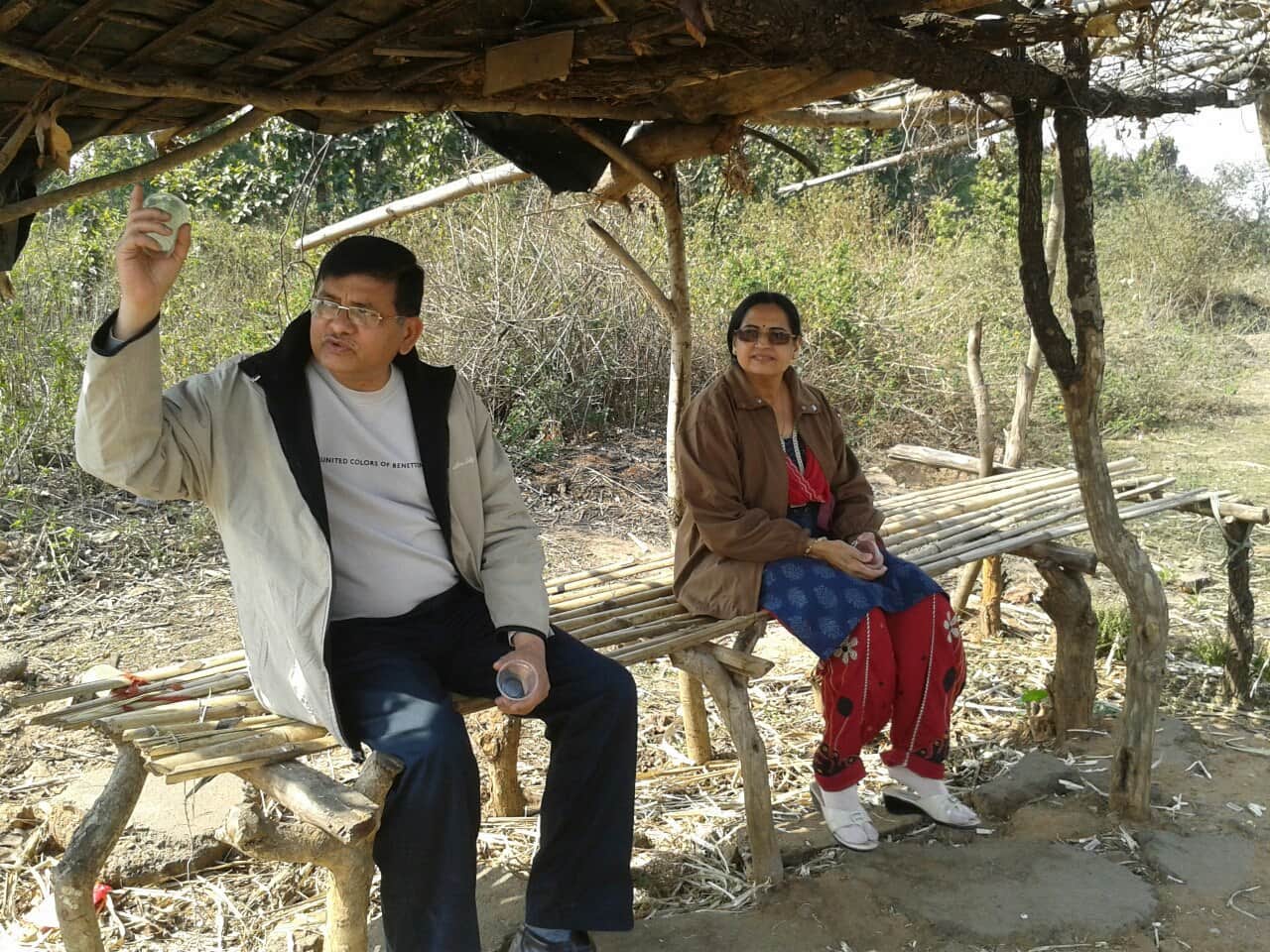
We eventually started our own practice in Nagpur, opening a 2,000 sq. ft. hospital in Sadar. I ran it well, balancing general, laparoscopic, and orthopedic surgery. In 2014, I became President of the Association of Surgeons of Nagpur—the only Sevagram alumnus to hold that post. But life brought me its hardest blow four years ago, when I lost Pratibha. She fought bronchial asthma with quiet courage throughout her life, but on 22 February 2022, she breathed her last.
Final Reflections
Since then, I have reduced my practice. My days are now gentler—spent with my granddaughter Anika. Looking back, two dreams remain unfulfilled. First, I wanted to be a full-fledged orthopaedic surgeon, not just a diploma holder. Second, I always wished to teach in a medical college. I tried—at Sevagram and later at Lata Mangeshkar Medical College—but never succeeded. Still, for a boy from a small village in Bihar, raised in poverty and educated in Hindi medium, destiny has been remarkably generous. Sevagram gave me my surgical hands, my lifelong friends, and the wife who walked beside me for forty years. For a boy who once sat on a tin trunk in an unreserved train compartment, the stars in the sky finally seem within reach.
Dr. Arvind Garg
The first time my admission was cancelled, I did not even know of it. The second time, I almost packed my bags to leave Sevagram forever. Even now, I wonder what invisible threads of fate kept me tied here, when so many hands seemed eager to loosen the knot. It was August of 1974. Monsoon clouds had wrapped Sevagram in grey, and I stood outside the admissions office, clutching a crumpled slip that carried just two chilling words: Admission Cancelled.
I had gone home to Naya Nangal, where my father was posted, because I was homesick. Two days later, I was back, arriving weary and hopeful by the Dakshin Express. Instead of a welcome, I found Mr. Bhausaheb Deshmukh, administrative officer of the principal officer, waiting, his voice sharp as a whip. He thundered that I had broken Ashram discipline by leaving without informing. The words struck like a hammer. My bewildered footsteps carried me to A Block of the boy’s hostel, to Brijmohan Gulati, the 1971 batch President of the Student Union. He looked at me and asked, “Can you cry? Can you really dramatise your story?”
In Principal Dr. I.D. Singh’s office, my tears came easily. Dr. Singh, hearing my story, switched to his earthy Punjabi: “Ki gal hai, munde?” (What’s the matter, boy?). It turned out they had admitted Pushpa Maheshwari from Etawah in my place, but another boy had just left, opening a second chance. That was how I entered MGIMS: not as a bright-eyed student striding into the future, but as a bewildered young man who had stumbled inside by the grace of circumstance and a well-timed cry.
From the Fertilizers of Sindri to the Calling of Dr. Das
My name is Arvind Garg. I was born on 1 September 1957 in Sindri, a small industrial township in Dhanbad district—then part of Bihar, now in Jharkhand. Sindri was synonymous with the Fertilizer Corporation of India (FCI) plant, and our lives revolved around its industrial rhythm. My father, a chemical engineer, worked there, but my own sights were set on a different kind of service. My grandfather suffered from bronchiectasis, and I watched my father carry him to the colony hospital, where a Dr. Das treated him with a calm assurance that left a permanent imprint on my sixth-grade mind.
My schooling was scattered across Gorakhpur and eventually Naya Nangal in Punjab. I was a product of the Hindi medium, but by Class 11 and 12 at Government Jubilee College, I began the difficult transition of answering my science papers in English. When the call for an interview came from Sevagram, I didn’t realize it was just a call; I arrived in Wardha with a large aluminum trunk and a holdall, convinced I was already a medical student. My interview was brief. Dr. Manimala Choudhary asked about the code of conduct—no meat, no alcohol, no smoking. Being from a strict vegetarian family, I replied that we didn’t even eat onion or garlic. She smiled, and the boisterous voice of Bhausaheb Deshmukh soon announced my rank on the notice board.
The Ashram Dormitory and the Takli’s Hum
For the first fortnight, all of us from outside Wardha were housed in a dormitory at Gandhiji’s ashram. I had never seen a metal bed before; at home, we slept on woven cots. I bought a thin mattress and a set of Khadi clothes from the Ashram shop, beginning a life that felt more like a spiritual apprenticeship than a medical course. Each morning began with prayers, followed by an hour at the takli—the small hand spindle. Luckily, I was not entirely new to it; in Sindri, spinning had been an elective. The charkha, however, was a new symphony, its rhythmic hum both strange and soothing.
The campus itself seemed more like an ashram than a medical college. Neem and banyan trees spread their shade generously, and the whitewashed buildings were simple, almost austere. My first friend was Deepak Fulzele, followed soon by Sanjiv Chugh, Sunil Dargar, and Vikrant Mohindra. Dargar would grandly announce he was from the Fiji Islands, while Vikrant wore his Ferguson College days like a badge of honor, polishing his shoes until they gleamed like mirrors. We were a eclectic mix, and from this group, a smaller, inseparable circle soon took shape: “The Dirty Dozen.”
The Dirty Dozen: A Legend in the Making
Rajiv Khushu, a Kashmiri boy with a ready wit, christened us “The Dirty Dozen.” At the time, we had no idea it was a 1967 war film; we just knew we were twelve souls bound by an unbreakable bond: Ashok Birbal Jain, Dilipkumar Bahl, Shadab Mahmood, Rajiv Khushu, Ravindra Behl, Sanjiv Chugh, Sunil Dargar, Sunil Taneja, Vikram Mohindra, Waqar Hasan, Deepak Fulzele, and myself. We were the actors in the dramas, the players on the cricket field, and the voices laughing in the corridors long after lights-out.
In the dissection hall, the glamour of our “Dozen” status vanished. My table partners were Bina George, Abhoy Sinha, Lalit Kose, and Ashok Taksande. Abhoy was the studious one, leaning over the cadaver while I read aloud from Cunningham, stumbling over the Latinate names of muscles. Biochemistry brought us Professor B.C. Harinath, who punctuated every lecture with: “A lot of research is going on in the USA on this…” We weren’t always saints, of course. We were once caught sneaking back from a late-night film in Wardha, facing the thunderous face of the warden who reminded us that tomorrow we would cut open cadavers, but tonight we wasted our time on Rajesh Khanna.
Illness, Tales of Hanuman, and the Library Refuge
Sevagram life was never without its sudden turns. I once fell ill with jaundice, a rite of passage for many of us. As the hostel emptied for vacations, I lay alone in the medicine ward, the silence pressing in. Only Hariom remained behind. He would sit beside me in the dim ward and tell stories—how Hanuman made the fire tremble in Lanka, or tales of mischievous cousins stealing mangoes in his village. I realized then that illness didn’t just isolate; it pulled people closer. Hariom’s tales stitched the silence into companionship.
Because money was always tight, I could not afford to buy many books. The library became my sanctuary. From nine in the morning until nine at night, I sat there, soaking in anatomy and physiology. But no matter how long the day in the library had been, the night belonged to the badminton court. At nine o’clock sharp, the whirr of the shuttlecock and the crisp sound of the racquet felt like a necessary release. I eventually had the privilege of captaining the college badminton team, balancing the hushed walls of the library with the competitive sweat of the court.
The ‘Wanted’ Expulsion and the Carbon Paper Notes
In 1974, Sunil Dargar and I went to Wardha to watch Wanted, starring Dev Anand. We returned at midnight to find the 1975 batch being ragged on the terrace. The principal arrived, everyone scattered, and the next morning, disaster struck. A senior falsely accused Dargar, Khushu, Taneja, Vikrant Mohindra, and me of being the culprits. Dr. Sushila Nayar, newly returned from Delhi, was furious. Four of us were suspended for a year, and Dargar was expelled.
The principal handed us booklets of donation coupons worth ₹5000—a king’s ransom in those days. “Sell these,” he said, “and only then can you return.” Our parents, heartbroken, rushed to Sevagram to pay the sum. We lost two months of classes, but the kindness of Suneela, Bina George, and Kamini Kaushal saved us. They took meticulous notes with carbon paper and posted them to us every few days. When we rejoined, the scars remained, but so did a deeper understanding of solidarity.
Holi, the Banyan Tree, and the Art of Listening
Holi in Sevagram was a test of survival—muddy water, soot-stained palms, and the occasional foul egg. Near the Madras hostel, the faculty—Drs. M.L. Sharma, R.V. Agrawal, and others—would swap scandalous jokes and dissolve the distance between teacher and student. But it was in the village postings that we learned the most. Pairing with Suneela—who would later become my life partner—I trudged through the dusty lanes of Warud. Suneela once remarked, “Textbooks don’t tell us that the hardest part of medicine is listening.”
Sevagram taught us resilience when the taps ran dry and humility when villagers brought us groundnuts as payment. On our last day, we gathered under the old banyan tree. I looked at the faces of the Dirty Dozen—Vikram’s grin, Deepak’s laughter—and I knew Sevagram was the invisible thread binding us. If my admission had truly been cancelled that June morning, I would have missed the best years of my life. Fate gave me Sevagram, and with it, memories that refuse to fade.
Dr. Ashok Birbal Jain
The Gandhi Deal and the Birbal Joke
I was born in Nagpur in 1958. My father worked as an administrative officer and was frequently transferred. When I was in 10th grade, he offered me a deal: “If you complete one good book this year, you will get a new shirt.” He handed me My Experiments with Truth by Mahatma Gandhi. I read it from cover to cover. I don’t remember if I ever got that new shirt, but I know it was this book that eventually brought me to Sevagram.
In 1974, I was living in a hostel in Delhi. The MGIMS pre-medical entrance test advertisements were out. I didn’t know about it, but a friend who had the newspaper cutting had cleverly hidden it inside a book. By chance, I opened that book and found the advertisement. I applied, took the exam at T Centre, and seemed to have done well because I received a call for an interview.
The interview was held in the Principal’s office at Sevagram. Dr Sushila Nayar was presiding over a board that included Prof I.D. Singh, Dr Manimala Chaudhary, and a gentleman whom I later came to know was Shreeman Narayan.
At that time, I didn’t identify myself with a surname. I just introduced myself simply.
“What is your name?” they asked.
“Ashok Birbal,” I replied.
“Then tell us a Birbal joke,” someone said.
So I told them the famous Akbar-Birbal story, where Akbar asks Birbal to list all the blind men in his kingdom, and the next day, Birbal sits outside the palace, preparing the list. When Akbar asks what he is doing, Birbal puts Akbar’s name at the top of the list to show that even a king can be blind to his surroundings.
The panel laughed. A man in a khadi white shirt with a crisp Gandhi cap told me, “Your interview is over.”
I didn’t know what to make of it. A student appearing for a medical college interview, and all they asked was for him to tell an Akbar-Birbal joke? I left the room thinking I must have performed poorly for the interview to end so quickly.
In the evening, the list of selected candidates was displayed. To my surprise, my name was there.
At that time, I had also cleared the entrance exams of Indore Medical College and AFMC, Pune. Both were prestigious colleges, but there was something about Sevagram—its mail, its message, its unseen pull—that left a lasting impression on me. I told my father I wanted to join Sevagram instead of Indore or Pune.
When I came home and told my father about my interview, he laughed. I couldn’t understand why, and then he explained:
“The man who ended your interview was none other than Shreeman Narayan—the renowned academician, researcher, thinker, and economist. Let me tell you a story.”
Years ago, when my father was serving as Under Secretary in the Education Department in Nagpur, Shreeman Narayan, then Principal of G.S. Medical College, had come to request a grant for his college. My father was impressed by Narayan’s honesty and transparency and approved the grant. Since then, they had developed a deep mutual respect.
“Shreeman Narayan must have seen your file, noticed the name ‘Birbal,’ and remembered his meeting with me. Perhaps, in his own way, he ended your interview and ensured you were selected as a gesture of gratitude.”
Perhaps it was destiny. Even today, I cannot fully explain why I said no to AFMC Pune and Indore Medical College and chose an unknown medical college in a small, dusty village. But this is how destiny shapes your life.
And looking back, I know that coming to Sevagram shaped not just my career, but also the way I live, think, and serve even today.
The Second Seat and the Three P’s
In the second and final MBBS, I was always just a rank below Hari Oam. Both of us had set our minds on Medicine. But there was only one seat. Naturally, it went to him, and I was told to wait six months for mine.
Then destiny intervened. I did not have to wait. Hari Oam and I became co-residents in Medicine. I became Dr. O.P. Gupta’s second postgraduate student, after Asha Ramachandran. I wrote my thesis on a question no one had asked before: could chest tuberculosis also bring on heart failure? It sounded improbable, but in those days we thought nothing was beyond TB.
There were three medicine units then—Dr. Gupta’s, Dr. A.P. Jain’s, and Dr. Ulhas Jajoo’s. The senior residents too came in a neat set of three, all conveniently identified by their initials: Kamal Parvez, known as KP; J.P. Sharma, always called JP; and S.P. Kalantri, SP. Together we were cheerfully referred to as the “three P’s.” The wards sat in the old hospital building, but the OPD had marched off to the new one on the hill, forcing us to shuttle between the two like postmen. The ICU, if it can be called that, had no ventilators, no monitors, no gadgets of any kind. Our proudest possession was a BPL ECG machine that worked when it wished to. The rest had to come from our brains—which, thankfully, were always on duty.
Academics, though, were relentless. The week overflowed with journal clubs, mortality meetings, long and short cases, and endless ECG and X-ray readings. Rounds could last forever, with the entire story of the patient’s life extracted at the bedside. History-taking and examination were everything, for there was nothing else—no ultrasound, CT, MRI, or echocardiography to fall back on. The laboratories were equally frugal, offering a few basic tests and not much more.
Still, we managed. In May 1982, I cleared my MD at the first attempt and became the second physician trained at MGIMS. Looking back, it seems a miracle we produced any doctors at all with so little. But perhaps, with just an ECG machine and our wits, we learned Medicine better than most.
A Secular Match and a Durga Talkies Clinic
My marriage to Aruna was a quiet evolution rather than a grand romance. The only hurdle was my lack of a traditional surname. Her father was puzzled by “Birbal,” unable to place my community or caste until we explained my father’s conviction in a secular identity. Secular to the core, he refused to be identified by sect. Fortunately, no astrologers were consulted to match horoscopes; the moon and mars were left to their own devices. We were married in June 1981 in a ceremony filled with the traditional pomp her family deemed indispensable.
By 1982, my MD was behind me. Aruna and I tried our luck in Delhi, but the city’s pace and pulse never agreed with ours. Before long, we returned to Wardha, and it was there that our first son, Aditya, was born. I started a modest private clinic near Durga Talkies with my batchmate, the paediatrician Dr. Arvind Garg. We rented a small place. We had neither the money for the rent nor the advance, but the landlord, in an act of rare kindness, told us to pay in instalments—when we could, and only if we earned enough.
To our relief, the practice picked up quickly. Aruna too found her footing, setting up a pathology lab of her own. Together we built our life, brick by brick. Our sons, Aditya and Anuj, chose medicine, as did their wives—thus, without much planning, we became a family entirely bound by the same vocation.
In time, Arvind and his wife, Suneela, moved to Delhi—he to the private world and she to academics. I stayed back, consolidating my practice in Wardha. I even ventured into naturopathy, homeopathy, and lifestyle medicine, giving advice on everything from diets to daily routines. Soon I managed to buy a place in Ramnagar, Wardha, where I set up a proper OPD and inpatient practice, strengthened by Aruna’s pathology services. And it is there that I have spent the rest of my life.
In those days, boys and girls were carefully segregated. If one spoke to a girl at all, it was usually one’s own sister. I did not storm in with any grand declaration of love, as in the pages of Marie Corelli or the heroes who won a Victoria Cross. Matters moved along in their own quiet way.
Her father had satisfied himself on all the essentials—class, community, and caste. The only confusion arose from my name. That I was indeed a Jain was clear enough, but I carried no Jain surname. The name “Birbal” on its own seemed unthinkable to them, until we explained that it was simply my father’s name. He had discarded any family or caste surname out of conviction. Secular to the core, he refused to be identified by sect, religion, or faith.
One relief was that no astrologer was summoned to match horoscopes. In those days, the Moon in the girl’s horoscope, if ill-aligned with Mars in the boy’s, could doom the match as inauspicious and even destructive. Fortunately, no such obstacle was raised.
Her parents remained somewhat puzzled and hesitant, but I was firm in my decision. In June 1981 the marriage took place—with all the pomp, festivity, gifts, and overcrowding that her family considered indispensable.
Consolidation and the Integration of Care
The practice grew steadily. While Aruna established her own pathology laboratory, I became a fixture in the Wardha medical community. Eventually, Arvind and Suneela moved to Delhi, but I stayed behind to consolidate my practice in Ramnagar.
Over the decades, my approach to medicine broadened. I ventured into naturopathy, homeopathy, and lifestyle medicine, realizing that healing often required advice on diets and daily routines as much as prescriptions. Our sons, Aditya and Anuj, eventually followed us into medicine, creating a family bound by the same vocation. Today, as I look back at the journey that began with an Akbar-Birbal joke, I know that Sevagram didn’t just give me a degree; it gave me a way of thinking that values transparency, simplicity, and the patient’s story above all else.
Shared Journeys & Connections
My lifelong friend and “co-traveler” in MD Medicine; we shared the grueling rounds of the O.P. Gupta era.
My first partner in private practice at Durga Talkies; we built our professional lives brick by brick in Wardha.
Arvind’s partner and a fellow pillar of the 1974 batch who shared our Wardha journey.
My wife and professional partner; she established the pathology services that strengthened our combined practice.
Dr. Brijbhushan Gupta
From the Mats of Gorakhpur to the Calling of Medicine
I was born in Gorakhpur, a town in Uttar Pradesh that, in the 1950s and 60s, moved at a sleepy, unhurried pace. My father was a manager at the Punjab National Bank—a man of figures and discipline—and my mother was the heartbeat of our large, bustling household. Although our family was vast, filled with cousins and siblings, the path of medicine was a pioneer’s trail for me; none of my relatives had ever worn the white coat.
My grandfather and father, however, held a shared dream. To them, a doctor was not just a professional; he was a figure of ultimate respect and sacred purpose. This hope was whispered into my ears so often that it took root in my soul before I even understood the complexity of the human body. My early education was humble and traditional. From Class 1 to 6, I attended Maharana Pratap Shishu Shiksha Mandir, a local Hindi-medium school where we sat cross-legged on mats on the floor. There were no desks, just the scratch of slate pencils and the sonorous voice of the teacher. I moved to DAV College and eventually JB College, but throughout my youth, the medium of my thoughts and my learning remained entirely in Hindi.
The Money Order and the Long Road to Wardha
In those days, the world of medical admissions was a mystery box. There was no internet to scan, no social media to consult. Our only windows were the newspapers and the local coaching centers. It was through these teachers that I first heard of a place called Sevagram—a medical college built on the ideals of the Mahatma. To prepare for the entrance, I needed books on Gandhian thought that were nowhere to be found in the bookstores of Gorakhpur. I remember the anxiety of sending a money order to a bookstore in Wardha, waiting weeks for the package to arrive, and then devouring those books cover to cover as if they held the secrets of my destiny.
The telegram inviting me for an interview was a lightning bolt of joy. But reaching Wardha was a feat of endurance. There were no direct trains from Gorakhpur. My father and I embarked on a multi-stage odyssey, changing trains at Jhansi, then Allahabad, and finally at the junction of Itarsi. By the time we reached Wardha East, we were coated in the coal-dust of the railways. My father, ever the banker, had connected with Mr. Sunderlal Chandna, the local PNB manager. After a brief rest at his home, we shifted to the Annapurna Hotel—a modest lodging that was, in those days, a crossroads for every hopeful MGIMS aspirant in India.
The Interview: A Moment of Raw Truth
The next day, I saw Sevagram for the first time. The interview took place in the Principal’s office, a modest setup near the old Kasturba Hospital. The panel was formidable: Mr. Sriman Narayan was the chairman, flanked by Dr. Sushila Nayar, Dr. Manimala Chaudhary, and Principal M.L. Sharma. I felt the weight of my father’s expectations as I sat in that chair.
The first question was sharp: “What’s the source of Vitamin C?” “Citrus fruits, sir,” I replied, my voice steadier than I felt. “Lemon, in fact, contains nearly twice as much vitamin C as most others.” They moved quickly to my background. Seeing my father was a bank manager, they asked my views on the nationalization of Indian banks. It was a political firebrand of a topic, but I spoke from my heart. I told them that nationalization meant the common man could finally walk into a bank without being turned away—that banks would finally serve the people, not just the wealthy.
Then, the tone shifted to the soul. They asked if Gandhian philosophy was still relevant. I took a deep breath. “I have immense respect for the Mahatma,” I said, “but I feel disheartened. Many who wear Khadi and spin charkhas today have eroded the values he stood for through corruption.” The room went silent. One interviewer noted that it was a strong statement for a boy my age. “But it’s the truth, sir,” I replied, meeting his gaze.
Finally, they asked why I wanted to be a doctor. I told them about the board I saw outside our local hospital every day: ‘To serve people is to serve God.’ I spoke of Mother Teresa and the dignity of the weak. I found myself moved to tears as I spoke, and in that moment, the panel stopped being a board of examiners; they became listeners. They sensed my empathy, and before the sun set that day, I was selected.
The Ashram Ethos and the Geometry of the Heart
My training began not in a lab, but in Gandhiji’s Ashram. For a fortnight, we lived the life of an initiate. Mr. L.R. Pandit, a man of strict but kind discipline, taught us the sanctity of food—how wasting a single grain was an insult to the farmer. We woke for the sarva dharma prayers, the chants of all religions mingling in the pre-dawn air. This wasn’t just orientation; it was a rewiring of our moral compass.
Initially, the language was a barrier. Coming from the Hindi heartland, the rapid Marathi of the wards was a blur. I gravitated toward the “North Indian circle”—friends like B.K. Behl from Kanpur, Sunil Taneja, and Jitendra Tiwari. But Sevagram had a way of breaking down these silos. The most powerful tool for this was the Family Adoption Programme.
The Chaudharys: A Bond Beyond Medicine
I was assigned to Warud village, specifically to the family of Shri Chaudhary. At first, it was a clinical exercise—I went there to fill forms and collect data on nutrition and sanitation. But the human heart has its own geometry. Soon, the data points were replaced by faces. When a member of the Chaudhary family fell ill, I didn’t just note it in my journal; I brought them tea from the hostel, sat by their hospital bed, and navigated the bureaucracy of the wards for them.
Over the years, the student-doctor relationship dissolved into a kinship that defies geography. The Chaudharys traveled all the way to Gorakhpur for my wedding. I, in turn, became a fixture in their family milestones. When their daughter married in Bangalore, my parents were there. When their younger daughter married in Mumbai, I was there for three days, working as a brother would. When their son married, I spent a night on a bumpy bus from Wardha to Dhule to ensure the ceremony went smoothly.
This program taught me a lesson that no textbook could: that a true doctor does not treat a “case”; he treats a family member. It taught me that beyond the pharmacology and the surgery, it is empathy and human connection that truly define the art of healing.
Fifty Years of the Sevagram Spirit
Looking back five decades later, I realize that MGIMS did not just give me a degree; it gave me an identity. The boy who sat on mats in Gorakhpur learned that the highest form of education is to recognize the suffering in another and to move toward it with a willing heart. The lessons of L.R. Pandit and the warm hospitality of the Chaudhary family shaped every prescription I have ever written.
Sevagram’s power lies in its ability to turn strangers into family and students into human beings. That spirit—the one that believes to serve people is to serve God—is the greatest medicine I ever learned. It is a spirit I have carried with me from the wards of Wardha to the busy streets of Gorakhpur, and it remains as vibrant today as it was when I first stepped onto the red soil of the Ashram in 1974.
Dr. Hari Oam
The Telegram That Went to the Coast
It was a sweltering day in July 1974 when a telegram changed the entire course of my life—and then, in a cruel twist of bureaucratic fate, almost snatched it away. The admission telegram from the Mahatma Gandhi Institute of Medical Sciences (MGIMS), Sevagram, was supposed to reach my village, Khair, in the Aligarh district of Uttar Pradesh. Instead, it was misread by a postal clerk and sent to Khar, a bustling suburb of Bombay.
By the time the letter was rerouted and finally arrived a week later, the admissions window had slammed shut. My father and I, desperate and clutching the late arrival, took the long train journey to Wardha. Our hearts pounded with a volatile mix of hope and dread. When we arrived, I was told I was number ten on the waiting list. My father, a man of quiet conviction, poured out our story to Badi Behenji—Dr. Sushila Nayar herself. She listened with a stillness that only those who have spent a lifetime in service possess. “If anyone withdraws,” she said softly, “you will be next.”
As luck—or perhaps destiny—would have it, a candidate from Himachal named Ravi Nangia secured a seat elsewhere. I stood ready with a ₹5,000 bond, and the seat opened. I joined MGIMS a full month late. I had missed the orientation camp, the prayers at the Ashram, and the freshers’ night where friendships are first forged. I stepped onto the campus as a latecomer, a boy who had narrowly missed the bus, unaware that this narrow opening was the door to my future.
Roots in the Red Soil of Aligarh
I was born in Khair, where my father, Shri Anand Prakash, practiced as an Ayurvedic physician. He was a man of deep local respect; patients traveled from distant villages to seek his counsel. We lived modestly, a lower-middle-class family where every rupee was weighed against the needs of three siblings. My mother, Savitri Devi, was the silent strength of our household, managing our limited resources with a grace that masked our struggles.
In the 1970s, engineering was the popular choice for many, but for me, mathematics was a formidable enemy. Furthermore, the job market for engineers was then a wasteland. Medicine appeared as a beacon of stability and respect. I failed my first attempt at the entrance exams and spent a year studying independently in my village. We couldn’t afford the coaching classes in Delhi, so I improvised. For the essay papers, I relied on my reading of Gandhi’s The Story of My Experiments with Truth. I didn’t realize then that I wasn’t just studying for an exam; I was absorbing a philosophy that would later define my clinical practice.
The Anatomy of a Latecomer
Because I arrived late, I entered the dissection hall like a man dropped into the middle of a foreign film. My batchmates had already finished the upper limb and were moving on to the complex structures of the thorax and abdomen. I didn’t even know the difference between dorsal and ventral. Every test I took was a disaster; my name was a permanent fixture at the bottom of the list.
Two young Anatomy lecturers, Dr. Sharma and Dr. Menon, saw my drowning spirit. During the Diwali vacation, they offered me a lifeline: “Stay back, and we will teach you what you missed.” I promised I would, but when the hostel emptied and the lure of home became too strong, I fled to Aligarh. When I returned, they scolded me with the sternness of older brothers, but they didn’t give up. They stayed back in the heat of the afternoon to guide my scalpel, restoring not just my knowledge of the human body, but my confidence.
The “Dirty Dozen” and the Ganesh Arches
In the hostel, I found my anchor in Arvind Garg. Soon, we were part of a band of twelve inseparable souls who called themselves “Dirnt.” We were a chaotic, joyful gang that navigated the rigors of medical school with humor and shared defiance. Coming from a Hindi-medium school in rural UP, the medical terminology in English was overwhelming. I often felt like an outsider until the first Ganesh festival arrived.
In North India, we had no tradition of public Ganesh celebrations. But my village school had taught me Krishi Vigyan (agricultural science) and craft work. I spent days creating intricate, handmade arches and ornaments for the festival hall. My friends were astonished; they saw a side of the “village boy” they hadn’t expected. Sevagram was beginning to introduce me to the vast, colorful tapestry of Indian culture beyond the borders of Aligarh.
I remember the simple joys of those years—like the time our classmate Jitender Lal received two crates of apples from his father in Himachal. The moment those crates hit the hostel floor, we descended like a swarm of bees. By the time Jitender fought his way to the front, he was lucky if a single bruised apple remained for the person whose name was on the box.
A Quiet Fire: The Journey to the Gold Medal
The turning point of my life occurred at the end of my first MBBS. I had barely passed Anatomy, though I managed to stay in the top ten through sheer grit. During the annual function, I sat in the back of the hall and watched Dr. Yogendra Mathur and Rita Madan walk up to the stage repeatedly to collect their medals. The thunderous applause echoed in my ears and sparked a quiet fire in my chest. “Next year,” I whispered to myself, “that clapping will be for me.”
I began my second MBBS with a discipline I had never known. I studied from day one. I slept eight hours a night, even before the most grueling exams, believing that a rested mind was a sharper tool. That discipline bore fruit. I topped the second MBBS, and then the final MBBS, winning gold medals in Pathology, Pharmacology, Gynaecology, and Community Medicine. The applause I had longed for was finally mine, but more importantly, I had proven that a latecomer could lead the race.
Choosing Medicine Over the Risk of Libya
After my internship, I initially wanted to specialize in Pediatrics. However, a chance encounter near the old library changed my path. I met Dr. (Mrs.) Chaturvedi, and in a moment of rare candor, she whispered, “Don’t tell anyone, but I am leaving for Libya.” I knew then that the department would be in flux. I shifted my focus to Internal Medicine and joined the MD program.
I pursued my MD under Dr. A.P. Jain, researching tropical pulmonary eosinophilia. This was an era before the luxury of CT scans or MRIs reached Sevagram. We had only our stethoscopes, our eyes, and our ability to listen. Under the mentorship of Dr. O.P. Gupta and Dr. Ulhas Jajoo, I learned the art of history-taking and physical examination—skills that are becoming a lost art in the age of digital diagnostics. I failed my first MD attempt, a blow that stung deeply, but I cleared it six months later in June 1983. Soon after, I married Anju, an intern who would become my life partner and a skilled gynecologist.
The Open Fields of Pitampura
In 1985, Pitampura in Delhi was not the urban jungle it is today; it was a landscape of open fields and a few scattered houses. I bought a small plot and opened a modest clinic. Over the years, that clinic grew into a 15-bed hospital. It was a pioneering center in the area—the first to perform laparoscopic surgery in Pitampura. We were the “village doctors” for a neighborhood that was rapidly transforming into a city.
By 2000, the geography of Delhi had shifted. The city had become divided by social and logistical barriers. Families in South Delhi wouldn’t dream of marrying into the North, and the daily commute for basic needs became a burden. We eventually closed the Pitampura chapter and moved to South Delhi. It was the end of one journey and the beginning of another.
Bonsai: The Patience of the Second Calling
While medicine was my profession, bonsai became my second calling. The seed was planted back in Sevagram by my friend Ravindra Bahl, a Botany enthusiast who told me of the Japanese art of growing ancient trees in tiny pots. In 1986, I attended an exhibition by the Indian Bonsai Association in Delhi, led by Dr. Leela Dhanda. I was captivated.
Bonsai is not just about gardening; it is about the intersection of time, art, and biology. It requires the same clinical patience I used in the medicine wards. You must understand the tree’s history, anticipate its growth, and intervene with a gentle hand. In 2000, I traveled to Japan to study the art at its source. Today, I am recognized as one of the few experts in India, spending hours trimming branches and shaping life.
Final Reflections under the Neem Tree
Looking back, I see a life shaped by the “grace of the glitch.” If that telegram had reached Aligarh on time, I might have led a perfectly ordinary life in a different college. Because it went to Khar instead of Khair, I ended up in Sevagram—a place that gave me the teachers who became my mentors and the friends who became my family.
From a village boy who failed his first anatomy tests to a gold medalist physician in the capital, every turn of the road has been a lesson in resilience. Today, when I sit quietly in my garden tending to my bonsai, listening to the songs of Jagjit Singh or Nusrat Fateh Ali Khan, I am at peace. I am the boy from Aligarh, the student from Sevagram, and the caretaker of miniature giants. Destiny, it seems, knew exactly what it was doing when it misdirected that telegram.
Dr. Kishore Shah
There was one landline in the house, and half the mohalla used it. Along with the telephone, they also shared their lives. Everybody knew who had failed in mathematics, who had eloped, whose son had got a government job, and whose daughter had topped the SSC. Everybody also knew that Kishore Shah’s mother wanted her son to become a doctor.
It was 1973. There were no mobile phones, no internet, and no coaching factories producing rank-holders by the dozen. The coaching class culture had just begun, and his mother enrolled him in one of those dimly lit establishments with rickety benches and a teacher who called himself “Professor” without producing any evidence to support the claim. Within a few weeks, Kishore had concluded that the only attractive feature of the coaching class was the girls who sat in the front rows — they wore thick glasses, wrote furiously in cheap notebooks, and looked alarmingly intelligent. Unfortunately, none of them looked at him. Since neither the teaching nor the romance showed much promise, he quietly stopped going. His mother protested for a while and then gave up.
He stayed home, studied a little, daydreamed a lot, and occasionally convinced himself that admission to medical college would somehow happen automatically.
Pune had one major medical college then: B.J. Medical College. AFMC existed too, but that seemed meant for the children of generals, brigadiers, and other intimidating people in uniform. The Shah household also had the only television in the neighbourhood, which meant that every Wednesday the house turned into a refugee camp before Chitrahaar. Men, women, children, distant relatives, and assorted freeloaders would pour in. By the time the programme began, the room smelt of sweat, hair oil, agarbatti, and ambition.
One such evening, as Kishore sat in a corner pretending to study, an elderly uncle settled next to him.
“Preparing for exams?” he asked.
Kishore gave him the kind of reply usually reserved for irritating relatives.
“Yes.”
“You should also read newspapers,” the uncle said wisely. “They ask general knowledge questions in entrance exams.”
“I am not appearing for any entrance exam,” Kishore replied.
The uncle seemed disappointed by his lack of ambition. He mentioned that his own nephew had given many entrance exams. And where had the nephew got admission? Nowhere, the uncle admitted cheerfully. But maybe Kishore would have better luck.
The following week, just before Chitrahaar, the same uncle arrived with a dirty yellow newspaper cutting in one hand and his finger inside his nose with the other. He handed over the cutting as though he was passing on state secrets. It was an advertisement from a Delhi agency promising guidance for MBBS admissions all over India for the princely sum of Rs 150.
Kishore thought it was a scam. His mother thought it was destiny. The next morning, she marched him to the post office and made him send a money order.
A few weeks later, a fat envelope arrived from Delhi. Most of it was junk — brochures, booklets, advertisements for impossible guidebooks. Buried in the middle, however, was one useful sheet listing all the medical colleges in India that admitted students through all-India entrance exams: AFMC, Vellore, Ludhiana, Pondicherry, Banaras Hindu University, AIIMS, and one name he had never heard before: Mahatma Gandhi Institute of Medical Sciences, Sevagram.
The Delhi people kept sending reminders about deadlines. Like a robot obeying instructions, he filled forms and posted applications across the country. Then came news that AIIMS, Banaras, and MGIMS would no longer share a combined entrance exam — each would conduct its own. He applied to all three.
Most entrance exams tested physics, chemistry, biology, and English. MGIMS had one additional paper: Gandhian Thought. This struck Kishore as deeply unfair. Until then, his knowledge of Gandhi came mainly from badly printed school textbooks and the occasional speech on Gandhi Jayanti. Suddenly he was expected to know about Sarvodaya, trusteeship, village industries, and other matters that no coaching class in Pune had prepared him for. He bought Gandhi’s autobiography along with a few other books and read them with the desperation of a man trying to learn swimming after falling into a well.
He travelled all over India for entrance exams — Bombay, Delhi, Ludhiana, Varanasi, Nagpur. His final marks were respectable but not spectacular. In those days, toppers got around 80 to 82 percent. He got 78, which meant he missed B.J. Medical College by one mark. His mother was devastated, while he behaved bravely — mainly because sons are expected to behave bravely when their mothers are devastated.
Then came a letter from AFMC calling him for an interview. He went wearing a new coat, answered questions about English and general knowledge, and a week later got selected. His mother was thrilled. He was less enthusiastic. The AFMC letter contained a terrifying list of uniforms, shoes, ties, socks, blazers, and sportswear that sounded less like joining a medical college and more like preparing for a parade.
Then a telegram arrived from Sevagram: shortlisted for an interview.
His mother and he boarded a train to Wardha.
Just before the station, some passengers pointed to a group of pink buildings in the distance. “That is the medical college,” they said. Kishore was surprised. With a name like Mahatma Gandhi Institute, he had expected mud huts, spinning wheels, and perhaps a few goats.
Wardha itself was a disappointment. After Pune, it felt like a dusty, overgrown village with cattle on the roads, paan stains on walls, and cinema halls that looked as though they had survived a minor earthquake. The only accommodation available was a crumbling lodge called Apna Ghar, whose owner — a Marwari gentleman named Champalal Bumb — knew everything about everyone within an hour of their arrival. He sat like a village astrologer predicting futures.
“There are only fifty seats,” he announced dramatically. “Half for Maharashtra. Half for outside Maharashtra. Half reserved. So maybe eight or ten seats for people like you.”
This was not encouraging. Then he lowered his voice and revealed that the last four digits of each interview form contained the candidate’s merit rank. Kishore looked at his form. The last four digits were 0004. His mother was delighted. He remained unconvinced. That night he slept badly because of mosquitoes, nerves, and Mr Bumb’s statistics.
The next morning, they squeezed into overloaded cycle rickshaws and reached Sevagram. The office buildings were simple, low structures with red tiles. Candidates sat cross-legged on mats on the floor — their first lesson in Gandhian austerity.
Kishore was seated according to merit rank. Number three was a handsome, confident fellow named Karan Kapoor, who looked around the room with mild contempt.
“What a bunch of idiots,” he said.
Kishore was impressed. While the rest of them were sweating and trembling, Karan behaved like a man who had come to inspect the college rather than seek admission. He had already decided, he whispered, to tell the panel inside that these interviews were a waste of time and that they should simply select candidates by marks and stop the drama. He said this with the easy confidence of someone who had never doubted himself in his life.
When Kishore’s turn came, he found Sushila Behen seated in the middle of the panel, with four others ranged around her. The first question was simple: where else had he applied? He told them proudly that he had already been selected at AFMC. This impressed the panel but also made them suspicious. How could they be sure he would not leave for AFMC once admitted?
“If I wanted to join AFMC,” he said, “I would not have come here.”
Then one of the panel members smiled and asked, seemingly out of nowhere: “Who is the President of Cyprus? The one who recently survived an assassination attempt.”
For one terrifying second, Kishore’s heart stopped. Then, by some miracle of newspaper-reading, he remembered: Archbishop Makarios.
The panel looked startled. Sushila Behen smiled and said he may go. It was the shortest interview of his life. As he left, he heard someone murmur that at least he was not oversmart. Only later did he realise this was not intended as a compliment for Karan Kapoor.
At 5:15 that afternoon, a pair of cyclostyled sheets were pasted on the columns outside the office. The crowd surged. Kishore pushed through until he found it: his own name. He was in.
His mother cried and hugged him, and he felt a surge of pride he had not quite anticipated. He spotted Karan nearby, who remarked that the examiners had missed a golden opportunity by not selecting him. They returned to Wardha to a small hero’s welcome. Champalal Bumb was strutting proudly — three of his residents had made it. He celebrated as if they were his own children, ordering wadas and bhajias for everyone. That night, lying in Apna Ghar, Kishore understood that a new chapter was beginning.
That first Diwali break, he returned home to Pune. The mohalla gathered at his house for Chitrahaar. He spotted the uncle who had given him the newspaper cutting and touched his feet. The uncle looked embarrassed, took the cutting back with the intention of passing it to someone else, and went back to picking his nose and enjoying the flickering images of Dilip Kumar. He had already forgotten the miracle he had brokered.
Before joining MGIMS, Kishore had already acted in about five Marathi films — including Chal Majhya Payat and Pakhru — and had made a practice of slipping away to Kolhapur to shoot whenever the schedule allowed. On one occasion, he was on set just before his first-year final university exams. Somehow, despite the dual life, he secured a gold medal in Physiology. The stage, it seemed, was not incompatible with the stethoscope.
Drama had a strong tradition at Sevagram before the 1974 batch arrived. The annual cycle ran like this: during the Ganesh festival, one-act plays were staged — usually one in Hindi, one in Marathi, and songs performed by SARGAM, the student orchestra. Everything was low-budget and self-directed. The grand occasion was the annual gathering in January or February, a four-day celebration with one day each reserved for Marathi drama, Hindi drama, SARGAM, and miscellaneous entertainment — mimicry, fish ponds, monoacts. The full-length three-act Marathi plays staged at the gathering were professionally directed, written by stalwarts like Acharya Atre or Pu La Deshpande. Dr. M.D. Khapre and Dr. B.V. Deshkar oversaw Marathi productions; Hindi dramas were managed first by Dr. Hariharan and later by Dr. Sutikshna Pande.
Just before the 1974 batch entered, the farce Kaka Kishacha had taken the campus by storm. Alhad Pimputkar of the 1972 batch and M.J. Khan of 1973 starred in it — comic chaos built around three Kakas turning up simultaneously to impress a girl. The new students heard tales of its hilarity for months.
When it came time for the 1974 batch to stage their own production, a professional director named Dharashivkar was brought in. He arrived once, looked around, and was never seen again. Left without professional guidance, the students co-directed the first play themselves. The experience convinced Kishore that creativity thrives best when you trust your own instincts. From that point, all Marathi drama productions at MGIMS fell under his direction.
His performing life at Sevagram unfolded year by year. In 1974, he acted in the Hindi play Dil Ka Doctor alongside Arvind Garg and Purushottam Lal, and in the Marathi production Taruni aani Rahasya with Vandana Oak, Mukta Khapre, and Pradeep Joshi. He also began working in mime and monoacts, learning to carry an entire story without words.
In 1975 came Ratra Thodi Songa Phar, with Vidya Rajwade, Vandana Oak, Mukta Khapre, Pradeep Joshi, Mukund Karambelkar, Sadanand Joshi, and Sucheta Patil; Govind Gopal, performed before a visiting president, which included a bathroom-themed monoact with M.J. Khan; and Karayla Gelo Ek, alongside Alhad Pimputkar, Vandana Oak, Sucheta Patil, Pradeep Joshi, and Mukund Karambelkar.
By 1976, he had taken on the role of director alongside actor. He directed Kayapalat, working with M.J. Khan, Shobha Lauthare, Nitin Gupte, Mamta Jawlekar, and Mridul Panditrao; Dinuchya Saasu Bai Radha Bai, with Ashok Mehendale, Atul Deodhar, and Aruna Mutha; and Ghetlay Shingawar, featuring Aruna Mutha-Birbal, the late Mamta Jawadekar, Kaustubh Patil, Santosh Prabhu, Ashok Mehendale, and Mridul Panditrao.
In 1977, he directed Chilkatraj Jagannath with Mukund Karambelkar, Kaustubh Patil, and Ravindra Bhatnagar.
In 1978 came Hunger Strike, which he both acted in and directed — and which won Best Actor and Best Director at the intercollegiate competition — with Pradeep Joshi, Mukund Karambelkar, Navin Sejpal, and Devendra Shirole. That same year he directed Hercules Ke Chamatkar, featuring Rafat Khan and Anil Gomber, and Zopi Gelela Jaga Zhala, with Rafat Khan, Mishra, and Alka Deshmukh from the 1978 batch.
The culmination came in 1979 with Moruchi Maushi — a Marathi drama that MGIMS teachers, staff, and the local community still remember decades later. He directed and acted alongside Suchitra Pandit, Anjali Ingley, Ramakant Gokhale, Kaustubh Patil, Ravindra Bhatnagar, Sanjay Dachewar, and Darshana Samant. That year he also wrote, directed, and performed in Police Ke Hath Are Very Lambe, a multilingual one-act play featuring Amulya Nadkarni, Fali Langdana, and Monica Ahuja.
Beyond the stage, he occasionally lent his voice to SARGAM, performing songs including Aankhon Mein Kya Ji and O Hasino.
Today everything is online. There is NEET, counselling, websites, passwords, OTPs, PDFs, scanned documents, and WhatsApp groups full of rumours. Perhaps the system is fairer now and more transparent.
Even so, Kishore Shah sometimes wonders whether today’s students will ever meet characters like Karan Kapoor or Champalal Bumb. Whether they will know the agony of waiting for a cyclostyled result sheet. Whether they will understand what it meant when a mother silently hugged her son outside a dusty college building in Wardha.
And whether they will ever believe that sometimes, a random uncle at Chitrahaar can change the course of a life.
Dr. Kishore Shah completed his MBBS from MGIMS, Sevagram, with the batch of 1974. Before joining medicine, he had appeared in approximately five Marathi films. At MGIMS, he directed Marathi drama productions from 1976 to 1979, including Moruchi Maushi and Hunger Strike*, the latter winning Best Actor and Best Director at intercollegiate competition.
He stayed at Sevagram for his postgraduate training, completing an MD in Obstetrics and Gynaecology at his alma mater. His thesis examined the effect of valethamate bromide on cervical dilatation during labour in primigravidae and multigravidae, supervised by Dr. Archana Acharya. His co-residents during those years included Meena Kurundwadkar of the 1982 batch, Anita Kant of the 1975 batch, and Gopa Chatterjee of the 1976 batch. The department was then shaped by three teachers whose styles could not have been more different from one another: Dr. Mridula Trivedi, Dr. Archana Acharya, and Dr. Shakuntala Chhabra, who had just joined the institute.
Residency years at any institution carry their share of difficulty, and Kishore has written about his with the same wit he brought to everything else — the hardships imposed by a department head who believed that suffering was pedagogically sound, the intransigence of a medical superintendent who appeared to regard residents as an administrative inconvenience. Time has softened the edges of these memories, though not entirely. One story he has told more than once involves Haldi Kunku, Dr. Acharya’s festival invitation, and a north Indian fellow resident who did not know enough Marathi to understand that the occasion was for women only. The male house officers who turned up at her door had to be gently but firmly turned away. The image of them standing on the threshold, confused and festively expectant, has never quite left the departmental folklore.
He returned to Pune after completing his degree and established a gynaecological practice at a time when many women in the city were still reluctant to consult a male gynaecologist — cultural hesitation that required patience, consistency, and a particular quality of trustworthiness to overcome. He built his practice slowly and on his own terms. He married Swati, an ENT surgeon. Their son Yash is an orthopaedic surgeon based in Pune, which means that the dinner table in the Shah household is, on most evenings, a reasonably well-staffed outpatient department.
The multidimensional quality that marked his student years has never narrowed. He paints, draws cartoons and caricatures, and writes a blog that his readers recognise immediately — the wit is dry, the puns are layered, the timing is that of someone who has spent decades on stage knowing exactly when to pause. When he underwent an angioplasty a decade and a half ago, he wrote about it in a tone so cheerfully subversive — turning his own cardiac event into material — that readers found themselves laughing at something that had every reason to be frightening. The piece circulated widely. His colleagues at obstetrics and gynaecology conferences have come to expect from him not only clinical insight but the kind of story that makes a large room feel suddenly intimate, and the caricatures he draws of speakers and colleagues have their own following.
One footnote his batchmates tend to offer when his name comes up: despite belonging to the 1974 batch, Kishore Shah was never a member of the Dirty Dozens, the group that batch is famously — or, depending on who is telling the story, infamously — associated with. Whether this reflects his temperament, his discretion, or simply the fact that his energies were fully occupied elsewhere is a matter on which different people offer different accounts.
Dr. Lalit Kose
The Engineer’s Son and the Accidental Harmonium
My story does not begin in a clinic or a hospital ward; it begins with the grit and stone of the Himalayas. In 1962, as India and China exchanged fire across icy, high-altitude borders, my father, Dhanu Hari Kose, an engineer, was summoned by the Indian Army. His mission was as perilous as the combat itself: he was to build roads where clouds lived, carving paths through mountains that seemed to swallow both men and machines. While he was away, risking his life to connect the nation, our family moved to a small village called Mahalle in Dhamangaon, Amraoti district. There, I spent my early childhood clutching a slate in a village school, always looking toward the horizon, wondering when Baba would return from the snow.
By 1965, he returned, posted to Wardha—a town that would become the anchor of my life. I joined Model High School and later Craddock High School, which was soon renamed Mahatma Gandhi Vidyalaya. We were a family of builders; every uncle, cousin, and elder brother was an engineer. Naturally, I assumed I would follow the blueprints. I moved to JB Science College, the only institution of its kind in Wardha, with my head full of mathematics. But destiny, I’ve learned, drifts like music rather than following a straight line. I failed the engineering entrance exams. My mother, a woman of quiet but immovable firmness, looked at me and said, “Become a doctor, then.” Just like that, I traded my geometry sets for biology textbooks.
The Persistence of 1974
The path to medicine was not an immediate triumph. In 1973, I sat for the medical entrance exams with high hopes. I tried for IGMC Nagpur and failed. I took the combined exam for AIIMS, BHU, and MGIMS, and failed again. I returned to JB Science College, head down, feeling the weight of being the “non-engineer” in a family of achievers. I spent that year in a state of quiet desperation, studying harder than I ever had, waiting for one more chance to prove my mother right.
In 1974, I was wiser and hungrier. I didn’t just study physics and chemistry; I studied the soul of Sevagram. I read Gandhi until his philosophy felt as familiar as my own breath. When the exam day came, I felt a strange calm. Weeks later, the letter arrived—an interview call for MGIMS. I boarded the train with a tin trunk, arriving at the campus dusty and weary. The panel felt like a blur of white khadi and intellectual gravity: Dr. Sushila Nayar, Manimala Chaudhary, and Professor I.D. Singh. When they asked why I wanted to be a doctor, I didn’t give a rehearsed, noble answer. I told them the truth: “Everyone in my family is an engineer. I tried, but I couldn’t get in. My mother asked me to become a doctor, so here I am.”
I don’t remember much else about that interview; fifty years have a way of fading the details like ink left in the monsoon rain. But I remember with crystalline clarity what happened after I was selected. For me, Sevagram was never just about the anatomy of the body; it was about the anatomy of a song.
Sargam: The Pharmacology Hall Sessions
Soon after my admission, I met Dr. M.D. Khapre, our pharmacology professor. He was a brilliant man of science, but he loved classical music with a devotion that made me wonder if the laboratory was merely his day job. Together, we formed Sargam, a music group that became the cultural heartbeat of the 1974 batch. Every evening, as the sun dipped below the Wardha horizon, we would gather in the pharmacology hall. The sterile scent of the lab would be replaced by the strains of Hemant Kumar and Lata Mangeshkar.
Our group was a tapestry of voices and talent. Kishore Shah had a soft, haunting voice that could silence a room; Bhaskar Chopade and Mukund Oke brought a power and range that filled every corner of the hall. We were joined by Munish Bhalla, Gaurishankar Goel, Surendra Shastri, Anil Mahajan, and Pradeep Sharda. The girls—Bhakti Sharma, V. Jayanti, Gauri Tuli, Swati Mulay Godbole, Swaraj Chaudhary, and Darshana Samant—added a grace and harmony that turned our simple rehearsals into something transcendent. Sanjay Khot would strum the guitar, and Fulzele’s hands would find the rhythm on the congo.
My own contribution was born from a debt. A man had once borrowed ₹100 from my father, leaving an old harmonium as collateral. He never came back for it, so the instrument stayed in our house. I taught myself to play, fumbling at first, but eventually finding the flow. In Sevagram, I was the man at the bellows, pumping life into the songs while Kishore Patil and Ravindra Biju kept the beat on the tabla. I even picked up the banjo and the mandolin, simply because guitars were a luxury we couldn’t easily find in those days.
The Conductor of the Freshers
Music was my second home, and I took my role as its guardian seriously. Every year, when the new batch arrived, I would go on a quiet mission. I would haunt the hostel corridors and the mess halls, listening for a stray hum or a whistle. When I found a student with a voice, I would corner them in a quiet spot and urge them to join Sargam. I knew that for many of these nervous teenagers, a song was the only thing that could cure the homesickness that the white coat couldn’t hide.
Our performances during Ganesh Jayanti and the Annual Day were the highlights of the year. We sang “Aaja Sanam Madhur Chandni Mein Hum” so often that it became our unofficial anthem. I can still see the crowd of students and faculty, their faces glowing under the hall lights, clapping until their palms were red, shouting “Once more!” until our voices gave out. In those moments, the hierarchy of the medical college vanished. We weren’t professors and students, seniors and juniors; we were a community bound by a melody.
The Legacy of the Bedside and the Beat
The years at MGIMS flew by in a whirl of clinical postings and late-night study sessions. I learned the art of bedside medicine from teachers who treated patients like family. I learned to listen to the rhythm of a heart through a stethoscope, but I never lost my ear for the rhythm of a song. The discipline required to master a complex raga was the same discipline I applied to learning the nuances of internal medicine.
Today, as I look back from the vantage point of five decades, I realize that Sevagram gave me two lives. One is the life of a physician, dedicated to the service of the poor and the mastery of healing. The other is the life of a musician, who knows that a well-timed song can be as therapeutic as any prescription. I remember the warm glow of the tube lights in the pharmacology hall and the collective hush before the first note was struck. In July 1974, I walked into an interview thinking I was just choosing a career. I walked out with a life I will never forget.
Batchmate Connection
-
Dr. Mukund Karambelkar (Roll No. 27): My frequent collaborator on the Marathi stage; we shared many Friday evenings singing during the Sarva Dharma Prarthana.
-
Dr. Kishore Shah (Roll No. 18): A fellow member of Sargam whose soft voice and theatrical talent defined our batch’s cultural legacy.
-
Dr. Abhoy Kumar Sinha (Roll No. 1): My first-year dissection partner; I watched him read Cunningham with a focus that I reserved for my harmonium.
Dr. Mukund Karambelkar
A Nomadic Childhood and the 10% Gap
I was born on 8 December 1955 in Sidhpur, a small town in Karnataka’s North Kanara district. My father was a medical officer. In those days, government service meant living out of trunks. I spent my childhood moving from place to place: primary school in Bolthan, eighth grade in Niphad, ninth and tenth in Chandwad, and finally back to Bolthan for the eleventh.
Medical admissions were a grim business. Nashik lacked a medical college, so I moved to Thane to join Bandodkar Science College. It was a new setup tied to Pune University, which at the time boasted exactly two medical colleges: AFMC and B.J. Medical College. The competition was savage. We all lived in dread of the “10% Gap.” Pune closed its doors to applicants at 72%, while Bombay took them at 62%. If you came from the Pune stream, falling short by a single mark meant a dead end.
I fell short by exactly two marks.
I did not pack up and go home. Instead, I moved to Bombay, betting that its wider array of colleges—Grant, GS, KEM, and Nair—offered better odds. I enrolled in a junior BSc course at Somaiya College, but my real campus was the vocational guidance centre at Bombay VT Station. I spent my days staring at notice boards, hunting for any national entrance exam that would take me: CMC Vellore, JIPMER Pondicherry, and of course, MGIMS Sevagram.
The Railway Strike and the Bicycle Rescue
In May 1974, George Fernandes called a nationwide railway strike. Bombay’s local trains stopped dead, cutting off my commute from Dombivli to VT. I simply packed my bags and moved to my uncle’s house in Bandra. Politics was fine, but I had exams to pass. I sat for every Pre-Medical Test going. When the results came out, I had cleared both AFMC and MGIMS. For Sevagram, I ranked second in the Maharashtra category.
The interview telegram arrived. My father and I took a train to Wardha, putting up at the Mahila Ashram with his friend, J.L. Ranade, a classical singer. At nine o’clock on the morning of the interview, we stepped out onto the street, waiting for a rickshaw. None came. Half an hour ticked by. I was the second-rank holder in the Maharashtra category, standing helplessly on a pavement.
A local college professor saw us stranded. He had no car or scooter, but he lent us his bicycle. My father and I pedaled to the medical college gates on that single bike, arriving breathless and covered in dust. I walked up to the clerk.
He checked his list and looked up. “You are already marked absent.”
The Linguistic Slip and the Gandhian Paper
My father explained to the Principal that Wardha had no transport. The Principal was sympathetic but refused to alter the interview schedule. We were told to wait. We sat outside his office for seven hours, watching other candidates go in and come out. Finally, at half-past four, they called my name.
The panel seated the heavyweights of the institute: Dr. Sushila Nayar, Manimala Choudhary, and Dr. M.L. Sharma. My English was poor. My Marathi was strong but useless in this room. Dr. Nayar spoke to me in Hindi. She listed the Gandhian rules: no alcohol, no tobacco, wear Khadi, attend morning prayers, and live simply.
I wanted to say I had no objection. Instead, my nerves mangled my Hindi.
“Mujhe isse koi ikraar nahi,” I declared. (I have no agreement with this).
She paused, amused. “Why do you have no ikraar with this?” she asked.
I realized my blunder. I had swapped the word for objection (inkaar) with agreement (ikraar). Flustered, I quickly explained that Somaiya College had enforced a similar discipline, right down to a strict ban on wearing bell-bottom trousers.
They ignored the butchered vocabulary. It likely helped that I had scored 42 out of 50 in the Gandhian Thought paper—the highest in the batch. I had spent months reading Gandhi’s autobiography, and my neat calligraphy made my answers easy on the examiners’ eyes. I was admitted. The next morning, my father paid the 1,200-rupee tuition fee.
The Orientation: Unlearning the City
The orientation camp at the Gandhi Ashram was my real introduction to Sevagram. I had spent my school days in small talukas of Nashik and my college years in Bombay. Those two weeks worked like a brisk course of treatment for any grand illusions I had about the medical profession.
Nobody treated us like future consultants with stethoscopes dangling from our necks and self-importance in our heads. We cooked our own meals, swept the floors, scrubbed blackened pots, and cleaned the toilets. Sevagram believed that before you could deliver babies, prescribe medicines, or save lives, you should first learn how to hold a broom.
At the ashram prayers, the academic hierarchy vanished. The Anatomy and Physiology teachers sat beside us on the floor. The Pharmacology and Pathology professors memorized every student’s name before the first lecture even began. MGIMS called this “Social Service.” In practice, it meant that before a doctor was allowed to treat a patient, he first had to learn how to clean up his own mess.
Music, Drama, and the Friday Prayers
When the first year began, I found my crowd. People knew me for my singing and my obsession with Marathi drama. Suresh Dhakate, Hemant Brahmane, V.S. Agrawal, and Ravindra Jain became my closest friends. Together with Kishore Shah and Pradip Joshi, I spent my free hours putting on college plays. Anatomy and physiology were brutal; the stage was a welcome escape.
Friday evenings belonged to the Sarva Dharma Prarthana. If Mukunda Oke was absent, the job of leading the prayers fell to me. I sang the hymns alongside Lalit Kose, with Ravindra keeping time on the tabla. I still remember the smell of incense and the low hum of voices in the twilight. It was a simple routine, but it anchored my week
Residency in Sevagram
I chose Obstetrics and Gynaecology for my post-graduation. At the time, the department itself had barely been conceived. Post-graduate training at MGIMS was a new, uncertain experiment. There were exactly two seats.
Dr. Shakuntala Chhabra, then a Reader, supervised my MD thesis. Residency in those early days was a tight, chaotic affair. Meena Kurudwarkar, from the 1973 batch, claimed the very first seat. Kishore Shah (1974) and I followed her in. Later, the roster expanded to include Anita Kant (1975), Gopa Chatterjee, and Nitin Gupte (1976).
Because the postgraduate program was in its first trimester of existence, there were no inherited systems or comfortable routines. We absorbed the institutional labour pains. We put in the gruelling, unscripted hours required to drag a new academic program into the light. But we pushed through. Eventually, we delivered.
Decades later, history repeated itself with clinical precision. In 2003, my son, Mandar, entered MGIMS. When his time came, he walked into the same maternity wards and chose the same discipline. He too earned his MD in Obstetrics and Gynaecology from Sevagram. A father and a son, two men studying the mechanics of childbirth in the exact same rural hospital—it remains a beautiful, statistical rarity
A Way of Life in Chalisgaon
After MD I moved to Chalisgaon to establish my practice. But the lessons of Sevagram never left me. Whether it was the discipline of the “Code of Conduct” or the empathy I learned while cleaning utensils in the ashram, those years shaped the way I treated every woman who walked into my clinic.
Looking back, I remember every convoluted railway route I took from Karwar in Karnataka just to reach Wardha. I remember the bicycle ride that almost cost me my career. Most of all, I remember the wonderful friendships that have lasted fifty years. MGIMS Sevagram gave me more than a medical degree; it gave me a moral compass and a way of life that continues to guide me every single day.
The Fertile Batch of ’74
Dr. SP Kalantri tells me that before my time, twenty-three MGIMS graduates had chosen obstetrics and gynaecology. Six of them were men: Omesh Verma, Ashok Sardey, Ajit Kulkarni, Vidyadhar Ranade, Krishnakumar Dhemare, and Pradeep Vaishwanar. In those days, a man entering a labour room as a trainee obstetrician was almost as unusual as finding a calm husband outside one.
I became the seventh man from the institute to take up an MD in the subject. Or perhaps the eighth. Kishore Shah and I belonged to the 1974 batch, and we did our residencies together. To this day, I cannot say with certainty who technically arrived first. Like many obstetric matters, the chronology remains slightly blurred.
Something in the air that year drew us toward the labour rooms. From our batch alone, three men entered the specialty. While Kishore and I stayed on in Sevagram, Ashok Taksande, the ninth male gynaecologist from Sevagram, went to Government Medical College Nagpur for his MD.
The women of our batch were no less drawn to the field. Nanda Deotale Vinayak completed her MD from Nagpur, while many others went on to earn their DGOs: Alka Chavan, Bhakti Sharma Tiwari, Kamini Kaushal, Kishori Ghirnikar Bendre, Maya Band Sapkal, Mukta Khapre, Sarala Deshmukh Agrawal, Sucheta Patil Bhonde, and Sunita Babbar.
When I look back, the numbers are striking. Four MDs and nine DGOs emerged from a class of sixty. Other batches produced surgeons, physicians, paediatricians and pathologists. Our batch, however, seemed to have only one calling: labour pains, delivery tables and sleepless nights. As far as obstetrics was concerned, the batch of 1974 was extraordinarily fertile.
Batchmate Connections
-
Dr. Kishore Shah (Roll No. 18): Read Kishore’s account of our theatrical partnership and the legendary production of Moruchi Maushi.
-
Dr. Pradip Joshi (Roll No. 14): Explore Pradip’s perspective on the “Dirty Dozen” and our shared days on the MGIMS stage.
-
Dr. Abhoy Kumar Sinha (Roll No. 1): Mukund’s first-year dissection partner; a story of grit from the paddy fields of Bihar.
Dr. Pradeep Kumar Gupta
The Sarpanch’s Son and the Jesuit Fathers
I was born on 29 May 1956 in a small village in the Araria district of north-eastern Bihar. My father, Ramchandra Gupta, was a local zamindar and the village Sarpanch, a man deeply entrenched in the grassroots politics of the Congress party. We were a house full of brothers—eight of us in total—but I was the only one whose path led toward the white coat.
My education began in the humble surroundings of the village school, but a chance visit from a civil hospital doctor changed my trajectory. He looked at me and told my father that I was wasting my potential in the village. On his recommendation, I was sent to St. Xavier’s at Sahibganj, a prestigious Jesuit institution. Because my Hindi-medium background made my English weak, the fathers placed me a year behind, in class five. It was a struggle at first, but by the time I completed my Senior Cambridge in 1971, I had found my academic footing.
Vacations in those days were an odyssey. My village was only 125 kilometers from the school, but the poor roads and the mandatory steamer journey across the Ganges turned it into a 12-hour trek. Those long hours on the river and the dusty roads taught me early on that the most important destinations require the greatest endurance.
The Decision at Patna and the Choice of 1974
I had a dual love for mathematics and biology, leading me to BITS Pilani and an IIT entrance attempt. However, as a boy from rural Bihar, I lacked the “tricks” of competitive exams. After failing to secure a medical seat in my first combined attempt for AIIMS and BHU, I enrolled in the Science College at Patna. It was a time of great political unrest in Bihar; Jayaprakash Narayan had launched his agitation, and the universities were in a state of paralysis.
When MGIMS announced its independent entrance exam in 1974, I spent months immersed in the four prescribed books on Gandhian philosophy. When the interview call came, I traveled alone to Wardha. My father’s parting words were a lesson in autonomy: “You must learn to carve your own path. Unless you make mistakes, you will never learn.”
During the interview, the panel—sensing my background—asked for my views on the JP movement. I spoke with a blunt honesty that probably surprised them. I told them that while the cause might be noble, the sabotage of our careers and the closure of colleges was a price students shouldn’t have to pay. I was placed at number five on the waitlist. Unwilling to risk the vagaries of the Bihar postal system, I stayed at “Apna Ghar” in Wardha, watching as the list slowly shifted. Miraculously, the names above me moved, and I was admitted.
The Crucible: Medicine Wards and “Mass of Protoplasm”
My arrival at Sevagram was a baptism by fire. I joined the orientation camp five days late, missing the initial bonding, but I soon found my circle: Abhoy Sinha, Jitendra Tiwari, and the “Dirty Dozen” gang. We lived in B-Block, room B-34, navigating the mild ragging of seniors who made us walk in reverse as a display of seniority.
However, the real testing ground was the Medicine ward. Dr. S.P. Nigam was a figure of absolute clinical terror. His English was impeccable, his gaze was piercing, and he had no patience for mediocrity. One afternoon, I volunteered to present a case before him—a task most of my batchmates avoided like the plague. Within minutes, he cut me down.
“You seem to be a confused mass of protoplasm,” he said, his voice echoing in the silent ward.
My ears burned with a shame that felt physical. But as I stood there, stripped of my ego, I realized something profound: I was no longer afraid. Once you have survived a public humiliation by a master like Dr. Nigam, the rest of life’s challenges seem manageable. He didn’t just teach me medicine; he gave me a skin thick enough to survive the trials of a surgical career.
The Anatomy of Loss and the Rhythm of the Pitch
While I was finding my clinical voice, my personal life was struck by a devastating blow. During my second MBBS, my elder brother died suddenly. I returned to Bihar for a month, lost in a cloud of depression and grief. My academic performance plummeted.
It was the community of Sevagram that pulled me back. The football field became my sanctuary. Having been the captain at St. Xavier’s, I took to the dusty ground of MGIMS with a desperate energy. Alongside Abhoy Sinha and Wakar Hasan, I represented the college in university tournaments. Those evenings, running barefoot on the sun-baked earth, were the only time my mind was quiet. The rhythm of the game and the loyalty of my friends were the real medicines that healed my grief.
Dattapur and the Lesson of Dignity
My internship was defined by a month at Dattapur, a leprosy rehabilitation center run by Dr. Ravi Shankar Sharma. On my first day, he asked a question that tested the very core of my humanity: “The food here is cooked by leprosy patients. Will you eat it?”
Without hesitation, I said yes. That month taught me more about the “Social Service” ethos of MGIMS than any lecture. I learned that medicine is not just about the eradication of disease, but the restoration of dignity. We saw patients not as cases of Mycobacterium leprae, but as human beings who deserved a seat at the table.
Building a Life in Palghar and Boisar
My path to Orthopaedics was another climb. I missed the single seat at Sevagram by a few marks—the result of missing Friday prayers which carried weight in those days. I moved to Bombay, working at the Parsi General Hospital and Jagjivan Ram Railway Hospital, honing my surgical hands under the city’s finest. I eventually earned my MS in Orthopaedics from Patna and returned to the Konkan coast.
In 1987, I joined a multi-specialty hospital in Palghar, eventually starting my own 12-bed orthopaedic nursing home in Boisar. I married Sapna Nair, a schoolteacher, and we built a stable, busy, and fulfilling life. Our son’s success—moving to the US for a PhD—was the crowning achievement of our years of hard work.
The Final Battle: Metastatic Cancer
In 2016, I faced a diagnosis that no doctor ever wants to receive: metastatic cancer. My colleagues gave me two years at most. I went through the grueling cycles of surgery, radiation, and chemotherapy, preparing myself for the end.
But perhaps the resilience I learned in the medicine wards under Dr. Nigam and the endurance I built on the football fields of Wardha had prepared me for this. Nearly a decade later, I am still here. I am still seeing patients, still practicing the art of healing, though I have traded the intensity of major surgery for a gentler pace.
Looking back, I am no longer that “confused mass of protoplasm.” Sevagram took a boy from a Bihar village and forged a doctor who could withstand both professional humiliation and terminal illness. If I were to stand under those neem trees again, I wouldn’t change a single step of the journey.
Dr. Sanjeev Prakash Chugh
Kuchh Khatta, Kuchh Meetha: My Journey Through Sevagram
Now that I am in my seventieth year, I often find myself looking back at the journey of my life with a mixture of nostalgia, amusement, gratitude, and, yes, a few regrets. Time creates a certain distance from the events that once seemed overwhelming, and allows one to revisit them with greater understanding. Some memories still bring a smile, some still carry a trace of pain, but each of them has contributed in some way to shaping the person I eventually became.
Before Sevagram: A Dream That Almost Slipped Away
I completed my matriculation—the eleventh standard in those days—in 1972, when I was a sixteen-year-old trying to make sense of the future. Careers were decided much earlier then; by the ninth standard, students had already chosen between science and arts, and those entering science had further divided themselves into mathematics and biology streams.
I joined SFS College, Nagpur, for my BSc with Biology, Physics, and Chemistry, carrying the same dream as lakhs of young students across Maharashtra—to enter medical college the following year. The admission process was very different then. Students applied to medical colleges in their state of domicile and were selected on the basis of first-year BSc marks, although a few centrally administered institutions conducted their own entrance examinations. In 1973, AIIMS, BHU, and MGIMS Sevagram had a common entrance examination.
I tried both routes, but neither worked. I could not secure admission through my BSc marks, nor did I succeed in the entrance examination.
This was not easy to accept, especially because I was the eldest son of a successful general practitioner in Nagpur. My father, an MBBS graduate from Amritsar Medical College’s 1948 batch, naturally hoped that I would follow him into the profession. Medicine, however, seemed to have other plans for me.
Strangely enough, a part of me felt relieved. With the pressure gone, I moved to Arts in my second year of college and chose Economics, Political Science, and English Literature as my subjects. Becoming a lawyer became the new goal—which, in those days, was often the destination for those who had not quite figured out what else they wanted to do!
I enjoyed that year thoroughly. Academics took a back seat while billiards, swimming, parties, friends, and the general pleasures of college life occupied centre stage.
After eight months of this carefree existence came a conversation that changed everything. One night, at about 1.30 am, as I quietly tried to enter home after a late-night party, my father was waiting. He gave me a reality check that I remember even today. In clear but caring words, he told me that if I wanted to achieve anything meaningful, I needed to bring my head down from the clouds and plant my feet firmly on the ground.
The message was received.
A Second Attempt and the Road to Sevagram
I returned to my science books and began preparing again for medical entrance examinations. This time, MGIMS conducted its own independent entrance examination, while AIIMS and BHU continued to ignore my existence! Fortunately, Sevagram did not.
I received an interview call from MGIMS and joined the 1974 batch through the Maharashtra quota, a year later than originally planned. Looking back, I have always believed that the interview and the section on Gandhian thought helped me secure admission—somewhat ironic considering that my lifestyle until then had been anything but Gandhian.
What followed was a decade-long association with Sevagram. From entering MGIMS in 1974 to completing my MD Pediatrics in 1984—with a one-year break in between for my DCH at Rohtak—the institution watched us grow from carefree youngsters into responsible adults. Those years took us from the security of our families to professional independence, from the innocence of student life to the responsibilities of becoming doctors, spouses, and parents.
The Ashram: Our First Introduction to Sevagram
Our first experience of Sevagram did not begin in lecture halls, laboratories, or hospital wards. It began in Gandhiji’s Ashram.
Sixty young students—forty boys and twenty girls from different regions, languages, and backgrounds—came together for an eighteen-day orientation programme. For most of us, it was a culture shock. Even the journey from Wardha to Sevagram in cycle rickshaws and horse-drawn tongas suggested that we had arrived in a world very different from the one we knew.
The days were spent sweeping floors, washing utensils, helping in the kitchen, serving food, cleaning toilets, learning to spin the charkha, drawing yarn from cotton, and ending each evening with sarva-dharma prayers and bhajans. At that moment, none of these activities seemed remotely connected with becoming a doctor.
Only later did we understand their purpose.
The Ashram quietly broke barriers. It dissolved differences of region, language, and background and helped sixty strangers begin the journey of becoming one batch. Friendships were born there—friendships that would survive examinations, careers, distances, and decades.
As part of community orientation, each pair of students was assigned four or five families in nearby Warud village. We continued visiting these families regularly for five years, and some of my batchmates maintain those relationships even today.
Hostel Days: Anatomy, Friendships, and Growing Up
After the Ashram came hostel life, and with it came our formal initiation into medicine.
The anatomy dissection hall introduced us to our first teachers—the silent ones. Ten cadavers were shared among sixty students, six students around each table. For many of us, it was our first encounter with death at such close quarters. Some could not eat properly for days, some struggled to sleep, and a few felt physically sick. Slowly, however, hesitation gave way to curiosity, and discomfort gave way to learning.
Hostel life brought its own rituals and memories—the white khadi clothes, black shoes with white laces, clean-shaven faces, interactions with seniors, endless conversations, and friendships that slowly deepened. Some ragging crossed limits and caused distress, but many seniors eventually became friends, mentors, and protectors.
The mess had its own stories: the competition for hot chapatis, the predictable tur dal, the complaints that never ended, and the conversations that mattered more than the food itself. Trips to Wardha for late-night movies were treasured adventures, even if they sometimes ended with a five-kilometre walk back to campus because no rickshaw driver was willing to make the journey for what we could afford.
Festivals brought the campus alive. Ganesh Chaturthi, Diwali, Rakhi, and especially Holi were celebrated with enthusiasm, and Dr M L Sharma’s jokes during these gatherings became events everyone eagerly awaited.
Those years gave us far more than medical knowledge. They taught us adjustment, friendship, resilience, humility, and the ability to live with people very different from ourselves.
Dr. Suneela Garg
The Road Less Traveled
I was born in November 1956 into a Delhi family that was a unique blend of orthodox tradition and military discipline. Daily poojas were the fabric of our lives, yet we were a family of army people—with at least half a dozen relatives serving in the forces. Their stories of service shaped my early understanding of duty. My father worked in the Ministry of Environment and Health, and my mother was a public health supervisor. We were taught early on to accept life’s challenges without complaint and to find contentment in the simplest of things.
My preparation for medical school was an exercise in grit. I enrolled in the Delhi Public College of Competition in Karol Bagh. I remember the long walks from the coaching center to catch a bus at Dhaula Kuan, carrying my dreams in a simple cloth bag. We were not pampered children; we were used to managing with what we had. When the telegram arrived from the Principal’s Office at MGIMS asking me to appear for an interview, I set off for Maharashtra with my father, prepared for the Gandhian thought paper we all believed would decide our fates.
Choosing Sevagram Over the Familiar
The interview itself was surprisingly gentle. While my batchmates faced rigorous questions on rural health, I was asked a few technical questions that felt almost like a formality. I have often wondered if the panel was simply being kind to a girl student who looked so eager and hopeful. Initially, I was waitlisted. We returned to the crowded lanes of Delhi, only for another telegram to arrive a few days later: I was selected.
A week after I joined the orientation camp at Sevagram, a third telegram arrived—this one from a UP medical college informing me of my selection there. It was a crossroads. I could have returned to the familiarity of North India, to a culture and language I knew perfectly. But I had already fallen in love with the quiet simplicity of the village, the rhythmic hum of the ashram prayers, and the unhurried pace of life in Wardha. I chose to stay. I chose the road less traveled.
The Seamless Transition
Many people asked how a Delhi girl, raised in the capital, could adjust to a small, obscure village where Marathi was the primary tongue. But the transition was seamless because the values of Sevagram—self-reliance, washing one’s own clothes, cleaning one’s surroundings, and communal spinning—were already ingrained in me from my childhood. It felt like a natural extension of my home life.
At MGIMS, I didn’t just earn my MBBS and MD in Community Medicine; I found a way of life. Taking that “road less traveled” in 1974 made all the difference in the woman and physician I became. To this day, the memory of that first telegram and the peaceful fields of Sevagram remains the most cherished chapter of my history. It was there that I learned that medicine is not just a profession, but a philosophy of living simply so that others may simply live.
Dr. Sunil Dargar
From a Newspaper Clipping to Sevagram
I first heard of the Mahatma Gandhi Institute of Medical Sciences through a modest, almost inconspicuous advertisement in a newspaper. At the age of 18, I was largely insulated from the social and political undercurrents that defined the 1970s. Concepts like caste, reservation, or affirmative action were distant abstractions to me. My father, a bureaucrat and UNDP expert, had spent much of his career in metropolitan cities and abroad. Ours was a household of modern comforts, quite distant from the rural realities that MGIMS would soon immerse me in. I applied to the college without any particular reverence for Gandhiji; I was simply an eager student pursuing a medical career.
The journey to Sevagram for my entrance interview was my first solo voyage—a true rite of passage that began on the wooden three-tier seats of the Grand Trunk Express. I remember that 21-hour journey from Delhi vividly; my holdall served as my only cushion against the hard planks of the train. When the locomotive finally groaned to a halt at what was then Wardha East station, I hesitated. The “station” was little more than a signpost in the dust—no platform to speak of, no bustling crowd, just an immense, quiet landscape. For a moment, standing there with my luggage, I wondered if I had made a catastrophic mistake in getting down.
The Doomsday Oracle of ‘Apna Ghar’
Fortunately, Mrs. Meera Mundhada from Mahila Ashram had arranged for someone to meet me. I was taken to her home briefly before shifting to a small guest house in the city known as Apna Ghar. It was a humble place, where the mosquitoes seemed to outnumber the amenities. Despite the protection of a thin mosquito net, I barely slept that night. The persistent buzzing of the insects was matched only by the nervous anticipation of the interview that lay ahead. I was miles from the comfort of my father’s metropolitan world, and the weight of the coming morning felt heavy.
The next day, I made my way to the campus. Dr. Sushila Nayar was away, and the interview panel was chaired by Shri Sriman Narayan, the Governor of Gujarat. Contrary to the warnings I had received about rigorous questioning on Gandhian philosophy, the interaction was remarkably warm and brief. They didn’t ask about the charkha or the nuances of khadi. Instead, Shri Sriman Narayan looked at me and asked one sincere, foundational query: “Why do you want to become a doctor?” I answered as truthfully and simply as I could. I no longer recall who asked the final question, but I remember the smile it brought to the room. When the results were announced the next day, my name was on the list. I had crossed the threshold.
The Ashram: Unlearning the City
The compulsory stay in the Sevagram Ashram following admission was a profound cultural shock. For a boy raised in the shadow of UNDP missions and metropolitan bureaucracy, living by the clock of simplicity and manual service was a radical departure. I was required to sweep, to serve, and to maintain a level of self-discipline that had previously been handled by others. It was here that I began to slowly unlearn the assumptions of my upbringing.
I realized that the “invisible platform” I had stepped onto at the Wardha East station was, in fact, the beginning of a life I could not yet imagine. MGIMS didn’t just teach me the science of medicine; it fundamentally reshaped my perspective on what it means to be a human being in service to others. Looking back across the decades, that maiden train journey on the Grand Trunk Express remains the most significant voyage of my life.
Dr. Anita Mehta Kant
The Southern Express pulled into Wardha on a wet July afternoon in 1975. The monsoon had washed the fields a lush green, and Anna Sagar was brimming with water. My parents and I, weary from the long journey, found ourselves climbing a narrow staircase above a modest eatery on the market road, where Mr. Champalal Bamb had arranged a small room for us. Apna Ghar, as his lodge was called, was buzzing with anxious faces—medical aspirants like me, clutching files, revising notes, whispering tips for interviews. That night, as I lay on a thin mattress listening to the patter of rain on the tin roof, I had no inkling that Sevagram would become the place where my life’s journey truly began.
The Legacy of My Father
But my story begins much earlier, long before I arrived in Sevagram. I was born on 14th February in Faridabad, a small but growing industrial town near Delhi. My father, Shri Kanhaiya Lal Mehta, popularly known as K. L. Mehta, was no ordinary man. He had been a freedom fighter, a man who had lived in Mailsi, in Multan, in South Pakistan before Partition tore our land apart. He witnessed the agony of migration, the chaos of trains, the despair of broken families. Yet, instead of surrendering to bitterness, he turned his grief into action.
After the Partition, he returned to Pakistan with police—not for property or wealth, but to rescue young girls left stranded, vulnerable, and forgotten. He brought them back to India, ensured their safety, gave them food, shelter, returned them to their families. In late sixties and seventies he started his zest for educating children, mostly girls, he opened Dayanand public secondary schools in Faridabad—fifteen in all—for children from refugee families and the lower strata of society. Many of them studied free of cost. He was a devout Arya Samaj follower, and his faith in education as a tool of dignity and independence never wavered.
My Mother’s Tenacity
My mother, Dr. Vimal Mehta, was no less remarkable. When she married my father, she had studied only till Class X. But she had a hunger for learning. While raising us and tutoring migrant children free of charge, she studied at night. Slowly, steadily, she worked her way up to a Ph.D. in Hindi and, by the 1970s, was teaching at Delhi University. Watching her was like watching a flame that never flickered despite the storms around it.
Between the two of them, my parents built an atmosphere where service and learning were not mere words but daily practice. My elder brother Anand became an engineer and worked with Escorts Tractors. My sister Suman, who pursued a Ph.D. in Chemistry at Delhi University, was the one who gently, and sometimes forcefully, guided me toward medicine.
School Days and a Pact
As a child, I studied at St. Joseph’s Convent in Faridabad. It was a convent run with strict discipline, and though it gave me a good grounding, it did not offer science beyond Class VIII. So I shifted to Kendriya Vidyalaya for my higher classes. Those years were full of teenage dilemmas.
I loved sketching and drawing. I dreamt of pursuing art. But my sister Suman had other plans for me. She made a pact: “If you score in the 70s, you must go for medicine.” I laughed then, certain that marks of that level were beyond me. But fate had other ideas—I scored in the 70s, and the pact became destiny.
For a year, I studied B.Sc. at Miranda House, Delhi University, because MBBS admission required Part I Science subjects. I commuted to the campus for extra Physics classes. The medical dream was slowly solidifying, though it was still my sister’s dream more than mine.
Arrival at Sevagram
In 1975, I appeared for the MGIMS entrance examination from Delhi. I still remember little of the center—its location is lost in the fog of memory—but I do remember the excitement when the results came. I had secured the second rank. I also qualified for PGI Rohtak and BHU Varanasi, but their admission letters arrived two weeks too late. By then, Sevagram had already stolen my heart.
My parents and I traveled to Wardha by the Southern Express in the last week of July. It was raining when we arrived. The fields around Sevagram shimmered in green. Anna Sagar was brimming with water. The hostels and college buildings looked new and inviting. We stayed in Apna Ghar, a lodging house run by Mr. Champalal Bamb, who became a guardian for many of us. He would arrange cycle-rickshaws to the college, advise us on interviews, and even direct us to the khadi shops.
At the interview, I was asked where I intended to work after my studies. Without hesitation, I said, “Faridabad.” When pressed about in-laws, I said I would buy a house near my parents and look after both families. Life, strangely, unfolded exactly in that manner.
The fortnight-long orientation in Gandhi Ashram was magical. We prayed, spun khadi on the charkha, worked in the fields, and sang together. I still keep the small handkerchief we were given, a token for the hours we spent learning the Gandhian way.
Hostel Life and Friendships
Hostel life was simple but full of camaraderie. For the first month, a friend and I would rush for a bath after dissection, the smell of formalin clinging to our hands. Ragging was mild—singing songs, making tea for seniors. Friendships grew naturally. Out of a class of sixty, there were barely a dozen girls—the smallest number in MGIMS history. Yet that smallness became our strength.
Poonam Verma became my lifelong friend. With her, and with others like Nafisa Kapadia, Nikita Bedi, Reeta Mayor, and Meena Shah, I shared the joys and anxieties of youth. Among the boys, we were friends with Madhu Kant, Surendranath Shastri, Akhil Saxena, Akhil Saxena, Krishan Agarwal and D.P. Singh. The community medicine department assigned us to Karanji Bhoge, a village three kms from Sevagram for fieldwork. In those days, the department picked a boy and a girl from a batch by asking them to pick up paper chits. My partner was Madhu Kant, and in those visits to Karanji Bhoge, just three kilometers away, our friendship blossomed into love. We married in 1982, while still residents at MGIMS.
Studies and Medals
I was a front-bencher, the kind who always wanted to catch every word from the teacher’s lips. Beside me, often with his neat notes and unflappable calm, sat Krishan Aggarwal. He was the undisputed topper of our batch—brilliant, tireless, and unfailingly generous. The teachers teased me often: “Anita, if you work just a little harder, you may overtake him.” But I never studied for ranks; I studied for the sheer joy of understanding. The medals came along the way—ten of them in all during my MBBS years. In Pathology, I stood first in Nagpur University and received the Daga Gold Medal. Yet what shines brighter in my memory than any medal is the camaraderie of those days, the way competition was always softened by kindness.
One evening, on the eve of our PSM examination, I sat with my books open and a head as blank as the pages before me. Three entire chapters had slipped out of my memory, leaving me in tears. Krishan walked over, pulled out a sheet of paper, and began to sketch little diagrams and doodles. With each line and arrow he drew, the concepts flowed back into my mind. By the time he folded the paper and handed it to me, my despair had melted. The next day I wrote with such clarity that I ended up scoring ahead of him. Krishan only smiled; there was never the slightest trace of envy in him.
I, too, discovered the joy of teaching in those years. My roll number was 3, and because roll number 2 had failed earlier, I was often the first to face the viva voce in practical exams. Each time I came out, I would gather my batchmates, narrating what the examiners asked, clarifying doubts, and sharing last-minute tips. Soon it became a habit—I began teaching whoever asked me to help. Teaching was not a duty; it was second nature.
Krishan’s brilliance went beyond academics; he had a knack for foresight. Our final MBBS results that year were declared unusually late, on 11 January. Without losing a day, Krishan sent telegrams to each one of us, urging us to join the internship immediately. He explained that unless we completed it by 1 February the following year, we could lose our chance at postgraduate admissions. He calculated our leave, our sick days, and worked out a plan so meticulous that not a single one of us missed the deadline. Thanks to him, our entire batch secured its rightful place in postgraduate studies.
That was Krishan—scholar, guide, and friend, all in one. When Covid claimed him in May 2021, it felt as though a lamp had been suddenly extinguished. I still miss not only his brilliance but also the quiet steadiness of his presence, the way he made life at Sevagram gentler and more secure for all of us. Even after those years, many of us continued to turn to him—not just for our medical illnesses but also for countless other problems—knowing he would always respond with wisdom and kindness.
When I look back on my days at MGIMS, one memory that stands out is from 1982, when a few of us residents were adjudged the best speakers in the Academy of Medical Sciences. Along with Aruna A. B. Jain, Vijay Sharma, the late Mamta Jawlekar, Kapil Gupta, and Sanjay Khot, I too had the privilege of presenting before none other than Dr. Sushila Nayar, who listened with keen attention and expressed her pride in how articulate and well-prepared her students were. Aruna Mutha and Vijay Sharma showcased the many faces of rheumatic heart disease, Mamta and Kapil spoke on malnutrition, while Sanjay Khot and I explained hypertension. None of these achievements came by chance—they were the outcome of long nights preparing our overhead slides while many of our classmates slept.
Life at Sevagram was as rich outside the lecture halls as it was within them. I still recall walking to Wardha East station when no transport was available, watching movies in the small Wardha theatres, the occasional trips to Nagpur for food and fun, or the many journeys home in unreserved compartments, always surrounded by the warmth of close batchmates. There were nights spent in the library, hours of gossip, sudden calls to rush patients from the Ob-Gyn wards to the OT, and countless moments of shared struggle and laughter. What made those years truly formative was the way our teachers in the seventies knew each one of us personally—our strengths and weaknesses—and nurtured us relentlessly. It was in that environment that the roots of knowledge grew deep and strong, shaping the doctor I became.
Choosing Obstetrics and Gynaecology
When the time came to choose a postgraduate specialty, I found myself leaning toward Medicine. There were only two seats. Krishan, ever the mentor, spoke with disarming clarity: “I will take one. I will be in the wards and the ICU round the clock, and the other candidate will always be measured against me—it won’t be fair, and it will be hard. Choose Obstetrics and Gynaecology. Take Paediatrics as your second job. You’ll care for both mother and child.” I trusted him without a flicker of doubt. I walked away from Medicine and into Ob-Gyn—never once looking back.
A Regret
Not all memories are sweet. In 1983, as students, we went on strike against the hospital and directed our anger at Dr. K. K. Trivedi, the medical superintendent. We pitched tents, shouted slogans, burnt his effigy, scrawled insults on the walls, and waged a bitter campaign. Saddened and disillusioned, he soon left the institute. I do not remember whether we won or lost; even if we did, it was a pyrrhic victory. When he and his family boarded the train from Wardha East station, no fewer than a hundred students gathered to bid him farewell, many with tearful eyes. In that moment, we realized our folly. I cried in shame. Even today, I carry that regret—a stark reminder of how easily mob psychology clouds judgment.
Beyond Sevagram
After completing my MD, Madhu and I returned to Faridabad. I worked at Escorts Hospital until 2010 and then joined Asian Hospital, where I continue to serve. Obstetrics and Gynaecology have been my calling, but I never stopped learning—Ultrasound, laparoscopy, robotic surgery—I embraced new skills (which arrived after our graduation) as they came.
Our daughters, Nidhi and Divya, grew up in the same spirit of learning. Nidhi did postgraduation in Psychology and works with a MNC, and Divya a radiologist. Madhu, my husband, continues to practice orthopaedics. Together, we built the life I once promised in my MGIMS interview—rooted in Faridabad, close to family, serving our people. K. L. Mehta Dayanand College for Women, started in 1970, has always been close to my family and to the city of Faridabad. It was founded by my father, Sh. K.L. Mehta, a dedicated social activist and Arya Samajist. For us, the college has always been more than just a school—it became a place of opportunity for young women at a time when education for them was not easy.
Through the Maharishi Dayanand Educational Society, the college grew and inspired generations of girls to learn and follow their ambitions. Seeing it thrive over the years has been a source of pride for my brother Anand and me, and for all of us involved in its management, carrying forward our father’s legacy.
The Rhythm of Memory
Looking back, I see my life as a rhythm that began in my father’s courage, carried through my mother’s resilience, shaped in the rain-soaked fields of Sevagram, and continues today in the operating theatres of Faridabad. The friendships, the laughter, the tears, the medals, the regrets—all merge into one melody. If given another chance I would like to be in Sewagram MGIMS again but in the same seventies!
It is true what they say: you can take a person out of Sevagram, but you cannot take Sevagram out of the person. The soil of MGIMS clings to me still—green in the rains, dusty in the summer, eternal in memory.
Shared Journeys & Connections
Shared Journeys & Connections
-
Dr. Krishan Aggarwal (Roll No. 1)
My brilliant desk-mate and mentor who turned every clinical challenge into a shared lesson in wisdom.
-
Dr. Madhu Kant (Roll No. 19)
My life partner and fellow traveler, whose chit was fatefully paired with mine during the village postings of 1975.
-
Dr. Aruna Mutha Jain (Batch of 1976)
A fellow resident and articulate voice who shared the stage with me during the 1982 Academy presentations.
-
Dr. Poonam Verma (Roll No. 46)
My lifelong friend among the “Dozen Girls” of 1975, whose camaraderie made the rigors of dissection bearable.
Dr. Bipin Amin
Math and I never got along.
That ruled out engineering—a quiet heartbreak for my father, Raojibhai Amin, a railway contractor who had proudly watched two of his sons march into BITS Pilani and REC Rourkela. I was the third son, born on April 13, 1956, to Raojibhai and Shardaben Amin, a gentle homemaker who held our family together. We were four brothers in all—my eldest already an engineer, my younger siblings still in school.
My strength? Biology. Not stellar. Not rank-worthy. But enough to keep a flicker of hope alive.
Medicine wasn’t a dream I dared to chase too loudly.
I passed BSc Part I and applied to the medical colleges in Nagpur. No seat. Nothing. In 1973, I sat for the combined entrance exam for AIIMS, BHU, and MGIMS. Cleared it. Got called for an interview at Sevagram. Waitlisted.
Tried again in 1974. Waitlisted again.
I kept going—I finished my BSc in 1975. Friends moved on, cousins entered medical schools, and I… stayed behind.
My father, though, never gave up.
“Try Sevagram once more,” he urged. “They test your potential—not your past.”
I applied. One last time.
But my mind was elsewhere. I had just cleared an interview for a medical representative’s job at Cadila. Training was about to begin in Ahmedabad. My bag was nearly packed.
Then, a letter arrived.
MGIMS. Interview call.
“Go,” my father said. “Even if it’s your last try.”
I went. I didn’t expect much. I walked into the interview room. Dr. M.L. Sharma looked up.
“You again?” he asked, eyebrows raised.
“Yes, sir,” I smiled. “Third time. I have a job waiting. But I thought I’d give it one last shot.”
He looked at me for a long moment. I still don’t know what he saw—grit, perhaps. Or just stubborn persistence.
That year, 1975, I got in.
No medals. No miracles. Just a boy who didn’t give up.
I studied at St. Francis de Sales School and College in Nagpur. In Class 9, students had to choose—Math or Biology. Geometry had been my downfall, so I landed in Biology. After HSSC, I didn’t score well enough for Science. I joined a commerce college, only to switch back when a last-minute seat opened at SFS College.
That shift flipped a switch in me. From a carefree, laid-back student, I became focused—driven, even. I just missed IGMC Nagpur by a single percentage point. One percent! Had I participated in a university-level sport, I might have made it.
But I hadn’t.
In 1973, with no options left, I applied for the AIIMS-BHU-MGIMS entrance. It was my Plan B. To my surprise, MGIMS called me for an interview. That first trip to Sevagram was unforgettable—my father and I stayed at the PWD rest house in Wardha. The campus, with its pink buildings in the middle of nowhere, felt sacred. Remote. Awe-inspiring.
The 1973 interview brought up a question about Watergate. Nixon’s hearings were dominating headlines, and I had no clue what the scandal meant. Years later, when I saw the Watergate complex in Washington DC, I cringed at the memory.
In 1974, I tried again. Same entrance exam. Same interview. Same result—rejection.
In 1975, to please my father more than anything else, I gave it one final shot.
That August, I arrived at Sevagram for the orientation camp. It was pouring. My father and brother came with me after a small puja at home. I wore the same white khadi shirt and trousers I had donned for all three interviews. A tilak on my forehead.
I must have looked like a complete outsider, a ghati, to the person beside me who noticed me struggling with the pen provided for filling out the form. It wasn’t a regular ballpoint—I couldn’t figure out how to open it. He leaned in gently and said, “Isko aise karte hain,” showing me with a smile. That was Vikas Jain from Dehradun. The sting of that small moment—my ignorance, his grace—has stayed with me. Even now, whenever I meet Dr. Vikas Jain, we both laugh about it.
Camp life was a jolt. Morning prayers, cold water baths, tasteless food, smelly toilets. But the bonds we formed in those harsh weeks—strangers turned brothers and sisters—still hold strong after five decades. What was painful to endure is now sweet to remember.
Room allotment in A Block was thrilling. And terrifying. Ragging loomed. That first day in Anatomy, in white apron and khadi, we were brought down to earth by a stern lecturer. Whatever romantic ideas I had about becoming a doctor were crushed by that single lecture.
Our batch was assigned Karanji Bhoge for community medicine. The week we spent there was another test—makeshift toilets, bad food, waking up before dawn to find a quiet spot along the railway tracks. It was crude, raw, and very real.
The year 1976 was my best. Having survived the most terrifying 1st MBBS exam, I entered the first semester of 2nd MBBS with a newfound lightness. It was the most carefree time of my life. My world expanded beyond medicine—travel, photography, reading. Cinema too became a passion. I must have seen Johnny Mera Naam more than fifteen times, swept away by Dev Anand’s charm. Music, however, remained beyond me; I was tone-deaf and never carried a favorite song.
Years later, when I reflect on what MGIMS gave me, it’s not just the education. It’s the people. The place. The lessons—taught not just in wards and lecture halls, but in the hostel rooms, at the prayer meetings, and in the friendships that stood the test of time.
Back then, I didn’t fully grasp the value of my teachers. Now, I do.
They didn’t just teach us medicine.
They shaped us into doctors—and more importantly, into better human beings.
After finishing my internship at MGIMS, I left for the United States with both excitement and uncertainty. Brooklyn was my first stop, where I trained in Internal Medicine at Kingsbrook Jewish Medical Center. From there I moved to Chicago for a fellowship in Hematology and Medical Oncology at Mount Sinai–Rosalind Franklin. Along the way, I also picked up additional training in transfusion medicine and bleeding disorders—fields that deepened my interest in caring for patients with complex blood conditions.
My journey took me from the lecture halls of the University of North Dakota, where I taught as a Clinical Professor, to busy group practice in Bismarck, ND. Eventually, I found myself drawn to something closer to my heart: serving patients in smaller communities. For the last several years, I have been living in Watertown, South Dakota, where I see patients at the Prairie Lakes Cancer Center.
Even after nearly four decades in oncology, I carry with me the lessons I first learned in Sevagram—that medicine is as much about compassion and teaching as it is about science. When I sit with a patient, I don’t just think of treatments and protocols; I try to bring the same human touch that shaped me in the dusty classrooms and wards of MGIMS.
Dr. D.P. Singh
Arre D.P. tu pass ho gaya!” I still remember Dr. Ullas Jajoo’s words as if they were spoken yesterday. My throat had gone dry that afternoon in the medicine ward, when Dr. H. N. Khatri, the internal examiner in Medicine practical exams, had looked at me coldly and declared, “You are cheating. Somebody has told you the diagnosis. I won’t take your viva.” He simply walked away, leaving me trembling with fear. I had imagined the worst—years of effort collapsing in a moment, a stigma of failure that would follow me forever. It was Dr. Ullas, newly joined as a young lecturer, who leaned in and whispered reassuringly, “Don’t worry. Dr. A. P. Jain is the co-examiner. You’ve done well in spotting, and you’ll pass.” Those words steadied me. Without Dr. Jajoo that day, my story might have taken a very different turn.
I was born on 31 March 1958 in Bhaura, a small village in Jaunpur district, about forty-five kilometres from Varanasi. My father taught chemistry at Varanasi College, where he later rose to head the department and even became the dean. But my childhood was far removed from such lofty titles. Like most families in eastern Uttar Pradesh, our home was a joint nest, often bursting at the seams with cousins and relatives who came to study in Varanasi.
I did my early schooling in the village and then joined Uday Pratap College for my intermediate education. I wrote both the BHU and UP-CPMT exams, securing admission at MGIMS Sevagram.
It was 1975. The Emergency year. I believe it was my destiny to join MGIMS in 1975.
I had almost dropped the idea. A senior had casually given me the address of Sevagram, and I was too nervous to travel alone to Delhi for the interview. I gave up. But fate intervened—a few days later, I ran into the same senior again, and this time, I got his company and courage. I went.
I was selected for the interview round. Since I was confident of securing a seat through the UP CPMT, I came to Sevagram just to try my luck—not desperate, not expecting much.
On the train, I met another senior from Varanasi. His presence reassured me. I reached Sevagram with a sense of curiosity, not anxiety.
The interview board was intimidating—10 or 11 people. When they heard I was from Varanasi, only Dr. Sushila Nayar spoke. She asked me everything about my hometown: Banaras, Kashi, its famous sarees, mangoes, the Kashi Vishwanath temple, BHU, and even the market near the BHU gate—Lanka. I answered honestly.
That night, around 9 pm, the results were declared in front of the Principal’s office. To my surprise, I was selected. What struck me most was the sheer fairness of the process.
But I was just 17 years and 3 months old—a minor. The next day, I couldn’t pay the fees because I wasn’t legally allowed to sign the ₹5,000 bond. The office superintendent scolded me for coming without a guardian and gave me two days to get it sorted. I sent a lightning telegram to my father, who rushed to Sevagram and signed the bond.
Then came the orientation camp in the Ashram. I felt comfortable from the very beginning. Having studied in a village school and grown up in a middle-class family, I easily connected with the spirit of the place. I enjoyed every activity.
Two weeks later, came a telegram—my selection at Allahabad confirmed. The final decision loomed: MGIMS or Allahabad Medical College? I held both offers in my hand like two diverging paths. Some of the waitlisted candidates, desperate for a place, even approached me quietly, offering to pay my bond money, fees, and travel expenses if only I would give up the MGIMS seat. The pull was strong: it was closer to home, set in a world where the language, food, and culture would be mine.
And yet, Sevagram had already begun to seep into me. I had spent a fortnight there—first at the Gandhiji Ashram orientation camp, then in the hostel. The simplicity of the village, the discipline that shaped daily life, the quiet dignity of its code of conduct—something in that soil clung to me. When I tried to imagine leaving, it felt as though I would be wrenching myself away from more than a campus.
Allahabad promised familiarity, but Sevagram offered purpose. My mind was made up.
I chose MGIMS—so far from home, at such a young age, with nothing but a Hindi-medium schooling behind me—and I have never once regretted that decision.
Life there was simple. Khadi was compulsory, and I soon realised its quiet advantage. Since everyone wore khadi from the same Bhandar, students from humble backgrounds like mine never felt dwarfed by those who could afford branded shirts and jeans. In khadi, we were all equals. Food too posed no problem for me. Many students from Delhi, Punjab and Haryana grumbled at the sight of watery dal and boiled rice, but I relished it. It was the very food I had grown up eating in my village.
In the beginning, though, I was shy—a Hindi-speaking boy from a modest background, unable to mix easily with the confident, convent-educated students from Delhi and Bombay.
Of the sixty students in the batch, ten were from Uttar Pradesh and nineteen were from Delhi, Punjab and Haryana belt.Two thirds of the students came from rural backgrounds. There were only a dozen girls, a fifth of the student strength/ So, for six months, I simply chose silence, observing everything around me. My first friend was Akhil Saxena from Kota, and then Bipin Amin from Nagpur joined the circle. Slowly, a group of seven formed—Rakesh Gupta from Jhansi, Krishan Agarwal from Delhi, Madhu Kant from Ghaziabad, Rajesh Mishra from Lucknow, Surendra Shastri from Bombay, Akhil Saxena, and I.
Among them, smaller subgroups emerged. With Pardeep Handa, Harish Parashar, Vikas Jain, and later, during internship, with Ramchandra Goyal, I formed deeper bonds. Ramchandra’s marriage to Baby, a staff nurse, was a bold Hindu-Muslim union in those days. When he faced opposition and legal hurdles, I stood by him. “D.P., will you hold all the money and gifts during my wedding?” he asked me once, his voice tense. I agreed without hesitation. Baby’s kindness also drew me close—she often sent us meat dishes secretly from the nursing hostel. For a boy who loved non-vegetarian food, her generosity was unforgettable.
Hostel life carried its own charm. I began in Block A, Room 40, then shifted to Block C, Room 17. Ragging was absent in our early years because it was the Emergency (1975–77). Dr. Sushila Nayar had taken refuge in Sevagram, fearing arrest, and her presence kept the atmosphere disciplined. Still, when ragging did rear its head in later batches, strict action followed. I recall Sunil Dargar from ’74 being suspended for six months after complaints along with four others but the four were sent home only for a month or two before they were permitted to join the institute.
I was no sportsman, nor did I participate in drama or debates. Yet, I was a permanent member of Sargam, our music group. My role was peculiar—I never sang. Instead, I sat late into the night, listening to the likes of Mukunda Oak, Surendra Shastri, and Harish Parashar, offering critiques in my rustic, untrained way. “Bhai, audience ko thoda halka gaana bhi chahiye,” I would say, and surprisingly, they valued my words.
Exams were another story
Anatomy under Dr. M.S. Parthasarathy was a nightmare. He had just joined as the department head and seemed determined to stamp his authority by setting impossible standards. During practicals, his sharp eyes darted across the room, as if searching for weakness. A student fumbling with a scalpel or misnaming a nerve would be dismissed with a withering remark. Rumours spread like wildfire—he might fail half the batch. In the end, fourteen of us were declared unfit, and a quarter of the class was pushed back by six months. For us, it was not just a failure in an exam; it meant watching friends move ahead while we sat on the margins, nursing humiliation. Even the principal, Dr. M.L. Sharma, was disturbed by the outcome. Within months, Dr. Parthasarathy resigned and left MGIMS, leaving behind a trail of demoralised students.
Later, in final MBBS, fresh anxieties awaited. Dr. H.N. Khatri, deputed from PGI Chandigarh to head Medicine, was a brilliant bedside teacher, a stickler for discipline, and an authority on cardiology. But brilliance did not make him fair. His classroom was a theatre of favourites and outcasts. Some basked in his approval; others, like me, endured his cold disdain. Once, I went with my friend Bipin Amin—his blue-eyed boy—to see an English movie in Nagpur. Fate played its trick: we ran into Dr. Khatri outside the theatre. The next morning, he looked at me with an icy smile. “You’re more interested in movies than medicine. You’ll never pass.” Then, turning to Bipin, his voice softened: “So, how was the movie?” The contrast was brutal, and as young students, we could not make sense of such arbitrary affections.
His judgments were public and merciless. Six months before the Nagpur University final MBBS exams, he declared openly that he would pass only 21 out of 42 students, naming the ones doomed to fail. “You’ll never pass,” he told me, his words cutting deeper than any scalpel. Living under that shadow was torment—the sense that one’s future depended less on competence and more on a teacher’s whims. Yet, against those odds, with the support of Dr. Ullas Jajoo and Dr. A.P. Jain, I scraped through. Survival in medical school often hinged not just on study and skill, but on the moods of the men who judged us.
I completed house jobs in Ophthalmology and E.N.T., and then, in need of a roof over my head in the boys’ hostel, requested Dr. K. K. Trivedi, the Medical Superintendent of the hospital, for a senior residency. He kindly agreed. At that time, MGIMS did not offer postgraduate training in Ophthalmology because there was no recognized guide in the department. I therefore had to look beyond Sevagram and turned my eyes to GMC and IGMC Nagpur, hoping that my performance at MGIMS would help me secure a coveted seat in Ophthalmology. That search, however, drew me into the world of litigation. Two court cases, fought at different stages, would go on to change the course of my life and shape my professional career. The first was a landmark judgment that expanded opportunities for medical graduates across universities in Maharashtra; the second was a personal battle that secured my place in the postgraduate program I had long aspired to join. Together, they opened doors—first to a Diploma and then to a Degree in Ophthalmology—that might otherwise have remained firmly shut.
The First Case: A Legal Wind of Change
In 1980, the legal climate in Maharashtra was shifting. A topper from Indira Gandhi Medical College, Nagpur, challenged an entrenched rule that restricted postgraduate admissions to graduates of the same institution. His argument was simple yet powerful: the examination was conducted by the same university, with the same theory papers and the same external examiners. If he had topped the entire university, why should he be denied a seat at another college within the same university system—specifically, Government Medical College, Nagpur?
The High Court agreed with his reasoning. In a historic judgment, it directed that 25% of postgraduate seats be reserved for “outsiders” from other colleges within the same university. That ruling changed the map of opportunity for many of us. It was because of this case that I secured admission to the Diploma in Ophthalmology at Indira Gandhi Medical College, Nagpur—a stepping stone that gave direction and focus to my future career.
The Second Case: A Personal Battle for MS
The second case was far more personal, and without it, my journey in Ophthalmology might have ended with the Diploma. After completing my Diploma, I sought admission to the MS Ophthalmology program at Government Medical College, Nagpur. To my dismay, my application was turned down—not by an Ophthalmologist, but by the Professor of Physiology, who also happened to be the chief of the postgraduate admission cell. No reason was offered for the rejection. It was arbitrary, and it closed the door on my aspirations.
With no other recourse, I knocked on the doors of the court. In this struggle, I found unexpected allies. Mr. Deshpande, a kindly senior lawyer in Wardha, took me under his wing and treated me like family. I was often welcomed into his home, where his wife, despite the language barrier between her Marathi and my Hindi, bridged the gap with gestures, smiles, and lovingly prepared meals. Their warmth sustained me during those anxious days.
One evening, Mr. Deshpande handed me a sealed envelope and asked me to deliver it to a young advocate in Nagpur, Shridhar Ane. Ane read the letter, looked at me, and without a moment’s hesitation agreed to fight my case. We won. The local newspaper The Hitavada carried the news, and with the court’s intervention, I secured my MS Ophthalmology seat at GMC Nagpur.
When I went to thank Mr. Ane, awkwardly offering to pay his fee, he only smiled. “Do you remember who wrote that letter for me? Mr. Deshpande. That is your fee.” He refused to accept a rupee. His generosity, like Deshpandes’ kindness, left an indelible mark on me.
Looking back, I realize that these two court cases did more than determine the trajectory of my career. They taught me how deeply the law, chance encounters, and human kindness can shape a life. Without them, I might never have become an Ophthalmologist. With them, I was able to move step by step—from Diploma to Degree—into the profession that became my calling.
I joined the MS Ophthalmology program under Dr. S. K. Dhawan, a strict but fair mentor. When I visited him on 10 January 1984, he said, “Join now, D.P. The postgraduate batch will begin only on the first of February. If you start today, you can choose me as your guide.” I did not hesitate. Though feared by many, I soon became his “blue boy.” Dr. Dhawan ran the department with military discipline, sparing no one for the slightest mistake and never suffering fools gladly. Yet with me, he revealed a completely different side. He was warm and encouraging, often taking me to the college canteen for breakfast—and always paying for it—and making me his companion on the eye camps in Gadchiroli. Few would have believed these two sides of Dr. Dhawan’s personality. Under his mentorship, I completed my MS in Ophthalmology in 1984.
From there, destiny carried me further. With Dr. Dhawan’s recommendation, I joined Sitapur Eye Hospital in 1985 as a surgeon, then served in Allahabad and Gonda, even as Medical Superintendent. On 7 September 1989, I resigned to start my own practice. I named my clinic Sanket Netralaya after my son, born in 1987.
Life gave me success, patients, and recognition. But it also dealt a cruel blow. In the summer of 2025, I lost my wife to a brain tumour. That void can never be filled. And yet, when I look back—from Bhauara village to Sevagram, Nagpur, Sitapur, and beyond—I feel destiny gave me more than I ever dared to ask. Sevagram, especially, shaped my roots and my wings. Without its soil, its khadi, its simple dal-chawal, and its uncompromising teachers, I would not be who I am today.
Dr. Kapil Gupta
Rain, Red Tape, and the Jalandhar Roots
I was born on 12th July 1956 in Jalandhar. My father, Mitrapal Gupta, was a man of industry who supplied atta to the Indian Army, stretching from the plains of Ambala to the peaks of Srinagar. Our home was a revolving door of military personnel, and I grew up captivated by their discipline and the rhythm of their stories. While my father built his business, he harbored a deeper dream for me: he wanted me to escape the reckless college culture of 1970s Punjab and grow into a “decent human being” shaped by values.
He was a man who scoured four newspapers daily. One morning, he spotted a small advertisement for the MGIMS pre-medical test. Following his nudge, I sent for the prospectus. I remember reading the Gandhian Thought paper casually during the train ride to Delhi, only to find that the very topics I glanced at appeared on the exam that afternoon.
When the telegram arrived announcing my selection, we set off for Sevagram. I will never forget the morning of my interview. It rained with a ferocity that caught us off guard. We had no umbrella, and my father, ever the resourceful Punjabi, wrapped my precious certificates in one of his spare shirts and secured them with a towel. We arrived at the principal’s office drenched to the skin, sitting quietly in a corner, dripping water onto the floor while we waited for our turn to face Bari Behenji and the panel.
The Orientation: Ironing with Trunks
My journey began in Gandhiji’s Ashram. The orientation camp was a baptism in simplicity. I quickly formed a circle of friends—Pardeep Handa, K.S. Bawa, and later, the brilliant Krishan Aggarwal, who would become my closest companion. We were a diverse group: polished students from Bombay and “rustic” boys from the North.
Khadi was our uniform, and keeping it crisp was an engineering challenge. Our secret weapon was Rajesh Mishra, the thinnest boy in our batch. We would fold our khadi shirts neatly under our heavy steel trunks and ask Rajesh to sit on them for hours. By morning, they were as crease-free as any iron could manage. This era was defined by such resourcefulness—and by the “slap ritual” of ragging, where seniors would send us to girls with a one-rupee coin to say “Jai Mata Di,” receiving a ceremonial slap in return.
The Surgical Dream and the Gospel of Dr. Das
I entered medical school with a singular ambition: to be a surgeon. I was inspired by my grandfather’s struggles and found a mentor in Dr. K.K. Trivedi, whose lectures on the mysteries of the body held me spellbound. I spent my nights devouring Love and Bailey, often rising in class to add points to his lectures—a habit he indulged with a patient smile.
However, destiny had a sharp lesson in store during my 1979 Surgery practical. My external examiner was Dr. K. Das, the legendary author of Clinical Methods in Surgery. I was confident, even quoting his own classification of ulcers back to him. But Dr. Das, weary and perhaps prideful, disagreed. When his own book proved me right, his pride flared into a cold fury. He awarded me zero out of twenty-five for the case. Had it not been for the quiet, tactical intervention of Dr. Trivedi, my career might have ended there. I cleared the exam, but I folded away my surgical dreams that day, turning instead to Internal Medicine.
ECGs on a Vijay Scooter: The Jajoo Era
Postgraduate life was a marathon of self-financed entrepreneurship. Under Dr. U.N. Jajoo, a demanding but visionary taskmaster, I was sent into the surrounding villages to study hypertension. Along with Kiran Munjewar, our ECG technician, I would balance a heavy ECG machine on my Vijay scooter, navigating mud paths and sleeping on village floors.
I recall one evening in June 1983, while revising my thesis with Dr. Jajoo and S.P. Kalantri, when the world stood still. Dr. Kalantri, listening to a transistor, suddenly roared with joy—Balwinder Singh Sandhu had bowled Gordon Greenidge! The thesis was abandoned as we raced on scooters to Wardha to find a television. That moment taught me that even the most serious academic pursuits must occasionally yield to the collective heartbeat of the nation. From Dr. Jajoo, I learned that medicine is not just about biochemistry; it is about how money, culture, and community intertwine.
Jalandhar: The Blank Cheque and the Bundle of Cash
I returned to Jalandhar in the winter of 1984, a time of curfew and unease following the assassination of Indira Gandhi. I began my career at Gulab Devi Memorial Hospital, treating every imaginable complication of tuberculosis. But I felt the urge to build something of my own.
My father offered me a blank cheque, but I could never bring myself to use it. Instead, my friends stepped in. Five of them arrived at my home one evening and placed a bundle of cash before my wife, Sushma. “He will never take it from us,” they said, “but he cannot refuse you.” That act of generosity was the foundation of my 30-bed facility. By 2010, this had grown into a 125-bed multispecialty hospital, a landmark of care in Jalandhar.
Looking back, I see a life shaped by the discipline of Jalandhar, the “doodles of wisdom” from Krishan Aggarwal, and the relentless rigor of Sevagram. I entered as a boy who didn’t know how to iron khadi; I left as a physician who understood that healing begins with humility.
Dr. Krishan Kumar Aggarwal
The Encounter: A Pleural Tap and a Littmann Stethoscope
On May 5,1982, on a hot afternoon, I entered the MGIMS medicine ward in Sevagram. Unlike the noisy government medical college, Nagpur where I was trained, this hospital sounded remarkably calm and tranquil. I ran into an unkempt resident in the medical ward doing a pleural tap at the patient’s bedside. With a stethoscope hanging around his neck—he was to wear a Littmann stetho around his neck all his life —he looked at me, barely able to conceal the puzzled expression on his face. He asked who I was and why I was there. I felt so self-conscious under his intense gaze.
When he looked up, his gaze was intense, momentarily puzzled by my presence. I told him that I was appointed a senior resident in the department of medicine and I wanted to see Dr. OP Gupta, the department head. In an instant, the intensity vanished, replaced by a beaming, sheepish grin that radiated a rare, childlike innocence. He peeled off his gloves, shook my hand, and said, “I am Krishan, you can also call me Kissu.” That handshake began a chord of empathy that would vibrate through our lives for the next four decades.
The Enfant Terrible of the Wards
It took me less than a week to understand why Krishan was already a legend among his peers. To some, he was the enfant terrible—a restless spirit who refused to move at the slow pace of institutional bureaucracy. To others, he was a prodigy. His energy was breathtaking, almost supernatural. By 7:30 AM, while most were just beginning their day, Krishan had already completed his ward rounds, ordered a battery of tests, finalized discharge summaries, and was standing ready for the 8:00 AM case presentations.
Working in the old Kasturba Hospital in the early 1980s was an exercise in pure clinical instinct. We had no high-speed imaging, no advanced biochemistry, and no digital safety nets. Krishan flourished in this scarcity. He possessed an uncanny ability to unwrap the mysteries of complex maladies using nothing but his senses—poking, prodding, looking, and listening. He later remarked that MGIMS taught him how a skilled doctor could make amazingly accurate inferences by establishing a connection between tradition and technology. Even after he reached the summit of cardiology, he insisted that the “ritual” of the physical examination was the most sacred part of medicine.
A Giant with a Temper: The Price of Brilliance
Admittedly, Krishan was a difficult man to work with. He was a quintessential workaholic who strove for a perfection that few could match. He was a man who lived to challenge the status quo, often sailing against the tide and incurring the wrath of colleagues who preferred the safety of the shore. His residents often struggled to keep pace with his ideas, which sometimes bordered on the idiosyncratic.
Yet, even his harshest critics could not deny the impact he had on the world. He was a giant in the making long before the awards and the accolades began to pour in. His tempers were the byproduct of an insatiable curiosity and a frustration with anything that stood in the way of patient care. He was a king in his discipline, but a king who never lost the “thirst for knowledge” that he had first displayed under the neem trees of Sevagram.
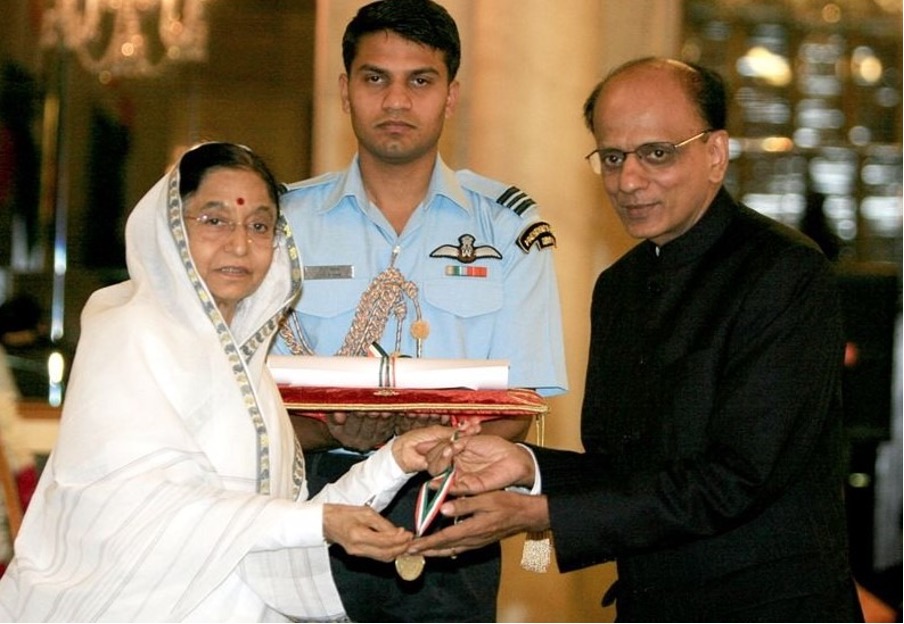
The Legend of the COVID Educator
When the COVID-19 pandemic struck, Krishan found his final, and perhaps greatest, calling. He recognized early on that in a time of crisis, facts were the only antidote to fear. He mastered social media and YouTube, turning himself into a national educator. He became a calming voice in the storm, often citing the importance of scientific evidence to bring clarity to a terrified public.
He worked with the same incessant energy that I had witnessed in the medicine wards forty years prior. He spent hundreds of hours counseling, training, and dispelling myths. As destiny would have it, the education of his fellow citizens filled the last year of his life. He fought a protracted battle with the very virus he sought to demystify, eventually passing away on May 17, 2021, at the All India Institute of Medical Sciences.
A Legacy of Spiritual Equanimity
Krishan once famously said, “I do not want my death to be mourned; I would like you to celebrate it.” He viewed death as a natural feature of the overall landscape of one’s life, balancing medical science with a profound spiritual equanimity. He left behind an expansive legacy—articles, books, and scholarships—but his greatest contribution was the fire he ignited in the hearts of his colleagues and the hope he provided to his patients.
He succeeded in carving a very special place in the landscape of Sevagram and in the history of Indian medicine. He was a man of science, a man of facts, but above all, he was “Kissu”—a boy with a stethoscope and an innocent grin who believed that to serve a patient was to serve the truth. Rest in peace, Krishan. We shall miss your energy and your brilliance forever.
Shared Journeys & Connections
- Dr. Anita Mehta Kant (Roll No. 3)
His lifelong academic peer and desk-mate; he famously sketched the “doodles of wisdom” that guided her through her pathology exams.
- Dr. Madhu Kant (Roll No. 19)
A fellow resident of the 1975 batch who witnessed Krishan’s ascent from the medicine wards to national prominence.
- Dr. S.P. Kalantri (Professor of Medicine)
The author of this tribute and his senior resident in 1982, who shared a four-decade-long chord of clinical empathy.
- Dr. Aruna Mutha Jain (Batch of 1976)
A colleague from the 1982 Academy of Medical Sciences who shared the stage during his formative years of public speaking.
Dr. Madhu Kant
I was born on 20 April 1956 in Delhi, the eldest of three brothers and two sisters. My father was an engineer, serving as a Wing Commander in the Indian Air Force. Till the third grade, I stayed at home with my parents. Then I was sent to St. George’s College, Mussoorie. From then on, my life was mostly in hostels.
After Mussoorie, I studied at Air Force School, Subroto Park in Delhi, till the eleventh grade. Then I went to DAV College, Chandigarh for my pre-medical studies, again in a hostel. By the time I arrived at Sevagram, I had become used to shifting schools, adjusting to new routines, and living with strangers. Hostel life was second nature to me.
Why medicine?
In those days, choices were limited. If you were good at studies, you either became an engineer, a doctor, or joined the National Defence Academy. I was scared of mathematics, so engineering was out. I tried for NDA but failed. My father then suggested, “There is no doctor in the family. At least one should be there.” That settled it.
My first aim was to join the Armed Forces Medical College, Pune. It suited both my ambitions: I could study medicine and then join the Army. Those days, admission to medical colleges was highly competitive. I sat for several entrance exams—Banaras, Aligarh, Pune, and Sevagram. MGIMS Sevagram asked us to study four books on Gandhi, which I had read carefully. To my surprise, I topped the Sevagram merit list. That was the only time in my life I ever stood first in an exam.
When the telegram arrived, my father was posted in Madras. I set off alone from Delhi with just enough money to buy a third-class train ticket. I lodged in Hotel Annapurna opposite Wardha station. From there, I took a cycle rickshaw to Sevagram.
The first person I met was Deepak Fuljhale, a senior from the 1974 batch. Unfortunately he died of a premature death, of a heart attack in 2001. He looked like a film hero, neatly dressed and confident. He asked me where I was planning to stay. I said I had no idea. He took me to the hostel and told me, “You are a topper. Don’t worry about money. Tonight, you are my guest.”
I told him I had an AFMC interview the next day in Pune. Sevagram was only a stopover, I thought. But fate had other plans.
AFMC dream ends
At Pune, I cleared the interview. But during the medical examination, the doctors found that I had retinal degeneration in one eye—probably from a football injury in school. Until then, I had never realized I had poor vision. The verdict was final: I could not join the Army.
Crushed, I returned to Sevagram with blurred eyes from dilating drops and hardly any money in my pocket. Still, something about Sevagram felt right—the Anna Sagar lake, the simplicity of the campus, the warmth of the people. My father, hearing of my rejection, agreed to send money for the admission fee. Mr. Gavai, the principal’s secretary, helped me tide over the first few weeks till the funds arrived.
That was how Sevagram became my home.
Student years
Our batch had 56 students, of whom only 12 were girls. Friendships formed quickly. My closest companions in the beginning were Amin, Rajesh Mishra, and Akhil Saxena. Later, I grew close to Shirish Dhande, Kolte, and Krishna Agarwal. Hostel life was lively, full of pranks, arguments, and late-night study sessions.
Slowly, a group of seven formed—Rakesh Gupta from Jhansi, Krishan Agarwal from Delhi, D.P. Singh from Benares, Rajesh Mishra from Lucknow, Surendra Shastri from Bombay, Akhil Saxena, and I.
I was steady in studies, usually among the top four, always trailing Krishna Agarwal and Kapil Gupta. I loved surgery and scored high marks in it.
The teachers left a deep and lasting impression on me.
Dr. Ramdas Belsare, a reader in orthopaedics, was among the most approachable professors I have ever known. His Marathi was rustic, his English simple, but he had a rare gift for connecting with patients and students alike. He treated us more like his children than juniors. Many times, he would take me along on his scooter to nearby villages, where he was conducting an ICMR project. Together, we administered polio drops to children.
He also owned an orange orchard in Amravati, which he fertilized with neem seeds. They were called nimboli. Every morning at six, he and I would collect neem seeds around Anna Sagar, fill a bag, and strap it onto his scooter. I never considered this menial work; to him, it was part of the bond we shared. From him, I learned that respect between teacher and student comes not from hierarchy but from trust.
Dr. Kush Kumar was the opposite—tall, authoritative, and commanding. His English was flawless, and he could read an X-ray as if it were his own handwriting. He was deeply involved in the leprosy project at Sevagram. Children with deformities would travel from distant villages to our orthopaedic department, and we learned how to correct them.
When Dr. Kush Kumar assumed leadership of the Orthopaedics Department at MGIMS, he inherited a dedicated team and a significant mission—a pioneering ICMR-funded pilot project focused on rehabilitating children affected by polio. As the chief investigator, he led a multi-institutional effort to restore mobility and dignity to these children. Dr. N.K. Kapahtia, then a research associate and MS Orthopaedics trainee from Nagpur University, played a key role in the project.
Under Dr. Kumar’s guidance, the department launched workshops to provide free orthotic and prosthetic devices—ankle-foot braces, hip supports, spinal aids, and custom footwear. Each child received personalized fittings and physiotherapy, both pre- and post-surgery. In one year alone, nearly 190 children received surgical aids, many taking their first confident steps with newfound independence.
Academically, the department flourished. Dr. Madhu Kant researched the management of plantar ulcers in leprosy, while Dr. Kapahtia evaluated foot and ankle deformities in poliomyelitis. Dr. Kumar’s tenure was marked by a dual focus on compassionate clinical care and rigorous academic inquiry.
The department balanced clinical compassion with academic rigor. My own research was on the management of plantar ulcers in leprosy, while my colleague Dr. Kapahtia studied foot and ankle deformities in poliomyelitis. Beyond individual theses, the project also undertook a community survey to identify children under five with poliomyelitis in both rural and urban settings. Our wards reflected the entire spectrum of the disease, and treatment extended far beyond surgery. Each brace, each artificial limb was carefully custom-made and given free of cost. For us, the greatest reward was watching children reclaim their childhood.
Between Dr. Belsare’s humility and Dr. Kush Kumar’s brilliance, I found my balance as a student. Their contrasting yet complementary styles shaped my learning, and under Dr. Kumar’s guidance, I completed my thesis on plantar ulcers in leprosy, while Dr. Kapahtia focused on polio rehabilitation.
The MS exam
By the time our MS examinations arrived, both Dr. Kumar and Dr. Belsare had left Sevagram. Staff transitions were frequent in those years—Dr. S. A. Faruqui went on deputation to Saudi Arabia in 1982, and by 1984, Drs. Wasudeo Gadegone and Naresh Kumar Agrawal had also departed. Left without a recognized guide in our department, Dr. Kapahtia and I had no option but to appear for the examination at Government Medical College, Nagpur.
We were outsiders there—“foreign” students in an unfamiliar setting. Four students from GMC Nagpur and the two of us from Sevagram sat for the MS Orthopaedics examination. The weight of being guests on another campus pressed heavily on us; we felt out of place, uncertain of what lay ahead.
The external examiner was Dr. S. M. Tuli from Banaras, one of the most respected orthopaedic surgeons of his time. Dr. Kush Kumar, our teacher at Sevagram, had obtained his MS in Orthopaedics at the Institute of Medical Sciences, Varanasi, under Dr. Tuli’s mentorship in 1976. For us, it was heartening to know that the man sitting across the table had once trained our own mentor.
On that day, Dr. Tuli traveled from Banaras to Nagpur, officially to examine the candidates, but also with the anticipation of meeting his distinguished former student again. Dr. Kush Kumar, then based in Karad, made the journey to Nagpur as well. He knew his boys—nervous, uncertain, pacing the corridors—needed him. His arrival was a turning point. Just seeing him there, smiling, steady, and reassuring, calmed our frayed nerves.
The atmosphere in the examination hall was tense. The GMC students already knew the diagnoses of their allotted cases, a privilege we did not share. That made us anxious. At first, it felt like a handicap, but as the viva progressed, it became a strange advantage. With no preconceived answers, we had to think aloud, argue logically, and justify every conclusion. What began as a trial by fire soon turned into an opportunity to display clarity of reasoning.
By the end of it, our fears gave way to cautious hope. The examiners seemed to appreciate our honesty and our willingness to reason things through, rather than recite rehearsed answers. Against my own expectations—I had given myself no better than a fifty–fifty chance—we both passed.
That night, in our modest home in Kabir Colony, Sevagram, we lay awake, replaying each question and answer, gripped by restlessness and doubt. Then, close to midnight, came a knock on the door. It was Dr. Kush Kumar himself, having ridden across town on a scooter, bottle in hand. He had come to celebrate with us. That moment has never left me—the relief of success, the warmth of friendship, and above all, the image of a teacher who cared enough to share in his students’ triumph.
Life after Sevagram
I married Anita, my classmate at MGIMS. She went on to do her MD in obstetrics and gynaecology. We moved to Delhi. From 1984 to 1987, I worked as a resident at Hindu Rao Hospital. Thereafter I was offered a GDMO’s job but turned it down.
Around that time, I met the administrators of the Delhi Council for Child Welfare. They ran an adoption program and wanted to introduce a program for handicapped children, especially those disabled by polio. They asked if I could help. I told them I had trained at Sevagram, where polio and leprosy surgeries were routine. That was how my journey with handicapped children began.
At first, we worked from a small clinic. Later, with donations, the NGO built a 28-bed hospital in Janakpuri. Over the next 20–25 years, I operated on nearly 10,000 children with deformities. Every Sunday, I would go out with the team to villages in Haryana, Uttar Pradesh, and Uttarakhand. We screened children, brought them for surgery, corrected their deformities, and then trained them in skills to live independently.
We did not stop at surgery. The girls were trained in sewing and running beauty parlours. The boys learned shoe-making, tailoring, block printing, and computer skills. I knew then that medicine was not just about repairing bones and joints. It was about restoring dignity.
Looking back
When I think back, I sometimes wonder what life would have been if AFMC had accepted me. I might have worn an Army uniform, not a surgeon’s gown. But perhaps it was destiny that sent me to Sevagram. It was there that I met teachers like Dr. Belsare and Dr. Kush Kumar, who showed me the meaning of service. It was there that I learned surgery not as a trade but as a calling.
Sevagram taught me to look beyond myself. The lessons I carried from those years gave me the courage to dedicate my Sundays, my skills, and my energy to children who would otherwise have lived in despair. If thousands of them now walk straighter, live better, and hold their heads high, I owe that to Sevagram.
Dr. Nafisa Kapadia Aptekar
The Byculla Beginnings: A Seed Planted in Bahrain
I was born on 12 January 1956 in Bombay, into a Bohra Gujarati family where tradition and education walked hand in hand. My father, Mr. Rahi Kapadia, ran a modest shop, and by the time I was ready for medical school, my two older siblings were already deep into their own college years. My childhood was shaped by the stern but loving discipline of the nuns at St. Agnes High School in Byculla. They were the guardians of our grammar, correcting every misplaced comma and insisting on a standard of English—and conduct—that became a second religion to us.
The dream of becoming a physician wasn’t something I debated; it was a seed planted early by my maternal aunt, a doctor practicing in Bahrain. That seed grew silently, never needing the water of alternative ambitions. However, the path was not easy. I applied to the heavyweights—AFMC Pune, CMC Vellore, and AMU Aligarh—but the doors remained closed. Even the local medical colleges in Bombay, usually the refuge of city students, were out of reach.
It was through local contacts that I first heard of a fledgling medical college in a place called Sevagram. I prepared for the entrance exam with a gravity I hadn’t felt before, reading Gandhi’s The Story of My Experiments with Truth from cover to cover. I suspect that immersive reading was what finally tipped the scales in my favor. At seventeen, shy and frightened, I made my first trip to Nagpur. My mother and I found shelter with a Bohra family in Wardha, and when I saw my name on the admission list for the 1975 batch, I knew my life had truly begun.
The Sevagram Atmosphere: Accepting the Air
Sevagram in the mid-1970s was not a place of “adjustment”; it was a place of acceptance. The khadi clothes, the vegetarian mess, and the Sarva Dharma Prarthana (all-religion prayers) were not mere rules—they were the very air we breathed. I grew to love those prayers, reciting them by heart even now. I remember a Gandhian line that became my quiet compass: “When in trouble, open the Bhagavad Gita. The first verse you read will guide you.” Coming from the sensory overload of Bombay, I found the lack of city comforts surprisingly liberating. There were no paved roads, no autorickshaws, and certainly no cinema halls or fancy restaurants. But we were so profoundly grateful to have been granted the privilege of medical school that these “shortcomings” simply vanished. My closest bond was with Nikita Bedi, a fellow Mumbaikar. In the absence of city distractions, our batch became an extended family. Your parents became mine; our joys and anxieties were communal. There was nothing to pull us away from each other, so we grew together, rooted in the red soil of Wardha.
Neurology in a Hostel Room
During my first year, the physical toll of the environment hit me—I was struck down by a severe bout of hepatitis. I lay in my hostel bed, yellow-eyed and nauseated, watching the days slip by while my batchmates attended the critical neurology lecture series. I felt I was falling behind, a fear every medical student knows.
That was when Krishan Aggarwal, my brilliant classmate, appeared at my door. “Don’t worry, Nafisa,” he said with that steady calm he was known for. “I’ll teach you.” And he did. He sat by my bed and walked me through the complexities of the nervous system. To this day, I believe Krishan taught me neurology better than any professor ever could have. This was the soul of Sevagram: you were never allowed to stand alone.
Chappals in the Slush: The Lessons of Dr. Jajoo
One of the most powerful influences of those years was Dr. Ulhas Jajoo. He was a striking figure in khadi, a young lecturer with a deep, unwavering commitment to rural health. Every week, rain or shine, he would lead groups of us on bicycles to the nearby villages.
I remember the monsoon treks specifically. The mud would be so thick and the slush so deep that our chappals would get stuck and snap. We would simply abandon them and continue barefoot. It was in those villages that I received my real medical education. I saw why a father would choose to spend his meager savings on a daughter’s wedding rather than a life-saving treatment; I saw why they trusted the local traditional healers over the “big doctors” from the city. Decades later, when I read about the “Social Determinants of Health” in Western textbooks, I would smile—I had seen them all as a teenager, barefoot in the mud of Karanji Bhoge.
From Tata Memorial to the Canadian Heartland
After four years, I returned to Bombay for my internship and married my childhood sweetheart. My career path followed the trend of the time: I took the seat that was available. I ended up in MD Radiology at Tata Memorial Hospital. While I worked as a radiologist for fifteen years, that deep professional “click” remained elusive.
In 2000, our family moved to Canada. I had to repeat my residencies—a grueling task for an established physician—but it led me to my true calling: Family Medicine. Today, as a family physician in Canada, I finally feel the contentment that eluded me in the darkrooms of radiology.
When I look back, the contrast between my Canadian residency and my Sevagram student life is sharp. Canada provided structure, efficiency, and professionalism. But Sevagram provided humanity. In Wardha, you were never lonely. Whether it was a friend, a teacher, or even a local shopkeeper, there was always someone to share a cup of tea and a moment of comfort with. Those four years taught me empathy and the value of community—lessons that make me the doctor I am today. I carry a quiet debt to MGIMS that I can never fully repay, but I carry the place in my heart every time I walk into a patient’s room.
Dr. Pardeep Handa
I still remember the day I stepped out of the train at Ludhiana Junction in June 1984, clutching a suitcase stuffed with medical textbooks heavier than iron blocks. It should have been a day of celebration: I had just completed my MD in Paediatrics at Sevagram, and was returning home to begin a new chapter. But the station was silent—eerily so. Armed policemen lined the platforms, rifles resting against their shoulders, eyes sharp with suspicion.
One officer stopped me.
“What’s in the bag?” he barked.
“Books,” I stammered, pulling back the zipper to reveal Guyton, Nelson, and a pile of notes scribbled during long nights in the paediatric ward. He lifted one of the volumes and frowned, as if medical knowledge itself could be subversive.
Finally, with a half-smile, he muttered, “Very heavy books for such a thin fellow,” and waved me on. I walked through the curfew-stricken town, the streets unnaturally quiet, shops shuttered, the air heavy with fear. This was Operation Blue Star’s Punjab, and I was stepping into it with nothing but my degree, a suitcase of books, and the nervous excitement of a young doctor about to find his place in the world.
Childhood in Ludhiana
But let me step back. My name is Dr. Pardeep Handa. I was born on 13 April 1957 in Ludhiana, the fourth of five brothers in a modest family. My father worked in the local post office—a steady but humble job. Nobody in our family had ever worn a white coat. In fact, in our lane, becoming a doctor was as improbable as reaching the moon.
I studied at Arya Samaj School for eleven years. It was there, in eighth grade, that the idea of medicine first entered my head. My father, a simple man of few words, went to the principal one afternoon.
“Which stream should I put my boy in?” he asked.
The principal listed the options—arts, commerce, science. My elder brother had already chosen the non-medical stream. By sheer elimination, my father said, “Then let him take biology.”
That casual decision sealed my destiny.
Chasing Medical Seats
In those days, boys from Punjab, Haryana, and Delhi sat for every entrance exam they could: AIIMS, BHU, MGIMS, anything that promised a seat. Nobody in my family had even heard of Sevagram. All we knew was that it was a place where people wore khadi and spoke often of Gandhi.
I remember hurrying through a book on Gandhi just before the exam, reading it like a newspaper, barely stopping to understand. But destiny was kind: a telegram arrived one morning. I had been called for an interview at Wardha.
My elder brother and I boarded the GT Express. We reached Wardha and took a room at the Annapoorna Hotel, right opposite the station. The interview itself is a blur. Someone asked me what I thought about Gandhi, someone else about the Emergency—declared only days earlier by Prime Minister Indira Gandhi. What could a seventeen-year-old, who had never read a newspaper with interest, have answered? Yet, somehow, I made it to the waiting list—fourth in line.
I still remember the fifth candidate: Harish Parashar from Adampur. He never let me forget that if I stepped aside, he would step in. Luckily for me, one by one, the names ahead dropped off, and by September 1975, I found myself on a train to Sevagram.
First Days in Sevagram
I had already enrolled in BSc Biology at Punjab Agricultural University because I wasn’t sure my dream would materialize. We were not a wealthy family. Ludhiana’s private medical colleges charged ₹10,000 a year—a fortune for us. My father couldn’t even afford to buy the prospectus. MGIMS, by contrast, charged ₹525 for everything: tuition, hostel, even health insurance. It felt like providence.
I reached Sevagram a month late, in September. The orientation camp was already over. The freshers had already been welcomed, or rather, ragged. I walked straight into A-Block hostel, carrying a steel trunk, a hold-all, and a heart full of nervousness.
Seniors were waiting. Some looked at me as if I were prey, others as if I were comic relief. Luckily, I had one talent—telling jokes. Whenever they pulled me into a corner, I cracked a story, twisted a tale, made them laugh. That was enough to save me from serious ragging. Soon, I was known as the boy who didn’t study much, but who didn’t let others study either.
Cinema, Chaos, and the First Exam
Wardha had three theatres then—Vasant, Durga, and Rajkala. Between them, films came and went with no fixed schedule. Sometimes a movie would vanish overnight, replaced without notice by another. We often bought tickets blindly, entered the hall, and only then discovered what was playing. Even if the film turned out to be dull, we sat through it till the end. Back in the hostel, we laughed at ourselves for wasting three hours—yet went overboard praising the movie. With no online reviews to guide them, our friends believed us, bought tickets, and then returned fuming that we had fooled them. That too ended in laughter, shared as heartily as the film itself.
Our first physiology exam was brutal: two papers, four consecutive days, no break. We studied without sleep, hallucinating by the third night. I remember walking to the hall feeling as if a stone sat on my head. Somehow, we survived.
In those days, railway concession forms were a great amusement. To get discounted train tickets, we went to the dean’s office where a clerk named Gawali filled out the forms. For boys, our ages fluctuated mysteriously between 18 and 24. For girls, it was always fixed at 18. We used to chuckle, “In Sevagram, girls never age.”
Teachers Who Shaped Us
Anatomy was ruled by Dr. Parthasarthy. He could draw diagrams so vivid and colorful that they seemed to leap off the blackboard. His discipline was legendary. Once, a girl ran breathlessly from the hostel, froze at the doorway on finding him already inside, and nearly turned back. Dr. Partha opened the door himself and said, “Come in.” That was enough to silence the whole class.
For some reason, he believed I was a brilliant student. During practicals, he repeatedly handed me the calcaneus bone. I had no idea what to do with it. Each time, I gently pushed it aside. I became desperate and pleaded, “Sir, please give me the femur.” He smiled, as if seeing through my bluff, but obliged.
Not all moments were terrifying. I recall one girl so nervous during the practicals that she ran straight to the railway station, intending to escape. Our classmates dragged her back, and ironically, she topped the exam. We often joked, “Maybe we should have run too.”
Growing Into a Doctor
I drifted at first, more devoted to films and friendships than textbooks. But slowly, medicine caught me in its grip. In the wards, with sick children in their mothers’ arms, I felt something shift. Their cries were not diagrams on a blackboard. They were real, and they demanded answers.
Dr. A.P. Jain, our medicine professor, once told the class:
“I have tested this boy in every sphere. He may not always succeed, but he works hard. Dedication will take him far.”
Those words stuck to me like a blessing.
Back then, Medicine offered only two postgraduate seats, which were taken by Krishan Aggarwal and Kapil Gupta. Paediatrics had just one seat. Sanjeev Chugh from the 1974 batch applied for MD after completing a Diploma in Child Health (DCH) from Rohtak. MGIMS rules at the time did not permit diploma holders to apply for MD, but he went to the High Court and won his case. An additional seat was created for him, and we became co-registrars.
I grew close to my teachers—Dr. B. D. Bhatia, Dr. A. M. Dubey, and Dr. N. M. Mathur. Dr. Bhatia, who had come on deputation from BHU, Varanasi, was an associate professor and became my guide. For my MD thesis, I worked under him on maternal anthropometry and fetal size. He was strict yet deeply supportive. Once, before our MD exams, we asked him for leave to visit Tirupati. He smiled mischievously and said, “Go, pray for good luck. But remember—I am your examiner.” We went anyway, seeking Lord Venkateswara’s blessings—not only for our exams but also for Bhatia-sir’s kindness.
A Brush With Neonatology
Dr. Bhatia carried a vision: to start India’s first DM in neonatology. He corresponded with Dr. A. M. Sur, head of Paediatrics at GMC Nagpur, but eventually gave up that plan in favor of establishing a PhD program in neonatology. Before he could realize that dream in Sevagram, however, his deputation ended and he returned to Banaras. After I completed my MD, he wrote to me: “You could be the first PhD candidate in neonatology.” For a moment, I was tempted. But by then I had taken up a post in Ludhiana, and life was drawing me back to Punjab. Even so, I remain grateful for his faith in me.
Practising in Punjab
It was the first week of June 1984. The army had entered the Golden Temple in Amritsar, and Punjab seemed to hold its breath under curfews and unrest. Even at the railway station, tension was palpable—my heavy bags, packed with medical textbooks, were scrutinized and checked, as though they might conceal a bomb. Every step—from the train to the autorickshaw, from the streets to my home in Ludhiana—felt charged with uncertainty.
Under Dr. Shashi Ahuja, I found more than a mentor—I found someone who taught me to remain steady when the world outside wavered. For nearly ten years, I learned medicine, yes, but also how to offer calm, reassurance, and care amid fear.
Later, when I opened my practice in Jalandhar, parents brought their children not just for treatment, but for the quiet sense of safety and continuity that the clinic offered. In a state shaken by violence, those walls became a small refuge, a place where life—however fragile—went on.
Family and Fulfilment
In 1986, I married Pratibha, a gynaecologist from Amritsar Medical College. She matched my spirit in every way—calm where I was restless, steady where I was impulsive. Together, we built not just a practice, but a home.
Our children carried forward the medical tradition that had once seemed impossible for a postman’s son. My son Siddharth became a colo-rectal surgeon, my daughter Surbhi a gynaecologist. Sometimes I smile, remembering the day my father asked the school principal which stream I should take. A casual question, answered by elimination, had changed the course of generations.
Sevagram in Memory
Today, fifty years later, I look back at Sevagram with nostalgia. At the time, we grumbled endlessly—the food too plain, the language too alien, the village too small. We often joked in the hostel: “Why did Gandhi choose Sevagram? Why didn’t he settle in Shimla? If Nayar had built a college there, we’d be studying in the cool hills instead of sweating here.”
But in truth, Sevagram gave us more than we realized then. It gave us discipline, resilience, and above all, a sense of service. In its wards and hostels, in its endless lectures and sleepless nights, we were shaped into doctors—not just healers of bodies, but servants of society.
As I sit in my clinic in Jalandhar today, listening to the laughter of children in the waiting room, I sometimes hear echoes of Sevagram. The clatter of hostel corridors, the chalk scratching on Dr. Partha’s blackboard, the suppressed giggles during a boring lecture. They come back like ghosts—gentle, affectionate, forgiving.
Life has taken me far from those days, yet every patient I see is in some way linked to the boy who once walked nervously into A-Block hostel, clutching a steel trunk. That boy has grown older, his hair silvered, his voice deeper. But inside, he still carries Sevagram.
Dr. Ramchandra Goel
The rains were merciless the evening I first came to Sevagram. My brother and I, both dripping wet, dragged a tin trunk through the slush. When we reached the A-block hostel, a group of seniors blocked the doorway.
One of them eyed me with mock seriousness.
“From where, boy?”
“Etawah… Nagla Pathak,” I stammered.
“Etawah? Oh ho! We’ll test if Etawah boys can sing.”
Before I knew it, they were clapping. “Sing a song!”
I croaked out two shaky lines of a Bhojpuri folk song. They burst into laughter.
“Good. You’ll survive,” one said, patting my back. That was my ragging.
The next morning, I sat in the interview hall with hundreds of other boys. My palms were sweaty. One professor leaned forward and asked,
“Would you return to your village after becoming a doctor?”
“Yes,” I said.
He raised an eyebrow. “Are you sure?”
“Yes, sir,” I repeated.
“Fine. Go. Results at five.”
When I saw my number on the list that evening, my brother clapped my shoulder. “You’ve made it,” he said. The next morning, he left, and I was suddenly alone.
My life had never been easy. In Nagla Pathak, our village in Post Muri in Etawah district of UP of 700 people, there was no road, no bridge, no slippers on our feet. My father practised Ayurveda, but it was more charity than business. “One paisa for me, nine paise worth of medicine for the patient,” he would say, handing out powders and herbs.
We were six brothers. I was the first doctor in the family, the village, the block and the entire district.
At school, the master would shout, “Goel, sweep the floor today. Tomorrow, sow seeds in the plot outside.” Learning and sweeping went hand in hand.
When I went to Phaphund for middle school, I had to cross a river daily. With no boat, I swam across. One day, a farmer saw me climb the bank dripping wet.
“Arrey, Ram Chandra! Don’t you fear the current?”
I laughed. “Not as much as I fear failing in exams.”
By the time I reached Class 10, I felt like a prince when I slipped on my first pair of slippers. That was also the year I saw a bicycle for the first time, running my hands in wonder over its shiny metal frame. For Classes 9 and 10, I moved 12 kilometers away to a hostel, sharing a room with my cousin. I had opted for science over commerce or arts, and each week I brought ghee and wheat from home by bus—the only bus that stopped six kilometers away. On rainy days, we fashioned makeshift raincoats out of plastic fertilizer sacks, trudging along with whatever we had, learning early to make do with little.
Cooking in the hostel was another battle. My cousin and I lit firewood under a mud stove. One evening, I served him aloo sabzi. He took a bite and spat it out.
“Too much salt! Are you trying to poison me?”
Another day, my rotis turned into papads. He waved one in the air. “See, it bends like a hand fan.”
But within eight months, I became an expert. Hunger is the best teacher.
For Classes 11 and 12, I studied at Rura College in Kanpur district, living with my elder brother, a cousin, and his friend. Among us, I was entrusted with cooking lunch and dinner, while my father sent me five rupees each month—one rupee for rent and four for all other expenses. Around that time, when I was in Class 10, I watched my first film, Aan Milo Sajna, an experience that felt nothing short of magical.
It was my Mausaji who first suggested that I apply to MGIMS. I sat for several entrance exams—AIIMS, BHU, the Uttar Pradesh CPMT, and MGIMS—but failed to clear the CPMT. Then came the call from MGIMS. The fees were ₹625, a sum far beyond our means. My mother, a Marwari woman of deep resolve, sold her golden mangalsutra for ₹700, and my father parted with his ring. With their sacrifices, my elder brother accompanied me to Sevagram for admission. Though I also secured a seat at BHU, the costs there were higher, and so I chose MGIMS—a decision that shaped the course of my life.
On 25 July 1975, I boarded the Dakshin Express from Jhansi, after a slow passenger train had carried me from Kanpur to Jhansi. I reached Wardha East station and quickly discovered there was no direct bus to Sevagram—I first had to get to the main bus stand. I knew no Marathi, but relief washed over me when I spotted a bus marked “Wardha–Sevagram.”
By the time my brother and I reached the boys’ hostel, torrential rain had drenched him to the skin. We found our way to A Block, where a group of seniors began their questioning—the ragging had begun. A boy from Itawa, Gaurishankar of the 1974 batch, took me into his room, where four others joined in the ritual initiation.
The next day was the interview. Six hundred students had come, all vying for just sixty seats. Professors like S.N.L. and M.L. Sharma were on the panel. S.N.L. looked at me and asked in a clipped tone, “Where do you come from? Will you go back to your village and serve there?” All I could muster was a simple “Yes.”
“Alright,” he said. “Go. You will get your result at five p.m.”
At 6 p.m., the results were announced. My number was there—I had made it. The next day, my brother left for home, and for the first time, I found myself truly alone. I went to Sevagram Ashram, where all of us new boys were placed in a single dormitory. There were no single rooms, no luxuries. Life began each day at 5 a.m. with prayer, followed by cleaning, washing our clothes, and community duties—helping in the kitchen, maintaining cleanliness, working in the goshala, or lending hands for shramdaan. We spent an hour in the fields doing agricultural work and another spinning yarn on the charkha, each of us expected to weave our own cloth. We also studied for the Sarvodaya Gandhi exam, a regular feature of our ashram life.
Our professors—Dr. B.C. Harinath, Ingle, Deshkar, and later Sutikshan Pandey—often held classes within the ashram itself. Hostel rooms were allotted not by choice but by performance in exams. I was given Room No. 5 in A Block, where Sutikshan Pandey and Naik Sir were the rectors, and Bele was the ever-watchful clerk. The recreation room stood nearby, a modest escape for students.
The monthly mess bill was about ₹90—only in the final year did it climb to ₹156. As a member of the mess committee, I had to supervise meals, which often drew sharp complaints from colleagues. Pithale satisfied the Maharashtrian palates, while rajma was a favorite for us North Indians.
One day, while serving in the mess, a fellow student grumbled, “Why always pithale? Can’t we have rajma like in North India?”
I snapped, “Then stand here and cook for yourself!”
Later we laughed about it, but those were the small fires of hostel life.
Discipline was strict under Behenji, who oversaw everything with quiet but firm authority. Khadi was compulsory—curtains, bed sheets, and clothes all had to be hand-spun. In Sevagram hostel, we woke at 5 am for prayers, swept the dormitory, spun cotton on the charkha, and worked in the fields. Behenji tolerated no breaches of discipline. If she found a heater, it was confiscated at once. She even tracked down students who smoked, inspecting the oxidation ponds for telltale stubs and confronting the culprits without hesitation.
Our professors left an indelible mark on us. Dr. Moghe in Pathology—stern yet kind—would remind us, ‘You must see the patient, not just the microscope slide.’ Dr. Parthsarthi brought a military discipline to the anatomy dissection hall. And Dr. Harinath, in Biochemistry, enlivened the Kreb’s cycle with stories from his days in the USA.
A unique feature of the hospital at that time was the GOPD—General Outpatient Department. Managed by the Department of Community Medicine, it functioned as a replica of a primary health centre within the hospital. Interns and students were regularly posted there under the supervision of PSM faculty. Every patient first reported to the GOPD, from where we would escort them to Medicine, Surgery, or Paediatrics OPDs, or take them for investigations in Pathology or Radiology. We were expected to follow each patient throughout the process. In whichever OPD we accompanied them, the physicians would pause to teach us how to approach diagnosis and treatment.
Each patient had to be escorted to pathology, radiology, everywhere. “A doctor must never abandon his patient halfway,” they said.
After my MBBS, I did my first house job in Ophthalmology under Dr. S.K. Dhawan, with Dr. Praveena Kher and Dr. Sanjay Shrivastava as faculty. My second house job was in Surgery. I had always dreamt of becoming a surgeon, but to qualify I needed prior experience in an allied subject—not in Community Medicine. When I sought Behenji, Dr. Sushila Nayar’s advice about applying for Surgery, she smiled and asked, ‘Have you heard of community ophthalmology?’ With that question, my career path changed. Though I had secured seats in Ophthalmology and Surgery at GMC Nagpur, I could not refuse her. And so, I entered Community Medicine.
At that time, the department was led by stalwarts—Dr. Sushila Nayar herself, Prof. B.K. Mahajan, Dr. Mohan Gupte, Dr. K.K. Ghuliani, and Dr. Naresh Tyagi. Each morning began with duties at the GOPD; afternoons were devoted to postgraduate sessions. In Community Medicine, there were only two of us—Agrawal from the 1974 batch and myself. The unwritten rule was whispered often: only one would make it through.
When my final exam came, the panel was formidable—Dr. R.N. Srivastava from Jhansi and Dr. P.V. Sathe from Pune as externals, with Dr. K.K. Ghuliani and Behenji, Dr. Sushila Nayar, as internals. Behenji fixed her gaze on me and said, ‘I will ask you four questions. Answer them, and you pass. Fail them, and you are out.’
I answered all four. She smiled. And with that, I had passed.
Behenji was also my thesis guide. For my MD thesis, I studied how healthcare was delivered in three villages under the Talegaon Primary Health Centre in Wardha district. I would quietly watch the anganwadi workers and ANMs as they worked, noting what they did, without them knowing I was assessing their performance.
Our training under her was rigorous. We would sit outside Prerna Kutir, her Sevagram home, at 9 a.m., waiting for her to call us in. Often, she summoned us only by 5 p.m. She would go through our drafts line by line, correcting spellings—especially since many of us had studied in Hindi medium. Just as I was preparing to submit, Behenji asked me to cycle through villages and collect fresh data on malnutrition in under-five children. Dutifully, I revised and rewrote my thesis.
There were no computers then—everything was typed manually by Mr. Bawase, the typist. After countless corrections and retyping on a manual typewriter, she finally approved my thesis.
On 30 July 1983, the very last date for submission, she asked me to meet her at Nagpur airport before her flight to Delhi. There, standing near the boarding gate, she signed my thesis. I rushed to get it bound and submitted it just in time to Nagpur University.
Somewhere in between, love entered quietly. She was a young nurse in Orthopedics in Sevagram. Her name was Baby. Our first encounter was not pleasant.
“Please fix this IV,” I asked wearily after a long surgery. I was an intern then.
She glared. “That’s your job, not mine.”
I muttered, “Then what are you here for?”
For fifteen days, we did not speak.
But later, when I fell ill with renal colic, she brought me food, medicine, and comfort. Slowly, affection grew. One evening, over tea from the tapri across the hostel, I confessed,
“I have no money, no support. And our religions are different.”
She looked me straight in the eye. “All I want is honesty. The rest doesn’t matter.”
In 1983, we married in a hostel room at Kabir Colony. Professors came—Dr. Sharma, Dr. Chatterjee, Dr. Khapre. Behenji herself supervised the dinner, asking each guest personally, “Have you eaten?” Watching her, tears welled in my eyes. My friends pooled money to buy household essentials. It was a wedding of love, not luxury.
Now, when I look back, I remember the kindness of strangers: Babulal, the helper who stayed by us always; Chhotu, the bread-seller who never asked for money; and my parents, who sold their jewellery to send me here.
I, the barefoot boy who once swam across rivers to attend school, had become Dr. Ram Chandra Goel. And sometimes, when villagers call me Doctor Saab, I still hear the voice of that professor asking long ago, “Will you go back to your village and serve?”
And my answer remains the same: “Yes.”
Dr. Vijay Sharma
It was during a routine ward round in my first week at Sevagram that I first understood how fragile life could be. I had just been admitted to MGIMS as a first year student of the class of 1975 and had spent barely the first week of the two-week long fortnight, our orientation camp. I developed malaria , and was admitted to the medicine general ward when Dr Shyam Babhulkar, the intern and Asha Ramachandran, one of the senior medical students, placed her stethoscope on my chest.
“Wait… wait,” she said, frowning. “Do you hear that?”
I looked at her, puzzled. “Hear what?”
“That murmur—your aortic valve. Have you felt short of breath?”
I shook my head, not fully understanding. Within minutes, Dr. O.P. Gupta confirmed her finding, and then Dr. A.P. Jain examined me with a calm, clinical air. “Yes,” he said finally. “You have a leaking aortic valve. This is serious.”
I remember sitting there, stunned. The words echoed in my mind. My dream of studying medicine, of becoming a doctor to serve people, seemed to crumble before it had even begun. My heart—the very organ I had wanted to heal in others—was faulty in my own body. For a moment, I feared my journey in medicine was over.
But life, I would soon learn, has a strange way of testing and rewarding resilience.
Roots in Punjab
I was born in Chamunda Devi, a small village about twenty-five kilometers from Amritsar. My father had migrated from Karachi, my mother from Sialkot, both uprooted by the Partition. My mother married at fifteen, and I arrived when she was eighteen. My father worked in the electricity department, and money was always scarce. Our three brothers shared a single room, yet my parents never compromised on education.
I remember my mother counting pennies and stitching clothes until late at night, just so we could attend the best schools. “Education is our only treasure,” she would say, her voice soft but firm. That treasure proved its worth: all three of us won national scholarships, easing our parents’ anxieties.
In our town, medical care was mostly in the hands of quacks. Once, during my school days, my knees swelled painfully, and my mother took me to a local healer. I suffered for weeks before the swelling subsided, only later learning it was rheumatic fever. That early brush with illness left a permanent mark on me: I wanted to provide proper medical care to towns like mine, where knowledge and skill were scarce.
Though most bright students in our generation leaned toward engineering, I felt an unshakable pull toward medicine. It was not a glamorous choice, nor a safe one for a poor boy like me—but it was mine.
Sevagram Beckons
My first attempt at a medical entrance had failed. But fate intervened when a friend who got admission at Aligarh suggested I try MGIMS. We were brahmins, pure vegetarians, and would not even touch an egg. Let alone eat it. Religion ran deep in the family and my parents believed in selfless service. My father, a man who believed deeply in tradition and discipline, was impressed by Sevagram’s strict code of conduct. “This is the right place for you,” he said.
We traveled from Ropad to Old Delhi Station and boarded the GT Express to Wardha. Money was tight—five thousand rupees for tuition, hostel, and mess. My father hid it under the sole of his shoe for safekeeping. The third-class compartment was packed; I sat atop our iron trunk while he stood beside me. At Bhopal, unaware that we were in a reserved coach with an unreserved ticket, the conductor demanded we leave. Panic rose. But luck, in the form of Dinesh Sharma from the 1971 batch, came to our aid. He arranged our seating, advised my father on a small bribe—his first ever—and thus, we reached Sevagram.
At the Annapurna Hotel, along with other parents and students, I waited for my interview with Dr. Sushila Nayar. She asked, “Why do you want to be a doctor, and why MGIMS?”
I stammered, words tumbling out: “I… I come from a Brahmin family… purity in thought, deed, and food… and I find that here in Sevagram.”
She looked surprised at the awkward seventeen-year-old before her but allotted me a seat. The journey had begun.
Orientation at Gandhiji’s Ashram was meant to be a week of inspiration, reflection, and bonding with my new peers. Instead, it became the beginning of one of the most challenging periods of my life. Within days, I fell ill with malaria. The fever drained me of strength, and soon I was admitted to the medicine ward. It was there, amid the quiet hum of fans and the soft murmur of patients, that something unexpected happened—a murmur was detected on my chest.
A leaking aortic valve.
I remember the moment with startling clarity: the stethoscope pressed lightly on my chest, the pause, the concerned glance exchanged between the young medical student and the resident doctor. Soon, the matter escalated to the medical board. I was asked to secure a fitness certificate from PGI Chandigarh before I could continue my medical education.
I had been to Chandigarh before, and that familiarity gave me courage. Carrying a letter from Dr. M.L. Sharma, our principal—who happened to be a classmate of Dr. P.S. Bidwai at GMC Nagpur in the early 1950s—I sought the professor’s advice. Dr. Bidwai, by then a towering figure in cardiology, welcomed me with a warmth I had not expected from someone of his stature.
He listened attentively, eyes kind but focused, fingers lightly pressing to feel the pulse. “You have a leaking valve,” he said finally, the weight of his words tempered by calm reassurance. “But I see determination in your eyes. You can continue.”
He issued the certificate, his manner as gentle as a teacher’s rather than the formal stiffness I had braced myself for. He even insisted I join him for a simple meal—bread, butter, and tea—sharing a quiet conversation about perseverance and purpose. By the time I returned to Sevagram, my admission was secured. Whispers of the wait-listed candidates faded into the background. That brief, seemingly minor encounter cemented a lifelong belief: the strength of the heart was as much mental as it was physical.
Friendships formed quickly at Sevagram, forged in long walks across dusty courtyards, late-night study sessions, and shared struggles with ragging and exams. Narendra Kapahtia, Rajesh Chauhan, Krishan Aggerwal, and Kapil Gupta became my pillars, companions who understood the peculiar pressures of medical life. Arvind Garg and Hari Oam, senior students from the 1974 batch, offered guidance that would prove invaluable.
I remember one evening vividly: it was the time of the traditional “ragging” for new students. As part of the ritual, I had to complete Arvind Garg’s practical books—a challenge he set with a mischievous glint in his eye. In return, he gifted me his meticulously handwritten class notes on Anatomy, Physiology, and Biochemistry, and later on clinical subjects. Each page was a work of art: neat diagrams, precise annotations, and notes distilled from countless hours of study. Those notes became my lifeline. Through their guidance, I navigated the rigors of medical school and ultimately secured a place among the first five in my class.
Even today, I remember the quiet lessons embedded in those early trials: the power of kindness, the value of mentorship, and the unshakeable strength that arises from determination. Sevagram, with its simple hostels, dusty corridors, and echoes of Gandhi’s ideals, had already begun shaping not just my career, but my very character.
Sevagram Lessons
During our second MBBS, our batch was sent to Nagpur by bus for postings at the mental hospital and the TB hospital. The long rides were supposed to be about observation and learning, but for half the students, including me, they became a chance to explore the city. Many of my classmates simply vanished once we reached Nagpur, spending their days wandering, eating lavish lunches, and watching films instead of attending the clinics. I followed suit, at least on the surface.
One afternoon, we found ourselves at Liberty Theatre in Sadar Nagpur. The movie that day was a documentary on the life and work of Dr. Michael DeBakey, the legendary cardiac surgeon. I remember sitting in the dimly lit hall, mesmerized. The precise, fearless hands performing surgeries, the innovations that changed hearts and lives—it all seemed almost mythical. For a boy nursing his own aortic valve leak, it was electrifying. I leaned closer to the screen, my heart beating faster—not with fever this time, but with possibility.
Back in Sevagram, my fascination grew. I began devouring every book I could find on cardiac surgeons and their work. The college library became my sanctuary. I would sit for hours, leafing through texts, scribbling notes, absorbing techniques and case studies as if my own life depended on it—which, in a sense, it did.
It was in one of those books that I discovered Dr. DeBakey’s address. With a mixture of trepidation and hope, I penned a letter: “I am a medical student in India. My aortic valve is leaking and needs replacement by a mechanical valve, but I do not have the means to afford surgery. I seek your guidance and help.”
Weeks later, a reply arrived. My hands trembled as I read it: Dr. DeBakey would waive his professional charges and minimize hospital costs. He was willing to operate on me. I sat there, stunned and grateful. It was a gesture of generosity I had never imagined. But the practicalities of life were harsh. I did not have a passport, a visa, or the funds to cover travel and accommodation. I had never boarded a plane. Despite the positive response and the tantalizing possibility of life-saving surgery abroad, I had no choice but to abandon the plan.
Even so, that exchange left a lasting impression. It was proof that the world could be generous, that doors could open if one dared to knock, and that determination could attract unlikely allies. It strengthened a resolve I had already begun nurturing: one day, I would master cardiac surgery—not only for my own heart but for the hearts of countless others.
During my house job in Medicine and Surgery, I was torn between the two paths. Medicine fascinated me—the intellectual challenge, the careful observation, the detective work of diagnosing patients. At that time, Dr. K. L. Khatri led the Department of Medicine. His discipline was legendary: six o’clock morning classes, late evening bedside teaching, and a relentless attention to detail. Watching him, I understood that excellence demanded both rigor and devotion. Yet, I felt an irresistible pull toward surgery—the precision, the immediacy, the chance to intervene directly and change lives.
At a crossroads, I returned to PGI Chandigarh and sought counsel from Dr. P.S. Bidwai, who had already seen me through my early cardiac challenges. “Vijay,” he said gently, reading my hesitation, “you have the skill, the temperament, and the courage. Cardiac surgery is where you belong.” Those words sank deep into my heart, and I resolved to pursue an MS in Surgery.
I began my postgraduate journey in the surgical department, spending three formative years under the exacting yet inspiring guidance of Dr. Karunakar Trivedi. My thesis focused on common surgical illnesses in the villages around Sevagram—hydroceles, hernias, perforated peptic ulcers, inflamed appendix, breast cancers, and thyroid disorders. Alongside me were several remarkable postgraduate students, whose dedication and camaraderie enriched those years: Khushu (1974), Jafri, Prabhu and Mittal (1976), Mandapaka, Naik and Akulwar (1977). Working together under Dr. Trivedi’s mentorship, we shared both the challenges and the rewards of learning, forging memories that have stayed with me ever since.
Dr. Trivedi, a USA-trained cardiac surgeon, began performing simple cardiac surgeries in Sevagram in the late 1970s—a rare sight in small-town India at the time. I often served as the fifth assistant in the operating theatre, performing tasks that seemed mundane but were crucial—measuring urine output, recording blood pressure, and observing every subtle nuance of technique.
One day, during a routine mitral valve repair, the patient’s blood pressure suddenly plummeted. My heart raced as I sprinted to the blood bank, returning with two bottles clutched tightly in my hands, and began the infusion immediately. Those were different times: blood was not screened for HIV, hepatitis, or malaria, and transfusions were given directly. Dr. Trivedi repaired the bleeding vessel, and the patient—a Marwadi woman from Wardha—went home safely.
A few days later, when he was invited to her home for dinner, he brought me along and told the family, “This boy deserves the credit. Without his quick action and presence of mind, you would not have survived.” That day, I understood what truly distinguishes a great surgeon: the humility to share credit, the wisdom to nurture juniors, and the generosity to recognize courage when it matters most.
Equally inspiring was the dedication of Dr. Shyam Bhabhulkar (MGIMS 1969 batch) and Asha Ramchandran (1973). When I was admitted to the medicine wards for malaria and discovered I had a leaking valve, they were almost always there—watching over patients, checking every vital sign, and patiently answering questions. Their devotion left a deep impression on me: medicine was not just a profession, it was a calling, one that demanded persistence, care, and empathy.
The third lesson came from Dr. Belokar, an AIIMS-trained urosurgeon in the surgical wards at Sevagram. During a bedside clinic, he exposed a patient’s wound that gave off a foul odor. The students instinctively recoiled, covering their noses, but Dr. Belokar remained calm and firm. “If you cannot face the patient, how will you care for them?” he asked. He sent the students out and only allowed them back after they apologized. That moment stayed with me: being a doctor means confronting unpleasant realities and attending to patients without flinching.
These lessons—technical mastery, and dedication to patient care—became the foundation of my journey. They shaped not only how I approached surgery, but also how I envisioned the life of a doctor: disciplined, compassionate, and fearless.
Choosing Surgery
Medicine tempted me, but surgery called. Once again, I returned to Dr. Bidwai at PGI Chandigarh. “If you want to fight your destiny,” he said, “become a cardiac surgeon.” The words resonated. I chose MS Surgery, worked under Dr. Karunakar Trivedi, and learned every detail of cardiac surgery, from measuring urine output to emergency transfusions.
Training took me from GB Pant to Safdarjung Hospital, then abroad for exposure—Uppsala, Chieti, Cleveland Clinic, Emory. Each place added a layer to my skill, yet my mind never forgot my childhood or the boy who once feared he would never practice medicine.
In 1993, Dr. Naresh Trehan operated on me, replacing my aortic valve with a St. Jude valve. Four decades after my first murmur, my heart beat fully, robust and strong—a living testimony to resilience and mentorship.
Across India and Beyond
My journey in cardiothoracic surgery began in 1988 at Fortis Escorts Heart Institute, Delhi. The operating theatres, long nights, and relentless learning quickly became my world. I still remember my first complex surgery—hands shaking, heart racing—but each incision brought a surge of purpose. Every patient had a story; every surgery was a challenge.
In 1995, I moved to Jalandhar to head cardiac surgery at BBC Heart Care. The hospital was small, resources limited, yet the community’s trust was immense. I spent nights beside patients, listening to the rhythm of their hearts, ensuring each beat was safe, while the distant temple bells and street vendors reminded me of life beyond the theatre.
Over the years, I helped establish three cardiac centres in Punjab and achieved several regional firsts: the first CABG in Punjab, beating-heart CABG, mini-sternotomy valve replacement, Bentall’s operation, and India’s first endoscopic internal artery dissection. In 1997, I received the Shaheed Ramesh Chand Memorial Award.
After stints at Tagore Hospital and BBC Heart Care, I led the department at Mukat Hospital, Chandigarh, before returning to Fortis Escorts in Delhi. From 2003 to 2014, at Hero DMC Heart Institute, Ludhiana, each day brought complex cases, anxious families, and the quiet satisfaction of lives changed.
In 2014, I became Director of Cardiac Surgery at Fortis Healthcare. Mentoring young surgeons and shaping programs brought immense joy. Today, at Ludhiana Mediways, I continue to operate, teach, and learn with the same intensity I felt on that first day in the operating theatre—each patient a reminder of why I chose this path.
Reflecting on my journey, I often return to those dusty Sevagram corridors, the evenings spent reading cardiac texts, and the small acts of kindness from mentors like Dr. Bidwai. From a sickly boy in Punjab to a surgeon whose hands mend hearts, the journey has been long, winding, and profoundly human. Every patient, every mentor, every challenge has taught me that medicine is not just a science—it is a testament to resilience, courage, and the enduring power of the human heart.
Dr. Anil Gomber
The Delhi Roots and the Botanic Commentator
I was born and raised in Delhi, a city of high ambitions and fierce competition. After school, I enrolled at Zakir Hussain College (then known as Delhi College) near the Delhi railway station for my BSc Part One. I was an academically strong student, but looking back, perhaps it was a touch of overconfidence that led me to miss out on the local Delhi medical colleges.
One of my most vivid memories from that time wasn’t of medicine, but of my Botany teacher. He was a popular Hindi cricket commentator, and his lectures often felt as rhythmic and engaging as a radio broadcast during a test match. While I enjoyed the greenery of Botany, my heart was set on the white coat. While attending a pre-medical coaching class, I heard a whisper about a unique institution in Maharashtra: MGIMS Sevagram. The catch was the “Gandhian Thought” paper—a 60% score was mandatory. I hunted through the bookshops of Delhi, buying every title I could find on the Mahatma, reading his Autobiography and Constructive Programme from cover to cover.
The Train Journey and the PNB Connection
I must have performed well in the entrance test, as an interview call soon arrived. My father, who was a manager at Punjab National Bank in Delhi, reached out to his colleague, Mr. Sunderlal Chandna, the PNB branch manager in Wardha. Thanks to that professional kinship, we had a comfortable holiday home near the station to rest our heads before the big day.
The journey itself was a prelude to the lifelong friendships of medical school. In my train compartment was Gauri Thuli, who was also traveling for the interview with her father. We didn’t know then that we would spend the next several years as batchmates in the Class of 1976.
The “Googly” and the Bold Answer
The interview panel was a formidable lineup of the institute’s giants: Dr. Sushila Nayar, Dr. Manimala Chaudhuri, and Prof. M.L. Sharma. Dr. Nayar, known for her sharp insight, threw me a curveball right at the start.
“What would you do if you are not selected?” she asked.
I didn’t blink. I looked her straight in the eye and told her that medicine was my lifelong ambition and that the decision was entirely mine, not my parents’. I told her I was confident not just of getting in, but of becoming a doctor she would be proud of. “And if I don’t make it this year,” I added, “it doesn’t matter. I will come back next year and get into Sevagram.”
Dr. Nayar turned to Dr. Sharma with a smile. “This boy looks very confident,” she said. “Select him.”
Choosing Sevagram over Ludhiana
Almost simultaneously, I received an admission offer from CMC Ludhiana. However, the financial contrast was staggering: CMC required nearly ₹74,000 a year, while Sevagram was a manageable ₹10,000. My stubborn confidence had not only won me a seat but had also led me to a place where the values of the Ashram would temper my Delhi-bred ambition.
I arrived in Sevagram as a boy from the capital who had never heard of the village just months prior. I left it as a physician who understood that confidence is only valuable when it is put to the service of those in need.
Dr. Aruna Mutha
The Salt and the Ashram: A Cultural Jolt
“Mith Aan,” I said casually to Premdas, asking him in Marathi to pass me some salt at the Sevagram Ashram when we sat for our dinner. We were first year medical students who had just joined the medical college.
Before he could respond, Narinder Sandhu from Delhi nearly leapt from her seat.
“How dare you ask for meat here?” she cried, her eyes wide with shock. “This is Gandhiji’s Ashram!”
The hall went silent for a moment before laughter rippled through the room. It took us several minutes to explain that in Marathi, mith meant salt, not the forbidden non-vegetarian fare. Narinder, embarrassed but still suspicious, shook her head. “Strange language,” she muttered.
That little misunderstanding in the first week of my medical college life in Sevagram has stayed with me. For a Pune girl who had never stepped out of her comfort zone, life in a Gandhian ashram was a daily series of surprises, challenges, and adjustments—some hilarious, some humbling.
I was born in Pune, the daughter of Hemraj Mutha, a wholesaler of stationery, and Shakuntala, a homemaker who anchored our household with quiet grace. I had always done well in my studies, topping my SSC examination. My parents were proud, but I was content with the idea of staying in Pune, studying something close to home. In those days, it was not considered proper for a “gentle girl” to move far away for studies.
But my father was determined that I should become a doctor. “Doctors are respected everywhere,” he often said, “and a girl with this talent should not waste her chance.”
It was April 1976. For the first time, I felt the Vidarbha heat. I saw cycle rickshaws on the road and refused to ride in one, unable to bear the thought of a man pulling the rickshaw with me seated in it.
He had heard of a new medical college in Sevagram—Mahatma Gandhi Institute of Medical Sciences. When their pre-medical entrance test was announced in Nagpur in April 1976, he insisted that I appear. “At least go and see,” he said. “You won’t stand a chance anyway.
Thousands of students will take the exam, and there are only 20 seats for women.”
To my own surprise, I did well. A telegram arrived, calling me for an interview. I protested.
“I don’t want to go,” I told my father. But he persuaded me, and we traveled to Sevagram.
The Interview: A History Lesson with Behenji
I had never been so nervous. Inside the principal’s office, eight or ten people sat around a table—Manilala Chaudhary, Dr. M.L. Sharma, Shriman Narayan. Then I saw Dr. Sushila Nayar herself.
“Where are you from?” she asked.
“Pune,” I said, my voice barely audible.
“What is Pune famous for?” she continued.
I blurted out what came to mind: Shivaji Maharaj, Shaniwar Wada, Saras Bagh, Ganpati Temple.
“Anything else?”
“Yes, Aga Khan Palace,” I said hesitantly.
“What is it famous for?”
“In 1942, Gandhiji and his colleagues were imprisoned there,” I replied.
“And who was with him?”
“Kasturba Gandhi and Mahadev Desai.”
She smiled. “Do you know Sushila Nayar?”
“No, ma’am.”
“Would you like to meet her?”
“Yes, of course.”
“Well, you are meeting her right now,” Dr Sushila Nayar laughed heartily.
“Would you like to study in this college?”
“Yes, ma’am.”
“Then come and join tomorrow.”
The interview was over. Not a single question was asked about physics, chemistry, or biology.
That was it. Not a word about physics, chemistry, or biology. By evening, the results were pinned on the notice board. Ashok Mehendale from Pune had topped the list, and I was second—and among the girls, I was the topper.
I went back to Pune. A month earlier, I had taken admission in St John’s Dental College, but now I collected all my certificates and transfer letters and returned to Sevagram.
That little scrap of knowledge about Pune’s history and Aga Khan Palace had changed the course of my life.
The rest is history.
Our class of 1976 was special—we had a record number of girls, twenty-one of us. On 1st August, we were packed off to Gandhiji’s Ashram for a two-week orientation. Life there was stark and austere. At 4:30 a.m., when most of us would rather be lost in dreams, Mr. L.R. Pandit, the camp in-charge, and his gentle wife, Manorama-bai, would wake us for prayers under the very pipal tree where Gandhiji had once sat. The girls from North India, who had never seen a morning that early, would rub their eyes in disbelief. But rules were rules.
Khadi was non-negotiable. The tailor from Wardha, who kept a shop near Durga Talkies, almost dropped his scissors when we asked him to stitch trousers. “Girls in trousers?” he muttered, shaking his head in horror. Within hours, the news had spread like wildfire: “The Pune and Bombay girls wear trousers!” Until then, girls from the earlier batches had worn only saris or salwar-kameez, their hair oiled and braided in traditional styles. But our batch broke the mold—some of us wore boy-cuts, a sight that shocked Sevagram’s sleepy conservatism.
For us city-bred girls, Sevagram was full of new lessons. The Indian-style toilets left some bewildered—“How do you even sit on this?” Narinder, soon rechristened ‘Nimmi,’ asked one morning, half in despair, half in laughter. Sitting cross-legged for meals was another challenge. We giggled, fumbled, and winced, but soon, everyone adjusted.
Ragging was playful, almost affectionate. Seniors asked us to sing bhajans like “Jai Santoshi Maa,” the chartbuster of the time, oil our hair, and wear two long plaits. They teased us about our trousers but never with malice. My cousin Chhaya, a 1972 alumna, often stood guard, shielding us from anything that crossed the line.
The GANG and the “Trousers” Scandal
The hostel quickly turned into a home. Gopa, Aruna, Nimmi, and Gauri formed a little circle we proudly named “GANG”—an acronym stitched from our initials. Nimmi was the best cook of the lot. She would whip up curries and snacks, pack tiffins for the boys’ hostel, and send them along on our weekend picnics to Bordharan.
Evenings in Sevagram belonged to theatre. As the sun dipped, the hostel corridors would buzz with voices rehearsing lines, the scrape of chairs pulled together for makeshift rehearsals, and bursts of laughter when someone forgot a cue. Under the watchful yet indulgent eye of Dr. M.D. Khapre, practices stretched well past midnight. Sleep could wait; the stage could not.
With my Puneri English and easy stage presence, I was often thrust into the heroine’s role, slipping into characters from Marathi plays like Dinachya Saasu Radhabai and Ghetala Shingawar. At first, we had the guidance of Mr. Dharashivkar, a professor from Yashwant Arts College, Wardha. But after a single visit, he vanished—leaving the field wide open for us. We didn’t complain. Students eagerly took over, with Kishore Shah from the 1974 batch steering much of the direction.
The casts were drawn from every corner of our classes. Dinuchya Saasu Radhabai brought together Ashok Mehendale, Atul Deodhar, and me. In Ghetlay Shingawar, late Mamta Jawalekar, Kaustubh Patil, Santosh Prabhu, Ashok Mehendale, Mridul Panditrao and I—all from our 1976 batch—filled the stage with energy and verve. Seniors like Alhad Pimputkar and M.J. Khan joined in, adding their gravitas.
Morning lectures were casually sacrificed. Dr. Khapre, with a smile that reached his eyes, reassured us: “Don’t fret. You’ll all pass your exams.” And we believed him. Costumes were scavenged from seniors’ saris and shawls borrowed from teachers’ wardrobes. Nobody minded. In Sevagram, nothing belonged to one person alone. Books, meals, costumes, even dreams—everything was shared. The stage wasn’t just theatre; it was our second classroom, our family hearth, our world.
The Rigors of A, B, C, and D
Of course, there were classes too—memorable ones.Dr. Parthasarathy taught anatomy. If someone sneezed, he would glare and thunder, “Who is this antisocial creature disturbing my lecture?”
Dr. S.K. Pandey taught physiology. In our first exam, we mischievously filled answer sheets with cartoons—a train named “Maharashtra Express,” cricket players, watches, even a jungle. Dr. Pandey was livid. “Your future looks dark and gloomy,” he warned. But we laughed nervously, knowing we’d crossed a line.
In medicine, we had stalwarts—Dr. O.P. Gupta, Dr. A.P. Jain, Dr. Ullas Jajoo. In surgery, Dr. Trivedi; in obstetrics, Dr. Chhabra. Each was larger than life, etched into our memories.
Exams were gruelling. For those of us with surnames starting from A to D, it was torture. Examiners arrived late, viva sessions stretched till 8 p.m., and the next day’s practicals began at 8 a.m. By the time we dragged ourselves back to the hostel, it was past eight. We dropped our bags on the floor, too drained even to talk. Some collapsed on their beds without changing; others sat staring blankly at half-eaten plates of food. The silence in the corridors said it all—tomorrow at eight, it would begin again. We often joked: “Never give your children names starting with A, B, C, or D.” Ironically, I married Ashok and later named my sons Aditya and Anuj!
Weekends were pure adventure. The moment the Friday classes ended at 5 p.m., we would dash to Wardha station, our hearts already halfway on the journey. The Maharashtra Express, always crowded, became our chariot of freedom. With no reservations, we squeezed ourselves into the unreserved compartments, sometimes perched at the doorway, the warm night wind whipping through our hair. Strangers, kind and curious, offered us seats or shared their snacks, and in that mingling of people and places, we felt free, alive, and impossibly young.
Festivals lit up our Sevagram days. Ganesh Chaturthi was celebrated with a grandeur that surprised even the most devout among us. On Dussera, we gathered large sona leaves, going from house to house, touching our teachers’ feet in reverence. The North Indian girls would frown in puzzlement. “Why call it sona when it isn’t gold?” they teased, their voices echoing with laughter.
Amid this whirl of studies and prayers, festivals and friendships, laughter and small rebellions, I slowly came of age. Sevagram was no longer just a village; it was the crucible where innocence turned into experience, where we discovered who we were, and who we might become.
When I finished MBBS, I was certain I would return to Pune. I had promised myself I would not spend a day longer in Sevagram than necessary. With that resolve, I went to B.J. Medical College, Pune, to apply for internship. The clerk there, however, gave me a piece of advice that changed the course of my life. He quietly warned me that if I left Sevagram, I risked losing my postgraduate seat not only at MGIMS but also at BJ. It was wiser, he said, to complete my internship at my alma mater.
Reluctantly, I returned to Sevagram in January 1981 to begin what I thought would be my final year here.
But destiny had other plans.
A Proposal and a Path
My first posting was in Medicine. Dr. Ashok from the class of 1974—fondly called Ashok Birbal—was then a resident, along with Hari Om. On 16th March, the last day of my posting, Ashok proposed.
“I can’t decide,” I told him honestly. “Our parents must approve.”
But he was persistent. With calm logic and persuasive charm, he continued to win me over. Still, I hesitated. Calling my father was daunting—there were no mobile phones then, only the public telephones in the hostel or casualty, and I did not have the courage to make that call. Instead, I wrote him a long, heartfelt letter, explaining that a senior had proposed and asking for his advice.
My father made discreet inquiries in Bhopal. He learned that Ashok’s father, once Chief Secretary in the Government of India, had long ago dropped the family’s caste-linked surname, choosing instead a life beyond labels of religion or caste. Satisfied, my father relented.
On 14th July 1981, we were married—making me the first among the twenty-one girls of my batch to tie the knot.
Ashok, ever practical, had insisted we not wait until December as originally planned. “Only married couples are allotted hospital quarters,” he reasoned. “If we delay, we might lose the chance.” That clinched it. Pragmatism had the final word, and with it began our shared journey.
After marriage, my academic path took a turn. I had performed well enough to pursue paediatrics or gynaecology, but Ashok gently nudged me toward pathology—a discipline, he reasoned, that would balance family life with a fulfilling career. I agreed, though not without reluctance.
In time, pathology drew me in. Under the meticulous guidance of Dr. Narendra Samal, I began my MD, choosing to work on biomarkers of chronic liver disease for my thesis. My dear friend, Mamta Jawalekar, and I studied side by side, supporting each other through every late night and early morning. Together, we broke tradition: we cleared the MD in our very first attempt. The examiners, impressed, overruled the unspoken custom of “never 100% results” and passed us both.
A Family Bound by the Vocation
By 1984, my MD was complete. Ashok and I tried to make a life in Delhi, but the city’s rhythm never matched ours. We soon returned to Wardha, where our son Aditya was born. Ashok, ever resourceful, set up a small private clinic near Durga Talkies with his batchmate, paediatrician Dr. Arvind Garg. Their practice flourished quickly. I too found my footing, establishing a pathology lab of my own in Wardha. Together, we built a life, brick by brick. Our sons, Aditya and Anuj, followed medicine’s call, and so did their wives—a family bound by the same vocation.
Looking back, I marvel at how far I had come—from a hesitant Pune girl afraid to step beyond home, to a woman shaped by Sevagram’s soil. It was Sevagram that toughened me, gave me friendships to last a lifetime, a stage for theatre, the thrill of exams, a partner in Ashok, a career to cherish, and a life brimming with memories.
Even today, when I pass through Sevagram, I feel the same morning breeze beneath the pipal tree, hear Dr. Pandey’s stern warnings ring in the distance, catch the ripple of laughter in hostel corridors, and breathe in the earthy fragrance of the ashram dawn.
That was our world—simple, demanding, innocent, unforgettable.
Dr. Ashok Mehendale
The Scholar’s Son and the Choice of “Gamya”
I was born in Wardha on 22 March 1956, but my intellectual roots were firmly planted in the scholarly traditions of Pune. My father, Dr. Madhukar Anant Mehendale, was a world-renowned Sanskritist whose work on the Mahabharata and the Dictionary of Sanskrit on Historical Principles brought Yale and Göttingen to our doorstep. Our home was less of a house and more of a living archive; discussions at the dinner table spanned centuries, from rock inscriptions to the Avesta.
My mother, a librarian by profession, gave me the gift of the written word. She was the one who nurtured my quiet discipline and ensured I fell in love with books and languages. My very name, “Gamya,” was a musical experiment by my parents. They began with the first notes of Indian classical music: Sa, Re, Ga, Ma. My elder brother, Pradip, took “Sa” and “Re.” When I arrived, “Ga” and “Ma” led to “Gammu,” which eventually softened into “Gamya.”
I grew up in the elite academic atmosphere of Nutan Marathi Vidyalaya, where my elegant boru (reed pen) handwriting once won an inter-school competition. When fountain pens gave way to ballpoints, my script took the “traditional” messy turn that relatives joked was a sign of a doctor-to-be. After finishing my pre-medical studies at Pune’s legendary Fergusson College, I narrowly missed a seat at BJ Medical College. My mother, who had been denied her own medical dream by the circumstances of her generation, refused to let history repeat itself. She urged me to try for the “pink buildings” of MGIMS Sevagram.
The Interview and the 1979 Sixer
At my MGIMS interview in July 1976, facing a formidable ten-member panel led by Dr. Sushila Nayar (Behenji), I gave an answer that defined my professional philosophy. When asked why I wanted to be a doctor, I didn’t recite the standard “serve the poor” script. I told her medicine was the only profession where one could blend swarth (self-interest) with parmarth (altruism). Behenji smiled; she appreciated the candor. I topped the entrance exam and joined a batch of 1976 that was already making waves with its record number of twenty girls and the first sightings of bell-bottoms on campus.
While my academics were steady, the alumni remember me for my presence on the sports field. I lived for the inter-college tournaments. I played table tennis with a smash that sent opponents scrambling and competed in basketball, kabaddi, and volleyball. However, it was the Cricket Tournament of 1979 that etched my name into MGIMS folklore. We were playing an engineering college from Nagpur that fielded two Ranji Trophy bowlers. I walked in at number six under a sharp sun and an expectant crowd. One of the fast bowlers delivered a searing ball; I stepped forward and, with a flick of the wrists, sent it sailing over long-off—out of the ground and beyond the fence. That single shot became a metaphor for my time at Sevagram: a blend of timing, confidence, and quiet precision.
Mentors of the “Golden Era”
My medical education was a mosaic of legendary personalities. We learned Anatomy under Dr. Parthasarathy, who viewed a sneeze in the lecture hall as an “antisocial act.” Dr. Harinath’s Telugu-accented Biochemistry made the Kreb’s cycle unforgettable, while Dr. M.L. Sharma’s theatrical delivery in Pharmacology turned the study of drugs into a stage play.
In the clinical wards, the logic was sharp and the mentors were giants. I remember Dr. O.P. Gupta’s incisive questioning and Dr. A.P. Jain’s meticulous diagnostic approach. Dr. Ulhas Jajoo’s compassionate patient care served as a moral compass. In the operating theater, the mastery of Dr. Trivedi and Dr. Belokar was hypnotic. Even in the stressful halls of Ob-Gyn, we found a spectrum of wisdom: from the military-like discipline of Dr. Mrs. Trivedi to the razor-sharp intellect of Dr. S. Chhabra. Each of these mentors didn’t just teach us medicine; they taught us how to hold the weight of a patient’s life with dignity.
The Redirection: From Paediatrics to the Village
My career path was not a straight line. I initially sought a residency in Paediatrics, but when the lone seat was taken, I found myself as a demonstrator in Pathology. In 1983, Dr. Sushila Nayar intervened with a firm hand: “I know you want Paediatrics, but we need you in the General OPD. You’ll treat children there, but you’ll also see the families and the villages.”
This was the beginning of my journey into the heart of rural health. I registered for an MD in Community Medicine in 1984 under Dr. M.P. Dwivedi. My research took me deep into the villages surrounding Sevagram to collect night blood smears for microfilaria.
When Dr. Dwivedi left to lead the research into the Bhopal Gas Disaster, I was left to navigate my thesis alone. In a rare academic milestone, Behenji herself signed my thesis at the Nagpur airport just before it was submitted. I passed my MD in April 1986, and by December of that year, through a series of unexpected faculty shifts, I found myself as the second-in-command of the department.
The Architect of the ROME and Social Service Camps
My most enduring legacy at MGIMS is perhaps the Reorientation of Medical Education (ROME) camp. Between 1988 and 1990, I took charge of the health unit at Anji. This was no ordinary training; it was a bold experiment in “unlearning.” We stripped students of their city comforts and placed them in the heart of rural India.
I believed that a doctor who hasn’t fetched water from a village well or understood why a farmer prioritizes seeds over surgery is not a complete healer. I collected jowar for health insurance schemes, braved floods during fieldwork, and often slept on gunny sacks after long days in the field. I led students into village homes, guiding them as they studied how family environments shaped diseases. In the mornings, specialists from all branches arrived to present cases; in the afternoons, students fanned out into the community to teach hygiene to schoolchildren and debate sanitation with village elders.
I also spearheaded the Social Service Camp for first-year students. Each recruit was assigned a village household, where they ate what the villagers ate and lived as they lived. For me, this was medical education at its best—raw, real, and deeply human. To reach these scattered villages, we relied on Health Minister Raj Narayan’s “white elephants”—massive ambulances—and our trusty Bradford white van.
Warden of A-Block and the 13th Fellowship
In 1990, Behenji appointed me Warden of the Boys’ Hostel. “You’ve been a student here since ’76,” she said, “you know hostel life inside out. Now sit on the other side of the table.” I moved into the Warden’s Apartment in A-Block and stayed there for five years. I was one of the few wardens who actually lived on the premises, ensuring I was not just a supervisor, but a mentor to students at their most vulnerable hours.
In 1995, I applied for a UNFPA fellowship for a Master’s in Public Health. The program was exclusively for women from developing countries, but Behenji’s personal recommendation was so powerful that the selection committee made a historic exception. They created a 13th slot just for me—the only male recipient. This took me from the mud of Anji to the University of North Carolina, Chapel Hill, where I expanded my horizons from rural health to global epidemiology.
Legacy and Guru Nanak Colony
Upon my return in 1996, Behenji assigned me a residence that held a near-legendary status in Sevagram: 9, Guru Nanak Colony. Much like 10 Downing Street, it was a home for the leaders of the institute. I lived there for twelve years, surrounded by senior colleagues like Dr. B.S. Garg and Manimala Chowdhury. It was a period of deep professional stability and personal joy.
I married Anuradha on 23 May 1995. Our children, Ajita (Chinu) and Shivansh (Haddu), were both born in Sevagram and delivered by the sharp-eyed Dr. S. Chhabra. Both have followed the medical call, carrying forward a tradition that began with their father’s “borru” pen. Ajita is currently doing her postgraduation in Dental Surgery and Shivansh is in the midst of Orthopedics residency in Nashik.
On 1st December 2000, I was promoted to Additional Professor. Just weeks later, our 1976 batch gathered for our Silver Jubilee. But the joy was soon followed by the loss of my mentor; Dr. Sushila Nayar passed away on 3rd January 2001. Her influence remains the bedrock of my practice.
I served as the Head of the Department of Community Medicine from 2010 to 2020. Across my career, I mentored 23 postgraduates and published 50 research papers. But my true success is measured in the students who walked through the ROME camps and realized that being a doctor is not just a trade—it is a calling. As I look back at the journey of “Gamya,” I see a life where swarth and parmarth were indeed perfectly blended in the red soil of Sevagram.
Dr. Desh Diwakar Mittal
Months before the interview, I had done everything in my power to avoid Sevagram. When my father handed me the MGIMS application form, I tore it up and threw it in the bin. I was adamant—I didn’t want to go to some obscure Gandhian college tucked away in rural Maharashtra. I dreamt of AFMC. I even had a seat at Aligarh. But my father, quiet and resolute, had a different vision.
He retrieved the shredded form, wired money by telegraphic money order, requested a duplicate from Sevagram, filled it himself, and sent it off through Railway Mail Service. I didn’t realize it then, but the journey to Sevagram had already begun—without my consent.
When I finally appeared for the interview, I walked into the room in a new khadi shirt, blue jeans, and bright orange shoes—defiant, and completely out of place among the white khadi and solemn faces. Across the desk sat Dr. Sushila Nayar and Mr. Shriman Narayan, the former Governor of Gujarat, with the principal, Professor M.L. Sharma, watching on.
“Do you always wear khadi?” Dr. Sushila Nayar asked, her gaze firm but not unkind.
“No, ma’am. This is my first day in khadi.”
“Why today?”
I hesitated, then spoke the truth: “To impress you.”
That made her smile—just a little—but I held on to that smile; it gave me hope.
“What is your name?”
“Desh Diwakar Mittal.”
Mr. Narayan chuckled. “That’s a funny name. What does it mean?”
“Desh is country, Diwakar is sun, and Mittal is my family name. My desire is to be like the sun for my country.”
“Not for the world?” asked Mr. Agrawal.
“For me, my country comes first,” I replied without hesitation.
“And your brother’s name?”
“Deep Deepak Mittal.”
Dr. Nayar looked at Professor Sharma and said, “Seems to be quite promising. We’ll take him.”
Looking back, I know I didn’t choose Sevagram. Sevagram chose me. I resisted with all my might—tore up the form, refused the books, fought the idea. But destiny, helped by a determined father, overruled a stubborn teenager. That is how I—Application No. 306, and later Roll No. 15—entered MGIMS.
I was born in Ghaziabad on 15 July 1959, but Kurukshetra was where I truly grew up—amid fields, books, and fierce sibling rivalry. My father was a professor with a PhD; my mother, a homemaker with a passion for learning, especially about children’s education. At Geeta High School, our English teacher was Mr Clive Hodder, a British man whose rolling tongue baffled us. But with patience and perseverance, he made English my ally. Numbers, however, remained my foe. My brother embraced maths and aimed for engineering. I turned to biology—part escape, part instinct.
In Class 8, I earned a place on the Haryana State merit list. I repeated my performance in the tenth as well which promised a ₹400-a-month scholarship for professional educationIronically, when I finally reached Sevagram, I had no idea how to claim it and lost the money. My father managed to send me ₹150 a month, and I managed, somehow.
I cleared multiple entrance exams—AFMC, Aligarh, Pune. My father, an Aligarh alumnus, refused the army route: “You will not be a soldier,” he declared. It was then that MGIMS surfaced in our conversations. Curious, my father visited Delhi, bought Gandhi’s books from Gandhi Smarak Nidhi—Mangal Prabhat, Key to Health, My Experiments with Truth—and handed them to me.
I didn’t read a single page. But he didn’t give up. Every evening, during our long walks, he told me stories of Gandhi—his struggles, principles, and dreams. Unwittingly, I absorbed them. When I sat for the MGIMS entrance test in a school in Sarojini Nagar, Delhi, half the students left midway. I stayed till the bell rang. My school invigilator read my paper and chuckled, “You should do a PhD in Gandhian thought!”
When the telegram from MGIMS came, my serial number was 306. “You’re sixth on the non-Maharashtra list,” my father said, “The first two digits do not matter. You will get in.” He bought me a new khadi shirt from Khadi Bhandar in Delhi. A tailor stitched it perfectly. My father even arranged for help in Sevagram through Hari Om, an MGIMS 1974 batch alumnus who lived in Kurukshetra with his uncle who owned a book store in the town.
We took the night train from Delhi. Across from me sat two girls—one of whom, Surinder Kaur, was from the 1972 MGIMS batch. I didn’t know it then, but the other girl would become my classmate. At Wardha East station, Surinder’s boyfriend Dilip Gode, her batchmate, came to receive her. My father and I took a cycle rickshaw to the campus and stayed in Hari Om’s room for three days.
And then came the interview.
I still remember my first days at Sevagram, when my father and I went looking for a place to stay. Dr Hari Om, a bespectacled , soft-spoken boy from Kurukshetra of the 1974 batch, lived in Block B, Room No. 10 of the boys’ hostel. He welcomed us with the generosity of an elder brother and offered to share his room. The next day, when my admission was confirmed, my father and I went to Hotel Ram Rose in Wardha and returned with boxes of sweets and namkeen to celebrate. Hari Om raised his voice in the corridor: “Mithai aa gayi!” Within minutes, the whole block descended on his room. In no time, every piece of sweet was gone. That was my first taste of hostel life—joys were shared, and so were laddoos.
Soon after, I went to the orientation camp, where I made my first real friend—Jitender Lal Gupta, half Punjabi and half Himachali. Because of my accent, everyone assumed I too was Punjabi. Although I could read and write the script. I never corrected them. During the camp, a Raksha Bandhan ceremony was organised. The shrewd among us sensed what was coming and quietly slipped away, leaving the braver ones to get rakhis tied by the girls.
When hostel rooms were finally allotted, Dr Sutikshna Pandey, the warden, announced that they would be distributed according to merit—alternating between All-India and Maharashtra candidates. I managed my corner in that arrangement. Around that time, I also went for table tennis trials. Ashok Mehendale and I made the cut, even defeating Yogesh Loomba of the 1975 Maitry batch, who was the captain of the team.
The first MBBS brought its own memorable characters. Our anatomy was taught by Dr Parthasarathy, Dr Swami, and Mrs Belsare. Dr Parthasarathy, a military man, instilled military discipline. He would walk the class, carrying a black umbrella. If anyone wished him, he wouldn’t reply with words but merely pointed the umbrella in acknowledgment. Each teacher had their quirks, and we students had our terrors. As exams approached, Anatomy loomed like a mountain. Four of us—Shankar Bahadure, Jitender Lal Gupta, Ashok Bansal, and I—conspired to predict likely questions. Our hostel rector, Mr. L.R. Pandit had just died. Bahadur suggested we try calling his spirit through a planchette. With an alphabet board set up (excluding X, Y, Z—because no organ began with those letters), we played. To our astonishment, the pen moved and pointed to D and U. None of us understood. But when the theory paper arrived, questions on the duodenum and ureter stared back at us. Whether it was chance, destiny, or Panditji’s ghost, we never knew. But we cleared Anatomy.
Another unforgettable figure was Prof. G.R.K. Hari Rao, who joined us in the third semester. Since he had not taught us earlier, he constantly feared his students would fail. In my viva, he showed me the base of the skull and fired questions. I was unsure of my answers, but somehow scraped through. Later, when I wished Dr Swami, he exclaimed with mock surprise: “Arre, Mittal—you too have passed?”
In the second MBBS, the one teacher etched in my memory was Dr Satish Sharma. If we dared ask him a question, he would retort: “Don’t be over-smart. Read from the textbook.” Long before the TV ad appeared with “Melody khao, khud jaan jao,” we joked about Sharmaji’s version: “Khud jaan jao.” Then there was Prof. R.S. Naik of Medicine. Always in sunglasses, with his slicked-back hair, he resembled Haji Mastan, the infamous smuggler of the 1970s. Whenever his lecture came up, we would whisper, “Chalo, Haji ki class hai.”
Final MBBS brought us under the spell of Dr K.K. Trivedi, Head of Surgery. A brilliant teacher and a master of English, he quickly sized up his students. He even formulated three “laws” of survival:
- If you don’t know the answer, keep quiet.
- If pressed, say, “I don’t know, sir.”
- If an answer comes to your mind, rotate it by 180 degrees—chances are you’ll be right.
Students with poor English dreaded him, often stammering and giving wrong replies. He would then turn to the fluent ones with a mischievous smile and remark, “The third law applies to him.”
And then there was Dr. Hari Narayan Khatri, our formidable Head of Medicine. He had come from PGI Chandigarh, a trained cardiologist with a stern manner that intimidated most of us. In those days, three medical students were posted together in the medicine wards for a fortnight to shadow residents and learn bedside medicine. My companions were Amarjit Kaur and Dev Narayan Sikdhar.
One Friday evening, temptation got the better of me. The local cine club often screened Hindi films in the Anatomy lecture hall—6 to 9 pm for faculty, 9 to midnight for students. That night they were showing Tere Mere Sapne, where Dev Anand played a village doctor. The irony wasn’t lost on me, but I couldn’t resist. I skipped the ward posting and joined my friends for the movie.
As fate would have it, that very night at 11 pm, Dr. Khatri made one of his surprise rounds. He asked for the medical students. The registrar tried valiantly to shield us, but Dr. Khatri was not the kind to be fooled. He pulled out his diary, wrote down our names, and the punishment began.
For the entire month that followed, during every morning clinic, he ignored me. He never called on me, never let me examine a patient, never asked a question. I was invisible. I would stand at the edge of the ward, straining to catch snatches of his teaching, humiliated, dejected, desperate for a chance to redeem myself. The silence weighed heavier than any scolding could have.
Looking back, it was a harsh lesson in discipline. At the time, it felt cruel, almost unbearable, but it left an imprint I carried throughout my student years—the knowledge that in medicine, there are no shortcuts, and the smallest lapse could cost you dearly.
In my final M.B.B.S., Ophthalmology was my strongest subject—I had scored 80 out of 100 in theory and felt assured. But in the practicals, Dr. Patil, an external examiner from Nagpur, awarded me only 44 out of 100. I had failed. The news left me devastated; all my hard work seemed to collapse in an instant.
It was only thanks to Dr. Suneela Khurana, then a house officer from the 1974 batch, that I scraped through. She knew my ability, argued my case, and somehow persuaded Dr. Patil to relent. I passed—barely—but the memory of that narrow escape, and the kindness of a senior who stood by me, has never left me.
I ranked fifth in the final MBBS, just behind Nitin Gupte, Rajiv Tandon, Sujata Khattar, and Javed Jafri. My heart, however, was set firmly on Orthopaedics. Fate, though, had other plans. The department at that time was headed by Dr. Sajjad Ahmed Farooqui, with Dr. Belsare as the second faculty. Then, in quick succession, Dr. Farooqui left for Saudi Arabia and Dr. Ramdas Belsare resigned to enter private practice in Amravati. With no recognised faculty, our 1976 batch was denied the chance to pursue MS in Orthopaedics. Ironically, not one of us could specialise in the field we longed for.
With the doors to Orthopaedics closed, I turned to Surgery. Even there, hurdles awaited. My classmate, Santosh Prabhu, had moved to Bombay and done three house jobs—six months in Surgery, four and a half in Gynaecology, and a short stint in Anaesthesia. By the rules, he did not qualify, but he fought his case in the High Court with a top lawyer and eventually secured a seat. By then, only Javed Jafri had managed to begin his postgraduation in 1983. A year later, more seats opened. Dean Sachdeva warned us bluntly: with so many postgraduates, stipends might not be possible. Yet we valued the training more than money. As it turned out, stipends were paid throughout, and that is how Santosh, Nagesh Mandakappa, Danny Naik, Anil Akulwar, and I finally entered postgraduate Surgery.
It was during those years that Dr. Kush Kumar returned to Sevagram. He was more than a teacher; he was a friend, a mentor, and above all, an orthopaedician whose passion rekindled my first love. With his trademark wit, he once said, “Contrary to the rumour that I died in the Iran–Iraq blast, I am alive before you. If you want, you can still come back to Orthopaedics.” His words stirred me, but by then too much water had flowed down the Dham. I had invested years in Surgery, and pragmatism prevailed.
There were further twists. A gap year, created by Santosh’s court battle, led me to Parsi Hospital in Bombay. There, I saw another face of surgery—slick, fast, and commercially driven. Returning to Sevagram, I found myself in financial need. Dr. Trivedi stepped in, offering me a CMO post with fixed hours and the freedom to attend morning rounds. That post sustained me when I needed it most.
Even my MS thesis was not a straight path. My first choice was fine-needle aspiration cytology of lymph nodes, an exciting new technique at the time. But that topic was allotted elsewhere. After much trial and error, I settled on The Effect of Surgery and Anaesthesia on Serum Immunoglobulin Levels and their Clinical Correlations. It was not thrilling, but it was solid enough to carry me through.
And so, after zig-zags, delays, disappointments, and unexpected diversions, I finally earned my MS in Surgery. The certificate was in my hands, yet the question that had haunted me from the beginning lingered still: what next?
The answer, as it turned out, came not only from my career but also from my personal life. In June 1986, I married Vinita Gupta, daughter of Dr. Jagdish Chandra Gupta, a professor of Pathology and dean of Jabalpur Medical College. With Vinita by my side, I began a three-year residency at Willingdon Hospital, a period that tested both stamina and resolve. When I returned to Sevagram as a lecturer in April 1990, it felt like coming home, though those five years were far from easy. They brought moments of joy and discovery, but also challenges that taught me resilience and patience.
My fascination with Urosurgery kept growing, and with Dr. K.V. Desikan’s support, I even secured a recommendation to the Sri Sathya Sai Institute of Higher Medical Sciences, Puttaparthi. It seemed as though the path had opened—but destiny thought otherwise. When that dream did not materialize, I had to reinvent myself. In June 1995, I stepped into the world of private medical colleges, not knowing that this would shape the next thirty years of my life.
That journey took me through Santosh Medical College, Saraswati Medical College in Gaziabad, Tirthankar Mahaveer Medical College in Moradabad, NC Medical College in Panipat, and the NCR Institute of Medical Sciences in Meerut, with a brief yet memorable stint in Oman. Each stop was more than just a job—it was a chance to learn, to adapt, and to see medicine practiced in diverse settings. Looking back, what remains with me are not only the institutions and positions but the friendships made, the students mentored, and the quiet satisfaction of a life spent in teaching and healing.
Dr. Mridul Panditrao
“The Last to Enter”: Permanently Etched Imprint shaping the entire life!
I was born on 2 June 1959 in Baroda. My mother hailed from Ujjain, Madhya Pradesh, and most of our relatives lived either in MP or Baroda. She had earned her BA and MA in literature, as well as a Sahitya Visharad degree, and had extensively read marathi saint literature although she never taught in colleges. She loved the poetry of Marathi saints—Dnyaneshwar, Namdev, and Tukaram—which often echoed through our home.
My father came from a small town in Belgaum district in Karnataka. He himself was an MBBS doctor, a member of the third batch of BJ Medical College, Pune, and had begun a private practice in the city.
All my schooling took place in Pune. I attended MES Girl’s school from classes 1-4, while MES Boy’s High School, Peru Gate from 5th to 11th. I pursued my pre-professional course at Abasaheb Garware College.
I was a reasonably good student, but I could not secure admission to BJ Medical College. In those days, many medical colleges in India conducted their own entrance tests. Around that time, my father met Dr. R.B. Agrawal, Head of Pathology at BJ, who was well-acquainted with MGIMS. He told us about Sevagram’s PMT and encouraged me to apply. But he warned, “You may be good at physics, chemistry, and biology, but at MGIMS, it is the Gandhi paper that makes all the difference.”
He advised me to read four books: Key to Health, Mangal Prabhat, Constructive Programme, and My Experiments with Truth. Over the next four weeks, he mentored me, explaining Gandhian philosophy and sharing tips for the exam.
Meanwhile, my father explored the possibility of admission to Belgaum Medical College. He paid ₹5,000 upfront, but when we arrived there, they demanded an additional ₹35,000—an amount we could not afford. We returned to Pune without enrolling.
With BJ and Belgaum ruled out, I now focused solely on Sevagram. I studied Gandhi and prepared earnestly for the PMT, which I took at Ravi Centre. A fortnight later, I was called for an interview at MGIMS.
My mother and I travelled from Pune to Wardha. As Deshastha Brahmins, we contacted a distant relative, Mr. Mashankar—a Gandhian living in Wardha—who told us about the nature of the interview. “They’ll ask you about Gandhi, khadi, and the ashram,” he warned, “especially since Dr. Sushila Nayar, Gandhiji’s physician, is the director.”
At the interview, they began with questions in physics, chemistry, and biology. Then one gentleman—possibly Mr. Sriman Narayan—asked, “Gandhi spent over twenty years in South Africa. What exactly did he do there to fight injustice, inequality, and racism?”
Fortunately, I had read Gandhi’s autobiography thoroughly and could answer in detail. Most panel members were from MP, and they were surprised by my fluent Hindi. When asked how I knew Hindi so well, I explained that my maternal grandparents were from Ujjain, the sacred city of Mahakaleshwar. I also told that we spentour summer vacation swith them, every year.
Despite doing well, I was waitlisted at number four. A clerk in the Dean’s office reassured us: “Don’t worry. The results of GMC and IGMC Nagpur are yet to be declared. Many selected students will move there.”
Three others were also on the waitlist: Nitin Gupte, Tarvinder Singh Oberoi, and Santosh Prabhu. Our families decided to stay in Sevagram for a week. By Lord Panduranga’s grace, exactly four students left for Nagpur—and we were all admitted.
That moment—being the last to enter—left a lasting imprint. For others, it might have been a footnote. For me, it became a quiet vow: I would work hard to erase the stigma of being the last. That determination shaped not only my student life but much of what followed. In our first-term anatomy exam, I topped the batch. Though I never topped again, that early push helped forge my path.
After admission, we attended an orientation camp at Gandhiji’s ashram. I was just 17 and away from home for the first time. My father came to visit me at Rustam Bhavan, where the boys stayed (the girls were in Gauri Bhavan).
He said he had brought gifts. I was excited, expecting something special. He opened a large box: inside was the latest edition of Gray’s Anatomy, still in its plastic wrap, along with three volumes of Cunningham’s Anatomy and a full bone set. That black, heavy textbook is etched in my memory.
That afternoon, while my father and I went for a walk, my classmates opened the bone set and arranged the entire skeleton on my bed—perfectly aligned. My father couldn’t stop laughing when we returned.
My years at MGIMS were intense and transformative. Academics were rigorous—lectures, ward rounds, seminars, and exams left us little time to idle. Still, there was space for cricket (I was a left-handed bat and often fielded at gully), college plays, and camaraderie. We joked about how there was no ‘hanky-panky’—an innocent term for the absence of distractions.
One early memory stands out. Dr. Hariharan, our dental surgeon, once gathered our batch and announced that he was staging a drama, Teen Pagal, and needed actors. He picked Sunil Takiar as the “political pagal,” Ashok Mehendale as the “Maharashtrian pagal,” and pointed to me: “You are Madrasi, right?”
“No sir, I’m Maharashtrian,” I replied.
He laughed, “Doesn’t matter. You’ll play the Madrasi pagal.”
I wore a lungi and kurta and tried to speak Tamil on stage—to the audience’s delight.
Later, I played the sanitary inspector Wakankar in another play, Ghetala Shingawar, alongside Aruna Jain, Atul Deodhar, and Ashok Mehendale.
What made MGIMS truly special was its spirit. Our teachers weren’t just learned; they were deeply committed. They knew us by name, cared for our growth, and constantly went the extra mile. Our batch—diverse in language, culture, and geography—shared a unity of purpose. The compactness of the campus, the proximity of the hostel blocks, and the Gandhian ideals embedded in everyday life shaped our values in lasting ways.
In Sevagram, I learnt the values that stayed with me long after I left its dusty roads and neem-lined paths: simplicity, restraint, hard work, and the quiet habit of placing others before oneself. MGIMS gave me far more than a medical degree. It shaped the way I thought, the way I worked, and the way I looked at the world. It gave me the discipline of a teacher, the instinct of a doctor, and, above all, the soul of a true Sevagrami.
MGIMS also laid the foundation for my career in anaesthesiology. It offered me a DA seat and opened the door to further training at the prestigious Postgraduate Institute of Medical Education and Research in Chandigarh. There, the young woman who stood across from me as a competitor for an MD seat became first a colleague and then my life partner, Dr. Minnu Sidhu Panditrao. From that point onward, the world seemed to widen. I had the opportunity to work in places I could scarcely have imagined as a student in Sevagram: the University of the West Indies in Jamaica, Princess Margaret Hospital in the Bahamas, Rand Memorial Hospital in Grand Bahama, and Al Adan Hospital in Kuwait.
Yet wherever I went, Sevagram travelled with me. In lecture halls, operating rooms, hospital corridors, and unfamiliar countries, I carried within me the habits I had acquired there: to stay grounded, to keep learning, to teach generously, and to remember that medicine is, before everything else, an act of service.
Looking back, being the last to enter turned out to be a blessing in disguise. It made me work harder, think more deeply, and value every opportunity that came my way. That, in the end, made all the difference.
There are many more stories—of hostel rooms, friendships, disappointments, late-night conversations, and laughter drifting beneath the neem trees of Sevagram. Those stories still remain, waiting for another day.
Dr. Rajiv Tandon
The Delhi Roots and the Emissary’s Influence
I was born on 11th June 1958 in Allahabad, a city where the confluence of rivers seemed to mirror the confluence of ideas in our home. My father, Dr. O. B. Tandon, was an agricultural and veterinary geneticist of international repute. In the 1970s, he served as the Deputy Director General at the Indian Council of Agricultural Research (ICAR). My mother, Indrajit Tandon, was a homemaker and a social activist with a background in cytogenetics. Even though she had stepped away from the laboratory to raise us, the scientific method and a deep-seated social conscience remained the bedrock of our household.
I was the eldest of three siblings. My sister Amal eventually joined the MGIMS 1981 batch and later specialized in Hospital Administration at AIIMS, while my brother Havind pursued Orthopaedics at UCMS. Growing up in the Air Force Central School at Subroto Park in New Delhi, I was surrounded by a culture of discipline and service. However, it was a family friend, the late Professor Dr. Shanti Ghosh, who truly steered me toward Sevagram.
Dr. Ghosh was a paediatrician whose husband had been Mahatma Gandhi’s emissary during the complex negotiations with British authorities. This personal lineage to the Mahatma, combined with our family’s ties to the great Purushottam Das Tandon ji, made the decision to apply to MGIMS feel like a homecoming to a philosophy rather than just a college. In 1976, after a year at Sri Venkateswara College, I boarded the Dakshin Express with a suitcase full of textbooks and a heart full of anticipation.
Freedom at Midnight and the Dim Lights of the Notice Board
The journey to Sevagram was an education in itself. Vijay Ramdasi and I arrived at Wardha East, a station that was little more than a platform under the vast Vidarbha sky. We stayed at the Annapurna Hotel, a landmark for generations of MGIMS students, and took a cycle rickshaw to the campus the next morning.
The interview panel was a formidable assembly of the institute’s architects: Badi Behenji (Dr. Sushila Nayar), Chhoti Behenji (Manimala ji), and Shriman Narayan. I remember the intellectual thrill of that conversation. We didn’t dwell on the rote memorization of biology; instead, we discussed Freedom at Midnight by Dominique Lapierre and the Duke of Edinburgh Award I had received in school. The panel was interested in the person behind the roll number—a hallmark of the Sevagram entrance process.
I spent that afternoon at Babulal’s canteen, sipping tea and feeling the nervous energy of the other candidates. It was around 8:30 p.m. when the selection list was pinned to the notice board under a dim, flickering light. My name was there. I had been selected for the 1976 MBBS batch. I ran to the nearest telephone booth to make a trunk call home. It took nearly two hours for the operator to connect me, but when I finally heard my father’s voice at 10 p.m., the distance between Delhi and Sevagram finally vanished.
The Rhythm of the Ashram and the “Dirty Dozen”
The first fortnight at the Gandhi Ashram remains the most transformative period of my life. Our days began at 5 a.m. with the chime of the temple bell. We participated in Sarva Dharma Prarthana, yoga, and spinning the Ambar charkha. These were not just symbolic acts; they were lessons in the dignity of labor (Shramdan). We learned that a doctor’s hands must be equally comfortable with a scalpel as they are with a broom or a charkha.
When we moved to the A Block hostel, I was allotted Room No. 18. Our warden, Professor Sutikshna Pandey, was a man who saw potential where we saw only medical students. He cast me in several Hindi plays, teaching me that communication and empathy are as vital as clinical skills. Life in the hostel was a delicate balance between academic pressure and the mischief of the 1974 batch, who called themselves “The Dirty Dozen.” They were our tormentors during the first few weeks of ragging, but they soon became our mentors, teaching us how to survive the grueling units and clinical postings.
First MBBS: The Cadaver as the First Teacher
The transition into the First MBBS was a plunge into the deep end of medical science. Professors Parthasarathy, Ingole, and Harinath were our guides through the labyrinth of the human body. The dissection hall was a place of quiet reverence. I remember the weight of Gray’s Anatomy and the hours spent sketching the brachial plexus and the intricate pathways of the cranial nerves.
Anatomy taught us about the structure, but Physiology and Biochemistry taught us about the miraculous balance of life. Between anatomy sketches and biochemistry equations, we spent long evenings in the library where ambition mingled with the anxiety of the upcoming university exams. The Sevagram environment, isolated from city distractions, meant that our focus was total. Our batch—including Santosh Prabhu, Ashok Mehendale, and Aruna Mutha—became a tight-knit family where books and notes were shared as readily as meals.
Clinical Years: Matching Theory with Breath
By the Second and Final MBBS, the tone of our education shifted from the morgue to the ward. Pathology, Pharmacology, and Forensic Medicine were the bridges to clinical practice. Our visits to nearby villages as part of the Community Medicine department were eye-opening. We saw firsthand that illness in rural India was often a symptom of deeper social determinants—poverty, lack of sanitation, and prejudice.
Final MBBS was the pinnacle of our student years. Ward rounds became the highlight of our days. It was exhilarating to finally match our theories with the living complexity of patients. We learned the art of history taking—how to listen to what the patient wasn’t saying. I stayed back at MGIMS for my house jobs in Medicine and Paediatrics, finding my true calling in the care of children.
I pursued my MD in Paediatrics under the mentorship of Professors Pushpa Chaturvedi and B.D. Bhatia. My thesis, focusing on the transplacental transfer of IgG and Complement 3 in low-birth-weight babies, was born out of the specific challenges we faced in the neonatal unit at Kasturba Hospital. This work eventually found its way into international journals, a testament to the high research standards Behenji demanded of us.
A Career in the Nurseries of Delhi
After completing my MD, I returned to Delhi. The city was a different world from the quiet dusty roads of Wardha. I spent the next two decades in the wards and nurseries of Sir Ganga Ram and Moolchand Hospital, and later at our family’s Tandon Nursing Home. I had the privilege of learning from stalwarts like P.N. Taneja and S.K. Bhargava.
Those years were a beautiful chaos—the midnight calls, the cries of newborns, and the immense responsibility of talking anxious parents through the most difficult nights of their lives. Paediatrics is a specialty of small victories and immense heart, and I found profound fulfillment in the clinical trenches of Delhi.
From the Ward to the World: Polio Eradication
However, a new calling began to emerge through my engagement with Rotary International. I started working on HIV/AIDS prevention, which slowly pulled me toward the broader world of public health. I realized that while I could save one child in my clinic, a successful public health policy could save a million.
I took on leadership roles, first as the Executive Director for Polio Eradication at Rotary International, and later with global organizations like USAID, Save the Children, and PATH. My work took me across forty-five countries. I stood in crowded health posts in sub-Saharan Africa and sat in high-level policy forums in Geneva. In every meeting, I found myself drawing on the lessons of Sevagram. The Gandhian principles of equity and focusing on the “last person” (Antyodaya) became my strategic framework for global health interventions.
Co-Founding The Health Continuum
After retiring from RTI International in April 2024, I felt that my journey was far from over. Along with a few dedicated colleagues, I co-founded The Health Continuum—a social enterprise dedicated to finding holistic and sustainable solutions to complex social problems.
Our current focus is on newborn care, specifically the implementation of Bubble CPAP systems in low-resource settings. We are collaborating with global academic leaders like Professor Thomas Burke of Harvard and Professor Jude Walson of Johns Hopkins. We are also working on programs to tackle Soil Transmitted Helminths. It is a full-circle moment: using the world-class expertise I’ve gathered to solve the very problems I first encountered as a medical student in the villages of Wardha.
Personal Life and Musical Anchor
My life has been anchored by my wife, Lata, whom I married in 1992. She is the daughter of the late Pandit Mani Prasad ji of the Kirana Gharana. Her voice and her grounding in Indian classical music have been my sanctuary through the years of international travel.
Our two sons, Sahil and Tejas, have carried forward the family tradition of service. Sahil works in a leadership role with Fondation Chanel, and Tejas is with Transform Health. They are tackling public health and social challenges across continents, proving that the values of Sevagram can be translated into a modern, global context.
Reflecting on the Sevagram Legacy
Today, when I look back at that 17-year-old boy boarding the Dakshin Express, I see how much Sevagram gave me. It gave me more than just the knowledge to treat a disease; it gave me the compassion to treat a person and the vision to treat a society.
The soil of MGIMS remains etched in my heart. The clatter of the A-Block corridors, the smell of the first rains on the Vidarbha dust, and the suppressed giggles during a boring lecture are all part of a melody that still plays in my mind. I am a product of the Wardha ward rounds and the Ashram prayers, and as I continue my work in global health, I know that the smallest act of sincerity can ripple far beyond what we can see.
Dr. Santosh Prabhu
MGIMS 1976 batch
I remember the day vividly. It was August 1976, and I sat nervously in a small room at the Annapoorna Hotel opposite Wardha station. I had just been interviewed for admission to MGIMS, Sevagram. My new friend, Tarvinder Singh Oberoi, sat by my side. We had met only hours earlier, yet we were bound together by a shared anxiety—the long wait for the merit list. Both of us were perched between hope and despair. Tarvinder asked me, “Number one, listed?” I nodded. “And I’m number two,” he said, smiling. That was the beginning of a friendship that has lasted for nearly five decades.
The two of us cycled daily to Sevagram, hovered around the principal’s office, and peeped into Gandhiji’s Ashram where our future classmates were already attending the orientation camp. For twelve long days, we waited for confirmation. Finally, on the twelfth day, our names appeared on the list. Our joy knew no bounds. We rushed back to the hotel, threw our bags on the bed, and laughed until our sides hurt. That night, I felt like the happiest boy alive.
It seems fitting to begin my story there, because that was when the path of my life found its true direction. But to understand how I reached that point, I must take you back to my childhood.
Childhood and School Days
I was born on 6 April 1959 in Manipal. My father, Dr. Kamlesh Prabhu, was a surgeon who had trained at KEM Medical College, Mumbai, and later went to the UK for his FRCS. When he returned, he helped establish the Department of Surgery at Kasturba Medical College, Manipal. My mother too was a gynaecologist, an alumna of KM Mumbai, who later practiced alongside my father. In such a household, medicine was less a profession and more a way of life.
My maternal uncle, Dr. Lala Telang, was an extraordinary man—a gynaecologist in Pune, Chief Medical Officer of TELCO, and a teacher beloved by his students. Even at ninety-two, he is fit and full of wit. I grew up surrounded by such role models. To me, there seemed to be no other career in the world but medicine.
My early education was at Premier English School, Kolhapur, where I studied till the sixth standard. Then I joined St. Xavier’s, where I studied until the eleventh. In those days, before entering medical college, we had to pass through the two-step system—first year science (equivalent to class twelve now) and second year science (equivalent to class thirteen). I did my B.Sc. Part I at Ruparel College in Mumbai.
Every day, I walked from my aunt’s house in Mahim to the college. On my way, I often stopped at Punjabi Book Stall, a modest shop with dusty shelves. The owner grew fond of me and one day handed me a thin fifteen-page booklet. It listed all the medical colleges in India and their entrance examinations. That small booklet shaped my destiny. As I scanned through the names, MGIMS Sevagram caught my attention. The reason was simple—there was no MGIMS or Sevagram Centre in Bombay. It felt like something new, something outside the beaten track.
Choosing MGIMS
At that time, I was preparing for competitive exams like AIIMS Delhi, JIPMER Pondicherry, BHU Banaras, and AFMC Pune. Yet MGIMS stood out because of its unusual “Gandhian Thought” paper. On my way toVT station, Mumbai to meet my aunt, I bought the prescribed books from Khadi Bhavan. I remember reading them on the train back, flipping through the pages with the curiosity of a novice. That last-minute preparation helped me clear the paper and eventually land the interview at Sevagram.
The MGIMS interview was unlike any other. I had walked in expecting a volley of questions on biology, chemistry, or Gandhian thought. Instead, the panel sat around a long table, their faces unreadable. One of them—a middle-aged man whose name I never learned—leaned back in his chair, looking faintly amused.
“So,” he asked, breaking the silence, “what was the last film you watched?”
“Doctor Zhivago,” I replied, a little surprised.
His eyes lit up. “And who wrote the novel?”
“Boris Pasternak.”
He nodded, and without missing a beat, continued, “The lead actress?”
“Geraldine Chaplin.”
He leaned forward now, his chin resting on his palm. “And tell us—what was the story about?”
I took a breath. “It is set in Russia during the First World War and the Revolution. The film follows Yuri Zhivago, a physician and poet, caught between his love for Lara and his loyalty to his family. It is a story of love, sacrifice, and survival against the sweep of history.”
The interviewer’s eyes softened. “And the message?”
I thought for a moment before answering, “That human love and compassion endure, even when crushed by politics, war, and the cruelty of fate.”
For the first time that afternoon, I noticed a smile pass across the faces of the panel. Perhaps they were tired of hearing the same rehearsed answers about science and service. Perhaps they simply enjoyed the detour into art and cinema.
That evening, the merit list was pinned to the notice board. My name stood at waitlisted number one. I was staring at it when a Sardar with an easy smile came up to me.
“I’m Tarvinder,” he said, pointing to the list. “Number two.”
We laughed at our shared fate, and in that moment, a bond was struck. Both of us decided to wait it out together, at the Annapoorna Hotel near the bus stand.
The hotel was run by two brothers—Surendra Bajaj and his brother Virendra—plump, cheerful Agrawal men in their late twenties. Soon they took to us as if we were younger brothers.
“Arre, don’t just sit idle,” Surendra would say, tossing us the keys. “While we go for lunch, you sit on the gulla and mind the cash counter.”
So there we were, two anxious medical aspirants, ringing up bills and handing out change to customers. The Bajaj brothers would return, slap us on the back, and chuckle, “Don’t worry. You’ll be in MGIMS before long. Have faith.”
Their confidence was infectious. Between endless cups of tea, hopeful conversations, and the daily ritual of checking the notice board, those twelve days became a small festival of waiting. What could have been a restless, anxious stretch turned instead into a chapter of joy, laughter, and friendship—etched in memory even today.
Sevagram Life
Sevagram in 1976 was a world far removed from Bombay. We were lodged at Gandhi Ashram for the orientation camp. At dawn, we attended prayers, sang bhajans, and wore khadi. Many assumed that a Bombay boy like me would resist the strict Gandhian code. But it never felt like compulsion. Everyone—teachers, doctors, nurses, even drivers—wore khadi. It was part of the air we breathed.
When the orientation ended, I moved to A-block of the boys’ hostel. Friendships grew quickly—Tarvinder, Rajiv Tandon, Ashok Mehendale, Kiran Swaroop, Atul Deodhar, Gopa Chatterjee, Aruna Mutha, Narindar Sandhu, and Gauri Tuli. We formed a lively group. Ragging was mild, nothing beyond playful moustache-pulling. I remember one senior threatening to pluck my moustache with forceps if I did not shave it off. I obeyed, and that was the end of it.
Life at MGIMS was simple but rich. We had inspiring teachers who not only taught medicine but also ethics, communication, and the responsibility of serving society. I joined college dramas, played table tennis, and represented the university. Unlike many, I never cared for hostel politics or the North-South divide. My heart was always apolitical.
House Job and Bombay Days
After completing my internship, I was eager to widen my horizons. A government rule allowed house jobs done in any MCI-recognised hospital to be considered valid. My aunt, an anaesthetist at Bombay Hospital, invited me to work there. Bombay Hospital in the late 1970s was a world-class institution with modern equipment and the best doctors.
Though I wanted a post in obstetrics and gynaecology, politics played its part and the seat went to someone with strong connections. I was left with no job. It was then that I noticed an opening for a house officer in neurosurgery at Nair Hospital. I applied, not knowing that this step would change my life forever.
At Bombay hospital, I worked under Dr. Daftari and Dr. Suresh Wagh. Neurosurgery fascinated me. The sight of the brain exposed under the surgeon’s steady hand, the delicate removal of tumours—it was awe-inspiring. I also met Dr. S.N. Bhagwati, who had been my father’s junior. On learning that I was Dr. K.P. Prabhu’s son, he welcomed me warmly. I began assisting him as well.
Equally influential was Dr. T.P. Kulkarni, a vascular surgeon and my father’s classmate. He often invited me to assist in his operations. Watching him perform delicate vascular procedures planted the seeds of my future interest in carotid artery repair surgery.
The Fight for MS Surgery
After six months in Bombay, I returned to Sevagram, confident that my varied experience would secure me an MS seat in surgery. But to my dismay, the seat went to my classmate, Dr. Diwakar Mittal. I felt wronged, for the government’s rule clearly recognised house jobs done in other hospitals.
I decided to fight. I filed a writ petition in the Nagpur bench of the Bombay High Court and engaged the legendary lawyer, V.R. Manohar. Many mornings, I rode pillion on Tarvinder’s scooter through the biting December cold, heading from Sadar to Dhantoli for consultations before the hearings. We would find Manohar already at his desk—draped in a simple kurta-pyjama, Tilak bright on his forehead, calm yet alert, every fact of the case arranged neatly in his mind. His presence itself commanded respect; he was then among the most admired lawyers at the Nagpur bench.
In court, his brilliance was effortless. He argued that I had been wrongly denied admission, reminding the judges that MGIMS, though unique in its ethos, was not autonomous but bound by the rules of the Maharashtra government. The Government Resolution was binding; by ignoring it, the institute had erred. He spoke with clarity and precision, dismantling the defense brick by brick, while the lawyer representing MGIMS paled in comparison, his arguments dissolving in the air.
The judge leaned in my favour and offered two options: cancel Mittal’s seat or create an additional one. I chose the latter—for I could not bear to harm a friend. And so, with that judgment, a new seat was created. That winter morning, I entered MS Surgery, not just as a student but as someone who had fought for his place.
My guide was Dr. K.K. Trivedi, and later, Dr. Kiran Kher. I wrote my thesis on diagnostic paracentesis in the abdomen and completed my MS successfully.
Turning to Neurosurgery
Initially, I enrolled in M.Ch. Urology at Manipal. Within a week, I knew I was in the wrong place. I had already tasted the fierce excitement of neurosurgery at Nair, and urology could not hold me. At that time, CT scanners were just arriving in India; MRI was still unheard of. Neurosurgery carried a reputation for relentless morbidity—head injuries, long hours, uncertain outcomes. Yet I knew instinctively: that was where I belonged.
In the mid-1980s, I stood at a crossroads. I was training in neurosurgery under Dr. Vengsarkar at Nair, but I feared that remaining there would put me at a disadvantage. Nair and KEM were fierce rivals, their neurosurgery departments locked in a long, simmering feud. Personal histories only sharpened the divide—Dr. Vengsarkar had never forgiven Dr. Sunil Pandya for being elevated to professor at KEM, despite being an “outsider” from Grant Medical College and JJ Hospital. The bitterness spilled into every interaction, and I knew it would cast a shadow on my future.
So, I applied for a registrar’s post in Neurosurgery at KEM. On the merit list, I stood first. But when the interviews were held, my name was never called. I sat in the waiting hall until 5 p.m., puzzled, then walked to the Dean’s chamber.
“Sir, I was first on the list,” I said to Dr. G.B. Parulkar, the legendary cardiac surgeon and Dean of GS Medical College. “Yet I was not interviewed.”
He looked at me coolly. “You’re not a KEM boy. The post has gone to Dr. Vaidya.”
The words hit like a blow. Anger rose. “But this is unjust. I deserved at least an interview.”
He frowned. “Please leave.”
“I will,” I replied, my voice steady, “but then I’ll see you in the High Court.”
That sentence lit the fuse. “Are you threatening me?” he thundered.
“No, sir,” I said quietly. “I’m only asking for what is rightfully mine.”
I walked out shaking, but determined. Outside, by chance, I met Dr. Prafulla Kerkar—later to become one of Mumbai’s finest cardiac surgeons. He too had been denied admission, and his brother was a High Court lawyer. We compared our stories, and his brother said firmly, “You have a hundred percent chance. This is gross injustice.”
At that time, MARD had gone on strike for better stipends and living conditions. With no hospital duties, I poured all my energy into the case. Within a day, our writ was admitted by Justice Bharucha, a brilliant but short-tempered judge. Three days later, it came up for hearing.
KEM’s head clerk, my friend Mr. Bhiwalkar, was representing the hospital. Ironically, he rode pillion on my scooter to court each morning. In court, Justice Bharucha listened, bristled, and declared that merit had been bypassed. “This is illegal,” he said. “I will pass strictures—and with costs.”
The KEM lawyer panicked. “Ten minutes, My Lord,” he pleaded, “to consult the Dean.”
Bhiwalkar stepped outside, dropped coins into the black public phone, and relayed the message to Dr. Parulkar: The judge has awarded the seats to Kerkar and Prabhu. He is threatening strictures, and you will have to pay costs. Better settle now—admit them, and be spared the humiliation.
Dr. Parulkar agreed. Just like that, the case ended in our favour. I was admitted to M.Ch. Neurosurgery at KEM.
Breaking the news to Dr. Vengsarkar at Nair was another trial. “You donkey!” he exploded. “You have no brains. You were doing so well here. I would have trained you myself.” But my decision was made.
The victory came at a price, though. I had displaced Dr. Pandya’s own chosen candidate, and for that, he did not take kindly to me. For weeks, I simply failed to exist in his field of vision. I was the outsider who had forced his way into a place that had not been meant for him.
Then fate intervened. With registrars on leave, sick, or gone, I was left as the only registrar for nearly a month. Those weeks were brutal. I slept two or three hours a night, if that. I managed OPDs, admitted patients, assisted in theatre, and ran to every head injury call. Some days we admitted thirty head injuries—railway accidents, road crashes, industrial trauma. I often collapsed on the sofa in the department, waking only when the next call came. But I kept smiling. I never complained.
One day, Dr. Pandya and Dr. Nagpal came to me. Dr. Pandya spoke at last. “We have been watching you. You’re doing the work of four registrars, always cheerful. From today, you are my boy.”
Career and Return to Kolhapur
After completing my M.Ch., I worked as a lecturer in neurosurgery at KEM for over three years. Dr. Pandya trained me rigorously and shaped me into a skilled neurosurgeon.
That moment changed everything. From then on, he took me under his wing. By the time I finished my M.Ch., he was my strongest supporter. When I applied for lecturer, he told the interview board, “Grill him as you like. I will not ask him a single question.” I was chosen, over eleven others.
For three and a half years, I worked under him, lecturer in Neurosurgery, learning the craft of neurosurgery. Later, I received an offer from Hinduja Hospital as Assistant Honorary Neurosurgeon. I asked him, “Should I stay in Bombay, or return to Kolhapur to practice with my father?”
He answered with a smile: “You can be a small fish in a big pond, or a big fish in a small pond. The choice is yours.”
The choice was clear. My father wanted me back in Kolhapur. I returned, started a small hospital, and invited Dr. Pandya to inaugurate it. He came again when we expanded. By the time we had grown into a 330-bed superspeciality hospital, with a hundred beds dedicated to neurosurgery, he had passed away.
But his voice still echoes within me.
My wife, Sujata Mehta, a bright Gujarati girl from Bombay, entered my life in the most natural of ways. She was a student in the 1980 batch of MGIMS, and I often taught her group during evening clinics in the surgery wards. What began as a teacher-student interaction soon deepened into friendship, and then something far more enduring.
When I finally gathered the courage to propose, Sujata—true to her thoughtful nature—did not say yes immediately. She tested my resolve, gauging the depth of my commitment. Only after she was convinced did she give me her consent, and soon, our families too blessed the relationship. She went on to earn her Diploma in Anaesthesiology from Tata Memorial Hospital, while becoming my lifelong companion in every sense of the word.
Together, we raised two children, each carving their own path in medicine. Our son, Akash, chose neurosurgery, following in my footsteps and joining me in practice. Our daughter, Niharika, took a different but equally challenging road—cosmetic dermatology—and established her practice close by in Kolhapur. Today, both of them work in the city we call home, Akash by my side in the operating rooms, and Niharika tending to her patients not far away.
Looking back, it feels as though life has come full circle—my journey that began in the wards of Sevagram found its anchor in Sujata, and together we have built not only a family but a shared legacy of healing in Kolhapur.
Looking Back
It has been more than four decades since I left Sevagram. Yet the friendships formed there, the values imbibed, and the sense of service remain fresh. I still remember the smell of those cyclostyle machines, the khadi clothes, the morning prayers, the warmth of teachers, nurses, and clerks. MGIMS gave me not just a degree but also an ethos. It taught me that medicine is not just about skill—it is about service, humility, and ethics.
When I stand in my hospital today and look at the rows of patients waiting for treatment, I silently thank MGIMS. It was there, in that small ashram-like campus, that my journey began.
Dr. Shyamsunder Rathi
From Daryapur to the Portals of MGIMS
Shyamsunder Rathi was born in the sacred town of Shegaon, the son of Shri Damodar and Smt. Kamala Rathi. He grew up in Daryapur, a small town in the Amravati district, where the rhythms of rural life shaped his early years. After completing his schooling at Adarsh High School and his higher secondary education at Khamgaon, Shyam set his sights on medicine.
In 1976, he entered the Mahatma Gandhi Institute of Medical Sciences. For Shyam, Sevagram was more than just a college; it was a place where his natural diligence met a profound sense of purpose. He was known among his batchmates—including Ashok Mehendale, Aruna Jain, and Santosh Prabhu—as a student of exceptional focus. While others might have been distracted by the lively social life of the hostels, Shyam was often found deep in clinical texts, preparing for a future that seemed destined for greatness.
The Gold Medal and the Silent Murmur
Shyam’s aptitude for surgery, specifically the delicate intricacies of the Ear, Nose, and Throat (ENT) department, was evident early on. After completing his MBBS, he remained at Sevagram for his post-graduation. His academic brilliance culminated in a prestigious milestone: he won the Nagpur University gold medal in DLO (Diploma in Otolaryngology). At the time, winning a university gold medal from a rural institute was a rare feat, signaling to the medical fraternity that a master surgeon was in the making.
However, beneath the accolades, a silent and cruel mystery was unfolding within his own body. Friends and colleagues noticed that Shyam’s fingers had become “clubbed”—a clinical sign often associated with chronic oxygen deprivation. In the mid-1980s, the diagnostic landscape was vastly different from today. Advanced CT scans were a luxury of the distant future, and sophisticated pulmonary function tests were unavailable in most regional hospitals. Shyam continued to work, treat patients, and study, even as his own breath began to betray him.
The Breathless Battle
In 1985, the diagnosis finally crystallized: Interstitial Lung Disease (ILD). For a young doctor who had just embarked on a new chapter of life—marriage—the news was devastating. ILD is a relentless condition where the lung tissue becomes scarred, making every breath an act of labor.
Shyam fought this battle with the same quiet dignity that characterized his life. During his final months, he lived with Dr. S.P. Kalantri in his Sevagram home. It was a period of profound sadness for the MGIMS community. “Watching a brilliant, young colleague fade away was heartbreaking,” Dr. Kalantri recalls. Shyam, who had spent his days ensuring his patients could hear and breathe clearly, was now struggling for the very air he needed to survive. Within a year of his marriage, and in the prime of his postgraduate years, Shyam succumbed to the illness.
A Family of Double Shadows
Tragedy, in an almost unthinkable twist of fate, visited the Rathi family again in the summer of 1994. Shyam’s elder brother, Dr. Satyanarayan Rathi—an alumnus of GMC Nagpur (Class of 1973) who was practicing as a respected physician in Ujjain—also faced a pulmonary crisis. He suffered from cystic bronchiectasis, a condition that causes permanent enlargement of parts of the airways.
A ruptured cyst led to a fatal pneumothorax (a collapsed lung), and Satyanarayan, too, was taken prematurely. The loss of two gifted sons, both physicians, left a void in Daryapur and the medical community that could never be filled.
The Fragile Bloom
The legacy of Dr. Shyamsunder Rathi is not found in a long list of publications or a lifetime of surgical records, but in the memory of his brilliance and the “promise” he represented. He remains an enduring figure for the Class of 1976—a reminder of the fragility of life and the importance of the time we are given.
In the archives of MGIMS, his name stands as a testament to academic excellence. To those who knew him, he remains the gold medalist with the gentle smile and the clubbed fingers—a doctor who understood the value of breath more than most, and whose life, though cut short, left an indelible mark on the soil of Sevagram.
Dr. Sunil Takiar
“Have you ever been to a village before?” asked Dr. Sushila Nayar, her voice firm yet not unkind.
I still remember how my throat went dry. I was only seventeen, nervous, my palms sweating, sandals slipping against the cool floor as I faced the imposing panel. Half a dozen men and women sat in a semicircle, but it was she who towered above the rest.
“Yes,” I managed to whisper, “my family belongs to Karnal. Many of my relatives are still in the villages there. Some are schoolteachers. Whenever I visit, I go and see them.”
She leaned forward, “And what do you think of the health problems in villages? Why do they occur?”
I swallowed, my voice steadier now. “Madam, the villages are dirty… there is no proper sewage disposal. I feel it is these environmental problems that cause many diseases.”
That was all. A few more questions followed, but those lines remained etched in my memory forever. I had walked into the interview hall in a stiff green khadi kurta—my father’s choice. He had ignored my wish to wear the stylish Rajesh Khanna collar shirts that every boy in Delhi flaunted. “Khadi will suit Sevagram,” he had said, adjusting his spectacles in that matter-of-fact way of his.
By evening, the suspense was unbearable. In front of the principal’s office, Mr. Gawli the clerk climbed onto a stool, a sheet of paper fluttering in his hand. He read aloud the names of the selected students. When my name came, I felt the ground steady beneath me. My father, who had already carried a cheque from Delhi “just in case,” deposited the fees without delay. That night, back at Annapurna Hotel—the lone refuge for medical aspirants and their anxious parents—we ate our dinner in silence, both knowing our lives had just changed.
From that day began my Sevagram story. The very next morning, I was taken to Gandhiji’s Ashram for orientation camp. My father left, and I suddenly found myself surrounded by strangers—soon to become my family for years. The air smelled of neem and khadi; the ashram bells rang at dawn; our days were filled with prayers, self-service, and simple meals.
I remember Raksha Bandhan in the ashram. One of my classmates, Gauri Tuli, looked forlorn—she had three sisters back home but none here to tie a rakhi. “Sunil,” Narinder Sandhu nudged me, “why don’t you let her tie one?” I stretched out my hand, and soon many rakhis adorned our wrists, binding us not just as classmates but as brothers and sisters. Even the ashram inmates joined in. What might have been awkward in another setting felt natural in that world of simplicity.
There was one man who left a deep mark on me during those days—L.R. Pandit, our camp in-charge. He was gentle, fatherly, always with a kind word. One evening, he walked me to Kasturba Hospital, when I had fainted in the ashram. Months later, when he himself lay gravely ill in Medicine Ward, battling cancer and diabetes, I went to see him. As I stood quietly by his bedside, he opened his eyes and asked in a faint whisper, “Are you okay? Did you faint again?” His concern, even in suffering, overwhelmed me. I touched his feet. That moment remains etched like a soft lamp burning in the dark corridors of memory.
Life in Sevagram was austere but never dull. From Annapurna Hotel to Boys’ Hostel A-Block, friendships bloomed like tamarind trees after rain. I still recall the laughter of Anil Gombar, the simplicity of Vasant Dhage, the earnestness of V.K. Gupta, the brilliance of Ashok Bansal, and the quiet charm of Atul Deodhar. We were young, restless, and full of dreams.
My destiny, however, took its first decisive turn during my internship. My mother had been admitted for a hysterectomy. Dr. Archana Acharya, a graceful and soft-spoken gynaecologist, performed the surgery. One evening, as I was walking with my mother in the hospital corridors, Dr. Acharya passed us, offering a gentle smile. After she left, my mother turned to me and asked, “Can you become like her?”
I laughed nervously. “Ma, I cannot be even a shadow of Dr. Acharya,” I said. But somewhere, in the folds of my heart, the seed was sown. A seed that would one day make me a gynaecologist.
Everyone believed I would take up surgery—I had topped my batch, after all. Professors like Dr. Karunakar Trivedi and Dr. Ravindar Narang themselves hinted so. But I kept my little secret close, like a gambler with an ace up his sleeve. I knew where my heart was leading me.
Unfortunately, in Sevagram there was only one postgraduate seat in Obstetrics and Gynaecology. My batchmate, Dr. Nitin Gupte, took it. Dr. Shakuntala Chhabra, ever encouraging, asked me to wait six months. “Another seat may open for diploma,” she said. But I wanted an MD. The decision was clear—I would try my luck in Nagpur.
At Government Medical College, Nagpur, fate smiled again. My hard work and good ranks carried me through, despite the complicated rules of MARD and the reservation of seats for other medical college candidates. Thus began my formal journey into gynaecology.
Looking back, I often smile at the irony. My Taiji in Karnal had once dreamed I would be an engineer, and had almost enrolled me in Regional Engineering College, Kurukshetra and Delhi College of Engineering. My cousins became civil engineers and later settled in America. But I—who rebelled against engineering—found myself drawn into the world of childbirth, surgeries, and women’s health. Perhaps life has its own architecture, one that no human engineer can design.
When I joined GMC Nagpur for my postgraduation, my world expanded in unexpected ways. My guides were Dr. Deshmukh Madam. Dr. Shastrakar, and Dr. Bhattacharya Madam—stalwarts were on the verge of retirement. Under her watchful eyes, I learned the craft of my trade: delivering babies, conducting hysterectomies, and performing caesarean sections. For three years, I lived in those labour rooms and operation theatres, learning not only the science but also the quiet art of reassurance, of standing steady in the storm of childbirth.
But Nagpur gave me something more than an MD degree. It gave me Rukmini. She was a staff nurse—compassionate, graceful, with a quiet strength that I found irresistible. Between late-night duties and hurried meals in the canteen, friendship grew into love. On 2 December 1984, my MD results were declared—I had passed. Just a fortnight later, on 13 December, Rukmini and I were married. Life had woven my professional success and personal joy into one unforgettable month.
By January 1985, I was back in Delhi. Dr. Rohit Bhatt from Gujarat invited me to join his setup, but something within me resisted. Instead, I walked through the gates of Moolchand Hospital, the most prestigious hospital in South Delhi at the time. The place glittered with private practice, polished corridors, and consultants who were already celebrities.
Yet, I found myself ill at ease. The culture of private hospitals—the relentless chase for money, the subtle compromises in ethics—did not appeal to me. Dr. Sheela Mehra, a senior consultant, and one of the richest doctors in Delhi then, would often tease me, “Sunil, stay here. I’ll make you a lakhpati in no time!” A lakh in the 1980s was a fortune, but my heart remained unmoved. I knew I wanted something else, though I could not name it yet.
So I began applying—everywhere. Sriharikota Space Centre. HMT Watches, Srinagar. Indian Railways. Government M.C. Delhi. Kasturba Hospital near Jama Masjid. And the Armed Forces.
One night, while I was on duty at Moolchand, my father walked in quietly, carrying three envelopes. “These came today,” he said. I looked at the postmarks. “Which one arrived first?” I asked him. He pointed to the Armed Forces letter. Without any logic, without even opening the other two, I declared, “Then that’s the one I’ll take. First come, first served.” And so, by that simple principle, I joined the Army Medical Corps.
The army life unfolded like a long train journey across the country. I was given family stations, three years at a time, perhaps because I was a male gynaecologist—a rare breed in uniform. From Arunachal’s misty hills to Ranchi’s dusty plains, from Jalandhar to Bhutan, Kota to Assam, Roorkee to Ambala—each posting carried its own rhythm, its own lessons.
I rose to the rank of Colonel, then Brigadier, commanding a unit in Roorkee. My final posting was in Kolkata in 2017. On my way back, I halted in Varanasi to meet friends when the phone rang. “This is the principal of a new private medical college near Faridabad. Will you join us?” he asked. I paused. Retirement had just set in, but the call of teaching was irresistible. And so, I began my second innings as a medical consultant at Al-Falah Medical College, in Dhauj, Faridabad, near Delhi.
Sevagram, however, never left me. Its memories visit me like old companions—some funny, some profound.
I remember how, long before yoga became fashionable across India, Nagpur University had already made it compulsory in medical colleges. Our sports teacher, Mr. Tupkar, doubled up as yoga instructor, assisted by a teacher from Nagpur. For our final evaluation, we assembled on the football ground near Dr. Chhabra’s residence. But students being students, mischief was never far. One day, the Nagpur Yoga instructor made a mountain out of a molehill, pretending injuries from yoga practice. Dr. Sushila Nayar, furious at what she thought was indiscipline, threatened expulsion. Suspensions followed—three months for Shivender Singhal, shorter terms for others. Even in punishment, Sevagram taught us discipline.
Another vivid memory is of the Ganesh festival. Alongside cultural programmes, there was always a debate competition on 2nd October. My classmate V.K. Gupta cornered me one day: “Sunil, you must team with me.”
“Me? I’ve never spoken on stage!” I protested.
“Don’t worry, I’ll steady you,” he said with a grin.
He argued for the motion, I against it. To my surprise, words flowed, confidence came, and we won. Our victory surprised even seniors like B.B. Gupta from the 1974 batch, who accused me jokingly of lying about being a novice. From then on, the stage became my ally. With Vijendra Chauhan, I formed another team, and together we collected debating trophies across Nagpur University.
The stage gave me yet another gift—acting. In my first year, I played the role of an Urdu poet in Teen Pagal. Ashok Mehendale was my co-actor, and the play was directed by Dr. K.K. Hariharan and Dr. Sutikshna Pandey, our Physiology professor. Later came Aurangzeb ki Aakhri Raat, directed by Dr. Sutikshna Pandey and Dr. M.D. Khapre. But my proudest moment was directing the first English play in Sevagram, performed by the 1979 batch. I distinctly recall the 1979 batch students- Atul Agarwal, Nagesh Mandapaka, Raghavendra Goswami, and Varinder Singh Bedi. We even took it to Maulana Azad Medical College in Delhi, representing MGIMS in an inter-medical college drama festival.
Sevagram also taught me politics—the kind I never wanted. In those early years, student elections were marred by bitterness between Maharashtrian and non-Maharashtrian groups. Friends became foes overnight. For three years, Maharashtrian students had swept the elections, often with manipulation. In my year, the consensus was: let a neutral, non-controversial candidate lead. Somehow, I fit the bill.
We won hands down, but the aftermath was ugly. Violence broke out in the hostels, inquiries were ordered. I was summoned last before the committee—Dr. K.K. Trivedi, Dr. O.P. Gupta, and Colonel Chatterjee. Dr. Trivedi looked at me sternly. “Why did you get into this dirty politics, Sunil? We expected better from you.”
I lowered my head, ashamed. But they offered me a way out. “Why not make rules to prevent this Maharashtra versus non-Maharashtra rivalry forever?” they suggested.
I sat down and drafted a set of guidelines that shifted elections from open fights to selective, consensus-based choices. Few know this today, but the student council elections at MGIMS still follow those very rules.
And then there were the field lessons. During internship, Professor B.K. Mahajan launched an innovative Anganwadi programme. Could these grassroots workers reduce malnutrition among under-fives in tribal areas? Three institutions—MGIMS, AIIMS Delhi, and the National Institute of Nutrition—collaborated. From my batch, Dr. Singhal and I were sent to Dharni, a tribal belt 300 km away.
We collected data, weighed children, distributed supplements, asked questions in huts where smoke stung our eyes. It was my first exposure to research, though I did not know the word then. What I knew was that medicine was not just about hospitals and textbooks—it was about listening, counting, caring, and learning from people who had nothing yet taught us everything.
One final memory lingers. A young lecturer had just joined MGIMS—Dr. Ulhas Jajoo. Fresh from GMC Nagpur, brilliant, charismatic, brimming with ideas. More than his knowledge, it was his vision that captured us. He led us, often at dawn, into nearby villages—on bicycles, on foot, carrying nothing but stethoscopes and notebooks.
We sat in mud huts, spoke to families, prescribed what little we could, and in the process discovered the essence of medicine: empathy, compassion, and humility. These were lessons not found in Harrison’s or Williams’ textbooks. They were carved into our hearts in Sevagram’s red soil.
Even today, when I close my eyes, Sevagram comes back like an old black-and-white film reel: the neem-shaded ashram, the clang of steel plates in the mess, the laughter in hostel corridors, the earnest voice of Dr. Sushila Nayar in the interview hall, and the gentle smile of Dr. Archana Acharya. Those small, ordinary moments shaped me as much as textbooks and surgeries ever did. Decades later, whether in an army hospital, a private ward, or a teaching classroom, I find myself guided by those early lessons. If I still pause before writing a prescription, if I still remind myself to listen before I speak, it is because of Sevagram.
And for that, I shall remain forever indebted.
Dr. Tarvinder Singh Oberoy
I was born in Nagpur on 20 December 1958. My father had migrated from Rawalpindi to India during the partition in 1947. First, he came to Punjab, then moved to Nagpur in 1952, where he started a transport business.
I often call my parents “illiterate but educated.” Let me explain. My father could only read and write Urdu; he didn’t know Hindi, Marathi, English, or Gurmukhi. Before he left Rawalpindi, he had studied only up to fourth grade. My mother could read and write Punjabi, but she did not know Hindi, Marathi, or English. Yet they understood the power of education. By 1968, they had four children. My sister earned her MSc. My elder brother Joginder Singh became a chartered accountant in 1976. My second brother, Ravinder Singh, became an engineer.
So when it was my turn, my father used his own clear logic. “We already have a CA and an engineer in the family,” he said. “Now, Tarvinder will become a doctor.” And that was it. In ninth grade, I switched from mathematics to biology, and that’s how I began my journey toward medicine.
I studied at Prudent High School up to fourth grade, then at SFS School for 5th to 11th, and did my first year of BSc at SFS College, Seminary Hills, Nagpur.
When MGIMS announced its PMT, I appeared for it. The test had two papers with essay-type questions. The system was a bit chaotic then. Candidates were not called for interviews based on marks or names. For example, although my name was Tarvinder, I was called on day one. My interview started at 9 am, and by 10, it was over.
In 1976, MGIMS held its own PMT—separate from AIIMS and BHU.
The interview? Let’s just say it wasn’t exactly a crucible of merit. I suspect it was designed to give a second chance to those who hadn’t aced the written exam. Or to help someone with the right connection.
No guidelines. No clarity.
Were they judging our knowledge? Communication? Empathy?
None of the above.
You were called in. Sat down. A random question, a polite nod, and out you went.
A one-minute ritual that felt more like a formality than a filter.
I remember noticing that the final selection list wasn’t alphabetical. That told me one thing—it was likely based on exam scores. Still, I knew someone who was interviewed at the very end of the day and ended up near the top of the list.
So what was the process, really?
The interview stretched from 9 in the morning to 5 in the evening. But the purpose? A mystery.
And yet, here we are.
Decades later, I look back—not at the fairness of the process, but at what each of us did with the seat we got. Whether deserved or not, it was an opportunity.
Some climbed high. Others served quietly.
In the end, life gave us a path. And we walked it.
How we got there?
Perhaps less important than what we did once we arrived.
When the merit list was put up on the principal’s office noticeboard, four students from Maharashtra were on the waitlist: Santosh Prabhu at number one, me (Tarvinder Singh Oberoi) at number two, Nitin Gupta at number three, and Mridul Panditrao at number four.
Someone told us that results for GMC and IGMC Nagpur were yet to be announced. Many students might leave Sevagram for government medical colleges, which had better infrastructure, higher reputations, and lower fees. So, we decided to wait.
Santosh and I rented a room at the Annapoorna Hotel near Wardha Railway Station and stayed there for a week. We became such good friends with the hotel owner, Surendra Bajaj, that by the second day, we were sitting at his desk, collecting cash from customers and chatting with them as if it were our own hotel.
A few days later, exactly four seats were vacated. All four of us—Santosh, Nitin, Panditrao, and I—got admission to MGIMS Sevagram.
That day began a lifelong friendship between Santosh Prabhu and me. We became family. When Santosh got married, my entire family—parents, brothers, uncles, aunts—attended his wedding. When I got married, his entire family came too.
Years later, when Santosh opened his 300-bed hospital, he invited me specially for the pre-inauguration function, which he named Mere Apne (My Own). His entire family was there, and so was mine.
It has been nearly fifty years since we entered MGIMS as the 1976 batch. Our friendship has only deepened over time. Even today, I can still feel the fragrance of those early days in Sevagram, and for that, I am forever grateful to MGIMS.
Dr. Vijay Gupta
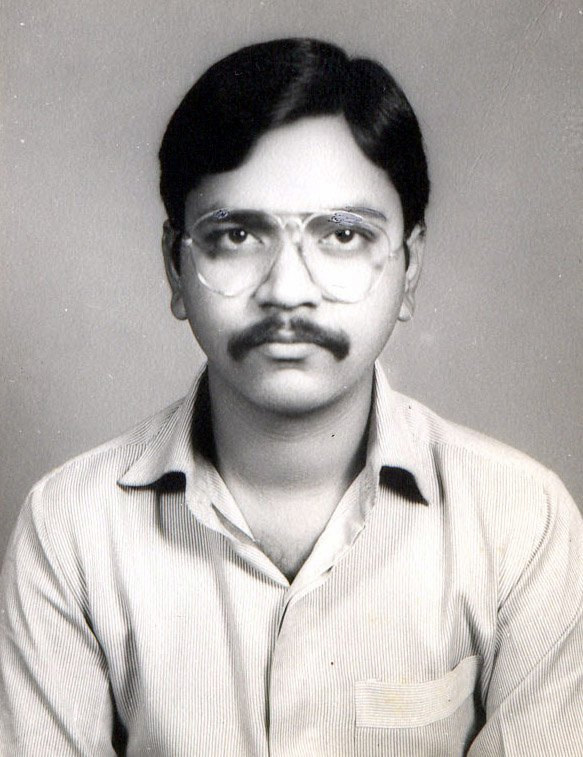
My Experiments with Admission
I was born on 15 January 1958 in Pattinarendrapur, a small village in Jaunpur district, eastern Uttar Pradesh. On that wintry morning, rain poured down in sheets, flooding the muddy paths. There were no roads, no electricity, and no doctor. A village midwife, a Dai, delivered me while my father, then working with the Indian Railways, was away. I was the youngest, with sisters ahead of me. My father would later rise to become Secretary of the Railway Recruitment Board, and my uncle, a homeopath, ran a small clinic in our village.
I began my schooling in a convent in Allahabad up to the fourth grade, before we moved to Bharwari, a modest railway town in the Kaushambi district in eastern Uttar Pradesh, where my father was posted. I joined the government primary school there, the only boy in a winter coat. Others, in thin shirts, sat cross-legged on the cold floor—shivering, yet learning.
We returned to Allahabad after my eighth standard. I joined Agrasen College for classes nine and ten, and then Government Intermediate College for eleventh and twelfth—a place known for producing toppers across Uttar Pradesh. It was there I resolved to become a doctor.
While pursuing B.Sc. Part I at Ewing Christian College, I also attended evening coaching classes. The red-brick college, perched on the banks of the Yamuna, echoed with lectures on science, philosophy, and Gandhiji. Their library held shelves of books on him, including My Experiments with Truth, which I had already read cover to cover in the eighth grade—gifted to me by my father.
In 1976, as students across India prepared for various PMTs, I applied to MGIMS Sevagram—a medical college that asked for not just Physics, Chemistry, and Biology, but also a paper on Gandhian Thought. The prospectus was expensive and had to be obtained via money order. I even tried selling it to classmates but found no takers. So, I decided to take the exam myself.
The MGIMS exam, with its two essay-type papers, was unlike any other. The Gandhian paper didn’t test facts—it asked what you believed. When I cleared it and found my name on the interview list, I was elated—though I had no idea where Wardha was.
My father and I boarded a train from Allahabad, changed at Itarsi, and arrived at Wardha. As a railway officer, he arranged for us to stay in the guest house. The interview panel included none other than Dr. Sushila Nayar—Badi Behenji.
I walked in with a mix of nerves and honesty, not knowing that my truth would be both my strength and my undoing.
She asked what I did during summer vacations, perhaps expecting me to say I volunteered in villages or taught children. But I simply told the truth: I spent my summers watching my uncle treat patients at his small homeopathy clinic. I didn’t know how to sugarcoat things. Gandhiji had taught me to never lie.
I could see that she was hoping for something nobler. But at that moment, I couldn’t bring myself to say what I didn’t believe. I remembered Gandhi’s Experiments with Truth, and decided I would follow his path—even if it cost me admission.
And it nearly did.
That evening, the results were announced. My name appeared—not in the main list, but on the waiting list for non-Maharashtra candidates. I was disheartened, but prepared to move on.
When the results were announced, I found my name—not in the main list—but on the waiting list for non-Maharashtra candidates. I was disheartened. Others on the waiting list included Nitin Gupte, Santosh Prabhu, Tarvinder Singh Oberoi, and Mridul Panditrao. As other medical colleges released their results, vacancies opened—and we got our chance.
A few days later, a telegram from the Principal of MGIMS arrived. It instructed me to report within two days, bringing a steel thali, katori, glass, spoon, and khadi clothes. I had only a cotton kurta-pajama; the rest I would find at Sevagram.
I packed my metal trunk and holdall—remnants of a pre-rucksack era—and boarded the Kashi Express to Itarsi, then the GT Express to Wardha East. I still remember the poha and hot milk during the layover.
My mother packed besan laddus and a kilogram of homemade ghee. It was my first long journey alone. My family’s hopes, pride, and quiet fears travelled with me.
By the time I reached Sevagram, the orientation camp had already begun. We loaded our luggage onto a cycle rickshaw and reached Gandhiji’s Ashram. Boys stayed in Rustam Bhavan, girls in Gauri Bhavan. There, we met L.R. Pandit ji—a gentle soul. He walked the dormitory at dawn, softly singing bhajans, waking us for morning prayers. He never scolded—his silence taught more than lectures.
Our first anatomy lecture took place seated cross-legged on the floor, with charts instead of cadavers. We learned not just medicine but how to clean latrines, spin the amber charkha, and work in the kitchen. At the end of our spinning, we were gifted a handkerchief—our first reward for physical labour.
But what lingers most in memory is the evening prayer. Sitting on gravel, facing the setting sun, listening to bhajans carried by the wind—it was grounding, spiritual, quietly profound.
We were 64 in the batch, including 20 girls—who, naturally, became the focus of attention for many seniors. I was the only student from Allahabad, but soon formed close friendships with Anup Saraiya and Anup Lohia.
Sevagram had its own vibrant student politics—Maharashtra, Punjab, and Jhansi panels jostled for influence. The Jhansi panel, vocal and fearless, often called the shots in student elections.
Sevagram taught me medicine, yes. But more than that, it taught me simplicity, service, and the courage to speak the truth—even when the truth isn’t what others want to hear.
And for that, I will always be grateful.
V. K. Gupta arrived in Sevagram in 1976, just as a young lecturer named Dr. Ulhas Jajoo had joined MGIMS.
Young, handsome, and impossible to ignore, Dr. Jajoo wore khadi, carried a permanent twinkle in his eye, and spoke of village healthcare not as an ideal but as something that had to be done. He taught medicine with energy and conviction, and students were drawn to him almost immediately.
Those from the 1973 to 1977 batches walked with him, cycled with him, and followed him down muddy village roads during the monsoon. They sat inside huts, listened to families, and saw for the first time how poverty, customs, beliefs, and social conditions shaped illness. Under Jajoo’s guidance, medicine became more than diagnosis and treatment. It became a way of understanding how people lived, why they delayed seeking care, and what kind of solutions might actually work in their world.
For V. K. Gupta, those years left a deep impression. His bond with the Jajoo family ran deep — not only with Ulhas, but also with his younger brother, Dr. Suhas Jajoo, a plastic surgeon from Government Medical College, with whom he spent many days during his MD years in Nagpur. Even now, nearly fifty years later, those four years with Ulhas Jajoo remain among the brightest parts of his memory.
V. K. Gupta went on to obtain his MD in Pathology from Government Medical College, where his thesis was supervised by Dr. Shobha Grover, then head of the Department of Pathology. He spent nearly four decades in the Indian Railways health services and the Central Government Health Scheme before retiring a few years ago.
Later in his career, he travelled to hospitals and laboratories across the country, helping them improve the quality of their laboratory services. He assessed how laboratories functioned, guided doctors and technicians, and showed them how to maintain standards so that test results remained accurate, reliable, and trustworthy.
His wife, Manisha, is a gynaecologist. They were married in Lucknow on the very day Javed Miandad hit Chetan Sharma for that unforgettable last-ball six in Sharjah. Their daughter, Aditi, completed her MS in Ophthalmology and now practises in Ghaziabad.
After spending most of his professional life in Allahabad, he has now returned to Lucknow. A lifelong reader, he moves easily between Hindi and English literature, equally at home with mythology, Hindi classics, novels, and the gentle humour of P. G. Wodehouse. He is happiest when pressing a well-loved book into a friend’s hands.
To family and friends, he has always been simply “VK.” The initials have stayed with him so long that they feel less like an abbreviation and more like a familiar blood group — simple, unmistakable, and instantly recognised by everyone who knows him.
Dr. Anil Akulwar
The other candidates waiting outside the interview room at MGIMS had, by the sound of their low voices and the flutter of the papers in their hands, prepared the usual answers. Why do you want to become a doctor? They had their reasons ready: to serve rural India, to honour Gandhi’s legacy, to heal the suffering poor. These were good answers. They were also, for many of them, true. But when Anil Akulwar’s turn came, he told the panel something no one else that day had thought to say.
“Sir,” he told Dr. M.L. Sharma, “right from childhood I have had a huge phobia of mathematics. I wanted to run away from maths, so I chose biology. And for a biology student, the only option left is to become a doctor.”
The panel burst into laughter. Dr. Sushila Nayar — Badi Behenji, as she was known — smiled and asked if he intended to become a doctor while carrying that fear in his heart.
“No, madam,” he said. “If given a chance, I will surely become a doctor you would be proud of.”
They laughed again. They also, as he found when the list was posted, admitted him.
He was born in Nagpur, where his father worked in the Indian Railways. He had attended a local school in Dhantoli before joining Hislop College for B.Sc. Part I. He was not, by his own account, a student with a grand sense of vocation. He had drifted away from mathematics and toward biology by the logic of avoidance, and had followed that logic to its natural conclusion: the medical entrance examinations.
He was sufficiently well-prepared to sit for multiple tests. He went to Banaras Hindu University for the BHU exam — a journey itself, in those days — and then travelled directly from the examination hall to the railway station, because the next day he had to appear for the Sevagram PMT. The two exams fell on consecutive days, and the only way to sit both was to treat the interval between them as a train compartment.
On the platform at Banaras, he approached the Sarvodaya bookstall that sold books on Gandhi, Vinoba, Bhoodan, and the khadi movement — a particular category of literature that had found a reliable market among aspirants to MGIMS, whose entrance paper included a section on Gandhian thought. He told the bookseller he was going to sit the Sevagram PMT. The bookseller smiled, as if this were a perfectly ordinary thing to hear, and produced a bundle of books he kept specifically for the purpose. Anil bought them, settled into his seat, and spent the next eighteen hours reading about a man he would shortly be expected to know well.
He sat the PMT the following morning at GS College of Commerce in Giripeth, Nagpur. A fortnight later, a telegram arrived from the Principal of MGIMS, asking him to come for interview.
He had not, it must be said, presented the most auspicious picture when he arrived. He had worn a simple cotton shirt and terry cotton trousers. Outside the room, candidates in khadi were rehearsing their answers. Inside, the panel — Dr. Sushila Nayar, Ms. Manimala Choudhary, Principal I.D. Singh, Dr. L.P. Agarwal the AIIMS ophthalmologist — sat in the particular silence of people who have conducted many interviews and are no longer surprised by anything.
Anil answered the question about his motivation with the honesty about mathematics. He then answered a question about khadi — where to buy it in Nagpur, which he knew from Khadi Bhandar near Shukrawari Talao Mahal and Andhra Khadi Centre near Anand Talkies. When Dr. Sharma pointed out that khadi was also available at Gandhiji’s Ashram, he apologised for the omission. Finally, he mentioned his father’s employment in the Indian Railways.
Not a single question on physics, chemistry, or biology. Not a question on general knowledge or Gandhian philosophy. He left the room with no clear sense of how he had done.
When the list appeared, his name was there.
His father paid the tuition fee of ₹1,200. The hostel fee was ₹100 a month.
He would serve in the Indian Army after MGIMS — a fact that sits interestingly alongside the story of a boy who had chosen biology to escape mathematics. Military medicine demands its own particular discipline: precision under pressure, clear thinking in difficult conditions, the capacity to act when the framework of a well-equipped hospital is not available. These are things Sevagram also teaches, though it teaches them in a gentler register.
Sevagram’s method was immersion. The orientation camp at Gandhiji’s Ashram, the dawn prayers, the shramdan, the khadi — these were not a preamble to medical education but a continuous part of it. The institution believed that what kind of doctor you became was inseparable from what kind of person you were, and that the person was still being formed when you arrived. The curriculum of daily life at Sevagram — the cleaning, the spinning, the communal eating, the prayers in several languages — was as serious as any lecture in Physiology.
The batch of 1977 arrived in a Sevagram that had matured from the raw improvisation of 1969. The hostels were built. The new hospital on the hill had opened. The library was stocked. The initial uncertainty — whether this village college would amount to anything — had been settled by the results of eight years of graduates. Anil Akulwar walked into an institution that knew what it was. He had only to decide what he would make of it.
He made a great deal of it. The capacity he had shown in his interview — to say the true thing clearly, without ornament, without concern for how it might land — turned out to be exactly the quality that a medical career in service of others requires. You cannot examine a patient well if you are not prepared to report accurately what you find. You cannot treat effectively if you are not prepared to acknowledge what you do not know. Honesty, which Anil had brought into the interview room as a kind of improvisation, turned out to be a professional discipline.
The friends he made at Sevagram would remain. This is a recurring fact in the Sevagram archive — the friendships formed there carry a particular durability that alumni speak of with a consistency that begins to feel like a defining characteristic of the place itself. Something in the conditions — the smallness of the campus, the shared privation, the daily rituals that required people to be present to one another — created bonds that subsequent decades of dispersal have not dissolved.
The batch of 1977 was the last to be selected by interview. From 1978, the process changed — only the written entrance test, no interview. Anil Akulwar had been examined as a human being as much as a student. The interview that had seemed arbitrary, even absurd in its casual informality, was asking something real: what are you like? What do you say when you have nothing rehearsed? He had passed that examination before he passed the medical one.
He returned to Sevagram after the Army — another circle completing. He went back as a different person, carrying what military service had made of the formation Sevagram had begun. How those two educations combined in him is a story that belongs to the wards and offices of his subsequent career, in which the values of both institutions — discipline, service, the subordination of self to purpose — were available to anyone he treated.
He has not forgotten the seventeen-year-old who stood in that interview room knowing nothing about the Ashram’s khadi outlet and told the selection panel he had been running from mathematics all his life.
He has not needed to forget it. It was, as it turned out, the best thing he could have said.
Dr. Anil Akulwar completed his MBBS at MGIMS Sevagram with the batch of 1977. He served in the Indian Army as a medical officer and later returned to Sevagram. He practises in Nagpur.
Dr. Anjali Ingley Bhure
There is a particular pressure that comes with growing up as the daughter of a beloved teacher — the sense that the institution knows you before you have done anything to be known by, that every small failure will be noted and every success will carry an asterisk. Anjali Ingley had been aware of this pressure for years before she ever sat in a Sevagram classroom. Her father, Dr. K.N. Ingley, had been teaching Physiology at MGIMS since the college opened in 1969. Her mother had become the warden of the girls’ hostel. The campus had been part of her family’s life since before she was old enough to understand what a medical college was.
When the time came, her father made one thing absolutely clear: his name would open no doors for her here.
She was born on 4 October 1960 in Nagpur, the city her family had not quite left even as her father’s professional life moved to Sevagram. She stayed behind with her mother to complete her schooling at Saraswati Vidyalaya, then her B.Sc. Part I at Hislop College — a compact, self-contained education in a city she knew well, while fifty kilometres away her father’s name was being woven into the fabric of an institution she had not yet entered. She applied to Government Medical College and Indira Gandhi Medical College in Nagpur. Both declined her. She sat for the MGIMS competitive pre-medical test.
She passed. She was called for an interview.
The panel included Dr. Sushila Nayar and Ms. Manimala Chaudhury. They explained the importance of khadi and asked whether she would wear it. She said yes. They asked about the problems facing rural India, about health in villages, about her willingness to serve in those communities if she was selected. She answered what she believed.
She was admitted. Her father’s name, as far as she knew, had not come up.
She has always been clear about this — not defensive, but direct. He had served Sevagram for nearly eight years by then, and his connections were considerable. He chose not to use them. The discipline of that choice, she felt, was itself a kind of teaching.
The first month was spent at Gandhiji’s Ashram, in the orientation camp that MGIMS had offered every batch since the beginning. Anatomy, Physiology, and Biochemistry teachers arrived under the neem trees to introduce their subjects in the particular cadence of Sevagram — unhurried, contextualised by the landscape, aware that the purpose of medicine here was not only clinical. Students woke before dawn for prayers, swept the campus and the corridors in the mornings, attended sessions on spinning and weaving, practiced yoga in the grey light before sunrise. For Anjali, who had grown up hearing about all of this from her father, it was still a different thing to live it. The body absorbs what the ear only hears.
Khadi was compulsory, as it had always been, and the supply was limited. Khadi Bhandar in Wardha and a small shop in the Ashram itself were the only sources, and there was one tailor in Sevagram who worked through the intake of each new batch. The stock ran tight and the fabric was coarse. Students who came from Bombay and Delhi arrived with finer khadi — a lighter weave, better finished — and the difference was immediately visible in the corridors and the wards. Anjali found this less amusing than she might have expected; the coarse Vidarbha khadi had its own texture and weight, and after a few weeks it stopped feeling like a compromise.
The batch was a map of India. Students from outside Maharashtra came with broader English, wider references, a certain cosmopolitan ease in the classroom. Students from vernacular-medium schools arrived with better Marathi and a more intimate knowledge of the terrain they had come to serve, but sometimes struggled with the English of the textbooks. These differences were visible, were occasionally awkward, and were, over the course of the five years, almost entirely dissolved. Anjali watched this happen — the gradual merging of city English and village Marathi into something that belonged to neither and both. By the final year, the batch had become a single thing.
The social geography of Sevagram extended beyond the hostel. Babulal’s canteen, where students ate and lingered and borrowed small sums on credit, had been a Sevagram institution since the 1969 batch; it was still the same Babulal, the same weathered khadi kurta, the same unhesitating generosity. Gulab Singh’s departmental store covered necessities. Madras Hotel supplied the idlis and dosas that became, for students from the north and west, an introduction to a cuisine they had never expected to love. The Indian Coffee House served filter coffee of a quality that students described for decades afterward with the specificity of something genuinely memorable.
Food in Sevagram was simple and not plentiful, and the cinema was Wardha, eight kilometres away. Three theatres — Vasant, Durga, Rajkala — showed what they showed, and the logistics of reaching them and returning before the hostel gates closed at ten o’clock had a quality of minor adventure. The last bus from Wardha left at 9:30. Missing it meant walking back, which happened often enough to become its own kind of story. The lone autorickshaw in Sevagram would sometimes carry a dozen students back from the bus stand in a configuration that defied engineering and delighted everyone involved.
By 1976 — Anjali’s first year — the hospital had moved into a new building on the hill. The old arrangements, which earlier batches had navigated by improvisation, had been replaced by infrastructure of genuine quality: well-designed wards, operation theatres fitted out to a standard that matched what any city hospital could offer. She remembers the OTs with the particular appreciation she brought to them years later, as an anaesthesiologist — the layout was thoughtful, the space generous, the workflow embedded in the design. Someone had understood what an operating theatre needed to be.
The library, below the OTs, became her other home. It held nearly everything an undergraduate needed, and it was used — not only consulted but inhabited, the way good libraries are, by students who came to read something specific and stayed because the reading led somewhere else.
Dr. K.N. Ingley had come to Sevagram in 1969, one of the founding faculty, part of the generation that had arrived from GMC Nagpur and elsewhere to build something from almost nothing in a village that most of their colleagues regarded as a professional exile. He had been present at the beginning. His daughter arrived at a Sevagram that had found its form — established, confident, with its own culture and its own particular claim on the doctors it produced. She studied under teachers who had, in some cases, been her father’s colleagues for years. She was known to many of them before she walked into their classrooms.
If this ever smoothed a path, she does not say so. What she says is that the ten years she spent at MGIMS — five as an undergraduate, five as a postgraduate — shaped everything that came after. Sevagram in those years was, to use her own phrase, something like a kingdom with its own queen. Dr. Sushila Nayar had built and cultivated the institution with a care and precision that extended beyond the academic into the social fabric of the campus: the canteen owner, the shopkeeper, the autorickshaw drivers, the nurses and ward attendants and technicians were all held inside a network of connection that was unusual in any institution and perhaps impossible outside one built on Gandhian principles. Anjali had grown up adjacent to this world. When she entered it as a student, she understood it in a way that perhaps only someone who had watched it from the outside could.
The beauty of Sevagram, she has said, was that no one who came there was allowed to remain only what they had been before they arrived. The place made demands and the place gave back, and the exchange — conducted over years, in wards and common rooms and evening prayers and the long walks to Wardha and back — left an imprint that did not fade.
Dr. Anjali Ingley completed her MBBS and postgraduate training in Anaesthesiology at MGIMS, Sevagram. Under the guidance of Dr. Arun Tikle, she explored whether pentazocine and diazepam, when combined, worked well for short surgical procedures. After completing her training, she briefly worked as an anaesthesiologist at the same institution where her father had taught for nearly a decade. She later moved to Nagpur, where she has been working at Lata Mangeshkar Hospital. She now lives in Nagpur with her husband, Rakesh Bhure.
Dr. Danny Naik
It was a friend’s indifference that brought Danny Naik to Sevagram.
The summer of 1977, and the friend — whose name he does not record, whose life went in a different direction — was holding an application form for a medical college he had decided not to bother with. “I’m not applying,” the friend said, handing it across. “But you might as well give it a shot.” The form was for Mahatma Gandhi Institute of Medical Sciences, Sewagram. Danny filled it out almost on a whim and put it in the post.
He did not, at that moment, understand what he was doing. Fifty years later, he does.
He was born on 23 December 1957 in Bombay, into a Jain family whose relationship with medicine was close and specific. His father, Dr. Mangalchand Naik, and his mother, Dr. Vinita M. Naik, were both physicians who had established and ran the Naik Nursing Home in Jabalpur. His mother came from a Sindhi family that had migrated from what became Pakistan at Partition; her brothers had joined the merchant navy and navigated the world’s oceans while she chose a different kind of travel — through medicine, through service, through the daily demands of a working clinic.
His name was an oddity in a traditional Jain household where names echo religious or cultural heritage. His maternal uncles, with their cosmopolitan merchant-navy outlook, had simply called him Danny. In a community where such a name was unusual enough to prompt questions — his future father-in-law would one day ask if he was Christian — it had the distinction of marking him as someone whose family had been exposed to worlds beyond the expected.
His younger sister Monica would follow him to MGIMS, joining the 1980 batch. Medicine, in the Naik household, was not a career so much as an inherited orientation.
He studied at St. Aloysius School in Jabalpur under the Cambridge curriculum, then moved to Bombay for his intermediate science at Elphinstone College. When the time came to prepare seriously for medical entrance examinations, he returned to Jabalpur and enrolled at Science College. Among the many colleges he applied to, MGIMS declared its results first.
Once it was clear he had cleared the written examination and was called for interview, he decided to take the matter seriously. He bought two books — My Experiments with Truth and Key to Health — and read them not merely as examination preparation but as an introduction to the ethos of the place he was considering joining. He would arrive, if he arrived, with some understanding of what he was entering.
On 30 July 1977, he and his father travelled to Wardha and checked into a modest hotel. That evening, they walked to the Sewagram Ashram. Danny read Gandhi’s words from the stone tablets placed along the ashram’s paths, and felt something that was hard to articulate but easy to recognise — a quality of calm in the place that he had not expected and did not quite know how to name. He walked back to the hotel in a different state of mind than he had arrived in.
The interview the next day was daunting. The panel included faculty members and Badi Behenji herself — Dr. Sushila Nayar, who radiated grace and authority in equal measure. She looked at his documents. Why do you want to become a doctor?
He spoke from his heart, as he had prepared himself to do, about his academic record, about his standing as the top-ranked badminton player in Madhya Pradesh, about the sense that medicine was his calling. The sincerity must have come through. He was told he had been selected. He was asked to join the very next day.
The orientation camp at the Ashram began immediately — early morning prayers, yoga at dawn, shramdan in the fields, community living with roommates from every part of the country. Danny had been, until this point, a city boy whose world was Jabalpur and Bombay, St. Aloysius and Elphinstone. Sewagram was neither. It asked things of him that neither school had required: physical labour alongside study, communal discipline alongside individual achievement, the daily practice of values that other institutions merely stated.
During community postings at Karanji Kazi — his batch’s adopted village — he was paired with a quiet, sharp, and kind girl named Swaraj. They worked together through those first weeks. The partnership deepened slowly, in the particular way that Sevagram deepened most things: without hurry, in the accumulated weight of shared experience. She would become his wife and life partner. Sewagram gave him his vocation and, in the same months, the person with whom he would practise it.
He remembers the good-natured ragging of seniors, the smell of formalin that clung to their clothes in the dissection months, the intimidating anatomy lectures that gradually became manageable as the language of the body revealed itself. He remembers teachers whose warmth and teaching combined in rare proportion — Dr. Suteekshan Pandey, who was encouraging and clear; Prof. Sharma, whose cheerful manner opened every lecture. The notice board with mark sheets was a recurring source of anxiety and motivation: you could see exactly where you stood, and the transparency was both uncomfortable and useful.
He completed his MBBS at Sewagram, then stayed for his house job and two years of postgraduate surgical training under Dr. V.K. Mehta — a man he describes as ever-inspiring, whose influence over those years shaped not merely his surgical technique but his sense of what a doctor should be. Nine years in total at Sewagram. He arrived as a boy who had filled in an application on an impulse. He left as a confident, formed, and purposeful surgeon.
He returned to Jabalpur with a particular distinction: he was the first to introduce gastroscopy in the city. He took over Naik Nursing Home from his parents and transformed it, over the subsequent decades, into Naik Multispeciality Hospital — a centre that grew in capability and reputation without losing the values that Sewagram had installed.
The values were the foundation on which the institution was built, and they passed to the next generation intact. Swaraj — his Sewagram partner, now his professional partner — practised obstetrics and gynaecology at the hospital. Their son, Dr. Sparsh Naik, became an MS in Orthopaedics specialising in joint replacement and arthroscopy. Their daughter, Dr. Trisha Naik, followed her mother into obstetrics and gynaecology. Their daughter-in-law, Dr. Richa, is a Maxillofacial Surgeon heading the dental department. Their son-in-law, Dr. Harsha Reddy, a DNB cardiologist, runs the hospital’s Cath Lab.
Four generations of doctors. One hospital. One thread that runs back to a morning walk through the Sewagram Ashram in July 1977, and a young man reading Gandhi’s words from stone tablets in the fading afternoon light.
Danny Naik sometimes reflects on the friend who handed him the application form and walked away. He does not know what became of that friend, or whether the decision not to apply was ever regretted. What he knows is that the single act of filling in a form — almost without thinking, almost as a favour to a friend’s indifference — produced a life he would not have exchanged for any other.
Excellence means nothing without empathy, he has said. Knowledge is hollow without humility. A true healer serves not just with skill, but with heart. These are the lessons of Sewagram, spoken simply, carried permanently.
He still remembers the boy who almost didn’t apply. He is, in the most important ways, still that boy — only now he knows what he found.
Dr. Danny Naik completed his MBBS and MS in Surgery at MGIMS Sewagram, where he spent nine years. He was the first to introduce gastroscopy in Jabalpur. He transformed Naik Nursing Home into Naik Multispeciality Hospital, where four generations of his family practise medicine. He lives and practises in Jabalpur.
Dr. K. P. Madhusoodanan
A Letter from a Radio
The voice came through crackling static, soft and unhurried, on a humid Kerala evening in the mid-1970s. A woman was speaking about a slim booklet published somewhere in Gujarat — a directory of medical colleges in India, listing each one’s selection procedure. K.P. Madhusoodanan, then a young man preparing for entrance examinations in Koodal, fetched a pen, jotted down the address, and posted a request.
The booklet arrived within weeks. He read it cover to cover. One entry stopped him: Mahatma Gandhi Institute of Medical Sciences, Sevagram. Selection not by marks alone, but by an understanding of Gandhian values. He was intrigued. He bought the books listed in the MGIMS prospectus and read them in his room in Koodal — a small town in Kerala, tucked into the hills, as far from Wardha in texture and temperament as it is possible to imagine.
That is how Kozhuvattasseril Padmanabhan Madhusoodanan came to Sevagram. Not through coaching classes or a mentor’s guidance. Through a radio programme, a booklet, and the quiet certainty that medicine was what he was meant to do.
The Roots
He was born on 28 May 1956, the fifth of eight children, in a household distinguished by its Ayurvedic heritage. His father, Padmanabhan, was a businessman; his mother, Savithri, a homemaker. The family name was known in Koodal for its association with traditional medicine. One brother was an Ayurvedic doctor, another an engineer, a third worked in Bahrain. His four sisters were teachers — one of them a Chemistry professor at a local college.
The first seed of medicine was planted not in a library but in a sickroom. When Madhusoodanan was four years old, he developed nephrotic syndrome — puffy eyes, swollen limbs, a long trail of hospital visits. The doctor who treated him was calm, kind, and competent. That image never left. Somewhere in the years that followed, watching that doctor’s unhurried confidence, a quiet decision formed.
His father’s illness deepened it. Padmanabhan suffered from urinary retention, underwent a suprapubic catheter insertion, and then a fall, a fracture, complications. He died after prolonged suffering that his family could do little to ease. Madhusoodanan watched medicine from both sides — as something that could comfort, and as something that sometimes arrived too late.
He studied in the local schools of Koodal, with no coaching, no entrance examination guides, no peers who had walked this path before him. Rural Kerala in the 1970s offered little of the infrastructure that the urban student took for granted. He simply read, prepared as best he could, and trusted his own steadiness.
A Number and a Gamble
When the interview card arrived, his candidate number was 505. His heart sank. Less than twenty-five seats. If numbering started at one, he had no chance. He was about to set the card aside when it occurred to him — what if numbering began at 500? He took the train to Wardha.
He was the second candidate called.
He was right.
The interview itself has dimmed in memory. What remains is the sensation of confidence — not arrogance, but the particular steadiness that comes from purpose. He walked out uncertain of the result but certain of himself.
The bus back from Sevagram to Wardha rumbled through flat terrain that looked nothing like home. He had come nearly a thousand kilometres. He would wait, and see.
Arrival and Adjustment
The pre-admission orientation camp at Gandhi Ashram was unlike anything Madhusoodanan had experienced. The bell at five in the morning. Cold water baths — for some students, a shock; for him, something he could absorb. Evening prayers in the ashram’s quiet courtyards. The days felt unhurried and purposeful at once.
On the second morning of the camp, a commotion broke the calm. Rakesh Sood, a batchmate from Delhi who had not realised that another student’s bucket of water had been heated, poured the boiling contents over himself. His screams pierced the dawn. He spent the following two weeks in the Surgery OPD having burns dressed. The camp bell disappeared around the same time — no one confessed to removing it, and no one was pressed too hard to do so.
Madhusoodanan was allotted a room in A Block, Boys’ Hostel. The advice among students was that the warden lived in A Block, which offered some protection from ragging. In practice, what protected him was his limited Hindi and English. When seniors approached, he looked confused and replied in Malayalam. They gave up.
The real challenge was academic adjustment. His world before MGIMS had been small — one district, one language, a sheltered domestic life. Now he sat alongside students from Delhi, Haryana, Punjab, Gujarat, and every corner of Maharashtra, in lecture halls where English was the medium and the pace unrelenting. He was slow to adjust, and he knew it.
What helped was not any single strategy but a set of friendships. Varinder Singh Bedi, Rakesh Sood, Paul Ragnauth, Batila Joel in his own batch. Gautam Daftary, Narayan Vinchurkar, and Girish Majumdar from the batches that followed. People who made Sevagram feel less like a foreign place and more like a community he had joined.
Dr. Nagesh Mandapaka
The train was already moving when the man appeared.
Nagesh Mandapaka had been sitting in his compartment for some time, scanning the platform at each stop, waiting for the interview call letter that had been promised — delivered to the Delhi railway station, someone had said, by someone who would find him on the train. The train had left Delhi. No letter had arrived. The platform behind him was pulling away. He had begun to accept that this particular door had closed.
Then, panting, drenched, a man appeared at his compartment window. He had something in his hand. He leaned in through the gap, handed over a crumpled envelope, and disappeared back into the crowd before Nagesh could ask his name. The train gathered speed. The platform receded. In Nagesh’s hands was his call letter for the MGIMS interview, warm and slightly damp from the sprint that had delivered it.
He opened it on the moving train. He was going to Wardha.
He had been born in June 1957 — the precise date is not recorded, which is itself something — one of four siblings in a family that straddled convention and ambition. The family had Calcutta roots; he had passed his Senior Cambridge examination there. His father was a marketing advisor with no medical background, but his mother’s side carried medicine in its inheritance — her nephew was Dr. Jagannath, a hepatobiliary surgeon of some renown in Bombay. Nagesh was the first on his father’s side to enter medicine; his younger brother took a different but equally distinguished path, becoming goalkeeper for the Indian hockey team and representing the country at the Champions Trophy, the Junior and Senior World Cups, and the Olympics.
He had been in Jalandhar when the small advertisement appeared in Career Digest. It announced a joint entrance examination for AIIMS, MGIMS, and IMS-BHU. He circled it in red pen. Something in him stirred. He was studying at DAV College for B.Sc., after having left Calcutta when the city had grown dangerous — Naxalism, curfews, the particular fear of a city where students had been disappearing. He had left quietly, with relief more than regret.
He had failed to qualify for AIIMS and JIPMER. He was directionless but not hopeless. In Jalandhar, he met Mukesh Agarwal, another candidate in the same uncertain position, and they spent long evenings on the hostel terrace discussing Gandhi and medicine and futures they could not quite see. Nagesh had been reading Gandhi by Romain Rolland, underlining passages he barely understood, hoping the effort would prove useful somehow.
Then Mukesh received his MGIMS interview call and left for Wardha. The watching of that departure left Nagesh with an unexpected hollowness. The very next day, the cable arrived from Calcutta, with its instructions about the call letter and the Delhi railway station. He boarded the train.
On the journey south, he met others like himself — nervous, eager, half-believing. Ravi Gupta, Samir Mewar, Deepak Sarin, Poonam Gandhi, Savita Sabharwal. They shared bananas, tea from clay cups, and the particular fellowship of people in transit toward the same uncertain destination. They talked about fathers who had borrowed from family or mortgaged land so their children could pursue medicine. The train carried not just passengers but the weight of accumulated family hope.
At dawn, they reached Wardha. The platform was quiet, samovars hissing, the koel calling. To save money, they crammed into one room at Annapurna Hotel near the railway station, sleeping on thin mattresses with their trunks serving as pillows.
The next day, they queued outside the interview hall. Nagesh saw Mukesh there, tired from his own journey but reassuring in the way of a friend who has already arrived somewhere and knows it is all right. They went in together.
The panel — Badi Behenji, Chhoti Behenji, Dr. M.L. Sharma, others — sat behind the table in the particular stillness of a room where the heat and the occasion combine. Nagesh remembers the heat more than the questions. He remembers the pounding in his chest. He believes he answered adequately. He is not certain.
What he is certain about is what came after.
Sitting under a neem tree outside the interview hall, the interview complete, he was confronted by a problem that his examination scores could not solve. Even if he had been selected, he could not pay the fees. His pockets were empty. The dreams were intact; the money was not.
Mukesh’s elder brother intervened. He took Nagesh to Dr. Sharma and they spoke quietly, with the careful language of people arranging something that requires delicacy. Somehow — the mechanics of it are lost to time — ₹750 was assembled for both Mukesh and Nagesh. They were admitted provisionally, on one condition: the balance had to be paid within forty-eight hours.
Nagesh called his father on a PP collect line, his voice doing something he hoped did not sound as frightened as it felt. His father promised to try. But the miracle arrived first, and from a source that had no obligation to provide it. The lodge owner — who had watched these young men come and go, who had seen the gap between their ambition and their means — stepped forward. “Payable when able,” he said, and put down the money.
There are moments in a life that you cannot explain and cannot adequately repay. Nagesh Mandapaka has carried this one with him for fifty years.
The next morning, two young men with trembling hands and empty wallets walked through the gates of MGIMS Sevagram. They walked past the red mud paths, the neem trees, the students in khadi whose ease in the place they did not yet share. They did not know, that morning, what the institution would make of them. They knew only that they had arrived, and that arriving had required more than they had expected.
Sevagram received them as it received everyone — with the same khadi, the same dawn prayers, the same shramdan, the same blunt equality of an institution that did not calibrate its welcome to the circumstances of your arrival. What you came in with was set aside. What you became while you were there was the only thing that counted.
Mukesh and Nagesh studied together, failed examinations together when failing was what the moment required, and stood by each other at weddings — their own and their children’s. The friendship that had begun on the hostel terrace in Jalandhar, deepened by shared bananas on an overnight train, forged in the crisis of empty pockets and a generous stranger, became one of those friendships that Sevagram, above all other things, seemed to specialise in producing. Permanent. Unshowy. The kind that does not need explaining because there is nothing to explain: the shared history is its own sufficient reason.
He completed his MBBS and built a career in medicine that carried the Sevagram formation through decades of subsequent work. What he brought to every patient was, in part, the understanding that arriving somewhere — to the clinic, to the ward, to the surgery — can cost more than it looks. That the distance between a person’s need and their capacity to meet it is real, and that the response to that gap is not calculation but generosity.
A lodge owner in Wardha taught him that in 1977. He has not forgotten the lesson.
Dr. Nagesh Mandapaka graduated from MGIMS Sevagram with the 1977 batch and later completed his MS in Surgery at his alma mater. His thesis, supervised by Professor Ravinder Narang, brought together surgery and microbiology: “Lymphadenopathy: A Clinical, Histopathological and Bacteriological Study.”
During his residency, he worked closely with his batchmates Dr. Danny Naik and Dr. Anil Akulwar. Among his seniors were J.A. Jafri, Santosh Prabhu, and Desh Diwakar Mittal, while his juniors included Rambir Singh, Sunil Mapari, Sudarshan Tomar, and S.S. Sandhu.
He went on to build his surgical practice in Kolkata. His career reflects the values that shaped MGIMS in those years: simplicity, service, and a deep gratitude for the many teachers, friends, and mentors who helped him along the way.
Dr. Pardeep Kumar Kapoor
His name, technically, did not exist when he arrived in Sevagram.
He had been born Pardeep Kumar — son of Ishar Das Kapoor, goldsmith and president of the goldsmith community of Rewari, Haryana — and in the north Indian convention of his childhood, that was sufficient: given name and father’s name, no surname required. It was Maharashtra’s administrative tradition that completed him. Official documents in the state demanded three names: given name, father’s name, and family name. Pardeep Kumar Kapoor. The last word had been latent all along; Sevagram drew it out.
He has thought, in the years since, about how a place that strips away so much — comfort, privacy, culinary preference, the casual liberties of a city upbringing — can also add something. He arrived with two names. He left with three. The Kapoor had always been there; it took Wardha to make it visible.
He was born and schooled in Rewari, Haryana, in a home shaped by his father’s particular character. Ishar Das Kapoor was known in the town for something unusual: his honesty. He had been elected president of the goldsmith community repeatedly, without elections being held, because no one disputed his fitness for the role. He ran his business — fifteen to twenty workers, a modest shop on a modest street — with the straightforwardness of a man who does not separate his professional conduct from his personal one. He had not become wealthy. He had become trusted. To his son, watching from childhood, the distinction was clear and instructive.
Pardeep’s grandfather had come to Rewari from what is now Pakistan, arriving at Partition with nothing and rebuilding from bare ground. The grandfather had wanted his grandchildren to study — the thing Partition had denied his own sons. When Pardeep was the first in the family approaching the threshold of a medical career, the grandfather’s investment in that possibility was personal and urgent. Pardeep understood the weight of what he was carrying.
He completed his pre-university at DAV College in Chandigarh and returned to Rewari for pre-medical preparation. He sat the standard entrance examinations — AIIMS, AFMC, Maulana Azad, St. John’s, AMU — and did not get through. He enrolled in BAMS at Jamia Millia Islamia in Delhi, keeping the ambition alive while preparing for another round. During this period, he spent time at Raj Ghat, buying recommended texts on Gandhi before sitting the MGIMS entrance examination. He admits, with the candour that runs consistently through his recollections, that most of what he read on Gandhi went over his head.
He was upset with his family on the morning he left for Wardha — a private difficulty he does not specify, but which coloured the departure. His father and his schoolteacher, Mr. Madanlal Agarwal, insisted on accompanying him. Agarwal had never missed an opportunity to pay respects to his own teachers; on the route to Wardha they first stopped at Burhanpur so that Agarwal could do precisely that. They reached Sevagram on July 27th, two days after leaving Rewari, and stayed at Apna Ghar, a Marwadi dharamshala near the bus station belonging to a Mr. Champalal Bamb.
Pardeep was captivated immediately. The simplicity of the buildings, the monsoon-drenched greenery, the rustic quality of the village and even the panwallahs on the street — everything felt quietly welcoming, in contrast to his inner turbulence of the preceding days. He had never travelled this far from home. He knew nobody. He did not understand a word of Marathi. He felt, inexplicably, that he had arrived somewhere he was supposed to be.
The interview panel had eight to ten people. They asked why he wanted to be a doctor. They asked about Haryana’s connection to the Bhagavad Gita. They asked about his preferences if admitted elsewhere. They tested his thinking with questions designed to unsettle. He had no letters of recommendation, no family connections to the freedom movement, no prominent uncle whose name he could invoke. He had only his honesty, which his father had modelled for him since childhood, and a calm that settled over him — to his own surprise — once he was inside the room. He answered every question truthfully.
He was selected.
Orientation at Gandhiji’s Ashram began the formation that the next five years would complete. Early mornings, prayers, the conch shell at dawn, walks on dusty paths that Gandhi had once walked, simple food that required no elaboration. He was placed in A Block, Boys’ Hostel, Room 41. In those first weeks, the batch moved together in the uncertain way of people who have not yet learned where anything is — classrooms, the dissection hall, the lecture theatres. They found each other instead.
Sunil Gandhi, Mukesh Agarwal, and others became his companions in the particular way that Sevagram friendships formed: through proximity, shared confusion, shared meals, and the slow accumulation of trust that comes from being in an unfamiliar place together. They studied together, dreamed together about the doctors they would become, quarrelled and reconciled across the years of a degree that asks more of you than examinations alone.
The teachers were exacting and generous in equal measure. The campus was spare; the intellectual life was rich. The daily discipline — khadi, prayer, shramdan, the communal eating and washing of utensils — was not merely Gandhian ceremony but a daily reminder that the practice of medicine begins with the practice of a certain kind of life. You cannot serve patients well if you do not know how to live alongside people whose circumstances differ from your own. Sevagram taught this by construction.
He was the son of a goldsmith who had been made president of his community without a vote because no one doubted his character. Pardeep carried that standard into Sevagram and into the career that followed. He has not, in the decades since, found any reason to carry a different one.
The third name — Kapoor — was there when he arrived. It simply needed a place like Sevagram to call it forward. A place that believed a person was more than the sum of their marks, more than the sum of their connections, more than the two names they had brought from home. You arrived incomplete, in some small way, and left with the full version of yourself in view.
He thinks of his father, standing behind the counter of the goldsmith shop in Rewari, chosen by his community not through competition but through trust. He thinks of his grandfather, arriving from Pakistan with nothing, wanting his grandchildren to study. He thinks of the dharamshala in Wardha, the monsoon-wet campus, the panwallah on the street who did not know him and could not speak his language and somehow made him feel he had arrived.
He has spent a career as a doctor in a profession that, at its best, is practised the way his father ran his shop: with honesty as the operating principle, trust as the currency, and the understanding that what you are for others is the only measure that ultimately counts.
Rewari gave him his values. Sevagram gave him his third name and the institution in which to apply them. He is grateful for both.
Dr. Pardeep Kumar Kapoor completed his MBBS at MGIMS Sevagram with the batch of 1977. He carries the values of simplicity and honest service instilled by his father and deepened by his Sevagram years. He practises in
Dr. Rajendra Borkar
He had already been inspired by Gandhi before he ever applied to MGIMS.
This was not a common thing in 1977, when applicants were reading Gandhi on overnight trains and buying books at platform bookstalls as examination preparation. Rajendra Borkar had been wearing khadi since he was eighteen — something, he notes with quiet precision, that was very unusual for a boy of that age. He had visited Sevagram Ashram before he was ever a student. He had travelled to Paunar and met Vinoba Bhave in person. The Gandhian formation that Sevagram worked to achieve in its incoming students was, in his case, already present before he sought admission.
And yet Sevagram almost did not happen for him at all.
He was born and brought up in Hinganghat, where he completed his eleventh grade before moving to Nagpur. At the Institute of Science in Nagpur he began his B.Sc., completing first year and appearing for the entrance examination at Government Medical College, Nagpur. He was not selected. The following year, 1977, he appeared for the MGIMS PMT.
He was not selected for the first list. His name was on the waiting list.
He returned to the Institute of Science and continued his B.Sc., which is the reasonable, adult thing to do when a door closes — to turn to the one that is still open and proceed through it. Months passed. His classmate at the Institute, Satish Tiwari, had made it into the 1977 MGIMS batch and offered what comfort he could. “One day you will also become a doctor,” Tiwari told him. Borkar thought these were kind but empty words. The waiting list had gone quiet. He had stopped expecting it to move.
Then, one morning in January 1978, a telegram arrived from MGIMS. The waiting list had moved. Borkar had been at position six; the list had come to number five, which meant he was now eligible. His joy was absolute, and he knew exactly what it cost to feel it — months of continued study, months of watching a friend go where he had wanted to go, months of telling himself that the door had been closed when in fact it had only been shut.
He arrived in Sevagram as part of what the institution called the “modified referred batch” — a small group of three students, himself among them, who had entered through the waiting list. Later, three students who had failed in the regular 1977 batch joined them, making a cohort of six. It was not the standard entry. It was not the orientation camp at the Ashram, the communal first arrival, the shared bewilderment of sixty people discovering a new world simultaneously.
This was what he missed, and he has not made peace with it entirely.
He had not been interviewed by Dr. Sushila Nayar. He had not attended the orientation camp in Gandhiji’s Ashram. He had not stood cross-legged in the Ashram courtyard at dawn, hearing prayers in several languages, learning the daily disciplines that formed the basis of the Sevagram character. These experiences, which alumni of every batch describe as foundational — the first encounter with Badi Behenji, the first morning prayer, the first shramdan — were missing from his formation.
He understood what this meant. The interview with Dr. Sushila Nayar was not merely an administrative process; it was an encounter with the institution’s living conscience, a moment in which the college looked at you and you looked at it and something was established between you that carried forward through five years of study. The orientation camp was not merely an introduction to Gandhian philosophy; it was the period during which the class cohered, during which the friendships that would last fifty years were first made. He had entered after that cohering, as an addition rather than a founding member.
He says, even now, that he is sorry he missed these moments. He says it without self-pity, which makes the regret more real.
There is another loss that Borkar carries from his Sevagram years, and it is not his own.
Before he entered MGIMS, he had three close friends: Satish Tiwari, Rajesh Gupta, and himself. Satish had made it into the 1977 batch; Borkar had made it, eventually, through the waiting list. Rajesh Gupta had not made it at all. The day he understood that his two closest friends would become doctors while he would not — the day the door had finally, conclusively closed on his own dream — Rajesh had wept on their shoulders.
“I am a donkey,” he said. “I will remain a donkey all my life. This is my fate. This is my destiny.”
They consoled him. They told him that a life without a medical degree was still a life, that other paths led to other things, that they would not lose him to the divergence. But words, in that moment, are thin.
What happened to Rajesh Gupta is the story that redeems Borkar’s account of his own narrower passage. Rajesh became a successful industrialist — pharmaceutical industries in Bangalore, Madurai, and Mumbai — and the friendship held. When Borkar visits Hyderabad, he stays with Rajesh. When Rajesh visits Wardha, he stays with Borkar. The thing that Rajesh feared — that the divergence of their paths would make him less than his friends — turned out to be the beginning of a different, equally successful life.
Borkar spent his MBBS years doing what Sevagram required of all its students, making what he could of the formation that was available to him. He had arrived already carrying the khadi habit, already carrying the Gandhian values, already having met Vinoba and walked the Ashram paths. What he had not done was arrive alongside the batch of sixty, in the swirl of first impressions and shared discovery, with everything ahead of him. He had arrived six months later, with the batch already formed, the first friendships already established, the institutional culture already absorbed by the others.
He made his own way in, as late arrivals must. He built friendships where he could, practised medicine with the seriousness that his pre-existing Gandhian formation had given him, and graduated into a career that has not been recorded in detail in the raw material available — a gap that this profile notes and trusts the subject to fill.
What the archive holds is the shape of his arrival and the particular quality of his regret about the things he missed. In the Sevagram archive, where every other alumnus begins their account with the interview, the orientation camp, and the first encounter with Badi Behenji, Borkar’s account is distinctive precisely in its absence of those things. He knows what was there. He was not.
He has spent decades knowing what he missed and continuing anyway, which is, in its own way, the Gandhian practice: you work with what you have, in the place where you are, and you do not make the absence of ideal conditions a reason for less than your best.
Dr. Rajendra Borkar completed his MBBS at MGIMS Sevagram as part of the modified referred batch of 1977–78. He had worn khadi since the age of eighteen and had met Vinoba Bhave at Paunar before entering the institution. He practises in Wardha.
Dr. Rakesh Sood
The Interview He Had Not Prepared For
He had prepared for the wrong interview.
Rakesh Sood arrived at MGIMS in 1977 carrying precisely what everyone had told him to carry: freshly acquired khadi, memorised answers about Gandhi’s associates and the obligations of rural service, a considered position on the importance of wearing plain cloth. He was dressed in a white kurta-pyjama that felt more like a uniform than an outfit. He had purchased all four books on Gandhiji listed in the MGIMS prospectus and studied them diligently. He had attended coaching at Sachdeva PT College in Patel Nagar, though most of the preparation had been self-directed. He was ready.
Dr. Sushila Nayar — Badi Behenji — looked at him and asked simply why he wanted to become a doctor.
He told her about his father: an insulin-dependent diabetic who needed injections three times a day. He wanted to become a doctor to help him, and perhaps one day to do research that would ease the burden for diabetics like him. She listened, and nodded.
Then Dr. L.P. Agarwal, the eminent ophthalmologist from AIIMS Delhi, produced the question that determined everything.
“Do you watch cricket?”
Rakesh was a cricket buff. He lit up, involuntarily.
“Yes, sir!”
“What colour clothes does Kerry Packer’s cricket team wear?”
In the mid-1970s, Australian media tycoon Kerry Packer had turned cricket on its head with World Series Cricket — a rebel competition that introduced coloured clothing, night matches under lights, and a showmanship that the established cricketing order found alarming and the viewing public found irresistible. It was not a topic on any list of expected MGIMS interview questions. It was, however, a topic on which Rakesh Sood had views.
“Coloured clothes,” he said. “Not white.”
“Name three players from Kerry Packer’s circus.”
“Viv Richards, Barry Richards, and Dennis Lillee.”
The panel smiled. More cricket questions followed — about players, about the structure of World Series Cricket, about the confrontation between Packer’s organisation and the established Test-playing nations. Rakesh answered each one without hesitation. The Gandhi texts, the khadi, the rehearsed lines about rural service — none of it came up. Not once. The interview that had been designed to test his Gandhian credentials tested instead his knowledge of Australian fast bowling and Caribbean batting.
When the list was pinned outside the principal’s office, his name was at number fourteen.
He was born on 3 June 1958 in Delhi. His father worked in the National Sample Survey under CGHS; his mother was an Upper Division Clerk in the Ministry of Commerce. He had begun schooling at Lahore Montessori School before moving to Harcourt Butler Senior Secondary School in Delhi, then Government College in Gurgaon for B.Sc. He had planned to sit the pre-medical entrance examination after his first year of B.Sc., but the death of his uncle interrupted that plan; he finished his graduation before attempting again.
His entry into the orbit of MGIMS came through a friend, Ashok Bansal, who had been admitted to the 1976 batch and spoke warmly of the institution. Motivated by that recommendation, Rakesh appeared for the MGIMS entrance test with the seriousness of someone who had been told the place was genuinely different. He was not disappointed. He had read the four recommended Gandhi texts. He had bought the khadi. He had prepared for questions about khadi’s symbolic significance and Gandhi’s associates and the obligations that rural medical practice imposed.
Instead, he was asked about Kerry Packer.
He has considered this for many years and concluded that it was the perfect interview question. What you cannot rehearse reveals what you actually know and who you actually are. His knowledge of cricket was unperformed, unstrategic, spontaneous. It said something about the person — about the range of his curiosity, the breadth of his attention, the pleasure he took in knowing things. The interview had, in its oblique way, done precisely what it was designed to do.
Baptism by Fire at Sevagram
The literal baptism that Sevagram offered its new students arrived the following day. In the orientation camp at the Ashram, Sunil Gandhi — a fellow student from Bombay — accidentally swapped Rakesh’s bucket of cold water with one of boiling hot water. Before either of them registered what had happened, Rakesh had poured it. His friend who stammered badly under stress, tried to warn him but could not get the words out in time.
Blisters. Two weeks of daily dressings in the Surgery OPD at Kasturba Hospital. The scars that remain are, he has said, marks of his literal baptism by fire at Sevagram.
It was not the last surprise the institution had for him. As the weeks passed and the campus became familiar, he discovered that several of his seniors were connected to him through invisible threads he had not known existed. Sunil Dargar from the 1974 batch — his father worked in the same government office as Rakesh’s mother. So did the father of Jayashree Sutaone. And Suneela Khurana, who later married Arvind Garg — her mother shared a desk with Rakesh’s mother at the Ministry of Commerce. They were strangers who had been connected, through their parents’ offices, long before they became friends. Sevagram had simply made the connection visible.
Learning the Sevagram Way of Medicine
The institution’s approach to clinical medicine was, he came to understand, the thing that distinguished it from other places he would later encounter. Sevagram taught its students to diagnose with their hands and eyes and ears before they reached for technology. To listen before they tested. To think before they ordered. This was not merely a Gandhian principle — it was, in the hospital settings of a rural area with limited resources, a necessity. You became expert at the examination precisely because the examination was often all you had.
Years later, when Rakesh had completed his MD and joined Escorts Hospital as a cardiologist, his colleagues watched him arrive at diagnoses that baffled them.
“How are you doing this without echo? Without cath?” they asked.
He had a simple answer: he had been trained to listen. To observe. To think. MGIMS had given him the clinical intelligence that equipment can amplify but cannot manufacture.
He joined the 1977 batch as a young man who had prepared the wrong answers and had the right ones already inside him. That, it turned out, was the most important thing he could have brought through the door.
He thinks of the interview as a kind of parable. The texts he had studied, the khadi he had worn, the answers he had memorised — these were his idea of what MGIMS wanted. Kerry Packer and Dennis Lillee — these were what he actually was. The institution had seen through the first to find the second, which is, after all, what a good medical education is trying to do.
He is still grateful to Dr. L.P. Agarwal — whoever on that panel had loved cricket enough to ask about World Series — for the question that found him out, in the best possible sense.
Dr. Rakesh Sood completed his MBBS at MGIMS Sevagram with the 1977 batch and stayed on for postgraduate training in General Medicine at his alma mater. Under the guidance of Dr. A.P. Jain, he wrote his MD thesis on “Clinico-Immunological Correlative Study of Pulmonary and Meningeal Tuberculosis with Special Reference to Cell-Mediated and Humoral Immunity.”
His years in the Department of Medicine were shaped as much by friendships as by academics. He spent sleepless nights in the wards, long hours in seminar rooms, anxious mornings facing professors during rounds, and busy days attending calls and seeing patients in the OPD up the hill at Sevagram. Those years were shared with colleagues such as Vijay Kathuria, the late Ashish Kulkarni, K. Madhusudanan, Samir Mewar, Anil Gomber, Deepak Telawne, Chandrashekhar Singh, Haresh Sidhwa, Anil Balani, Arvind Ghongane, and Subodh Mohan.
Into the Villages with Ulhas Jajoo
Sood arrived in Sevagram at a time when Dr. Ulhas Jajoo drew medical students the way a flame draws moths. They crowded around him—captivated by his fierce intelligence, his restless energy, and his conviction that medicine could not be practised from behind hospital walls. He spoke of villages, of poverty, of crops ruined by failed rains, of roads that vanished in the monsoon, and of illnesses that began long before a patient reached a doctor.
Once Sood entered the clinical side after passing First MBBS, he joined that restless band of students—BB Gupta, KK Aggarwal, Sunil Dargar, VK Gupta—who followed Jajoo into the villages around Sevagram. They walked along dusty roads, ducked into dark huts with mud floors, sat with farmers and labourers, and listened. The villagers spoke of failed harvests, debts, dry wells, daughters to be married, sons without work. Illness was there, but often far down the list. Sood began to see that money, roads, crops, and clean water could shape health far more powerfully than any prescription pad.
What began as admiration soon turned into a lifelong bond with Dr. Jajoo. Decades later, when Sood married in November 1987, Jajoo was there.
From Sevagram to Delhi
After completing his MD, Sood went to Delhi and sought out his Sevagram friend KK Aggarwal, who had already joined Moolchand Hospital and was beginning his rise in cardiology. Sood joined the hospital the very next day. Those were the years when thrombolysis was transforming the treatment of heart attacks, and he became involved in several clinical trials testing streptokinase in acute myocardial infarction.
Around 2010, he moved to Fortis Hospital, Shalimar Bagh, where he eventually became Senior Director. Yet beneath the titles and technology, he remained, at heart, a Sevagram doctor. He still believes that the patient’s story often reveals more than the scan, that hands laid carefully on the chest and abdomen still matter, that tests should be ordered with restraint, and that sometimes the wisest prescription is to stop medicines rather than add new ones.
He trained at MGIMS in an era when young doctors relied more on their eyes, ears, and hands than on machines. He carried that confidence into the rest of his career. Today, he lives and practises in Delhi with his wife and daughter.
Dr. Ravi Gupta
The question, when it came, was about cricket.
Ravi Gupta had answered the usual questions: why he wanted to become a doctor, how he would serve rural India, what he understood about the obligations that came with studying at a Gandhian institution. He had answered them adequately — not brilliantly, he thought, but honestly, drawing on what he had actually read and actually believed. And then one of the professors, perhaps sensing his Delhi roots and the particular confidence with which Delhi boys discussed the national sport, asked: “What is the importance of a one-down batsman in cricket?”
He answered well. He must have. Shortly afterwards, he was packing his bags for Wardha.
He was born on 22 September 1957 in Delhi. His father was both a Chartered Accountant and a Company Secretary — a man of numbers and balance sheets, as Ravi describes him — whose work carried the family through Baroda, Ahmedabad, and Bombay before they settled definitively in Delhi. Ravi had moved with them: middle school in Baroda and Ahmedabad, grades nine to eleven in Bombay, then back to Delhi for Zakir Hussain and Hansraj College. The itinerant childhood had made him adaptable, a collector of friends in different cities, comfortable in different registers of language and culture.
He had, in school, refused to choose between Biology and Mathematics. This dual ambition had taken him to Delhi College of Engineering — then near ISBT — where he discovered, with some clarity, that trigonometry and he had not been made for each other. He withdrew quietly and joined B.Sc. Part I at Hansraj, uncertain of direction but not of determination.
He tried Aligarh Muslim University: the environment, he felt, was not conducive to study. He missed the Delhi quota for Meerut Medical College by one or two marks. The margins were thin and the disappointments were real. He was scanning the newspaper one morning — a voracious reader, someone who moved between Premchand’s earthy tales and Harivansh Rai Bachchan’s lyrical verse — when he saw the MGIMS advertisement.
He wrote the entrance paper on Gandhian thought in Hindi. Perhaps it was the Hindi, or the fluency with which he moved through the language, that carried him through the written round. His love of literature in his mother tongue had, by accident or design, prepared him for an examination that no coaching class had anticipated.
At Sevagram, he found a cohort that felt like a continuation of his life in different cities. Atul Agrawal, Samir Mewar, Deepak Sarin, Rakesh Sood, Mukesh Agrawal — some he had known before, in other contexts: Sarin and he had sat together at Sachdeva Coaching Classes on Pusa Road; Samir Mewar had once shared a wooden bench with him at Zakir Hussain College. Sevagram had assembled them from the scattered points of north Indian student life and placed them in a village in Vidarbha, which had no neon signs and no cinema near enough for anything but an expedition, and had given them the rare gift of an entire formation to go through together.
The campus received him as it received everyone: khadi, prayers, shramdan, the gradual surrender of the habits you had brought from home in exchange for the habits of this particular place. For Ravi, coming from a family that had lived in several cities and carried no fixed attachment to any of them, Sevagram’s rootedness was a novelty. The place knew what it was. It was not in transition toward something else. This gave it, he came to feel, a stability that more ambitious institutions sometimes lack — the stability of an institution that has decided, once, what it is for, and does not renegotiate the question.
Cricket remained his first love, and at Sevagram it found new expression. He had begun opening the innings in school matches in Ahmedabad, played for Hansraj College, represented local leagues in Delhi. But it was at the Sonnet Cricket Club — a nursery of Delhi cricket — that the game had taken on the quality of a serious pursuit. He had shared nets there with players who would later wear India’s colours: Manoj Prabhakar, Surinder Khanna, Bhaskar Pillai, Ashish Nehra, Ajay Sharma. He had been in that company without necessarily belonging to it, but had absorbed from them a seriousness about the game that his Sevagram years sustained rather than diminished.
During his MGIMS years, he played for clubs whose kits were generously supplied by organisations that had understood the value of sport as a binding agent in institutional life. He remembers Suraj Paul, a dashing batsman who seemed to score centuries at will. He remembers a match against VRCE in Wardha — sometime in the late 1970s, the precise year blurred now — when he opened the innings and carried his bat for an unbeaten 62. Shortly after, he was called to play for Nagpur University. A feeler came from the Ranji selectors. The trajectory of a life that might have gone differently is visible in that moment, and he has looked at it calmly across the years without regret.
Medicine was the choice he had made. The cricket was the life within it.
After MBBS, he returned to Delhi. He completed his internship at ESIS Hospital, then house jobs in Orthopaedics and Surgery at Hindu Rao Hospital. The pull of Sevagram was strong: he went back, determined to specialise in Orthopaedics. What followed was not the straight drive of a batsman who has read the pitch correctly but a long, hard-fought innings — a court battle for the right to the seat he had been promised. He does not elaborate on it, noting only that it is another story for another day. What matters is that he fought and that the values Sevagram had given him — the persistence, the clarity about what was owed and what was not, the refusal to concede a wicket that had not been fairly taken — sustained him through it.
He joined Roshanara Club in Delhi after his postgraduate years, a ground of historic significance: it had hosted India’s first unofficial Test match and witnessed the founding of the BCCI. For a man who loved cricket with the particular intensity of someone who has played it well enough to know exactly what it requires, the ground itself was almost sacred. He played there for years. He plays still, in whatever form the game takes when the body is no longer twenty.
What Ravi Gupta carries from Sevagram is not a single story but an orientation. The Hindi-medium Gandhian thought paper that opened the door. The one-down batsman question that confirmed the entry. The friends assembled from the scattered addresses of north Indian student life. The long innings in court. The Roshanara ground. The literature — Premchand and Bachchan — that was always there alongside the anatomy textbooks, that has never entirely separated itself from the clinical practice of medicine.
He was the boy who could not choose between Biology and Mathematics and ended up, in the long run, not needing to. Sevagram does not ask you to choose between the things you are. It asks only that you bring all of them, honestly, through the gate.
He brought cricket and Hindi literature and an opening batsman’s patience. The institution found a use for all three.
Dr. Ravi Gupta completed his MBBS at MGIMS Sevagram with the batch of 1977. He pursued postgraduate training in Orthopaedics from his alma mater, following a period of legal contest that he characterises as “another story for another day.” He played cricket at Roshanara Club and represented Nagpur University. He practises in Delhi.
Dr. Samir Mewar
The DTC bus that morning was doing what Delhi buses have always done: lurching through traffic with magnificent indifference to the schedules printed on its side. Samir Mewar had climbed aboard at his hostel stop, found a handhold near the window, and opened the notes he had been revising for weeks. The examination centre in R.K. Puram was an hour away. The Gandhian Thought paper was first.
He had bought the four recommended books from a quiet bookshop near Rajghat, just opposite Gandhi Samadhi, where such things were sold to the occasional serious buyer and the more frequent ceremonial one. He had read them cover to cover, highlighted pages, scribbled in the margins, and revised them again that morning at lunch. On the bus, swaying in the Delhi heat, he went through them a last time. When the paper began, he wrote until the final bell.
Most candidates for the MGIMS entrance that year treated Gandhian Thought as a paper to be survived rather than engaged. Samir had decided otherwise. When the results appeared, he had topped the written list for non-Maharashtra candidates. There were thirty seats in that category; after reserved quotas, fewer than twenty remained open. He had earned his.
His friend Rakesh Sood moved to the top slot after the interview, which placed Samir second. He did not mind. He was in.
Dhanbad, and a Dream of Engines
He was born on 28 March 1958 in Dhanbad, a coal town in what is now Jharkhand, where the earth beneath the streets held its own kind of energy and the air in certain seasons carried the particular smell of industry and effort. His father, Harsukhrai R. Mewar, had studied to the tenth standard and worked as a clerk in a coal mine office. His mother, Pramila Mewar, had studied to the third class. She managed the household with quiet strength and the particular competence of a woman who had never needed a formal education to understand what a family requires.
They were six children: an elder sister, two older brothers, Samir, his twin, and a younger brother. His sister went to Mount Carmel School. Samir and his twin attended De Nobili School in Dhanbad, a missionary-run institution whose discipline was real and whose academic standards were not negotiable. It was the kind of schooling that left a residue of rigour that stays useful long after the specific lessons are forgotten.
By 1975, he was at Zakir Husain College in Delhi, enrolled in B.Sc. Physics, and privately dreaming of aeronautical engineering. The dream was clear enough to act on: he went to Calcutta to prepare for the engineering entrance examinations.
Calcutta, and a Reckoning
The city was not what he had imagined. The landlord was indifferent, the food was poor, and the loneliness of a teenage boy far from home in an unfamiliar city settled over him with the particular weight of a mistake you cannot yet admit to yourself. He had spent his father’s money. He had nothing to show for it. The thought of facing his father with this news was worse, for a time, than the situation itself.
It was his school friend Alok Shrivastava who offered the way out, though he would not have called it that at the time. Alok was in Delhi, preparing for medical entrance examinations, and he spoke to Samir about it with the easy confidence of someone who has found his direction. Something in the conversation landed. Medicine, Samir calculated, was a plan his father could be told about without the preceding conversation about engineering having to be admitted in full. Delhi was also familiar ground: his elder brother studied there, an aunt lived in the city.
He moved to Delhi. Alok Shrivastava, who would go on to become a professor of pathology at CMC Vellore, had nudged him toward a life. Neither of them knew it then. They were just two small-town boys chasing different versions of the same ambition.
The List of Six Colleges
The year was 1977, and medical entrance examinations demanded a kind of dispersed courage: you applied everywhere that did not require domicile, sat every paper, waited across multiple results. Samir applied to AIIMS Delhi, CMC Vellore, PGIMS Chandigarh, JIPMER Pondicherry, BHU, and MGIMS Sevagram. He also applied to the medical colleges in Patna and Dhanbad, where local connection might help.
Of MGIMS he knew only fragments: that it was far, that it followed Gandhian principles, that getting in was harder than it appeared. When the notification arrived for the entrance examination, he prepared with the thoroughness that had always been his instinct. He went to the Rajghat bookshop, bought the Gandhian texts, and read them as he would read anything he intended to be examined on: completely, carefully, with a pencil in his hand.
That preparation, made without any guarantee that it would matter, was the decision that determined everything.
The Interview, and Mr. Deshmukh
Two days before the interview, he and his father arrived in Wardha by the Eastern Railway. There was one hotel near the railway station that served both as accommodation and restaurant; they stayed there. His father had come along, perhaps more nervous than his son.
The interview itself has since faded almost entirely from memory. He remembers Dr. Singh and Dr. M.L. Sharma on the panel; the questions they asked have dissolved. What he remembers clearly is the feeling of sitting in that room and understanding that the written examination had been within his control, while the interview was not. They could have chosen otherwise and justified it. He was aware of this, and aware that there was nothing to be done about it except answer as honestly as he could.
When his name appeared on the final selection list, the feeling was, as he described it years later, pure elation.
What followed was a small scene that stayed with him longer than the interview itself. After the selection, they were directed to meet Mr. Bhausaheb Deshmukh, the administrator who managed admissions. His father, a modest man from a coal town who had no experience of institutions where money did not eventually enter the conversation, leaned forward quietly and asked: “Sir, how much donation do we need to pay?”
Mr. Deshmukh burst out laughing.
“Donation? Here? No, no. Everything here is on merit. Your son got in because he earned it. All you need to pay are the regular tuition and hostel fees.”
His father’s sigh, long and heavy with relief, was the sound of a man discovering that the world occasionally works as it is supposed to.
The Fortnight at Gandhi Ashram
His first impression of Sevagram was honest: it was remote. Wardha was ten kilometres away, and the college sat in a landscape of flat fields and wide sky that had nothing of the coal town energy he had grown up in. But remoteness, he found, has its own intelligence. The silence of the place did not oppress him. It grew on him slowly, the way habits grow when they are not noticed.
Before the academic year began came the orientation camp at Gandhi Ashram — a fortnight that had nothing to do with stethoscopes or anatomy books and everything to do with a different kind of education. Morning prayers at dawn, cooking duties, sweeping floors, cleaning utensils, cleaning the sandas. The concept of seva — self-service as a form of discipline rather than a form of servitude — was entirely new to him. He had come to become a doctor. He found himself, first, learning to clean a bathroom without resentment.
The schedule was structured, the days were full, and the gaps between scheduled activities were filled with the inventive mischief of a group of teenagers who had not yet found better ways to spend their energy. One night, someone rang the Ashram prayer bell at three in the morning instead of five, jolting the entire camp into waking prayers in the dark. On another occasion, a group returned from Wardha at two in the morning and proceeded to wake their batchmates, announcing with great gravity that it was time for morning prayers. His batchmate Batra, a man of genuine conscientiousness, actually got up, took a shower, and was making his way to the prayer ground before he understood what had happened.
These were, he would say later, the purest days of the whole seven years — untouched by examinations, by clinical anxieties, by the slow accumulation of medical responsibility. A fortnight of austerity and laughter in equal measure, before everything got serious.
Block A, Room A-32
After the camp, the batch moved into Block A of the boys’ hostel. He was in room A-32 in the first year. In the second year, they shifted to Block E, which remained home for the rest of the MBBS. He was never a morning person; early classes had a tendency to proceed without him unless the subject was one he had decided, for his own reasons, was worth the alarm. He did not pretend otherwise, then or later.
The friends who formed around him were partly circumstantial — proximity on the same hostel floor creates a specific kind of closeness that has nothing to do with selection and everything to do with the fact that you are always there when someone needs tea at eleven at night. Ravi Gupta he had known from his Delhi days. Rakesh Sood, Varinder Bedi, Danny Naik, and Ravi Bhatnagar lived on the same floor; they became, in the way of medical students everywhere and in no way more than in Sevagram, a small, self-sufficient world.
They spent hours together discussing cases, and hours not discussing cases. They cycled to Wardha in groups on the evenings when Sevagram’s small inventory of entertainments had been exhausted. In the final year, a deficit of surgical attendance required a group of them to forgo summer vacation and attend make-up clinics. Dr. Chaturvedi agreed to teach them through the break. They grumbled. They were grateful, in retrospect, with the particular gratitude one develops for people who gave you more than you were owed.
The Non-Aligned Group
The Students’ Council elections were a civic education that no curriculum had thought to include.
The batch divided, as batches do, along the fault lines that were available: the Maharashtra group, the Punjabi contingent from North India, and what came to be known, with some amusement, as the non-aligned group — students from Bihar, Bengal, Odisha, and the southern states who had arrived without the pre-existing solidarity of a regional majority. The two larger camps were roughly matched. This meant that the non-aligned held the deciding vote. In electoral terms, they were the kingmakers.
What followed was Samir’s first education in the mechanics of negotiation. The canvassing was serious — late-night conversations, carefully positioned cups of chai, arguments that mixed genuine principle with transparent self-interest in proportions that varied by candidate. Nobody called it politics. It was, of course, exactly that. He absorbed its rhythms without quite realising he was learning something that would be useful to him for the rest of his professional life: how to sit at a table where multiple interests are present and find the outcome that most people can live with.
What Sevagram Built
A coal town boy who had gone to Calcutta to study engineering and found himself unable to face his father came, by the indirect route of a friend’s suggestion and a Gandhian bookshop near Rajghat, to a place that had nothing obviously in common with anything he had planned. Sevagram was remote, austere, strange in its demands, and entirely unlike any institution he had imagined himself attending.
It gave him medicine, which was what he had come for. It gave him, more slowly and less obviously, something harder to name: the capacity to sit in rooms that are not quite comfortable, in institutions that make demands of a person rather than simply accommodating them, and to find, after the initial resistance, that the demands were worth meeting. The sandas cleaned at dawn. The prayer bell at five in the morning. The summer of make-up clinics. The solidarity of the non-aligned.
He thinks of Alok Shrivastava sometimes — the friend from school who suggested medicine with the casual certainty of a man who already knew what he was doing. He thinks of his father’s sigh in Mr. Deshmukh’s office, and what it meant to come from a family for whom the honest answer — no donation, no queue-jumping, your son earned his place — was not something to be taken for granted. He thinks of Batra heading toward the prayer ground at two in the morning, wet from a shower, before the laughter of the corridor reached him.
These are the things that last. The examinations are a matter of record. The knowledge has been applied and extended across a career. But the texture of those years — the particular quality of life in Block E, in Room A-32, on the cycle road to Wardha at dusk, in the half-dark of the Ashram prayer hall — that is what Sevagram finally is, when the degrees and the professional achievements are set aside and a man asks himself simply what the place meant.
Dr. Samir Mewar completed his MBBS from MGIMS Sevagram with the batch of 1977. He topped the written entrance examination for non-Maharashtra candidates in his year, clearing a field drawn from across India.
Dr. Sandeep Jeste
A Newspaper on a Flight
In 1977, Sandeep Jeste’s father was on a work trip to Kolkata, travelling in his capacity as a senior officer at the Reserve Bank of India. On the flight, he picked up a copy of The Indian Express and read a small advertisement: Mahatma Gandhi Institute of Medical Sciences, Sevagram, was accepting applications. He folded the page carefully, carried it home to Mumbai, and set it before his son.
“Apply for this,” he said.
Sandeep had just missed admission to the Bombay Corporation medical colleges — JJ, KEM, Nair, Sion — by four marks. Four marks in the year’s examination had been the difference between a medical seat in Mumbai and no seat at all. He was a Mumbaikar through and through, raised in Malad, schooled at St. Anne’s High School and Mithibai College in Parle, fluent in the cadence and expectations of the city. A village in Wardha district had not featured in any version of his future he had imagined.
He applied.
The Train and the Book
The journey from Dadar to Nagpur took many hours. On the platform at Dadar, Jeste ran into Sunil Gandhi — another student travelling for the same interview, a name he did not yet know would become a batchmate and a close friend. Sunil had a copy of My Experiments with Truth. Jeste had not read it. He borrowed it.
He read Gandhi through the night as the train moved northeast, through the changing landscape from Maharashtra’s coast to its interior. It was not a calculated preparation — the interview was the next day and there was no time for calculation. But something in the reading steadied him. He thought of 1893, of another train journey, of a man thrown off at Pietermaritzburg and the life that changed because of it. Gandhi’s life had pivoted on a train. In a smaller way, Jeste’s was pivoting on this one.
He was ranked eleventh on the admission list. He learned this only after initially misreading his position: the number 311 appeared beside his name, and he spent a tense few minutes convinced he was 311th out of 316 candidates before someone explained that the first digit was a code. It is the kind of story that stays in the memory not for its drama but for the small light it casts on how anxiety makes fools of even careful readers.
Childhood in Malad
Medicine had been in his sights from childhood — not because his parents pushed him toward it, but because of his uncle, Dr. Dilip Jeste, the first Indian to become President of the American Psychiatric Association, and his aunt, a noted paediatrician from JJ Hospital. Their dedication had lit something in him from an early age and eventually drew him toward obstetrics and gynaecology.
The Interview
His father accompanied him to Sevagram. They stayed with a relative in Wardha. The interview itself was brief. Dr. M.L. Sharma, the Principal, looked at his certificates, noticed he had taken typing as a vocational subject in school, and asked — adjusting his glasses — how typing was useful in life.
Jeste smiled. “Typing helps us write good letters, draft essays, prepare certificates. Even write novels, if we wish.”
Sharma chuckled and nodded. “Okay, you may go.”
By evening, his name was on the list.
Outside the principal’s office, a student from the 1975 batch tried to pull a prank. Jeste’s father was watching from a distance. The prank did not succeed.
The Khadi and the Train Floor
There were four of them from Mumbai in the 1977 batch: Suchitra Pandit, Ravindra Bhatnagar, Sunil Gandhi, and Jeste. During vacations, they travelled home together in unreserved compartments, spreading pages of The Times of India on the floor to sleep. The carriage smelled of biscuits and metal and the particular tiredness of long-distance trains. They talked through the nights and arrived in Mumbai rumpled and happy.
Khadi was, for Jeste, never an imposition. He had always liked it. He bought finely woven khadi from the well-regarded shop in Mumbai’s Fort area; later, he moved to khadi silk, and the tailors at the shop would smile at the quality of fabric he brought in. In Sevagram, where the available khadi was coarser — the Wardha variety was plain and functional — he stood out as the Mumbaikar who wore the fabric with something approaching elegance. His Bombay counterparts, he noted, brought refined khadi from the city; students from vernacular-medium schools across Maharashtra arrived in the plainer variety and struggled initially to keep up with English-language lectures. These differences eroded over months, as they always did in Sevagram, ground down by shared meals and shared examinations and the levelling effect of a place that did not much care where you had come from.
What the Village Gave the City Boy
The aloo parathas of the first few hostel mornings became, in memory, a kind of benchmark — food that tasted as good as anything he had eaten in Mumbai, precisely because he had not expected it. The mess food that followed was less romantic. They prayed for home cooking. They ate what was available.
The Ganesh Festival. The village postings. The particular intimacy of a small campus where teachers knew students by name. The first time he saw a patient in the wards, and understood that the body before him was a life, not a case study. These accumulated slowly, without drama, into something that reshaped how he understood medicine.
Dr. Sandeep Jeste completed his MBBS at MGIMS Sevagram and stayed on at his alma mater to pursue postgraduate training in obstetrics and gynaecology. Under the guidance of Dr. Shakuntala Chhabra, he worked on a thesis that explored how antepartum perception of fetal kick counts could be used to monitor fetal wellbeing. His co-residents during those years included Swaraj Chowdhry and Suchitra Pandit. He now lives in Mumbai. His younger brother, Milind, joined MGIMS in the 1982 batch; he passed away in May 2025.
Dr. Satish Tiwari
On the morning that Satish Tiwari found his name on the MGIMS admission list, he also found it on another list — at Government Medical College, Nagpur. Two letters, two offers, arriving within hours of each other. GMC Nagpur was a city college, better known, more prestigious in the circles that counted such things. Sevagram was a village.
He stayed in Sevagram.
The reasons he gives today are several and honest. He was drawn to the simplicity of the place, the Gandhian atmosphere, the unhurried rhythm of rural life. He was also short of money. Withdrawing from Sevagram would have cost ₹5,000 in cancellation fees — a sum his father, a police inspector on government pay, could not easily arrange.
And there was a third reason, the one he speaks of most quietly. His friend Rajendra, who had been on the waiting list for Sevagram, was poorer still. The convention at the time was to sell a vacated seat to the next waiting candidate at double the official fee. Satish knew Rajendra could not afford it. He could not bring himself to turn a friendship into a transaction.
Four months later, a telegram arrived in Rajendra’s home: the waiting list had moved. He joined MGIMS. The two young men who had sat together in Nagpur classrooms preparing for exams neither was certain he could pass found themselves in the same college after all — one through effort, one through the small act of conscience that had held the door open.
The Roots
Satish Tiwari was born into a family from Uttar Pradesh, though he grew up across Vidarbha, following his father’s police postings through Bhandara, Nagpur, and Amravati. He was a transfer child — like many of the 1977 batch — who assembled his education in instalments: primary school at Rashtriya Vidyalaya in Tumsar, high school at Hindi High School in the same town, then the Institute of Science in Nagpur for BSc Part One.
His batch was the last to sit BSc Part One before the examination system changed and the 12th grade replaced it. The following year, he sat for entrance examinations: Government Medical College, Nagpur, first — unsuccessful — and then MGIMS. He prepared carefully, reading Gandhi’s autobiography cover to cover, making notes on the Bhoodan movement, trying to understand not just the facts of Gandhian thought but its spirit.
In Nagpur’s examination halls, he was ranked second in the Maharashtra division for the MGIMS pre-medical test. Many people told him this would not matter. “Admissions there are all about influence,” friends and acquaintances warned. “Without the right connections, you’ll waste your time and money.”
He went anyway. Alone, without a parent or elder sibling, on a train to Wardha.
The Interview
The interview with Dr. Sushila Nayar was brief, as these things went. She asked about his background, his roots, what he wanted from life. She asked about Mahatma Gandhi. He answered confidently — he had read well. Other panel members asked questions he no longer remembers. Five minutes, and it was over.
He walked out of the principal’s office with no sense of how he had done. He had no political connection, no letter from a minister or party worker, no family tie to the freedom movement. He was a police inspector’s son from Tumsar, travelling alone.
He saw his name on the list, and allowed himself to feel something close to joy before turning to the practical question of what happened next.
Sevagram Days
The orientation camp at Gandhi Ashram was, as it always was, something for which nothing in previous life prepared a student. Early morning prayers, simple food, the charkha sessions, the cleaning duties, the communal rhythm that gradually, almost imperceptibly, began to feel natural.
Tiwari wore khadi without resistance. He had read enough about it to understand it not as a dress code but as a statement. Sevagram’s insistence on simplicity struck him as honest rather than eccentric — the college was not pretending to be something it wasn’t, and it was not asking its students to pretend either.
Studies were demanding. The first MBBS examinations separated those who had come prepared from those who had counted on coasting. Tiwari had always been disciplined — a quality the years of attending different schools and adapting to new towns had perhaps reinforced. He cleared his exams in sequence, with the particular satisfaction of a student who had been told he didn’t have the connections to make it.
The friendships of those years were forged in the specific crucible of a small campus: students from states that shared nothing but youth and ambition, living in close quarters, eating the same food, sitting through the same lectures, gradually losing the accent of where they had come from and acquiring something shared instead.
A Decision Revisited
Looking back at the choice he made that morning — Sevagram over Nagpur, conscience over convenience — Tiwari is clear that it was the right one. Not because GMC Nagpur would have been wrong, but because Sevagram made him into a doctor differently.
The village postings, the community health camps, the patients who arrived from nearby hamlets — these were not incidental to the medical education but central to it. He learnt, before he could fully articulate it, that the body he was being trained to treat existed within a life: a family, a livelihood, a set of worries that no prescription could entirely address.
He thinks about Rajendra sometimes — the friend who waited, and joined four months later, and built his own life in medicine through a path that began in the same cramped hostel room. The two men whose destinies were linked not by blood or background but by a small act of decency on an ordinary morning in 1977.
Dr. Satish Tiwari completed his MBBS at MGIMS Sevagram and entered medical practice carrying the values he had read about in Gandhi’s autobiography and found, to his considerable satisfaction, were actually lived in the village where he chose to stay.
Dr. Suchita Pandit
The Clerk and the Certificate
She had the certificate. The problem was the wording.
She had won a national-level elocution competition while studying at JB Petit High School for Girls in Mumbai — a distinction she was proud of, had kept the certificate for, and had produced at the Mumbai medical college admissions office in 1977 with the expectation that it would earn her the twenty grace marks that might compensate for the difference between her examination score and the cut-off. The clerk looked at the certificate, looked at her, and returned it.
“It must mention university, madam. Not national.”
That was it. Twenty marks, and the distinction on the certificate was national rather than university-level. She was not admitted to a Bombay Corporation medical college. She enrolled, half-heartedly, in a BSc Pharmacy course, wondering how long it would take for the dream of medicine to loosen its grip.
It took less than a year.
The Form
During a pharmacy practical in 1977, a friend mentioned a medical college in a village called Sevagram, somewhere in Wardha district — a place students wore khadi, studied among farms, and lived in close contact with the communities they would eventually serve. Suchitra Pandit listened, and felt something stir.
She got the prospectus, filled the form, paid the fee by money order, and arranged to sit the entrance examination in Nagpur. She made her brother come with her — he was unenthusiastic about the journey but agreed. She bought the books prescribed for the Gandhian thought paper, read all four of them with concentrated attention, and found in the ideas of Sarvodaya and swaraj something she had not expected: a quality of poetry, of thought that reached beyond strategy into vision. The paper, when it came, did not feel like examination.
She passed. She was called for interview.
A Complicated Childhood
She was born on 11 August, in Kolkata — but childhood was a succession of cities, following her father, a food technologist trained in the United States who had worked at Central Food Research Institutes across India. Nagpur, Mysore, Bangalore, Bareilly, Delhi. Maharashtrian by heritage, she was educated at Nirmala Convent in Bareilly and St. Mary’s before arriving in Mumbai for JB Petit and, eventually, Mithibai College’s Inter Science course.
Marathi was her third language. She arrived in a Marathi-medium world with the particular confidence of someone who has had to adapt before and knows she can manage.
The Interview
She was not alone when she arrived in Nagpur for the entrance test — she had her brother, whom she had insisted accompany her. A stern professor on the interview panel looked at her file, noted that she was doing well in BSc Pharmacy, and asked the question directly: why leave it?
“I want to be a doctor,” she said.
That was her entire answer. He did not press her.
Her father, waiting outside, asked about donation fees. The clerk smiled. “Standard university fees. One thousand rupees khadi deposit. If she breaks the khadi code, we deduct. Otherwise, it’s refundable.”
She was in.
The Adjustments
The orientation at Gandhi Ashram was the particular immersion that Sevagram required of all its students. Electricity was unreliable. Food was plain. Rules were strict. When they asked for volunteers for toilet-cleaning duty, Suchitra stepped forward while others hesitated. Her teachers noticed.
Ragging followed, as it always did. Seniors from other states called the Bombay students soft, too accustomed to comfort. She ignored them. “They’ll know us better soon,” she said. They did. The seniors who ragged her most became, over time, her closest friends — among them Aruna Jain, Mamta Javalekar, and Nishita from the 1976 batch, whose friendships have outlasted all the years since.
There were four of them from Mumbai: Swaraj Chaudhary, Mohini Gandhi, Pradeep Sood, and her. They walked in straight lines during ragging season, eyes lowered, dependent on seniors for mundane transactions like buying idli-sambar at the India Coffee House. In their free time between lectures, they found each other and laughed about it.
Karanji Kaji
The village posting was Karanji Kaji — small, without electricity, a dialect she did not speak, with the perpetual worry, in Vidarbha’s fields, of snakes. Her assigned partner for the posting did not appear. She went alone.
The villagers welcomed her with sweets and taak and the particular trust with which rural communities received the young doctors-in-training who came to them. They shared their illnesses. They shared their stories. They treated her, she said later, like a daughter. She followed Dr. Ulhas Jajoo on foot through the surrounding hamlets, collecting health data from huts she would not have been able to find alone. The smell of untreated ulcers and infected wounds had nauseated her at first. Within weeks, it was simply part of the work.
The Sevagram summers were punishing — taps ran hot, fans circulated hot air, air coolers were unavailable, and relief came only with the monsoon. She survived the summers, as they all did, through the fellowship of shared misery.
Eight Years
She became a doctor. Then a specialist. She built, over the following decades, a practice in obstetrics and gynaecology that brought patients from across the country to her door. She spoke at conferences; she received awards; she trained residents who themselves went on to careers she could trace. The girl who had been turned away from Bombay’s medical colleges because a certificate said national rather than university became, by any measure, one of the profession’s distinguished practitioners.
When the Sevagram WhatsApp group buzzes with old photographs and unchanged jokes, she finds herself back in the village immediately — the khadi uniforms, the brinjal curry in the mess, the sound of bhajans in Gandhi Ashram’s morning air, the unreserved train compartments that brought them all home.
Fifty years, she says. Fifty years and Sevagram has not faded. It has grown more vivid.
Dr. Suchitra Pandit completed her MBBS at MGIMS Sevagram and post-graduate training in obstetrics and gynaecology. She built a distinguished clinical practice and taught students of medicine for decades. She lives in Mumbai. She was once a girl who missed twenty grace marks. Sevagram, she says, gave her everything else.
Dr. Swaraj Naik (née Chowdhry)
A Circle Completed in Obstetrics
There is a particular arithmetic in a doctor’s life when the hospital in which she trained becomes the hospital where her daughter now works. Dr. Swaraj Naik (née Chowdhry) understands this arithmetic well. She chose obstetrics and gynaecology at MGIMS partly by accident, partly by trust in the teacher who shaped her there. Her daughter, Dr. Trisha Naik, has chosen the same speciality. The thread that began in a village in Wardha district runs unbroken, a generation on, in a hospital in Jabalpur.
But the beginning, as beginnings often are, was simple and slightly frightened. She was seventeen years old, standing near the khadi shop in Sevagram Ashram on the morning of orientation camp, when she met a soft-spoken young man named Dr. Danny Naik. They exchanged a few polite words — just enough to ease the awkwardness of two young people in a new place. She did not know then that he would become her husband.
Chandigarh to Wardha
She was born on 15 August 1959 in Bareilly, but grew up in Chandigarh, where her father, Dr. S.B. Chowdhry, was a Professor of Commerce and Business Management at Punjab University. Her mother, Smt. Krishna Chowdhry, kept the home with the quiet warmth that Swaraj would later recognise as the most reliable kind of love. She was the youngest in the family — pampered, protected, and encouraged in equal measure.
Her schooling was at Government Senior Model School in Chandigarh; her BSc at Government College for Women. It was her father who pushed the idea of MGIMS. He was drawn to Gandhian values, had read about the college, and believed it was the right place for her. She trusted him, as she had always trusted him, without knowing precisely why.
The journey from Chandigarh to Wardha involved a change at Delhi. On the train, somewhere in the long overnight stretch, she and her father met Mr. Kuljeet, an MGIMS staff member who helped them find accommodation in the boys’ hostel on arrival. His small kindness — a stranger’s practical assistance at the start of a long journey — is what she remembers most from that day.
The Interview
The interview was held in the Dean’s old office. Dr. Sushila Nayar sat at the centre — composed, graceful, dressed in a pristine khadi sari, the particular stillness around her that students invariably noticed before anything else. She saw the anxiety in the girl from Chandigarh and broke the ice by asking about her family.
Then: “Do you know anyone who received a Nobel Prize from Punjab University?”
Swaraj smiled. “Dr. Har Gobind Khorana — for his work on genetics.”
A pause.
“If selected, will you stay here?”
“Yes.”
That one word — offered without hesitation, without calculation — settled something in the room. She was selected.
Sevagram
The orientation camp at Gandhi Ashram began the next day. Yoga at sunrise. Morning prayers. Shramdan in the afternoon. Sessions on values, ethics, and service led by teachers who spoke about Gandhi not as a historical figure but as a living obligation. The girls moved into the hostel. Ragging from seniors was minimal — most were kind. Swaraj had, in any case, a handwriting neat enough to make her useful for journal-writing duties, which tended to improve one’s standing with seniors considerably.
The academic life was another matter. The glamour of being a medical student evaporated quickly once the books opened. Anatomy, biochemistry, physiology — dense and demanding. She was slow to settle, as most students were. Then the mark sheets came back from the anatomy examination, and her name appeared at the top.
She had topped in anatomy. It surprised everyone, including her. She credits it entirely to the late Dr. Krishan Kumar Agrawal, whose passion for the subject — the way he taught, the stories he told to anchor difficult facts — left an impression that translated into examination results.
The Study Partner
She passed all her MBBS examinations with Dr. Danny Naik as her study partner. The friendship formed on that first morning near the khadi shop had deepened through years of shared classes, shared anxieties, and shared village postings. For her internship, she was posted to Duttapur Leprosy Centre with Dr. Suchitra Pandit — a posting that was, by its nature, not the one students competed for. The stigma around leprosy, the suffering of patients, the resource constraints of a small centre — these taught her, in a compressed and vivid way, more than the well-equipped wards of the main hospital could have.
In their free time, she and Suchitra cycled to Wardha or Sevagram, bought tea from the railway station canteen, and talked. Simple pleasures, she says now, but the kind that weave people together permanently.
The Speciality Chosen
She chose obstetrics and gynaecology for post-graduation, training initially under Dr. Mridula Trivedi at MGIMS. When Trivedi left, Swaraj became the first postgraduate student of Dr. S. Chhabra — a teacher whose reputation for strictness preceded her and did not disappoint. Chhabra was demanding, exacting, and entirely fair. Swaraj did not always appreciate it in the moment. She appreciates it now, in the way that students eventually come to understand the teachers who were hardest on them.
She married Dr. Danny Naik. They returned to Jabalpur, where he built Naik Multispeciality Hospital. She brought her obstetrics into the same institution, working alongside her husband in the hospital his parents had started, creating something that spanned generations.
Her daughter, Dr. Trisha, chose the same speciality. Swaraj watches her work and recognises, in her daughter’s hands and her daughter’s patience with anxious patients, something of what her own teachers gave her.
The Thread
MGIMS, she says, does not merely produce doctors. It nurtures human beings who happen to be doctors — people shaped by the daily discipline of simplicity, by village postings that stripped away clinical remove, by teachers who believed that empathy was not a supplement to medicine but its foundation.
She remembers Dr. Sushila Nayar. She remembers the khadi shop. She remembers a seventeen-year-old girl from Chandigarh arriving in a place she did not know, saying yes to a question she had not anticipated, and having that single syllable determine everything.
Dr. Swaraj Naik (née Chowdhry) completed her MBBS and postgraduate training in obstetrics and gynaecology at MGIMS Sevagram. She practises in Jabalpur at Naik Multispeciality Hospital, which she and her husband Dr. Danny Naik (Roll No. 9, MGIMS 1977) built together over four decades. Her daughter, Dr. Trisha, is an obstetrician and gynaecologist who now works alongside her.
Dr. Varinder Singh Bedi
The Turning in PGI’s Corridors
He was a schoolboy in New Delhi when his sister fell ill and the family travelled to PGI Chandigarh for treatment. He was perhaps twelve or thirteen, and the visit was not, in the usual sense, a memorable one — an unwell sibling, anxious parents, the institutional smell and fluorescent light of a teaching hospital. But he remembers walking through PGI’s corridors, watching doctors move with quiet urgency, and feeling something clarify inside him. Not ambition exactly. Something quieter: recognition.
He has never been able to describe it more precisely than that. He saw the doctors and knew, in the particular way that children sometimes know things before they can explain them, that this was what he wanted to do.
Delhi to Sevagram
Varinder Singh Bedi was born and raised in New Delhi, his father Harbhajan Singh Bedi an officer in the Indian Air Force, his mother Harsurinder Kaur a homemaker. He attended school entirely in Delhi — primary, secondary, higher secondary — and after his 12th briefly pursued a BSc in Physics, Chemistry, and Biology, sitting simultaneously for entrance examinations at AIIMS, Delhi, and MGIMS.
A friend told him about MGIMS. He was drawn not only to the academic reputation but to the particularity of the place — a medical college built on Gandhian principles, located not in a city but in a village. He read everything he could find about Gandhi before the entrance examination: the autobiography, the essays, whatever was available in Delhi. He appeared for the exam at the Delhi centre and was called for interview.
Two days before the interview, he and his uncle travelled to Sevagram. They stayed at the Civil Guest House near the State Transport bus stand. The next morning, Varinder walked out into a landscape that felt alien — rustic, humid, radically different from the urban pace of the capital he had never properly left.
Sevagram was a village. Dusty lanes, a different diet, Marathi conversations he could not follow. At first glance, it seemed impossible that this was the place where he would spend years of his life. And then, slowly, over that first morning, something shifted — the same shift others had described, the same quiet that descended on people in Sevagram and eventually began to feel less like absence than presence.
The Interview and the Wait
He does not remember the interview clearly. The swirl of uncertainty. A panel of faces. Questions he cannot now reconstruct. He walked out unsure.
The letter arrived. He was in.
Orientation
The camp at Gandhi Ashram was the formal beginning. Early morning prayers before sunrise. Simple communal meals. Shramdan in the ashram’s fields and grounds. Sessions on ethics, service, and the Gandhian vision of what a doctor should be. Students from different states, different languages, different assumptions about what the next five years would look like — all of them beginning to adjust, simultaneously, to a place that asked more of them than competence.
He was allotted a room in E Block, Boys’ Hostel. The language barrier was real — Marathi was incomprehensible, and Hindi helped only partially in a campus where the local staff and many teachers spoke Marathi as their first language. But his batchmates from across India helped him. The friendships formed in those early weeks, provisional and slightly desperate, became the durable ones.
The Village and the Ward
The community education programme sent each batch to an adopted village. His batch went to Karanji Kaji, a small settlement that had no electricity and roads that became difficult after rain. They went door to door, barefoot sometimes, taking health histories, identifying disease patterns, watching the distance between medicine as it was taught in classrooms and medicine as it was needed in the world.
These visits were, in retrospect, the education that no lecture hall could have provided. He learnt, before he could articulate it, that diagnosis required listening before it required instruments; that a patient’s reluctance to return for follow-up was not a failure of compliance but a consequence of cost, distance, and the competing demands of a life lived on thin margins.
The first delivery he witnessed. The first life he lost. These memories remain sharp in a way that examination questions do not.
Vascular Surgery and the Scalpel That Carries Sevagram
He became a vascular surgeon. The precision and control that surgery demanded — the steadiness of hand, the clarity of judgment under pressure, the habit of thinking three steps ahead — were qualities that MGIMS had cultivated not through surgical training alone but through the entire texture of life in that village. The early mornings, the discipline, the village postings, the expectation that a doctor’s responsibility did not end when the ward round did.
Every time he holds a scalpel, he says, he carries with him the values of Sevagram. It is the kind of statement that can sound like performance but in his case clearly is not. He means it precisely: that the habits formed in that village — of humility, simplicity, and the understanding of service as something that precedes technique — are present in the operating theatre with him, in the same way that a craftsman carries the memory of early instruction even at the height of his competence.
The boy from Delhi who walked into Sevagram feeling it was impossible that this could be his place walks out, in memory, as someone who had found the place that made him.
Dr. Varinder Singh Bedi completed his MBBS at MGIMS Sevagram, pursued surgical training, and became a vascular surgeon. He lives and practises in India. He still remembers the early morning chill of Gandhi Ashram, the quiet pride of khadi, and the corridors of PGI Chandigarh — where, as a schoolboy watching doctors move with purpose, he first understood what he wanted to do.
Dr. Bharti Sonwane Magre
She was born on 27 March 1961 in Wardha — the same district that held Sevagram, the same red earth, the same flat horizon. Her early childhood was spent partly in Mumbai, where her father, Shankarrao Sonawane, served as Maharashtra’s Prohibition Minister and a member of the Legislative Council. It was a household with political weight and social standing. Jagjivan Ram knew her father. Dr. Sushila Nayar knew her father. The Kasturba Health Society had been built in part by men and women who sat at the same table as Shankarrao Sonawane.
And yet, when the time came for Bharati to apply to MGIMS, her father drew a clear line. He would not call Jagjivan Ram. He would not call Dr. Nayar. “Let merit speak,” he said, and he meant it without qualification. For a man in his position, with his connections, this was not the easiest position to hold. He held it anyway.
She had studied at Buniyadi Vidyalaya, then Craddock High School in Wardha. Both schools were in the town where she was from, among teachers who knew her family, in classrooms that smelled of chalk and the particular discipline of a Marathi-medium education. She joined J.B. Science College for her 10+2 and kept her eyes on MGIMS — a college her school had sent students to across several years, familiar as a name, understood as an aspiration.
She appeared for the pre-medical test, did what she had to do, and waited.
First Days
The batch she entered had its own social architecture, as all batches do. There were Maharashtrian students and students from outside Maharashtra, city students and small-town students, Hindi speakers and Marathi speakers. These lines did not take long to reveal themselves. But they also did not take long to dissolve — at least within the friendships that mattered.
Bharati found her circle quickly. Meena Barmase, Archana Dongre, Neeta Ramteke, Alka Deshmukh — girls from similar backgrounds, similarly rooted, who had arrived at Sevagram with a shared understanding of what they were there for. The khadi dress code did not trouble her. The early morning prayers were not unfamiliar. She had grown up in proximity to the Gandhian world and recognised its rhythms without needing to be inducted.
She stayed in the girls’ hostel and cycled home every weekend. The distance from Sevagram to Wardha was manageable on a bicycle — eight kilometres, the same road the founding batch had walked a decade earlier. That commute became her rhythm: five days of wards and lectures and the particular smell of the dissection hall, and then two days in the home she had always known, with her father’s books on the shelves and the certainty of a meal cooked by someone who knew her.
The hospital and its wards became, in time, her second home. She learnt not merely how to take a history but how to listen — for the thing behind the complaint, for the fear underneath the symptom. Her professors taught clinical medicine and alongside it, without always naming it, the moral obligation of service. The philosophy of Gandhi did not hang merely on walls at MGIMS; it moved through the teaching, through the village postings, through the community medicine days in the adopted villages around Sevagram.
What the Wards Taught
The clinical years at MGIMS were built differently from most medical colleges of the era. Obstetrics was not simply a department you rotated through; it was a world you were placed inside, expected to observe and absorb and eventually participate in with increasing responsibility. Bharati found herself drawn to it — the directness of the work, the fact that outcomes were often visible and immediate, the particular mix of science and attending-to-the-person that the specialty demanded.
She did not choose gynaecology as a calculation. She chose it because the wards had shown her what she was good at and what she cared about. That alignment — between aptitude and vocation — is rarer than it should be. At Sevagram, where the teaching was close and the teachers observed their students in the wards as much as in the lecture hall, it happened more often than at larger institutions where the student was a number among hundreds.
The professors she worked under were particular people. They held opinions about what medicine was for. They had come to a village college by choice, which meant something about the kind of choice they were capable of making. She absorbed that, the way you absorb the ethical atmosphere of a place when you are young and still being formed.
After MBBS
She completed her MBBS and internship at MGIMS, then moved to Aurangabad — now Chhatrapati Sambhajinagar — for postgraduate training in Obstetrics and Gynaecology. The city was different from Wardha; the pace was faster, the hospital larger, the distance from Sevagram’s simplicity measurable in more than kilometres.
She worked, completed her qualification, and built a practice. She retired from professional life in 2000.
But Sevagram had not finished with her. The values it had pressed into her — simplicity as a working principle, service as the baseline assumption of what medicine is for, sincerity as the non-negotiable — became the compass she carried into every room she worked in, into every conversation with a patient, into every decision about what to recommend and what to withhold.
The Walk Out of the Room
Fifty years on, when she reaches back toward Sevagram, the moment that returns first is not a clinical triumph or an examination result. It is the walk into that interview room on a July morning in 1978, and the walk out.
She had gone in with nothing but what she had earned. She had walked out with her place secured on the same terms. Her father had said: let merit speak. And in that room, in front of that panel, merit had.
She understood, even then, that this was not nothing. In a country where the right telephone call could open any door, she had opened hers by studying Gandhian thought on a pre-medical entrance paper and answering questions in a second language without hesitation. It would have been easy, given who her father was, to have done it differently. He had not allowed that. She had not wanted it.
That insistence — on earning rather than receiving — became the grain of her professional life. She carried it into every consultation room she ever worked in, into the obstetric wards of Aurangabad, into the care she gave to women who came to her with their fear and their bodies and their trust.
The girl from Wardha had walked in alone and walked out a medical student. Everything that followed was built on that foundation.
Dr. Bharati Sonwane completed her MBBS from MGIMS, Sevagram, with the class of 1978 and her postgraduate degree in Obstetrics and Gynaecology in Aurangabad. She practised in Aurangabad until her retirement in 2020. She lives in Chhatrapati Sambhajinagar.
Dr. Chandrashekhar Singh
The question, when it came, was not about the Krebs cycle or the pharmacology of penicillin. It was not about Gandhi’s salt march or the principles of rural health. Dr. L.P. Agrawal, the eminent ophthalmologist from AIIMS Delhi, leaned forward across the interview table and asked, in careful Hindi: Gai-bhainso ko jo chara khilate hain, use kya kahte hain?
What do you call the fodder fed to cows and buffaloes?
Chandrashekhar Singh did not hesitate for a second. “Chitta,” he said, with the confidence of someone who had spent his childhood watching cattle fed in the yard outside his family’s mud-walled home in Dobhi, Jaunpur district, eastern Uttar Pradesh.
Dr. Agrawal smiled. He had been testing not knowledge but origin — trying to establish whether this young man truly came from a village or had merely claimed it on a form. The smile said: he does. The smile said: this one is genuine.
Another professor, sterner, followed with a question about caste discrimination. Chandrashekhar’s answer was direct, practical, rooted: what mattered was cleanliness and dignity, not caste. The food of a man from any community was acceptable if the space was clean. The food of a Brahmin was not acceptable if the space was not. Simple. The panel listened and were satisfied.
That was the interview. That was how a village boy from eastern UP, who had never spoken English aloud in his life, walked into MGIMS Sevagram.
Dobhi, Jaunpur
He was born on 26 January 1957 in Dobhi, a village in the Shahganj block of Jaunpur district. The date — Republic Day — was not something he had chosen, but it arrived with a certain weight. His father tilled a small patch of land. The family’s rhythm was the rhythm of the monsoon and the harvest; what the rains gave, you ate, and what the rains withheld, you waited out.
His schooling began at a modest middle school in Senapur, Kerakat block. For high school and intermediate, he attended Shri Ganesh Rai College in Dobhi itself. He took his BSc at a local college nearby. The education was solid in its way — the sciences taught, the mathematics drilled — but it was education conducted entirely in Hindi, and spoken English was simply not something the system required of him or offered him.
He wrote English with flair. In school and college, his English essays consistently earned full marks. What he could not do was open his mouth and produce the language with any confidence. He had assembled it from textbooks, carefully, in silence. It lived in him as a written thing.
When his elder brother — who had gone to Bombay and was doing well — sent him an application form for MGIMS Sevagram, Chandrashekhar filled it with a mixture of hope and uncertainty. His brother had written: Doctor ban jao. Gaon ke liye bahut bada kaam hoga. Become a doctor. It will be great work for the village. He was not sure he was doctor material. He had always assumed doctors were born to a different order of ability — something he had watched from outside, not felt from inside. He had been a strong student, but not, he thought, in that way.
The telegram arrived. Interview, Sevagram.
Arrival
Sevagram in the late 1970s was khadi and neem trees, prayers at dawn, and a pace of life that moved closer to the village than to the city. For Chandrashekhar, this was not alien. It was, in certain respects, a formalised version of what he had always known. The mud paths, the shared taps, the food cooked simply and eaten together — none of this required adjustment.
What required adjustment was language. The English-speaking classmates — from Bombay, from Delhi, from the English-medium schools of Maharashtra — were not enemies, but they were a different species. They spoke with a fluency he did not have. They called themselves doctors in their carriage and their conversation even before they had earned the right. He and the other Hindi-speaking students formed their own island: Vijendra Chauhan, R.P. Mishra, Ram Veer Singh, Vijay Jaiswal. Hum toh Hindi mein hi baat karenge, they declared. We will speak in Hindi. And they did.
The hostel assigned him Room 10, first floor, Block A. It was a small room with a wooden desk, a metal cot, and a window that looked out onto the path between the hostel and the lecture hall. Within weeks, the room had expanded in practice — friends drifting in from Maharashtra, from Delhi, from wherever they had been posted. Deepak Telwane, Sunil Mapari, Gautam Daftary. The borders of language softened over samosas from Babulal’s canteen and the particular intimacy of shared examinations.
The Spoken Word
The English problem did not resolve itself quickly. It was his bane and his embarrassment through the first year, through the second. He understood; he could not speak. He sat in lectures absorbing content that made sense to him and felt the humiliation of knowing that expressing it would betray him.
He found a way through. He wrote. His case notes were careful and complete. His theory papers were, as they had always been, strong. He built a reputation, quietly, as a student who was more than his spoken manner suggested.
The dissection hall was democratic in its way. It did not ask you to speak; it asked you to observe, to handle, to understand what was in front of you. He was good at this. Physiology experiments had the same quality — precise, repeatable, verifiable. Biology, in its practical form, did not require eloquence.
The wards, later, were harder. Presenting a case to a consultant in English was the crucible, and he passed through it imperfectly but honestly. His consultants understood what they were dealing with and marked accordingly — on knowledge, not on accent.
Medicine in the Classroom, Medicine in the Field
The community medicine component at MGIMS was not supplementary. It was structural. The villages around Sevagram were not backdrop; they were curriculum. Students spent weeks in primary health centres, in sub-centre postings, in the adopted villages that each batch was assigned.
For Chandrashekhar, this was familiar ground. The filariasis camps — trudging through Vidarbha villages at night, bending over microscopes to find nocturnal parasites wriggling on slides — felt less like fieldwork and more like a continuation of what he had always observed at home. The hydrocele and cataract surgeries conducted in makeshift operating theatres under canvas tents were something else: medicine stripped of all pretension, placed directly in the life of the people who needed it. He assisted, and in assisting he understood what his teachers were trying to show him.
The professors themselves were something to learn from. Dr. A.P. Jain, who joined in the final year, delivered a lecture on oesophageal bleeding that Chandrashekhar still recalled decades later. Dr. O.P. Gupta, from Chirgaon near Jhansi — gentle, sincere, a man with whom Chandrashekhar felt a quiet kinship of geography and temperament. Prof. S.P. Nigam in Medicine, whose lectures on clinical gait were theatre and science simultaneously, who acted out each walking abnormality with the commitment of a performer who has decided the audience deserves his full attention.
After Sevagram
After MBBS, he did his house jobs in Medicine and Paediatrics. The MD in Medicine followed — three years under Dr. U.N. Jajoo, working in the wards and building his thesis on tetanus. When he presented his dissertation at Bombay Hospital years later, Dr. Patel — who had himself done pioneering work on tetanus — was quietly surprised to find his own papers cited in a Sevagram dissertation. So, Sevagram reads Bombay too, he remarked.
Armed with an MD, he returned to his village with the intention that the situation required. He would serve his own people. The plan made sense from every angle except the angle of how villages actually receive returning doctors. What he found was not the reception he had prepared for. The villagers wanted the injection that worked overnight, the glucose drip that sparkled with visible action, the immediate and legible sign that medicine had occurred. His rational prescriptions competed, badly, against quacks with theatrical remedies.
He was disillusioned. He had not expected gratitude, but he had expected to be useful. He was useful, but less so than he had believed he would be. He moved to Banaras — against his family’s wishes, carrying the weight of a choice that disappointed people he respected — and built a practice there from nothing. In thirty-five years of work in Varanasi, he has made it his own.
The Echo
He sits in his clinic in Banaras and patients file in. The day moves as days do, in the small increments of other people’s illness and recovery. And sometimes he hears, underneath the familiar sounds of a consultation room, something older.
Agar Chitta ka jawab de sakta hai, toh doctor ban sakta hai. If you can answer what fodder is called, you can become a doctor.
He answered. He became one. The rest is the life that followed from a village boy knowing the word for what cattle eat — knowing it not from a book, but from watching it happen, every morning, in the yard outside his father’s house.
Dr. Chandrashekhar Singh completed his MD in Medicine from MGIMS, Sevagram. He practised for a brief period in his home district before moving to Varanasi, where he has run a medical practice in Internal Medicine for over three decades. He lives and works in Varanasi.
Dr. Gautam Daftary
He arrived on 1 October 1978, still pale from a prolonged bout of viral hepatitis, three days after the rest of his batch had settled in. The orientation camp at Gandhi Ashram was almost over. Dussera was ten days away. He was eighteen years old, turning nineteen in two days — his first birthday away from home, in a place he had chosen largely because one woman had described it as somewhere that would shape not just his career but his character.
He lay on his hostel cot that first night, listening to the ceiling fan, and wondered — as young people do when they are far from home and slightly unwell — who would remember that his birthday was in two days.
What he did not know was that October, in the class of 1978, belonged to the batch. Vijendra Chouhan had celebrated his birthday the day before Gautam arrived. Puneet Sahgal, Sanjay Marwah, and Sanjay Potdar were all born on the 19th. Dilip Kasare followed on the 20th. Angeli Dhar rounded off the month on the 27th. October had conspired, without anyone organising it, to welcome him in its own way.
The loneliness he had been bracing for did not arrive. His batchmates had simply made room for him — in their routines, in their laughter, in the small topography of friendship that had already begun to form in the three weeks before his arrival. Someone said, grinning: You missed the Gandhian bootcamp. Welcome to Sevagram anyway.
He smiled, still catching his breath, and stayed.
The Father’s Lesson
He was born on 3 October 1959 in Mumbai, into a family where medicine was not merely a profession but a philosophy of action.
His father, Dr. Vinod G. Daftary, had begun as a professor of pathology at Grant Medical College. But the laboratory and the lecture hall were not, for him, the final form of what a doctor could do. In 1972, when most physicians measured achievement by the quality of their consulting rooms, Vinod Daftary stepped into pharmaceutical manufacturing and research, founding Bharat Serums and Vaccines Ltd. He was not a businessman who happened to know medicine. He was a scientist who believed that healing could happen on a scale that no individual clinician could reach — that if you could produce the right serum in sufficient quantity and at sufficient quality, you could change the health of a nation without ever meeting a patient.
Gautam grew up watching this. Not as doctrine — his father did not lecture — but as demonstration. The company, the work, the particular seriousness with which his father approached problems of access: these were the environment of his childhood, the way a family’s ethos always is, present before it is understood.
His brother Bharat joined their father early, taking charge of sales and marketing. Around the family table, medicine pulsed. There were twelve or fifteen Daftary doctors in the extended family. When the time came for Gautam to choose a direction, there was no real uncertainty. The only question was where to train.
The Application
He did not cast a wide net.
He applied only to MGIMS.
The nudge came from Sarlaben Parekh, a family friend and trustee of the Kasturba Health Society. She described Sevagram not as a medical college in the conventional sense but as a place of values — somewhere the curriculum included the community, the village, the patient who arrived on foot and could not afford most of what medicine had to offer. It will shape not just your career, she said, but your character. Gautam heard this, and something in him recognised it as the right kind of challenge.
He sat for the entrance examination at the Nagpur centre. The Gandhian paper required preparation, and he prepared — reading, thinking, taking it seriously in the way that the institution’s founders had intended. As it turned out, he was a Central Government nominee, which meant the formal interview was replaced by a brief conversation with Professor M.L. Sharma, the Dean. It was not a grilling; it was a conversation. An approving nod, and the door to a very different kind of medical education opened.
October’s Batch
South Bombay had not prepared him for Sevagram, and he knew it. The city he had grown up in moved at a pace and density that Sevagram simply was not. The air here smelled of earth and neem. The sounds were the sounds of a village settling into evening — mynas, ceiling fans, the distant punctuation of a bell.
And then there were the people. Raju Shah and Prithvi Ranglani became fast friends within the first weeks. Bindu Ballani, a year junior, tied a rakhi on his wrist and became his sister for the years that followed. The 1979 batch — Anil Ballani, Narayan Vinchurkar, Girish Muzumdar — also became part of the circle, the way circles expand in places where the physical space is small and the intensity of shared experience is large.
Babulal’s canteen was the gathering point of the quotidian — tea, shared conversation, the small relief of something warm and familiar in an otherwise unfamiliar day. Long walks to the Adhyayan Mandir. Power cuts, when the campus went dark and conversation filled the space that electricity had vacated. The village of Kutki, six kilometres from Sevagram, which the batch had adopted: mud pathways, no street lights, a primary school that stopped at the seventh grade, not a single latrine in the whole settlement. He walked its lanes with a stethoscope around his neck and questions forming in his mind that lectures had not yet answered.
The questions were: why here, why this, why these people and not others? Why did access to the most basic elements of health — clean water, sanitation, immunisation — remain rationed by geography and poverty? He did not have the answers yet. But the questions had taken root.
What the Villages Taught
The immersion into community medicine at MGIMS was not supplementary. It was structural, woven into the MBBS in a way that prevented the student from treating the village as backdrop. Kutki was curriculum.
He went door to door. He sat under neem trees and took histories from women who explained their symptoms in Marathi he was still learning. He saw how tuberculosis moved through a family because the house was too small and the ventilation was too poor and no one had explained contagion. He saw how a child’s weight could be read as a graph of its household’s fortunes over the preceding months. He saw how far a woman would walk, with a sick child on her back, because the nearest health worker was too far and too infrequent.
He was, as his father had been before him, a man being shown that the scale of medicine’s obligation was larger than any individual could address from a consulting room. The lesson was not delivered as a lecture. It arrived through his feet and his eyes and the conversations that took place in huts with low doorways, in the particular light of a Vidarbha afternoon.
The Career That Followed
After MBBS, the path that had been forming for two decades became explicit. He joined Bharat Serums and Vaccines Ltd., the company his father had built, and spent the decades that followed asking, in industrial form, the same questions Kutki had raised.
The company focused where help was needed most, not where profit was most reliable. Anti-rabies immunoglobulin, at sufficient scale and quality to make prevention genuinely possible. Anti-snake venom tailored to the snakes of India, not the snakes of Europe. Anti-Thymocyte Globulin — India’s first indigenous version, reducing transplant costs to a fraction of what imported product had required. Liposomal Amphotericin, which became a lifeline during the mucormycosis crisis. Therapies for Kala Azar, for aplastic anaemia, for sepsis — not because these conditions attracted research investment, but because they killed people who deserved the same attention as people whose diseases attracted research investment.
SIRO Clinpharm, the clinical research organisation he helped build, set new standards for ethical, rigorous trials in India. Harvard took notice. The work was described as a model of frugal innovation — doing more with less, for more people, in more places.
His father had once said, watching the lab team: You may not meet the patient, but your work must meet their needs. Gautam had spent his career trying to honour that.
The Circle
Over four decades after the October batch settled into Sevagram, they still meet. On WhatsApp, in person when they can manage it, in the particular ease of people whose shared history is long enough that they do not need to explain themselves to each other.
He thinks of the first night on the hostel cot, the ceiling fan, the quiet worry about who would remember his birthday. He thinks of Raju Shah grinning, Bindu tying a thread around his wrist, the long walks to Adhyayan Mandir, the power cuts when the dark brought conversations that the light had not.
He thinks of Kutki. The low doorways and the questions that walked in with him and did not leave.
The orientation camp he missed did not, in the end, matter. The shaping that Sarlaben Parekh had promised happened anyway — in the wards, in the village, in the decades of work that followed, in the quiet insistence that medicine meant meeting the needs of the patient even when you would never meet the patient.
Sevagram gave him his grounding. He spent the rest of his life building on it.
Dr. Gautam Daftary completed his MBBS from MGIMS, Sevagram, with the class of 1978. He went on to lead Bharat Serums and Vaccines Ltd., developing life-saving biologics including anti-rabies immunoglobulin, anti-snake venom, and India’s first indigenous Anti-Thymocyte Globulin. He also founded SIRO Clinpharm, a clinical research organisation. He lives in Mumbai.
Dr. Harminder Kaur
The cries split the night.
“Hey Bhagwan! Hey Bhagwan!”
Harminder Kaur woke in the middle of the night to find half the girls’ hostel already crowded around her bed. Beside her, glistening in the lantern light, coiled with the unhurried composure of a creature that had chosen its resting place and saw no reason to leave, was a large cobra.
Her legs went cold.
Someone ran to call Vandana.
“Don’t move,” Vandana whispered, urgent and low. “Don’t scream. Just jump out quickly.”
Harminder blinked, grasped the situation in the half-second that mattered, and leapt.
The boys from the hostel arrived with sticks and the particular courage of people who decide to act before thinking too carefully. The snake was dealt with. A bonfire claimed it. The air smelled of smoke, dust, adrenaline, and the sharp relief of disaster narrowly avoided.
Then, in the way of the young and the surviving, they laughed. They laughed until dawn, replaying the moment — Harminder’s leap, the sticks, the bonfire — and Harminder said, with the perfect timing of someone shaken out of her sleep:
“You were more frightened than I was.”
Sevagram taught her two things that night: how thin the line is between life and death, and how quickly fear, in the company of friends, becomes a story that lasts fifty years.
Childhood and the Question That Started Everything
She was born on 12 February 1961 in Jalandhar, Punjab, the daughter of Bhajan Singh, an officer in the Indian Air Force, and Bij, his homemaker wife. The family moved with the service — that particular rootless childhood of Air Force households, where the school changed and the friends changed and what remained constant was the family itself.
The seed of medicine was planted when she was four years old.
In 1966, when Lal Bahadur Shastri’s body was brought back from Tashkent to Delhi, her father took her to pay respects. She was small, the hall was vast, and the man in the glass case did not speak. She pulled at her father’s hand.
Papa, why is he not speaking?
Why do people die?
Where do they go?
Her father, patient and steady, gave the only answer that made sense to him: “If you want answers to these questions, become a doctor.”
She did not know then that the same Shastri had, a year before his death, asked Dr. Sushila Nayar to establish a medical college in Sevagram. She did not know that the college he had helped bring into existence would one day be the place where her own answers began.
The Rough Road
She was not the groomed PMT aspirant of coaching classes and rehearsed strategies. She was someone who tried for things and encountered closed doors and kept walking until a door opened.
Her first attempt was at the Armed Forces Medical College in Pune. She had hoped that her father’s years in the Air Force might count for something. They did not.
Her father was disappointed. Around the same time, he resigned from service and accepted a posting in Zambia. With the discipline and certainty of Air Force life suddenly gone, Harminder found herself standing on uncertain ground, her plans no longer as clear as they had once seemed.
Then, by chance, she met an old school friend — Neelam Parashar, whose father knew Harminder’s. He mentioned the entrance examination at Sevagram. She applied half-heartedly, without expectation. The interview call surprised her. She travelled to Sevagram with her mother, carrying cautious hope into the principal’s office.
The interview began, the panel’s questions were forming — and then a group of senior students burst in, shouting slogans for postgraduate courses. In the disruption, Harminder was pushed out. Her interview ended before it had properly started.
Days later: not selected.
She enrolled in B.Sc. Part II in Jalandhar, accepting the verdict. Then the telegram arrived: a waiting list candidate had been called. She and her mother rushed back to Sevagram. The orientation camp was almost over. She slipped into the new life two days late, breathing a gratitude that had surprised even her.
The Six Sizzlers
The class of 1978 had nineteen girls and forty-two boys — the same numbers, by an unexplained coincidence of destiny, as the 1977 batch before them.
Harminder found her tribe within weeks. Six of them cohered into a unit that the rest of the campus would come to know as the Six Sizzlers: Karuna, Vandana, Sadhana, Mala, Anjali, and Harminder. The name arrived from outside, attached to them by a campus that had noticed their collective energy. They wore it without embarrassment.
They were known for their laughter, their pranks, and the particular solidarity of young women who have decided that the opinions of people who do not understand them are not worth managing. They were also known — and this was the observation that those who knew them best always made first — for genuinely caring about one another.
Life in Sevagram was unlike anything any of them had known at home, but Harminder had the advantage of a background that had already stripped the unnecessary from daily living. She had moved often, adapted often, built attachments quickly and carried them across distance. Sevagram’s austerity — the khadi, the early prayers, the hostel rooms without indulgence — was not a hardship to someone raised in Air Force quarters where simplicity was structural.
The escapes were the pleasures: cramming ten people into an autorickshaw that groaned the whole way to Wardha, arriving at Vasant or Durga or Rajkala cinemas for the six o’clock show, sprinting back to catch the last bus, sometimes missing it and walking home through the dark, laughing too hard to mind the distance.
Anatomy and Malathi Madam
Anatomy fascinated her. It was enormous and terrifying in the way only the most beautiful subjects are — the kind that make the student aware of how much there is to know and how little they yet possess.
Dr. Malathi was the department’s most formidable lecturer. Her accuracy with a thrown journal was campus legend; many a student had had his notebook returned to him at velocity. She was not gentle in the way that softens expectation. She was precise in the way that raises it.
Curiously, she liked Harminder.
The reason was the diagrams. Harminder’s notebooks were filled with histological slides and anatomical structures drawn with a clarity and care that stood apart from the average student’s work. Dr. Malathi called her to the blackboard regularly. The rest of the batch borrowed her notes as a matter of course. Give me Harminder’s notes became a standing request in the years when Anatomy occupied the centre of the curriculum.
Biochemistry was the opposite experience — territory where no love took root, where she survived by determination rather than pleasure. She survived nonetheless.
Theatre found her as it found many at Sevagram — through the cultural programme that was built into the year’s rhythm. She acted in Hindi and English plays, danced in Maharashtrian folk performances, competed in fancy dress events. Under the direction of seniors like Kishore Shah and Dr. K.K. Hariharan, she rehearsed lines until midnight in the hostel corridor. This was not extracurricular; at Sevagram it was simply how the weeks went, the studies and the stage braided together.
Gold and the Gold Medal
Final MBBS came. She passed with distinction. The gold medal was awarded.
The pride was not hers alone — it travelled to Zambia, where her parents heard the news with the particular satisfaction of people who had supported something without being certain it would hold.
Then: internship trouble. Homesickness, the pull toward her parents in Zambia, a trip that extended beyond what the schedule permitted. When she returned, she was told her internship would be extended by six months as a consequence.
She went to Dr. Sushila Nayar.
“When I came in 1978,” she said, “my interview was cut short. I was pushed into the waiting list. And now again, despite being honest, I am punished.”
Dr. Nayar listened. She smiled. “Complete your internship faithfully. I will ensure your path forward.”
The extension sent her to Dattapur Leprosy Hospital. She had not chosen this posting; it had been assigned as consequence. What she found there was not punishment but revelation. Patients with hands and faces altered by years of disease, waiting without complaint, receiving care with a dignity that asked nothing in return. The experience pressed something into her that no textbook ward round had managed. It etched compassion — not as principle but as practice — into the way she approached every patient who came to her thereafter.
The Wider World
After internship, she sought work in Delhi and Punjab. Corruption and the weight of recommendations blocked every path. She prepared for UK examinations, joined her parents in Zambia, and entered the United Kingdom in 1985. In 1992, she moved to the United States.
She married Dr. Harpal Singh Mangat in 1989. They built a practice together in Internal Medicine. Later she specialised in obesity medicine and metabolic syndrome. During the Covid pandemic, she worked with an intensity that recalled those early morning shifts in Sevagram — arranging monoclonal antibodies for patients, supporting schools with mental health initiatives, trying to assist in India where the second wave was taking its toll.
From a girl in Jalandhar who asked her father why people died, to a physician in America treating the complications of prosperity in the world’s richest country — the distance was vast and unimaginable and entirely hers.
Looking Back
She thinks of the Six Sizzlers. She thinks of the snake. She thinks of gold medals and leprosy wards and an interview that was cut short and a waiting list that moved.
She thinks of Dr. Nayar saying: complete your internship faithfully.
And she thinks of what faithfulness looks like over a lifetime — the daily commitment to showing up for whoever is in front of you, which is what Dattapur had shown her, which is what the Six Sizzlers had demonstrated to each other, which is what Sevagram had been trying to teach from the first morning prayer of the first batch nine years before she arrived.
Medicine had been her father’s answer to a four-year-old’s questions about death. Sevagram had given that answer its first real content.
Dr. Harminder Kaur completed her MBBS from MGIMS, Sevagram, with the class of 1978 and received the gold medal at final MBBS. She trained further in Internal Medicine in the United Kingdom and the United States, specialising later in obesity medicine and metabolic syndrome. She lives and practises in the United States.
Dr. Jyotsna Bajpai (Potdar)
She was born too soon and too small, in a railway hospital in Katni, Madhya Pradesh, and placed in a makeshift incubator that her family regarded with more hope than confidence. The relatives who gathered said what relatives say in such circumstances: she is very small, very fragile. They meant it kindly. They meant: do not expect too much.
Her name was Jyotsna. Her official records would say 15 June 1960, but she was born on 5 October — the discrepancy a small clerical casualty of the chaos of a premature arrival in a town that managed what records it could. She spent her earliest days in that crude incubator, fighting in the quiet, uncomplicated way of newborns who have not yet been told that the odds are not in their favour.
Her parents were not doctors. Her father, Shri Harishankar Sahdev Prasad Bajpai, was a Central Railway engineer, which meant the family moved as the posting required — Katni, then elsewhere, the geography of a railway career spread across central India. Her mother, Mrs. Snehlata Bajpai, managed each new household with the same domestic competence that railway wives accumulate across decades of transfer. Jyotsna was the youngest of four. Her eldest brother had joined the Air Force as an engineer. A sister was studying BSc. Another had already entered medicine.
The relatives who had doubted her survival would not have predicted medicine. “Medicine? For her?” she heard them say once, when she was old enough to understand but not old enough to answer. “She’s too delicate for that kind of life.”
Nagpur and the Angel in the Hostel
Her father’s postings eventually took the family toward Nagpur, and Jyotsna was sent there to study. She stayed in the Providence School dormitory for teacher training students through the tenth standard, then moved to Holy Cross Girls’ Hostel for her eleventh and twelfth at Hislop College. The hostels shaped her in ways that schooling alone could not — she learned to manage without the familiar, to make her own decisions, to trust her own judgement in small matters that accumulated into a character.
It was in the Holy Cross hostel that she met Sharda.
Sharda was a Maharashtrian working woman — kind, unhurried, with the particular wisdom of someone who has paid attention to life over a long span of it. She noticed Jyotsna. She noticed her seriousness, her quietness, her capacity for independent thought. One evening over tea, she said: “Have you heard of MGIMS Sevagram? It’s a different kind of medical school. Quiet, disciplined, Gandhian. You’d be perfect for it.”
She brought the admission form. She brought the books on Gandhian thought. She coached Jyotsna gently on the values that MGIMS expected its students to carry. She asked nothing in return.
“This place suits your spirit,” Sharda said. “Apply. Don’t tell anyone unless you get in.”
Jyotsna’s parents did not know she was applying. They were still uncertain whether she was made for the demands of medicine. She believed she was. She applied in secret, without drama, on the strength of one working woman’s attention and her own quiet conviction.
The Jeep and the Interview
The written test was in Nagpur. She appeared without coaching, without a plan beyond having read the Gandhian thought books that Sharda had given her. When the interview call came, her father’s scepticism softened into something that resembled pride. Her elder sister said, firmly: she has managed this far on her own. Support her now.
They drove to Sevagram in a rickety old jeep. Her father was present but quiet — the quiet of a man who has revised his expectations upward and is not yet sure where to place them. Jyotsna looked at the campus: the vast, unhurried grounds, the open fields beyond, the red earth of Wardha district. “This place speaks to me,” she told him. “I belong here.”
The interview panel she faced was not identified by her — she had not done enough preparation to know who each member was. She answered what she could. What she was asked surprised her: the panel wanted to know about the unrest at Aligarh Muslim University, what caused it, whether politics was behind it, how such situations should be handled. It was, for a seventeen-year-old girl from a railway household in central India, a formidable question. She stayed calm and answered with whatever understanding she had.
The results announced her on the waiting list. The jeep carried them back in silence. She waited.
The phone call came. One seat had opened. She was in.
Finding Her Place
Settling into Sevagram felt, in her telling, not like arrival but like recognition. The khadi did not trouble her. She had never found simplicity a burden; it was the register in which she had always lived most comfortably. She bought her clothes from the Gandhi Ashram without the reluctance she noticed in classmates for whom khadi was a compromise. For her, it was simply what the place required and she provided without complaint.
The Ashram orientation was its own world: cross-legged lectures under trees, yoga at sunrise, shramdan in the fields, oranges plucked directly from the branches during afternoon walks. She cleaned toilets without hesitation when volunteers were asked for, while others around her stalled. Her teachers noticed. The noticing, in an institution that watched its students closely, mattered.
The hostel life settled around her in the way it always does — the geography of daily friendship built from proximity and shared difficulty. She found her bearings in the wards, where the clinical material was abundant and the teaching was close. The lectures, the practicals, the bedside rounds, the community medicine postings — all of it proceeded in the rhythm that Sevagram imposed on its students, and she kept pace without strain.
She was, by nature, an introvert. She did not claim space loudly. She observed, absorbed, and applied — which is, as it turned out, one of the most reliable ways to become a competent doctor. The teaching at MGIMS rewarded this disposition. There were no large anonymous lectures to disappear into. Every student was seen.
The Long Examination
The clinical years carried her toward Obstetrics and Gynaecology — not through a dramatic moment of revelation but through the slow accumulation of ward experience that directs some people toward the work they are best suited for. She found there the combination of technical precision and sustained human attention that the specialty demands. She was good at it.
Her MBBS examinations came. She passed. She was admitted to the postgraduate programme in Obstetrics and Gynaecology. The training was demanding — the hours long, the consultants exacting, the pace unsparing. She kept up. She was not the loudest voice in the department or the most visible presence, but she was the one who was always there, always attending, always prepared.
The MD followed.
She built her practice in Pune, where she has worked in Obstetrics and Gynaecology for the decades since. The work brought her, repeatedly, to the particular experience of accompanying women through the most consequential passages of their bodies — the pregnancies, the deliveries, the complications that require both clinical skill and the capacity to hold someone steady when they are frightened.
What Sevagram Made of Her
The girl whom the relatives had called too delicate for medicine became the doctor who brought lives into the world, again and again, for decades.
She thinks about this sometimes — about the incubator in Katni, and Sharda in the Holy Cross hostel, and the jeep to Sevagram, and the interview about Aligarh that she had not been prepared for. She thinks about the waiting list that moved. She thinks about how many of the most important things in her life arrived not as the result of strategy but as the result of one person paying attention at the right moment — Sharda noticing a quiet girl and saying: this place suits your spirit.
She has tried to be that person herself, in the decades of clinical work that followed. The patient who needs someone to stay calm. The student who needs to be seen. The young woman who needs to be told: you can do this, despite what anyone else believes about the limits of your fragility.
The Gandhian way of life that Sevagram offered was not, for her, a constraint. It was simply a formalised version of how she had always moved through the world: with quiet care, without excess, attending to what was in front of her.
She had survived the incubator. She had survived the waiting list. She had built a career and a life out of the stubbornness of small perseverances.
Sevagram had given it form.
Dr. Jyotsna Bajpai Potdar completed her MBBS from MGIMS, Sevagram, with the class of 1978, and her MD in Obstetrics and Gynaecology at MGIMS. She built a clinical practice in Obstetrics and Gynaecology in Pune, where she continues to live and work.
Dr. Kiran Shankar Banerjee
The train screeched gently as it pulled into Wardha station, and Kiran Shankar Banerjee leaned out of the dusty window. His brother-in-law nudged him: we’re here. He looked out at the platform — the dry, sun-drenched stillness of a small Maharashtra town, the sleepy rhythm of a morning that had no interest in urgency.
Sevagram toh bilkul apna gaon jaisa hai, he murmured. Sevagram is just like my own village.
He was not yet a doctor. He was not yet anything except a young man from Bankadaha, Bankura district, West Bengal, arriving at a place he had chosen for reasons that he could now barely separate from instinct. The red soil, the unhurried sky, the sound of cattle somewhere beyond the platform buildings — it all resembled, in texture if not in detail, the village where he had grown up watching his father heal.
He had not expected to feel at home. He felt at home immediately.
The Father Who Lived the Answer
He was born on 4 March in Bankadaha, a village in Bankura district. His father, Dr. Vijay Krishna Banerjee, was a physician who ran his clinic with a quiet dignity that his son absorbed before he had language to describe it. Long queues of patients outside their home. His father’s unhurried way of moving through each consultation — listening before speaking, observing before concluding, giving the person across from him the full weight of attention rather than the fraction that busyness permits.
His father did not lecture him about medicine. He demonstrated it. The demonstration was continuous and unconscious: what a doctor looked like when they treated people as people rather than problems to be resolved efficiently. Kiran grew up inside this demonstration and never needed to be told that he would become a doctor. He simply knew.
His mother, Bina Pani Banerjee, kept the household with a soft-spoken grace that held the family together through the irregular demands of a village practice. She was the steadiness that made his father’s work possible.
He studied in the local school in Bankadaha and moved to Delhi for his BSc at Deshbandhu College under Delhi University. Delhi was loud and full of velocity after the village he had come from. He joined coaching classes at Sachdeva New PT College and Bansal’s, preparing for medical entrance examinations with an attention that had been building for years. AIIMS, MAMC, UCMS, AMU, BHU — and MGIMS Sevagram, whose advertisement he had read in a newspaper and whose Gandhian philosophy had stopped him mid-sentence.
He visited the Gandhi Smriti Library near Rajghat while preparing, reading about Bapu’s ideas and the role of village health in the larger project of nation-building. Sevagram had a pull that the other institutions did not exert. It was not merely a medical college. It was a particular idea about what a doctor was for.
The Interview
On 29 July 1978, he took the entrance test. The interview followed.
He had prepared carefully. The night before, at Annapurna Hotel in Wardha, he reviewed notes, rehearsed possible questions, went through the material with the discipline of someone who has decided to give this their full attention. He noted the date in his diary — he was the kind of person who kept diaries, who attended carefully to the record of his own life.
The selection committee was headed by Mr. H.I. Jhala. Dr. M.L. Sharma, the Principal, asked him what medicines his father often prescribed. He answered without hesitation: sulphadiazine, chloramphenicol, and for fever a mixture of sodium salicylate and potassium citrate that his father prepared himself. Dr. Sharma smiled. “You’ve been observing carefully,” he said.
Then came a question from Dr. Bisht, Director General of Health Services, Delhi: could he name a hybrid variety of rice?
Taichung, he answered. A Japanese hybrid, high-yielding, short-stemmed, resistant to wind damage.
Dr. Sushila Nayar, seated quietly in the room, nodded.
He walked out with his confidence restored. He had known, somewhere on the way into that room, that this was where he was going to study. He knew it more certainly on the way out.
He was one of twelve students selected from rural backgrounds that year. The information arrived as a fact, not a boast — but it carried a quiet weight. His father, watching from the village in Bankura, received the news with the particular pride of a man whose life’s work had taken root in his son.
The Ashram and Kutki
The orientation camp at Gandhi Ashram was, for Kiran, not foreign. Mud pathways, hand-pump water, morning yoga, prayers, the communal discipline of shared living — this was the texture of the village he had come from, formalised and given a philosophical architecture. He swept without reluctance. He spun without complaint. He decorated the prayer room with mango leaves on the first day, part of a small group arranging the space with the careful attention of people who understand that the atmosphere of a place matters.
That afternoon, at precisely 3:45 p.m., Robert Goheen, the American Ambassador to India, arrived at the ashram with Dr. Sushila Nayar and a delegation of dignitaries. Kiran stood in line, watching the procession, wide-eyed in the way of someone who has come from a small village and is finding, incrementally, how large the world is.
The visiting speakers during orientation were a particular gift: Shri Chimanlal Shah, Shri Annasaheb Sahastrabuddhe, Smt. Madalsa Narayan, Shri Devendra Kumar. They made Gandhi’s ideals immediate rather than archival — not a curriculum requirement but a living conversation about what medicine and service could mean if you chose to take them seriously.
On 13 August 1978, the batch appeared for the Sarvodaya Vichar Prarambhika Pariksha, a test of their understanding of Sarvodaya thought. Akhil Bhai Pandya from Gandhi Smarak Nidhi guided them through the ideas with an engagement that made the examination feel less like evaluation and more like introduction.
And then there was the khadi. The 1978 batch collectively spun 2,12,000 metres of khadi thread under the patient guidance of Shri Bhavishya Bhai. The number is specific because Kiran kept it — noted in the diary, preserved in the record of a man who understood that details matter, that the particular is what makes the general legible.
The most treasured detail from those days: a visit to Paunar Ashram, where Acharya Vinoba Bhave was present. Kiran received his autograph. He has kept it in a corner of his drawer ever since, a fading signature from a man who walked alongside Gandhi and gave the Bhoodan movement its shape. It is, he says, among his most cherished possessions.
Kutki Village
The adopted village was Kutki, about six kilometres from Sevagram. In 1978, it held roughly a hundred families and five hundred residents. The houses were mostly kutcha — mud walls, thatched roofs, a few brick structures scattered among the rest. The primary school served children only to the seventh grade, and not a single latrine existed anywhere in the settlement, including in the school building itself.
A narrow river traced the village from west to east. The river was everything: bathing, washing, drinking water, the daily convergence of life around a source. It taught the batch something that the lecture halls could not: that health is not separable from where people live, how they drink, what their houses are made of, what happens when a child is sick in a home three kilometres from the nearest health worker.
Dr. Anand Tatte, Shri M. Kumaran, Shri P.V. Bahulekar, and Ms. Sathe guided them through the village visits with the kind of teaching that only works in the field — not explanatory but demonstrative, showing rather than describing the relationship between poverty and illness, between access and outcome.
He went door to door. He sat with families under neem trees. He listened. He observed. The questions his father’s practice had raised in him, through fifteen years of watching from a respectful distance, now arrived as clinical experience: why did this child have this infection, why did this woman have this deficiency, what was the upstream cause of the downstream symptom.
He had come to MGIMS with the theoretical answer — rural poverty, inadequate infrastructure, limited access. Kutki gave him the lived answer, which is a different and harder thing.
Love in the Same Red Soil
It was in Sevagram that he met the woman he would marry.
Dr. Neeru Gupta came from the 1981 batch. Their courtship was quiet and respectful — the long conversations under the tamarind tree near the mess, the shared ideals, the gradual recognition that what they each cared about aligned in ways that mattered. They married. She pursued her MD in Obstetrics and Gynaecology from MGIMS.
And then, by a coincidence that feels less like coincidence and more like the particular logic of a small institution where people’s lives become entangled: his younger brother, Dr. Gautam Banerjee, also studied at MGIMS — the 1988 batch. Gautam met his wife, Dr. Meeta Wajani, as his classmate. She went on to complete her MD in Obstetrics and Gynaecology.
Four doctors. Two brothers. Two wives. All shaped by the same campus, the same red earth, the same morning prayers and village postings and clinical teaching in the wards above Kutki.
Sevagram did not merely give Kiran Banerjee a degree. It gave him his family.
What He Carries
He completed his MD in Medicine under Dr. U.N. Jajoo, whose teaching had the quality of all great clinical education: it made the patient the organising principle of everything else. His thesis on tetanus connected him to a body of research that extended outward from Sevagram into the wider conversation of Indian medicine, and he discovered that Sevagram was not separate from that conversation but embedded in it.
He has practised Internal Medicine for the decades since, carrying with him the particular formation that his father began and Sevagram completed: the unhurried attention, the listening before the prescribing, the patient understood as a person in a context rather than a symptom requiring management.
When he sits with a patient now and allows himself a moment’s stillness, he can sometimes hear the echo of Bankadaha — the queue outside his father’s clinic, the sound of a village settling into its evening. He carries the Vinoba Bhave autograph in a drawer. He keeps the diary he started in 1978.
He arrived in Wardha feeling at home before he had any right to. He was not wrong.
Dr. Kiran Shankar Banerjee completed his MD in Internal Medicine from MGIMS, Sevagram. He married Dr. Neeru Gupta, a gynaecologist also trained at MGIMS. His brother Dr. Gautam Banerjee also trained at MGIMS, as did his sister-in-law Dr. Meeta Wajani — four doctors from one family shaped by the same institution.
Dr. Nitin Gangane
They put him in a remand home for standing up against the Emergency.
He was barely fifteen when it happened. It was 26 June 1976 — the first anniversary of Indira Gandhi’s Emergency — and Nitin Gangane had joined a meeting in Wardha organised by those who dared to speak against the regime. His elder brother Bipin was already part of the resistance. That day, the police raided. They arrested Nitin and his friend Ashish Wele. Since they were minors, they were sent to a remand home under the Juvenile Act.
For the next year and a half, he lived behind those gates. During the day, he attended college. At night, he returned to the locked doors of the juvenile facility. Even after the Emergency ended in March 1977 and the Janata Party came to power in May, he remained inside. He was released only in October 1977.
By then, something in him had changed. The system had tried to silence him. Instead, it made him bolder, braver, more resolute.
Born at Kasturba Hospital , Sevagram
He was born on 11 June 1961 at Kasturba Hospital in Sevagram — the very institution he would one day lead. His birth was attended by Manimala Choudhary, who would later serve as Secretary of the Kasturba Health Society. His roots ran deep in this soil before he had taken a single step on it.
His father, Mrigrajendra Gangane, came from Gulbarga. A freedom fighter in the Hyderabad Liberation Movement, he had gone underground at sixteen to escape the Nizam’s rule, working closely with Vinoba Bhave, Baba Amte, and Annasaheb Sahastrabuddhe. In 1960, he moved to Sevagram and began work with the workers’ cooperative society, later overseeing construction of MLK Colony. He was not a man who separated his convictions from his daily life.
His mother, Prabha, came from Konkan. Orphaned young, raised by her aunt in Mumbai, she had joined the Medical Records Section at Kasturba Hospital and worked there until retirement. She held the household with a quiet steadiness that matched her husband’s extroversion.
Nitin studied in Marathi-medium schools: the government school in Sevagram until fourth standard, Yeshwant High School until seventh, Swavalambi Vidyalaya in Wardha for matriculation. These schools, these village streets, built in him a grit that his father’s activism had begun. He had seen, at close range, what it meant to stand for something.
The Entrance and the Classroom
In 1978, the year after his release from the remand home, he appeared for the Sevagram Pre-Medical Test at the Nagpur centre. Essay-based — questions on biology, physics, chemistry, and Gandhian thought, no multiple-choice shortcuts. He cleared it. Roll No. 24.
“The system had tried to silence him. Instead, it made him bolder, braver, more resolute.”
Hostel living was mandatory, but his family’s modest means allowed one concession: he took his meals at home. In medical school, he found lasting friendships — with Deepak Telawane, Gautam Daftary, Pradeep Bezalwar, Rupak Datta, Sanjay Dachewar, Sanjay Marwah, Sanjay Potdar, Sharad Patil, Sunil Mapari, and Sushil Kumar Varma.
The campus was, in the most literal sense, his native ground. He had been born in its hospital. He had grown up in its lanes. He had watched its teachers come and go from childhood. Now he was one of their students.
Beyond the Wards
After MBBS, he pursued an MD in Pathology. Then — unusually for a doctor from Sevagram in that era — he earned a PhD in Sweden, a journey that took him into the precision disciplines of European laboratory medicine before bringing him back.
He returned to MGIMS. He joined the Department of Pathology. He rose to become its Head. Then Dean. Then Vice-Chancellor of a reputed university.
The arc is exact: born at Kasturba Hospital on the campus; imprisoned as a teenager for the principles his father had lived; returned as the man who led the institution. Sevagram completed its own circle through him. The small-town boy who stood his ground grew up to lead the very institution that made him.
None of the titles that followed — Head, Dean, Vice-Chancellor — define him as much as the trials that shaped him. He had stood for something at fifteen. The standing had cost him. The cost had not broken him.
Dr. Nitin Gangane completed his MBBS from MGIMS, Sevagram, with the class of 1978, followed by an MD in Pathology and a PhD in Sweden. He served as Head of Pathology, Dean, and later Vice-Chancellor. He was born at Kasturba Hospital, Sevagram — the same institution he would one day lead.
Dr. Pratibha Mishrikotkar Sinha
Every Monday morning, the outer gate of the boys’ hostel brought a procession — students returning from weekends at home, bags slung over shoulders, the week’s accumulation of laundry and homesickness traded for clean clothes and fresh resolve. Abhoy Kumar Sinha, a final-year MBBS student from Bihar, had positioned his chair at the first-floor window of B-block with a view of this gate. He was, by his own admission, waiting.
Then one morning he saw her. A slender girl, walking briskly toward the girls’ hostel, simply dressed, with the self-possessed bearing of someone who has learnt not to waste motion. Something in him registered, sharpened.
For months, he watched in silence. When he finally learned her name — Pratibha Mishrikotkar, 1978 batch, Nagpur — two juniors added a warning: she is no-nonsense. Be careful.
This did not discourage him. It was, if anything, clarifying.
Where She Came From
Pratibha Mishrikotkar was born on 29 March 1959 in Nagpur, the third of six siblings in a family that understood, with the particular clarity of the not-quite-comfortable, what it meant to want more for your children than circumstance had provided.
Her father, the late Dr. Premchand Gangalal Mishrikotkar, was born in Karanja Lad into a modest household. Against considerable odds, he had pursued a medical education supported by the Jain Temple Trust. He was among the earliest batches of GMC Nagpur, a classmate of Dr. R.M. Ballal, Dr. H.S. Bhargava, and others who would shape Maharashtra’s medical landscape. He served as a medical officer with the Nagpur Municipal Corporation until retirement, a career of quiet steady service. Despite the weight of his own siblings’ obligations and the demands of raising six children, he ensured that several of his daughters entered medicine.
Pratibha completed her twelfth standard from Saraswati Vidyalayam in Shankarnagar, applied to the Nagpur medical colleges, and did not get in. She enrolled in B.Sc. at the Faculty of Science, Nagpur — disappointed, but not defeated. Two years later, she cracked the entrance exam. MGIMS offered her a seat. So did IGMC. She chose Sevagram. Her father, looking back decades later, would offer his own explanation: she was destined to meet her husband there.
The No and the Yes
Abhoy Kumar Sinha had been watching from his window for months when he finally acted. He waited near the old MGIMS library, knowing she would pass after her pathology class, and stepped forward.
“She chose MGIMS because she was destined to meet her husband there. And he came from Bihar for the same reason. Destiny had written this long before any of us knew.”
‘I want to be your friend,’ he said.
She did not hesitate. ‘No chance. My father is very strict. He won’t tolerate this. This can only bring tension, tears, and sorrow.’
He persisted: if her family had no objection, he wanted this to lead to marriage. Her response was equally direct. ‘It’s a no. I won’t even have the courage to speak to my father about this.’
What followed was not a love story written in ease. Abhoy went to Dr. K.N. Ingle, the physiology professor who knew her father. He went to Nagpur and met Dr. Mishrikotkar himself. He was told: you both have exams. Focus on those first. We will talk after that.
Then he left for Mumbai, joined Nanavati Hospital as a senior resident, tried to move forward. Months passed. And then a letter arrived from Nagpur. Just one word: Yes.
They were married on 22 November 1983, in a quiet ceremony in Nagpur. She returned to Sevagram to complete her house jobs and stayed on to pursue her MD in Obstetrics and Gynaecology under Dr. Chhabra, completing it in 1986.
The Doctor She Became
Dr. Chhabra was not a gentle teacher. She was tough, exacting, consistent in her demands — the kind of teacher who raises the student to meet the standard rather than lowering the standard to meet the student. Pratibha did not always appreciate this while it was happening. She appreciated it later, when she found that the exacting standard had become her own.
She built a practice in Obstetrics and Gynaecology, working with the quiet assurance of a doctor who has been well-trained and knows it. She was diagnosed with bronchial asthma during her final year MBBS — a shadow that followed her through the decades of her working life. She fought it with the same quiet courage that had carried her through the years of her father’s silence.
The Last Pilgrimage
On 22 February 2022, Pratibha Mishrikotkar Sinha lost her final battle with bronchial asthma.
Just two weeks before she died, she and Abhoy had visited Sevagram. It was her last pilgrimage to the place where everything had begun — the campus, the wards, the library corridor where he had once waited for her. She spoke warmly of Dr. K.K. Agrawal and of Dr. S.P. Kalantri, saying he had always understood her asthma better than most.
Abhoy wrote: she was not just my wife. She was my beginning. She had come to Sevagram because the numbers at Nagpur did not add up, and because something larger was perhaps already written. She had said no to the man who waited at the window, firmly, more than once. Then she had said yes. She spent the years that followed building a life in medicine and in marriage that was quietly, stubbornly, entirely her own.
Dr. Pratibha Mishrikotkar Sinha completed her MBBS from MGIMS with the class of 1978 and her MD in Obstetrics and Gynaecology from MGIMS in 1986. She practised until 22 February 2022, when she passed away after a long battle with bronchial asthma. This profile was narrated by her husband, Dr. Abhoy Kumar Sinha, MGIMS batch of 1974.
Dr. Rafat Khan
Rafat, ek gaana suna do na! Someone called out one muggy Sevagram evening, and Rafat Khan cleared his throat, shy but willing.
Kora kagaz tha yeh man mera…
By the second line, a classmate was clapping off-beat. By the third, others had joined in. The hostel courtyard of MGIMS in the late 1970s was not a concert hall — it was a square of open sky above a circle of charpoys, lanterns guttering in the heat, the smell of khadi starch mixing with dust. But a good voice fills a space whatever the space is, and Rafat Khan had a good voice.
It had always been his passport. In school it had fetched him applause when he forgot his lines and pivoted to Mohammed Rafi mid-performance. In Sevagram, it fetched him friends, votes in student elections, and — in time — the particular attention of a young woman named Nahid.
Kamptee and the Narrow Door
He was born on 18 June 1956 in Kamptee, in his grandfather’s house. His father, Shahjahan Khan, was a mechanical engineer — precise, firm, disciplined. His mother was gentle and nurturing. A peculiarity had persisted across five generations of his family: never more than two children. Rafat had one younger brother who became a professor.
His schooling was at the Corporation School in Nagpur, then Rajendra Prasad Hindi High School in Thane after his father moved there for work. He pursued a B.Sc. in Microbiology at Chandibai College, Ulhasnagar.
Maharashtra’s education system was in the middle of its transition from 11+2+3 to 10+2+3, and the available seats in medical colleges contracted at precisely the moment Rafat was trying to occupy one. Bombay’s colleges turned him away.
His father knew Prof. S.P. Nigam, Head of Medicine at Sevagram. One telephone call, one application form, one entrance examination later, Rafat was on a train to Nagpur, clutching Gandhi’s writings and preparing for the Gandhian thought paper that everyone said could make or break your chances.
The Interview and the Hostel
He bought the four prescribed books at Nagpur station and devoured them. Gandhi unsettled him in the way moral seriousness always unsettles — how could a frail man in khadi challenge the might of the British Empire without raising his hand? During the interview, a professor asked: Patel aur Gandhi ke rishte ko tum kaise dekhte ho? He steadied his voice: Gandhi socha karte the rashtra ke liye, aur Patel, parivar ke mukhiya ki tarah, us soch ko mazboot banate the. Gandhi thought for the nation; Patel made that thought strong. The professor smiled faintly. That was enough.
“Tere dar par aaya hoon, kuch leke jaoonga — I came to your threshold and left with more than I had dreamed.”
The Ashram air carried its own fragrance: neem leaves, cow dung, the faint smoke of wood-fired stoves. Khadi felt strange on his body — ironed stiff, wrinkled by noon. For a seventeen-year-old, this metamorphosis was nothing short of a nightmare. But the rhythm took hold quickly: morning prayers, simple food, cleaning their own plates, village visits.
His first friend was Jitender Singh Rana from Rohtak. Then Shabinder Singh, a Sardar from Punjab who carried a harmonium everywhere. In the evenings Gajanan Ambulkar played sitar, Sanjay Potdar played tabla, and Rafat sang. Under Sevagram’s wide sky, these evenings felt complete.
Teachers, Rescue, and the Stage
The Anatomy faculty were strict to the point of anxiety in his telling. Yet during examinations their severity mellowed. One memory stands above the rest. In his final MBBS viva, an external examiner from Bombay worked through him methodically and Rafat faltered. Dr. A.P. Jain noticed. He quietly sent a senior to quiz Rafat on three questions in the corridor. Rafat answered correctly. When he returned, Dr. Jain repeated the same three. He answered with confidence. He was dismissed at once. He walked out with his eyes moist — not from fear, but from the gratitude of someone who has been rescued without being asked to acknowledge it.
He acted in Bade Log and Zopi Gelela Jaga Zala, sharing the stage with Sanjay Potdar, Devendra Shirole, Nita Ramteke, Harminder Kaur, Karuna Bhog, and Anjali Dhar. Once during rehearsal, he improvised a Urdu line that the audience thought was in the script and applauded. His teachers shook their heads. He was still smiling about it decades later.
Nahid and After
It was during internship that Ophthalmology cast its spell. Dr. Sanjay Srivastava had just joined as senior registrar from Bhopal — gentle, Urdu-inflected in his manner of speech, with a way of treating patients that made the work feel like art. Doctor ban’ne ka matlab sirf ilaaj karna nahi hai, he once said. Mardum-e-basar ko roshni dena hai — unke dil tak roshni pahunchana. Restoring light to the eyes, and to the people behind them. Rafat knew then what he wanted to do.
Among the many gifts Sevagram gave him, the most precious was Nahid — from Pune, bright and graceful, present at hostel functions and cultural evenings where their duets became something the campus looked forward to. In 1986, after her MBBS and his diploma, they married.
The early years were difficult. Bank loans were elusive and a hospital felt like an impossible ambition. He accepted a position in Saudi Arabia, worked for five years, and returned with the capital to build what he had imagined. He established his eye hospital in Nagpur. His son, who inherited the vocation, also became an ophthalmologist. They practise side by side.
When he stands on stage today to sing Rafi’s songs, he is transported back: the hostel courtyard, the charpoys, the lanterns, the wrinkled khadi, the laughter. Tere dar par aaya hoon, kuch leke jaoonga. I came to your threshold. I left carrying more than I had dreamed.
Dr. Rafat Khan completed his MBBS from MGIMS, Sevagram, with the class of 1978 and a Diploma in Ophthalmology from IGMC Nagpur. He worked in Saudi Arabia before establishing his own eye hospital in Nagpur, where he practises with his son, also an ophthalmologist. He and his wife Nahid — his MGIMS batchmate — were married in 1986.
Dr. Raju Shah
I missed it by just one mark.
That was the sentence Raju Shah kept repeating to himself the day his sister got into medical college and he did not. It was 1977, the transition year when Maharashtra’s education system was shifting from Interscience to 10+2, and the collateral damage of doubled student numbers and unchanged seat counts had fallen disproportionately on his cohort. His sister had made it. He had not.
He locked himself away for six months and prepared with a seriousness the first attempt had not demanded. He applied to AIIMS, AFMC, and MGIMS Sevagram. Manipal offered a confirmed seat for fifty thousand rupees. He was in Manipal to submit the draft when, on a whim, he consulted an astrologer in a hotel room.
The man charged twenty-five rupees, looked at Raju’s palm, and said almost casually: you’ve wasted your money. This seat is not yours. You’ll get in elsewhere.
Raju laughed it off and travelled home. The next morning, a telegram arrived from MGIMS Sevagram: he had cleared the entrance exam and stood twelfth on the merit list. His mother asked: should we still go ahead with Manipal? He said no, without hesitation. They got the Manipal draft refunded and packed for Sevagram.
The Village and the Wards
He was born on 8 October 1960 in Baroda, the second of four siblings. His father was a radiologist who had established a clinic in Bandra in 1952 that would become the axis of the family’s professional life. He had grown up in Mumbai, studying at Bandra English School, St. Theresa’s High School, then Parle College — the batch whose timing was the worst it could be.
The village MGIMS had allotted to the 1978 batch was Kutki, three miles from Sevagram on unpaved roads with no electricity after dark. The batch went door to door, learnt to survey and listen before prescribing, understood health as something determined by water quality and housing as much as by pathogens and diagnoses. For Raju, who had grown up in Bandra with the sea wind and the noise of Mumbai’s suburbs, Kutki was education in the sense MGIMS intended: not supplementary to medicine but foundational to it.
The teachers made an impression that has not worn with time. Dr. S.P. Kalantri and Dr. K.K. Trivedi were among the finest — firm, fair, deeply human. They taught medicine and taught, without naming it, how a doctor should inhabit the relationship with a patient.
His Father’s Diagnosis
He was still in second MBBS when his father was diagnosed with colon cancer. Surgery. Chemotherapy. The particular slow deterioration that cancer imposes on a family. Raju had been reading his father’s radiology books with increasing curiosity during this period, finding in them an unexpected pull toward the discipline that had shaped his father’s professional life.
“His father left knowing that Raju would carry forward his work. That knowledge gave him peace. It gave Raju purpose.”
His father made his decision in the final hours — removing his oxygen tube in front of the family, seventeen hours before he died. He was fifty-eight. A few days after his death, Raju began his first house post in radiology.
The career he had imagined — surgery, perhaps ophthalmology — receded. His father had left him a clinic established in 1952 and a legacy of honest practice. The letter his father had written from his sickbed — before my eyes close forever, I wish to see at least one of my sons take the reins — had arrived when Raju was in his final examinations. He had read it. He had answered it.
His father left this world knowing that Raju would carry forward his work. That knowledge gave him peace. It gave Raju purpose.
Building the Practice
He enrolled for his DMRD on 15 March 1985. The years that followed were grinding in the way that building something from a difficult starting point always is: leave at 7:30 a.m., reach Tata Hospital by 8:15, snatch ten minutes for lunch, return to the clinic until 8:30 in the evening. He and his brother trained alternately so the clinic was never unstaffed. They built step by step — X-rays, IITV, portable X-rays, sonography, colour Doppler, DEXA scans, then a pathology unit in collaboration with Metropolis. More than forty people work with them now. Each step was earned.
The practice has always been free of commissions — a principle his father established and Raju maintained against the grain of an industry that has largely normalised referral payments. He has kept the clinic open to the poor and underprivileged without qualification. He married in December 1984. His wife Mita devoted herself to their home and family. Their daughter Kinjal is a dentist; their son Vrajang is a commercial pilot on the Airbus 320.
When he reflects on the trajectory — the one missed mark, the Manipal astrologer, the Sevagram telegram, his father’s letter from the sickbed — he sees the whole of it as a single continuous line. He missed the seat he was trying for and ended up at the seat he was meant for. He chose radiology when no one coveted it and watched it become one of the most important disciplines in modern medicine. He was, as it turned out, simply ahead of his time.
Dr. Raju Shah completed his MBBS from MGIMS, Sevagram, with the class of 1978. He trained in radiology at Tata Hospital, Mumbai, completing his DMRD and later his MD. He has practised radiology in Bandra, Mumbai, for over four decades, continuing the clinic his father established in 1952.
Dr. Rupak Datta
He still remembers the night omelette-wala outside the boys’ hostel — a man who appeared after midnight under a dim lantern, frying eggs in a pan that hissed against the dark, surrounded by a small crowd of medical students with steel plates and the particular hunger of people who have been studying since before dinner. The smell of onions and green chilli, the sound of the pan, the half-awake camaraderie of a hostel at one in the morning: Rupak Datta returns to this image when he thinks about what Sevagram truly was.
Simple, unpredictable, and unforgettable.
Barrackpore and the Steel Trunks
He was born on 3 August 1959 at Barrackpore, an Air Force Station in West Bengal. His father served as a warrant officer, which meant the family’s geography was determined by posting orders rather than preference. Barrackpore, Firozpur, Pune, Kashmir, Adampur, Delhi — each move a new school, new streets to learn before the next packing began.
Delhi stays sharpest in memory. They lived on Racecourse Road, in the shadow of the Ashoka Hotel. From the balcony he watched Indira Gandhi’s motorcade sweep past; Atal Bihari Vajpayee walked his dog with the unhurried air of a man for whom the street is merely a street; Y.B. Chavan, their neighbour, whose gate the milkman passed through before arriving at their door. To a boy, these were not political giants but familiar presences — part of the everyday rhythm of the neighbourhood.
From childhood, he wanted to be a doctor. He sat for every entrance examination available. Delhi University rejected him for its trigonometry and calculus requirements. But the Sevagram form had been filled, the examination sat, and a telegram arrived with an interview call.
The Waiting List
The interview at Sevagram placed him on the waiting list, not on the list itself. Three months passed. Then fortune tilted: three students who had been holding spots secured admission elsewhere. Into those vacancies stepped Harminder Kaur, K.P. Singh, and Rupak Datta.
“Sevagram taught him how to face success and disappointment with the same calm. That was the only luggage that mattered.”
He joined MGIMS in late 1978, three months behind his batch. By the time he arrived, friendships had formed and cliques had cohered. The Bombay group moved with effortless ease. The Delhi boys were sharp and confident. The Jat group from eastern UP were audible before they appeared. Rupak floated between these worlds, never tied to one, never turned away from any.
He was not the loudest voice in any room. His friendships formed in the quieter corners — Rameshwar Prasad Mishra with his calm wisdom, Vijay Jaiswal with his easy laughter. He drifted from room to room in the evenings, sharing tea, joining debates, simply being present. In those dimly lit hostel rooms, he found his own way of belonging — quietly, unobtrusively, but fully.
The Court Case and the Turn to Radiology
During internship, doubts arrived. He left Sevagram for Delhi, joined Gangaram Hospital to complete his internship, then moved to the Railway Hospital as a house officer. His teachers there were excellent — they taught him to manage cardiac emergencies, insert central lines, interpret ICU X-rays. He found his footing.
Two years later, he returned to Sevagram wanting to do MD Pathology. Nagpur University had a rule: students away for two years were considered outsiders. He fought the case in the Nagpur Bench of the Bombay High Court. He lost. His batchmates Anil Ballani and Bindu Bansal, represented by a young Sharad Bobde — later Chief Justice of India — won. Destiny redirected him toward radiology.
Under Dr. Sudarshan Agarwal he completed his DNB Radiology in 1992. In Delhi under Dr. A.B. Sehgal — whose patients included cricketers, film stars, and politicians — Rupak sat in the corner reading films, learning the art. Sehgal’s hospital had the first MRI centre in Delhi. That machine, humming like a creature from the future, became his daily companion.
From Kuwait to Singapore
He married Preeti in 1992 — a gynaecologist from Meerut. Then Kuwait for eleven years. FRCS. Accreditation. In 2007, he joined Tan Tock Seng Hospital in Singapore — as large as Singapore General Hospital — where he has worked since.
The work is technically sophisticated, the distance from Sevagram measurable in decades and continents. Yet Sevagram refuses to leave him. The omelette-wala at one in the morning. Bele, the hostel assistant, who scolded them like a parent. Babulal, the canteen keeper. Teachers whose names have blurred in memory but whose influence shaped him more than he realised while it was happening.
Four and a half decades later, the 1978 batch still gathers — grey-haired, grandchildren present, laughter unchanged. Sevagram taught him how to face success and disappointment with the same calm. He arrived three months late, carrying light luggage and uncertain hope. He left with everything that turned out to matter.
Dr. Rupak Datta completed his MBBS from MGIMS, Sevagram, with the class of 1978 and his DNB in Radiology in 1992. He worked in Kuwait for eleven years before joining Tan Tock Seng Hospital, Singapore, in 2007, where he continues to practise. He married Dr. Preeti in 1992.
Dr. Sanjay Marwah
He was born on 18 May 1960 at Government Medical College, Nagpur — inside the institution his father would come to lead. Dr. Vikram Marwah was an orthopaedic surgeon who rose to become Professor, Head of Surgery and Orthopaedics, and eventually Dean of GMC Nagpur. Sanjay grew up in the corridors of that ambition without quite realising he was absorbing it, the way children of doctors absorb the language and ethic of medicine before they can explain either.
He did not need to search for inspiration. It lived in his house, in his father’s hands, in the evening conversations that turned on cases and procedures with the ease of a family that knows medicine as intimately as other families know their trades. He never seriously imagined any other profession.
Those who know what they want early in life are either very lucky or very clear. Sanjay Marwah was both.
The Path to Sevagram
He studied in Aurangabad through middle school — his father had moved to Government Medical College there when Sanjay was young — and completed high school in Nagpur after the family returned in 1970. He did his B.Sc. Part I at Mohota College with the standard combination of zoology, botany, and chemistry.
He missed GMC and IGMC by one percent after B.Sc. Part I. He tried the PMTs of Madhya Pradesh, AFMC, BHU, and MGIMS. AFMC called him for an interview but did not offer a seat. Raipur Medical College offered one; something held him back. He waited for the MGIMS result.
Many of his father’s colleagues had children in MGIMS — the name was familiar, and its character was familiar too: close teaching, small cohort, the warmth between students and faculty that larger institutions cannot produce. His father and he drove to Sevagram for the interview in July 1978. They returned to Nagpur the same evening. The interview had been simple — general knowledge, a gentle test of his Gandhi reading. Once his hands stopped trembling, he answered well.
Kutki and the Uike Family
The orientation camp delivered the first adjustment in expectations: morning yoga, prayers, talks by teachers who were also idealists, the first taste of the subjects — all arriving together, overwhelming in aggregate if manageable in detail.
“Those who know what they want early in life are either very lucky or very clear. Sanjay Marwah was both.”
The village was Kutki — three miles from Sevagram on unpaved roads, no electricity after dark, a river tracing its western boundary. For many in the batch, Kutki was the first sustained encounter with village life. For Sanjay, it recalled time spent with his grandfather in Madhya Pradesh. They stayed in the village for weeks before Diwali, swam in the river without a thought about its colour or clarity, in the uncalculating way of people who have not yet learned to worry about water when water is simply there.
The Uike family welcomed them as their own. When they came later to the hospital, they would seek him out. Two of their boys eventually found work in the boys’ hostel mess — a connection between village and institution that was precisely what MGIMS was designed to produce.
Ten Golden Years
His batch got along well. No one bothered much about marks or who the teachers favoured, which produced a climate of ease that examination anxiety can quickly dissolve. Two friendships stood above the rest — Sanjay Dachewar and Sanjay Potdar — both lost too early, a pain he carries quietly.
One memory from the first year remains sharp. A friend told him that some classmates had entered his room in his absence and checked which chapters he was studying, thinking he had information about the papers. He had entered Sevagram assuming his batchmates were simply companions in a shared enterprise. He learnt that day what human nature looks like when anxiety and competition arrive. Sevagram taught him this too: not only medicine but the people who practise it.
He stayed at Sevagram for ten years in all — MBBS, then postgraduate training in orthopaedic surgery. He came as the son of a man who had spent a career heading a major medical college and left as a surgeon shaped by a village institution that had given him something larger institutions could not: the kind of teaching that knows your name.
He found the woman he would marry among his Sevagram friends — the connections of those years extending into the rest of his life in the way that only the connections of youth do. He rates those ten years as the best of his life, without qualification and without nostalgia. He chose Sevagram when he could have chosen otherwise. The choice was exactly right.
Dr. Sanjay Marwah completed his MBBS from MGIMS, Sevagram, with the class of 1978 and went on to train as an orthopaedic surgeon. He practised in Nagpur, where he also found the woman he would marry among his Sevagram friends. He rates his ten years at Sevagram as the best years of his life.
Dr. Sunil Mapari
The first time Sunil Mapari saw his name written in chalk on the Sevagram noticeboard, he stood frozen.
The board was leaning against a wall, the evening sun throwing long shadows across the courtyard. He rubbed his eyes, bent closer, and read again: Sunil Mapari — Selected.
For a long moment he just stood there. The son of a farmer from Lonar village, Buldhana — who had studied all his life in Marathi-medium schools, who had watched his father bend over the fields in the summer heat and heard the same instruction year after year — was now a medical student. The dream that his father had planted had stepped out of the mist and stood solid before him.
Roots in the Soil
He was born on 12 August 1960 in Lunera village, Buldhana district, Vidarbha. His father farmed the land from dawn to dusk with the stubbornness of a man who understands that farming is not something the weather always rewards, and that this is beside the point. Two of his uncles, Khusal and Bhushan, had become doctors. His father had seen how their lives differed from his own — respected, financially stable, free from the anxiety of watching the sky and calculating what the monsoon intended. He wanted that life for his son.
Sunya, tu shik. Study, Sunil. Don’t stay back in the village like me. Become a doctor.
The injunction came from love and from the particular pain of a man who can see, with absolute clarity, the difference between his life and the life he wants for his child. Sunil walked to Shivaji Kanishtha Vidyalaya every day, carrying books that were his father’s instruction made material.
When his twelfth results came and were insufficient for GMC Nagpur or IGMC, the despair was real. Then his uncle Dr. K.V. Mapari spotted a small notice in a Marathi newspaper: a medical college in Sevagram was taking students. He had been reading about Gandhiji’s ideas for weeks. The questions on Gandhian philosophy in the entrance exam did not frighten him. He answered them with ease.
The Interview and the Noticeboard
The interview was held in the old principal’s office. He remembers only two faces clearly from the panel: Dr. Shetty, professor of anaesthesia, and Dr. Sushila Nayar.
Dr. Nayar asked him a question in Hindi. His mind went blank. Words refused to form. Dr. Shetty sensed the difficulty, smiled faintly, and translated into Marathi: Your father is a farmer. Can you milk a cow?
He almost laughed with relief. Yes, Sir. I have seen it done since childhood and can do it too.
They exchanged glances. Perhaps that simple answer convinced them that he was genuinely from the soil. That evening, his name appeared on the noticeboard. He stood in front of it for a long time.
Adjustment, Language, and Small Victories
The first fortnight in Gandhiji Pawan introduced them to the code of conduct: khadi, early prayers, shramdan, simple vegetarian food. The first time they handed him a broom, he muttered that they were going to make him a karmachari rather than a doctor. But the rhythm took hold. Sweeping the courtyard, scrubbing clothes in cold water, waking to prayers at five in the morning — these became normal.
“Every time I tie my surgical gown, I silently thank Sevagram — for the discipline, for the friendships, for the values it etched into me.”
In the early days he found comfort in the company of boys from similar backgrounds: Dilip Kasare and Tulsidas Ghube, both from Buldhana. They were village lads, awkward and shy, lost among classmates from Pune, Mumbai, and Delhi — confident, convent-educated, easy in English. They formed their own circle and comforted themselves with the language of their soil.
Classes began with Anatomy. At night he sat hunched over Gray’s with a Marathi dictionary beside him. He understood the subject but could not express it in the language required. He scraped through first MBBS while others stumbled. That small margin gave him courage.
Then came the ragging episode — his name among fifteen students rusticated for signing a paper he had not read carefully. His world collapsed around that word. He ran to Dr. Sushila Nayar. She heard him out. ‘I believe you. The enquiry has not been fair. You will not be punished for what you have not done.’ Her words lifted a weight from his chest that he still remembers feeling leave.
The Making of a Surgeon
He wanted surgery. A failure in second MBBS had trimmed his aggregate enough to threaten his postgraduate seat. Fate tilted for him when reshuffling created a vacancy in Surgery.
Dr. V.K. Mehta, the head, was known for his strictness and tendency to keep the significant operations for himself. There were days Sunil feared he was not learning enough. Then Dr. Suhas Jajoo joined, newly arrived, and noticed the way Sunil dressed burn patients — meticulously, even those not assigned to him, even when no one was watching. I like your sincerity. From now on, you’ll handle more surgeries.
That changed everything. The operating experience accumulated. Skill arrived as it always does — not as a gift but as the residue of hours of attention.
He still remembers the final MS examination. After his long case, Dr. Jajoo placed a hand on his shoulder and said quietly: Very well done. You are through. The weight of those words has not diminished in forty years.
Akola, Gajanan Hospital, and Service
After his MS, he tried Bombay briefly. The city dazzled him and made him feel small in equal measure. His heart pulled him back toward Vidarbha. He joined the district hospital in Akola, worked for three and a half years in the public system, then built a private practice.
He named his hospital Gajanan Hospital, after Gajanan Maharaj of Shegaon — the saint whose sansthan he visited every Thursday to offer voluntary surgical service. For him, medicine was not only livelihood. It was seva. The Thursday visits were not supplementary to his work; they were part of its moral logic.
He thinks sometimes about the boy who stood in front of that Sevagram noticeboard on an evening in 1978, rubbing his eyes to make sure the chalk letters were real. That boy became a surgeon. He operated for four decades in a city in Vidarbha, not far from the village he had come from. He named his hospital after a saint. He went every Thursday to serve the people who could not afford what medicine usually costs.
Every time he ties his surgical gown, he silently thanks Sevagram. For what it made him. For what it asked of him. For the fact that it asked at all.
Dr. Sunil Mapari completed his MBBS from MGIMS, Sevagram, with the class of 1978 and his MS in General Surgery from MGIMS. He practised as a general surgeon in Akola for decades, running Gajanan Hospital, where he offered voluntary surgical service through his Thursday visits to Gajanan Maharaj Sansthan.
Dr. Anil Ballani
“I am not going back to Sevagram, Amma. Please, get me another college.”
He was sitting at his mother’s feet in their Bombay flat, barely a week after stepping onto the campus for the first time. He had come home on the Howrah–Bombay Mail, arrived at Dadar, rushed to Bandra, and declared the experiment over. Wardha was not Bombay. There was no Marine Drive, no double-decker bus, no Irani café. In place of streetlights, kerosene lamps. In place of the sea, dust.
His mother listened. When he had finished, she folded her hands on her lap.
“Anil,” she said quietly, “you have fought so hard for this seat. Do you know how rare it is? Stay for a year. If you still feel the same, we will see.”
Her words carried the firmness of a general — appropriate, perhaps, since his father had been an officer in the Indian Army. Reluctantly, Anil Ballani packed his bag and boarded the train back to Sevagram. What followed was not the year he had agreed to endure but a decade that shaped the remainder of his life.
Born in Darbhanga, Raised in Bombay
He was born on 19 January 1960 in Darbhanga, Bihar, but his life unfolded in Bombay. In 1967, his father, Dr. Govardhan Ballani — an anaesthesiologist in the Indian Army who had served in the India-Pakistan war two years earlier — decided that Bihar’s schools would not suffice. His mother and Anil moved to Bombay, where his aunts also lived. That same year, his father was killed in a road accident. Anil was seven.
He joined Little Angel High School in Sion, directly across from Lokmanya Tilak Medical College — close enough that he could walk to its gate in five minutes, and young enough that the idea of one day walking through it became a fixed aspiration. He studied at Jai Hind College for his three years of HSC preparation, watching the medical entrance landscape with a single-mindedness that might have seemed excessive in a teenager but that his circumstances had made entirely sensible.
Then Maharashtra shifted to the 10+2 system. Overnight, the number of students competing for medical seats doubled while the seats did not. The year became the dreaded “double year.” His mother, with the resourcefulness of someone who has survived harder things than administrative obstacles, applied for Central Government admission under the Army quota — twenty seats scattered across the country, available to wards of service personnel. Through a distant relative with a connection to veteran politician N.K.P. Salve, the process was navigated. Anil was allotted MGIMS Sevagram — a college he had never heard of, in a village he could not have located on a map.
He arrived angry, homesick, and determined to find a way out.
Ashok Kamble and the Chess Board
In the anatomy hall, some weeks after his reluctant return, he noticed a nervous boy fumbling through his viva. His name was Ashok Kamble. He wore a faded, unironed khadi shirt and worn-out sandals. His parents sold vegetables in Wardha’s market. His English was halting and his confidence in the dissection hall very low.
Anil took an immediate liking to him. He invited Kamble to play chess. Kamble did not know the names of the pieces. “This is the pawn, this is the king,” Anil explained. The boy listened with quiet concentration. Within two years, he was defeating Anil with ease. His hunger to learn humbled a Bombay boy who had always assumed that the advantage was his.
Their worlds were poles apart — Anil’s home in Bandra with polished floors and decent restaurants nearby, Kamble’s in Pulfail Wardha, a neighbourhood known for bootleggers. Yet sitting cross-legged in Kamble’s small home, eating bhakri and dal cooked by his mother, Anil felt a warmth no Bandra restaurant could match. He began to stand by Kamble deliberately — gifting him medical books, bringing food from Bombay, buying the occasional cinema ticket. Years later, when Kamble moved to start his radiology practice, Anil was able to offer financial support. What had begun in an anatomy hall with a chess board grew into a bond that survived every difference between them.
A Fight, a Principal, and Badi Behenji’s Veranda
Not all of Anil’s Sevagram story was so quiet. A foolish quarrel with a classmate over walking with a girl escalated into a fistfight. In Sevagram’s conservative social atmosphere, a boy and girl strolling together was itself enough to generate talk; a fistfight was something worse. Both boys were summoned before Principal Dr. M.L. Sharma, who thundered that they would both be terminated.
For a week, they reported every morning to Dr. Sushila Nayar’s house — Prerna Kutir — and sat on her veranda, silent, sipping the tea she sent out. On the seventh morning, she came out herself.
“You have come here to be doctors,” she said, her voice calm and final. “Not to fight. Apologise. Hug each other. And tomorrow, go to class.”
They did. He has thought since about what would have happened if she had chosen punishment instead of correction. His career, for the second time, had been rescued by a woman who chose to believe in him rather than dismiss him.
Carbon Paper and a Quiet Arrangement
In the lecture halls, Anil had found a particular arrangement with Bindu Bansal that suited him well without his fully acknowledging why. She slipped a sheet of carbon paper under every page of her notebook, producing two identical sets of notes — one for herself, one for him. He read them with ease and never made notes of his own. At examination time, he passed with very good marks. His classmates admired his copies. Nobody knew they were Bindu’s. He never mentioned it.
He did not think of this as taking advantage. Bindu, for her part, did not seem to mind. The carbon paper continued until they both cleared MBBS. Somewhere in the years between the first exchange of notes and the last examination, the arrangement had become something else entirely — and in December 1988, they married.
The Court and the Extra Seat
After MBBS, they returned to Bombay for internship at Nanavati Hospital, expecting that postgraduate seats at either Bombay’s municipal hospitals or at MGIMS would follow. Bombay classified them as external candidates. Sevagram told them they were outsiders, having completed internship elsewhere. In a bureaucratic double-bind, no institution would claim them.
They went to the Nagpur Bench of the Bombay High Court with lawyer Shrihare Ane. The judge looked at their ranks — among the top four in the batch — and ruled with the brevity of someone who found the situation absurd. Extra seats were created the following morning. Anil joined MD Medicine. Bindu joined MD Obstetrics and Gynaecology.
The Year He Decided to Stay
He is still struck, when he thinks about it, by the turning point he cannot quite date. At some point in his first year — after the chess games with Kamble, after the week on Dr. Nayar’s veranda, after the friendships had begun to take hold — the argument for leaving Sevagram had simply lost its force. His mother had quietly completed all the paperwork for a KEM Hospital seat in Bombay. She called to tell him: the door was open.
He told her no.
“Sevagram is where I belong now,” he said.
She was silent for a moment. Then she said: “All right.”
He has described that moment as the most consequential decision of his life — not because of what it chose, but because of what it revealed: that Sevagram had already changed him, and he had not noticed until the moment he was offered the chance to undo it.
After Sevagram
He returned to Bombay after his MD and built a practice as an internist — first as a registrar at Bombay Hospital, then at Lilavati Hospital from 2001, and finally at Hinduja Hospital, where his entry came through an incident that had nothing to do with formal recruitment. He was visiting the Hinduja family home opposite the ashram of Guruji Swami Gangeshwar when their diabetic daughter collapsed with severe hypoglycaemia. Someone pointed to him. He injected glucose; she revived within minutes. Two days later, Hinduja Hospital called. No interview, no application — just the quietly noted competence of someone who knew what to do.
He and Bindu settled in Bandra. Their elder son Abhijit lives in New York as an engineer. Their younger son Chirag is training in Orthopaedics in Düsseldorf, working at GFO Kliniken in Bonn.
He continues to practise internal medicine in Bombay, at the same pace and with the same discipline that Sevagram instilled — fewer tests than the generation after him prefers, more listening, more time with the patient before reaching for the prescription pad.
⸻
Dr. Anil Ballani completed his MBBS from MGIMS Sevagram and his MD in Internal Medicine thereafter. He practises as a consultant physician in Mumbai, with attachments at Hinduja Hospital and Lilavati Hospital. He lives in Bandra.
Dr. Arvind Ghongane
“Doctor, do something! She should not die on the road. If she must die, let her die here.”
The murmur outside the hospital in Hinganghat was low but insistent, the kind that precedes a crowd’s anger. Inside, a young girl lay before three interns — Arvind, Poonam, and Jasbinder — with a gash across her throat, her trachea gaping, blood clots blocking her breathing. No suction machine. No senior doctor in sight.
“Where are Dr. Dwande and Dr. Khobragade?” Jasbinder asked, her voice unsteady.
“Not here,” Arvind said. “It’s just us.”
He picked up a rubber catheter, inserted it into the trachea, and sucked the clot out with his own mouth, spitting it aside.
“Arvind!” Poonam gasped. “You’ll swallow blood.”
“I’d rather swallow blood than watch her die.”
The air passage cleared. Hours later, the girl opened her eyes. The crowd outside broke into applause. Some lifted the three interns onto their shoulders. Arvind’s Luna scooter, which perennially ran short of petrol, mysteriously had a full tank the next morning. Farmers brought vegetables to their quarters. Villagers asked them, almost pleading, not to leave when the internship ended.
That night, under a dim lantern, Arvind understood what Sevagram had made of him. Not just the capacity to act under pressure, but the willingness to stand by a patient when standing by them cost something.
A Grandfather’s Prophecy
He was born on 3 December 1962 in Jalgaon, in his grandmother’s house — though the official records give his birthday as 3 September. His father was a clerk at the Reserve Bank of India in Mumbai, and the family lived modestly, not far above the poverty line. Arvind was the third of three children. There were no doctors in the family, no white coats in anyone’s memory.
The prophecy came from his grandfather. Lying sick in a hospital bed, he held the boy’s hand and said, with the quiet certainty of the very old: “This boy — he will be a doctor.” Nobody thought much of it at the time. But the words stayed.
When Arvind completed his schooling and the time came to prepare for medical entrance exams, he had almost nothing to work with. No coaching classes, no surplus textbooks. He read only what was prescribed in the prospectus, supplemented by whatever the school librarian could spare. His father, a steady man of modest means, pressed him to study Gandhian thought seriously. Arvind read what he could. He appeared for the PMT. The result, when it came, was both Nair Medical College in Mumbai and MGIMS Sevagram. His father had recently been transferred to Nagpur. Sevagram was closer, and Gandhiji’s shadow still fell across its compound. The decision made itself.
There was, however, a problem. The admission fee was eight thousand rupees. Arvind had six.
At the counter, certain he would be sent home, he confessed the shortfall. The clerk, Mr. Gawli, looked at him and smiled. “Don’t worry, Arvind. Pay later. Sevagram won’t send you away.” It was, he would say for years afterward, his first lesson at the college: humanity came before paperwork.
The Boy Without Books
He arrived by passenger train from Nagpur — ticket price, four rupees — carrying a small bag and very little else. The campus was modest, neem-lined, and unhurried in the way of places that have never had to prove themselves. A tall senior, passing by, lifted Arvind’s bag without asking and walked him to the ashram. He left without giving his name.
The fortnight of orientation at Gandhi’s ashram passed in prayers, sweeping, and the slow rhythms of khadi. On Independence Day, the batch shifted to Boys’ Hostel Block A. The cohort was fractured along the usual lines — Pune-Mumbai boys versus Vidarbha locals, English speakers versus Marathi medium, the comfortable versus the rest. Arvind belonged to the last category. He had no books at all.
One morning in Anatomy, Dr. Malathi — the department’s most feared presence — called out his roll number. She held his notebook open, squinting at it.
“What have you written here?”
The pages were full of bones and muscles rendered phonetically in Marathi: humorous for humerus, temparal guessed at from sound. She marched him directly to Dr. G.K. Hari Rao, the Head of Anatomy, and explained. Rao listened, reached into his shelf, and pulled out his own copy of Gray’s Anatomy.
“Take this, Arvind. Study from this book.”
It was the first English medical text he had ever owned. When a senior student, Deepak Telwane, graduated years later, Dr. Rao told him: “Give your books to Arvind.” Decades afterward, Arvind would still remind Telwane that he had quite literally lived on borrowed books.
By the end of first MBBS, to everyone’s disbelief including his own, he topped the university in Anatomy with honours.
Three Hundred Rupees
Every month, his father sent three hundred rupees. The mess bill was exactly that. To save money, Arvind skipped meals or split a plate with a friend. A batata vada from Babulal’s canteen cost fifty paise. The group would pool what coins they had, buy one, and divide it three ways. Once, during a religious fast, Babulal quietly instructed his waiter to make sabudana vada for the boy. The gesture was wordless and warm, and Arvind never forgot it.
The students with money went to the Indian Coffee House for dosas. Those without gathered at Babulal’s over a glass of cutting chai. Arvind was the latter. He had a black-painted second-hand bicycle, later upgraded to a Luna scooter — a vehicle that became his signature. Colleagues spotted him strapping an ECG machine onto the back of it with a length of rope. Patients came to know him as the Luna-wala Doctor. He tried, with limited success, to teach Dr. S. Chhabra to ride it during their residency years. She declined the offer repeatedly.
Songs, Plays, and the Madman
Sevagram was not only examinations. Arvind acted in the Marathi play Zopi Gelela Jaga Jhala, playing a madman for five luminous minutes. His friends said he played it far too convincingly. At an inter-medical competition in Nagpur, Jasbinder Kaur from their class had barely begun singing when rowdy students from GMC began jeering. Arvind stepped forward, sang a Marathi folk number — Chal Turu Turu — and the hall quietened. He was given a consolation prize. Only then did they allow Jasbinder to finish.
Biochemistry was his perennial enemy. In an examination one year, a visiting external asked the entire class to name the chemical constituents of a paan — supari, kattha, chuna. A dozen students, including Arvind, stood frozen, and a dozen failed. Anatomy, by contrast, had become something close to devotion. Dr. Malathi walked with him in the evenings under the campus stars, quizzing him as they went.
“Don’t answer immediately,” she advised him once. “Pause. Think. Examiners don’t like quick mouths. And a week before the exam, stop reading and start teaching your classmates. The day before, play table tennis.”
He followed her counsel to the letter. The night before his Anatomy practicals, he and Pandurang Rao played table tennis until the nerves dissolved. The next day, the external examiner, Professor Kate from IGMC Nagpur, asked Arvind to describe the coracoclavicular ligament. Arvind quoted Gray’s Anatomy. The examiner looked at him with faint amusement — the ligament bore his name in the standard text. He nodded. Arvind walked out.
He had topped Nagpur University in Anatomy, the only student to do so with honours that year. The boy who had once rendered humerus phonetically in Marathi had arrived somewhere.
A Twist of Fate
He had wanted Paediatrics. His friend Nisha Shah wanted Ophthalmology. That year, the Ophthalmology department lost its guide; the seat vanished. Nisha’s parents came from Ghatkopar to make a case. If Arvind took Medicine instead, Nisha could have Paediatrics. Arvind agreed. By that small act of generosity, he became a physician rather than a paediatrician.
Three years under Dr. O.P. Gupta, Dr. A.P. Jain, Dr. Ulhas Jajoo, Dr. S.P. Kalantri, and Dr. Vivek Poflee shaped him in ways he would spend the rest of his life drawing on. They were strict, measured, and inspiring. They taught him that medicine was less about prescribing than about listening.
After Sevagram
He went to Mumbai after his MD. With almost no money, he found work as a registrar in the municipal hospital in Malad, where his classmate Geeta Menon was also posted. A gynaecologist named Dr. Arun Apte took an interest in him.
“Save money for five years,” Apte said. “Then start your own practice. Small beginnings, steady growth.”
Arvind followed the advice. A modest seven-bed nursing home grew into a respected practice in Mumbai. The wealth he accumulated was not financial but something harder to count — the trust of patients who kept returning.
In 1990, he married Meena, a paediatrician from Belgaum. Their elder daughter became a paediatrician. Their younger daughter works with children with special needs. Meena was the architecture of their children’s upbringing, the stability behind the household. She developed metastatic breast cancer and passed away in 2022. Arvind is still, in his own words, finding his footing.
He still rides a scooter. No car, no clinic with marble floors. Patients smile when they see him arrive. That smile, he has decided, is wealth enough.
⸻
Dr. Arvind Ghongane completed his MD in Internal Medicine from MGIMS Sevagram. He practised for decades as a physician in Mumbai, building a reputation rooted in clinical precision and patient trust. He rides a scooter to work. His classmates still call him the Luna-wala Doctor.
Dr. Ashok Kamble
At a dusty bus stand in Yavatmal, long before the day had properly begun, a curious scene played out. A man and his wife sat with their heads bent over two thick paperbacks, so absorbed that the buses came and went, vendors called out their wares, and a dog nosed around their bags without either of them looking up.
“What are you two reading with such concentration?” a passerby asked, stopping.
Ashok looked up, adjusted his spectacles, and replied with a trace of mischief: “Rajnish.”
The man’s eyebrows rose. “Doctors reading Rajnish? Come to my house tomorrow. I’ll show you meditation.”
That casual invitation at a dusty bus stand set in motion a transformation that would eventually lead one of Vidarbha’s most established radiologists to step out of his clinic, sell his hospital, and build a meditation monastery. But to understand how a fruit-seller’s son from a neighbourhood of bootleggers reached that point, one must go back to the beginning.
The Market Awakening
Ashok was born on 16 December 1957 in Takli, a small village in Deoli taluka of Wardha district. His parents — Shantibai and Neelkanth Rao — were illiterate. They had no land, no government job, only baskets of fruit and vegetables that they carried to the market in Wardha each day. When Ashok was still small, the family migrated to Wardha, settling in Pulfail — now Anand Nagar — an area that neighbours associated with petty crime and illicit liquor. His parents held one conviction: education would pull them out.
Ashok, for years, gave them little reason for confidence. At his Marathi-medium school, homework was an unwanted guest. He played kanche in the lanes, hit makeshift cricket balls with pieces of wood, and disappeared into the fields until evening. Two years were spent at his uncle’s home in Tapri, where he learned to chase cattle rather than chapter headings.
Then, one afternoon, he wandered into the vegetable market and stopped. His parents sat under the burning sun, their backs bent, their hands roughened, haggling for single rupees over bananas and cucumbers. His mother carried unsold vegetables home in a tattered basket.
That night he lay awake, staring at the dark. “If I continue like this, I will be no better than a burden.”
From the next morning, the same boy who had hated books began to read with hunger.
The Long Road to Medicine
After finishing his tenth standard, Ashok joined JB Science College. His marks in the twelfth were not enough for Government Medical College, Nagpur. He read through textbooks of physics, chemistry, and biology from class eight to class eleven, borrowing where he could, building what he lacked. “If I cannot climb the wall,” he said, “I will dig a tunnel under it.” English, his main obstacle, yielded slowly to persistence.
In 1979, a letter arrived. He had secured admission to MGIMS Sevagram. The fees were ₹1,800 — a mountain for his family. His parents borrowed, begged, and collected from neighbours. Ashok arrived at Sevagram carrying his family’s full weight, and began.
The orientation fortnight in Gandhi’s ashram suited him. Sweeping, prayers, the charkha — the life of simplicity did not unsettle a boy who had grown up without comfort. He moved into the hostel, found classmates who also came from the margins, and held on.
He passed MBBS without losing a year, quietly proud of having completed what most from his neighbourhood would have called impossible. When the time came for specialisation, he chose Radiology — a decision most classmates dismissed. Surgery, they said, was where the action was. Ashok only smiled.
Building from Nothing
His first practice was a rented room in Hanumanpura at ₹500 a month, with a second-hand ultrasound machine that produced hazy, unreliable images. The advanced model he needed cost five lakhs. “Where will you get such money?” his wife asked. Classmates pooled funds. She gave up her mangalsutra; Ashok sold his gold ring and the television set. When they were still short, a bank manager bent his own rules and sanctioned the loan.
The new machine arrived. On its first day, he earned ₹750. Within a month, his income had tripled what he had once drawn at the college. CT scans, Doppler imaging, X-ray — machines accumulated. Patients filled the waiting hall, and referrals came from doctors across Vidarbha. His name travelled. The boy from Pulfail, whose parents had once sold vegetables in the market, was building a practice.
The Books That Changed Everything
But amidst the hum of machines and the shuffle of case sheets, Ashok’s eyes kept drifting to books. He read Ambedkar, the Bhagavad Gita, Jain scriptures, Buddhist texts. Then a friend handed him Rajnish.
“Be careful,” the friend warned. “People say readers of Rajnish lose their minds.”
Ashok laughed. “Let me see what kind of madness this is.”
What he found was not madness but precision — Rajnish’s words cutting through convention with the sureness of a scalpel, asking old questions in new ways. Ashok bought more, read at the bus stand, read at night, read on trains. It was during one such session that the stranger at the Yavatmal bus stand invited him home, and Ashok, on a bare mat, closed his eyes for his first meditation. Minutes stretched. When he opened his eyes, the world felt lighter.
From that day, medicine and meditation walked together in him.
Toward the Monastery
He plunged into Vipassana under S.N. Goenka, studied Ambedkar’s Buddhism, and began teaching meditation to others. Gradually, he understood that his heart lay less in the radiology room and more in the practice of contemplation. He dreamed of a place where the two could meet — a monastery and meditation centre, open to anyone who sought silence.
It took eight years to find the land near Yavatmal, and three more to build. The monastery — first named Mind Meditation Monastery, later Zhhang Bhoomi — rose at Chaparda in Kalamb taluka. Ashok poured his earnings into it. He named himself Abhik — one who is fearless.
He gave twenty percent of his income to his family and the remainder to spreading awareness, meditation, and the contemplative life. “Babasaheb Ambedkar said we must give back to society,” he explained, without drama. “This is my way of returning what life gave me.”
Two Paths, One Direction
A batchmate and friend, Dr. Tulsidas Ghube — a 1978 MGIMS graduate who had come from Deulgaon Ghube in Buldhana district — walked a parallel road. He built a flourishing general practice in Chikhli, then stepped away from it to join the Ramakrishna Mission. After the 2013 Uttarakhand floods, he founded an ashram at Guptkashi, establishing a health centre that became a lifeline for survivors. When the centre was well established, he entrusted it to his devotees. He now lives and serves in Varanasi.
A batchmate who knew Ashok well reflected on what the path of renunciation means: “He sold his hospital and all other property, donating the proceeds to charity. I had noticed certain changes in him much earlier — an inclination for spirituality. But there was no indication he would go this far. Perhaps he also did not know that. He did it because he felt it was the right thing to do. Detachment sets you on a journey of spirituality. The mind is liberated from worldly matters. It is a state of inner peace. But does every monk reach the endpoint of his spiritual journey?”
The question has no answer. Ashok is still walking.
⸻
Dr. Ashok Kamble completed his MBBS from MGIMS Sevagram in 1979 and his MD in Radiology thereafter. He built one of the first comprehensive radiology centres in North Maharashtra. He later founded Zhhang Bhoomi, a meditation monastery in Kalamb taluka, Yavatmal district, to which he has devoted the latter portion of his life.
Dr. Bharat Sharma
The Boy Who Went to Sevagram with an Impeccable Record
He arrived in Sevagram in 1979 with something that most of his batchmates were still building: an academic record that announced itself. Ranked twelfth in Matriculation across all of Punjab. Distinction in Science at Intermediate. A seriousness about ideas that expressed itself in long debates, a chess board, and an almost reverent relationship with the music of Mohammed Rafi.
Then something happened. Or, more precisely, something stopped happening. Within months of reaching Sevagram, Bharat Sharma found himself in the grip of an attitudinal shift he has never been fully able to explain — not even decades later. The books were set aside. The cricket field, the chess board, the long evenings of music and philosophy filled the hours that study might have claimed. A man who had gone to Sevagram with everything needed for distinction graduated having used very little of it.
He has thought about this for a long time. He still does not know precisely what happened. But in trying to understand it, he has written some of the most honest and precise passages in this archive.
A Family in Perpetual Motion
He was born on 31 October 1960 in Moga, Punjab, into a family that had left Jalandhar behind a generation earlier and never quite settled anywhere since. His father joined the Post and Telegraph Department in 1956 and spent years on Army deputation. His mother, now ninety-three, was a homemaker who held the household together through the many transfers and transitions. His two brothers were born in Moga — one became a judge before retirement, the other died in 2013. His father retired in 1993 and passed away in 2014.
For a family that moved as often as the postal routes required, schooling was a succession of institutions: Matriculation at Model Academy, Jammu; Intermediate at Vishnu Inter College, Bareilly. He was a boy who carried his curiosity with him from city to city. Civil services was the plan — he had even begun a graduation with that intention before changing course.
When he got selected to MGIMS in 1979, and a few other medical colleges, the choice was Sevagram. The orientation camp at Gandhi’s ashram was, in his own words, a totally different experience. The camp at Dhanora organised by the Community Medicine department gave the batch its first real sight of rural health in all its complexity. Both experiences left marks. He respected the teachers at MGIMS for their commitment. He admired them for the depth of their knowledge.
What the Hostel Took
The trouble, if trouble is the right word, was less dramatic than it sounds. It was simply the hostel’s extraordinary abundance of other things to do.
There was Naval Bhatia, whose company was made for talk — warm, meandering, largely useless, and somehow essential. There was Daljeet Sandhu, with whom discussions swung between silliness and genuine sagacity, sometimes within the same sentence. Ajit Saste’s room was a kind of temple to Mohammed Rafi, where an afternoon could dissolve entirely among the songs. Then there was Dhaval Ghala, heavily influenced by Rajnish, who would simply walk into any room and deliver a discourse on whatever topic had seized him that morning. No time limit applied.
Chess consumed them too. A friend had developed the habits of a military commander at the board — his face suffusing with concentration as each move deepened, his opponents using his self-absorption to occasionally remove a piece when he wasn’t looking. He lost more than he should have. The group found this pitiable and satisfying in equal measure.
Cricket took the other hours. Bharat played for four seasons, as an all-rounder who opened both batting and bowling. His best bowling figures, preserved in memory with the precision of a man who has replayed the over many times: nine overs, four maidens, seven wickets for twelve runs. He also represented the football and table tennis teams.
He literally opened his books two months before the first MBBS examination. The pattern, once established, proved stubborn. Subsequent efforts to reshape it failed. He passed. He always passed. He simply never discovered what he might have been if he had used what he had brought.
“I wish I could go back to MGIMS,” he has written, “and do what I was capable of. Alas, the clock cannot be turned back.”
Three Portraits
Among the pieces Bharat has written about his Sevagram years, three carry particular weight — not as medical history, but as small, precise portraits of the place and the people it gathered.
The first is about the cadaver. He spent two hours a day with the man for more than a year, he writes, in complete silence and without communication of any kind. They did shocking things to him — severed his limbs, sawed through his skull. He never complained. He always appeared, in Bharat’s memory, reassuringly serene. Totally forgiving. Nobody knew what he had done in his lifetime. His name was not on any register. His gift to medical education was given without his being asked, or at least without anyone present to record his consent. That extraordinary dignity in death, Bharat writes, deserves to be remembered.
The second is about Holi. Their first Holi in MGIMS. A little bhang, taken with the innocence of those who have not yet learned what it does. The sense of time dissolving. Space becoming unreliable. A friend who hid under his bed until evening because he was certain he would be propelled into space. The memory still makes Bharat chuckle.
The third is about Dr. M.L. Sharma, the Principal. Called in for an indiscretion, Bharat entered the office already apprehensive. Sharma, without preamble, asked him to speak the truth. Before he could begin, Sharma erupted: “Don’t tell lies!” — and blasted him for several minutes without allowing a single word of response. At the end, a caution. Bharat nodded and exited quickly. He remembers Sharma for his kindness.
After Sevagram
He completed one house job in Medicine at MGIMS. In 1986, he joined the Indian Army Medical Corps, where he served until retirement in 2018. He lives now in Mohali, Punjab, with his wife, who taught intermittently for approximately twenty years. His daughter is a psychologist, married to a software engineer at Microsoft’s headquarters in America. His son is in the Army.
The life that followed Sevagram was a long one, marked by service and by the particular discipline that the Army imposes on the restlessness that hostel life never quite resolved. He is, by his own account, a better physician for having gone to Sevagram, even having used only a fraction of what he carried there.
Whether that is enough is a question he has the honesty to leave open.
⸻
Dr. Bharat Sharma completed his MBBS from MGIMS Sevagram and joined the Indian Army Medical Corps in 1986, serving until retirement in 2018. He lives in Mohali, Punjab. He believes MGIMS is one of the finest medical colleges in the country — a conviction that coexists, without apparent contradiction, with his equally firm belief that he wasted most of his time there.
Dr. Bindu Bansal Ballani
She was standing, wedged between office-goers in a Bombay local train, the air thick with sweat and the clatter of steel wheels, when a college friend spotted her and shouted something across the noise. It took a moment to hear it properly. There was a medical college, the friend said, in a village called Sevagram. They held their own entrance exam. Four papers — physics, chemistry, biology, and one on Gandhian thought.
Until that moment, Bindu Bansal had never heard of Sevagram. In 1979, there was no quick way to look up a name or find an address. Information travelled by word of mouth, and this word had reached her by accident, in the middle of a working morning, on a train that was already pulling away from the platform.
She had missed admission to Bombay’s medical colleges by a single mark. Thirty-two other students had tied at the same score; the tie-breaker rules were obscure, and nobody could explain clearly why her name had not appeared. She had enrolled, resigned, in a BSc programme.
That evening she hunted down the Sevagram address, filled out the form, and paid the fee. On the overnight train to Nagpur for the exam, she read four slim books on Gandhian thought she had bought the day before. Weeks later, she was ranked twenty-first on the merit list.
The friend who had told her about Sevagram appeared for the exam herself but did not make it. Hurt and disappointed, she stopped speaking to Bindu. Even now, in her mid-sixties, Bindu says that if she met her today she would bow down and touch her feet. Those words on the train, almost drowned in the din of iron wheels and shouting hawkers, carried her to Sevagram. They made her a doctor.
Childhood in South Bombay
She was born on 22 November 1960 in Bombay, near Metro Cinema, within walking distance of Bombay Hospital. Her father was a chartered accountant with an office in Fort. Her mother was the steady anchor of a large household — four sisters, two brothers, and Bindu. Among the seven children, she alone chose medicine. No teacher or relative pushed her toward it. By the time she was ten, the conviction had simply arrived and stayed.
She studied at St. Anne’s Girls High School, then St. Sebastian’s High School, and went on to Elphinstone College for her BSc. She was the girl who worked late, came early, and read until midnight without anyone asking her to. The dream of medicine, she has said, required no explanation. It was just there.
The Battle at Home
When the admission letter from Sevagram arrived, the household erupted.
“A dusty village we have never heard of?” her mother said. “You expect us to send our seventeen-year-old daughter there?”
Her father frowned. “There are colleges in Bombay. Why chase a mirage in the wilderness?”
Bindu, with the stubbornness of someone who has already made up her mind, was immovable. “I don’t care if Sevagram is in the jungle. I want to become a doctor. And I will go.” Her mother, half resigned, accompanied her to Wardha for admission. Looking at the red-tiled buildings in July, the mud paths leading to Gandhi’s ashram, the quiet of the fields, she asked: “Is this where you will study?”
“Yes,” Bindu said. Something in the simplicity of the place had already spoken to her.
Friends, Books, and a Carbon Copy
The first fifteen days were spent at the ashram in orientation — bhajans, sweeping, the charkha’s patient hum. There, she met Neelam Mehta and Parul Shah, two Bombay girls who became her anchors. The hostel, when she arrived, was full of ragging that was more mischievous than cruel, but for a shy girl whose world began and ended with books, it was enough to send her to her room with the door firmly shut.
She read until midnight, woke at four, and returned to her books. Evenings that most classmates spent in the common room, she spent in Anatomy and Physiology. A small group coalesced around her from the Bombay contingent — Raju Shah, Prithvi Ranglani, Gautam Daftari, Anil Ballani, Narayan Vinchurkar, Girish Muzumdar, Bhavana Sheth, Parul Shah. Whether it was the mess, the library, or a walk to Wardha, they went together.
When Anil Ballani became her friend, a small but significant change entered her routine. She began slipping a sheet of carbon paper under every page of her notebook during lectures. By the end of each day, she had two sets of notes — one for herself, one for Anil. There were no photocopiers. Every extra copy meant double the effort. She delivered the duplicate pages to him, who read them with ease and never troubled himself to make notes of his own. At exam time, he passed with very good marks. Everyone admired his neat copies. Nobody knew whose work they were. He never mentioned it, never credited her. She never minded. The work was complete; that was enough.
She stood second in first MBBS, topped Microbiology, Medicine, and Paediatrics.
Loss, and What Follows Loss
One evening during Second MBBS, the hostel warden summoned her to the telephone. Telephones in Sevagram were emergencies-only. The voice at the other end was urgent: “Come home. Your mother is very ill.”
Within the hour, Gautam Daftary had appeared at her hostel. He asked no questions, arranged a taxi, and drove with her to Nagpur airport himself. At the departure gate, he said: “Don’t worry about exams. Just go.”
She arrived in Bombay too late. Her mother had died of metastatic cancer a day before. Bindu had missed her Microbiology paper, which she sat six months later. She topped the city. The medal was denied because it was not a first attempt. Life, she understood then, does not always hand out prizes.
When she returned to Sevagram, Gautam stood quietly at the edge of her grief. He never offered grand gestures. His presence was steady and reassuring. That year, she tied a rakhi on his wrist. He became her brother for life — and remains, to this day, the one she can turn to with problems, joys, and sorrows.
The Court, the MD, and the Return
After MBBS, she and Anil Ballani returned to Bombay for internship at Nanavati Hospital, expecting to secure postgraduate seats there. They discovered they were classified as “external candidates” — Sevagram graduates, neither fully Bombay nor fully local. Back at Sevagram, the institute told them they were outsiders there too, having completed internship elsewhere. Caught in bureaucratic limbo, they went to the Nagpur Bench of Bombay High Court with lawyer Shrihare Ane. The judge looked at their ranks — among the top four in the batch — and ruled against the institute. Extra seats were created the following morning.
Bindu joined MD Obstetrics and Gynaecology. Her guide, Dr. Samal, was more than a teacher. Standing together at two in the morning, listening to a woman in labour, Samal said: “Don’t fear the labour room. Every cry is a prayer for safe hands.” Under her watchful eye, Bindu learned to wield forceps, to bring new life into the world, to steady trembling hands in the theatre.
In December 1988, she and Anil Ballani married. They opened a modest clinic in Bandra.
A Practice Built on Discipline
The early years were a struggle — long nights, uncertain patients, bills that outpaced earnings. Slowly, word spread. Attachments at Asian Heart Institute, Hinduja Hospital, and Mahavir Trust followed. Her practice grew not through advertising but through discipline and clinical precision.
“Dr. Balani is old-fashioned,” some said. She took it as a compliment. A patient was a person, not a source of income. Diagnosis, monitoring, and treatment had to follow logic, not profit. Even now, when younger colleagues order batteries of expensive tests, she prefers to sit down, listen, examine, and think.
Their elder son Abhijit lives and works as an engineer in New York. Their younger son Chirag chose medicine; he is training in Orthopaedics in Düsseldorf, working at GFO Kliniken in Bonn. Anil continues his practice as a physician. To watch each of them find their own path fills her with quiet gratitude.
⸻
Dr. Bindu Bansal Ballani completed her MD in Obstetrics and Gynaecology from MGIMS Sevagram. She practises in Bandra, Mumbai, where she has built a reputation for clinical rigour and patient-centred care. Her practice continues at the same clinic she opened with Dr. Anil Ballani in 1988.
Dr. Chandrashekhar Badole
The result was pinned to the noticeboard in December 1980, and Chandrashekhar Badole stood before it in the particular silence of someone reading something he cannot quite believe. His name was absent from the Biochemistry list. He had failed.
It was the first time in his life he had done so. He stood there, the campus sounds continuing around him — a bicycle bell, the distant slam of a hostel door — and stared at the paper. His notes had been borrowed by half the batch. Everyone praised them, called them gold. And yet, here he was.
That evening, in Room 19 of A Block, he sat with his notes spread before him and made a quiet decision. “If this is what destiny has written,” he told himself, “then I will write my own chapter.” He did not know, that December evening, that the chapter would end with him as Professor and Head of Orthopaedics at the same institution that had just shown him his first failure.
From Gondia to Wardha by Accident
He was born on 28 August 1961 in Brahmapuri, Chandrapur district, the fourth of five children. His father, Maroti Badole, worked as an assistant postmaster. His mother, Triveni Bai, raised the family with quiet dignity. The eldest sibling, Sharad, had already walked the path of Sevagram as part of the 1972 batch at MGIMS. Another brother built schools near Gondia. The third retired as a bank officer. His sister settled in Thane.
Chandrashekhar’s early schooling was in Gondia, where most of his classmates were sons of businessmen, their futures already mapped in their fathers’ account books. He wanted something else — escape, he says now, though he could not have named it precisely as a boy. He completed school at Baba Ambedkar School in Gondia and enrolled at JB Science College in Wardha, where he boarded at the Arts College hostel, having entered as the last student admitted that year through the help of a pharmacist who knew the principal.
Medicine had not been his plan. Engineering excited him — circuits, structures, bridges. He had applied to polytechnic colleges in Khandgaon and Amravati, trusting a friend to submit his forms. The friend submitted his own and forgot Chandrashekhar’s. Khandgaon went to the friend; Chandrashekhar was left stranded.
The MGIMS form arrived through the back door. His brother, without asking him, filled it out and submitted it on his behalf. Chandrashekhar cycled to the Law College examination centre in Nagpur one morning — telling no one, his family at a wedding in the city — sat the PMT almost on a whim, answered a question on Gandhi’s thoughts on prohibition with the directness of common sense, and returned without mentioning it. When the letter came, he hid it in his pocket. But his brother found it, and the family’s financial arithmetic ended the debate. Five thousand rupees had already been paid to MGIMS. Raipur Medical College, which had also offered a seat, would have required more. Engineering in Surat would have cost more still.
Sevagram it was. He arrived reluctantly, resigned himself to his fate within a week, and spent the next forty years building his career in the very institution he had not wanted to attend.
Orientation and a Boy from Shimla
The orientation fortnight in Gandhi’s ashram helped. Spinning the charkha, sweeping the paths, sitting cross-legged for bhajans at dawn — the rhythms of the ashram softened his resistance. He had never swept a floor at home, never washed a shirt with his own hands. Here it was expected, and everyone did it without comment.
He moved into Hostel A Block, Room 19. Bhimrao Kolekar from Miraj became his first steady companion — cheerful, loud, and always ready with a story. Ashwini Sharma from Shimla arrived with a tin trunk that smelled faintly of apples. “In Shimla,” Sharma would say, pressing one into his hand, “they grow sweeter than sugar.” Chandrashekhar believed him.
Two motorbikes belonged to the 1979 batch — one to Narayan Vinchurkar, one to Ram Rathod. Their engines announced themselves before the machines appeared. Chandrashekhar had a bicycle: the only one in the batch. He never locked it. Anyone could take it for errands to the post office or a film in Wardha. It became a silent witness to the batch’s comings and goings, passed from hand to hand across five years.
His notes were meticulous, and his room was the busiest in the hostel whenever examinations approached. Pages circulated like currency. This made the Biochemistry failure especially sharp — his own notes had not been enough for him.
The Stage and the Volleyball Terrace
If the classroom occasionally let him down, the stage never did. Chandrashekhar became a recognisable presence in Sevagram’s dramatic productions, accumulating more than ten awards for acting and fancy dress across the years. He remembers particularly a Marathi play in which he played a forgetful Parsi bank manager — a role that required him to fumble through his lines in character while the hall roared. He fumbled perfectly. The applause was always there when he walked off.
On the sports field, he was equally present. Badminton, volleyball, the occasional cricket match — he played with energy and enough skill to contribute. The night after the 1979 batch won the sports championship, he was part of the group that hauled drums to the C-Block terrace and played loud enough for the entire campus to hear, three hours of music whose sole purpose was to announce to the 1978 seniors that the cups now belonged elsewhere.
Failures, Setbacks, and a Dual Degree
The Biochemistry failure taught him that medicine demanded more than neat notes. He passed, eventually, and continued. But setbacks did not stop there. By the time of final MBBS, his heart was set on MS Orthopaedics. He wanted to train at Sancheti. But Dr. Kush Kumar had left Sevagram, and without a PG guide, the MS Ortho seat was not available.
He tried Surgery. But here too the teachers had quietly already decided their candidates. He and a batchmate were left outside, the choice having been made before the formal process began. Community Medicine became his reluctant alternative, guided by Dr. Sushila Nayar herself.
He did not accept this as a final answer. He tried again. By a combination of persistence and a second round of fortuitous timing, he secured an MS in Orthopaedics — while already pursuing his MD in Community Medicine. He became one of the very few Sevagram students to hold dual postgraduate degrees. The man who had arrived not wanting to be a doctor at all had refused to stop once he was one.
He served at MGIMS for the rest of his career, rising through the department he had once been denied, eventually leading it as Professor and Head of Orthopaedics.
⸻
Dr. Chandrashekhar Badole completed his MBBS from MGIMS Sevagram in 1984 and subsequently earned both an MS in Orthopaedics and an MD in Community Medicine. He served MGIMS throughout his career, retiring as Professor and Head of the Department of Orthopaedics — the institution he had arrived at reluctantly, by a series of accidents, in 1979.
Dr. Chandrashekhar Gattani
He still remembers that summer morning in 1979 when he first walked through the gates of Gandhi’s ashram at Sevagram. The neem trees stood tall, their shadows falling on the dusty path, and the place held a quiet that seemed to resist the morning. He had come for the orientation camp, uncertain of his own future, torn between the pull of Chennai’s engineering college and the quieter gravity of his family’s medical history.
He had been admitted to A.C. College of Technology in Chennai — one of only two boys from Maharashtra to get in that year. A seat at GMC Nagpur had been carefully held by his anxious father. And here he was, standing instead on the red earth of Sevagram, about to begin the same journey that four elder sisters had already made.
Four Sisters Before Him
Chandrashekhar — Chandu to everyone — was born on a date he does not volunteer, into a household in Amravati that was already, by the time he arrived, shaped by medicine. His father was a lawyer, well known in the district. His mother ran the household with quiet precision. His four sisters had all studied medicine at MGIMS before him: Kalpana in the 1969 batch, Aruna in 1973, Purnima in 1975, and Rajshree in 1977. Their textbooks, notes, and accumulated wisdom flowed into his trunk when it was his turn.
For some years, his heart had been set on machines rather than medicine. Engineering excited him — circuits, bridges, structures. He had secured the Chennai seat and was prepared to take it. But his father held firm. “We have already paid five thousand rupees to MGIMS. Do you think I can afford more?” It was, in the end, a financial argument that decided a medical career. Chandu accepted his fate, packed his trunk, and arrived.
Ashram Life and the First Adjustments
The orientation camp remade him more quickly than he had expected. They were given simple khadi kurtas and told to spin the charkha, sweep the verandas, and join the bhajans at dawn. At home, Chandu had never once picked up his plate after a meal, never washed a shirt with his own hands, never held a broom. Yet in the ashram atmosphere, surrounded by sixty classmates all doing the same, the adjustment happened without drama. Sweeping the red-earth paths became a matter of pride. Scrubbing his own plate became a discipline. Sevagram had a way of absorbing resistance.
After a fortnight, they moved to the hostel. The blocks were functional — iron cots, mosquito nets, long corridors of youthful noise. Meals were in the mess, where rice and dal were served in steel buckets and laughter echoed late into the night.
He gravitated quickly toward Jaideep Laxman, B.B. Sharma, and Pandurang Rao, forming a circle that held across the years. The 1979 batch had its social geography like any other: the Pune-Mumbai contingent, the Vidarbha locals, the rural-quota students from smaller towns. Ashalata Jagtap, whose father was Speaker of the Maharashtra Assembly, was with them briefly before leaving. Six students had come under the rural quota — Narayan Marathe, Sanjay Deshpande, Bhimrao Kolekar, Arvind Pandey, Anil Lokhande among them.
A Guinea Pig Batch
The 1979 batch discovered early that they were, in curricular terms, experiments. Theirs was the first batch to face the “separation papers” — Chemistry split from Physiology, Microbiology separated from Pathology, ENT removed from Surgery. Nobody knew how to prepare for the changes. Chemistry, in particular, claimed more failures than anyone had anticipated.
Chandu was spared. He had four sisters’ notes to draw on and four sisters’ warnings about which papers were most treacherous. The advantage was not always welcome — it also meant that his family had higher expectations of him than of most. He navigated both with the pragmatism of a youngest child who has watched others navigate the same terrain.
The Volleyball Terrace
If the classroom tested him, sport sustained him. Badminton was his game, and he was good enough to win trophies partnering with Anil Lokhande. On the volleyball court, he played with an energy that drew attention. Then there was the night after the championship win, when the batch gathered on the terrace of C-Block, pulled out drums, and played loud enough to wake the birds. The music lasted three hours. Its purpose was simple: to show the 1978 seniors that the 1979 batch now owned the sports cups. The music lasted long after the message had been delivered.
Politics found him too. At the instigation of their Physiology professor, Dr. Ingle, he contested — unopposed — for Joint General Secretary of the Student Council. The position brought less administrative responsibility than social drama. He served, concluded his term, and moved on.
The Summer Without Water
The summer of 1980 remains particularly vivid. The rains had failed, and by March, the campus taps had reduced to a trickle. Principal Amle Sharma called the students together and announced, with the weary candour of a man managing a drought, that the hostels would have to be vacated until July. Students could not run a college without water.
They packed their trunks and went home. Parents, accustomed to MGIMS’s strict routines, assumed they had done something wrong and been suspended. Chandu and his friends laughed and explained: not indiscipline, but drought. When they returned in July, the pace doubled — lectures at seven in the morning, clinics until noon, the same cycle repeated after lunch. They were worked to the bone, but the syllabus was covered.
The Stage
Acting was, for years, Chandu’s second vocation. He appeared in play after play at MGIMS, accumulating more than ten awards for acting and fancy dress competitions. He remembers particularly a Marathi play in which he played a forgetful Parsi bank manager — Gopi Gela Zala, directed by Rafat Khan and Shirole. The hall roared as he fumbled through his dialogues in character, forgetting lines perfectly, never forgetting the pleasure of an audience’s response. The plays changed. The applause was constant.
Radiology and the Long Career
After MBBS, he joined Indira Gandhi Medical College, Nagpur, for a diploma in Radiology, followed by his MD in 1989. His sisters had gone to the United Kingdom, and a visa for FRCS was ready for him too. He chose to stay in India.
His post-MD years were eventful — he worked at KM Hospital, Mumbai; shared accommodation with Lokhande and Suresh Jain; and juggled posts across Mumbai, Pune, and Nashik simultaneously. On 6 July 1991, he opened his own X-ray and ultrasound clinic in Nashik. Fifteen years later, he entered academics as an assistant professor. Wanderlust moved him through Bhilai, Khammam, Hyderabad, Udaipur, and finally to Dahod in Gujarat, where he serves now. He has examined more than 400 postgraduates in radiology over the years.
He married Shruti, an MGIMS alumna from Bhopal, who had briefly joined a different college in 1985 before returning to Sevagram’s orbit. “See how fate works,” he tells her often. Their elder daughter, Shreya, pursued oncology. Their younger daughter, Sowmya, became a financial consultant in London.
⸻
Dr. Chandrashekhar Gattani completed his MBBS from MGIMS Sevagram in 1984 and his MD in Radiology from IGMC Nagpur in 1989. He practised and taught across Maharashtra and Gujarat and has examined postgraduate students in radiology at multiple universities. He currently serves in Dahod, Gujarat.
Dr. Girish Muzumdar
“Late again?” The invigilator frowned at the two boys standing outside the heavy wooden doors of the Sarojini Nagar examination centre in Delhi, clutching their admit cards. It was the summer of 1979, and they had lost forty-five precious minutes to a car that had coughed its last on the deserted early-morning streets of the capital.
“Sir, please — allow us in. Let fate decide,” Girish pleaded.
The invigilator looked at them for a long moment, then, with the air of a man granting mercy against his better judgement, opened the door.
Inside, once the shock passed, Girish found himself writing steadily, almost calmly. He answered the Gandhian thought paper in Hindi — perhaps it was his love for language that carried him through, he has thought since — and did well enough to be called for the interview. He was in. Even when BHU sent him an admission letter later, he did not look back.
Fate had let them in through a barely open door. Both boys stepped through it.
A Father’s Eye Camps and the Seed of Medicine
Girish Mazumdar was born in Bombay on 29 May 1961. His father, an ophthalmic surgeon, had taken his MS from Grant Medical College and was the first eye specialist in Chembur. He was never quite content within the walls of a clinic. Long before corporate social responsibility had a name, he was travelling to the hinterland — sometimes as far as Chitrakoot in Madhya Pradesh — to run open-air eye camps sponsored by industrialists like Arvind Mafatlal. Bare minimum resources, no shining equipment, only determination and skill. Patients arrived, sight was restored, families thanked a man whose name they would quickly forget.
Girish watched. The image stayed with him for decades. When he encountered Sevagram’s philosophy of service, he recognised it not as an abstract ideal but as something he had already seen practised, in a different form, in his father’s packed travel bag and dusty surgical kit.
His mother came from Karwar in Karnataka; the family was Bombay through and through. English, Marathi, Gujarati, Hindi — all floated easily in the household, but not Kannada. His schooling was at Our Lady of Perpetual Succour Convent, Chembur. He then joined Ruia College for his twelfth standard, belonging to the first batch to navigate the new 10+2 system. When Bombay’s medical colleges did not offer him a seat, he registered for BSc Part I and began the round of entrance examinations — AIIMS, BHU, AFMC, and MGIMS Sevagram — that would decide everything.
First Impressions at the Gate
It was the first week of August 1979 when Girish and his father arrived at Sevagram. They had taken a train to Wardha and come to the campus by cycle rickshaw. The monsoon had bathed everything green. The Anna Sagar lake brimmed to its edges. The ashram walls held history quietly, without announcement.
The campus was new — painted walls, bare corridors, rain-washed buildings — and something about its austerity spoke to him. He did not know precisely what he had expected, but he knew he had found something he could work with.
There he met Pandurang Rao and Dhaval Gala, his first friends. Then Narayan Vinchurkar, whom he had known briefly from a camp at Bhosla Military School in Nashik years earlier — Vinchurkar’s mother had once served him home food at that camp, and the warmth of that small memory had never dissolved. And Anil Ballani, who would become a permanent fixture in the circle they built together.
One other distinction followed him through Sevagram and has outlasted it: his handwriting. He had grown up holding the pen in a peculiar fashion — tilted and reversed, as though writing backwards. Seniors and teachers alike remembered him by this quirk. Forty-five years later, friends still mention it.
Ragging, Textbooks, and a Bridge Between Batches
The ragging, if one could call it that, was playful and purposeful. Seniors made juniors recite jokes, sing songs, act foolish. No bruises, only laughter. What it gave the 1979 batch, along with the mild embarrassment, was something more lasting: a bridge to the batches above them. Seniors passed down carefully marked textbooks, insider wisdom about examiners, advice on which questions to expect in which paper. The 1979 batch received these gifts and, in turn, passed them to the 1980 and 1981 batches that followed. The horizontal culture of knowledge-sharing was, in Girish’s recollection, one of Sevagram’s least acknowledged pedagogical achievements.
The evenings were alive. Cricket was taken with the seriousness of competitive examination. The hostel volleyball court drew players every day. One cricket match has stayed sharp in Girish’s memory: MGIMS versus VRC Nagpur. The Nagpur crowd had gathered with rods and chains, warning the visitors not to dare win on their soil. Surujpaul Raghunath had scored a breathtaking century. Their last batsman, Sanjay Poddar, needed two runs for victory, looked at the menacing mob at the boundary, and quietly tapped his wicket and walked away. They lost. The story became hostel folklore, repeated at every reunion since.
Table tennis had its champions too — Ashok Mehendale of the 1976 batch, Anil Ballani from Girish’s own batch, Gagandeep Singh from the 1980 batch. Their matches in the common room drew the same attention as cricket.
Disappointment and Conversion
After completing his MBBS and internship, Girish did house jobs in Surgery and then in Obstetrics and Gynaecology. The OBG department fascinated him. He worked closely with Dr. Chhabra, who called him her “blue-eyed boy,” an honour that had previously gone to Nitin Gupte of the 1976 batch. Girish wanted to stay in OBG for his postgraduation. But that year the only available seat was reserved, and it went to Dr. Bharati Sonwane of the 1978 batch.
Disappointed, he moved toward Pathology without much conviction. Then Dr. Narendra Samal sat him down one evening.
“Give it six months,” Samal said. “Pathology is not the absence of life. It is the language of disease. Without us, no surgeon or physician can speak clearly.”
Six months later, Girish was converted. The microscope became his companion; slides became his stories. He completed his MD. Even when Dr. Chhabra later approached him about a project on labour outcomes in leprosy patients, the OBG door she was holding open no longer tempted him. He had found his calling.
Pravara, Bombay, and the Slide That Told a Story
In 1987, he joined the newly opened Medical College at Pravra Nagar. It had no patients, no infrastructure, only empty walls and optimism. He worked alongside Dr. Sunil Mishra of the 1978 batch. One afternoon, his old teacher Dr. B.S. Raichur, retired from Grant Medical College and now at Pravra, sat him down.
“You are young,” Raichur said. “You must shape your career. Do not waste these years here. Go back to Bombay.”
Girish resigned and returned. In Bombay, he worked under Dr. Vatsala M. Doctor, Dr. Arun Chitale, and others who specialised in surgical pathology. For four years he was an assistant, a researcher, a student of tumours. Neuro-oncology in particular drew him, and he travelled to the United States for specialist training.
In 1992, Dr. Arun Chitale invited him to Bombay Hospital. That was the turning point. He built a practice in surgical pathology, focusing on the stories that cells and tissues told. Today, he divides his time between Bombay Hospital and private consultative work.
Forty-Five Years Later
The circle that formed in Sevagram’s first weeks — Anil Ballani, Narayan Vinchurkar, Prithviraj Ranglani, Raju Shah — still meets regularly in Bombay. Their spouses have watched this reunion tradition continue across decades and found it bewildering in the best sense. The friendships forged in dusty corridors and monsoon-soaked cricket grounds have proved remarkably durable.
When Girish looks back, it is not the microscopes and cases that rise first in memory. It is the overflowing Anna Sagar. The scent of rain on red soil. The absurd heroism of Sanjay Poddar choosing safety over two runs. The peculiar handwriting that served as a signature across five years of notebooks. The professors whose quirks they mimicked, whose lessons they absorbed without quite knowing they were absorbing them.
He has thought, more than once, about what would have happened if the invigilator at Sarojini Nagar had not opened the door. He does not pursue the thought. Fate let him in through that gap, and he ran with it.
⸻
Dr. Girish Muzumdar completed his MBBS and MD in Pathology from MGIMS Sevagram. He specialised in surgical pathology and neuro-oncology, receiving additional training in the United States. He joined Bombay Hospital in 1992, where he has practised ever since, consulting across Bombay’s major hospitals.
Dr. Haresh Sidhwa
There is a moment that Haresh Sidhwa returns to when he thinks about the doctor he became. He is a resident in Medicine at MGIMS, sometime in the mid-1980s. His head of department, Dr. O.P. Gupta, looks at him and says, simply: “Haresh, you’ve exhausted your leaves. If you go to Goa, your house job will be incomplete. This chance won’t come again.”
Haresh had booked tickets. The hotel was paid for. His friends were waiting.
He cancelled the trip. They teased him mercilessly. But that evening, sitting in the ward with a chart in his hand, he understood that the decision had just saved his career. The Medicine seat that might have slipped to a classmate came to him instead. A Goa holiday that he did not take turned out to be the hinge on which everything turned.
He has thought about this kind of thing a great deal — the small, contingent moments on which a life pivots. Sevagram produced a surprising number of them.
Steel City to Wardha
He was born on 1 March 1961 in Ulhasnagar, near Kalyan. His father was an electrical engineer who had joined Tata Steel in Jamshedpur just two months after Haresh’s birth. The family stayed there until his father’s retirement in 1992. His mother was a homemaker, the quiet, reliable force behind the household. He had a younger brother, Sanjay, who would one day become a doctor too. His story, when it came, would not be a happy one.
Haresh studied at Loyola School, Jamshedpur, from Class One to Ten — a school that was strict about discipline, English, and expression. Father O’Connor, the principal, would thunder in class: “Don’t just write, write well!” Dickens and Shakespeare were on the syllabus. Until Class Seven, the Bible was a regular subject. Those early lessons embedded themselves. By the time Haresh sat for medical entrance exams, he could produce long essay-type answers in proper English, structuring thought the way the Loyola masters had taught him. In Sevagram, this served him well — especially for the Gandhian thought paper, which rewarded people who could argue with some elegance.
Jaideep Laxman, who would become his 1979 batchmate, was a junior at Loyola. Their paths had been crossing for years without either of them knowing it fully.
After school, Haresh moved to Nagpur for his 10+2 at SFS College — Hislop had no hostel — and for BSc Part I. Jaideep was living barely half a kilometre away, and they became study partners. Because Haresh had studied in Jamshedpur, he was classified as non-Maharashtra, which closed the doors of GMC and most state colleges. The national colleges — AIIMS, BHU, JIPMER, Pondicherry — were theoretically possible but geographically distant. He fixed his hopes on MGIMS and waited.
The telegram confirming admission arrived. His heart leapt.
Orientation and the First Lessons
The orientation fortnight in Gandhi’s ashram was unlike anything Haresh had experienced. At Loyola, he had already been trained in discipline. Khadi felt no burden. The excitement of finally being in a medical college made everything else seem small.
What the camp gave him, more than the formal instruction in Gandhian thought, was the first long look at his classmates. Some had come from poor villages, their English shaky, their money thin. Narayan Marathe and Ashok Kamble, in particular, carried the full weight of difficult beginnings on their backs. Within days, Haresh felt the particular texture of Sevagram’s social world — a place where convent-educated boys and girls from Bombay shared benches and dining halls with first-generation students from Vidarbha’s smaller towns. The campus had a way of compressing these distances, if not quite eliminating them.
He moved into Boys’ Hostel Block A, first floor. His neighbours were Rajiv Chatterjee, Bharat Bhushan Sharma, Jaideep Laxman, Subodh Mohan, Rajender Singh Nandal, and Sunil Jain. Ragging was mild — a little leg-pulling from seniors like Rupak Datta and Malhotra, but mostly affectionate. Tarvinder Singh Oberoi, from the 1976 batch, discovered they had studied at the same Nagpur college and took particular care of him.
Friendships settled into their shapes: Subodh Mohan, Rajendra Nathani, Bharat Bhushan Sharma, Vimal Dubey, Daljit Singh Sandhu, and Haresh at the centre of a circle that held throughout. His bond with Rajiv Chatterjee grew especially close — Rajiv’s father was a professor of PSM at MGIMS, his sister Gopa three years senior. She tied rakhi on Haresh’s wrist and has continued the ritual for forty-five years.
Cricket and a Slip Fielder’s Instincts
Life was not only medicine. Haresh played cricket as a right-hand batsman and slip fielder, his reflexes a product of years of Loyola sports. He played alongside Bharat Sharma, Girish Muzumdar, and others, under the coaching of Narender Kapathia, who drilled a strategic philosophy into them: “Never let the field dictate your play. Make the field move for you.”
He also acted in an English play directed by Sunil Takiar, and travelled to GMC Nagpur for inter-college competitions. His years in Sevagram had, as Sevagram tended to produce, an extraordinary social texture — friends from a dozen states, cricket debates into the night, the particular camaraderie of people thrown together with no shared history except the common ordeal of examinations.
Some classmates lost steam. Brilliant students who had worked fiercely for admission drifted, overwhelmed or quietly burnt out, and stumbled through exams. Sevagram tested resilience as methodically as it tested medicine.
The House Job That Almost Wasn’t
After MBBS, Haresh chose Paediatrics as his house posting — his first love. Then the department’s faculty left, almost simultaneously: Dr. B.D. Bhatia, Dr. Anand Dubey, and Dr. N.M. Mathur departed, leaving only Mrs. Chaturvedi. The seat shrank to one and went to Nisha Shah. Haresh shifted to Medicine.
Which brought him to that evening when Dr. Gupta told him not to go to Goa.
He stayed. The Medicine seat came. He did his MD alongside Anil Ballani, Arvind Ghongane, and Subodh Mohan. His thesis on antidepressants and irritable bowel syndrome was supervised by Dr. A.P. Jain. He worked under giants: Dr. Gupta’s patience, Dr. Jain’s thoroughness, Dr. Ulhas Jajoo’s sharp eye, Dr. S.P. Kalantri’s insistence on clinical reasoning. The wards were his university in the truest sense.
Loss and Grief
In 1988, tragedy arrived without warning. His younger brother Sanjay, fresh from completing his MBBS examinations at Maulana Azad Medical College, died in a road accident. He was twenty-three. Their parents never fully recovered. Haresh carried the grief in the quiet way of someone who has decided that work is both tribute and therapy.
When he opened his private clinic in Vasant Kunj, New Delhi, on 13 December 1993, he named it Sanjay Clinic. It is still the same name.
Thirty-Two Years in One Chair
For thirty-two years, he has sat in the same chair in Vasant Kunj, listening to patients. He has built his practice on what Sevagram’s Medicine department taught him: minimal tests, careful listening, a doctor’s hand on the pulse, a stethoscope on the chest, a clinical diagnosis reached the old way.
In an era of CT scans and high-end laboratory panels, he still trusts the old methods. Sevagram trained him to be patient-friendly, to avoid over-investigation, to use medicine with restraint. That discipline has not left him.
He married Rajani in 1990, a paediatrician from JN Medical College, Ajmer, who completed her postgraduation later. Their elder son Jatin is a dermatologist. Their younger son Divyanshu completed his MD in Medicine and is now training in endocrinology.
When MGIMS friends gather — and they do, in WhatsApp threads and occasional reunions — something particular happens that their respective wives have noticed for years. “We never saw such camaraderie in our colleges,” they say. The friendships forged in Sevagram’s compact, intense world have a quality that is difficult to explain and apparently impossible to dilute.
⸻
Dr. Haresh Sidhwa completed his MBBS and MD in Internal Medicine from MGIMS Sevagram. He opened Sanjay Clinic in Vasant Kunj, New Delhi, in December 1993, named in memory of his younger brother. He has practised clinical medicine there for more than thirty years, relying on the bedside methods his Sevagram teachers instilled.
Dr. Jasbinder Kaur
The trachea was severed. The crowd outside the small government hospital in Hinganghat pressed close, its murmur low and insistent. Three interns — Jasbinder, Arvind, and Poonam — stood over a young girl whose kite string had cut her throat open. No suction machine, no equipment, no senior doctor within reach.
Arvind acted first. He sucked the clot out with a catheter and his own mouth. Jasbinder and Poonam worked beside him. When the wound was stitched and the child’s thin cry finally rose in the room, the crowd outside heard it and erupted. Some lifted the three interns onto their shoulders.
The local newspaper ran the story the next morning, a photograph of the girl beside them. Villagers brought guava, papaya, and oranges to their quarters. Farmers whose names they did not know told them not to leave when the posting ended. The projector at the local cinema would rewind a film if they arrived late, as a matter of civic honour.
Jasbinder would carry this memory as a touchstone for the rest of her career — proof of what the profession was, at its most essential, for.
A Grandfather’s Promise
She was born on 9 December 1961 in Odhpur, a village in Hoshiarpur district, Punjab. Her parents worked in Chandigarh — her father as a finance and commerce clerk who eventually became a superintendent, her mother as a JBT schoolteacher. The youngest of three children, Jasbinder was left largely to the care of grandparents, aunts, and an uncle in Delhi during her early years.
Her grandfather was an exceptional man who had once been admitted to a medical college in Lahore and could not join it, the money having run out before the fees could be paid. He found his living in the railways instead. But the dream had not died — it had simply migrated to a new generation. He patted the girl’s head and said, with complete conviction: “One day, my granddaughter will wear the white coat.”
Jasbinder carried this promise with her across every school she attended, every examination she prepared for, every setback she absorbed.
She studied at Khalsa School in Karol Bagh, topping nearly every class. Later, when her parents brought her back to Chandigarh, she joined Sri Guru Gobind Singh College in Sector 26. There, away from her grandparents’ household for the first time, she lost focus and scraped through in the second division. She sat on the terrace one evening, watching the sunset, and told herself: “Jasbinder, this is not you.”
She returned to Delhi, joined Gargi College for BSc Zoology Honours, and enrolled at Sachdeva coaching classes. She prepared for medicine the second time with the deliberateness of someone who had already tasted a near-miss.
The Telegram and the Unreserved Compartment
In July 1979, a telegram from Sevagram arrived confirming her admission. The news was read and re-read, passed around the household, absorbed as a collective triumph. There were only three days to reach Wardha, and no train reservation. Jasbinder and her father pushed their luggage through the train window, scrambled into an unreserved compartment, and spent twenty-four hours in the company of farmers, noise, and heat. By the time they reached Wardha, her father’s shirt was soaked through, and she had already learned her first lesson in endurance.
Sixty Students, Sixteen Girls
Out of sixty in the 1979 batch, sixteen were girls — a number that felt significant in the way that small numbers in a new world always do. They came from across the country: Neelam Parashar from Adampur near Jalandhar, Neena Munsif from Banaras, Poonam Jaiswal from Faridabad, Vineeta Nangia from Panipat; from Bombay came Bhavana, Bindu, Geeta, Neela, Nisha, Parul, and Smita; from Central India, Shama Tomar and Ashalata Jagtap; and Jyoti Narsinghani from Hyderabad.
The orientation camp at the ashram wove them together. They stood in line one afternoon on the hostel terrace while seniors in mock-commanding voices demanded they salute with their chappals raised. Up went the slippers. The seniors doubled over. The awkward initiation dissolved into laughter, and by evening they were eating at the same table, laughing at the same small foolishness. Ragging in those years had an affectionate quality that hardened, over weeks, into permanent friendship. The seniors who had pulled their legs the hardest became the ones they later called on in a crisis.
Coming from Khalsa School, where Gurbani competitions and Path were woven into the academic year, Jasbinder slipped naturally into Sevagram’s prayer routine. She joined the Sargam group, their voices rising together in bhajans under the open sky, beside the great tree that Gandhi himself had planted. In those evenings, history, faith, and music seemed to merge into something that required no explanation.
The Terrace Library
Sevagram’s summers were a particular ordeal. Taps ran hot water from the pipes, fans pushed warm air in circles, and the only bearable place after dark was the hostel terrace. Students dragged up mattresses, pillows, and books. Lanterns flickered and table lamps glowed under mosquito nets. Someone would always peel peanuts and pass them around. Whispers of “just five more minutes” drifted between the mosquito nets before everyone was asleep.
From afar, the long whistle of a train echoed across the fields. They would stop reading for a moment, look toward the tracks, and dream aloud about where the trains were going. Then someone would laugh, and the books would open again.
Manna Bai and Tanna Bai, the hostel workers, pressed curd and sugar into students’ hands before every examination. The small ritual, offered with such uncomplicated warmth, gave them more courage than any last-minute revision.
Cricket, Wicketkeeping, and One Newspaper Line
Dr. Belokar, the orthopaedics professor, had firm opinions about girls and cricket. “If you can diagnose a fracture, you can certainly hold a bat,” he declared, and left no room for argument. So, reluctantly at first, the women of the 1979 batch took the field in white shirts and trousers, batting against medium-fast deliveries bowled by men from the 1978 batch who had been recruited for the purpose by their coach, Mr. Kamaraj Kesari — the man who had once trained Dilip Vengsarkar.
Jasbinder kept wicket, crouching behind the stumps, her palms stinging with every ball. They travelled to Amravati to play against the sports college team. The match was a rout. But the next morning, a local newspaper appeared with a line that Jasbinder kept folded in her notebook for months: “With elegant strokes, Neelam Parashar and Smita Mehta shone with the bat, and behind the stumps, Jasbinder Kaur’s sure hands stood out.” A few words in a small newspaper in Amravati. She showed it to everyone.
Music at the Centre
She had been singing since school — bhajans, shabads, group songs, even qawwalis. A small group of girls had performed on Delhi Doordarshan, sitting in front of cameras with make-up carefully applied by studio staff, feeling briefly transformed. At Sevagram, music followed her into every gathering. Her favourites were Lata Mangeshkar’s more melancholy songs — Naina Barse Rimjhim Rimjhim, Thandi Hawayen, Na Tum Hamen Jaano. When she sang them, the hall would quieten. She would open her eyes after the final note to find people still sitting in silence, as if the song needed a moment to dissolve.
Painting was another quiet constant. A portrait she made of a girl cradling an injured dog won a prize and was given as a parting gift to her friend Parul, who has kept it to this day.
Detours and Destinations
Her path after Sevagram did not run straight. After completing her MBBS and internship — three months in Hinganghat, three in Dattapur, each teaching her things that wards at MGIMS could not — she began house jobs in Gynaecology and Anaesthesia. Her father died suddenly. Dr. Tikle and Dr. Chhabra both counselled her: take a DGO rather than MD, support your family sooner. She listened.
Marriage to Dr. Varinder Saini, an MD in Chest and TB, led to Haryana. A change in postgraduate entrance rules closed clinical seats to outsiders. Her father-in-law, a professor and head of Biochemistry at Rohtak, offered to mentor her instead. At five in the morning, he would sit with her over notebooks and metabolic pathways, demanding impossible deadlines, preparing seminars overnight. She fell, reluctantly, in love with the subject.
She completed her MD in Biochemistry, alongside her DGO. She taught at Medical College, Rohtak, then at Maharaja Agrasen Medical College in Agroha — separated from her husband for four years, their daughters at different schools across different cities. When the new Government Medical College at Chandigarh opened, she and her husband were finally posted to the same institution. The family gathered again.
She became the first woman to serve as Director-Principal of a government medical college in Punjab. Her father would have been proud, she says, to see a girl from Chandigarh — a girl who had grown up moving through its sectors — sitting in the principal’s chair.
⸻
Dr. Jasbinder Kaur completed her MBBS from MGIMS Sevagram and holds a DGO and an MD in Biochemistry. She served as Director-Principal of Government Medical College, Chandigarh — the first woman to hold that post. She lives in Chandigarh.
Dr. Narayan Marathe
“Protein metabolism!”
The invigilator’s voice cut through the examination hall, announcing the first question of Narayan Marathe’s very first MBBS examination. Half an hour earlier, in desperation, he had borrowed a tattered textbook from a classmate and skimmed the very same chapter. As if the exam had been listening to his panic and chosen to reward his nerve, he scribbled furiously for two hours, filling page after page.
When the results came, he had not just passed. He had stood first in Biochemistry. They gave him a gold medal.
That medal — tiny, gleaming — meant more to him than almost anything that followed. It was proof that the son of a poor farmer from a small village in Khandesh could come to Sevagram with nothing but stubbornness, and leave with something to show.
Five Kilometres to School, Barefoot
He was born on 1 June 1958 in Naigaon, a village in Muktainagar taluka. His father owned a single acre of land — a stubborn patch on which he grew crops and raised a family of four sons and two daughters. They knew poverty not as a condition to be described but as a daily arithmetic problem: how to feed this many people on this amount of grain, and still have something left over for school fees.
From Classes One to Four, Narayan studied in the Zilla Parishad Marathi-medium school in his own village. For Classes Five to Seven, he walked three kilometres each day to Pimpri Nandu. From Class Eight to Eleven, five kilometres daily to Karki. Chappals wore out quickly on those mud tracks. Many days he walked barefoot.
“Why do you study so much, Narayan?” his friends teased.
“One day I will wear a stethoscope,” he would reply, puffing his chest, knowing how improbable this sounded in a village where becoming a doctor was, in material terms, about as likely as catching the moon in a well.
He carried the dream silently, step after dusty step.
The First Setback, and the Second
After school, he managed entry to Moolji Jaitha College in Jalgaon for BSc. He had no money for coaching classes or supplementary books. He scraped through, but the marks were not sufficient. Medical college was closed. He enrolled in a BAMS course at Shree Gurudev Ayurveda College, Gurukunj Ashram, in Mozri, Amravati, studying Ayurvedic texts while his heart remained in modern medicine. Every night, after finishing the assigned reading, he prayed at the samadhi of Tukdoji Maharaj: “Give me strength. One day I must become a doctor.”
He attempted the MGIMS entrance examination in 1977. He cleared the theory paper. He appeared before the interview panel. They asked where he was from. “Naigaon,” he said, the word carrying both pride and hesitation. They asked whether he would serve in rural areas. He said yes — it was, after all, the only life he had known. The admission letter never came.
He tried again in 1978. Rejection again.
In between, a chance he never even knew about dissolved quietly in his father’s hands. A telegram had arrived from Banaras Hindu University — confirmed admission to MBBS. His father had read it, calculated the cost of travelling to BHU, of maintaining a son in Benares, of the years of fees and lodging, and had slid the telegram under his mattress and said nothing. He told no one. He could not carry that burden. Narayan learned the truth only a month later, when his own MGIMS admission finally came through. He had nearly been a BHU graduate. Poverty had made the choice for him, and Sevagram had benefited.
In 1979, Chief Minister Sharad Pawar abolished the interviews that had for years allowed influence and political connections to shape admissions. Merit alone would decide. Narayan’s marks finally spoke for themselves. His name appeared on the list. He walked through the gates of MGIMS, his struggle vindicated, his dream fulfilled at last.
The Long Way to Medicine
Life at Sevagram was not frictionless. He had come from a Marathi-medium school. His English was halting, his confidence in group discussions low. Students from convent schools spoke with the ease of those who had always expected to be heard. Narayan found his refuge in the library. Hour after hour, he bent over thick books, copying notes, underlining words, memorising lines. If he could not speak like the others, he could know more than them.
The examination results confirmed this. He stood consistently near the top. The Biochemistry gold medal was the first signal; subsequent papers reinforced it.
His classmates had developed a system for the university papers. They knew that theory questions were usually set by professors from GMC and IGMC Nagpur. When those colleges held their preliminary exams, carbon copies of the questions sometimes circulated. Students who obtained them memorised the questions, knowing at least half would reappear in the finals. Narayan watched this method with the suspicion of someone who had earned every mark by reading the whole book. He chose the longer road — reading Davidson, Hutchison, and Harrison cover to cover, lingering on details that interested him. When the theory papers came, his classmates relied on memory while he relied on understanding. He was always well prepared.
A Calculation Goes Wrong
By the final MBBS, he had set his heart entirely on MD Medicine. He wanted to be a physician.
In the Obstetrics and Gynaecology paper, there was a long essay question on fibroids. He had studied fibroids thoroughly, and in his enthusiasm wrote page after page, filling supplement after supplement. When he looked at his watch, horror struck: he had spent an hour and a half on a single question. He scribbled the remaining answers hastily. When the results came, he had barely passed, and the marks were fractionally below the cut-off for Medicine.
Then a chain of small decisions by others cascaded through the postgraduate seat allocation. A classmate who had been planning to leave for Ophthalmology changed her mind at the last moment and claimed the Paediatrics seat. One who had wanted Paediatrics shifted to Medicine. One who had wanted Surgery turned toward Ophthalmology. By the end of the reshuffling, Narayan — who had wanted only Medicine and had the marks for it in every other paper — found himself facing an ENT seat he had never sought.
He reminded himself: “A doctor heals, whatever the branch. Do not complain.”
Twenty Years Later, the Dream Returns
He completed his MS in ENT, served as a postgraduate for three years, worked part-time in his village and as a casualty medical officer to cover expenses. He qualified. He practised ENT in Muktainagar, but kept Harrison’s textbook open on his desk throughout. His stethoscope wandered beyond ears, noses, and throats. Medicine never fully left him.
In 1996, a phone call from his batchmate Dr. Chandrashekhar Bole changed everything. A few MD seats were opening at Sevagram, with preference for candidates who had served in rural areas. Marathe had served in Muktainagar for years. Apply immediately.
He applied. At the age of thirty-eight — married, with two daughters — he returned to Sevagram as a postgraduate in MD Medicine. People asked whether he could manage it. “I have waited nearly two decades for this,” he said. “Do you think I will stop now?”
For three years, he studied alongside colleagues twenty years younger. They treated him with respect, never as an outsider. He cleared his MD in the first attempt.
Returning to the People
In 1999, he returned to Muktainagar with his MD in Medicine and opened a small hospital with an ICU. His fees were a fraction of what city doctors charged. The contentment, he says, was greater than any salary.
Two memories drove him to this choice. The first: as a child, ill and feverish, he had been treated by an Ayurvedic practitioner who was more quack than healer, whose powders and decoctions seldom worked. The second, sharper and more lasting: in 1976, his elder sister went into labour. A BAMS doctor attempted the delivery and failed. She bled heavily and died. She was young. That loss carved a wound in him so deep that only one resolve could fill it: he would go back to the places where sisters like his died helplessly, and be the doctor who was there.
⸻
Dr. Narayan Marathe completed his MBBS from MGIMS Sevagram in 1984, his MS in ENT thereafter, and his MD in Internal Medicine from MGIMS in 1999. He practises in Muktainagar, Maharashtra, where he has served the community for more than two decades, keeping his fees deliberately within reach of the people around him.
Dr. Narayan Vinchurkar
It was the second week of August 1979. The orientation camp was already halfway through. A young man stepped out of an auto at Sevagram in jeans and a jacket, a cigarette between his fingers, trailing smoke as he asked a passerby where the medical students were lodged.
The passerby stopped.
He was not a student. He was Dr. Sutikshna Pandey, Professor of Physiology, in charge of the orientation camp. His eyes blazed.
“Young man, do you know where you are? Sevagram! And you stand here smoking? Throw that cigarette at once.”
Narayan Vinchurkar froze. He threw the cigarette. That, as he would say for years afterward, was his true first lesson at MGIMS: Sevagram was not Pune or Bombay. City airs had no currency here.
A Father Lost, a Mother’s Grit
He was born on 4 August 1961. By the following year, his father, Wing Commander Ganpat Narayan Vinchurkar of the Indian Air Force, was dead. Narayan grew up without a single living memory of him. His mother, Sharadabai, took up the battle of four children alone — not just the logistics and the finances, but the endless court cases over ancestral property that followed. She had no law degree, but she earned a reputation in Nashik as a lawyer’s equal. Her children learned their character from watching her.
The family history carried old grandeur: Sardars under the Peshwas, ancestors who had ridden with Bajirao I and Shahu Maharaj, a forefather who had fought at Panipat and been rewarded with lands at Vinchur near Nashik. Palaces, courtyards, Ravi Varma portraits, fountains, and Sabha Mandaps had once made up the estate. By the time Narayan was a boy, that glory had become rubble and legend. But in his mother’s fire, he could still feel its embers.
He studied to the tenth standard at St. Xavier’s School, Nashik, and moved to Pune for his eleventh and twelfth at Loyola College. He was not a student who sat easily with books. Disco, rock music, dancing, debates, long conversations over coffee — these were the things that animated him. When his serious classmates took the examination for BJ Medical College and succeeded, he did not. He joined Fergusson College and even considered law, enjoying the spectacle of argument.
Destiny, as it tends to with people who are not looking for it, arrived from an unexpected direction. His mother discovered that wards of defence personnel held reserved seats in certain medical colleges. She wrote letters, knocked on doors, and secured a Central Government nomination. That is how Narayan Vinchurkar arrived at MGIMS — not through the PMT, not through preparation in Gandhian thought, but through his mother’s stubbornness and a dead pilot’s entitlement.
A Cigarette, a Professor, and the Start of Something
The cigarette had been thrown away. The orientation camp resumed. Within days, Narayan found his footing. Anil Ballani was the other Central Government nominee in the batch, and they gravitated toward each other immediately. Girish Muzumdar, whom Narayan had met years before at a camp in Bhosla Military School in Nashik — where his mother had once served Girish home food — was suddenly a batchmate. The thread that had formed at that camp without either of them noticing it had held across years and now pulled them together again.
He thrived in the social world of the hostel. Debates, dramas, dances — any platform that offered an audience drew him forward. At an inter-college debate in Balarshah, he and Ashutosh Raguvanshi won the championship, Narayan taking “Best Speaker” for himself. He directed English plays with juniors including Monica Ahuja and Ashok Gowdi. In examinations, when his preparation was thin, his English sometimes rescued him. He still recalls Dr. Kulkarni asking each student, one by one, to spell knuckle. They stumbled and fumbled. Narayan said: “K-N-U-C-K-L-E.” Kulkarni laughed and asked nothing further.
There were motorbike rides — triple-seat to Wardha, pushing the machine past every sensible limit. Trips to Nagpur for Bruce Lee films. Ice cream at Dinshaw’s. Video screenings of English films in Wardha hotels. Rules were broken, always collectively, always with laughter. The bus driver-conductor duo on the campus-Wardha route invited students to their homes for meals — lavish thalis served without any expectation of return. Narayan has found this kind of hospitality rarely elsewhere.
A Strike, a Regret
There is one chapter in his Sevagram years that Narayan does not recount with pleasure. As General Secretary of the Student Council, he was part of the storm that led to Dr. K.K. Trivedi’s departure from the institute. Students raised slogans, a strike unfolded, and in the heat of mob frenzy, a brilliant teacher was driven away. Looking back, Narayan says he cringes at the immaturity of it — the inability to separate legitimate grievance from the cruelty of what was done. He would erase that memory if he could.
The Birthday Telegram
After completing his internship, he stood at a crossroads. House jobs in Surgery and Gynaecology were behind him. Postgraduate seats at MGIMS were scarce, and the frustration of watching them pass to others had been accumulating for months.
On 4 August 1983 — his birthday — a police constable arrived at his quarters on a roaring Bullet motorcycle, carrying a telegram. It was from his maternal uncle, Mr. Bhishmaraj Bam, Director General of Police (Intelligence), Maharashtra, and a sports psychologist whose name would later appear in association with Sachin Tendulkar, Rahul Dravid, Anjali Bhagwat, and P. Gopichand. His uncle had learned through his wife of a DMRD seat at Tata Memorial Hospital in Mumbai — a seat that had just fallen vacant. His mother heard, and with the quiet firmness that had defined her entire life, urged him: “Beggars can’t be choosers. Grab it.”
He did.
Radiology and Nashik
At Tata Memorial, under Dr. Nikhil Merchant, he discovered that radiology was not the passive specialty its reputation suggested. The machines fascinated him — CT scans, MRIs, angiograms. He completed his MD in Radiology by 1990, with Dr. Merchant as his mentor and lifelong guide.
Back in Nashik, he established Vinchurkar Diagnostics — the first comprehensive radiology centre in North Maharashtra. From a boy who had arrived at Sevagram with a cigarette and a leather jacket, he had become a radiologist with an MRI scanner humming in his clinic. MRI technology arrived. CT scans followed. The centre grew.
His wife Anuradha, once an active trekker in the Himalayan ranges, manages the hospital and its finances. Their daughter Kshitija chose radiology, following her father into the specialty. Their son Samihan chose law — echoing, with an odd tidiness, Narayan’s own youthful flirtation with the subject before medicine claimed him.
The circle that formed in Sevagram’s first weeks — Anil Ballani, Girish Muzumdar, Prithviraj Ranglani, Raju Shah — has met monthly in Bombay for thirty-five years, their spouses in tow. What began in the dust of Sevagram’s orientation camp has proved, in their case, essentially permanent.
⸻
Dr. Narayan Vinchurkar completed his MBBS from MGIMS Sevagram and his MD in Radiology from Tata Memorial Hospital, Mumbai, in 1990. He founded Vinchurkar Diagnostics in Nashik, the first comprehensive radiology centre in North Maharashtra, where he continues to practise.
Dr. Shivraj Mathpati
“Give her a spinal, Mathpati,” Professor Arun Tikle said, in a voice as calm as if he were asking for a cup of tea.
Shivraj Mathpati froze. Tikle’s wife lay draped on the operating table, prepared for a hysterectomy. His palms turned clammy inside sterile gloves. He was a house officer — barely a few months into Anaesthesia — and here was the Head of the Department entrusting him with the spinal block for his own wife.
“Sir… me?” he whispered, hoping he had misheard.
Tikle adjusted his spectacles. “Yes, you. Who else? You will give it. I will sit here.”
In the silence of the operation theatre — the trolley ready, the spinal needle waiting, his heart louder than the ventilator — Shivraj felt Tikle’s eyes on him. Something in that steady gaze produced, against all reason, a kind of calm. He positioned the patient. He gave the spinal. It worked perfectly.
That day, he understood what trust can do to a frightened person. It was the lesson that would define his career.
Cloth Shop to Medical College
He was born on 13 March 1960 in Nawegaon, a small village in Ahmedpur taluka of Latur district, Marathwada. His father ran a tiny ready-made cloth shop — barely enough to sustain a family of three brothers and three sisters. His mother, a primary school teacher, rose to become a headmistress. Ours was not a family of doctors or professionals, he has said. Nobody before him had dreamt of wearing a stethoscope. His family had roots in Bidar, Karnataka, but had migrated to Marathwada after Independence in search of livelihood.
He moved through the Zilla Parishad school in Chakur, then Jagat Jagruti Madhyamik School in the same town, and then D.B.F. Dayanand College of Arts and Science in Solapur, completing his twelfth in 1977. The private medical college in Solapur was a possibility only in theory — its fees were astronomical. His elder brother, an engineering professor, spotted an advertisement in the Times of India for MGIMS Sevagram. “Shivraj, this is your chance. Physics, Chemistry, Biology — you handle these well. Apply.”
He bought the prospectus. The PMT for BHU and for MGIMS were held in Nagpur within four days of each other. He appeared for both, reading Gandhi’s books late into the night before each, and on 26 July 1979, a telegram arrived. He had cracked the Sevagram exam — first on the Maharashtra merit list.
Reaching Sevagram was an adventure of its own. There was no direct train from Solapur to Wardha; he changed trains twice before giving up and boarding a Maharashtra State Transport bus that rumbled all night. At 2:30 in the morning, bleary-eyed, he arrived at Wardha bus stand.
“Sevagram?” he asked the bus stand officer.
“At 5:45 the state transport leaves,” the man said. “Or a cycle rickshaw. Or one tonga.”
They took the bus. At dawn, Shivraj laid eyes for the first time on Sevagram Ashram — its mud paths, neem trees, and the particular quiet of a place that has decided never to hurry.
The Ashram and the First Batchmates
The orientation fortnight at the ashram suited him, though he was far from home in every way that mattered. At 5:30 each morning, they sang bhajans, then swept the campus, scrubbed the latrines, cleaned the prayer room. He grumbled at first, as everyone did, and then the meaning of it slowly entered him — the discipline, the equality of the broom, the lesson that no task was beneath a doctor-in-training.
The first batchmate he met was Shiv Pratap Singh Chauhan from Mathura, who spoke chaste Hindi while Shivraj replied in broken Hindi thickened with a Marathi accent. Neither understood the other for the first few hours. Relief came when he spotted Narayan Marathe, who spoke his language.
On Independence Day, they saw Dr. Sushila Nayar for the first time, hoisting the tricolour on the staff club ground. She lived at Prerna Kutir. The name meant something — it always would.
After the fortnight in Gauri Bhavan, he moved to Jawaharlal Nehru Hostel. Bele and Premdas — one tall, the other short — were the hostel clerks who called names from the merit list. He was assigned Room 20 in A Block. Marathe was in 19. Chauhan in 23. The monsoon poured that year. In the mornings, steaming chai and pakoras arrived in the mess, brought by Mr. Junagade from the Dean’s office, whose squinted eyes behind thick spectacles held warmth for first-year students.
The Ragging, the Stage, and a High-Mortality Batch
Ragging was vigorous. Seniors from the 1977 and 1978 batches appeared at midnight, fingers working through ventilators, unlatching doors from outside. Books were balanced on heads and students marched through corridors in mock parade. There was laughter everywhere, and a strange comfort in its cruelty. Strange enough, one senior from the 1974 batch — Deepak Fuljhale, who had been struggling to clear his examinations for years — never ragged them at all. He warned them instead: “Vidya is tough. Study, study, study. Else you will drown.”
Festivals offered relief. He acted in the Marathi play Zopi Gelela, Jaga Jhala. The Dahi Handi on Janmashtami one year produced a casualty when Prem Bhattad, six feet tall, attempted to break the pot from twenty feet, fell, and fractured his pelvis. Dr. Sutikshna Pandey, with his dry wit, remarked that one who wanted to be Krishna Kanhaiya had received the appropriate reward. Bhattad managed a grin from his hospital bed.
The 1979 batch acquired, over time, an unofficial and unhappy distinction. Of the sixty students who began, only twenty-nine reached internship. They called themselves a high-mortality batch — not without dark humour. Biochemistry had claimed its first victims in first MBBS. Forensic Medicine claimed more in second. Teachers who arrived in those years were formidable — Dr. G.K. Hari Rao drawing anatomy diagrams ambidextrously, both lungs and liver simultaneously, leaving the room in something close to awe.
Dr. Tikle and the Ether Era
Dr. A.C. Tikle, who became head of Anaesthesia after Dr. Shetty left, welcomed Shivraj as a member of his family from the first day. Every Sunday, he found himself at Tikle’s home, where his wife set a proper meal. His mentor attended his wedding in Solapur, staying with the family like a relative. When Tikle later died, Shivraj mourned as though he had lost a father a second time.
The operating theatre in those years was bare by today’s standards — no monitors flickering, no pulse oximeter, no ventilator in the corner. A Boyle’s apparatus stood alone in the room. On the trolley sat the Schimmelbusch mask, its wire frame stretched with gauze, over which ether dripped in its sharp, sweet vapour until the patient’s breathing deepened. Halothane had just arrived, so precious it was kept locked in the head of department’s cupboard. Shivraj and his colleagues occasionally helped themselves to a few millilitres, laughing at their own daring.
Red rubber endotracheal tubes, boiled so many times they had lost their suppleness, were pressed into service again and again. Stainless steel lumbar puncture needles were used until they would barely pierce skin. The disposable culture had not yet arrived. Technicians like Yadavrao Kale and Chandorkar were the backbone of the OT — always present, always encouraging, the first to arrive and the last to leave.
This was, as Shivraj calls it, their dabba-batli anaesthesia. It produced something that modern equipment often does not: the necessity of knowing your patient’s body without machines to tell you what it was doing.
Solapur and Fifty Years of Practice
On 1 January 1987, he returned to Solapur and began freelancing as an anaesthesiologist. He had married Suvarna, a BAMS graduate, the year before. She runs an Ayurveda fertility centre. In April 1988, he was appointed chief anaesthesiologist and intensivist at N.M. Wadia Hospital, a 400-bed institution. For twenty-three years he worked there — building ICUs, upgrading operating theatres, introducing modern anaesthesia protocols, making the hospital a CPS training centre. More than a hundred students trained under him across Maharashtra, Karnataka, and Andhra Pradesh.
Every Guru Poornima, calls arrive from former students. “Sir, pranam. Without you we wouldn’t be here.” Each call carries the warmth he once felt under Tikle’s gaze in that Sevagram operating theatre.
He authored a textbook of Community Medicine — reluctantly at first, at the urging of colleagues. Mathpati’s Textbook of Community Medicine is now in its fourth edition, accepted by Maharashtra University of Health Sciences as a reference text. From ether drops to textbooks — the trajectory surprised even him.
His elder son Sumit is an orthopaedic surgeon in Solapur. His younger son chose a different path.
⸻
Dr. Shivraj Mathpati completed his MBBS from MGIMS Sevagram and his postgraduate training in Anaesthesiology there. He was appointed chief anaesthesiologist at N.M. Wadia Hospital, Solapur, in 1988, where he served for twenty-three years. He authored Mathpati’s Textbook of Community Medicine, now in its fourth edition. He lives and practises in Solapur.
Dr. Vinod Bele
The first sound he associates with his Sevagram years is the crash of iron plates on a concrete floor. A clang followed by laughter, and then the proud voice of Deshpande — their self-appointed pehlwan from Kolhapur — booming across the corridor of C Block:
“Bele, this is not the sound of books, but of real strength!”
In a corner of the hostel, they had built a makeshift gym with their own hands — mud under their nails, sweat streaking their brows. Later, with the help of the sports teacher, Mr. Tupkar, a few rods and plates appeared. The utility room became an akhada. It smelled of rust, damp cement, and ambition. Many nights, instead of studying Cunningham’s Anatomy, Vinod found himself wrestling with Sandhu or hoisting iron alongside Deshpande.
Looking back, he suspects those evenings shaped him as much as any lecture on pathology.
A Gandhian Father and a City of Ghats
He was born on 7 August 1960 in the Government Medical College Hospital, Nagpur — a detail that would have amused him later. His father, Deorao Bele, was a Gandhian through and through, having worked alongside Vinoba Bhave in the Sarva Seva Sangh at Banaras. His earliest memories are of that holy city — the ghats bathed in the glow of diyas, the rhythmic chants rising from the Ganga, and his father’s voice, calm and certain: “Life is not for oneself alone. It must be for others.”
At Buniyadi Shikshan Sanstha near Prahlad Ghat, Vinod studied until the fifth standard. In 1971, the family shifted to Sevagram. He was eleven. Gandhiji’s ashram — its dust, its prayers, its deliberate simplicity — became the landscape of his adolescence. He moved through Yeshwant Vidyalaya in Sevagram, then Swavalambi Vidyalaya in Wardha, and finally JB Science College.
He was the first batch in Maharashtra to enter the 10+2+3 pattern. He enjoyed debates and argument; had you asked him at seventeen what he wanted to be, he would have said a lawyer. But his father, who had by then joined MGIMS as a cashier, suggested quietly one evening that a reserved seat existed for staff children, and that medicine offered job security. Vinod nodded. Law could wait. And thus, without great passion but with practical clarity, he began preparing for the PMT.
In 1979, interviews were abolished for the first time — admission by merit alone. He cleared the exam, was assigned Roll No. 54, and entered the institution where his father worked.
The Boy Who Felt the Job Was Already Done
He has the honesty to admit it. On the first day of MBBS, he felt a euphoria so complete that it blocked study: the seat was secured, the degree would follow, the profession awaited. First MBBS he scraped through. Second MBBS he became more casual still. By the time of Final MBBS, he failed both Medicine and Surgery in the first attempt.
He remembers sitting under the neem tree outside the college, the mark sheet in his hands, the results unambiguous. Sandhu sat beside him and said softly: “Bele, don’t worry. Medicine is not about passing quickly. Sometimes failure teaches more than success.”
The failures forced him to study differently — to connect symptoms with patients rather than with pages, to understand rather than to recognise. He has said, and seems to mean it, that failing Medicine made him a better physician than passing it would have.
The Hostel, the Gym, the Friends
Cricket and volleyball occupied the evenings he did not spend in the makeshift gym. He rarely made the official team but played with the pleasure of someone for whom winning is pleasant but participation is enough. The hostel carrom board, the corridors alive with noise until midnight, the occasional conspiracy to bunk a lecture — these were the textures of his daily life.
His friendships were easy and durable. Bhimrao Kolekar, Sanjay Deshpande, and Arvind Ghongane formed the core of a circle that gathered and scattered according to the rhythms of hostel life. The gym drew Deshpande and Sandhu most consistently. The table tennis board drew everyone at some point.
He has said, looking back, that Sevagram was the last place he expected to find himself, having grown up on its very soil, attending its school, and now entering its college. Familiarity gave him a different kind of belonging from his classmates who had arrived from Bombay or Chandigarh — he knew the canteen owner’s name, the hostel clerk’s habits, the way the campus looked at different hours of the day. That knowledge gave him small advantages and larger responsibilities.
Surgery and the Speed of the Hands
After MBBS, he took a house job in Medicine. Then Infectious Diseases, alongside Bharat Sharma. The wards gave him what the lecture halls had only sketched: real patients, real decisions, the specific weight of being responsible.
He joined DA — a Diploma in Anaesthesia — in 1987, then entered government service through MPSC as a Medical Officer. His first posting was at Bhidi PHC, not as a specialist but as a general practitioner. From Bhidi he began practice in Anji, returning to Sevagram on weekends, referring patients to Kasturba Hospital, building his confidence in slow, deliberate steps.
In 2001, he established a ten-bed hospital in Anji, later moving to Wardha for his children’s schooling. His practice grew from quiet work rather than advertising — fractures, plasters, sutures, lipomas, split ear lobules, the bread-and-butter of surgical practice in a district town. The patients of Wardha came to trust him.
One skill, in particular, made his reputation: tubectomies. At a time when Wardha had eight or ten centres performing the procedure, Vinod became known for both speed and safety. Skin to skin in eight minutes. Over thirty-five years, he performed close to fifty thousand tubectomies, working without a single day of leave taken for his own preference. The number sits matter-of-factly in his telling, without inflation — simply the accumulated arithmetic of showing up, day after day, for a population that needed the service.
The Health Club
In 2002, the akhada of his student years found its grown-up form. He purchased a plot of land and opened a gymnasium in Wardha. Someone in town named it Dr. Bele’s Health Club, and the name stuck. The clang of iron plates on concrete floor echoed again. The gym became an institution in the district.
In 2021, his own health failed without warning — a giddiness, an irregular pulse, and a diagnosis that showed an eight-second cardiac pause. He opted for a pacemaker without deliberation, went home, and returned to the gym. Weightlifting, strict diet, and a disciplined routine — none of it changed. He continued as before.
His daughter pursued Ophthalmology at Sawangi and returned to practice alongside him in Wardha. His son chose a different path entirely — engineering, then an MBA, then sports management in Sydney.
⸻
Dr. Vinod Bele completed his MBBS from MGIMS Sevagram. He established a surgical practice in Wardha, Maharashtra, where he has worked for more than three decades. He performed approximately fifty thousand tubectomies over the course of his career. He founded Dr. Bele’s Health Club in Wardha in 2002, which continues to serve the district.
Dr. Aruna Vishwanath Vanikar
Her father never stayed long in any one city. Dr. Vishwanath Anant Vanikar, Gujarat’s first practicing pathologist, would return from his laboratory at the LG General Hospital in Ahmedabad and within days be preparing to leave again — for a village in Saurashtra, or a tribal settlement in the hills, or a cluster of homes whose inhabitants had never once thought about their own bones. He carried with him a set of bones from his teaching collection: a tibia, a fibula, a radius, an ulna. He showed them to boys and girls in fields and courtyards, explaining the scaffolding of the human body in the simplest possible language. He trained them to manage fevers and mosquito bites and scorpion stings. He arranged medicines. He followed up personally. His daughter Aruna watched all of this, the youngest of five children in a household where excellence and service were simply the atmosphere — not discussed, but breathed.
Her eldest sister became a gynaecologist. Her second sister graduated among the first women engineers from IIT Bombay. Her brother studied electrical engineering. Her third sister joined ISRO. Aruna, the youngest, found her calling in medicine — drawn there by her father’s example, though the path to a medical seat was neither simple nor straight.
She had completed her schooling at Gujarat Law Society in Ahmedabad and spent a year at LM College of Pharmacy, but the image of her father with those bones, in those villages, stayed with her. Medicine was not a profession to her; it was a calling, demanding something beyond competence. Her 12th-standard marks were insufficient for Gujarat’s medical colleges. AIIMS and BHU did not yield seats. A cousin in Nagpur suggested a third possibility: MGIMS Sevagram. Growing up surrounded by Gujarat Vidyapeeth and the Navjivan Press, she had read Gandhian literature as casually as others read film magazines. The PMT’s paper on Gandhian thought gave her no trouble at all.
When the results arrived, joy overtook her. Among the first people she met on campus was Neena Naik from Nagpur, and the bond formed in those first hours would last a lifetime.
The Ashram Fortnight
The orientation camp at Gandhi’s Ashram remains, more than four decades later, the sharpest memory of those years. Sixty-five students arrived in Sevagram in the first week of August 1980, most of them strangers to one another and to the land they had entered. The ashram received them with its particular austerity: early prayers before sunrise, shramdan through the morning, spinning sessions, simple vegetarian food served without ceremony. They wore khadi — coarse, in Sevagram; the finer sort, they would discover, was available only in Bombay.
Aruna was not distressed by the simplicity. She had come from a home where the same values prevailed — not as ideology, but as instinct. What surprised her was the depth of the people she found there: men who had sat at Gandhi’s feet, women who had walked the Bhoodan marches with Vinoba, inmates for whom the ashram’s discipline was not a programme but a life. The fortnight ended, but the tone it set — the expectation that medicine was inseparable from service — persisted through five years of MBBS and long afterward.
The batch was allotted Gopuri, a village eight kilometres from Sevagram. Aruna stayed with Thakurdasji Bang, a professor of commerce, a freedom fighter, and a participant in the Bhoodan Yatra who had also endured imprisonment during the Emergency. His wife Sumantai worked with Chetna Vikas, an NGO for village women and children. Their household was voluntary poverty made graceful: two educated, capable people who had chosen to live with less and do more. When Aruna naively asked whether she could bring their young grandson — suspected of tuberculosis — to Kasturba Hospital for investigation, Thakurdasji replied without drama: he would receive the same care as any other child of his age there. It was a lesson in Sarvodaya — not preached but embodied — that she has never forgotten.
The Hostel Years
Hostel life was lively, occasionally chaotic, and made bearable by friendship. Her closest companions were Neena Naik, Kumud Agrawal, Pratima Kothare, and Kalpana Bhargava — a circle that shared meals, complaints about the mess, and the quiet exhilaration of becoming doctors. She won a cycling race from the college to the Wardha Milk Dairy and carried herself well on the badminton court. She practiced Bharatnatyam in a room at the Ashram that Nirmalaben Gandhi, Gandhiji’s granddaughter, had generously made available. She kept up with festivals, with sports, with all of it — though the losses came too, and came early: Kalpana died young, a grief the surviving circle still carries.
During Raksha Bandhan of the first year, ragging reached a pitch that strained even Sevagram’s generally mild tradition. The entire batch of girls, in a rare collective act of resistance, departed together for their homes. The holiday lasted longer than anyone had planned. They returned, the year continued, and the incident became, in time, one of those stories that grows funnier with the distance that only decades can provide.
The academic years brought their own rhythms. Anatomy after lunch, with Swami Sir’s voice slowing as the afternoon heat settled — a war against drowsiness that was not always won. Pathology under Khan Sir, who was strict to the point of intimidation, who made them sit in the front rows despite the ambient hazard of paan-stained proximity. By the final year, the glamour of medical college had fully dissolved into the hard work of becoming useful.
Aruna also suffered, twice, from acute abdominal illness that required surgery, and once spent weeks of the final year confined to a bed — her classmates reading lessons aloud while she recovered, their solidarity a demonstration of everything Sevagram had been trying to teach them. On one occasion, Narang Sir walked into the examination hall to check on her. On another, he brought oranges.
Transplant Sciences
After completing MBBS and internship, she pursued her MD in Pathology and Bacteriology from NHL Municipal Medical College in Ahmedabad, then joined the Institute of Kidney Diseases and Research Centre — IKDRC — where a pathology department needed to be built from nothing.
The man who shaped the decades that followed was Dr. H.L. Trivedi. He had trained at McMaster University in Canada, held a settled, recognised position there, and resigned it — without drama, without visible regret — to return to Ahmedabad and found the institute in 1981. His decision had the same quality as Thakurdasji Bang’s voluntary poverty: a deliberate choice to be where the need was greatest rather than where the rewards were most comfortable. He believed that transplant science in India could achieve what Western models said it could not; that the poor deserved the same access as the wealthy; that innovation had no obligation to remain in well-funded laboratories abroad.
Aruna learned, and then led. She headed the Department of Pathology, Laboratory Medicine, Transfusion Services, and Immunohematology at IKDRC. She built a stem cell research programme, working with adipose-derived mesenchymal stem cells that could behave, depending on induction, like neurons, cardiac muscle, liver tissue, or immune regulators. Two patents emerged from this work — both handed to the institute, because, as she reasoned, they belonged to the community the institute served. She was named the first teacher for the post-doctoral course in renal and transplant pathology by the Indian College of Pathologists. When IKDRC became Gujarat University of Transplantation Sciences — GUTS — she guided it as Vice Chancellor, the first such institution of its kind in India.
More than two hundred publications in indexed journals. Editorial boards across the country and abroad. The title of president of the Indian Society of Renal and Transplant Pathology. A phrase used about her — “pioneer lady scientist” — that she has always received with mild amusement and quiet pride.
She was also entrusted with compiling Dr. Trivedi’s autobiography in both English and Gujarati, published by Navjivan Press at Gujarat Vidyapeeth. In telling his story, she says, she understood the contours of her own.
What the Soil Remembered
Her father had travelled across Gujarat with four bones and a belief that knowledge could be carried anywhere. He died knowing that the youngest of his five children had taken that belief into a laboratory, into an operating room, into a university, and across the country to every postgraduate student who received the transplant pathology course she helped found.
When she thinks of Sevagram now, it is not the examination halls she sees first but the ashram paths at dawn, the figure of Sumantai cooking in her swayampakghar while the village waited outside, and the classmates who sat beside a sick friend and read anatomy aloud because that was simply what you did for one another. The institute was many things. It was also, in some sense, her father’s lesson continued: you carry the bones to where the people are, and you do not stop until the work is done.
Dr. Aruna Vanikar completed her MD in Pathology and Bacteriology from NHL Municipal Medical College, Ahmedabad. She joined IKDRC in 1982 and rose to head its combined departments of Pathology, Laboratory Medicine, Transfusion Services, and Immunohematology. She led stem cell and regenerative medicine research, contributing two patents to the institution. She served as Vice Chancellor of Gujarat University of Transplantation Sciences and as President of the Indian Society of Renal and Transplant Pathology. She lives in Ahmedabad.
Dr. Jayant Dattatraya Vagha
“Fit? How can this boy be fit for admission? He came with a plaster on his leg!”
The words carried from the director’s office across the Kasturba Hospital courtyard, and Jayant Vagha, sitting in a wheelchair in the July heat, heard them clearly. He had fractured his leg before the admission process and arrived at MGIMS in a state that did not, on the face of it, suggest a promising medical career. Dr. Sushila Nayar was not wrong to be dubious. But she had not yet spoken to Dr. Ramdas Belsare.
Belsare, the orthopaedic consultant, was a man who preferred plain speech. He tugged at the plaster, studied the X-ray, delivered his assessment without softening it — if the fracture healed badly, there would be a limp — and then, in the same unflinching register, reversed the verdict. “Your head is not broken. Your brain is intact. Legs heal. This boy is fit.” The plaster was cut. Jayant was wheeled to the principal’s office. Dr. Nayar, who had just declared him unfit, found herself marking him fit instead. The ink dried. He was in.
He tells this story at every opportunity, and he has had many, because for forty-five years Jayant Vagha has been the unofficial historian of MGIMS Sevagram’s class of 1980. His batchmates still call him when they need to remember a roll number, a hostel room, a year. His own memory for these things is encyclopaedic, and he cannot entirely explain why. It is simply the way his mind was made.
A Wardha Boy with Music in the Walls
He was born on 10 March 1963 in a house on what was then called Bachelor’s Road in Wardha — now Dr. J.C. Kumarappa Road — delivered not in any hospital but at home, by his Mai Talpade. This detail, which he notes with the wry pleasure of a paediatrician who knows exactly what the guidelines say about home deliveries, was accompanied by another tradition of doubtful modern sanction: his father, in the ancient custom, dipped a golden ring in honey and touched it to the newborn’s tongue. These were the origins of Jawant Vagha, doctor in waiting, in a house where the walls held music.
His mother was an accomplished classical vocalist, trained by a disciple of V.D. Paluskar; her gurubandhu was none other than Vasantrao Deshpande. She sang on All India Radio for nearly five decades. His maternal grandfather had served as Minister of Public Health in the Central Provinces cabinet in the 1940s. His father taught English at a school in Nagpur, then at Deenanath High School, where he also introduced his son to Tarkhadkar’s translation exercises and Wren and Martin’s grammar with the precision of a man who believed there was no shortcut to language. Jayant stood first in his class that year. The whispers that followed — that the son of the schoolteacher had merely benefited from proximity — annoyed his father enough to transfer him to Hadas High School, where the headmaster initially doubted whether the boy could manage the standards. He came second in several subjects. The headmaster came personally to apologise.
Medicine, however, was not Jayant’s idea. He has said so consistently, to anyone who has asked. It was his parents’ wish, and he followed it — which is not the same as reluctance, simply an honest account of how paths begin. His own passion was for stories: for the Marathi dramas his mother sang beside, for the history embedded in his grandfather’s career, for the way a well-placed detail could hold a listener more firmly than any argument.
He joined the Institute of Science in Nagpur for his B.Sc. Part I, where he performed without distinction in chemistry — a weakness that would re-emerge during the MBBS years with spectacular consequences. But in the Gandhian Thought paper of the MGIMS PMT, nurtured on Wardha’s political history and a grandfather who had met Gandhi, he scored 86 out of 100 — the highest in both Maharashtra and non-Maharashtra categories. It was this paper that carried him to Sevagram, fracture and all.
The Red Button and What Followed
The orientation camp was held in Rustam Bhavan inside Gandhi’s Ashram, boys sleeping on one side, girls on the other, all on reed mats on the floor. Krishna Mohan, a classmate from Andhra, rose at four each morning to clean the washroom before prayers, his Telugu-accented English sounding like music to Wardha ears. A transistor radio in the corner received crackling news of the world: Jimmy Carter had defeated Edward Kennedy. These were facts absorbed in the small hours of a different century, against the scent of khadi and mosquito coils, and they lodge themselves in memory as the significant and the trivial always do — without hierarchy, without apology.
After the fortnight, the batch moved into the A Block hostel. Rooms were allotted by PMT rank. Jayant chose Room 20, directly above the Bele and Premdas office, overlooking the Indian Coffee House. The ragging was immediate. Seniors instructed freshers to sew a bright red button onto the third spot of their shirts and to keep their eyes fixed on it — a prohibition against looking up that lasted, in practice, until some members of the batch simply refused to comply. Sheikh Zubair, a classmate of unusual nerve, actually jumped from the second floor when instructed to do so. He landed without injury. The seniors cheered. The ragging diminished after that, partly because it had nowhere obvious to escalate.
The mess food was relentless in its monotony. Every preparation, regardless of the vegetable it began with, arrived accompanied by potato. The word for this phenomenon was aloo, and it recurred like a motif across baingan, gobi, and palak, each time without apology. The Madras Hotel down the road served idlis and dosas whose fragrance drifted into the morning air as relief. Later, Kranti Gutta — father of badminton champion Jwala Gutta — opened another eatery across the road and introduced the batch to noodles with tomato ketchup. In 1980, in Sevagram, this qualified as exotic.
Anatomy offered joy. Jayant won the Kothari Brothers Gold Medal with 84 percent, placing him six marks below the university topper from GMC Nagpur. For a brief, heady season, he felt invincible. Then Pathology arrived, and with it Dr. Naseeruddin Khan.
Dr. Khan read his lectures from dog-eared notes, punctuating sentences with the particular hazard of heavy paan consumption. The first four rows of his classroom were reliably empty. His doctrine was absolute: reproduce the notes precisely. Jayant, young and overconfident, cited Robbins in his first pathology paper instead.
“Who is roll number thirteen?” The voice came in the classroom, the answer sheets redistributed, and the grade announced: two out of fifty. The paper was then torn into fragments and scattered in Jayant’s face like confetti at a celebration he had not been invited to attend. He sat in the wreckage of his answer sheet and understood, for the first time, something the Anatomy gold medal had not prepared him for: that knowledge is not always what is being measured.
Children and the Work of Staying
In October 1985, he married Sunita, who had just completed her MBBS at GMC Nagpur, five days before his MD Paediatrics examination began. The timing was neither planned nor resented; it was simply the tempo of a life that had found its pace. He spent that year almost entirely in the ward — rounds, admissions, the overnight emergencies that are paediatric medicine’s particular texture. His co-resident Paresh Desai, who married just months later, covered for him unfailingly on weekends, urging him home without complaint or expectation of return. “Go,” Paresh said, each Friday. “I’ll take care of your duties.” He went. It is a debt of friendship that Jayant has never forgotten.
He cleared his MD on the first attempt in 1988. He joined the department as a lecturer, worked alongside Kiran Shankar Banerjee through 1990, then resigned in early 1991 when it became clear that the institution had no permanent position to offer. He came back to Wardha — to the city where he was born, on a street that had changed its name, in a house that no longer stood — and opened his paediatric clinic on 16 March 1991.
Parents came. Word spread. He charged honestly. He did not over-investigate. He was careful with antibiotics and more careful with expensive brands. Some colleagues, watching his prescription pad, said he was too idealistic for the market. He did not argue. He understood that the reputation he was building was not the one they were tracking.
In 1997, Jawaharlal Nehru Medical College in Sawangi — where his wife Sunita would later head the Pathology department — invited him to join as a faculty member. He accepted. Twenty-eight years later, he is still there, teaching medical education to a college that was itself young when he arrived. He has supervised more than forty postgraduate students. His contribution to the assessment of teachers and teaching — a field known in the trade as medical education — has become a second vocation, running alongside clinical paediatrics without displacement.
He is still the unofficial archivist. He still remembers the roll numbers. He still notices, in every child who enters his clinic, the specific, unrepeatable weight of a small person’s trust placed in an adult’s competence. His mother’s voice, somewhere in the background of his earliest memory, continues to carry.
Dr. Jayant Vagha completed his MD in Paediatrics from MGIMS, Sevagram. He established a paediatric practice in Wardha in 1991 before joining the faculty of Jawaharlal Nehru Medical College, Sawangi, where he has worked for over twenty-five years. He has contributed extensively to medical education and postgraduate training. He lives and practises in Wardha.
Dr. M.C. Krishna Mohan
The day Manish Kothari walked into the MGIMS notice board area and found his name listed as a fee defaulter, printed in plain black ink for the batch to read, the world did not end. It simply became more precise. He had no money for the examination fees. His father, a schoolteacher who earned ₹175 a month, had sent ₹150 — an act of sacrifice that left nothing spare. There was no way to pay without help, and the only person he knew well enough to ask was Nalin Chaudhary.
Nalin paid without discussion. He did not mention it again. The following morning he said, “Come on, let’s go for tea,” and the matter was closed. Years later, Krishna Mohan has said that this was the kind of grace that carried him through Sevagram — the quiet kindness of people who noticed what was needed and provided it without the theatre of generosity.
He was born on 8 August 1959 in Baireddypalle, a village in Chittoor district that stood at the last edge of human settlement before the Seshachalam forest began. The population was barely a thousand. His father Subramanyam taught science at a high school in Narapalli. There was no doctor in the village, no person in the family who had ever practiced medicine, no particular reason to imagine that the son of a schoolteacher in a remote Telugu district would one day be performing 75,000 gastrointestinal endoscopies in Hyderabad.
The village had one bus. It arrived at eleven each morning carrying newspapers — three or four Telugu dailies, passed from hand to hand until evening, their pages soft with use. On Wednesday nights, the Panchayat’s radio drew the entire neighbourhood: Binaca Geet Mala, Ameen Sayani’s warm voice, the crackle of film songs that came to feel like the sound of the world beyond the forest. He listened to everything. He absorbed everything. He had a near-photographic memory and held the pen in a peculiar fashion — tilted and reversed, as though writing backwards — a quirk that became his signature across five years of MBBS, noticed by seniors and teachers alike.
The School That Burned
In 1971, when he was in the seventh standard, the school building caught fire and reduced itself to ash. For months, the class met under trees. When it rained, there was no school. The replacement was a temple: twenty children behind the deity, ten in the kitchen, a single teacher explaining physics and chemistry by lamplight on a stone floor. He studied like this for four years. His father, watching, pushed him into mathematics — not because the boy wanted it, but because fathers of that generation did not often ask what boys wanted. Composite mathematics. He struggled. He scored 69 percent. He left it and chose biology.
At a junior college fifteen kilometres away, he met Nagendra, a boy from Vijayawada who became his first serious mentor. Nagendra taught him how to frame answers in English, how to carry himself in conversation, how to read a question for what it was actually asking. He topped the school examinations — unheard of for a biology student, since toppers were always from the mathematics stream. For the first time, he believed he could become a doctor.
The medical entrance examinations crushed that belief twice. Each failure was a withdrawal into silence, which was the only response his circumstances afforded. His mother, watching, wrote to her sister in Sevagram. Her husband was Dr. B.C. Harinath, who had returned from the United States with a PhD in Biochemistry and joined MGIMS as head of the department in 1970. He summoned his wife’s nephew to Sevagram.
The date was 16 September 1979. Dr. Harinath’s son Ashok was having a birthday. Before Krishna Mohan could set down his iron trunk, he was confronted: “Unless you work day and night, you will never become a doctor. If you cannot slog, forget medicine altogether. Go prepare for an M.Sc. in Organic Chemistry.” There was no welcome, no adjustment period. Only the productive shock of someone who will not allow you the luxury of settling into your own inadequacy.
The Laboratory and the Australian Woman
He began on 1 October 1979 as an assistant to the laboratory technician in Dr. Harinath’s department. He washed petri dishes, arranged ELISA trays, prepared charts for postgraduate students. The department worked on filariasis. He worked in the evenings on the entrance examination, page by page, night after night, while the rest of the campus slept.
A watch arrived one morning — purchased by Dr. Harinath and handed over not as a gift but as the removal of an excuse. “You said you had no watch. Now you do. Be on time.” This was the discipline. It was not unkind. It was the opposite of unkind.
Six weeks before the 1980 PMT, Dr. Harinath sent him to Delhi, arranging a stay at the Gandhi Smarak Nidhi. The Gandhian Thought paper was the decisive one, and Krishna Mohan’s Telugu-inflected English was still not fluent enough to write well under examination pressure. At the Nidhi, he met an Australian woman — a Gandhian — who took it upon herself, over dinner each night, to ask him what he had read about Gandhi that day, to correct his grammar, to polish his expression, to teach him how an answer built itself into a shape that an examiner would follow. Night after night, she worked on him with the patient intensity of someone who has found a purpose.
He scored high enough to rank 21st. He could have taken a seat under the non-Maharashtra rural quota. Dr. Harinath would not allow it. “One more boy or girl from a small village could become a doctor if you leave that seat,” he said. Krishna Mohan took admission on general merit.
Sevagram and What It Gave
He walked into the orientation camp carrying the particular anxiety of a person who has never crossed his district’s borders, who does not speak the language of most of the people around him, and who knows that the gap between his preparation and theirs is wide enough to fall into.
Jayant Vagha, from Nagpur, extended friendship immediately. Mudit Kumar, whose mother spoke Telugu, provided warmth. Vinaya Soman, Debjyoti Malakar, Nalin Chaudhary, and Ramani formed the circle that sustained him. He borrowed books, accepted money for fees without embarrassment, wore the same four shirts and four trousers through five years of MBBS, managed on breakfast of milk and bananas that cost less than two rupees daily. The library was his refuge: he read from nine in the morning until nine at night, making notes in the cramped handwriting that circulated among batchmates who copied them faithfully and scored well on the contents.
The examinations rewarded this. First MBBS: second in the batch. A gold medal in Biochemistry. First rank in Forensic Medicine, ENT, Ophthalmology. By the final year, the boy who had arrived unable to speak Hindi or manage a full sentence in English was, without announcement, near the top of his class.
His MD examination in Medicine began in failure — nerves overwhelmed competence in the practical, the words came too fast, the clarity dissolved under the examiners’ gaze — and he failed. The same pair of examiners returned six months later. He passed without difficulty. One of them, he was later told, had expressed regret about the earlier verdict.
In 1992, he married Vasundara, who had completed her MBBS from Kurnool Medical College and wanted, in a husband, someone who would refuse dowry, pursue learning without stopping, and believe that medicine was work to be done seriously for the rest of a life.
Kuwait, Cancer, and the Work That Continues
After MD, after years at Nizam’s Institute of Medical Sciences in Hyderabad, after DM in Gastroenterology from Osmania Medical College, after thirteen years at University Hospital in Kuwait, he came back to India in 2011. Since 2016, he has been at Basavatarakam Indo American Cancer Hospital and Research Institute in Hyderabad. In the past decade, he has managed more than 75,000 cases, the majority of them gastrointestinal cancers. He has trained doctors, contributed to oncology practice, and built a career of the scale that might have seemed implausible to the boy in that village where the school had burned down.
He still holds the pen wrong. Seniors noticed it in 1980. His patients’ families notice it now. He has never bothered to correct it. The words come out clearly enough regardless of the angle of the hand that writes them.
Dr. M.C. Krishna Mohan completed his MD in Medicine from MGIMS, Sevagram, and his DM in Gastroenterology from Osmania Medical College, Hyderabad. He worked at the Nizam’s Institute of Medical Sciences and at University Hospital, Kuwait, before joining Basavatarakam Indo American Cancer Hospital and Research Institute in Hyderabad in 2016. He lives and practises in Hyderabad.
Dr. Manish Narayan Kothari
Six young men, bored and restless on a Sevagram afternoon, climbed into a slowly moving goods train at the station with the intention of reaching Nagpur cheaply. When the guard found them in his cabin, he assumed the worst. The film Sholay was only a few years old, and bandits jumping trains were still fresh in the popular imagination. He pulled the vacuum brake. The train shuddered. Police arrived within minutes.
“We are medical students,” they said. “Not thieves. Not bandits.” They produced their college identity cards. They explained about cadavers, about professors, about the entirely legitimate reason they needed to reach Nagpur. The guard was not convinced. The interrogation took half an hour. The train remained stalled. They were eventually released, sheepish and stifled with suppressed laughter, into the Sevagram afternoon.
Manish Kothari tells this story with the relish of a man who has been telling it for forty years and sees no reason to stop. It captures something essential about the batch of 1980: resourceful, slightly reckless, and entirely convinced that the situation, however it developed, would eventually resolve in their favour.
The Mulund Boy
He was born on 23 January 1962 in Mulund, Bombay, the only son of Narayan Das Motiram Kothari, who spent forty-five years in the accounts department of Great Eastern Shipping, and Hiralaxmi, a homemaker whose quiet efficiency organised everything that mattered in the household. His maternal aunt, a general practitioner in Mulund, was the inspiration — the way she walked into a room, the relief that followed her, the satisfaction visible on her face after a consultation. “That,” he decided young, “is what I want.”
His schooling ran from Gurukul in Ghatkopar through SIES College in Sion, at both institutions accompanied by a classmate named Parag Shah, whose trajectory ran so parallel to his own that it was either coincidence or something stranger. They had been in school together, studied science together, applied to MGIMS together, interned together at Sion Hospital, and would carry the parallel well past graduation. When Parag once remarked on it, Manish agreed: they seemed to be living adjacent versions of the same story.
His first attempt at a medical seat failed. He was offered a place at a homeopathic college in Vile Parle, but homeopathy was not what he had imagined for himself, and he declined. He sat for every entrance available — Delhi, Nagpur, Hyderabad, Bangalore — in the manner of a man who has decided that the answer is yes and is working through the options until one agrees. Nisha Shah, his SIES classmate who had joined MGIMS the previous year, reported back warmly: the academic culture was serious, the values genuine, the Gandhian life manageable if not entirely comfortable. He wrote the PMT. He and Parag both made it.
The First Exams and the Artery
The first internal examinations delivered a shock that equalised the batch. Boys who had never scored below the top two ranks in school found themselves sitting with three or four out of fifty in anatomy. Nobody mentioned this in the weekly phone calls home, which happened on Saturdays and Sundays, each lasting barely three minutes because the trunk call charges accumulated and parents were already sending what they could.
The city-village divide manifested predictably: the Bombay contingent — Parag, Manish, Sujata, Meena, Amin, Kishore, Pankaj — gravitated together, spread newspapers across the floor of unreserved compartments on the Howrah–Bombay Mail, and returned from Bombay on Sunday evenings stuffed with home cooking, fortified for another week. The ritual acquired a particular texture: the train, the newspaper mattress, the slightly guilty pleasure of having been away.
One examination season produced a comedy that entered batch folklore. A telephone call from Nagpur, crackling over the trunk line, warned that the anatomy paper would carry a full question on the “auxiliary artery.” The batch spent the night memorising every branch, relation, and embryological nuance of this vessel. The question appeared the next morning, but it concerned the maxillary artery, not the auxiliary. The caller had misheard. After the first wave of despair, the laughter was long and genuine. It was, Manish has said, Sevagram’s own version of Sholay: the plan was excellent, the intelligence faulty, and the outcome both disastrous and somehow perfect.
Student Politics, Done Properly
By the final year, he had become General Secretary of the Students’ Association and editor of Pulse, the college magazine. This was the territory where his real talent announced itself: not in the examination hall but in the management of people, alliances, and information.
The MGIMS student elections were a miniature of Indian politics, complete with factional arithmetic and the careful deployment of goodwill. Ajit Saste — from Baramati, Sharad Pawar’s own constituency — served as the chief strategist of his era, and Manish watched and learnt. When Manish himself was contesting for General Secretary, Saste managed the opposing candidate with a promise that the result was assured, persuaded him to step away before the final count, and then let the votes decide. The count came to the last ballot. Manish voted for himself. He won by one vote. The candidate who had been reassured was back in Baramati when the result came in. Manish says this story with a mixture of admiration and mild guilt that is precisely the texture of having learned something from someone more experienced.
The Pulse editorship was less strategic but more dangerous. A sharp critique of the college management, contributed by Kishore Shah — six batches senior, a postgraduate in Obstetrics and Gynaecology, known for a pen that drew blood — was submitted. Prof. K.K. Trivedi, then in charge of the magazine, read it, and, to everyone’s astonishment, permitted it to go to print. The issue circulated. Manish still does not know why Trivedi allowed it. He suspects the professor simply thought the criticism was fair.
The City He Came Back To
After MBBS, he interned at Sion Hospital with Parag and then joined his aunt’s practice in Mulund, learning the rhythms of general practice from the person who had originally made him want to be a doctor. The choice between postgraduate studies and practice was made practically, without anguish: his marks did not open the clinical PG doors he might have wanted, and the practice was there, needed to be sustained, and was genuinely useful work.
The second vocation arrived through inheritance of a different kind. His parents and grandparents had long been investors on the Bombay Stock Exchange — his mother had received physical share certificates in her dowry, which says something about the household’s orientation. His father, for all his years in shipping, knew the rhythms of Dalal Street intuitively. Manish began helping, then learning, then trading. The BSE in those years was physical, vocal, athletic: the ring where bulls and bears settled their disputes through shouted bids and hand signals, where men like Harshad Mehta and Rakesh Jhunjhunwala moved with the confidence of people who understood things that others were still working out. He crowded into first-class compartments with Harshad, watching the arc of his rise and then his fall, and found the markets a more honest education than many classrooms.
Between 2014 and 2016 he ran a local newspaper, Mulund Meet, publishing astrology and market analysis alongside community news. He became administrator of the MGIMS alumni groups on Facebook and WhatsApp, a position requiring the same skills as student politics: keeping religion and ideology out, preserving the space for friendship and memory.
He married Meena in 1988. Their elder son Kushal is an MBA married to a chartered accountant. Their younger son Janak is a chartered accountant engaged to a dentist. The family’s two professions — numbers and medicine — have distributed themselves, in the next generation, without conflict.
He still practises, still follows the markets, still administers the alumni groups with the same watchful energy he brought to the student elections. He is, in whatever room he occupies, the person keeping track.
Dr. Manish Kothari completed his MBBS from MGIMS, Sevagram. He established a general practice in Mulund, Mumbai, which continues to the present. He has been an active investor and market analyst at the Bombay Stock Exchange for over three decades. He serves as administrator of the MGIMS alumni WhatsApp and Facebook groups. He lives in Mulund.
Dr. Nalin Chaudhary
The clerk looked up from his files, adjusted his spectacles, and said four words that ended a journey of several days: “Today is the last date.” Nalin Chaudhary, seventeen years old, from Sindri township in Jharkhand, standing in the principal’s office at MGIMS Sevagram on the final afternoon of July 1980, had made it with nothing to spare.
Mr. Gawli, the clerk, checked the certificates, found them in order, and admitted the boy whose name had appeared on the merit list but whose arrival, until that moment, had seemed in question. Nalin walked out into the corridor, and a tall senior approached. “Bihar se ho kya?” “Yes.” A pat on the shoulder, a reassurance that classes ran on time here and that Bihar need not be thought about anymore. The senior’s name was Abhoy Sinha. He was from the 1974 batch. The chance encounter was the first reassurance that arrival was possible.
He had been born in a different part of the country, in Moga, Punjab, then grown up in Sindri, where his father worked in the fertilizer factory. Sindri was a self-contained township: neat rows of houses, factory sirens marking the hours. His schooling ran through Rajendra High School in Sindri and then St. Xavier’s College in Ranchi, under Belgian Jesuit fathers who treated the English language as a precision instrument and expected their students to treat it the same way. Their patience in teaching him to frame a paragraph, to construct an argument, to write with care — this patience, absorbed across years of morning classes, would turn out to matter enormously.
Bihar’s examination system had its own particular rhythm: results arrived one or two years after sitting, the uncertainty spreading like weather across the entire academic calendar. By the time his pre-medical marks were confirmed, students from other states were already applying. He sat for every available entrance: AIIMS, JIPMER, BHU, AFMC, AMU, and MGIMS. For the MGIMS paper, the Gandhian Thought section was the one he had prepared most carefully. His father — a double MA in English and Hindi — had guided him through Gandhi’s life since childhood: the autobiography, the associates, the philosophy. He wrote the paper in fluent Hindi, at length, without hesitation. He ranked first in that section. Fourth overall among the sixteen students admitted from the non-Maharashtra open category.
Arrival, Language, and the Library of Slates
The orientation camp at Gandhi’s Ashram was, for Nalin, genuinely resonant rather than merely obligatory. He found among the ashram’s inmates men who had participated in the freedom struggle, who spoke of Gandhi’s vision of village health not as history but as living obligation. He had read about these things. To encounter people who embodied them was something different.
In the hostel, the batches mixed without much formality. From the 1974 batch, Abhoy Sinha; from the 1978 batch, Haresh Sidhwa and Jaideep Laxman; from 1979, Subodh Mohan; from 1980, his own classmates — and from 1981, Sandeep Dey; from 1983, Sudip Ghosh. The friendships crossed years without effort because the campus was small enough that everyone occupied the same dusty paths, the same canteen tables, the same late-night conversations.
Hindi was his natural language; Marathi was the language of most of the hostel staff, the shopkeepers, the bus conductors. He learned it by necessity and managed it adequately within months. English he could write and read with confidence; speaking it was harder, which is the particular disadvantage of a literary education in a language learned on paper. He worked on this quietly, without drawing attention to the work, because he had decided it was something he could do and would do, and that was enough.
Paper was a luxury. For anatomy drawings and practicals, the strategy was slates: sketch, memorise, wipe, sketch again. His handwriting was beautiful — the Jesuit fathers had required it — and his notes circulated. Debjyoti Malakar borrowed them and scored well. He did not mind. Paresh Desai, whose own family circumstances allowed him some room, provided books and instruments without being asked and without making a transaction of it. A Littmann stethoscope appeared one day. He accepted it and kept it for years.
The examinations rewarded his preparation. First MBBS: tenth in the batch, with a distinction in Biochemistry. Second MBBS: second in the batch. Third MBBS: second in the batch again. For someone who had arrived in Sevagram on the final afternoon of the last day, clutching certificates that had taken too long to be released, this was a statement of accumulated quiet.
The Orthopaedics That Was Not To Be
After MBBS, he was drawn toward two specialties: Medicine and Orthopaedics. Dr. Kush Kumar, the orthopaedic surgeon — slightly heavy, spectacles thick-framed, moving with a deliberate authority that was part surgical and part philosophical — had made orthopaedics visible to him in a way it had not been before. The clinical thinking, the examination, the layering of diagnosis: he watched Kumar teach at the bedside and understood that this was what he wanted to do.
Dr. Kush Kumar resigned from MGIMS. There was no longer a guide. The orthopaedics postgraduate seat ceased to exist. Nalin spent two months in dilemma, then chose MD Medicine — the bird in hand. His mother was aging. His father had retired. The longer road was not available.
The three years of medicine residency that followed were shaped by four people who became, in different ways, permanent. Dr. O.P. Gupta, his thesis guide, directed him toward immunology and bronchial asthma with the patient thoroughness of someone who has already proven himself and now concentrates on proving students. Dr. A.P. Jain was sharp-tongued, precise, and capable of a one-line observation that stayed with you for a decade. Dr. Ulhas Jajoo — in whom Sevagram’s founding commitment to village health had become clinical practice — moved through the wards with a quiet insistence that the patient’s social context was not separate from the patient’s disease. And Dr. S.P. Kalantri drilled the art of bedside examination into them until it became instinct.
One evening, Nalin brought his thesis draft to Dr. Jain. He came back the following week with revisions. And the week after that. Dr. Jain read every handwritten line, word by word, refusing to sign until the standard was exactly what it needed to be. The discipline was understood as respect, which is the only way discipline of that kind can be productively received.
The Resident Who Led a Strike
The years after MD ran through Bihar, through a posting at Holy Family Mission Hospital in Patna, through marriage in 1992 to Poonam Kumari Jha, and then through a decision to pursue neurology that came from the MBBS years and never entirely left him. The DM Neurology entrance, all-India, placed him 29th in the country. He chose neurology over nephrology: not the procedural discipline of machines, but the intellectual discipline of localisation — of finding the lesion in the nervous system through clinical reasoning alone.
At KEM Hospital in Mumbai, under Dr. Praveena Shah and alongside teachers like Dr. Eddie P. Bharucha, Dr. Sunil Pandya, and Dr. Ranjit Nagpal, he trained in a department that took neurology seriously as both science and craft. In 1995, junior doctors across Maharashtra went on strike over stipends — ₹1,100 every six months, an amount that made survival contingent on outside support. Nalin became secretary of the Maharashtra Association of Resident Doctors and spent two months holding the position together. The Shiv Sena government relented. Stipends rose to ₹8,000 with annual increments. He had not thought of himself as an activist; the situation had made him one, and he had responded with the same steady persistence he had brought to everything since Sevagram.
In Warangal, where he eventually settled, he founded the TNC Medical Foundation — named for his father, Tej Narayan Chaudhary — which became a centre serving children with autism, patients with neurological disabilities, and the broader community of those for whom specialised neurology would otherwise be inaccessible. Beyond medicine, he has accumulated degrees in Hindi, LLB, LLM, journalism, and economics, and is currently working toward a PhD in Law. Learning, he has said, has never stopped; it has been the one constant through everything else.
Dr. Nalin Chaudhary completed his MD in Medicine from MGIMS, Sevagram, and his DM in Neurology from KEM Hospital, Mumbai. He served as secretary of the Maharashtra Association of Resident Doctors during the 1995 stipend agitation. He founded TNC Medical Foundation in Warangal, focused on neurology and special needs care. He lives and practises in Warangal, Telangana.
Dr. Neena Naik Thosar
Pre-MGIMS: A Childhood of Distance and Determination
She was born in January 1961 in a village that sat on the Karnataka–Maharashtra border, claimed by both states and served adequately by neither. Her father was the first engineer the village had produced. Her mother had spent her days in the unbroken labour of a rural household — grinding jowar before dawn, fetching water, tending the farm, managing everything that a life without infrastructure requires — and had understood, with the particular clarity of someone who has had no choices, that her daughter must have some.
“Study,” she had said, not as encouragement but as instruction. “Be free from this.”
The family moved to remote mining towns when Neena was still small, and the schools in those places were inadequate. Her parents sent her to St. Joseph’s School in Kamptee, which had a hostel, because it was the best option available and proximity was not a criterion they could afford.
She was six years old. On her first evening, she was left in the playground while the other girls were away. She climbed to the top of a slide and sat there, small and alone, looking at a world that had no familiar coordinates. She did not cry. She does not know, even now, exactly why she did not cry. She stayed on the slide until someone came.
That early experience of managing displacement without collapse is one she has returned to in her account of herself — not as a formative wound but as the first evidence of a quality she would need repeatedly. The boarding school years taught her to adapt quickly, to find pleasure in the company of strangers, to become at home in institutions. She moved between schools as her father’s postings dictated — Kamptee, Bishop Cotton in Nagpur, Saraswati Vidyalaya — each transfer requiring the same recalibration she had first performed at six years old on a playground slide.
For most of school, Neena was a bright student. But in Class XII, poor choices and the confusions of adolescence pulled her down. Her marks suffered. Medical admission seemed out of reach.
Her father, however, refused to surrender. She appeared for several entrance examinations and failed, including at Sevagram. She joined BSc, but decided she would make one more attempt. This time she prepared only for the PMT examination for MGIMS.
The telegram arrived after a difficult few weeks. An anaphylactic reaction to Septran had left her drowsy for days. She sat the MGIMS entrance examination with Avil still in her system. So worried was her father that he even asked the invigilator to wake her if she fell asleep during the paper.
Then she returned home and waited, expecting very little.
One paper, however, had gone better than the others. She had spent the previous days reading all four recommended volumes on Gandhian Thought after someone warned her that this paper often decided who got in and who did not. Perhaps the advice came at the right time. Perhaps she had absorbed more than she realised.
Whatever the reason, it was enough.
When the telegram finally arrived, it changed the direction of her life in an instant. What had seemed like another disappointment suddenly became a new beginning.
Her father, who had carried quiet anxiety about his daughter’s future through two difficult years, read the telegram more than once before he allowed himself to believe it.
She was in.
The MGIMS Years
The orientation camp felt less like an introduction to medicine and more like an initiation into a way of life. There were khadi clothes, prayers, shramdan, sweeping, simple meals, and long conversations. For Neena, already hardened by hostel life, nothing felt strange.
The ashram introduced her to the astonishing diversity of her classmates. There were polished students from Delhi, fashionable girls from Mumbai, confident Puneites, and quieter students from villages and small towns. Sixty-five strangers arrived. A batch was born.
The hostel gave her a room of her own — an extraordinary luxury for a girl who had spent her childhood in shared school dormitories — and she loved it with the straightforward pleasure of someone who had not had one before. On a later visit to Sevagram, she stood outside that first-floor room and told the girls leaning on the balcony that it used to be hers.
“Which batch, Ma’am?” one asked.
“1980,” she replied.
Their faces shifted into the expression reserved for things that happened before their parents were born. She felt, briefly, the distance of forty years made physical.
Nagpur was close enough that she went home most weekends. Her mother fed five or six girls without apparent effort and packed breakfast for the Monday morning train — a ritual that her batchmates still mention when they recall those years, because the food was what home-cooked food always is when you have been living on institutional mess for five days. Aruna and Kumud Agrawal were the regulars; Kalpana Bhargava came when she could. They watched films. They shopped. They ate until they were full and then ate a little more. On Mondays they ran from the station to make Dr. Sutikshna Pandey’s physiology lecture at eight, which closed its doors at exactly eight and did not reopen them for stragglers.
She was not drawn to sports or drama, which were the two channels through which Sevagram’s extracurricular life organised itself. She was drawn to quieter forms of making: rangoli, for which she and Alka Ravekar won a consolation prize at the first batch gathering; reading, which she did with the sustained appetite of someone who had grown up in a household where books were a reliable pleasure; and the particular Sevagram occupation of long walks around the campus in the evenings, where the conversations that shaped the next decades took place without anyone knowing that was what was happening.
The first year passed in a blur that was partly excitement, partly homesickness, partly anatomy, and partly the slow discovery that becoming a doctor was a more complex undertaking than the ambition to become a doctor had suggested. She was not, she says with clarity, a distinguished student. She was thorough. She was present. She passed her examinations without drama. She did not top anything, although she eventually did exceptionally well in Gynaecology— which she had failed in the first attempt, and which she then passed with marks good enough to represent a reversal so complete that it still slightly puzzles her.
The second MBBS years were spent peering into microscopes and memorising pharmacology. She admired teachers like Dr. Pratibha Narang and feared others like Dr. Nasruddin Khan, whose viva voce examinations reduced her mind to a blank page.
One memory stayed with her. During a forensic viva, Dr. Nayak asked her the IPC section for murder. She guessed 300 because it was close to her roll number. By sheer luck, she was right.
Final MBBS brought clinics, patients, wards, and seriousness. Medicine, Surgery, and Paediatrics came alive. But just when she thought she had found her footing, she failed.
Gynaecology undid her.
She still does not know how she gathered herself, studied a subject she had never liked, and returned to pass with good marks. But she did. The day she finally became a doctor remains one of the happiest days of her life.
Internship, Friendship and Marriage
Internship began under a shadow. Her failure in final year had left her withdrawn and ashamed. Then came her surgery posting under Dr. Suhas Jajoo.
Dr. Jajoo had humour, patience, and the rare gift of making work enjoyable. Every day he would ask if the interns had found a hydrocele case. Eventually they did. The thrill of surgery lifted her spirits and brought her confidence back.
Outside the wards, friendship shaped her Sevagram years. Long walks, roasted potatoes, collected stones, shared secrets, and endless conversations filled the evenings. Two of her closest friends, Kalpana and Sarita, are no longer alive, but their memory remains vivid.
Internship changed more than her confidence. Somewhere between ward rounds, rural postings, and long conversations, she and Sanju grew close. During one such posting, they decided to get engaged.
She still remembered running back to the hostel, breathless with excitement, to tell Pratima Kothare, a friend who would later become family. Then came the letters. Kumud Agrawal received pages full of details, emotion, and gossip. Aruna Vanikar, practical and career-focused even then, received a much shorter note, stripped of drama and gossip.
Their marriage unfolded in the way the best Sevagram marriages often did: slowly, without drama, through shared work and long hours together. During internship, they were posted to Hinganghat, where a small hospital and limited resources revealed people as they really were. He was the boy from Konkan who had arrived at MGIMS unable to speak Hindi and had found his voice through patience and the bansuri. She was the girl from the Karnataka–Maharashtra border who had learnt resilience through setbacks and recoveries. Somewhere in the middle of ward work, night duties, and village postings, they recognised something in each other.
They married in 1987 while both were house officers, earning ₹750 a month between them — barely enough, yet somehow enough.
As a house officer, Neena worked in Anaesthesia and Ophthalmology, marking the end of her years at MGIMS. She first chose Ophthalmology for postgraduation, but later moved to MD Anaesthesiology at IGMC, Nagpur.
Choosing Anaesthesia, and the Logic of the Choice
She had wanted Obstetrics and Gynaecology from her clinical years, which is a common destination for women in medicine and was, in her case, a genuine preference rather than a default. The final year changed her view. She found the specialty, under the particular teaching circumstances of those years, less accessible to her than she had expected.
House jobs in Anaesthesia and Ophthalmology followed her MBBS, and Anaesthesia revealed itself as something she was good at in a way that she had not anticipated.
She chose an MD rather than a DGO because she needed, quickly, to contribute to the household she was building. Her father had told her, with the same plainness he had always used: go to Sevagram, I will manage.
She went. She managed. Now it was time to return something.
Career, Writing and the Mountains
Her career with Coal India stretched across decades — steady, purposeful work first as a medical officer and later as Chief of Medical Services. The job took her to remote mining areas, including parts of Chhattisgarh, but she managed transfers with the calm of someone who had learnt, very early in life, how to adapt to unfamiliar places.
Alongside her administrative work, she continued to practise anaesthesia. It kept her grounded, current, and useful. Kavita Lokhande, her MGIMS batchmate, became a colleague in Coal India and later a close friend, the kind whose bond extended to the next generation as well.
When retirement came, she accepted it without fuss. She had risen as high as a doctor could in the mining sector. The title was impressive, but what mattered more to her was that the work had been done well.
Private practice never suited her. She never enjoyed asking patients for money and knew she would not be good at it. Simplicity came more naturally.
She and Sanju have one son, now an engineer settled in Chicago. Books remained her lifelong refuge. Over time, reading led to writing. What began as poems and scattered fragments slowly became a way of making sense of politics, faith, anger, joy, and the world around her.
What she had not expected was that the most visible part of her life would begin after retirement.
Travel and trekking became her second life.
For years, Sanju urged her to join him on a trek. She resisted. Finally, at the age of fifty-two, tired of his persistence, she agreed to climb Rajgad. She expected it to be a one-time adventure. Instead, the mountains claimed her.
She went on to trek across the Sahyadris — Harihar, Ratangad, Kalsubai, Alang-Madan-Kulang, and Bhairavgad. Then came the Himalayas: Kedarkantha, Roopkund, Kuari Pass, Bhrigu Lake, Tarsar Marsar, and Sandakphu.
The greatest challenge was Mount Kilimanjaro. She climbed it with four MGIMS alumni, including her batchmate Mudit Kumar. Standing at Uhuru Peak, 19,341 feet above sea level, exhausted and exhilarated, remains one of the proudest moments of her life.
She later completed the Pangong Frozen Lake Marathon with Dr. Parag Shah and other MGIMS alumni. In 2023, she earned a diploma in archaeology from the Institute for Oriental Studies in Thane, giving formal shape to a long-standing fascination with forts, temples, ruins, and the stories hidden inside old stones.
What MGIMS Left Behind
MGIMS shaped Dr. Neena in ways no degree ever could. It gave her teachers who taught ethics, empathy, simplicity, and respect for patients. It gave her friendships that outlived distance and time. It gave her confidence, even after failure.
Most of all, it gave her a way of living.
The teachers who made her feel seen remain part of her life. Dr. Pushpa Chaturvedi still calls when she visits Nagpur and arrives for a meal as though no time has passed. Friends such as Aruna Vanikar and Kumud Agrawal — the same girls who once ate her mother’s food on Nagpur weekends — remain woven into the fabric of her life.
She carries Sevagram’s simplicity deliberately. She has never been drawn to the accumulation of money or status that some medical careers encourage. She prescribes carefully, investigates cautiously, charges honestly, and is known by patients for doing so. These are not rules she adopted later. They are the residue of an education.
The telegram that arrived after the anaphylactic reaction, in those years when nothing seemed to be going as planned, set everything in motion. She is too practical to attribute everything to luck. Her own work carried her the rest of the way.
But she also knows that without that telegram, none of it would have had anywhere to begin.
Dr. Neena Thosar completed her MD in Anaesthesiology from IGMC, Nagpur. She served with Coal India for more than two decades and retired as Chief of Medical Services. She now lives in Nagpur.
Dr. Parag Anop Shah
The secretary, Ms. Bilimoria, had watched him haunt the corridor outside Dr. Praful Desai’s office for three days. Each morning he arrived early, waited with the patience of someone who has decided that this particular door will eventually open, and each afternoon he left without the conversation he had come for. On the fourth day, she pushed him in. “Go,” she said, with the exasperation of a person who finds waiting more painful than the thing being waited for. “Tell them what you have to say.”
He told them the truth: that he could easily secure a postgraduate seat at his parent institution in Sevagram, but returning there, or leaving Bombay, was not an option he was prepared to consider. He needed a surgical seat in the city. A vacancy had just opened. The university’s registration window was closing in two days. Dr. Desai, the director of Tata Memorial Hospital, looked at him and then at Dr. R.S. Rao, the medical superintendent. Something passed between them. They offered him the seat.
What followed was a sprint that Parag Shah still describes with slightly breathless pleasure: an overnight train to Sevagram on an unreserved berth, the migration certificate collected from the registrar’s office before it had time to wonder why someone wanted it so urgently, a dash to Nagpur, then back to Bombay. He arrived at the university office with forty-five minutes to spare. He was now an MS candidate in General Surgery at Tata Memorial, assigned to Dr. Ashok Mehta’s unit, and the story that began in a corridor had acquired its proper beginning.
The Trajectory Before Sevagram
He was born on 18 April 1962 in Dar-es-Salaam, Tanzania, where his maternal grandfather had built a modest trading concern. His father, Dr. Anop Shantilal Shah — a physician trained in the 1956 batch of KEM Bombay — had briefly considered making a life in East Africa before returning to India months after his son’s birth. Parag arrived in Mumbai carried across the Indian Ocean by his mother, and the city of Ghatkopar became his permanent anchor from that point forward.
His father’s practice, his school at Gurukul across the lane from the family flat, and SIES College in Sion were the geography of his formation. At SIES, his parallel with Manish Kothari — same school, same college, same MGIMS, same internship at Sion Hospital — seemed too consistent to be coincidence. They had been shaped by the same institutions into people who were recognisably different but recognisably from the same place.
Why medicine? It was never quite in question. His father had set the pattern: a KEM-trained physician who spent his working life in honest private practice. Parag wanted to show that the pattern could be continued and perhaps exceeded. He sat for the PMT after a year of preparation that included reading every Gandhi-related text in the MGIMS prospectus list, having been briefed by Nisha Shah — his SIES classmate, already at MGIMS a year ahead — that the Gandhian Thought paper was not an afterthought but the decisive element. He sat the exam in Delhi, staying at Gujarat Bhavan, and qualified.
The early weeks in Sevagram unsettled him more than he had anticipated. His mother never visited the campus; his father came once. The fortnightly train home on the Calcutta Mail — newspaper sheets on the floor, three or four batchmates stretched across the unreserved compartment, the particular pleasure of home food waiting at the other end — became as necessary as sleep. The Bombay contingent cohered naturally: Manish, Parag, Sujata, Meena, and several others who found in each other’s company the mitigation of displacement.
Tata Memorial and the Education of a Surgeon
The postgraduate years at Tata Memorial were shaped by the particular character of the institution: a cancer hospital whose surgical faculty represented, in those years, India’s various communities and regions rather than a single elite tradition. The logic was partly sociological — patients felt more comfortable with surgeons who shared their language or heritage — and partly clinical, since the cases were severe and the operating lists long. Parag moved through postings at Central Railway Hospital, Mulund Municipal Hospital, Sion, and even a stint as locum registrar at KEM.
At KEM, on his very first emergency duty, a case of duodenal perforation arrived. He offered the procedure to the houseman, Samuel Thomas, thinking to be collegial. Samuel had performed ten cases but had never truly understood one; he said so afterward. The surgery went well because the MGIMS training had given Parag what he had not yet consciously inventoried: the fundamentals. Not technique borrowed from a particular operating style, but principle — the understanding of what the tissue was doing and why, which made the specific choice of how to address it secondary. Over butter-dripping pav bhaji after midnight, he silently thanked the teachers who had drilled this into him.
He completed his MS in 1988. In the years at Sion that followed — one as registrar before the MS, five as lecturer, one as associate professor — he encountered trauma medicine at a scale that forced innovation. A technique for perihepatic packing using a T-incision was published and received international attention. He introduced conservative, non-surgical management of splenic trauma when the reflex in most institutions was still to operate. The work had the character of all good surgical innovation: it began not with a theory but with a problem that the standard approach was not solving well enough.
A conference in Barcelona and France in his final year at Sion opened the door to laparoscopy. Liver transplant did not attract him — too dependent on machines, on the systems around the surgeon rather than the surgeon’s own skill. Laparoscopy was different: an extension of surgical judgment into a new visual and mechanical register. He returned to Bombay and, in 1998, performed the first laparoscopic surgery in a municipal hospital in the city — second only to Dr. T.E. Udwadia in the government sector.
Ghatkopar
He moved into private practice in Ghatkopar in 1998, renting a small chamber at Doshi Nursing Home for ₹2,000 a month. Each morning he walked to work from his family home. The connections that city-trained surgeons relied upon — the alumni network of a municipal hospital, the relationship capital accumulated over years of departmental socialising — were largely unavailable to him. He did not attempt to replicate them. He relied on one thing: that when a patient came to him, he would listen, examine, and think, and that the diagnosis would be correct and the management appropriate.
Word moved in the direction it always moves when trust accumulates. Mothers brought children. Patients returned. He charged honestly and prescribed without unnecessary investigation. The practice built itself on the same principles that had carried him from a corridor outside the director’s office to a surgical seat at Tata Memorial: patience, directness, and a refusal to perform what was not required.
He married Dr. Preeti Dadhich in 1991. She holds an MBRD from JJ Hospital and works alongside him. Their elder son Rishabh studied law at NALSAR, Hyderabad, and now heads the legal department at a technology company in Bangalore. Their younger son Naman studied engineering at the University of British Columbia, completed the CFA, and works in Toronto with a precious metals fund. The family’s range — surgeon, lawyer, financial analyst — maps the breadth of what the next generation made of the discipline it inherited.
The Second Ascent
Past fifty, his body delivered a series of unambiguous messages: cholesterol, blood pressure, a waistline that had its own momentum. He could have managed these with medications and minor adjustments. Instead he chose running and climbing, and discovered that the choice was not moderate but total.
In 2017, at fifty-five, he enrolled in the Basic Mountaineering Course at ABVIMAS in Manali. The age limit was thirty-five. The waiting list stretched more than a year. He was advised, by people who knew the course, that he would not last and certainly would not earn the top grade. He completed the course with an Alpha grade — the highest — and won the “Keep Himalaya Clean” award. The Advanced Mountaineering Course followed the next summer.
Since then: Kedarkantha, Har Ki Dun, Roopkund, Sandakphu, Everest Base Camp. The Chadar trek on the frozen Zanskar river, each step a negotiation with ice that would or would not hold. The Mongol100 race across frozen Khovsgol Lake in Mongolia at minus forty degrees. The Pangong Frozen Lake Marathon, where he stood at 19,341 feet on Kilimanjaro’s Uhuru Peak surrounded by four MGIMS alumni — Dr. Neena Naik Thosar among them — having climbed through the night. A Guinness World Record for the Pangong marathon. The New York Marathon.
Running came without athletic precedent. He had played no sport in school, no gully cricket in the lanes. What he had was the same quality that had carried him into Ms. Bilimoria’s office and then to the university registrar’s window with forty-five minutes to spare: the conviction that a thing worth doing was worth preparing for fully, and that the preparing was not separate from the doing but identical with it.
He is sixty-two years old. He still practises surgery in Ghatkopar. He is still climbing.
Dr. Parag Shah completed his MS in General Surgery from Tata Memorial Hospital, Mumbai. He established a laparoscopic surgical practice in Ghatkopar, performing what is credited as the first laparoscopic surgery in a Mumbai municipal hospital. His mountaineering achievements include summiting Kilimanjaro, Trishul, and Nun, and completing the Pangong Frozen Lake Marathon. He lives and practises in Ghatkopar, Mumbai.
Dr. Paresh Chandrakant Desai
The viva question arrived without warning, delivered by a junior doctor who had no particular authority and no reason to expect a serious answer. Dr. A.P. Jain had spotted Paresh Desai during a ward round and, in the casual register of a man testing a hypothesis, asked the houseman to explain G6PD deficiency. The room contained postgraduates, residents, nurses, all of whom waited.
Paresh answered: the enzyme’s role in the hexose monophosphate pathway, the production of NADPH, the mechanism by which red blood cells maintain their defence against oxidants, the consequence when the pathway fails, the drugs and dietary items that exploit the vulnerability. He spoke clearly, without performance, for the length of time the explanation required. When he stopped, Dr. Jain was quiet for a moment. The postgraduates exchanged glances. Nobody had expected the houseman to produce a response of that quality, not because he was unknown to them, but because the question had been asked as a test and the test had been answered as though it were simply a question.
Dr. Jain said nothing directly. The episode became, in its quiet way, a kind of threshold. From that point, Paresh Desai was understood to be someone whose clinical knowledge exceeded his designation.
Churchgate to Worli
He was born on 26 August 1960 in Navsari, Gujarat, but grew up in Bombay — Churchgate first, then Grant Road, then Andheri, then Worli, where he still lives and practises. His father, Chandrakant Desai, worked in the sales office of Laxmi Vishnu textile mill in Fort. His mother managed the household and the family across its various moves through the city’s changing geography. The family’s Bombay life had a particular quality of forward motion — each move a small increment upward, each neighbourhood better positioned than the last.
He schooled at Hansraj Morarji Public School, where the curriculum included horse-riding, swimming, debates, and scouting alongside the conventional academic programme. The effect was a student who could present an argument in public without flinching, which is a skill more useful in medicine than most medical schools choose to teach. After Hillgrange High School and Wilson College, he applied to Bombay’s medical colleges and fell short. Dentistry at St. George was offered. He could not bring himself to accept it. He sat for national entrances.
Nisha Shah, his SIES classmate, was already at MGIMS. She spoke of it as a serious institution, not a fallback. He applied, qualified, and arrived in Sevagram with Nalin Chaudhary as his train companion from Nagpur — a journey that ended, for Nalin, on the last possible day of admission, and for Paresh, a week earlier with rather more composure.
The Shaved Head and What It Changed
Ragging at MGIMS in 1980 had taken on a quality that the preceding batches had not quite managed to restrain. The 1978 batch, in particular, had developed a practice of demanding that incoming students shave their moustaches as a gesture of submission. There was no violence, no physical harm, but the principle — that humiliation was the proper currency of initiation — sat badly with certain members of the new batch.
Three of them decided to refuse differently. Paresh Desai, Nalin Chaudhary, and Vinod Yadav appeared the following morning not with their moustaches shaved but with their heads shaved entirely. They had not shaved their moustaches because they had chosen not to, and their choice was visible, irrevocable, and somewhat magnificent in its bluntness. The seniors were furious. A strike broke out. The campus buzzed with the debate about tradition and its discontents.
What followed, gradually, was the effective end of physical ragging at MGIMS. The batch of 1980 made a quiet collective decision not to pass the culture forward. The books, notes, and operating-theatre wisdom that seniors had previously shared as reward for compliance were now unavailable through that channel. The batch found its own sources and managed without them. As a decision, it was practical, principled, and had consequences that lasted well past their graduation.
Paresh’s reputation as a defiant student spread quickly. Some seniors muttered. He walked the campus without bowing. He had, from early childhood, a straightforward relationship with his own opinions, which he held clearly and stated plainly, and found no particular reason to moderate when the opinion concerned institutional fairness.
Three First Ranks
The examination results were consistent in a way that retrospectively seems inevitable but was, in the living of it, the product of a particular study method. He read for understanding rather than reproduction. In anatomy, he could trace the relationship between structures because he could see them spatially, not because he had memorised the words in order. When a question arrived that had not been directly rehearsed, he could work from principle to answer. This served him well in every examination he sat.
First MBBS: first in the batch. Biochemistry distinction. Second MBBS: first again. Third MBBS: first again. When Dr. Jain told an external examiner, “This boy is exceptionally brilliant — ask him anything,” it was a form of institutional pride that Paresh received with the same composure he brought to everything. He understood it as accurate rather than flattering, which is the most useful way to receive a compliment.
Between examinations, he extended the same care to classmates that he had received from Nalin Chaudhary’s particular form of friendship. He shared books without accounting. He bought instruments for batchmates whose circumstances were constrained. He lent money when it was needed and did not track debts. The carbon paper system — a sheet under every notebook page during lectures, producing a duplicate set of notes delivered to Anil Ballani each evening — was a small daily act of generosity that continued for years, unremarked and never asked about.
He was not drawn to extracurricular life. Plays, sports days, hostel debates — these occupied others. His evenings belonged to medicine. His leisure, when he took it, was quiet: walking, reading, the particular companionship of friends who did not require him to perform sociability. When Anil Ballani became more than a note-recipient, when the friendship deepened into something the both of them could feel settling into permanence, it was as natural as everything else in those years. The bond lasted; Anil and Bindu Bansal married, and Paresh and Jayant Vagha stood nearby.
Why Children
After MBBS, the conventional expectation was Medicine. Three years, then cardiology or neurology or nephrology — the prestige paths, well mapped and well remunerated. His teachers encouraged it directly. He thanked them and chose Paediatrics.
The reason was not complicated. Children were honest. Their bodies had not yet developed the layered ambiguity of adult illness; their responses to examination were direct; the satisfaction of getting a diagnosis right and watching a child recover was clean and complete. He had known, watching ward rounds during clinical postings, that this was where his interest genuinely lay. He did not mistake his interest for anything less than what it was.
His co-resident was Jayant Vagha. He covered for Jayant on weekends, consistently and without complaint, so that the newly married man could spend time with Sunita in Nagpur. Years later, Jayant has said he is still trying to account for this generosity; Paresh has said there is nothing to account for. Both statements are true.
He completed his MD, cleared the examination on his first attempt, and returned to Bombay. He joined Bombay Hospital for a year, then set up a small chamber near his home in Worli for ₹2,000 a month. The referral economy that sustains most urban speciality practices — the percentages, the reciprocal arrangements, the quiet financial architecture of city medicine — he declined to enter. He paid no commissions. He sought no referrals. He relied on his diagnosis.
The Clinic on Worli Road
Seventy percent of his patients come from the slums adjacent to Worli — Dharavi, Worli Koliwada, the cramped chawls of a neighbourhood that contains, within walking distance of one another, extraordinary wealth and extraordinary poverty. He has always charged the poor differently from the wealthy, not as a policy but as an instinct. He examines before he investigates. He diagnoses with his hands and ears before he orders tests. He is, in the most direct sense, a clinician of the pre-digital school: his stethoscope is still the first instrument he reaches for.
When a mother brings a thin boy coughing to his clinic and Paresh asks the child to walk from his mother’s arms to a chair, he is watching the shoulders, the chest expansion, the work of breathing — all of which, in a right lower lobe pneumonia, tell their story before the X-ray confirms it. The mothers notice this. Word has reached Dharavi, and Ghatkopar, and parts of the city he has never visited, that the doctor in Worli will look at the child before he sends you for tests. This is not a marketing claim. It is simply what he does.
His father practised medicine in Bombay for decades. His son practises medicine in the same city. The generations are connected not by a shared address or a shared specialty but by a shared seriousness about what the work is for.
Dr. Paresh Desai completed his MD in Paediatrics from MGIMS, Sevagram. He returned to Bombay and established a paediatric practice in Worli, where he has worked for over three decades. He is attached to Asian Heart Institute, Hinduja Hospital, and Mahavir Trust. He lives in Worli, Mumbai.
Dr. Prakash Shankarrao Nagpure
Some evenings, after the last case has been closed and the scrub nurse has wheeled the trolley back to the sterilisation room, Dr. Prakash Nagpure changes out of his theatre clothes, drives the three kilometres to Karanji Bhoge, and walks into his fields. The wheat stands in rows. The neem trees at the boundary hold the light of the late afternoon. His farmhand Shyamrao, who has worked this land longer than most junior surgeons have been alive, looks up and says what he says every time: “Doctor-saab, you operated this morning, and now you are here with the bullocks. How do you manage both?”
Prakash laughs. He has been answering this question for thirty years. “Surgery and farming are not so different,” he tells Shyamrao. “In the theatre, I cut and suture. Here, I plough and sow. Both need patience, both need hope.” The answer is not evasion. He means it completely.
He was born on 5 November 1962 in Karanji Bhoge, a village three kilometres from Sevagram. His father, Shankar Rao Nagpure, had threaded together several lives in sequence: schoolteacher under Gandhi’s Nai Talim programme, worker in the Khadi Gramodyog, manager of the oil press and spinning unit at Gopuri, then back to the land. Six children. The land in Karanji. The conviction that the soil gave something that employment could not. By the time Prakash was old enough to understand what his father was telling him, the lesson had already been absorbed through observation: a life built on what the earth provides is more honest than a life built on what institutions provide, and the two need not be mutually exclusive if you manage your time with care.
He studied at the Zilla Parishad school in the village through fourth standard, then Yeshwant Vidyalaya in Sevagram, then Gangabai Bulakidas Mohta Junior College in Hinganghat. He was a Marathi-medium student in a college that also ran English and Hindi sections, and the competitive pressure of the merit lists was something he resolved early: he would simply be at the top of them. Mathematics yielded to him completely; he held his hundred out of hundred in that subject across several years. Biology was less willing, a stubborn field that required more persuasion. He persuaded it.
The Boy from the Adjacent Village
Sevagram had been visible to him since childhood — its hospital, its dust, its students in white aprons cutting across the fields toward the wards. He had eaten samosas at Babulal’s canteen as a schoolboy, watching those students stride past. Whether this proximity constituted a gravitational pull toward medicine or simply a familiarity with the idea of medicine being practiced nearby, he cannot cleanly separate. What he knows is that when Manilal Pathak, his father’s acquaintance, said one afternoon: “Prakash is sharp. Let him fill the PMT form for MGIMS,” the suggestion did not require contemplation. He filled the form, sat the exam, and found that physics and chemistry came naturally. Biology, as always, required effort.
He was seventeen when he walked into the orientation camp at Gandhi’s Ashram in August 1980. He had slept two fields away from this place for his entire childhood and had never spent a night inside it. The first days had the quality of formal entry into a territory he had always observed from outside — not alien, but newly defined.
The batch came from across India. Bombay boys in their precise khadi. Delhi students who spoke English without hesitation. Students from Gujarat who understood the ashram’s rhythms as immediately as he did. They became a community in the way that Sevagram’s batch sizes always allowed: sixty-five people, small enough that anonymity was impossible, large enough that solitude was available if you needed it. He was a local boy among students for whom Sevagram was a posting. This gave him a particular poise — he did not need to adapt, because he was already home — that was occasionally useful and occasionally, in the way of young people in new collectives, slightly resented.
Kabaddi, Surgery, and What Dr. Chaturvedi Said
His game was kabaddi. While others gravitated toward cricket or badminton, he found in kabaddi the physical argument he wanted: the chant, the held breath, the sudden lunge, the whole-body commitment of crossing the line into the opposing half with nothing but your own nerve. He captained the team to the university finals and was named Best Player. Decades later, the memory of diving across the line — gasping, victorious — still arrives with the same clarity.
The academic years had their characters. Dr. G.K. Hari Rao in Anatomy drew the same diagrams with both hands simultaneously, the two halves of the brain appearing in parallel on the blackboard until they joined seamlessly. The first pre-term examination produced a mass failure: of sixty-five students, only nine passed, and Prakash was not among them. He had never failed anything in his life. That night, his roommate Sanju said, with the matter-of-factness of someone who has already digested the news: “In mathematics, numbers obeyed you. Here, bodies have their own mind.” He heard this clearly. He got up and worked differently.
After MBBS, the house jobs ran through Medicine and then ENT. His classmates Debjyoti Malakar and Nalin Chaudhary took MD Medicine. The orthopaedics seat had disappeared with Dr. Kush Kumar’s departure. Prakash was guided into ENT, a path he had not planned but which, once entered, he found absorbing: the precision of microsurgery, the satisfying mechanics of an airway restored, the particular craft of a mastoid operation done cleanly.
His MS guide was Dr. V.N. Chaturvedi, who told him at the end of the programme something that stung at the time but has since been proven correct: “Do not trap yourself in this small pond. Go out, learn more, then return.” The department must not stagnate. Prakash obeyed. He went to the District Hospital in Bhandara, then to a rural hospital in Deori on the Maharashtra–Chhattisgarh border, then to Western Coalfields in Chandrapur and Bhandara, where the salary was reliable and the professional life was adequate. Then Dr. Samal, former professor of gynaecology at Sevagram and now at Jawaharlal Nehru Medical College in Sawangi, found him. “Medicine may give you comfort,” she said, “but it will not give you purpose. Come.”
He left the coalfields and entered academics.
The Field and the Theatre
In 1995, his father died. The death pulled him back to Karanji Bhoge with a force that was partly grief and partly the recognition that the fields were now his responsibility. He began tending them as duty, and discovered, over a season, that the duty had become pleasure. The monsoon months, the smell of wet soil at first rain, the sowing of soybean and tur and cotton. The autumn crackling of dry pods, the winter wheat standing calm in the wind. Summers were harsh — the earth cracked, the cattle panted — but the predictability of the cycle, the fact that each season followed the last with or without your consent, had the quality of patience he had also been learning in the ENT theatre.
He built a small hut in the middle of the fields. He slept there on certain nights, the stars overhead, the air carrying the scent of flowering tur. He kept cows and buffaloes, sold milk in Sevagram, grew bananas and sugarcane alongside the staple crops. Colleagues asked about it with the slightly amused curiosity of people who practice one skill and find the idea of practicing two simultaneously more interesting in theory than they expect it to be in practice. He did not try to convert them.
When he stood in front of his students at MGIMS — returned eventually as Professor and Head of ENT, the same corridors he had walked as a seventeen-year-old from the adjacent village, now carrying different authority — he told them what the fields had clarified for him and what Sevagram had tried to tell him from the beginning. “Don’t fear English. Don’t fear failures. Look at me — a boy born in Karanji Bhoge, schooled in Marathi, once terrified of anatomy. If I can stand here, so can you.”
His son chose medicine and then surgery, returning eventually to practise alongside him. His daughter married an MGIMS alumnus. The institution that sits three kilometres from his birthplace has now produced three generations of his family’s doctors, which is not planning but simply the accumulated consequence of proximity and time.
Two Kinds of Rootedness
There is a phrase he returns to, not as an aphorism but as a description of experience: in the operating theatre, he stitches life back into bodies; in the fields, he stitches life back into earth. He does not know which skill he learned first and suspects the question is unanswerable, because the patience required for both was assembled from the same material — his father’s discipline, his mother’s steadiness, the Sevagram orientation camp in which a boy from the next village formally entered the territory he had been watching since childhood.
Shyamrao is still in the fields. The question is still asked. The answer is still the same.
Dr. Prakash Nagpure completed his MS in ENT from MGIMS and joined Jawaharlal Nehru Medical College in 1991. He later returned to MGIMS as Professor and Head of ENT. Alongside an academic career, he continues to look after the family farm in Karanji Bhoge. His daughter, Pratibha, is an MGIMS alumna from the 2010 batch. She completed her MD in Anaesthesiology from Jawaharlal Nehru Medical College and married her classmate, Dr. Piyush Gadegone, an orthopaedic surgeon and fellow MGIMS alumnus. His son, Pranav, belongs to the MGIMS Class of 2015. After completing his MD in Medicine from Indira Gandhi Government Medical College, he joined the DM Medical Oncology programme at Tata Memorial Hospital. Dr. Nagpure and Dr Shubhangi, his wife, an ophthalmologist, live in Sevagram.
Dr. Ravindra Balwant Mulay
“Ravi, fifteen votes will decide Nagpur University’s future,” said Shrikant Jichkar, standing in the Sevagram hostel courtyard with the urgency of a man who believed electoral outcomes were always the consequence of the last conversation held. He had the energy of someone who had never once doubted that he could persuade a room, and more often than not he was right. “Don’t worry, Jichkar-ji,” Ravi Mulay replied, handing over a list of supporters. “Sevagram will not let you down.”
Jichkar was from the 1972 GMC Nagpur batch — a doctor who had entered student politics with the same intensity he had brought to medicine and would eventually bring to an assembly seat in Maharashtra. He was not wrong to seek Ravi’s help. The batch of 1980 had, through a combination of strategic alliance and genuine enthusiasm, made itself heard in the Nagpur University student elections, cycling to arts and commerce colleges in the surrounding area, building support with the patient groundwork of people who understand that politics and medicine share an essential skill: the ability to listen.
Ravi has looked back at those years with a clarity that acknowledges what he was at the time. Young. Swept by the energy of collective action. Unable, as he puts it, to separate right from wrong when a crowd was moving. The particular episode he most regrets involved a strike whose consequences included the departure of Dr. K.K. Trivedi, a teacher he had genuinely admired. The slogans they raised, the momentum they sustained, the immaturity of their rebellion — he would erase that memory if he could. He cannot. It is part of the record of who he was in those years, and he holds it without flinching.
From Jabalpur to Sevagram via a Last-Minute Form
He was born on 12 November 1961 in Jabalpur, the son of Balwant Renukadas Mulay of the Indian Army — a man decorated with the Vishisht Seva Medal, presented by Prime Minister Indira Gandhi herself, for distinguished service of a high order. The medal sits in the family’s memory as evidence that discipline and loyalty, sustained over decades without public drama, are eventually recognized. His father had once harboured a dream of becoming a doctor; the fees at Banaras Hindu University, in the years when he was young enough to go, had been beyond the family’s means. The dream closed. He entered the army. He rose. He retired. His son became the doctor he had not been able to become.
The family moved with army postings — Jabalpur, Bombay, Pulgaon — and Ravi’s childhood was therefore a series of new classrooms, new accents, new social geographies. He grew up reading widely: the Gandhi Seva Sangh library in Sevagram’s Mahadev Bhavan became, in his teen years, one of the places he visited regularly, its shelves carrying histories and biographies and the texts of the freedom movement that would eventually serve him well in the PMT’s Gandhian Thought paper.
His father retired and moved to Sevagram. He joined MGIMS as Chief Executive Officer. This proximity — his father as the institution’s CEO, himself as a student applicant — could have been either an advantage or a complication. In practice, it was neither. His father handed him the form with perhaps ten minutes remaining before the deadline and said, simply, that it needed to be filled. Ravi rushed to the administrative office, filled it before the window closed, and submitted it to Mr. Deshmukh with the particular relief of someone who has completed an important task only slightly later than would have been ideal.
He was admitted. The uniform fact of his father’s position in the institution gave him the poise of a local, without the familiarity that would have made learning too comfortable.
The Break with Ragging
The batch of 1980 arrived in Sevagram with the intention of ending the ragging culture that preceding batches had sustained with varying degrees of enthusiasm. This was less a manifesto than a collective mood, shaped partly by the severity of what they had encountered in the first weeks — Paresh Desai and Nalin Chaudhary shaving their heads in defiance was the emblematic gesture — and partly by the straightforward recognition that humiliation is not a foundation for community.
The cost was real: seniors who might have passed down books, notes, and institutional wisdom now had no reason to do so. The batch found its own sources and managed. Ravi accepted this arithmetic without complaint. The knowledge that they had been the generation in which the practice stopped was, in retrospect, worth the inconvenience.
In the hostel, the circle that formed around him was his permanent landmark across those years: Rajiv Singh (then Rajiv Pawar), Kalpana Bhargava, S.P. Singh, Monica Naik, Mudit Kumar, Sweety Taneja. They were a Maitri group in the literal sense — a collective of warmth — sharing the particular intensities of medical school: the examination anxiety, the small celebrations, the late-night conversations that were not quite about medicine and not quite about anything else.
After MBBS, Ravi took house jobs in dermatology and surgery. Dermatology attracted him for a season — he pushed Nagpur University, collecting syllabi from Bombay and Goa, to start an MD programme in the specialty, and within a year or two they did. He never joined it. By the time it existed, his circumstances had shifted, and Pathology had come to seem more suited to the kind of doctor he was: thoughtful, observant, interested in the underlying structure of disease rather than its surface presentation.
His MD years in Pathology were shaped by Dr. Kiran Swaroop, a senior who combined rigor with kindness, and by two external examiners whose entry into the viva should have been worrying. Dr. Chitale arrived dressed like a film star — Panama hat, floral shirt, bright trousers. Dr. Wagholikar introduced himself by explaining that his name had two parts: Wagh, the tiger, and liquor, his passion. “Remember both,” he said, “and you will understand me.” The batch stood in the corridor before the examination and tried to decide whether to treat this as reassuring or alarming. They went in. They passed.
After MD, Ravi joined Pravara Institute of Medical Sciences in Ahmednagar, Maharashtra, then BHEL in Bhopal, where he spent nearly two decades in corporate medicine — efficient, well-organized, and, as he came to experience it, increasingly soulless. The practice of medicine within a corporate framework imposed a rationality on clinical decisions that was useful in some respects and limiting in others. He found himself missing the texture of clinical engagement that Sevagram had prepared him for.
The call came from Ashok Raghuvanshi — his batchmate, now a cardiac surgeon of national standing — with the directness of someone who wastes neither words nor opportunities. “Would you like to come abroad?” Four years in the Cayman Islands followed, then Bhopal again, then the decade in Africa.
He has said, in various ways across the years, that he could practise medicine anywhere in the world with reasonable confidence because Sevagram had given him roots rather than protocols. This is the single thing he returns to when asked what the institution provided.
The sentence that still works, decades after graduation, in any room where MGIMS alumni gather, is simply: “I am from MGIMS Sevagram.” He has watched faces shift when he says it — softness, recognition, the particular ease of people who share a reference that needs no explanation. It is not a tribal loyalty but something that feels, to him, more like the recognition of a shared formation: a set of values that were absorbed in a specific place and have proved durable.
He lives now in Bhopal. He reads voraciously, travels when he can, and keeps in touch with the Maitri group that formed forty years ago in the boys’ hostel over samosas and examination anxiety and the particular camaraderie of people who have had to find their own way through something together.
Dr. Ravindra Mulay completed his MD in Pathology from MGIMS, Sevagram. He worked at Pravara Institute of Medical Sciences, Ahmednagar, BHEL Bhopal, and in the Cayman Islands. He lives in Bhopal.
Dr. Sanjiv Sudhakar Thosar
“Sanju, tu Hindi bolata hai ki Marathi?“
The boy from Delhi asked this on the first day in the hostel, and the question landed with the precision of something that had been thought but not yet said. Sanjiv Thosar had introduced himself in the only register available to him: thick Raigad-Marathi, the accent of Konkan, a tongue that had never needed to be otherwise. The room erupted. He stood with ears burning and understood, without needing to be told, that the distance between where he had come from and where he now was measured in something more particular than kilometres.
Hindi was a rock face without ropes. English was approximately the same. He could manage written English with the caution of a student who has read it carefully and distrusted spoken approximations — but spoken English, in real time, in a room full of people who had been schooled in it from infancy, was the daily reminder that he was arriving somewhere from outside. It took three years to stop flinching when someone asked him a question in English. It took longer than that to stop rehearsing the answer before he gave it.
What carried him through the early weeks was not adaptation but stubbornness, which is a different quality and serves a different purpose. He had not driven himself from Konkan to Sevagram to be sent home by a language. He stayed. He sat with the discomfort. He allowed Sevagram to do what Sevagram did to everyone who remained long enough: it reshaped the person until the person could manage it.
Konkan Roots and a Central Government Nomination
He was born on 23 February 1963 in Rohi village of Raigad district, the younger of two children. His father, Sudhakar Thosar, was a postmaster whose defining qualities were honesty and the particular dignity of a government servant who carries his work seriously without needing anyone to notice. His mother Sushma worked in the Zilla Parishad office. Konkan in those years was a landscape of paddy fields, coastal light, and a pace of life that moved with the tide rather than against it. The family moved frequently with government transfers — Alibag, Khalapur, Pali, Panvel, Rasayani — and Sanjiv grew up with the light rootedness of a child who learns early that home is portable.
He scored 148 out of 150 in PCM in his 10th examination. This was the kind of score that opens futures, but the future it opened was not immediately clear. Engineering? Medicine? Commerce? He drifted without a map until his maternal uncle, Madhukar Bhave — a journalist at Lokmat — obtained a central government nomination on his behalf. Unlike most of his batchmates who had sat the PMT and wrestled the Gandhian Thought paper, Sanjiv arrived at MGIMS through this channel. He had not taken the entrance examination. Destiny’s passenger, as he has described it — without a ticket in hand, but on the train nonetheless.
The first day in Sevagram coincided with the radio announcement that Jimmy Carter had defeated Ted Kennedy. The India of 1980 received this information from crackling transistors in hostel rooms while students in white khadi tried to remember whether the esophagus was anterior or posterior to the trachea. Both facts — the American election and the anatomical relationship — have the same status in Sanjiv’s memory: they arrived together in a particular moment and have never since been fully separable.
The Trunk That Was Packed Three Times
The first MBBS year was marked by a regularity of departure that his father found bewildering. Sanjiv would pack his trunk, appear at the Wardha railway station, stand in the unreserved compartment for the Bombay direction, arrive at home in Panvel by morning, and be standing in the kitchen by the time his father came down for breakfast. “Have you gone to Sevagram to become a doctor,” his father asked each time, with the calm of someone who knows the answer but wants to make the question felt, “or do you want to stay home?” By the third occasion, the trunk was packed with the slightly sheepish efficiency of habit.
His roommate Shridhar Jagtap had the particular patience of a person who has decided that someone else’s weakness is not their problem to solve but is their problem to wait out. He waited. He did not harangue. He said, more than once, with the laughter of someone who finds the situation funny rather than exasperating: “We can’t keep running home for every sneeze.” Eventually Sanjiv stopped running. The trunk remained unpacked. The homesickness did not disappear so much as it transformed — into something that could be carried rather than something that had to be fled.
The first MBBS examination delivered what it delivered to a significant portion of the batch: failure. Biochemistry and Physiology. Ravindra Mulay failed. Sunil Bhartiya failed. Jitendrasinh Solanki and Vinod Yadav failed. Not a single girl failed. For a boy who had scored 148 out of 150 in mathematics two years earlier, the experience had the quality of a very precise correction. He had believed, without quite knowing he believed it, that intelligence in one domain was portable to others. Sevagram told him plainly that it was not.
He worked differently after that. He kept the radio on at low volume while he studied — not as distraction but as company, the soft murmur of Lata Mangeshkar or Mohammed Rafi in the background while the notes accumulated. He rose at seven, walked to the Indian Coffee House for two plates of upma and a steel tumbler of filter coffee, returned, slept until the afternoon, and then studied for sixteen hours. This routine was not disciplined in the way that students with timetables are disciplined; it was disciplined in the way that people who have found their method and know it works are disciplined. He repeated it for four years.
The Bansuri and the Parallel Life
Sevagram gave him music as unexpectedly as it gave him medicine. He had played the bulbul-tarang and mouth organ as a boy, without instruction, by ear. In his second MBBS year, he picked up the bansuri — the Indian bamboo flute — and did not put it down. The instrument requires breath control and patience, both of which he was acquiring in other contexts, and the two developments reinforced each other in ways he has never entirely analysed but has observed with satisfaction.
He played at the Indian Coffee House table late at night, in the hostel room when the studying was done, in quiet corners of the campus where the neem trees absorbed sound and returned silence. Sevagram in those years had a particular quality of quiet — the village’s smallness, the absence of traffic, the rhythm of a community that lived by early light and early dark — that made music feel natural rather than performed. He was part of the Marathi drama contingent: the annual function saw him on stage regularly, his comfort there increasing year by year as the language difficulty that had defined his first months receded and left behind a person who could inhabit a character in public without self-consciousness.
He studied German — briefly, without Dr. Kalantri’s class this time, on his own initiative and his own judgement — and found it less gripping than the bansuri. He has kept one and let the other go. This seems to him like the right outcome.
Neena and the DCH
During the posting in Hinganghat, the group of interns that included Ravindra Mulay, Dilip Gupta, Sweety Taneja, and Neena Naik began to cohere in the particular way that small groups cohere when they are the only people in a particular place managing a particular problem. Sweety was engaged to Mudit Kumar and transferred away midway. Neena remained. She was convent-educated, fluent in English, confident where Sanjiv still felt occasional residue of the old self-consciousness. Rounds together, case sheets together, the gradual intimacy of shared clinical work: these are not romantic scaffolding in any obvious sense, but they are how people learn who someone is in conditions that are not social performance but actual work. He learned who she was. She learned who he was.
In 1987, while they were still house officers, earning ₹750 a month between them, they married. The castes were different; neither family made this the point. Life in Sevagram had a way of making differences between people feel less determining than the institution’s own culture of common purpose — a habit of evaluation that they carried into the marriage.
He had wanted Paediatrics from early in his clinical years. The MD seats were gone before he reached them — Paresh Desai and Jayant Vagha had arrived at the specialty before him, and the slots did not multiply to accommodate demand. Dr. Chaturvedi recommended the DCH rather than trying to wait out another cycle. He took the diploma. He sat the Nagpur University examination and stood first — the first rank in the city for the DCH that year. It was, in its particular way, the completion of something that had begun with failure in first MBBS: the proof that the method he had found, and the patience he had developed, and the person he had become in Sevagram, were equal to what the work required.
Nagpur and the Prescription Pad
He returned to Nagpur after internship, attached himself to Mayo Hospital and then to multiple nursing homes in Kamptee, and built a paediatric practice on the foundations that Sevagram had laid. He does not over-investigate. He does not over-diagnose. He uses simple, affordable brands and resists the pressure — which is always present in private practice, always finding new forms — to substitute expensive pharmaceuticals for clinical judgment. Some colleagues, watching his prescription pad over the years, have said he is too idealistic for the market. He has not argued. He has simply continued.
The patients who travel from Pune, Raipur, and the north-east to ask him whether a test is necessary are doing so because someone told them he was the kind of doctor who would answer honestly rather than expensively. This reputation was not planned. It is the accumulated consequence of every prescription written with care across four decades.
He still plays the bansuri. He follows cricket analytically — the bowler’s grip, the batsman’s footwork, the field placement logic — and writes about it on his social media pages with the engagement of someone for whom sport is not passive entertainment but active thinking. He sings on collaborative apps, his voice joining strangers who become, over sessions and shared songs, something approaching friends.
The Indian Coffee House in Sevagram, where he once spent early mornings over upma and filter coffee, is a permanent feature of the interior landscape he carries. The two plates, the steel tumbler, the particular stillness of seven in the morning before the hostel woke fully — these details remain, clear and specific, as the evidence of a life that found its shape in a place and has carried that shape ever since.
Neena retired in 2020 as Director-Principal of Government Medical College, Chandigarh — the first woman to hold the position. He has said, without ceremony, that he has always understood her achievement to be at least partly his, and his to be at least partly hers.
Dr. Sanjiv Thosar completed his MBBS from MGIMS, Sevagram, and his DCH from Nagpur University, where he ranked first in the examination. He e
Dr. Sujata Mehta-Prabhu
The monitor blinked fitfully. The ventilator — their only one, bought out of their stipend money — hummed with the mild uncertainty of a machine that had not been designed for the conditions it was operating in. The operation theatre had bare walls. The nursing staff, who had arrived from Kerala with dedication but without training in neurosurgical protocols, were learning the procedures simultaneously with the procedures. Dr. Santosh Prabhu, scrubbed and focused across the drape, looked up briefly. “Can we manage this one?”
Dr. Sujata Mehta-Prabhu, standing at the anaesthetic end of the table, checked her gauges. “If we don’t, who else will?” she said. The answer was practical. There was no one else. This was Kolhapur in the early 1990s, and they had come here to build something that did not yet exist.
What that something became — the Western India Institute of Neurosciences, WIINS, now a 220-bed multispecialty hospital with its own neurosurgical ICU, its own modular operating theatres, its own DNB training programme — is a measure of the distance between a bare room with one ventilator and a working institution. The distance was crossed a decade at a time, each decade adding infrastructure that the previous decade had lacked, each addition made possible by the one before it. The early years were the hardest because they were the most improvised: Sujata was simultaneously anaesthesiologist, technician, nurse, ward coordinator, and procurement officer, leaving every fortnight for Mumbai to buy supplies down to the level of gloves and IV lines.
She does not describe those years with complaint. She describes them with the matter-of-factness of someone who has understood that the gap between what exists and what is needed is always bridgeable if the people doing the bridging are willing to stay.
The Vile Parle Childhood and the Promise Made
She was born on 4 December 1961 in Mumbai, the daughter of Dr. Kishore Mehta, a general practitioner trained at GS Medical College and KEM, and Tara, a homemaker who, when her daughter was in the seventh standard, began running package tours across Maharashtra, Rajasthan, and Kerala and continued doing so for twenty-five years. These two influences — a father who sat with patients, a mother who organised journeys — gave Sujata a particular combination: the patience of clinical medicine and the practical capability of a person who understands logistics.
She schooled at Sarla Sarjan, a Gujarati-medium school in Vile Parle West run by the Nanavati trust, then studied at Mithibai College for her 11th and 12th. Her grandfather, despite his own limited formal education, had been treasurer of the Shri Vile Parle Kelavani Mandal, which built Mithibai and Narsee Monjee Institute. Education, in her family, was both aspiration and inheritance.
She fell short of a Bombay medical seat by three marks. When she sat for the PMT the following year, among the colleges she applied to was MGIMS Sevagram. She did not prepare the Gandhian Thought paper conventionally; at home, her grandfather and father wore khadi as a daily habit. The ideas were not new to her. She ranked second in the MGIMS entrance exam. Jayant Vagha ranked first. She has said, with the equanimity of someone who has long since stopped caring about entrance rankings, that this was a satisfactory outcome.
Her father, a practical man with a doctor’s instinct for honest appraisal, had offered a safety net: if she didn’t get in on merit, he would buy a seat at Manipal. She had told him, at seventeen, that a donation seat was not acceptable. She would try again on her own terms or not at all. He listened. She got in. She had promised him something, and she had kept it.
Sevagram: Adjustment and Stage
The orientation camp was not unfamiliar territory. Growing up in a house where khadi was worn as normal clothing rather than political statement, where the daily routine included habits of simplicity that were observed without drama, she found the ashram’s expectations neither burdensome nor alien. What surprised her was the quality of the community she entered: students from Kerala who could manage surgical knots in their sleep, students from Delhi who could speak three languages before breakfast, students from small Maharashtra towns who would turn out, examination by examination, to be formidably capable.
Ragging in the girls’ hostel was managed by a combination of senior kindness and collective resistance. Mohini Wable of the 1977 batch was particularly protective, intervening when things threatened to cross a useful line. Sujata found that the students who ragged her most severely in the early weeks became, by the end of first year, her most reliable allies. This she understands as one of the more durable paradoxes of institutional life.
She was not a natural extrovert, but she sang. At a Ganesh festival, senior Mukunda Oke — from the 1972 batch, a man who took culture seriously and considered the annual function a test of character as much as talent — ordered her, in the manner of ragging, to sing something. She chose Geeta Dutt’s Babuji Dheere Chalna, from Aar-Paar, in a voice that started hesitant and steadied. When she finished, the crowd applauded. She had not expected this and did not quite know what to do with it. She accepted it. That, she says now, was the lesson: sometimes courage is simply not refusing to try.
Rajni Gaind of her batch became her closest friend in the hostel years. Together, they navigated the examinations, the mess food that would have benefited from editorial intervention, and the particular pleasure of Bombay home cooking on the weekends when Sujata’s mother fed six girls without difficulty and packed breakfast for the Monday morning train.
Tata, Kolhapur, and What Was Built
After MBBS, she trained in anaesthesia at Tata Memorial Hospital in Mumbai — a department whose rigour, whose equipment, and whose sense of institutional purpose set a standard she has measured against ever since. Under Dr. Sawant and Dr. Anila Prabhu, she learned what anaesthesia looked like when it was practiced well, with attention and consistency, in a setting that expected no less.
She was completing her MD when she became pregnant, and complications required her to withdraw from the final examination. She moved to Kolhapur, consoling herself with the intention to sit the examination later. Kolhapur had other plans.
Santosh had trained under Dr. Sunil Pandya at KEM — three and a half years of neurosurgical formation under a teacher who was simultaneously a clinician, an ethicist, and a writer, and who treated his students with the particular seriousness of someone who believes that what you make of yourself matters to more than just yourself. When Santosh chose Kolhapur over Hinduja Hospital — his father-in-law had built a surgical practice there, and the decision to build something independent rather than join something established was already made — Sujata came with him.
The early years at WIINS were the years of naked improvisation. No trained nurses: she trained them herself, hour by hour, procedure by procedure. One ventilator: she monitored it personally. No non-invasive monitors, no pulse oximeters for years: she relied on clinical signs the way her teachers in Sevagram had taught her to, because clinical signs were all she had. The Malayali nurses who arrived from Kerala — dedicated, technically capable, willing to work through nights without complaint — became, in her account, the institution’s hidden foundation. She has never stopped acknowledging this.
She bought supplies in Mumbai every fortnight. She arranged equipment. She kept the operating lists running. She was the other half of a surgical partnership in which Santosh operated and she kept the patient’s physiology steady — a collaboration that the best theatre partnerships require, built across two decades of cases into something that functions below the level of explicit communication.
WIINS grew: a proper ICU in 1998, modular operating theatres in 2002, DNB accreditation in 2007. More than seventeen neurosurgeons have trained there. The institution introduced procedures — VIM thalamotomy for Parkinson’s, psychosurgery for treatment-resistant psychiatric conditions — that required both technical courage and the willingness to develop a practice no one had handed them ready-made.
Dr. Sunil Pandya came to the inauguration and came again when invited. He watched what his student and his student’s wife had built from an empty room and a single ventilator, and he was, by all accounts, pleased. He died some years later, and his death left a space in Sujata’s inner landscape that she describes plainly: she mourned him as a mentor, as a witness, and as the kind of person whose approval carries weight because it was never easily given.
Architecture, Briefly Considered
She has said, occasionally, that she might have become an architect if the path had been different. She can see it in the buildings she has noticed all her life — the way a space is organised, the way it holds or fails to hold the people inside it. What she built in Kolhapur was a building in the most literal sense, and also an institution, and also a practice of medicine. These three things, she has found, are not as separate as they appear when you are standing outside any of them.
She is still in Kolhapur. She is still at the anaesthetic end of the table.
Dr. Sujata Mehta-Prabhu completed her MBBS from MGIMS, Sevagram, and trained in anaesthesiology at Tata Memorial Hospital, Mumbai. She co-founded the Western India Institute of Neurosciences in Kolhapur with her husband Dr. Santosh Prabhu, building it from a single operating room into a 220-bed multispecialty hospital with a DNB training programme. She lives and practises in Kolhapur.
Dr. Vinaya Soman Agnihotri
The bicycle was a bright red Hero. She rode it from her second year of MBBS until her MD years. It took her everywhere in Sevagram — from the girls’ hostel to the college, down the slope to the old Medicine ward, and across the campus. Often, her close friend, the late Sarita Varma, perched behind her, double-seat on the small bicycle as they moved from one corner of Sevagram to another.
The red bicycle could be spotted from far away. On more than one occasion, Vinaya Soman rode it up the ramp of Kasturba Hospital and along the first-floor corridor because the labour room and the gynaecology operation theatre were too far apart, and the walk between cases took time she did not always have. Nobody told her she could do it. Nobody told her she could not. She simply did it.
The bicycle became part of her identity. In a small campus where habits quickly become legend, the red Hero was one of the details her batchmates remembered longest. The cycle that once went up the ramp and along the first-floor corridor has been stationary for a long time. The work it carried between wards — the urgency, the precision, the willingness to be where the need was — has not.
She was twenty years old and had just been handed the keys to the first independent surgical decisions of her training. Dr. Pradeep Sambarey, her teacher in Obstetrics and Gynaecology, was a man who trusted students in the way that produces real surgeons rather than permanent assistants. He stood at her side for the first breech delivery, then moved back slightly. He stood at her side for the first Caesarean, then moved back again. The first hysterectomy, the first vaginal hysterectomy, the first vaginal tubectomy: each time he was present, each time he let her lead, each time the distance between teacher and student was exactly what it needed to be. She became, under his supervision, someone who could work. This is not a small thing. Many doctors trained in Sevagram’s era have noted that the willingness of teachers to hand over responsibility early — not recklessly, but deliberately — was what distinguished the institution from colleges where students watched and rarely touched. Vinaya touched, and the bicycle carried her between the places where the touching happened.
Indore Childhood, the Chinese Method, and a Decision Made Early
She was born on 21 February 1962 in Nagpur, but grew up in a household whose geography was defined by her father’s postings in the Indian Bureau of Mines and, more formatively, by her grandfather in Indore, who had ideas about education that diverged from the standard curriculum. He used a large blackboard in the living room. Whatever word she spoke, he wrote and built a story around it. This was how she learned Hindi and English — not from textbooks, but from story, and the learning stuck in her memory with a physical precision she has carried ever since. She did not enter a school until fourth standard, by which point she could already read, write, and recite Sanskrit shlokas with the clarity of a child who has been taught by someone who loves language enough to make it beautiful.
Government Girls’ High School in Indore took her through class eleven. Then Gujarat Science College, also in Indore, for her BSc. Her father, watching the admissions landscape in Gujarat and Maharashtra from his Bureau of Mines postings, advised her to apply to MGIMS. She appeared for the PMT at GS Commerce College in Nagpur. The Gandhi paper cost her no anxiety; her grandfather had spoken of Gandhi as a familiar figure rather than a historical one. Outside the examination hall, she met Aruna Vanikar — a meeting that became, without either of them knowing it at the time, the beginning of a lasting friendship.
The telegram confirming her admission reached the family on 4 August 1980. She was away at a wedding in Pune. The neighbour who brought the news, Shastri Uncle, rushed over as if the admission were his own family’s triumph.
The very next day, on 5 August, she arrived in Sevagram with her father and Kanitkar Kaka, the family friend who drove them there. By then, the orientation camp was almost over. Only one student joined after her — Tarlika Parmar, who later retired as Professor of Anaesthesiology at BJ Medical College, Ahmedabad.
The Hostel, the Ramp, and What Was Not Yet Known
The girls’ hostel received her with the established rituals of arrival: ragging, managed by seniors who found their own amusement in the process, and absorbed by juniors who understood, correctly, that the people causing the discomfort were the same people who would eventually become their most reliable allies. Mala Premchand of the 1978 batch, who resembled Vinaya closely enough that people asked whether they were sisters, took her under her wing and gave her textbooks including Samson Wright’s Physiology — an act of generosity that settled something practical in the first weeks when everything was uncertain.
She was a Nagpur student, which meant that the city was close enough to visit on most Fridays and return from on Monday mornings in time for Dr. Sutikshna Pandey’s physiology lecture at eight o’clock. He closed the door at exactly eight, and the students who had spent the weekend in Nagpur or Bombay or wherever home was ran from the bus stop or the station entrance, wet from the monsoon or rumpled from the overnight journey, and arrived with the particular breathlessness of people for whom punctuality was a matter of survival rather than preference. They were never late. Or rather: they were occasionally late, and the consequences were sufficient that lateness became rare.
The first terminal examination was manageable because her BSc had already covered most of the cycles, the enzyme classifications, the metabolic pathways that others were encountering for the first time. Her anatomy drawings impressed Mr. Swami, the lecturer who had an eye for spatial precision, and her colour-coded plexus diagrams circulated among batchmates in the way that good notes always do in medical colleges — freely and with the implicit understanding that this is what good notes are for.
Her village posting was Nalwadi, eight kilometres from Wardha. Four families were assigned to her care alongside Dhirendra Chavan. Two of them — the sarpanch’s household and the family of an elderly couple the village called Aji and Ajoba — became, across the posting weeks, something closer to relationship than assignment. Ajoba pressed fruit into her hands at every visit: guavas, jujubes, a small homemade laddu. He was poor in the way that most of the village was poor, which meant that the offering was everything he could give and he gave it without hesitation. The sarpanch’s daughter-in-law went into labour during the posting and was brought to Sevagram; Vinaya stayed through the long hours, and when the child arrived, felt the particular gratitude of someone who has done the right thing and been present for it without being thanked beforehand.
German and a Thesis That Failed
Among the institutions MGIMS embedded in the MBBS years that had nothing to do with medicine and everything to do with formation, the German language class organised by Dr. S.P. Kalantri was one of the stranger and more enduring. A small group — Suchitra Pandit, Sudha Jain, Monica Ahuja, Ganesh Srinivasan, Parthak Pradhan, and Vinaya — met three times a week with Mrs. Sunanda Kawade, who taught the language with a seriousness proportional to the improbability of the enterprise. They passed the first examination. The language gave her nothing practical for decades, and then, when she began encountering German medical literature in her later career, it gave her exactly what languages always give: a door into a room that would otherwise have been locked.
She completed Visharad in Hindustani classical vocal music from Indira Kala Sangeet Vishwavidyalaya, one of India’s oldest institutions dedicated to music and fine arts, with a history spanning more than a century. The university offers training in drawing, painting, sculpture, literature, and all three forms of music — vocal, instrumental, and dance.
At MGIMS, Nirmalaben Gandhi — Gandhiji’s granddaughter — made a room available in the Ashram for practice. She used it. She continued to use it after MBBS, after her postgraduate years, across the various cities her husband’s career took her through, until she sat the Visharad examination in classical music and dance in her middle years and passed it. These are not credentials. They are evidence of a life maintained in parallel with medicine, fed by it and feeding into it and never confused with it.
The MD thesis was a different kind of parallel: a difficulty that ran alongside the clinical training and resisted resolution. She was studying toxaemia of pregnancy and intrauterine growth retardation — GFR tests difficult to obtain, platelet counts unreliable without modern counters, data messy and hard to stabilise. Her teachers were less helpful than she needed. She failed the first attempt. So did Darshana and Vinita Nangia. She persisted. She passed.
She has said since that the failure was the most useful thing that happened to her in those years, because it taught her that the thing not achieved on the first attempt is not the same as the thing not achieved.
Marriage, Transfers, and the Women’s Programmes
In December 1987, she married Dr. Praful Agnihotri, who was training in anaesthesiology. What followed was the particular geography of two medical careers negotiated across a marriage: Loni, Trivandrum, Bhilai, Saudi Arabia, Australia, and then Bhilai again in 2000. In 2008, they settled in Raipur, where she began independent practice. Each posting had its own learning. Each city required the kind of recalibration that medical training, with its emphasis on adaptation, had prepared her to manage better than most.
She is a member of “Shakti,” a women’s organisation with nearly 30 branches across India. When Chhattisgarh became a separate state in 2000, Shakti decided to create an independent branch rather than continue under the Bhopal unit in Madhya Pradesh. A group of professional women from Raipur were invited to establish the new chapter, and she became one of the founder members of Shakti Chhattisgarh.
With an initial group of ten members, two of them took the lead in registering the organisation in the state in 2008 as Shakti Chhattisgarh Vignan Bharti Samiti. The NGO renews its state registration every five years.
Today, Shakti has registered bodies working in five districts of Chhattisgarh — Raipur, Durg, Bhilai, Bilaspur, and Korba. The programmes address adolescent girls, married women, and post-menopausal women, offering health education in settings where such education is otherwise unavailable. The work is both medical and social, which is the distinction that Sevagram’s orientation camp had always been trying to erase: the idea that medicine is something practiced inside a hospital on patients who arrive already sick, rather than something practiced everywhere on people who would rather not need it.
Dr. Vinaya Soman Agnihotri completed her MBBS from MGIMS, Sevagram, and her MD in Obstetrics and Gynaecology at MGIMS. She established gynaecological practice in Raipur and founded Shakti Vigyan Bharati Samiti, a women’s health organisation with thirty branches across Chhattisgarh. She holds the Bharatnatyam Visharad examination and passed the first level of German language certification. She lives and practises in Raipur.