Category: Heritage & History

Documenting the legacy of MGIMS, Sevagram heritage, and medical history.

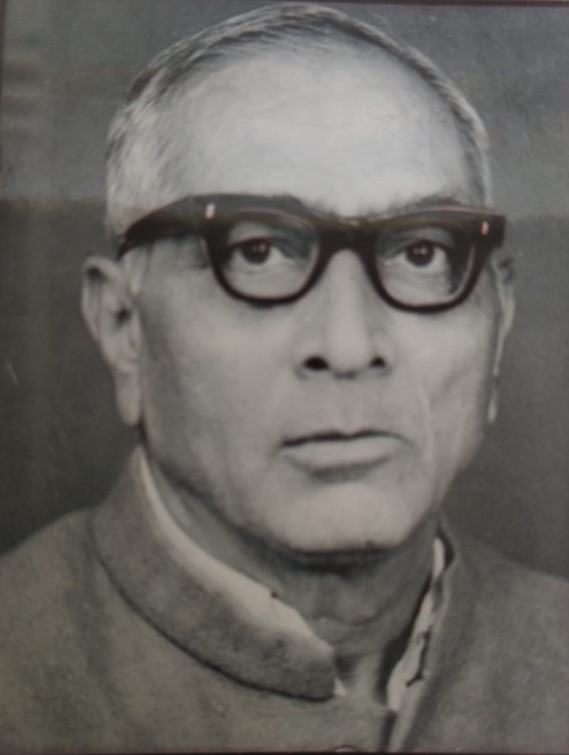
  • Nalinbhai Mehta

    Nalinbhai Mehta

    Nalinbhai Mehta’s khadi rustled as he moved, a man of quiet authority. His square face, broad jaw, and deep-set eyes carried the weight of responsibility. A ledger lay open before him. He scanned it, catching every detail. His voice, steady and deliberate, commanded attention.

    Numbers spoke to him. He read them like a seasoned navigator reads the stars—unfaltering, precise. Finances were not just figures on paper; they were the pulse of the institution. Without them, dreams remained dreams. With them, MGIMS took shape.

    Before the college even existed, Nalinbhai safeguarded its financial future. Rupees, however scarce, never went to waste. Government grants, donations, hospital revenues—he stretched every paisa, making it count. Year after year, his balance sheets left auditors nodding in approval. Clarity, precision, and trust were his currency.

    Nalinbhai Mehta had a rare gift—he understood money, not just as numbers but as the lifeblood of an institution. His instincts for finance kept the organization afloat long before MGIMS was even a blueprint.

    He made every rupee work. Government grants, donations, hospital revenues—nothing slipped through the cracks. He stretched each paisa until it yielded its full worth. Year after year, his balance sheets told a story of discipline and precision, so immaculate that even the sharpest auditors found no room for doubt.

    Born in Karachi on January 17, 1917, Nalinbhai Mehta’s early years were a stark contrast of privilege and hardship. The devastating loss of his mother at three and his father at seven left, losses that time would not fully heal. Adding to their hardship, his father, a once-prosperous merchant trading fine crockery in Karachi and Mumbai, faced financial ruin in 1922 when a ship carrying his entire inventory sank. This catastrophe forced the family into bankruptcy, uprooting them from Karachi to start anew in a small town in Gujarat.

    Orphaned young, Nalinbhai Mehta found shelter in Halvad, a small village in Gujarat’s Morbi district. His stepmother and uncle raised him, but his restless spirit refused to be confined. Schooling in Surendranagar came with its own struggles—money was scarce, and college was a distant dream. To make ends meet, he worked while studying, apprenticing under photographer J.J. Mehta.

    Then came the call of freedom. At nineteen, he stood shoulder to shoulder with India’s independence fighters. His convictions cost him four months in a British prison—a steep price for a teenager, but one he never regretted.

    Even in turmoil, his sharp mind found purpose. He honed his accounting skills, an ability that would shape his future. Perhaps it was destiny. As an Audichya Sahastra Brahmin, he carried a surname that, in Gujarat, stood for financial expertise. “Mehta” meant banker, accountant, trustee. He lived up to the name, making numbers work not just for himself, but for an entire institution

    In 1936, Sarvodaya worker Babalbhai Mehta urged 19-year-old Nalin to visit Sevagram and meet Gandhi—a meeting that changed his life. Gandhi sent him to the Khadi Gramodyog Vidyalaya to work with economist and freedom fighter J.C. Kumarappa. Under Gandhi’s guidance, Nalinbhai embraced frugality and dedication to work—principles he upheld throughout his life.

    Kumarappa’s vision of self-sufficient villages—built on local resources and diverse skills—left a deep mark on Nalinbhai. He didn’t just admire the philosophy; he lived it. Thrift became second nature. He shaved his head to save on haircuts, wore simple clothes to conserve fabric, and treated every paisa with care.

    But more than austerity, Kumarappa taught him the art of financial discipline. Precision in record-keeping, the rigor of balancing accounts, the wisdom of making money work—these lessons shaped Nalinbhai’s future. They weren’t just theories; they became the bedrock of his success.

    Kumarappa’s financial wisdom didn’t just influence Nalinbhai—it set his course. What began as admiration grew into a deep bond between mentor and disciple.

    Life moved forward. Nalinbhai married Madhu Lata, a woman from his home district. Kumarappa, who cherished her like a daughter, marked the occasion with a rare gesture. He gifted her a gold armlet—a token of his affection. To Nalinbhai, he gave two prized possessions: an Omega watch and a Zeiss Ikon camera. More than gifts, they were symbols of trust, a reminder that he had found not just a mentor, but family.

    Madhu Lata battled rheumatic heart disease for nearly thirty years, her heart weakened by a blocked valve. On May 19, 1987, in Ahmedabad, the fight ended.

    Through the years of illness and resilience, she and Nalinbhai built a family. They had three children—sons Rajiv Lochan and Bharat Bhushan, and a daughter, Vrinda. Her passing left a void, but the family she nurtured remained her lasting legacy.

    In 1964, Sushila Nayar, then India’s Health Minister, set out on an ambitious mission—building a rural medical school and hospital. Lal Bahadur Shastri had planted the idea, urging her to train doctors who would serve the villages.

    As India approached Mahatma Gandhi’s centenary in 1969, the vision gained momentum. The Gandhi Smarak Nidhi stepped in, launching a nationwide fundraising campaign to turn the dream into reality.

    Vaikunthbhai Mehta, a respected Gandhian and cooperative leader, took charge of the fundraising effort. But fate had other plans—he passed away before he could see it through.

    The responsibility fell to Nalinbhai Mehta. He stepped in without hesitation, managing the collected funds with his characteristic precision. Splitting his time between Delhi and Sevagram, he immersed himself in the project, his bond with it growing stronger with each passing day.

    In September 1964, the Kasturba Health Society took shape. It began with a handful of committed individuals from Sevagram—Dr. Sushila Nayar, then Union Health Minister, matron Manimala Chaudhury, Dr. Anant Ranade from Kasturba Hospital, and Nalinbhai Mehta. Others joined from across the country: Shri Laxmidas Mangaldas Shrikant from the Gandhi Smarak Nidhi in Delhi, Shri Shriman Narayan from the Planning Commission, and Shri Raghunath Shridhar Dhotre from Wardha.

    To steer the society, Dr. Sushila Nayar appointed trustees. Kamalnayan Bajaj, a Member of Parliament, took on the role alongside Nalinbhai Mehta and herself. Their leadership would lay the groundwork for something extraordinary—a healthcare institution that would redefine medical education in rural India.

    In 1969, as the Mahatma Gandhi Institute of Medical Sciences (MGIMS) prepared to open its doors, the Gandhi Smarak Nidhi provided a one-time grant of one million rupees. But there was a condition—no more funds in the future. MGIMS had to stand on its own. Nalinbhai Mehta took on multiple roles—finance advisor, member-in-charge, and trustee—playing a crucial role in shaping the institute’s early years.

    In 1965, four years before MGIMS admitted its first batch of sixty students, a 19-year-old P.L. Tapdiya met Dr. Sushila Nayar for the first time. Then an apprentice studying to be a chartered accountant, he had no idea this meeting would define his career and bind him to the Kasturba Health Society for six decades. That day, he never imagined he, too, would one day become its president, walking the same path as Dr. Sushila Nayar.

    The accounts office was a study in austerity—two cramped rooms under a sloping kavelu roof, their stone floors cool against the sweltering Vidarbha heat. A flickering tubelight cast a dim glow over the space, where wooden shelves sagged under the weight of thick ledgers. A noisy table fan whirred in the corner, pushing warm air over stacks of yellowing files. The room smelled of ink, old paper, and the occasional whiff of kerosene from a nearby lantern.

    In one room, Manimala Chaudhary, the formidable secretary of the Kasturba Health Society, sat at her desk, her upright posture and clipped handwriting reflecting the discipline she demanded. She was the second most important person in the organisation, and every financial decision passed under her sharp gaze.

    In the adjoining room, three men shared a single, battered wooden desk, its surface cluttered with ink pots, ruled registers, and frayed cloth pouches filled with currency notes. Dadarao Shingare, a wiry man with deep-set eyes, sat closest to the cash box, his fingers instinctively flicking through worn banknotes, counting and recounting with practiced precision. Kanakdas, the youngest of the three, perched on a wooden stool, scribbling entries in neat columns, his forehead creased in concentration. Bhimrao Pradhan, his spectacles balanced precariously on his nose, muttered calculations under his breath, his calloused fingers flipping through budget sheets.

    Tapdiya stood among them, supervising, suggesting, occasionally dipping his pen into the inkwell to jot down figures in the thick, leather-bound ledgers. Together, they managed the finances of a growing institution, their workspace more an assembly of determined minds than of formal training.

    None of them had studied finance.

    Dadarao Shingare had left school after the sixth grade. Yet, he had handled the cash flow of the old 50-bed Kasturba Hospital long before government grants arrived, keeping meticulous records when every rupee mattered. The local Wardha Zilla Parishad filled the funding gaps with a deficit grant, and it was Shingare who ensured not a single paisa was unaccounted for.

    Kanakdas’s story was even more remarkable. In the mid-sixties, he arrived in Wardha from Kerala, nearly illiterate and orphaned in adolescence. Stepping off the train with little more than hunger in his belly, he walked to Sevagram in search of food and shelter. Manimala Chaudhary noticed the frail boy lingering near the kitchen and took him in. She found him a job—ringing the hourly chime in the ashram.

    He knew no Hindi, no English. But he watched. He listened. He sat beside Dadarao, fetching papers, filing documents, running errands. At night, he studied by the light of a kerosene lamp. He passed his matriculation, then pored over the General Financial Rules, memorizing them like scripture. By 1975, the bell boy had become the chief accountant.

    Bhimrao Pradhan had studied up to the tenth grade in Yavatmal. He began his career as a laboratory attendant, then spent a few months assisting a technician before shifting to accounts. There, he learned to handle cash, prepare budgets, and balance sheets—first hesitantly, then with the steady confidence of a man who knew his numbers.

    None of them—Shingare, Kanakdas, or Pradhan—had studied commerce. None had ever worked under an accountant. And yet, in that dimly lit room, armed with ink-stained fingers and an unshakable resolve, they managed an annual budget of ₹1,00,000.

    “Am I to blame if I entrust sensitive jobs to men who may not be very bright but on whom I can rely?” Dr. Sushila Nayar once said, defending the employees who managed key sections of the hospital.

    For five years, Nalinbhai shuttled between Delhi and Sevagram, dividing his time between managing funds and overseeing the fledgling institution. When in Sevagram, he lived simply—often sleeping on the floor, riding a bicycle to inspect the Society’s agricultural land.

    In 1970, he moved permanently. By then, he was already a founding member of the Kasturba Health Society and one of its trustees. He took charge of the accounts office, ensuring every rupee was accounted for.

    His workday began at 4 a.m. “Son,” he chuckled, “4 a.m.—that was my happy hour! Three quiet hours, just me and the numbers. No phone calls, no meetings, no interruptions. I could balance the books, track every paisa, and get things in order. Once the office opened, it was chaos. I had to be ready.”

    Nalinbhai didn’t just oversee the institution’s finances; he controlled them with an iron grip. His desk was not merely a workstation—it was a stronghold protecting every rupee. A single misplaced digit in a ledger would prompt a sharp glance, while an unclear expense would summon a booming interrogation.

    Frugality wasn’t just a principle for him; it was a way of life. His own austere lifestyle—simple clothes, modest meals, and an unwavering commitment to accountability—was a silent yet powerful statement. There were no hidden dealings, no murky corners in his books. Transparency was not just a policy; it was his creed.

    He convinced Dr. Sushila Nayar that the three pivotal figures—herself, Manimala Chaudhary, and Nalinbhai—would accept only a nominal honorarium of ₹500 per month. Over the years, this amount increased in small increments of ₹500, reaching ₹2000 by the time a stroke in 1991 left him paralyzed.

    He and Mr. Tapdiya both understood that financial integrity was paramount. Mr. Tapdiya’s presence provided an invaluable extra layer of scrutiny—if a rare error ever slipped past Nalinbhai’s watchful eye, Mr. Tapdiya was there to catch and correct it. Few institutions are fortunate enough to have such individuals—masters of numbers who recognize that sound financial management is the backbone of any organization, without which everything would collapse.

    It was no surprise that Nalinbhai enjoyed Dr. Sushila Nayar’s complete trust and autonomy. In 1991, when she visited him at home after his stroke, tears filled her eyes. “Nalinbhai,” she said, “I had no idea how meticulously you kept the accounts. Where will I find someone like you?”

    He shared a bond like family with Sarla Parekh. Their work wasn’t just about asking for money—it was about building trust. Every handshake, every conversation, meant something.

    He knew a small gift from a shopkeeper mattered as much as a big donation from a company. Every rupee counted. He treated each donor with the same respect. People believed in him because he believed in the mission. That’s why they gave, not just money, but their faith.

    His work didn’t end when office hours did. His simple home wasn’t just a place to sleep—it mirrored his values. Every rupee he saved wasn’t just a number in a ledger. It kept the institution running. He knew that every paisa mattered.

    Over the years, he built strong ties with Sushila Nayar, Manimala Chaudhary, Parmanand Tapdiya, and Sarla Parekh—the pillars of the organization. In 1982, he and Shri Tapdiya arranged a lunch meeting between Sushila Nayar and Dhirubhai Mehta, bringing Dhirubhai into the fold. After Annasaheb Sastrabuddhe’s passing, Dhirubhai stepped in as Vice President. He became Sushila Nayar’s trusted ally and, after her death, led the institute for 24 years. Tapdiya was to take over from him in 2024.

    In 1991, while in Gujarat, Nalinbhai suffered a stroke. It took his strong voice and left him unable to move his right arm and leg. He spent nearly a decade confined to his home in Ramdas Colony. He never recovered. It was a difficult time, not just for him but also for his daughter-in-law, Lata.

    Lata cared for him with unwavering devotion. She was more than a daughter-in-law—she was like a daughter. Through every struggle, she stood by him, tending to his needs with quiet strength and deep compassion. From the smallest tasks to the hardest moments, she gave him comfort, support, and love.

    On June 17, 2000, he passed away at home, surrounded by Lata, Bharat, and his loved ones. Sevagram lost one of its own. Six months later, Dr. Sushila Nayar followed. These two pillars had witnessed MGIMS’s entire journey—from its birth to its growth, through struggles and triumphs. How many today remember their legacy?

  • Dr. PY Deshmukh: Old Memories

    The GMC Nagpur alumni mourn the passing of Dr. P.Y. Deshmukh, a revered teacher of medicine whose influence extended far beyond the lecture halls and hospital wards. He departed yesterday at the age of 95, leaving behind a legacy of wisdom, wit, and an enduring passion for the art of healing.

    Born in 1930, Dr. Deshmukh was an exceptional student—”first class first” in his tenth board examinations—and among the earliest batches of GMC Nagpur. He rose to lead the Department of Medicine and later served as the esteemed dean of the college, shaping generations of physicians.

    For those fortunate enough to have been his students in the late seventies, his presence was unforgettable. He graced the wards with a quiet dignity, often accompanied by his trusted colleagues, Drs. SN Joglekar, PD Jalgaonkar and (Late) Rajeev Warhadpande. Dr. Aziz Khan , his resident in Kidney Unit II, remembers him fondly. I was K1, Khan was K2. (Kidney Unit registrars in Unit 1 and 2 respectively).

    His rounds were not mere clinical exercises; they were performances—elegant, deliberate, and infused with his characteristic wit. As he moved from bed to bed, poetry flowed from his lips, his words a rhythmic diagnostic tool:

    “𝘙𝘩𝘰𝘯𝘤𝘩𝘪? 𝘋𝘪𝘭𝘢𝘵𝘦 𝘵𝘩𝘦 𝘣𝘳𝘰𝘯𝘤𝘩𝘪.”

    “𝘊𝘳𝘢𝘤𝘬𝘭𝘦𝘴 𝘪𝘯 𝘵𝘩𝘦 𝘤𝘩𝘦𝘴𝘵? 𝘋𝘦𝘤𝘰𝘯𝘨𝘦𝘴𝘵.”

    These weren’t just medical instructions; they were lyrical lessons, indelibly etched in the minds of his students.

    In the classroom, his presence commanded attention. Short and stoic, his voice boomed across the lecture hall, each word carefully chosen, each concept clearly articulated. We, his students, meticulously transcribed his every utterance, knowing we were in the presence of a master.

    His pronunciation of two particular words—”Mannitol” and “Perhaps”—became part of his legend, echoing from the podium during lectures on stroke treatment, lingering in the memories of those who learned from him.

    Dr. Deshmukh’s words, like his stature, were concise but powerful. He used his height to playfully emphasize the immensity of the field of medicine. “𝘋𝘰𝘯’𝘵 𝘵𝘳𝘺 𝘵𝘰 𝘮𝘦𝘢𝘴𝘶𝘳𝘦 𝘵𝘩𝘦 𝘩𝘦𝘪𝘨𝘩𝘵 𝘰𝘧 𝘔𝘦𝘥𝘪𝘤𝘪𝘯𝘦 𝘣𝘺 𝘵𝘩𝘦 𝘩𝘦𝘪𝘨𝘩𝘵 𝘰𝘧 𝘺𝘰𝘶𝘳 𝘱𝘳𝘰𝘧𝘦𝘴𝘴𝘰𝘳!” he’d declare. This was followed by, “𝘋𝘰𝘯’𝘵 𝘭𝘦𝘵 𝘮𝘺 𝘩𝘦𝘪𝘨𝘩𝘵 𝘧𝘰𝘰𝘭 𝘺𝘰𝘶. 𝘛𝘩𝘦 𝘧𝘪𝘦𝘭𝘥 𝘰𝘧 𝘮𝘦𝘥𝘪𝘤𝘪𝘯𝘦 𝘪𝘴 𝘧𝘢𝘳 𝘵𝘢𝘭𝘭𝘦𝘳 𝘵𝘩𝘢𝘯 𝘢𝘯𝘺 𝘱𝘳𝘰𝘧𝘦𝘴𝘴𝘰𝘳. 𝘐’𝘮 𝘫𝘶𝘴𝘵 𝘢 𝘴𝘩𝘰𝘳𝘵 𝘨𝘶𝘪𝘥𝘦 𝘪𝘯 𝘢 𝘷𝘦𝘳𝘺 𝘵𝘢𝘭𝘭 𝘸𝘰𝘳𝘭𝘥. 𝘒𝘦𝘦𝘱 𝘤𝘭𝘪𝘮𝘣𝘪𝘯𝘨.”

    These words, spoken with a twinkle in his eye, left the class spellbound. This playful admonition spoke volumes about humility and the pursuit of knowledge.

    He was to Dr. B.S. Choubey what Rahul Dravid was to Virender Sehwag—the perfect balance of steadiness and flair. While Dr. Choubey’s energy was dynamic and aggressive, Dr. Deshmukh’s approach was patient and precise, anchoring the team with quiet confidence.

    His slow, almost whispered speech, his carefully chosen words, his expressive eyes scanning the ward, absorbing every detail—these were the hallmarks of his unique style. He moved at his own rhythm, enriching our rounds with his famous one-liners, each a miniature masterpiece.

    His son, Pradeep, now heads the Department of Cardiology at GMC Superspeciality Hospital, Nagpur—in the footsteps of his father.

    Yesterday, that steady presence was stilled. The final round is complete. And yet, Dr. P.Y. Deshmukh’s influence lives on in the doctors he trained and the countless lives he touched. May his soul rest in eternal peace.

  • Dr. P. Y. Deshmukh

    Dr. P.Y. Deshmukh, former professor of Medicine and Dean GMC Nagpur, passed away yesterday at the age of 95, and since then, many of us from GMC Nagpur’s 1970s era have been reminiscing—not just about the good old days, but about our unforgettable teachers. This morning, Vinayak Sabnis called to share a story that perfectly captures Dr. Deshmukh’s razor-sharp wit and our rather… inventive way of voicing discontent.

    We belonged to the 1973 batch. Our day began with a 7:30 a.m. lecture—an hour-long marathon—followed by a short break before the 9:00 a.m. ward clinics. One morning, as Dr. Deshmukh wrapped up his lecture and the clock inched toward 8:30, he made a casual announcement: “Bacterial meningitis in ten minutes!”

    Now, GMC Nagpur students had a protest technique that was anything but subtle. Forget murmurs of dissent or raised hands—when displeased, we unleashed the Chappal Chorus: a synchronized, deafening scrape of footwear against the floor, capable of drowning out even the most determined lecturer.

    Dr. Deshmukh, a man of keen observational skills (and an even keener sense of humor), caught on immediately. He listened to the growing rumble and, without missing a beat, adjusted his timeline. “Ten minutes?” he mused.

    “Perhaps… five?”

    The scraping intensified.

    He paused, eyes twinkling. “Two minutes it is!”

    And with the precision of a master clinician, he delivered: “Bacterial meningitis is a neurological infection caused by various bacteria, leading to intense inflammation of the meninges. Diagnose it with Kernig’s and Brudzinski’s signs. Lumbar puncture reveals pus cells. Treat with penicillin.”

    Two minutes. Exactly.

    Then, with a triumphant smile—one that suggested he’d just won a high-stakes cricket match truncated by the Duckworth-Lewis method—he walked out, leaving behind a lecture hall that had fallen into awed, amused silence. One can almost picture him taking a bow.

    He had delivered a perfect googly. The first full question in the exam? Bacterial meningitis. Twenty marks. Classic PYD.

  • Poverty of Thoughts. Bankruptcy of Ideas.

    Dr. B.S. Chaubey. A name that evoked both awe and trepidation. He was fire and ice—blazing with intensity, chilling with his stare, his mind a scalpel that could slice through the most complex diagnoses in a few minutes.

    For twenty-five years, he reigned over the Department of Medicine at GMC Nagpur, shaping generations of physicians.

    Ward 23—his ward—was a crucible. Raw recruits were forged into physicians there, some tempered, others broken.

    He tolerated no mediocrity. His temper was legendary, his standards unforgiving, his sarcasm cutting.

    In 1979, I was a Unit 1 house officer, stretching thin between Ward 23 and the kidney unit. Mondays were chaotic. Forty new patients flooded the ward, overflowing into the hallways. We worked around the clock—histories, exams, notes, tests, reports—with no sleep.

    Tuesday morning, 7:59. Dr. Chaubey’s blue Fiat screeched to a halt. He emerged, impeccably dressed—red tie perfect, apron gleaming, shoes polished. His smile was thin, his eyes sharp. A low hum escaped his lips as he moved, like a general before battle.

    Rounds began. Familiar faces surrounded me—Jalgaonkar, Sarda, Pendsey, Kalamkar, Subhedar, Wasnik, Kane, Mundle, Srivastava. Nurses Bansod and Lalamma. Our seniors, Dr. G.K. Dubey and Dr. S.M. Patil, stood at attention, equally under his merciless scrutiny. Dr Chaubey cut through cases swiftly—malaria, ulcers, cirrhosis, TB—pausing only when something caught his eye.

    He stopped at bed five. “Present the case,” he commanded. Seventy-two hours without sleep. Unbathed, clammy, rumpled. My unshaven face would irk him. I began. The patient: sixteen, legs paralyzed, numb below the navel, bladder distended.

    “Kalantri,” he demanded, “Diagnosis?

    My heart pounded, my throat dry. “Guillain-Barré syndrome, sir,” I croaked, deliberately emphasizing the French pronunciation, hoping to impress him.

    Silence. A long, heavy silence.

    Then, the flare. His nostrils flared, jaw tightened. He yanked the blanket away. “Look!” he barked as the patient’s abdomen lay exposed. “No sensation. Bladder like a drum.”

    A muscle twitched in his temple—his telltale sign of rage barely restrained. “Textbook acute transverse myelitis! And You missed it! Something So obvious!”

    My pulse thundered in my ears. He turned to Dr. SM Patil, shaking his head. “Who sends idiots to Medicine these days?” he asked, making sure everyone in the ward heard his judgment.

    Then, the coup de grâce—his infamous phrase, twisted by his facial palsy: “Poverty of thoughts and bankruptcy of ideas.”

    Coming from a vernacular school, my English was a struggle. His effortless Oxford accent made his words hit hard. First confusion, then shame, then crushing failure. He moved on, leaving me in the wreckage.

    Forty-five years have passed since he spoke those words. Though he’s gone, his voice lingers: “Bankruptcy of thoughts and poverty of ideas.” My colleagues still recall it—sometimes in jest, sometimes a stark reminder.

    Brutal? Yes. But my respect remains. He shattered illusions, but he also rebuilt me, lifting me from intellectual poverty to a wealth of understanding, from ignorance to knowledge.

    Poverty of thoughts and bankruptcy of ideas. Did I remain intellectually bankrupt? No. That very ward, where those words stung, reshaped me. Ward 23 was my crucible, forging me into a physician rich not in currency, but in knowledge, skill, and medical reasoning.

    For that, despite the scars, I am eternally grateful.

  • German Classes in Sevagram

    It all started on a whim—those small, unexpected moments that often turn into the most memorable.

    One winter morning in 1986, while making my rounds at the hospital in Sevagram, an unusual thought crossed my mind: I should learn German. The idea seemed absurd, even to me. But then I learned that Mrs. Sunita Kawale, the wife of Jayant Kawale, CEO of the Zilla Parishad in Wardha, was a trained German teacher. She had casually mentioned her linguistic skills during a visit to the OPD, and suddenly, the idea no longer felt so far-fetched.

    Until that point, we barely knew that “German” and “Deutsch” were the same language.

    I floated the idea among my colleagues.

    “German? What for?” one scoffed. “We’re not heading to Germany anytime soon.”

    “It won’t even look impressive on our CVs,” another added. “Hospitals don’t ask if you can say ‘Guten Tag.’”

    “Why waste our evenings?” a third laughed. “We might as well watch Nukkad or Wagle Ki Duniya.”

    Despite the skepticism, a few students were intrigued. Ganesh Srinivasan and Parthak Pradhan from the 1985 batch, Monica Ahuja Sinha from 1982, Vinaya Agnihotri from 1980, Anjali Ingley Bhure from 1977, Suchitra N. Pandit from 1976 along with Sudha Jain from Anaesthesiology, joined in.

    Within a week, our small group had come together, a blend of students, residents, and teachers, each bringing their own energy.

    Classes began in the Medicine seminar room, which had since moved to Surgery on the ground floor. Twice a week, from 6 to 8 in the evening, we tackled German alphabets, numbers, and its tricky pronunciations. The grammar felt like a different world. I struggled.

    Reading aloud in class made me nervous. “What if I fumble? What if my students laugh at me?” The thought of failing an exam in front of them was unsettling.

    But after a month, something shifted. The divide between teacher and student blurred. We became comrades, encouraging one another. In the hospital corridors, we greeted each other with a cheerful 𝘎𝘶𝘵𝘦𝘯 𝘔𝘰𝘳𝘨𝘦𝘯 in the mornings and parted with an “𝘈𝘶𝘧 𝘞𝘪𝘦𝘥𝘦𝘳𝘴𝘦𝘩𝘦𝘯” in the evenings. Counting in German became second nature—“eins, zwei, drei” rolled off our tongues as easily as one, two, three.

    The hospital, in our minds, transformed into a 𝘒𝘳𝘢𝘯𝘬𝘦𝘯𝘩𝘢𝘶𝘴, and we were all 𝘈𝘳𝘻𝘵 (doctors). These new words felt like a secret world we’d unlocked, as if they had been waiting for us all along.

    Four months later, we sat for the exam. We all passed. I don’t remember the marks, but does it matter now?

    Did we celebrate? Maybe with a cup of coffee and a chocolate. The details are hazy, but the warmth of those days remains clear. What started as a whim became one of those small, unexpected adventures that make life richer.

    None of us ever made it to Germany. But so what? We had unlocked a new world—even if just a small one. And if nothing else, we could always greet each other with a hearty 𝘎𝘶𝘵𝘦𝘯 𝘛𝘢𝘨 and part ways with an 𝘈𝘶𝘧 𝘞𝘪𝘦𝘥𝘦𝘳𝘴𝘦𝘩𝘦𝘯.