Category: Heritage & History

Documenting the legacy of MGIMS, Sevagram heritage, and medical history.

  • The Unsung Heroes: Caregivers in Palliative Care

    Shankar sat on the old wooden bench outside his workshop, absently rubbing his rough, unshaven chin. The bright sparks of welding had once lit up his face, but now it was worn, lined with worry. He had battled difficult customers, unpaid bills, and broken machines, but this was different. This was a fight he knew he could not win.

    Thirty years ago, he married Lakshmi—a name straight out of mythology, the goddess of prosperity wedded to Lord Shankar. Their union was no less sacred. She had studied two grades higher than him and managed their home with quiet efficiency, raising three daughters and a son. Shankar welded his way to respectability, shaping metal and fate alike. A small home, a good name in town, the quiet satisfaction of a life well spent—he had it all.

    Then, disaster struck.

    It started with a sore throat. Lakshmi ignored it. The local doctor dismissed it as an ulcer. In Chandrapur, they kept her for days without answers. Frustrated, Shankar brought her to our hospital. A swollen lymph node raised suspicion. The biopsy confirmed it—cancer. 

    Clinging to hope, he took her to the big cancer hospitals in Nagpur.  They were known for their expert doctors and advanced machines. Shankar believed that if cancer could be cured anywhere, it would be there. 

    He spent money he didn’t have, waiting for a doctor to tell him something different. But the tests only brought worse news. Scans, biopsies, and blood tests all said the same thing.

    It had started in her throat, spread to her lymph nodes, and was already too late. Six rounds of chemotherapy, then radiation—thirty draining sessions. 

    Stronger drugs, more hospital stays. She vomited, grew weaker, lay still for hours. 

    The tumor shrank, hope flickered, then another scan—more cancer. It had spread to her spine, liver, even her eyes. 

    Six months later, she was just 34 kilos—a frail shadow of herself. 

    She couldn’t bathe, dress, or walk without help. She couldn’t eat on her own. Nights brought on breathlessness. The world beyond her doorstep ceased to exist; she left home only for hospital visits.

    Neighbours kept their distance. Family stopped visiting. Shankar shut his workshop. His world became Lakshmi’s bedside. He bathed her, dressed her, fed her through a tube. He cleaned her wounds, changed her diapers, massaged her aching legs. A nurse, a husband, a shadow of himself. He did everything a nurse would do—and more. Always gentle, always patient.

    And he never complained. He never spoke of his own exhaustion, his empty pockets, his fear of what lay ahead. He only asked, “Doctor, what more can we do?”

    His life now revolved around a single purpose—caring for Lakshmi.

    One day, her abdomen swelled—the cancer had blocked her intestines. Surgery was too risky. “She may not survive,” we warned him. He didn’t hesitate. “Do whatever you can.” 

    By some miracle, her intestines started moving again. But soon, pus-filled pockets formed in her back. Surgeons drained the infection. She seemed better, for a while.

    She got worse. The ICU left her confused and took away her sleep. She felt lonely, with no one to talk to. We decided to move her to the palliative care ward. The ICU no longer served her needs. We hoped the palliative care ward would bring peace. It did. Morphine eased her pain. The nurses gently cared for her wounds. The residents’ kind words gave her comfort.

    Everyone knew death was near. No one—doctors, nurses, or Shankar—tried to stand in the way. Nobody attempted to fight death. They all accepted that when it comes, the right thing to do is nothing.

    Thus, in the quiet hours of the morning, in the palliative care ward, with Shankar by her side, Lakshmi slipped away.

    Shankar had not slept for days. Yet, in those final moments, he sat by her, holding her hand, whispering to her. His own needs—rest, food, a moment of peace—had long ceased to matter. 

    At home, he was always by her side. He helped her off the bed, walked her to the auto-rickshaw, found a seat for her on the bus, and brought her to the hospital. He registered her name, got her blood tests done, took her to the scan center, paid the bills, bought medicines, and waited for hours outside the OPDs. When she was finally admitted, he did everything—feeding her, cleaning her, arranging tests, fetching reports.

    It was not just about love or duty. He had to prove—to doctors, relatives, and society—that he was a devoted husband, that he cared enough. The expectations were endless.

    A true caregiver. Committed, tireless, selfless. But at what cost?

    Working in the palliative care unit, I have seen how much attention we give to the patient. The caregiver fades into the background—exhausted, sleepless, breaking a little more each day, yet never showing it.

    Society expects them to endure. It is their ‘duty,’ after all. They must not rest, watch a film, or attend a wedding. They exist only to care, and care, and care—without a sigh, without a pause.

    Who said caregiving is easy? It is lonely, relentless, and unseen. And too often, the caregiver is left with nothing but grief and silence.

  • When Cancer Talks Back

    When Cancer Talks Back

    Radhika was never one for outbursts. But that day, as she lay in the hospital bed, her voice shattered the silence like a storm. Her eyes burned with fury.

    “How dare you talk to me?” she shouted, her chest rising and falling with anger. “Get out! Don’t come near me! Don’t touch me!”

    Her words were sharp, her agitation unshakable. This wasn’t an argument in a marketplace or a woman feeling unsafe on a dark road. This was Radhika—steady, faithful, and bound by routine—now lost in the chaos of illness. Her world had turned upside down

    In her early forties, Radhika lived a quiet, simple life. She had separated from her husband two decades ago and now stayed with her brother and his wife in their modest home. She didn’t work. Her days were spent in prayers to Lord Krishna, her evenings filled with soft bhajans. Life was predictable, almost comforting in its routine. Until the illness came.

    It started quietly. A deep, growing tiredness. The kind that makes you forget what it feels like to wake up refreshed. Then, her appetite faded. Food lost its joy.

    But what troubled her most was a strange change in her body. Her bowel habits—once regular and routine—became erratic. Some days, she was constipated. Other days, diarrhea came in waves. At first, she ignored it. But then, one day, she saw blood in her stool. Fear gripped her. Something was wrong.

    Her fear was clear when she arrived at the hospital. Doctors examined her—questions, scans, tests. Then came the news. Colon cancer. But not just that. It had spread—to her ovaries, uterus, and kidneys. A hard truth to hear. Even harder to accept.

    The doctors explained the treatment. Chemotherapy. Medications. Blood tests. Frequent hospital visits. Maybe surgery—if the treatment worked. They spoke gently. “We’ll take care of you,” they assured her.

    The first chemotherapy session took its toll. Nausea. Weakness. No appetite. It was a long, difficult road. Radhika seemed to endure it in silence.

    Or so they thought.

    The next morning, everything changed. Her calm was gone. In its place was a restless, frantic energy.

    She wouldn’t speak to her brother. She barely looked at the nurses. When the doctors arrived, she met them with cold hostility.

    “Leave me alone!” Her voice shook with anger. “You’re poisoning me with these toxic drugs! That’s why I feel like this. I can’t eat. I can’t sleep. I can’t even use the bathroom properly!”

    Her words stung. Doctors are used to gratitude—to thank yous, to relief, to trust. But this? This was different. The woman they had just helped now saw them as enemies.

    What had changed?

    Radhika’s anger wasn’t just from her illness. Her mind had been troubled for years. She believed people could read her thoughts. She felt they controlled her, forcing her to act against her will. She lived in fear.

    But she found comfort in a Dargah—a sacred shrine where people seek blessings, peace, and healing. A spiritual healer there listened to her. He offered prayers, hope, and healing words. She trusted him completely—more than doctors, more than family. She believed only the Dargah could cure her.

    So when she learned she had cancer, she refused treatment. Medicine wouldn’t help, she thought. Only faith could.

    The psychiatrist finished writing her prescription and looked up. “It will take time,” he said softly. “Her mind needs healing too. And trust won’t come easily. She fears everyone around her.”

    Radhika’s brother, always the dutiful sibling, apologized again and again. But the doctors only nodded. “It’s not her fault,” they reassured him. “It’s the disease talking, not her.”

    And so, in the face of Radhika’s rage, the doctors stayed calm. They knew it wasn’t anger speaking—it was fear, confusion, and pain. She taught them a quiet but powerful lesson: Not all patients show gratitude, and that’s okay. Sometimes, those who resist the most are the ones who need the most care.

    In the weeks that followed, Radhika’s mood swung like a pendulum. One day, anger. The next, silence. But slowly, she adjusted to her new reality. The fury never left, but it softened. She didn’t embrace the treatment, but she began to accept it. It was, after all, her only chance.

    For the doctors, the experience was humbling. They had grown used to praise. But now, they saw medicine differently. Healing wasn’t about thanks or recognition. It was about walking with the patient—through rage, through doubt, through suffering. They learned to accept both the bouquets and the brickbats.

    As the Gita teaches, they learned equanimity—to stay steady, no matter what came their way.

    And so, when Radhika finally left the hospital, she didn’t thank them. But in her eyes, there was a quiet, reluctant acceptance. And that, perhaps, was enough.

  • A Walk Down Memory Lane: The Forgotten Colonies of MGIMS

    A Walk Down Memory Lane: The Forgotten Colonies of MGIMS

    The names—Kabir, Ramdas, Vivekanand, Guru Nanak, Ramkrishna, Dharmanand, Martin Luther King, Patel, and Birla—are more than just colonies in Sevagram. They hold memories of beginnings, struggles, friendships, and quiet acts of courage. Each name has a story to tell.

    Yesterday, a thought crossed my mind, almost by accident Dr. Sanjay Diwan had asked whether the Kabir Colony quarters on the MGIMS campus still stood or if, like so much else, they had faded with time. I realized it had been years since I last saw them. So, I set out—not just for a walk through familiar lanes, but on a journey through the years themselves.

    My steps led me to Quarter No. 13 in the Kabir colony—my first home in Sevagram. It was the summer of 1982, and this modest 400-square-foot space was shared with Sanjay Shrivastava, a senior resident in Ophthalmology. Next door lived MVR Reddy—a dear friend who left us suddenly in 2017, a loss I still struggle to come to terms with.

    Life was simpler then—no television, no internet, no mobile phones. Just a transistor crackling in the background and, more importantly, each other.

    Now, the doctors are gone. The quarters are home to nurses. Across the street, Patel Hostel stands in quiet ruin, a mere shadow of the lively days when Dr. OP Gupta and Dr. Hariharan were its first residents.

    Ramdas Colony has changed too. A librarian told me that it is now home to clerks, helpers, and drivers—the unseen workers who keep MGIMS running. Once, though, it had been a place that rang with the booming  voice of Nalin Bhai Mehta and the hearty laugh of Raja Khapre. Among the other residents were Mr. Ramachandran Nair, secretary to Badi Behenji with his strong leftist views, and Shri Vidwans, the peaceful Yoga teacher. The two couldn’t have been more different—one outspoken and political, the other calm and spiritual.

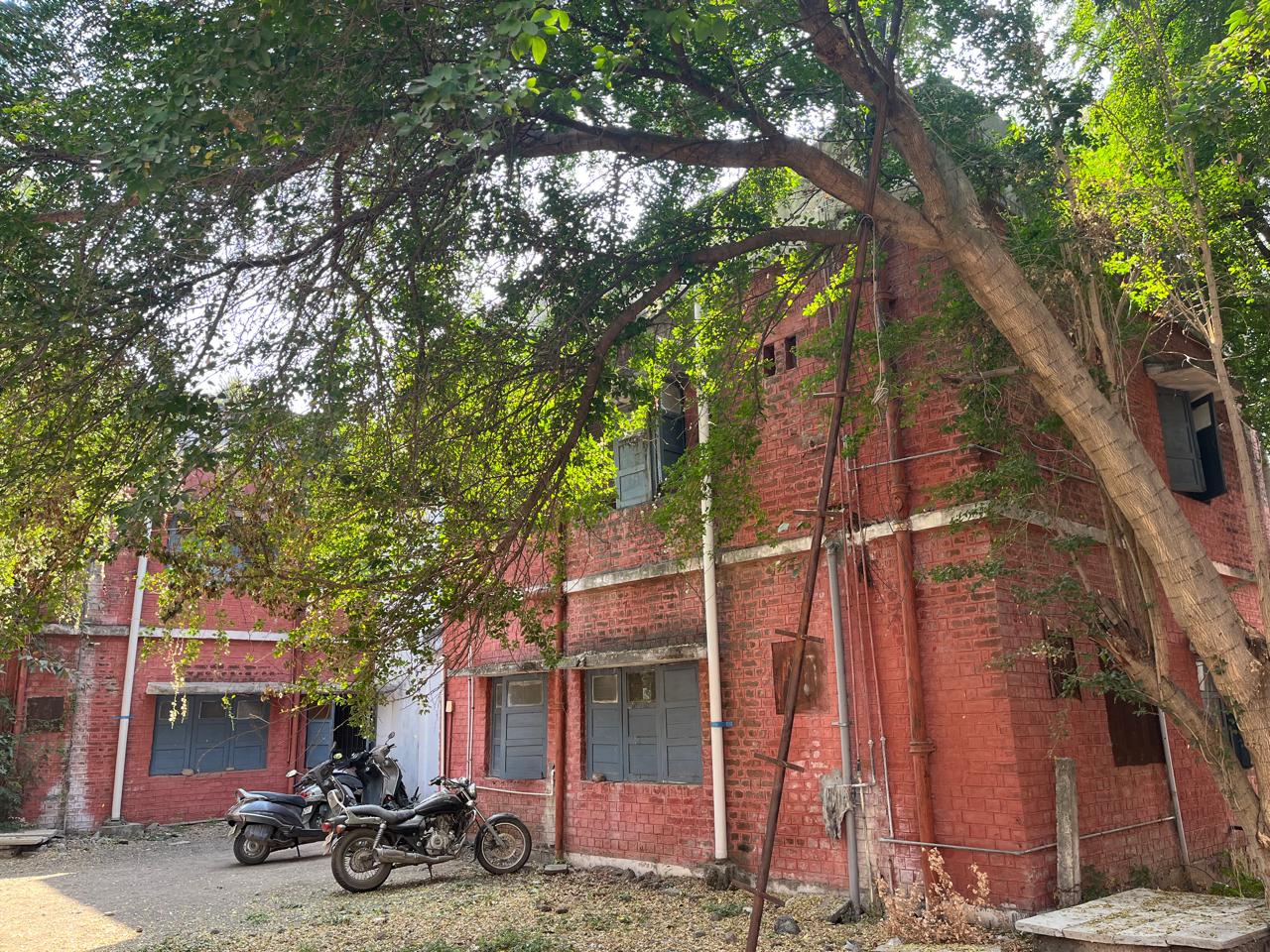
    Back then, the Type 2 quarters were a world of their own—a little pocket of life tucked behind Kasturba Vidya Mandir. Twenty-four two-story homes stood side by side, their walls echoing with the sounds of children playing, pressure cookers whistling, and conversations spilling from open windows.

    It was a colony of young lecturers, all at the start of their journeys—Lalita and Ramji Singh, Mala and Deepak Mendiratta, Archana and Ajay Aggarwal, Lakshmi and MVR Reddy, Sudesh and Naresh Tyagi, Rajesh and Ashok Sharma, Sandhya and Vivek Poflee, Mukesh Agrawal, Vandana and Atul Agrawal, Dolly and Vivek Agrawal, Sudha Jain, Shashi and NC Prajapati, SKT Jain, Mr. Mulay, and Sangeeta and Naresh Kumar. The Agrawals, in particular, seemed to multiply like the neem trees in the compound—there was always one within earshot, sharing a cup of tea, discussing a new case, or organizing the next festival gathering.

    Between the buildings, an open ground served as our meeting point, where a modest badminton court came to life every evening. Rallies were fiercely contested, but it was never about winning—just an excuse to be together. Diwalis lit up the quarters with rows of flickering diyas and bursts of fireworks. Holis left the walls and faces splashed with a riot of colors. Birthdays were never just personal affairs; they belonged to the whole colony. Cooking, decorating, and laughter flowed freely across all 24 homes, binding us in a way that time and distance could never quite undo.

    Then, in the early 1990s, the New Type 2 Colony appeared near the Dean’s office. Drs. Vyas, Pal, Satish Kumar, Tirpude, and Kar lived there—now retired, moved away, or simply gone.

    The Ramkrishna Colony is no more. It was demolished years ago, leaving behind no sign of the life it once held. In the 1970s, its small quarters had familiar names on their doors—Dr. Mrs. Gupta, Dr. VN and  Dr. Pushpa Chaturvedi, Dr. OP Gupta, Dr. Damle and Dr. Belokar. Neighbors in the colony knew each other well, voices carried across verandas, and days slipped by quietly. The colony sat next to the Dharmanand Hostel. Today, nursing students live there.

    Guru Nanak Colony too has changed. The homes that once belonged to Manimala Chaudhari, Kamala Desikan, CD Gokulachandran, Drs. BS Garg, Rajiv Borle, and Ashok Mehendale have made way for a guest house. Manimala and Kamala, both trusted by Dr. Sushila Nayar and the two women who served as secretaries of the Kasturba Health Society, once lived here.

    In front of me stood Prerna Kutir—simple, much like its owner, Dr. Sushila Nayar, the founder-director of MGIMS. There was nothing grand about it—bare furniture, a thatched roof, old fans, and flickering tube lights. No air conditioners, no embellishments—just a quiet, unadorned grace that reflected her own grounded nature.

    Yet, within these modest walls, history was made. Much like the great halls of 10 Downing Street or 1 Willingdon Crescent, this was where MGIMS’s future took shape. She hired and mentored, debated and decided, reviewed files, dictated letters, supervised postgraduate theses, and completed unfinished work. Here, she played bridge with friends, hosted Sundarkand recitations, and welcomed visitors with an effortless warmth that made them feel at home.

    It was also here that she met her final days with quiet dignity, facing her illness without fuss, passing away 25 years ago. For years, the house stood in silence, fading into the background. But recently, it was restored, as if the institution she had built was finally paying tribute to the woman who had breathed life into it.

    Birla Colony tells a tale of homes once alive with warmth. Mrs. Narula had lived here—how could I ever forget Biji? In her nineties, yet brimming with life, love, and boundless affection.

    Now, the old occupants have been replaced by new faces. As I walked these familiar streets, I couldn’t shake the feeling of being a stranger in a place that once felt like home.

    Turning toward Vivekanand Colony, where I had spent nearly two decades, I saw the familiar eight quarters. They had once been full of warmth—colleagues who had become family—Narang, Chaturvedi, Tyagi, Jajoo, Taori, Ghuliani, Ghosh, Nayak, Vijayshree, Mathur, and ML Sharma. Time, as it always does, had taken its toll. Some had passed away, others had moved on, and now those quarters stood empty, strangers occupying what had once been home.

    Step back into the 1970s, when MLK Colony was a close-knit world of just 14 quarters, each with its own stories and characters. Dr. Jyotsna Nigam, daughter of Dr. S.P. Nigam, who led the Medicine department in the late ’70s, still vividly recalls who lived where. From Quarter 1 to Quarter 14, the colony housed a remarkable lineup—Drs. Hariharan, A.P. Jain, R.V. Agrawal (later Dr. Moghe), M.L. Sharma, S.P. Nigam, B.C. Harinath, M.D. Khapre, W.V. Belokar, B.V. Deshkar, K.N. Ingley, O.P. Gupta, and even the administrative officer, Mr. Giri, alongside Drs. R.N. Shetty and B.K. Mahajan. It was more than a neighborhood—it was a world where friendships flourished, ideas were exchanged, and the pulse of the medical college beat strong.

    Their homes were simple—stone floors, thatched roofs, Bajaj scooters parked patiently outside, waiting for their next ride to the hospital or the Wardha subji mandi. Yet, within those modest walls, there was a richness of purpose, a quiet dignity in the way they lived and worked. Wealth never touched these quarters, but something far greater did—a sense of mission, of building something that would endure long after them.

    The 1990s brought change. Professors moved to Dhanwantari Colony where they built their own homes. Staff quarters passed hands—first to younger teachers, then to support staff.

    Today, the walls of these colonies sag. The roofs leak. The paint peels in weary strips. By modern standards, they are ordinary, even worn. Yet, there is a beauty here that no amount of renovation can restore. These buildings, now slipping quietly into history, still hold the echoes of laughter, the murmur of evening gatherings, and the unspoken stories of those who once called them home.

    What made them special? It was never the bricks and mortar, but the lives that unfolded within. We had little—just spirited badminton matches on makeshift courts, endless cups of tea shared on verandas, birthdays celebrated with borrowed chairs and homemade decorations, and quiet conversations that stretched long into the night. But in those simple moments, we had everything.

    The “good old days” were never perfect, yet they were ours. As I turned back towards home, one thought refused to leave me: Do these streets still whisper their stories, or are they waiting for someone to listen—and bring them to life once more?

  • The Heart of MGIMS: Gone but Not Forgotten

    The Heart of MGIMS: Gone but Not Forgotten

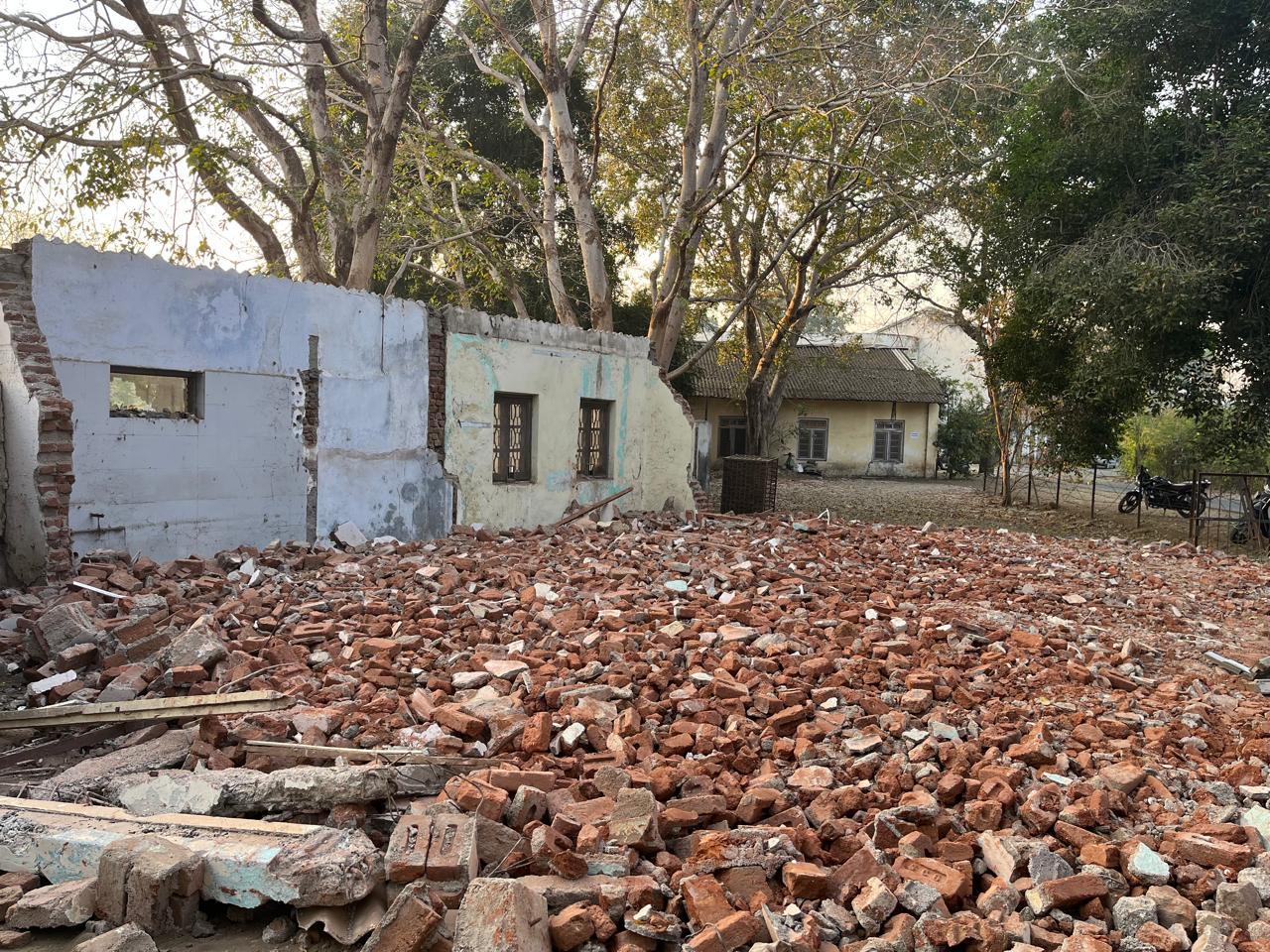
    The old principal’s office, once the heart of MGIMS in 1969, is now nothing more than a pile of rubble.

    Today it lies in ruins.

    In 1969, when MGIMS began, the principal’s office was a plain two-room building. It stood quietly next to the old hospital, where the Community Medicine department is now, almost touching Adhyayan Mandir. There was nothing fancy about it. It blended into the surroundings, barely noticed.

    Yesterday, that quiet dignity met a dusty end. A JCB reduced the building to rubble—bricks, walls, doors, windows, everything. The foundation had grown weak, the walls cracked, and the structure had aged beyond repair. Like an old, rusted machine, it had served its purpose and was ready to be laid to rest.

    For me, the building held special memories. In 1973, I cycled from Wardha to Sevagram along a narrow tar road, flanked by open fields and the occasional tree. I had come to collect the MGIMS entrance form. The building stood just off the Sevagram Ashram Road, marked by an iron gate known as ‘54 gates,’ after the office phone number. Inside, the air smelled of old paper and damp walls. Wooden almirahs lined the room, and simple tables and chairs completed its sparse furniture. I handed over Rs 10 for the form, filled it out, and submitted it there.

    Dr. I.D. Singh was the principal then. A tall, khadi-clad Sardar, he was soft-spoken and modest, a gentle soul. He balanced his admin duties with a spiritual side, leading evening bhajans and playing the harmonium with quiet grace. His warmth left a mark all who met him.

    At that time, MGIMS shared its entrance exam with AIIMS and BHU Varanasi. In the summer of 1973, I took my exam in Nagpur and waited for the results. I cleared the first round and was called for an interview. But by then, I had already joined GMC Nagpur. I never attended the MGIMS interview. I wasn’t destined to be an MGIMS alumnus.

    Life moved on.

    Yet, that little office lingered in my thoughts. Its simplicity and warmth stayed with me over the years. It wasn’t just a building; it was a witness to dreams and beginnings. The first MGIMS batches would always remember that.

    As the dust rose, it felt as though a piece of history was being carried away. Time moves on. Old things make way for the new. The building is gone, but its spirit—rooted in simplicity and purpose—remains in my memories.

  • Of Kachha Chiwda and Aloo Bonda

    Of Kachha Chiwda and Aloo Bonda

    Don’t forget to eat that 𝑎𝑎𝑙𝑜𝑜 𝑏𝑜𝑛𝑑𝑎,” he said again, his voice steady now.

    “I will,” I replied with a smile, stepping away.

    Only a week earlier, his son had wheeled him into the hospital OPD, visibly anxious. A driver in our hospital, his face betrayed his helplessness as he pushed the wheelchair into my room.

    “Sir, my father isn’t talking. He doesn’t recognize us. And look—his right arm—it’s gone,” he said, his voice trembling.

    On the bed lay a man of 73. Words tumbled out from his mouth, jumbled and unclear. His face was twisted; one side drooped, his mouth sagged, and his right arm hung limp and lifeless. It didn’t take long to connect the dots.

    “He’s had a stroke,” I told the son, and the residents around me sprang into action.

    The blood pressure cuff hissed, the glucometer pricked his finger, and the monitor beeped softly as it measured his vitals. He was rushed for a CT scan, which confirmed our suspicion—a shadow on the parietal lobe, a silent cry from his brain, starved of blood.

    The usual steps unfolded with practiced urgency. A resident leaned in, his voice steady, “Can you hear me? Squeeze my hand if you can.” The patient’s hand lay limp, unresponsive. Another resident pressed a car key gently along the sole of his foot, her gaze fixed on his big toe—it twitched upward, confirming the brain damage. A percussion hammer tapped against his knee; the leg remained still. A cotton swab brushed his skin, followed by the faint prick of a needle. “Feel this?” the resident asked, but the blank stare was answer enough.

    Nearby, the nurse prepared the clot-busting injection. The syringe slid in, delivering a lifesaving dose. Medications followed in quick succession—blood thinners, BP stabilizers, and cholesterol pills—all lined up in the fight to restore what the stroke had stolen. Time pressed on, relentless.

    Days in the ICU passed. Slowly, he got better. He was moved to a private room, where a physiotherapist started working on his weak arm. He began eating and sleeping. Words came back, though slowly. Numbers puzzled him, and he struggled to name his fingers—clear signs of damage to his brain.

    Then, just when we thought the worst was behind us, trouble struck again. He got a fever, and coughed. His lungs crackled rattled like an old bullock cart over a potholed road. Pneumonia. Antibiotics cleared the infection, and a feeding tube replaced his meals to prevent choking, while a catheter kept him dry.

    “I don’t like this,” he grumbled one day. “You don’t know what’s wrong with me. Let me go. I’ll try Ayurvedic treatment.”

    My residents exchanged incredulous looks. All the toil, all the medicines—only to hear this? Their frustration was palpable.

    I tried to reason with him gently. “Stay just a few more days. Let us help you regain your strength.”

    He shook his head, resolute. “I haven’t bathed or shaved. I want to go home. I need hot water and a barber to clean me up.”

    We pleaded again. Reluctantly, he stayed.

    Then he improved. Time, treatment, and the tranquil rhythm of hospital care worked their magic. He sat up, moved his arms, and walked to the toilet with renewed strength.

    The day came to send him home.

    “Today, my father is feeling much better,” his son said, his face lighting up with a genuine smile. “ This morning he ate a big bowl of 𝐾𝑎𝑐ℎℎ𝑎 𝑐ℎ𝑖𝑤𝑑𝑎 and even asked for more!”

    We could understand his joy. After days of worry, his father had finally found an appetite for life again.

    The mention of 𝐾𝑎𝑐ℎℎ𝑎 𝑐ℎ𝑖𝑤𝑑𝑎 stirred something deep within me. “Did you ever eat it from the one-legged vendor near Rambharose Hotel?” I asked, unable to resist.

    His face lit up. “𝐾𝑎𝑐ℎℎ𝑎 𝑐ℎ𝑖𝑤𝑑𝑎! Four annas for a cone, and the taste of 𝑗𝑎𝑤𝑎𝑠 oil… nothing like it.”

    We laughed, two strangers sharing a sliver of nostalgia. I was transported to my school days, the crisp, tangy taste of 𝐾𝑎𝑐ℎℎ𝑎 𝑐ℎ𝑖𝑤𝑑𝑎 lingering on my tongue.

    He had spent his life working in Wardha, and it was the city where I was born. His words took me back to my school days, to the joy of eating 𝐾𝑎𝑐ℎℎ𝑎 𝑐ℎ𝑖𝑤𝑑𝑎 from the same vendor. Its flavours lingered in my memory, a delicious reminder of childhood.

    He chuckled, the memory pulling him back many years. Then his voice softened. “These days, it’s 𝑎𝑎𝑙𝑜𝑜 𝑏𝑜𝑛𝑑𝑎 for me,” he said. “There’s a stall owner near Gajanan Mandir who makes them perfectly—spicy, crisp, just right. I eat two plates every other day.”

    I glanced at his belly, round and firm, peeking out from under his shirt. No wonder his cholesterol was high.

    The nurse handed him his discharge card. “Make sure he takes these pills and comes back for a checkup in two weeks,” The resident told his son.

    As I reached the door, his voice carried over, steady and warm. “Doctor,” he called out, a playful glint in his eye, “don’t forget the 𝑎𝑎𝑙𝑜𝑜 𝑏𝑜𝑛𝑑𝑎.”

    His words were tinged with a joy that only fond memories can bring.

    “I will,” I said, though I knew I wouldn’t. Oily foods were forbidden for me now.

    Walking back with my residents, I found myself reflecting. Was it the clot-buster, the physiotherapy, or even our care that brought him joy?

    No. It was something simpler—a cone of 𝐾𝑎𝑐ℎℎ𝑎 𝑐ℎ𝑖𝑤𝑑𝑎, the crunch of a perfectly fried 𝑎𝑎𝑙𝑜𝑜 𝑏𝑜𝑛𝑑𝑎.

    “These simple pleasures breathed life back into him,” a resident summued up aptly.