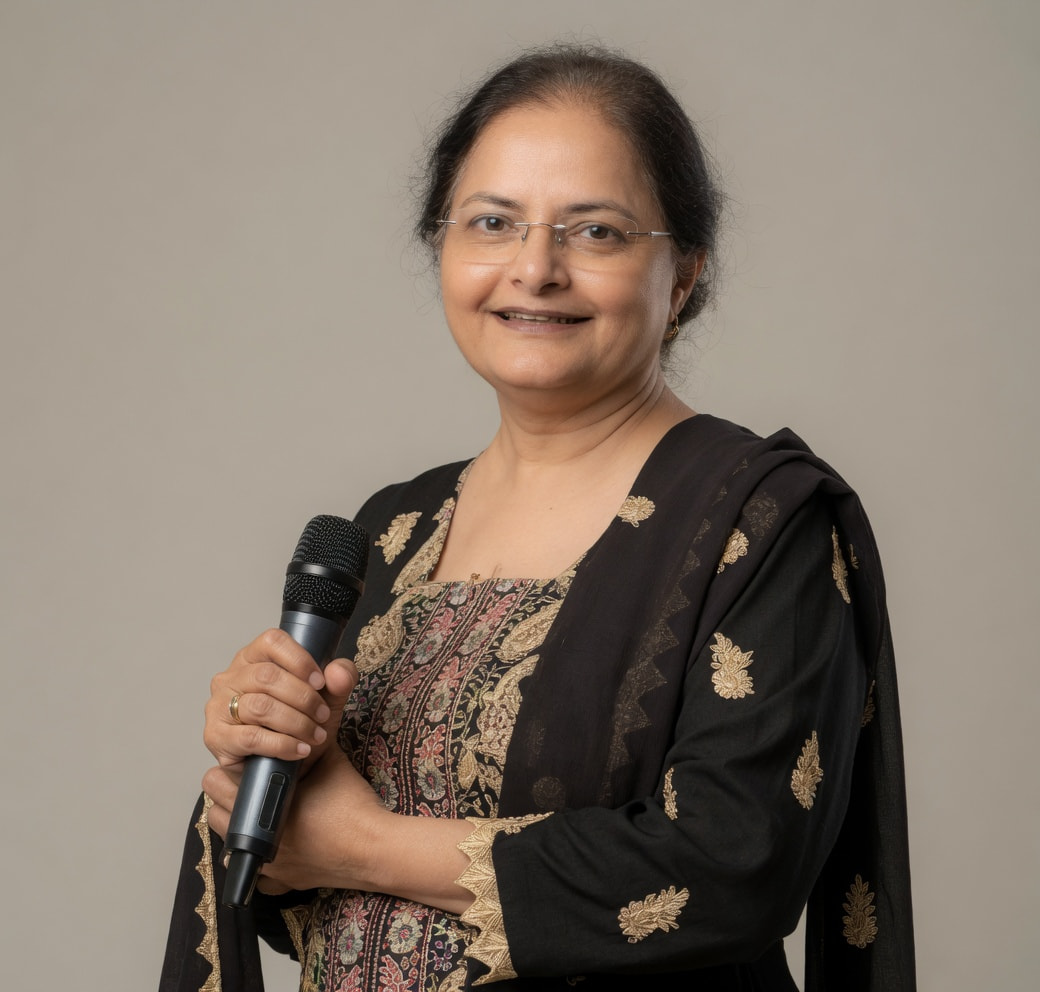
She was the first female obstetrician and gynaecologist in Olney, Maryland, when she opened her practice there in 1988. The town had not had one before. Over the three and a half decades since, she has delivered babies, managed high-risk pregnancies, performed gynaecological surgery, served as department chair — the first woman to hold that office at MedStar Montgomery Medical Center — and watched her community grow up around her. “I value my relationships in the greater Olney, Maryland community,” she has written, “and have raised my children here. This is my home.”
It is a quieter statement than it first appears. Atiya Mamdani grew up in Yavatmal. She trained in Nagpur, then in Buffalo. She moved, eventually, to a small town in Maryland, and she stayed.
From Yavatmal to GMC
Atiya was born in Yavatmal to Ali-Hasan Mamdani and Hanifa Mamdani. She completed her schooling at Holy Cross Convent Higher Secondary English School in Amravati, finished her pre-medical year at the Institute of Science, Nagpur, and entered GMC Nagpur in July 1973. Soft-spoken and academically strong, she completed her MBBS and interned at the Rural Health and Training Centre, Saoner, and at Yavatmal District Hospital.
Back at GMC after internship, she began a postgraduation in Obstetrics and Gynaecology. She left it — the manuscript does not record why — for a Medical Officer post at Yavatmal Women’s Hospital, where she worked for a year. Then, in 1981, she emigrated to the United States.
The route from Yavatmal to Olney, Maryland, was not direct. It required years of examination, retraining, and repositioning — the standard path for a foreign medical graduate in America, but demanding in ways that are often underestimated by those who have not walked it.
Residencies, Retraining, and a New Start
In the United States, Atiya sat the ECFMG and FLEX examinations. She undertook a postgraduate residency in psychiatry — a year and a half that included rotations through internal medicine and substance abuse detoxification — at the State University of New York, Buffalo. Then her first love reasserted itself. She entered a four-year Ob/Gyn residency at SUNY Buffalo, completing it in 1988.
The training was comprehensive: gynaecology, high-risk obstetrics, ultrasonography, maternal-foetal medicine, premenstrual syndrome, menopause, oncology, colposcopy, laser surgery, microsurgery, hysteroscopy, infertility, reproductive endocrinology, adolescent gynaecology, and surgical intensive care. She also taught Obstetrics and Gynaecology to medical students at the SUNY Buffalo School of Medicine for four years.
She is board-certified, a Fellow of the American College of Obstetricians and Gynecologists (FACOG), and a member of the American Medical Association, the Med Chi Society of Maryland, and the Montgomery County Medical Society. She is affiliated with MedStar Montgomery Medical Center, where she served as Chair of the Department of Obstetrics and Gynaecology — the first woman to do so.
Olney, and the Quiet Feminism
For more than 35 years, Atiya has practiced in Olney. Her clinic at 18111 Prince Philip Drive handles the full range of female reproductive health: routine and high-risk obstetrics, gynaecological problems, family planning, menopause, hormonal disorders, and surgical intervention. Her patients have come to her as young women and returned as mothers bringing their daughters.
She describes herself, without fanfare, as a “quiet feminist.” The phrase repays attention. She has not led campaigns or held platforms. She has simply been present — in a town that had no woman obstetrician before her, treating the women of that town through their pregnancies, their surgical needs, their reproductive lives — for more than three decades. The advocacy is in the work itself.
Her son Azeem works in finance; her daughter Aaleeya works in music and audio technology. They grew up in Olney, in the community their mother chose and kept.
Across the years, her home has been a small, lively sanctuary of animals—each one briefly passing through, leaving behind a story. Chickens that moved on to a farm, fish that quietly slipped into memory, rabbits and a wandering tortoise that seemed to chase new horizons, parakeets that found their skies, and beloved cats, Pal and Ash, now only recalled with affection. Today, four budgies—Heer, Rabbie, Egghead, and Gojo—keep that spirit alive, with Rabbie bravely recovering under her care. For her children, these pets were more than companions; they were gentle teachers of kindness, responsibility, and the quiet, inevitable lessons of loss.
“It is a great privilege and honour,” Atiya has written, “to be entrusted with the health care of my patients. I am so humbled and grateful for the opportunity.” After 35 years, the gratitude is not diminished. That, too, is a form of character.