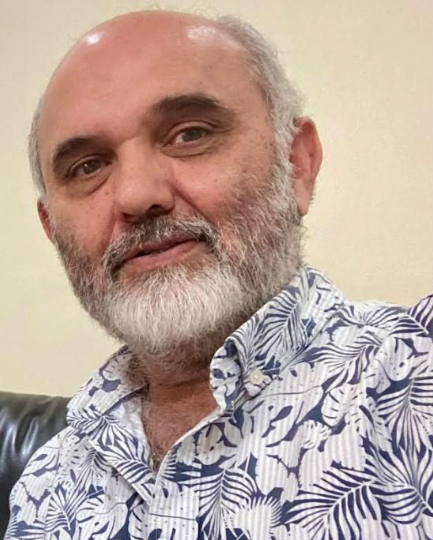
In late 1977, as the final MBBS examinations loomed over Government Medical College (GMC) Nagpur, a violent scooter accident nearly ended a career before it began. Harshvardhan Sheorey, a man known to his 1973 batchmates for his vibrant attire and a beard that signaled a certain bohemian intellectualism, found himself in a hospital bed instead of an exam hall. The 1973 batch felt the blow collectively.
The recovery was long, but it was the intervention of a friend, Ramesh Mundle—who had already cleared his exams—that bridged the gap. Mundle returned to tutor Harsha through the grueling months of preparation the accident had stolen. When Harsha finally sat for the finals six months later, the results were more than just a passing grade; they were a testament to a steady hand. The legendary calligraphy was intact. The intricate histology diagrams—especially the one of amyloidosis, which batchmates would vividly recall at reunions thirty years later—remained as precise as ever. The boy who survived the crash was destined to become a man who mapped the microscopic world with world-class clarity.
Orphaned Early, Rooted in Nagpur
Harshvardhan was born in Mumbai on June 30, 1956, at Dr. Shirodkar Hospital, into a family defined by high-altitude ambition and grounded science. His father was an Air Force jet pilot; his mother held a degree in horticulture. But the trajectory of his childhood was shattered in 1962. At the age of six, Harsha was orphaned.
He was raised by his maternal grandmother until he was ten, before moving to his paternal grandparents’ home in Nagpur. His schooling was the peripatetic journey typical of military families: from the Air Force Children’s School in Delhi and Villa Teresa in Mumbai to Bishop Cotton and Kendriya Vidyalaya in Nagpur. He eventually landed at Shri Mathuradas Mohota Science College for his pre-medical education. He was part of a remarkable cohort; thirteen students from Mohota Science—including Vilas Tambe, Arvind Dani, and Sujata Sawangikar—would enter the 1973 batch of GMC Nagpur together, forming the bedrock of a lifelong fraternity.
From the Wards of Nagpur to the Labs of Melbourne
After his delayed graduation, Harsha turned his focus to the invisible world. He pursued post-graduation in Microbiology at GMC Nagpur under the mentorship of Dr. Usha Hardas. His MD thesis, which explored cell-mediated immunity in pulmonary tuberculosis, laid the groundwork for a life in research. He cut his teeth as a research fellow at the WHO Influenza Monitoring Centre in Nagpur and later as a lecturer at GMC, before seeking a “sea change” in 1986.
That change first took him to Grant Medical College, Mumbai, where he rose to Associate Professor. However, the true transformation occurred in 1992 when he moved to Australia. Navigating the rigorous requirements of a new medical system, he achieved the Fellowship of the Royal College of Pathologists of Australasia (FRCPA). His journey through the Royal Prince Alfred Hospital in Sydney eventually led him to Melbourne. Since 1996, he has served as a Consultant Clinical Microbiologist and Staff Specialist at St. Vincent’s Hospital—a premier teaching institution—while holding a concurrent appointment at the Royal Melbourne Hospital.
The Global Parasitologist
In the world of clinical microbiology, Harsha found his true calling in Parasitology—the study of organisms that survive at the expense of their hosts. It is a discipline that demands patience, precision, and an eye for microscopic detail, the same qualities he once brought to histology diagrams as a medical student in Nagpur. Over the decades, he has emerged as one of the leading authorities in clinical parasitology in the Asia-Pacific region.
After migrating to Australia in 1992, Harsha undertook specialist training in Microbiology and, in 1996, became a Fellow of the Royal College of Pathologists of Australasia (FRCPA), a distinction that marked his formal entry into the highest ranks of diagnostic microbiology. His professional journey thereafter spanned some of Australia’s most respected institutions. He served as Microbiology Registrar at the Royal Prince Alfred Hospital and Westmead Hospital in Sydney, worked as Lecturer and Tutor at the University of Sydney, and later became Honorary Senior Lecturer and Tutor in the Department of Microbiology and Immunology at the University of Melbourne.
Although parasitology became his defining field, his expertise extends across tropical diseases, mycology, and ocular microbiology. Colleagues describe him as a clinician-scientist equally comfortable at the microscope, in the laboratory, and at the lectern.
Harsha is also the co-author of Clinical Parasitology: A Handbook for Medical Practitioners and Microbiologists, a widely respected reference text that bridges laboratory science and bedside medicine. The book is now entering its third edition, scheduled for publication in mid-2026, reflecting its continued relevance to clinicians and microbiologists across continents.
His influence, however, extends far beyond textbooks and academic departments. Recognising the diagnostic isolation faced by clinicians working in remote and resource-limited settings, Harsha founded the International Parasitology e-Diagnostic Group, an innovative digital network linking experts from Australia, Europe, the United States, and South Africa with practitioners confronting difficult diagnostic puzzles in distant corners of the world. The initiative transformed expertise into a global public resource.
His standing in the discipline is reflected in the invitation from the American Society for Microbiology to author the chapter on “Nematodes” for the 2023 edition of the Manual of Clinical Microbiology—widely regarded as the definitive reference work in the field.
Even now, his academic calendar remains remarkably active. His engagements for 2026 include a National Masterclass in Melbourne, participation at the International Congress of Parasitology (ICOPA) in Montreal, a return to India for MICROCON in Nagpur, and a specialised workshop in Egypt. With more than thirty published scientific papers and service as a reviewer for ten international journals, Harsha has become not merely a contributor to the field, but one of its custodians of scientific rigor and quality.
A Life Rebuilt
Beyond the culture plates and peer reviews, Harsha remains a man of varied textures. He is a competitive table tennis player, a passionate photographer, and a master of the calligraphy that first made him famous at GMC. His family life in Melbourne represents a circle closed. His partner, Krishna, works in the infectious diseases and microbiology space at Melbourne’s leading hospitals. His daughter, Radhika, has followed the medical path as a General Physician, while his son, Mohit, serves in Information Technology for the Victorian government.
The family that was fractured in 1962, when a six-year-old lost his parents, has been patiently and successfully rebuilt across two generations and two hemispheres. The boy who once drew the “beautiful” histology of amyloidosis in a Nagpur classroom now draws the diagnostic boundaries of a global discipline.