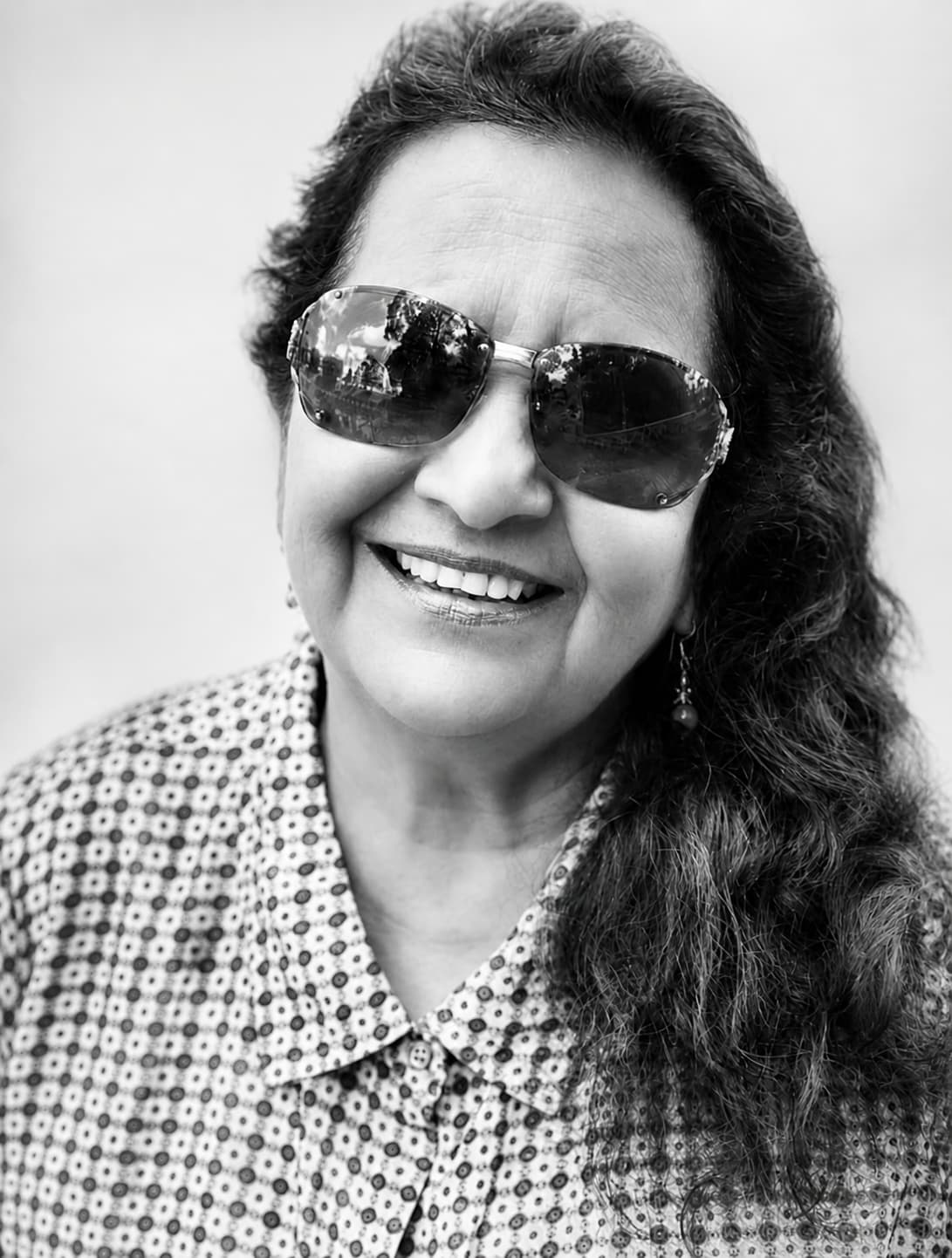
She keeps her answer to the question of interests deliberately brief, and the half-smile that accompanies it says as much as the words do: “I love reading and delve into all sorts of books, as long as they aren’t textbooks.” It is the remark of a woman who spent decades immersed in the most serious work medicine offers — delivering children, managing obstetric emergencies, keeping a 15-bed nursing home running through four decades of practice in Pune — and has earned the right to draw a firm line around her pleasures.
The Girl from Warud
Vijaya Vithalkar — she would become Vidya Sontakke after marriage — was born into a family with a history of freedom fighters, in Warud, a town in Morshi taluka, 87 kilometres northeast of Amravati, near the Maharashtra–Madhya Pradesh border. She began her schooling at PD Kanya Shala in Warud, then crossed to Amravati for her pre-medical year at Vidarbha Mahavidyalaya, and returned to Warud for her BSc Part I at Sitaram Chaudhary College before gaining admission to Government Medical College, Nagpur in 1973.
At GMC she became part of a close circle of women students from small Vidarbha towns — a generation for whom English was a second language, city life an adjustment, and medicine a destination earned through examination rather than inheritance. Her rural posting for the internship was at the Rural Health Centre, Saoner, where she worked alongside a group that called themselves the Spectacular Six: Rajshree Chaturvedi, Alison Girling, Ratna Shekhawat, Alka Desai, and Sujata. The name carried affection, the kind of compact that forms between people thrown together by circumstance and held together by character.
She completed her DGO at Government Medical College, Nagpur.
Pune, and the Hospital She Built
In 1981, Vijaya married Dr. Sudhir Sontakke, a psychiatrist trained at BJ Medical College, Pune. The marriage brought her to Pune — a city considerably larger than anything in her Vidarbha background, and one that would become home for the rest of her working life. She served initially as a medical officer at Ammunition Hospital, Khadki, while building her private consulting practice on the side.
In 1986, she established Sanjivan Maternity Surgical and General Nursing Home at 72, New Khadki Bazar — a 15-bed facility that would become her principal professional home for four decades. The name was chosen with care. Sanjivan: that which restores life. In obstetrics and gynaecology, the choice is apt in ways that only become visible after years of practice — in the emergencies managed quietly, the deliveries that required more than routine skill, the patients who arrived having exhausted every other option.
The India in which Vijaya established her practice was one in which general practice and district-level specialists were still the backbone of healthcare for most patients. The drift toward corporate medicine, toward mega-hospitals and consultant networks, was beginning but had not yet remade the landscape. A 15-bed nursing home run by a capable gynaecologist, in a Pune neighbourhood, could sustain itself on reputation built one patient at a time. Vijaya built that reputation across four decades.
Books, and What Remains
Dr. Sudhir Sontakke established the New Life Psychiatry Hospital, Deaddiction and Rehabilitation Centre at Chinchwad, Pune — a separate institution that placed the couple at the intersection of two specialties rarely housed under the same professional roof. Psychiatry and obstetrics share, at their best, a particular orientation: toward the person behind the presenting complaint, toward the life surrounding the symptom.
Their sons — Sanmegh, a computer graduate who is a partner in Hydropoint Solutions, married to Sonali, an engineer and lecturer at Bharati Vidyapeeth; and Sudhanshu, pursuing law in Pune and running Touchstone Plastics — built careers outside medicine, which is its own kind of achievement in a household organised entirely around it.
Vijaya came from Warud carrying a family memory of the independence movement, studied medicine in a city that required her to learn its language and rhythms from scratch, and built a practice that outlasted several waves of change in Indian healthcare. The mischievous grin she deploys when asked about her reading is not evasion — it is the expression of a woman who knows exactly where her professional life ends and her own begins, and has kept that boundary intact.
The books, she says, just cannot be textbooks.