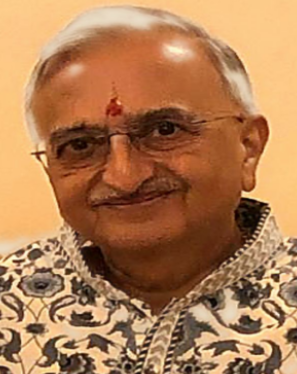
The school principal at RLT College, Akola, had a particular method of punishing misbehaving students. He would present them with an unseen paragraph in English and instruct them to memorise it, then reproduce it after the school break.
Rajeev Biyani was punished this way often. He would read the paragraph once — just once — and repeat it almost verbatim.
The principal, it appears, had no idea that the punishment was not working.
The Boy from Akola
He was born in Akola to Kamal Kishore Biyani, an entrepreneur, and Umadevi, a homemaker. He went to Holy Cross Convent, Akola, then to Radhakishan Laxminarayan Toshniwal (RLT) College for premedical education. He entered GMC Nagpur in 1973.
He tells the story of his GMC years with characteristic directness: “I was a happy-go-lucky, fun-loving person in my college days — never serious about studies. Eventually, when I got serious, my marks dipped, and I went back to my original ways.” The period from 1973 to 1977, he says without qualification, is the best of his life, and he still prizes the friendships built there above most things that followed.
At GMC, he was part of what the batch remembers as the Famous Five — Uday Gupte, Vinayak Sabnis, Sanjay Warhadpande, Harish Motwani, and Biyani himself. He played table tennis with the intensity of a man who takes every game seriously. He dressed with a precision that his classmates still remark upon — meticulous, elegant, and clearly deliberate. Vinayak Sabnis, who knew him from their Holy Cross Convent days, puts it plainly: he was born with a fantastic memory and an irreverence for authority, and both gifts got him into and out of trouble in roughly equal measure.
His internship was at the primary health centre in Deolapar, 67 km northwest of Nagpur, with Sanjay Gadre, Rajendra Phadke, Harish Motwani, Pradeep Desai, and Avinash Deshmukh.
The Turn Away from Medicine
After graduation, the postgraduation in Medicine that he wanted did not come. He was the only son of a family that ran a daily newspaper — Matrubhumi, the oldest district newspaper in the country, started by his grandfather, then already in its 88th year of publication. The paper covered Akola, Amravati, Yavatmal, Khamgaon, and Washim.
He joined the family business.
This decision, which might look like a retreat, was in fact the beginning of a different kind of career. He traded in cotton, cement, and tea. He dabbled in detergents and plastics. He moved into land development and financial brokerage. He served as secretary and then president of the Berar General Education Society — a premier educational institution in Akola — for fifteen years, and left it, by his own assessment, perceptibly better than he found it. He served as president of the Maheshwari Samaj Trust.
The medical degree, in this trajectory, became less a qualification than a frame of mind — a trained habit of attention and diagnosis applied to problems that were institutional rather than clinical.
Kalashray and the Music
The passion that ran beneath all of it was music. He had always been a listener of the serious kind — not background music, but music attended to, argued about, remembered. In time, he founded Kalashray, a club that organises live classical and semi-classical performances for its members in Akola. It has run, without interruption, for more than 24 years.
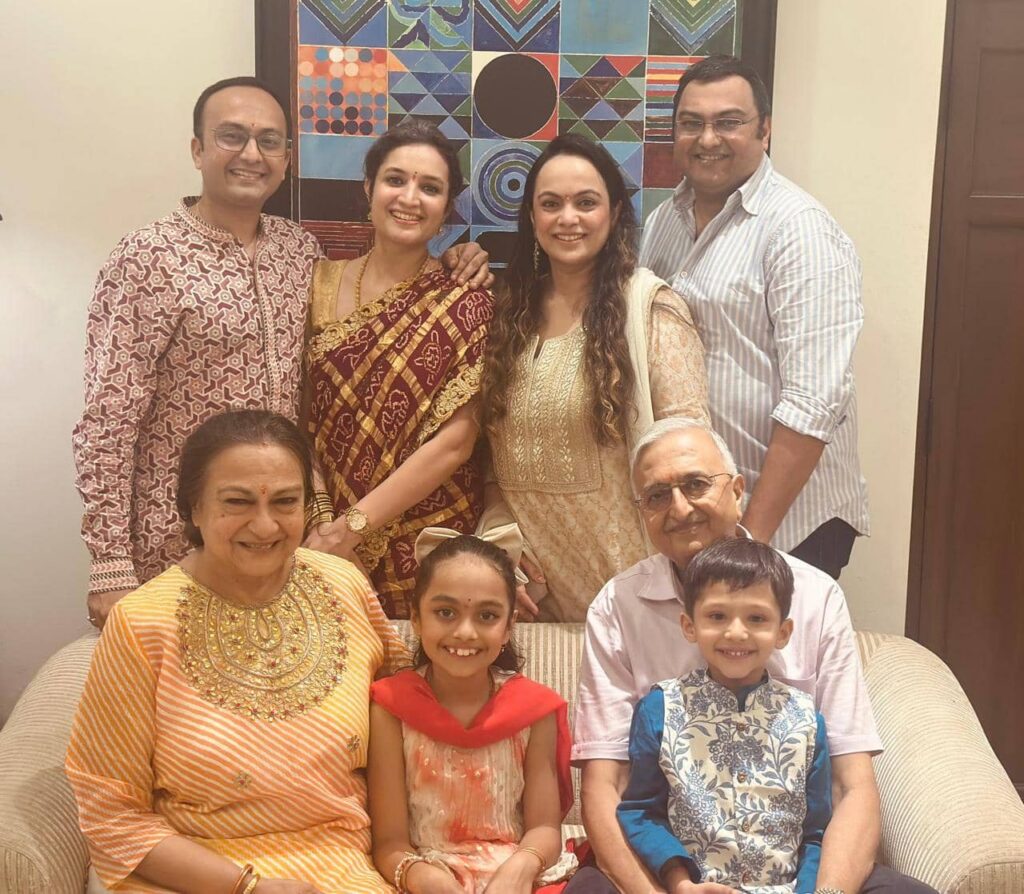
His younger son Pushkar has gone further. An amateur cricketer and snooker enthusiast, Pushkar has shaped into a playback singer of real ability, learning from Ustad Ghulam Mustafa Khan — teacher of Hariharan, Sonu Nigam, and Shreya Ghoshal. He can perform light music with a versatility that has earned him serious attention.
The elder son, Utpal, went a different route: a BFA from Purdue University, an MBA from London Business School, and he is now executive assistant to Kumar Mangalam Birla. His wife Aditi, an IT engineer from Pune, works in the same orbit. Between the two sons, the family has managed to span classical Indian music, corporate strategy, and multinational management — a breadth that the grandfather who started Matrubhumi in Akola would probably not have predicted and might have admired.
The Honest Assessment
Rajeev Biyani does not romanticise the road not taken. He left medicine because medicine, at that moment, did not have a place for him, and because the family business had an immediate claim. He built what he built in the space that was available. He ran an institution, grew businesses, supported music in a city that needed it, and raised two sons who are, in their different ways, flourishing.
“The period of 1973 to 1977 is by far the best period of my life,” he says, “and I still cherish the friendships and bonds created during the college days.”
That is the statement of a man who knows what he lost and what he kept. GMC gave him five years and a cohort of friends who have, half a century later, not loosened their grip on him. The rest — the newspaper, the trading, the education society, the music club — he built himself.