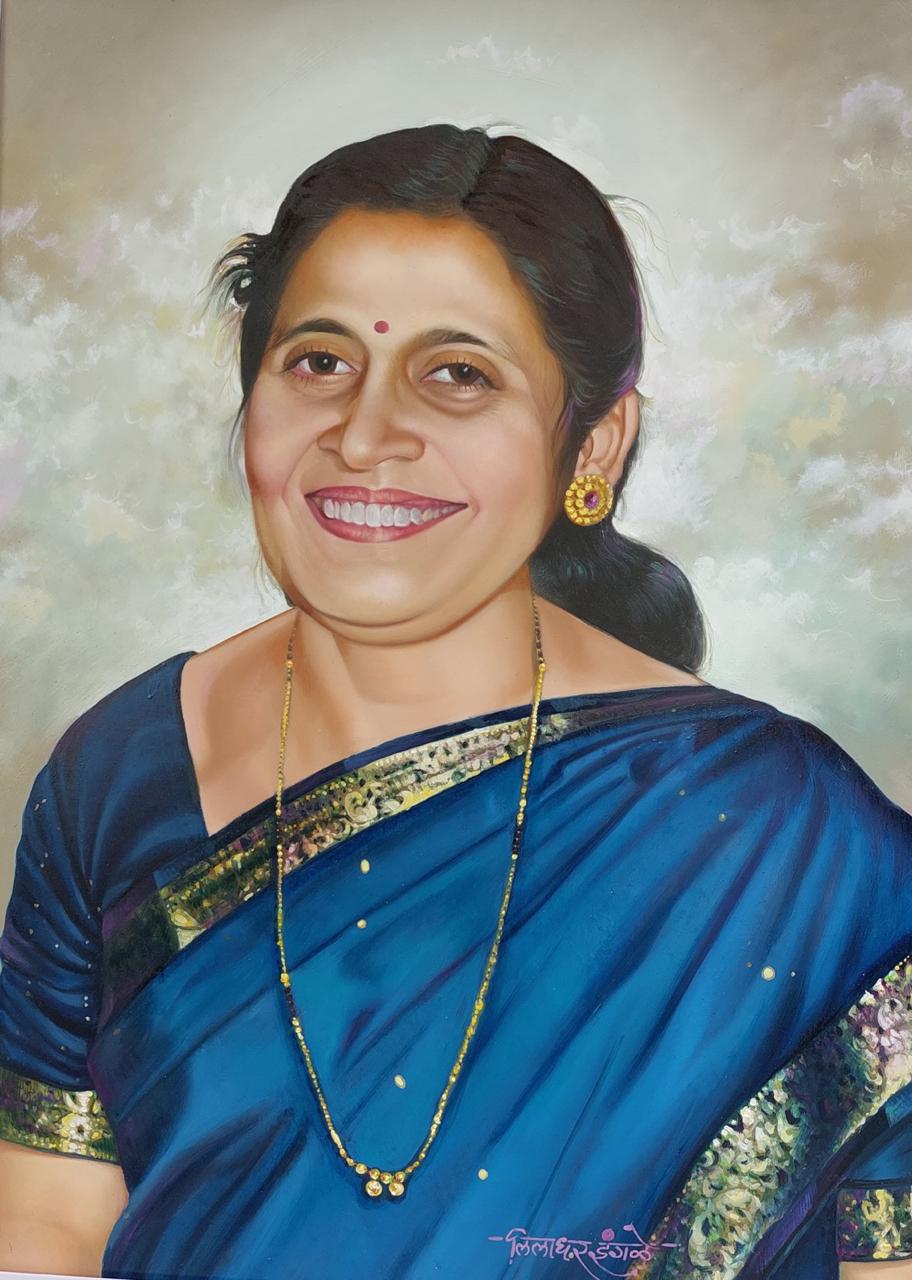
In the late 1960s, Lokmanya Tilak Vidyalaya in Chandrapur was a world dominated by boys. In one particular batch, there were only four girls. In a quiet, collective defiance of the era’s expectations, all four of those girls went on to become doctors. One of them was Vanmala Chatur, known to her family and patients as Anjali. She was a woman of few words whose surgical “hand” spoke for her—a hand that doted on her sons and healed the women of the Melghat tribal belt with equal precision.
The Road Through the Forest
Vanmala was the daughter of a forest officer, which meant her childhood was a series of relocations through the green heart of Vidarbha—Morshi, Chandrapur, and the surrounding tehsils. This nomadic upbringing gave her a resilience that she carried into GMC Nagpur in 1973. She was a bright, steady student who shared a room with Maya Bhaskarwar-Jamkar.
Her life took a decisive turn in 1978 when she married Dr. Anil Kavimandan, a senior from the 1968 batch. Their marriage necessitated a break from the usual batch patterns; while most of her classmates were doing their rural internships at Saoner, Vanmala chose Mohadi PHC to be near her husband, who was posted at Tumsar. This was the first of many choices where she balanced professional duty with the architecture of her family. She obtained her DGO in 1981, and by 1986, the family settled in Amravati.
This period coincided with the decline of the general practitioner as the primary unit of respect and the rise of the hospital-based specialist. Vanmala stepped into this gap at the Dufferin District Hospital in Amravati. For nearly two decades, she was a fixture there, and in the difficult, often ignored terrain of Melghat.
The Melghat Influence
In Melghat, the medical challenges were not just clinical; they were historical. The region was a pocket of deep poverty and malnutrition, where modern medicine often felt like a foreign language. Vanmala served there with a sincerity that bypassed the need for many words. Her son, Amit, remembers her as a “major force”—a mother who drove him toward success with the same determination she used to navigate a complicated delivery.
She was a person of unfailing observation. While other surgeons might rely on the emerging technology of the 90s, Vanmala relied on clinical acumen. She was communicative through her kindness and gentleness, qualities that patients in the public sector desperately sought but rarely found.
Once she read these lines to me: “To all that seek you—the sick and suffering—I hope your hand, heart and mind will always be set to soothe and heal. Sympathy and understanding, they mean much to all who are ill.”
These lines became the blueprint for Amit’s own career. He became a child prodigy, moving from KEM Mumbai to AIIMS New Delhi for his DM in Gastroenterology. Though Vanmala had wished for him to be a surgeon like herself, she lived to see him become a consultant of high standing, realizing that “soothing and healing” didn’t always require a scalpel.
The Void in Amravati
In 2004, Vanmala made another pivot. She opted for voluntary retirement from the government service to start her private practice. It was a move mirrored by many in the GMC 1973 batch—the transition from the aging, bureaucratic Nehruvian public service to the autonomy of private practice. Her hospital in Amravati became a center for ethical, skilled care.
However, the narrative was cut short on August 15, 2011. A hemorrhagic stroke took her away, leaving what her son describes as a “permanent void.” She did not live to see the formal inauguration of the hospital that now bears her name—the Dr. Anjali Kavimandan Memorial Hospital in Amravati.
Today, the hospital specializes in gastrointestinal and hepatic disorders—the field her son Amit mastered. But the foundation of the building remains the legacy of the girl from the Chandrapur boys’ school. She remains an example of a generation of women doctors who did not wait for the world to change; they simply went to work, serving the tribal poor and the urban sick, proving that a doctor’s hand is at its best when it is “set to soothe.”