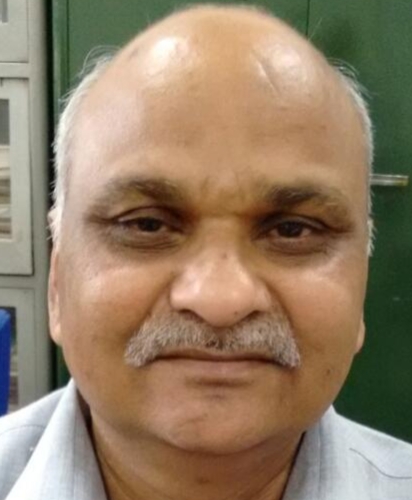
Gopal Ingle remembers the mud. To get from his village, Dudulgaon, to the school in Shelgaon Bazar, he had to walk twelve kilometers. By cutting through fields and crossing a river, he could reduce the trek to nine kilometers, but in the monsoon, the shortcuts were often traps. He was the youngest of five siblings, the son of an illiterate farm laborer who somehow found the means to support a family of seven. For Gopal, the “Science of Community Medicine” wasn’t something he learned from a textbook; it was something he had lived while navigating the waterlogged paths of the Buldhana district.
The Unconventional Choice
When Gopal joined GMC Nagpur in 1973, he resided at the Chokhamela Hostel near Deeksha Bhoomi. He was a boy from the parched soil of Malkapur who had arrived in the city via the RLT College of Science in Akola. After graduation, he made a choice that baffled his classmates: he opted for Preventive and Social Medicine (PSM) over the prestige of clinical medicine or surgery.
I always had a fascination for public health. I thought that treating a community is much better than fixing the maladies of individual patients.
In 1979, this was a radical stance. Most of his batch-mates were chasing the “heroic” specialties—cardiology, neurosurgery, and plastic surgery. Gopal chose the specialty of statistics, vaccines, and operational feasibility. He obtained his MD in 1982, evaluating the efficacy of the measles vaccine in rural Vidarbha—a study that helped define how the state delivered primary care to its most remote citizens.
The Delhi Metamorphosis
Gopal’s career took a decisive turn on March 31, 1984. Recruited as a lecturer at Maulana Azad Medical College (MAMC), he moved to Delhi. He pays tribute to his mentor, a young faculty member from IGMC Nagpur who literally bought his train ticket and pushed him to appear for the UPSC interview. Gopal “cracked the examination” and fell in love with the capital.
At MAMC, Gopal rose to become a professor in 1991 and headed the department from 2004. He received a WHO fellowship that took him to the Harvard School of Public Health in Boston, where he earned sixteen out of sixteen credits and ranked first in health management. This international exposure transformed his vision of what an Indian community medicine department could be. He didn’t want a bureaucratic office; he wanted a “School of Public Health”.
Under his leadership, the department published nearly 50 papers every year, a testament to a research culture that prioritized data over dogma. He organized the 2008 national conference of IPH, an event still remembered as one of the best in 25 years. He was the “fastest question setter” for the National Board of Examinations and the UPSC, a man who saw multiple-choice questions in the world around him.
The Grinding of the Wheels
Despite his professional accolades—including awards for meritorious service from Chief Minister Sheila Dikshit—Gopal’s career was marked by the frustration of “the wheels of bureaucracy”. He had planned to formally transform his department into a School of Public Health, a move publicly announced by the government, but the implementation stalled in the corridors of power. “The wheels of bureaucracy grind slowly and sometimes simply stop,” he laments. “In my case, they did not even start.”
This frustration reflects the historical sweep of the GMC 1973 batch. They were the generation that saw the grand Nehruvian public health projects run into the wall of late-century stagnation. Gopal had the vision of a “Boston-style” public health institute in the heart of Delhi, but he had to navigate a system that often preferred the status quo.
The Retirement Plans
Gopal retired on July 31, 2019, and moved to Indore to be near his brother. He arrived with five plans: to open a charitable dispensary, to meditate, to start aquatic farming, to provide health education in schools, and to teach his brother’s granddaughter.
Except for the last wish, I was not able to accomplish any of them.
Troubled by fibromyalgia for three decades—a condition that left him “achy and tired”—he eventually decided to cut off from the subject of medicine entirely. He lives now with his wife, Kusum, an Income Tax Commissioner, and his two sons.
Gopal Ingle’s life is the completion of the trek he started in Malkapur. The boy who walked nine kilometers through mud grew into a man who moved the heavy machinery of the Indian medical education system. Though some of his grandest plans remained unfulfilled, his legacy lives in the hundreds of students he trained and the vaccines he evaluated. He remains the farm laborer’s son who understood that the health of a nation is not found in its hospitals, but in the community paths he once walked.