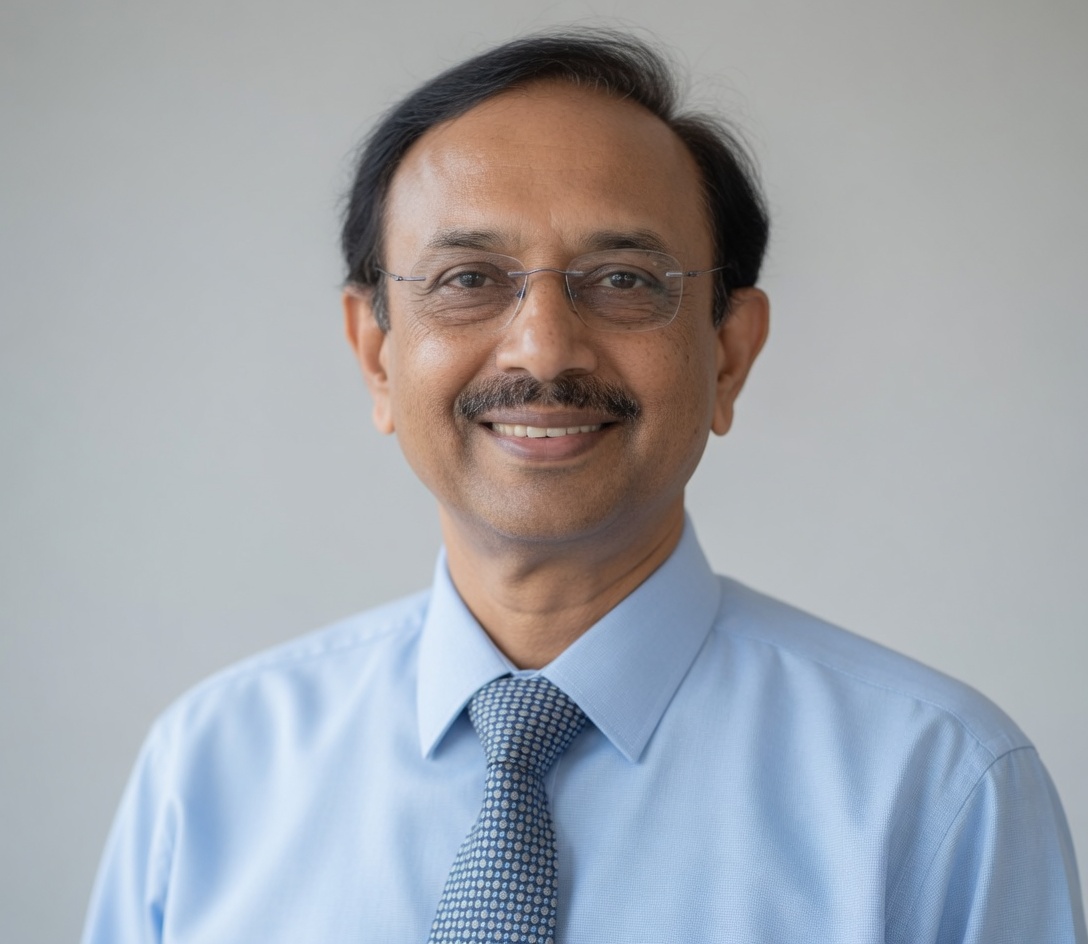
A young man stood at the Canadian Embassy counter, his future neatly arranged in a file. He had cleared the ECFMG at the Hotel Hilton in Lahore, secured strong recommendations from Dr. Vikram Marwah and Dr. R. N. Das, and confirmed his admission for the fall semester in Vancouver. The path seemed assured: he was to become a cardiothoracic surgeon.
Then it ended. In May 1983, the visa was refused. To the clerk, he was not a surgeon in training but a potential immigrant who might not return.
He absorbed the blow without display. Back in Nagpur, he joined Government Medical College Hospital as an unpaid house officer in the TB ward. Only months earlier, he had held a secure post as a Class I Medical Officer in the Central Health Service, drawing a salary of ₹1,155—a position he had already resigned from, trusting the future he had planned. With that future closed, he began to look elsewhere. His search led him to Wadi, on Amravati Road—a place people passed through, but rarely paused to consider.
The Highway Kingdom of Wadi
On 25 September 1983, he opened a small clinic. There was no ceremony. The fees were modest—five rupees for a new patient, three for a revisit—and the beginning passed almost unnoticed. He simply opened the door and began.
The decision carried the weight of earlier choices. In 1979, as a house officer in Pediatrics Unit III, he had worked alongside Sharad Jaitly and Adesh Gadpayle in a setting that could have led to a postgraduate degree. But money, immediate and unavoidable, altered that course. He joined the Central Health Service, and later stepped away from it to build his own practice. It was not a decision he revisited. It was made, and then lived with.
The title came later. “King of Wadi,” the radiologist Dr. Raju Khandelwal called him, perhaps in passing. Yet it stayed, because it captured something true. This was a kingdom built not on scale, but on continuity—the steady accumulation of years, decisions, and presence.
Wadi demanded a certain kind of doctor. There was little room for narrow expertise. A general practitioner here had to move across systems, read signs quickly, and act without the cushion of referral networks. Ravindra adapted, becoming a physician of breadth rather than designation. Over time, his chamber filled with 168 certificates—not as decoration, but as a record of movement, each one marking a refusal to stand still.
The MD he once considered receded in importance. In its place came something slower and more enduring: recognition from practice itself, and later, a Fellowship from the Geriatric Society of India in 2016. By then, he had treated patients through the arc of their lives, from their working years into the vulnerabilities of age.
The Making of a Generalist
His journey unfolded alongside a broader shift in Indian medicine. By the 1980s, cities were expanding faster than their institutions could keep pace. Between the large hospital and the individual patient, a gap began to widen.
Into that space stepped a generation of doctors who chose uncertainty over security. They left government service and moved toward the edges—industrial belts, roadside settlements, emerging townships. They became the first point of care for communities that needed immediacy more than specialization.
Ravindra did not set out to represent this movement. He simply stayed. Over time, that act of staying turned a transient stretch of road into a place of return.
The Making of the Man
His resilience had earlier roots. Born at the Air Force Station in Jalahalli, Bangalore, he grew up in a household shaped by discipline and movement. His father, a commissioned officer in the Royal Indian Air Force, was posted across the country, and the family moved with him—Jodhpur, Kanpur, Nagpur, Bangalore. By the time Ravindra reached college, he had studied in eight different schools.
He describes it simply: you learn to arrive, adjust, and move again. That early restlessness stayed with him.
His entry into medical education followed a similar pattern. Initially admitted to SS Medical College, Rewa, under the defence quota, he later transferred to Government Medical College, Nagpur in 1975—the first inter-state transfer of its kind. An additional seat was created for him; he became Roll Number 201, the extra student who entered midstream and found his place.
A Life Beyond the Clinic
If his clinic was modest, his presence within it was deliberate. He dressed with care, his signature tie becoming less an affectation than a standard he chose to maintain. He spoke directly, without softening his words, yet those who knew him sensed a mind constantly in motion.
Outside the clinic, his life widened rather than narrowed. He sang Kishore Kumar songs at gatherings, trekked, and spent long hours observing wildlife. These pursuits did not distract from his work; they gave it texture.
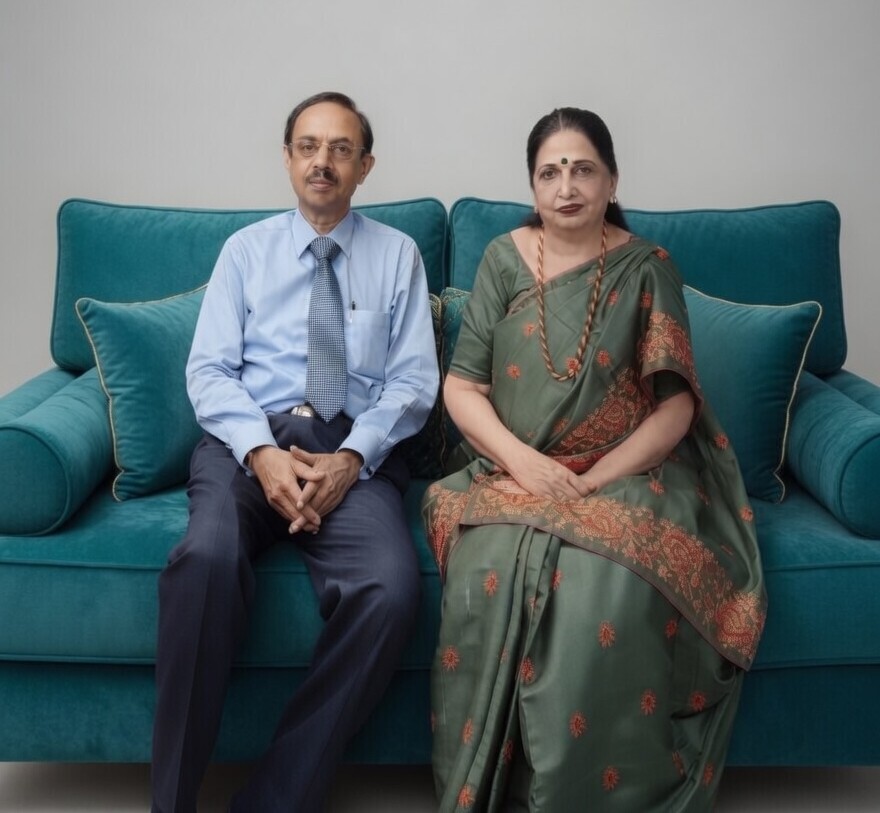
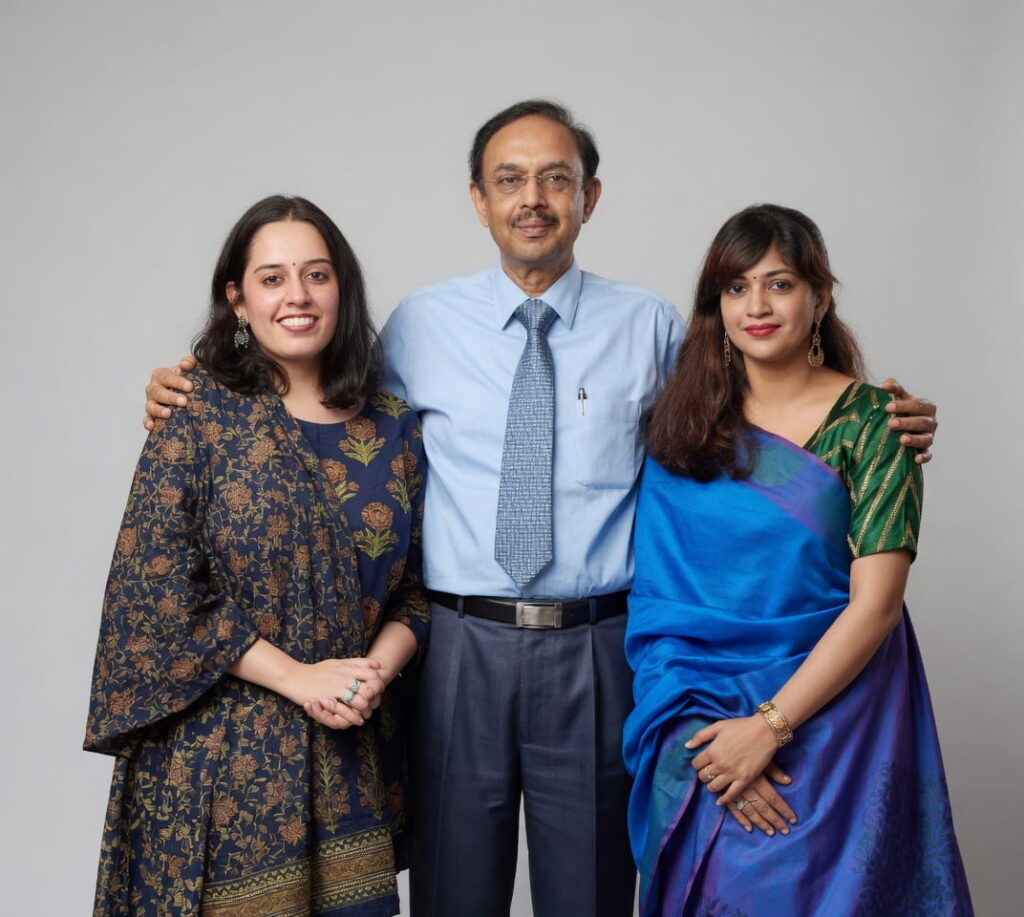
His wife, Harsha, an academic who rose to become Vice Principal and later Chief Administrative Officer of LAD and SRP College, shared that sense of discipline. Their daughters built their own paths—Ritika, a Cornell-trained heritage architect restoring landmarks like the Rajabai Tower, and Radhika, who moved from telecommunications to psychology and now works in mental health. The family’s achievements unfolded quietly, without display, each pursuing their own line of work with similar seriousness.
Life Today: Upheavals and Anchors
Looking back from 2026, Jharia does not dwell on what did not happen. He sees instead a series of redirections. The impulse that set him in motion in 1973—the need to keep learning—remains intact. Even now, he has completed a Postgraduate Diploma in Cardiology from the Royal College of Physicians, UK, not as an addition to his credentials but as a continuation of habit.
His practice in Wadi has spanned over four decades. The hours are fewer now, the pace more measured, but the instinct remains unchanged. He still meets patients with the same attentiveness he carried on his first day—listening closely, thinking carefully, and working with steady intent.
Illness, Without Interruption
In September 2020, he was diagnosed with prostate cancer. The treatment was long—a four-hour surgery followed by thirty-nine sessions of radiation—unfolding during the uncertainty of the pandemic. Yet he continued to work, seeing patients in the morning and going for treatment in the afternoon.
Complications followed over the next three years, requiring repeated procedures. These slowed him, but did not alter his direction. He adjusted, continued, and remained present in his practice.
In July 2024, the IMA Nagpur honoured him with a Lifetime Achievement Award—a recognition of more than four decades of continuity.
He often returns to a simple line: do not go where the path may lead; go instead where there is no path, and leave a trail behind. What once appeared as loss now reads as direction. The life he did not live has faded. The one he built has deepened.
In Wadi, in a clinic opposite Pillar 23, he remains—not as someone passing through, but as someone who stayed. And in that staying lies the measure of his work: not titles or degrees, but the quiet trust of those who return.