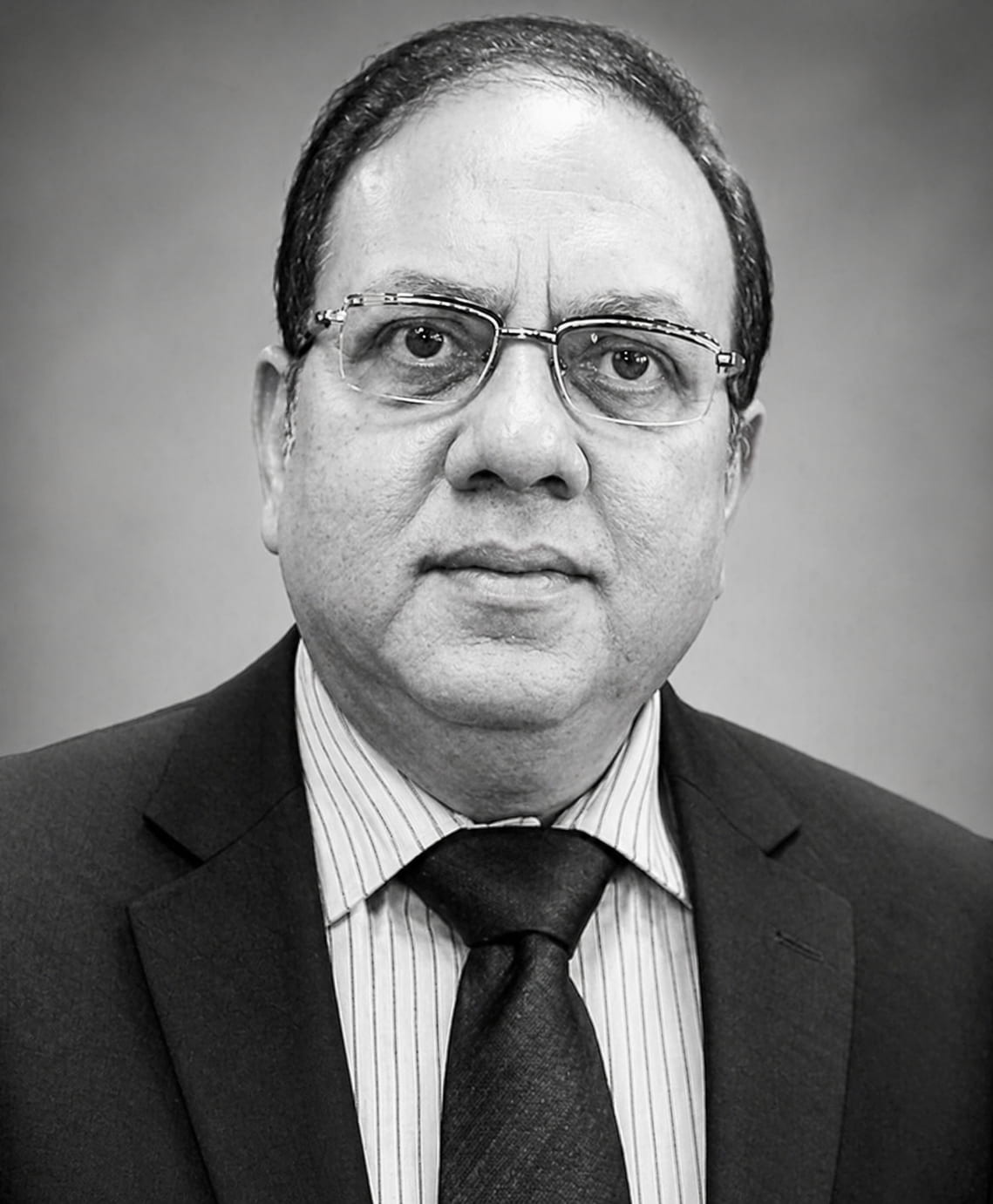
In November 1973, a shy boy from a Marathi-medium school found his bicycle missing from the GMC cycle stand. He stood crestfallen, sweat on his forehead, too tongue-tied to know what to do next. A classmate he barely knew — the son of a Professor, schooled in English, carrying what seemed like an aura of effortless privilege — spotted him, put a hand around his neck, and walked him to Ajni police station. He sat patiently while the FIR was filed. The bicycle never came back. But SP Kalantri never forgot that afternoon, or the man who turned it from humiliation into something warmer.
That was Anil Sharma. The story tells you almost everything.
The Surgeon’s Son
Anil was born on 9 June 1954 in Raipur, the son of Dr. K.D. Sharma, a distinguished Pathologist whose name appeared in Love and Bailey’s textbook of surgery. His father headed the Department of Pathology at Government Medical College, Nagpur — and in the winter of 1974, was transferred to Grant Medical College, Mumbai. Anil went with him.
He had spent his school years at St Francis De Sales School, Aurangabad, arriving in Nagpur in 1972 for his premedical year at the Institute of Science, and entering GMC Nagpur in 1973. A year and a half later, he was gone — transferred with his father to Mumbai, where his education continued at Grant Medical College.
He was one of four students from the GMC Nagpur 1973 batch who left before completing their MBBS there: the others were Hari Paranjape, Jayashree Seolekar-Apte, and Pradeep Deshpande. The umbilical cord with Nagpur stretched but did not break — he remained in touch with classmates, returned for reunions, and remembered his old friends with the same warmth that had defined him from the start.
The Making of a Cardiologist
At Grant Medical College, Mumbai, Anil completed his MD in Medicine and then his DM in Cardiology. He then went further — to Harvard Medical School in 1984, where he spent three years in a cardiology fellowship that sharpened everything he had already learned. He returned to India in 1987, joining P.D. Hinduja Hospital and Research Centre as a full-time cardiologist.
He arrived at precisely the right moment in Indian cardiology — or, more accurately, he helped make the moment. When he started, a heart attack was still commonly treated with bed rest and nitrates. The echocardiogram was a novelty. A catheterisation laboratory was a rarity. Interventional cardiology — the idea that a blocked coronary artery could be opened from within — was new science, not yet standard practice.
In 1996, Anil moved to Lilavati Hospital, Mumbai, leading its Department of Cardiology between 2003 and 2009, and serving on the hospital’s management board between 2003 and 2006. Over his career, he performed more than 20,000 angiographies and 8,000 angioplasties. He was not merely technically skilled — he was, his colleagues recalled, someone who understood that a heart attack was a dynamic event unfolding over hours, not a bolt from the blue to be watched. Early intervention mattered. Speed mattered. He acted on this conviction every working day.
In redirecting Bombay cardiology from watchful waiting to active intervention, Anil and his generation transformed both the practice and the culture of heart medicine in the city.
The Man Inside the Clinician
His GMC batchmates remember him differently — not as the cardiologist who opened 8,000 blocked arteries, but as the boy in the corridor who made people feel they mattered.
He was, by all accounts, someone who wore his heart on his sleeve — figuratively, which is a particular quality in a man who spent his career repairing other people’s hearts. His wit was sharp and unpredictable. A surgeon had once inadvertently tied his ureter during an appendix operation when Anil was a teenager, costing him a kidney. The story circulated through GMC hostels for years. Anil’s own response to it, characteristically, was nonchalant — he would not have taken such a thing to heart, his friends said, and would have carried on regardless.
His last years tested that composure more severely. Metastatic prostate cancer arrived without announcement. He spoke about it to Kalantri on a birthday call — not with self-pity, but with jokes. He described the metastases “merrily wandering” through his body. He made fun of a disease that was killing him. His wit did not dim; his warmth did not withdraw.
He had once said, defending older cardiologists against younger critics: “Good reasoning, like fine wine, may even improve with age.”
He died on 17 August 2018, in Mumbai. He was 64.