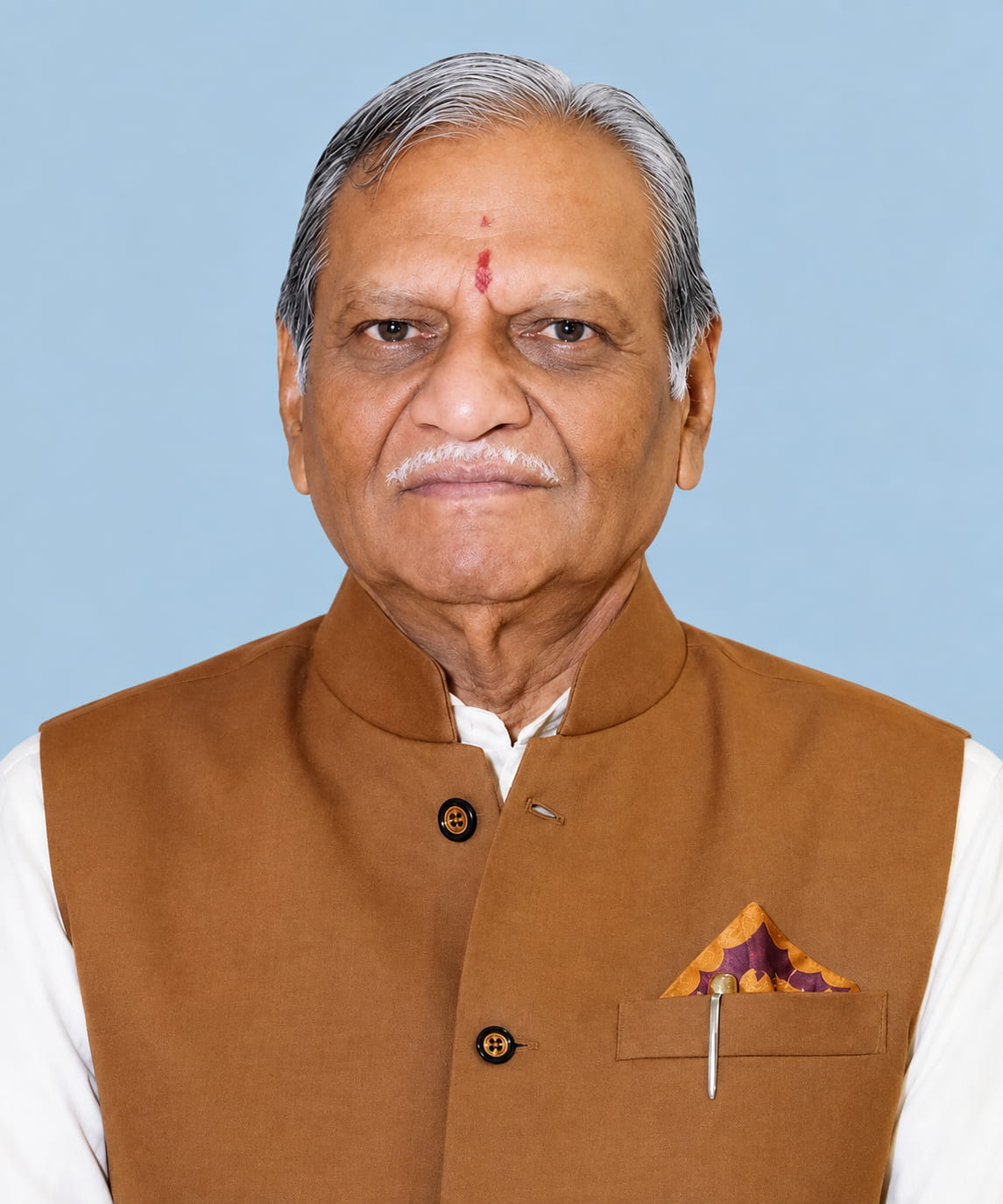
Dr Ganeshgir Gosavi, our GMC Nagpur Class of 1973 classmate (Roll No. 147, placed between Arun Deshmukh and Mohan Gupte), passed away in Akola on 4 September 2026 at the age of 73. He is the twenty-sixth member of our batch of 204 to depart. He breathed his last in a makeshift ICU arranged for him in his daughter’s hospital, surrounded by his family.
The road to the primary health centre in Jamthi, near Murtijapur, was not the path Ganeshgir had imagined when he entered Government Medical College, Nagpur, in 1973. Yet he walked it anyway—and then the road to Medshi, the trail to Harisal in the Dharni forests of Amravati district, and many others across four districts over three decades of government service. When he retired in 2012, he had seen more of rural Maharashtra from the inside—its PHCs, district wards, and leprosy centres—than most physicians in the state.
From Balkhed to GMC Nagpur
Ganeshgir was born on 4 August 1953 in Balkhed, Washim district, to a father who was both tailor and farmer—a dual livelihood familiar to rural Maharashtra. As a boy, he walked five kilometres to school each day, crossing a river and skirting open drains. What he could not have foreseen was that his career would echo those early walks: navigating poorly connected outposts and serving people who depended entirely on whoever the state sent.
After attending Tilak Rashtriya Saraswati Mandir in Umari Akola and completing his pre-medical education at RLT College of Science, he arrived at GMC Nagpur in 1973. His early college days were unsettled: he stayed first with a classmate in Hanuman Nagar, moved to an uncle’s home in Raghuji Nagar, and eventually settled into the GMC hostels.
The Long Road of Public Service
Following his MBBS, Ganeshgir completed a rural posting at the Rohana PHC before finishing his internship at the Akola District Hospital. There, he worked alongside four colleagues: Manik Khune, Arun Mankar, Ramvallabh Rathi, and Jayant Deshmukh (from the 1972 batch). With Ganeshgir’s passing, three of that five-member cohort—Rathi, Mankar, and now Gosavi—are gone.
Soon after completing his internship, he married Chitra on 9 June 1979; she devoted herself to making a home for their growing family. He then served for two years at the ESIS Hospital in Akola before embarking on a demanding sequence of rural postings: Jamthi (1983–1985), Medshi (1985–1986), and Harisal in the tribal Melghat belt of Amravati (1988–1990).
Harisal remains one of central India’s most nutritionally vulnerable pockets. Practising medicine there in the late 1980s meant working with scarce supplies, erratic logistics, and patients who trekked hours for basic care. Ganeshgir stayed and worked. Subsequent postings took him through the district hospitals of Akola, Shegaon, Amravati, and Chandrapur, culminating in his role as Additional Director of Health Services at the Akola leprosy centre until his retirement on 30 April 2012.
Midway through this journey, as an in-service candidate between 1995 and 1997, he earned a Diploma in Otorhinolaryngology (DLO) from Indira Gandhi Government Medical College, Nagpur. In a system that often encouraged inertia, he acquired specialist training and returned straight to public clinics. The Government of Maharashtra recognised this sustained, unglamorous dedication with the Anandibai Joshi Award for primary health care.
The Quiet Physician
A career like Ganeshgir’s leaves few footprints in medical journals. He did not publish research papers or address national conferences. Instead, he arrived every morning at understaffed peripheral clinics, diagnosing tuberculosis and malaria, handling difficult obstetric deliveries, treating snakebites, and keeping the machinery of rural healthcare turning. Even in his final administrative assignment in leprosy—a field stripped of prestige—he went where directed and worked steadily.
After formal retirement, he volunteered for six months at the Regional Police Training Centre in Akola before establishing a quiet private practice that combined general medicine with ENT consultations.
Medicine remained in the household. His elder daughter, Sonali, followed him to GMC Nagpur for her MBBS, earned a DGO from GS Medical College, Mumbai, and married Dr Sanjay Bharti, an intensivist at ICON Hospital in Akola. His younger daughter, Dipali, completed a master’s degree in physics, while his son, Avinash, trained as an electronics engineer, married Priyanka, and teaches entrance-level mathematics in Akola; they have a son, Arjun. The family remained anchored in the same city Ganeshgir had reached as an ambitious schoolboy.
The Final Months
In November 2025, a persistent cough began to trouble Ganeshgir. Over the months that followed, initial diagnoses of asthma, allergy, and COPD gave way to a confirmation of severe, progressive interstitial lung disease (ILD). Despite consultations at tertiary centres in Nagpur and Yashoda Hospital in Hyderabad, antifibrotic medications and steroids could not halt the decline. By January 2026, he required continuous oxygen; by June, he was bedbound. As Avinash poignantly recalled, his father did not set foot on the ground during those last few months. Advanced disease ruled out lung transplantation.
Yet his clinical instincts never deserted him. Aware of his poor prognosis, Ganeshgir quietly settled his worldly affairs, entrusting property and family responsibilities to Avinash. Even as breath failed him, his clinical identity endured. When he could no longer physically examine patients, he gathered histories through his family, dictated prescriptions from his bed, and issued medical fitness evaluations for local police officers who continued to seek out his counsel until weeks before his death.
Ganeshgir lived his final days with uncomplaining composure. When renal complications and SIADH supervened, he accepted the end with clear-eyed grace, passing away peacefully in the care of his family.
Ganeshgir is survived by his wife Chitra, their daughters Sonali and Dipali, their son Avinash, and his five grandchildren.
We will remember Ganeshgir not for the illness that claimed him, but for the decency, endurance, and quiet devotion that defined his life in medicine. Farewell, dear friend.