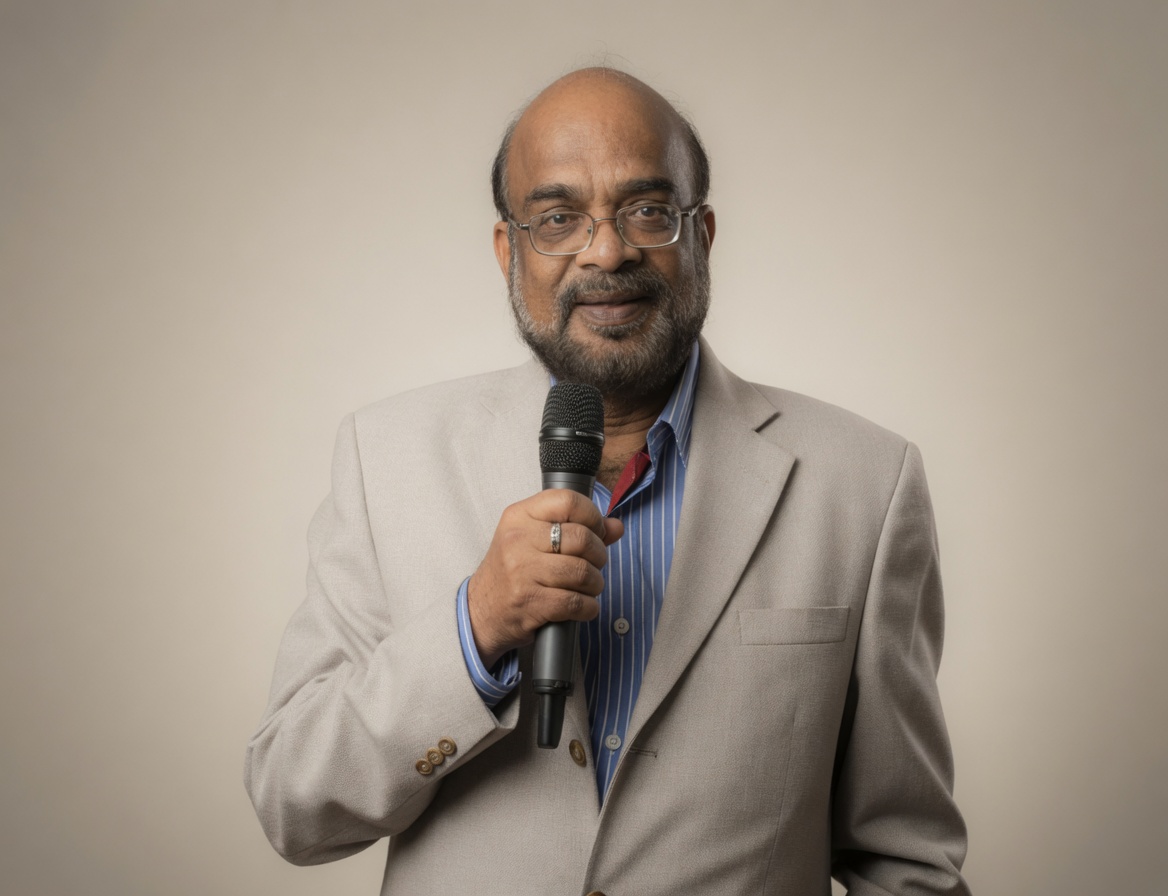
Every weekday, Milind Dangre sees fifty patients at his clinic on Wardha Road. One in five pays nothing. This has held true for forty years. When he opened his doors in the early 1980s, his consultation fee was two rupees and fifty paisa. The number has inched upward since, but the principle has not budged.
“I must be one of the most middle-class doctors among private practitioners in Nagpur,” he says, with a cadence that sounds more like pride than complaint. “And I am proud of this financial status.”
The son of a journalist, dramatist, and freedom fighter who refused every state privilege—including the Tamra Patra—Milind grew up in a household where integrity was the only currency that mattered. That early discipline stayed. He passed through Sule Mahila School, New English High School at Congress Nagar, and Shivaji Science College before entering Government Medical College in 1973. For his internship, he chose the primary health centre at Kuhi, forty kilometres southeast of Nagpur, spending six months alongside Ashok Badhe and Harshvardhan Sheorey before setting up his independent practice.
General practice in Maharashtra in the 1980s was not the diminished craft it would later become. Milind caught the tail end of its most confident decade. He built his work on a foundation that felt ordinary then and seems almost eccentric now: see every patient who walks in, charge what they can bear, and treat every fifth one free.
He has never stopped.
In forty years, Milind has avoided the corporate scramble. He sees outpatients, manages what he can, and refers the rest. His fees remain deliberately modest. “When power and wealth become the goal of the average physician,” he says, “the poor will find no place in the minds or hearts of their physicians.” He speaks without sanctimony, aware that he is describing a drift he has spent a lifetime resisting.
Few of his patients—and precious few friends—know what he does on weekends. A tight circle of six friends picks a forgotten village in Vidarbha or Chhattisgarh, tracks down its most stubborn problem, and helps fix it. On several occasions, the group has performed what Milind calls voluntary labour: clearing blocked drains and sweeping village lanes, tasks that carry no credit and leave no paper trail. “I wanted to give something back to society,” he says, “and wanted to repay the social debt incognito.”
For years, he has also written Marathi ghazals. The mercurial poet Manik Godghate, known simply as Grace, read them and approved. At the Maharashtra Sahitya Sammelan in Pune in 2007, Milind won second prize for extempore poetry. A collection of his ghazals sits ready. A novel remains in quiet progress.
The clinic runs. The weekends fill. The poetry accumulates. None of it is ever announced.
Then came the sharp break. On September 27, 2026, while SP Kalantri was in Richmond, his GMC classmate and neurologist Chandrashekhar Meshram called with heavy news. Milind had developed ataxia and cognitive decline. Investigations revealed Creutzfeldt-Jakob disease, a rare and relentless affliction. His son flew in from Houston, greeted by a cruel prognosis, while Meshram stood by to help the family weather the storm.