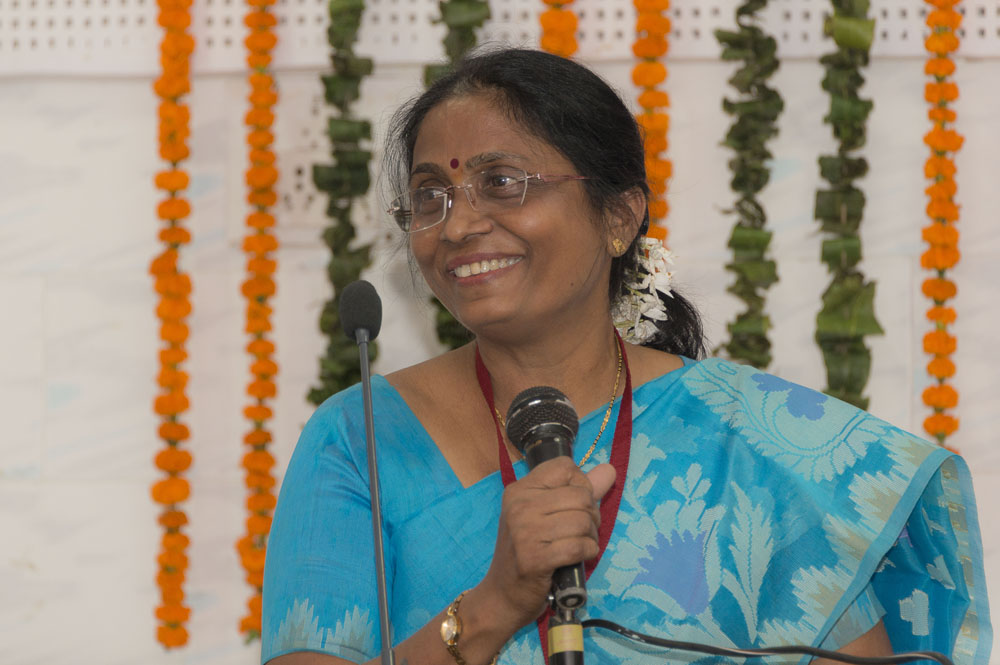
Dr. Vikram Marwah, the legendary Dean of GMC Nagpur, once stood for several minutes in front of a Rangoli. It was a depiction of an old man, created with painstaking detail by Sandhya Motghare and Meena Patil. Marwah, a man of profound artistic sensibilities, eventually turned to the young students and remarked, “You seem to have chosen the wrong profession. You are gifted artists—why did you enter mundane Medicine?” For Sandhya, that question became a central paradox. She spent the next forty years proving that medicine is not mundane if practiced with the soul of an artist and the voice of a singer.
The Voice of the Music Society
Sandhya was born in Amravati, the daughter of a Professor of Zoology. She arrived at GMC Nagpur in 1973 with a voice that was already locally famous. She joined the GMC music society, and the songs she rendered then—specifically Lata Mangeshkar’s Panchhi banu udti phirun—remain fresh in the collective memory of the batch.
Her group—Ratna Shekhawat, Alison Girling, and Archana Srivastava—was known for its late entries into theory lectures, usually arriving with a laugh and a sense of mischief. Yet, as their careers unfolded, this “unserious” group became the backbone of Vidarbha’s medical infrastructure. Sandhya chose Anaesthesiology, a specialty that requires the very qualities she possessed: rhythm, timing, and a deep, quiet composure under pressure.
The GMC graduate days were filled with art, music, and sheer fun. We were not as serious about studies then, but those years gave us the emotional resilience to handle the operating theaters later.
The Academic Nomad
Sandhya’s career reflects the “Usanwari” era of faculty transfers in Maharashtra. Over thirty years, she gathered a rich experience across six different medical colleges—from the high-volume wards of JJ Hospital in Mumbai to the rural outposts of Ambajogai and Miraj. She administered anaesthesia for everything from neurosurgery to ENT, but her heart, she says, always lay in Pediatric Anaesthesia. There is a specific delicacy required when putting a child to sleep, a clinical “melody” that Sandhya mastered.
In 2009, she returned to Nagpur as Professor and Head of Anaesthesiology at IGGMC. She rose to become the Medical Superintendent, navigating the bureaucracy of a major government hospital with the same grace she used in her Rangoli designs. She retired in 2020, having spent her final years overseeing the hospital’s response to a changing medical landscape.
The Artist in Retirement
Retirement for Sandhya has not been a withdrawal from life, but a return to the arts. She lives in Nagpur with her husband, Pranjal, an architect whose own firm operates across Mumbai, Nagpur, and Goa. Their daughter, Shivangi, has followed the creative path as an interior designer.
Sandhya Motghare is the answer to Dean Marwah’s original question. She did not choose the wrong profession; she simply brought the right sensibilities to it. She proved that an anaesthetist is, in many ways, like a singer—holding the patient in a state of grace, ensuring the rhythm remains steady, and managing the silence of the OT with a specialist’s care. She remains a woman for whom the “mundane” was always transformed into the “melodious.”