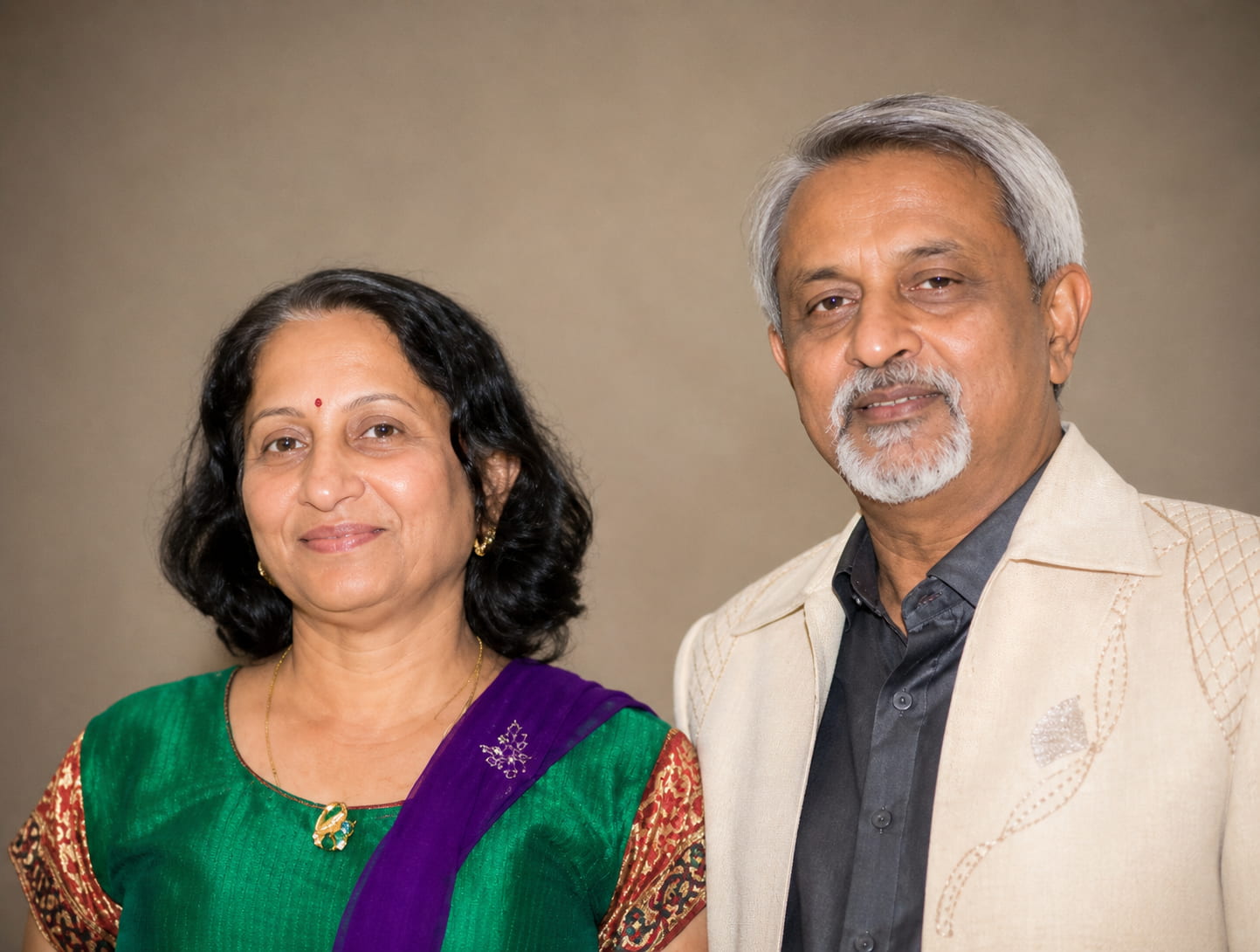
The workshop near GMC square had no name above the door, but it was well-kept — some said it was cleaner than an operating room. The man who ran it had just graduated from Government Medical College, Nagpur, and had, by every conventional measure, a medical career ahead of him. Instead, for two years after his MBBS, Shriniwas Shelgaonkar repaired scooters.
The Mechanic Who Became a Pharmacologist
The workshop was not an aberration. It was a declaration. Shelgaonkar had always believed that machines and bodies obey the same logic. “If doctors can solve and fix the malfunctioning of various organs in the body,” he argued, “there is no reason they should not be able to set the machines right.” He trained himself in radio repair, moved into electronics, and obtained a postgraduate diploma in computer software and systems analysis. He was, in the years before the word existed in Indian medicine, an integrator — someone who did not recognise the walls between disciplines.
He was born in Nagpur. His schooling moved through several institutions — Saint Ursula Girls’ School up to the second standard, Corporation Primary School Ravinagar for the third and fourth, and CP and Berar School, Ravinagar, through to the tenth standard. He then went to the Institute of Science for his pre-university and first BSc, and entered GMC Nagpur in 1973. He interned at the primary health centre, Narkhed, 90 kilometres northwest of Nagpur, alongside Shriram Kane and Uday Gupte.
After the workshop years, Shelgaonkar joined the Department of Pharmacology at Government Medical College, Nagpur, as a lecturer in 1980. He would remain in pharmacology — at GMC Nagpur, with a brief posting at GMC Akola — for the next four decades, teaching the subject to generations of students and serving at the Super Specialty Hospital attached to GMC Nagpur before retiring on 31 May 2020.
The Man His Friends Called
In a batch with no shortage of brilliant minds, Shelgaonkar earned a quieter reputation: the one people telephoned when they had a complex problem and needed a logical answer quickly. He is described, by those who know him well, as one of the best advisors in the group — sharp analytical mind, calm delivery, conclusions arrived at without visible effort. He also managed, for years, a small informal group of music lovers in Nagpur. He is neither a singer nor a musician, but he understood, apparently, that management is its own art.
His wife Meena holds an MSc in Medical Pharmacology from GMC Aurangabad and a PhD in Clinical Pharmacology from GMC Nagpur. After a distinguished academic career, she became a consultant pharmacologist for a Swedish pharmaceutical compliance company, advising as a toxicology expert from Nagpur — a career that speaks to the particular kind of intellectual rigour the Shelgaonkar household appears to run on.
Children of Two Continents
Their daughter Mugdha completed her BE in Architecture at VNIT, Nagpur, then a postgraduate masters in Building Information Modelling in Australia. She works as a Digital Engineering Coordinator at Mirvac, the Australian property group, in Sydney. Her husband Vinayak is a senior architect in Sydney with her. Their son Saurabh completed his BE in Electronics and an MS in Computer Science, and works as Product Manager at Gravitas AI, a UK-based company — while also running Bright Fish Infotech, a Nagpur-based healthcare software company that has built tools for e-procurement, clinical trial documentation, and virtual clinics. His wife Dimple heads Finance and Operations at Hotelkey. Both children have moved outward — one to Sydney, one straddling Nagpur and London — while the house in Bhausaheb Survey Nagar remains the still centre.
Shelgaonkar himself, at 41 years in pharmacology, retired on 31 May 2020. He was the same age as the GMC batch he entered in 1973 — 47 years of institutional life, if you count from his first MBBS year. The workshop near GMC square is long gone, but the instinct that built it — the conviction that understanding one system teaches you something about all systems — ran through every year he spent teaching young doctors how drugs work in the human body.