Category: Heritage & History

Documenting the legacy of MGIMS, Sevagram heritage, and medical history.

  • There is no answer, only silence

    She stood there, eyes fixed on the motionless figure before her. Her brother, just 23, lay on the hospital bed. His eyes were shut. His body still, but his chest rose and fell with each shallow breath. The monitor beeped steadily, a reminder of the fragile line between life and death.

    She was three years younger, but their bond was deep. They had grown up together in a small village near the hospital. He had just started working at a private bank two years ago, helping women in the village form small savings groups. This month, he was expecting a reward—a decent bonus for hitting his loan target. It was supposed to be his breakthrough, the moment he’d been waiting for.

    But destiny had other plans.

    On a rainy evening, as he was heading home after work, The roads were dimly lit, the drizzle making everything slippery. He was on his two-wheeler when a speeding bike collided with him. He was thrown to the ground, his head hitting the pavement hard.

    Unconscious on the road, he was recognized by the woman he had helped, the one he had lent money to. She quickly grabbed his phone, dialled his mother’s number, and called for help.

    The family, living three hours away, rushed to the scene. By the time they arrived, however, some kind souls had already taken him to the local hospital and admitted him for care.

    The next day, he was transferred to a neurology center in Nagpur. The scans revealed the harsh truth: his brain had suffered severe damage, and there was no chance of recovery. Surgery couldn’t revive the neurons that had been lost.

    Still, the neurosurgeon did what he could. He removed part of the skull, hoping to relieve the pressure building inside his brain, the only option left to save him—even if it was just to keep him alive.

    Three months passed. The family drained all their savings into his care—ICU fees, ventilator charges, antibiotics. But the surgeon gave them the harsh truth: there was nothing more that could be done. He advised them to take him home.

    At home, they tried to make him as comfortable as possible. Oxygen flowed steadily through a tube into his nostrils. They turned him regularly to prevent bedsores, massaged his limbs, put drops in his eyes, suctioned his throat, and fed him through a tube. But every day, the same question haunted them: When will he open his eyes? When will he speak? When will he recognize us?

    Unable to provide the care he needed, his mother decided to bring him to our hospital. It was near her village, and she had heard that our nurses were kind and approachable.

    Today, his sister asked me the same question again. Her small frame trembled with emotion. Her eyes, brimming with tears, spoke of a heart weighed down with fear and sorrow. She fought to hold them back, but the tears spilled down her cheeks. Her voice was barely a whisper, “Why is destiny so cruel?”

    As I looked at her, I heard the voice of the grandmother, who had been silent until now. Frail, her face etched with age, her words carried the weight of a lifetime of pain. “I raised him, you know? After his father died, I cared for him and his sister. His mother worked all her life for them, gave them everything she could. Now, when all was supposed to be well—when I hoped to see him married, start a family—this happens. Why am I seeing him like this? Why is this happening to my grandson?”

    Her voice cracked, and I saw the depth of her grief in the lines of her face. I was at a loss for words. My residents and the nurses stood quietly by, giving them space to express their pain. We didn’t try to offer advice or console them with empty words. We simply acknowledged their suffering. One of the nurses gently held the grandmother’s hand, showing that she was not just a caregiver, but someone who truly understood their pain. Sometimes, the only thing left to do is listen—and show empathy.

    The room fell silent, the weight of grief filling the air.

    As we left the patient and continued our rounds, I reflected on the true challenges of caring for such patients. What happens when a family runs out of money, when no caregivers are available at home, when bringing the patient to the hospital becomes impossible? Yet hospitals often send patients like these home with the same answer: “There’s nothing more we can do. Take him home.”

    Medical school didn’t teach us how to deal with this. We were trained to diagnose, treat, and move on. But what about the times when the treatment ends, and the real work begins—the work of caring for a life reduced to a fragile shell?

    There is no answer, only silence.

  • 𝗧𝗵𝗲𝗿𝗲 𝗶𝘀 𝗠𝗼𝗿𝗲 𝘁𝗼 𝗟𝗶𝗳𝗲 𝗧𝗵𝗮𝗻 𝗠𝗲𝗲𝘁𝘀 𝘁𝗵𝗲 𝗘𝘆𝗲

    Recently, we cared for a frail man in his late fifties. He came in gasping for air. His heart raced, and each breath was a challenge. His lungs crackled with every inhale. Both his face and feet were swollen.

    The ECG was very abnormal, and the chest X-ray showed fluid in his lungs.

    When he arrived at our ICU, we quickly put him on a mechanical ventilator. Drugs flowed through several pumps into his body. Tubes filled his windpipe, stomach, and urethra. Wires hung across his chest, and the monitors beeped relentlessly. It felt like a maze of machines.

    He couldn’t speak, and we couldn’t connect with him.

    Three days later, one by one, the tubes began to come out. He started to breathe more comfortably.

    That’s when we learned something remarkable. He had been blind since he was two years old. A smallpox infection had stolen his sight. But instead of letting this define him, he embraced life. He attended a school for the blind in Wardhamaneri, about 70 km northeast of Sevagram. With determination, he earned postgraduate degrees in arts and education—an M.A and an M.Ed.

    For 30 years, he thrived as a teacher. In a zilla parishad school in Wardha district, he taught languages to children. He opened their minds to the beauty of words, helping them dive into rich literature. Books became his refuge. His zeal for teaching lit up the room.

    Students adored him. Parents praised him. His family admired him.

    This year, he retired, ready for a new chapter. But then, tragedy struck.

    He was diagnosed with a rare heart disease that caused proteins to accumulate in his heart. This made it hard for his heart to pump. Blood pooled in his lungs and legs, leaving him breathless.

    Once, he was full of life. He played cricket and kabaddi, competing with other visually impaired athletes. He trekked mountains every year and walked ten kilometers daily. But now, he could barely walk a block. Climbing just a few steps left him gasping for air. The simple activities he once did effortlessly felt like climbing a mountain.

    Yet, his spirit remained unbroken. He smiled as he shared stories of his past. “I have lived a very good life,” he said. “I enjoyed everything I did. I was lucky. A good school, a fulfilling job, a caring wife, and two wonderful kids. No regrets. If this is my path, I will endure. I have climbed mountains before; this is just a small hill.”

    I listened, captivated by his resilience. He was a master storyteller, painting pictures with his words. As he finished his tale, tears filled my eyes.

    He didn’t see them.

  • Life and Death in Sevagram: The Day the Snake Bit

    It was a quiet morning in Sevagram, a village 20 kilometers from where Gopal (name changed), a small farmer, lived. As dawn broke, his peaceful life took a sudden, violent turn. He woke up with severe abdominal pain, vomiting, and a feeling of extreme weakness. There were no warning signs—no heavy meals, no alcohol, none of the usual causes of indigestion. For a man who lived simply and worked with his hands, his condition was baffling.

    With no nearby medical facilities to turn to, Gopal called a close friend. Without hesitation, his friend picked him up on a motorbike, and they rushed to our hospital. By the time they arrived, the village was just waking up, but Gopal’s pain overshadowed the peaceful morning.

    In the emergency department, the young doctor moved swiftly, his face set with concern as he examined Gopal. “It looks like acute appendicitis,” he said, arranging for Gopal to be admitted to the surgery ward. There, the surgery resident and a senior resident doctor, their eyes gleaming with anticipation, prepped the new laparoscope, which had recently become a prized asset in our rural hospital.

    As they got Gopal ready for surgery, a pre-operative check showed something unexpected. The anaesthetist noticed Gopal’s drooping eyelids and unusual sleepiness for his age. He felt something was wrong and called me in for a second opinion.

    When I arrived, Gopal’s eyes were barely open, his eyelids drooping heavily, and he struggled to swallow. The urgency was clear as I noticed these signs. His symptoms didn’t match appendicitis or a common illness. Instead, they pointed to a venomous snake bite, likely from a krait, one of rural India’s most dangerous snakes.

    “Where did you sleep last night?” I asked.

    “On the floor,” Gopal replied weakly.

    “Did you see a snake bite you?” I probed further. He shook his head, but his father added, “We see snakes all the time, especially now during the rains. A jet-black snake with yellow stripes was in our backyard last night.”

    The pieces fell into place. This was indeed the silent work of a krait—a nocturnal snake that often slips into homes in search of rats, biting sleeping victims with its thin, needle-like fangs. The bite causes no pain, no swelling, and leaves no telltale signs. Most people are unaware they’ve even been bitten. But the krait’s venom is deadly, paralyzing muscles, including those needed for breathing.

    Gopal’s condition was worsening, and his breathing grew laboured as we moved him to the ICU. Our 26-bed ICU is well-staffed and equipped for emergencies, but we often handle cases that city ICUs rarely see: snake bites and pesticide poisoning.

    Our ICU nurses, despite exhaustion and sleepless nights, worked tirelessly to save Gopal’s life. Their hard work, often going unrecognized, was key to his survival.

    We had to act quickly, and the residents, trained to handle such cases, immediately took charge.

    By the time Gopal was settled into an ICU bed—his first experience with a bed, having slept on floors his entire life—his breathing had grown shallower. Though his heart was stable, he could barely count to ten before gasping for air. His eyelids stayed heavy, and he could barely swallow.

    The diagnosis was clear: krait venom had blocked the signals between his nerves and muscles. Without quick treatment, his diaphragm would stop working, and he wouldn’t be able to breathe.

    We gave him two key medicines—neostigmine and atropine—and inserted a tube into his windpipe to connect him to a ventilator, which helped him breathe. We also gave him antisnake venom, an expensive but life-saving treatment. In villages, Rs 7000 for ten vials is a huge cost, but it was Gopal’s only chance.

    Over the next 24 hours, Gopal’s condition slowly improved. His heavy eyelids began to lift. Though he couldn’t speak because of the tube in his throat, his eyes showed it all—he was smiling. His body was fighting off the venom successfully.

    Another day passed, and Gopal was breathing on his own. We took him off the ventilator, and a week later, he was ready to leave the hospital. This time, he walked down the stairs, smiling, fully recovered. His friend, who had brought him on the motorcycle, handed him the keys, and Gopal, now stronger, drove himself home.

    But this story, like many others in rural India, reminds us how fragile life can be. Krait bites are stealthy and deadly, often mistaken for other conditions like appendicitis or stroke. Yet, with awareness and quick action, lives can be saved. For Gopal, the bite was a wake-up call—a reminder that next time, he might not be so lucky.

    It’s time he bought a bed. Luck doesn’t always strike twice.

  • 𝗔𝗿𝘁𝗶𝘀𝘁𝗿𝘆 𝗶𝗻 𝗠𝗚𝗜𝗠𝗦: 𝗧𝗵𝗲 𝗦𝘁𝗼𝗿𝘆 𝗼𝗳 𝗦𝗶𝘁𝗮𝗿𝗮𝗺

    𝗔𝗿𝘁𝗶𝘀𝘁𝗿𝘆 𝗶𝗻 𝗠𝗚𝗜𝗠𝗦: 𝗧𝗵𝗲 𝗦𝘁𝗼𝗿𝘆 𝗼𝗳 𝗦𝗶𝘁𝗮𝗿𝗮𝗺

    In 1970, a young man arrived at Gandhiji’s ashram in Sevagram. A year later, he joined a medical college, not as a student but as an artist.

    Although he left the college after twenty-five years, he left behind footprints in the black cotton soil of Sevagram.

    The medical institution was 𝗠𝗚𝗜𝗠𝗦, and the young man was Sitaram Vooturi.

    As fate would have it, he began an unexpected journey that intertwined his passion for art with the mission of the college.

    Artists are often known for their whims, fancies, and unique quirks. Their tempers and moods can swing dramatically, reflecting the highs and lows of their creative journeys.

    Sitaram was no exception; his unpredictability was part of what defined him as a true artist.

    This morning, while I was taking ward rounds in the hospital, I had the chance to meet Sitaram. Recognizing the importance of his story, I took some time to listen. As he spoke, I took notes, eager to share his insights.


    𝗘𝗮𝗿𝗹𝘆 𝗟𝗶𝗳𝗲 𝗮𝗻𝗱 𝗪𝗮𝗻𝗱𝗲𝗿𝗹𝘂𝘀𝘁

    Born in Jagtial on 7 March 1949, then a small town in Andhra Pradesh, Sitaram grew up in a humble family. His father, Satyanarayana, owned a business and cinema halls, while his mother, Amrita, was a homemaker.

    Tragedy struck in 1965 when his father passed away, just before Sitaram was to take his 12th-grade exams. He could have easily gotten into three engineering colleges in the state, but he chose a different path. Instead, he enrolled in a teacher training course, where he discovered his interest in the Wardha Education Plan created by Mahatma Gandhi in 1937.

    After finishing his training in 1968, Sitaram set out on a two-year journey across India. He simply wanted to discover the country and its rich culture.

    He had no agenda, no plans, and no itinerary. Each day was a new adventure, every night on the train taught him something, and each town he visited added to his knowledge.

    His travels brought him to Sevagram on March 7, 1970, his 21st birthday. With no connections or plans, Sitaram arrived at Gandhiji’s Ashram, unsure of what lay ahead but searching for a sense of purpose.


    𝗧𝗵𝗲 𝗙𝗼𝗿𝘁𝘂𝗶𝘁𝗼𝘂𝘀 𝗘𝗻𝘁𝗿𝗮𝗻𝗰𝗲 𝗶𝗻𝘁𝗼 𝗧𝗵𝗲 𝗠𝗚𝗜𝗠𝗦

    Sitaram met Mr. Chiman Lal Bhai, who welcomed the young man, penniless but full of hope, and offered him a place to stay at Rustam Bhavan. He advised Sitaram to speak with Prabhakarji, the Ashram secretary. Prabhakarji saw potential in him, despite his confusion, and recognized his passion. He offered Sitaram a managerial position at an Ashram in Shivrampalli near Hyderabad. However, Sitaram’s heart was set on staying in Sevagram. In the end, Prabhakarji gave in, and Sitaram found his home and purpose in Gandhi’s Ashram at Sevagram.

    The year was 1970. MGIMS had just opened its doors, and the first batch of medical students had been admitted. Sitaram, still an unpaid Ashram inmate, spent his time making drawings at the Ashram. Yet, he wondered if he could find a way to earn a living at the medical college.

    He had no certificates, no formal degrees—only a strong desire to prove himself.

    Manimala Chaudhari, the secretary of the Kasturba Health Society, and Dr. I.D. Singh, the principal of MGIMS, were regulars at Gandhiji’s Ashram. Every evening, they would sit cross-legged under the large peepal tree for the evening prayers. Sitaram often ran into them during these peaceful gatherings, slowly becoming a familiar face in their midst.

    In the summer of 1970, Sitaram formally met Dr. I.D. Singh in his modest, bare-bones office—just two or three small rooms with minimal furniture, a far cry from the more elaborate principal’s office of today. The entire administrative staff, consisting of Mr. Deshmukh and Mr. Khare, also shared this humble space.

    Sitaram, though a humble villager without formal qualifications, carried an intense passion for art and a natural talent for drawing. Dr. Singh asked Gajanan Ambulkar, the young artist in Anatomy, to test Sitaram’s drawing skills. Gajanan handed him 𝘎𝘳𝘢𝘺’𝘴 𝘈𝘯𝘢𝘵𝘰𝘮𝘺 and asked him to replicate the detailed illustrations.

    One look at Sitaram’s sketches, and Gajanan nodded in approval.

    Sitaram finally made his way into MGIMS. He impressed enough to land a job in the Pathology department, earning just ₹60 a month. But that was just the start. For the next 25 years, he stayed rooted in Pathology, carving out his place, never once looking back.


    𝗔𝗿𝘁𝗶𝘀𝘁𝗶𝗰 𝗖𝗼𝗻𝘁𝗿𝗶𝗯𝘂𝘁𝗶𝗼𝗻𝘀 𝗮𝗻𝗱 𝗖𝗲𝗹𝗲𝗯𝗿𝗮𝘁𝗲𝗱 𝗘𝘅𝗵𝗶𝗯𝗶𝘁𝗶𝗼𝗻𝘀

    Instead of sticking to just making simple charts and drawings for the museums of the second MBBS departments—Pathology, Microbiology, Pharmacology, and Forensic Medicine—Sitaram went beyond. He became involved in exhibitions that showcased not only his own art but also the creative talents of the medical students.

    Every winter, the batches of 1969, 1970, and 1971 proudly displayed their artistic talents at an exhibition in the staff club on campus. One of Sitaram’s early standout pieces was a semi-painting inspired by the tragic 1971 India-Pakistan War. Positioned at the entrance, it captivated the audience and became the highlight of the event. This stunning artwork cemented Sitaram’s reputation as a gifted artist within the college community.


    𝗧𝗿𝗮𝗻𝘀𝗶𝘁𝗶𝗼𝗻 𝘁𝗼 𝗘𝘃𝗲𝗻𝘁 𝗠𝗮𝗻𝗮𝗴𝗲𝗺𝗲𝗻𝘁

    As the medical college grew in stature, so did Sitaram’s role. He had acquired a new skill—planning, organizing, and executing conferences. His attention to detail and organizational talent naturally led him into event management. Sitaram became the go-to person for planning conferences, ensuring that everything—from seating arrangements to banners and decorations—was flawlessly executed.

    Sitaram’s style mirrored the values of MGIMS—clear, simple, and effective. He believed less was more. With minimalism, he brought out his creativity in every event, making a lasting impression without excess.

    In October 1973, MGIMS hosted the silver jubilee conference for leprosy workers, drawing 600 delegates from 60 countries. Sitaram took charge of every detail, from logistics to execution. His efforts ensured the event ran seamlessly, reflecting Gandhi’s values of compassion and service.

    His ability to blend different parts into a unified whole helped raise the college’s reputation both nationally and internationally.


    𝗠𝗮𝘀𝘁𝗲𝗿𝘆 𝗶𝗻 𝗦𝗹𝗶𝗱𝗲 𝗠𝗮𝗸𝗶𝗻𝗴 𝗮𝗻𝗱 𝗠𝗲𝗻𝘁𝗼𝗿𝘀𝗵𝗶𝗽

    Sitaram, always restless and eager to learn, set his sights on a new field—making 35 mm slides for presentations at seminars and conferences. From the 1970s to the early 1990s, long before PowerPoint, he became a skilled slide maker.

    Researchers relied on his work to present their findings, using 35 mm slides with slide projectors at conferences. His creativity now had a new medium.

    Sitaram mastered the art of slide-making with precision. He captured images with a 35 mm camera, developed the film, and projected the negatives onto slide film. After carefully framing and labeling each slide, he created engaging presentations that left a lasting impression.

    He taught residents and young faculty the essential rules for making effective slides. “Use large, readable fonts so everyone can see,” he advised, “and keep text to key points to help focus.” He stressed the need for “high-quality images to enhance understanding.” Sitaram emphasized simple design, saying, “Avoid clutter to keep the audience’s attention,” and highlighted the importance of a clear flow, reminding them that “each slide should connect logically to the next.”

    He encouraged direct engagement with the audience, teaching that slides should support the presentation, not be read verbatim.

    This was during the 1980s and early 1990s, long before the internet existed, and there were no online resources to learn how to create effective PowerPoint slides.

    Sitaram was truly ahead of his time.

    Besides making slides, Sitaram worked closely with residents and young faculty, helping them practice their presentations. His support built their confidence and skills, leading 19 postgraduate students to win gold medals and best paper awards at various conferences.

    He enhanced the learning atmosphere at MGIMS, turning shy speakers into confident presenters and underscoring the value of clear communication in medicine. His legacy of mentorship continues to inspire alumni, reminding them of the power of storytelling in their medical practice.


    𝗧𝗵𝗲 𝗗𝗲𝗽𝗮𝗿𝘁𝘂𝗿𝗲 𝗮𝗻𝗱 𝗟𝗲𝗴𝗮𝗰𝘆

    In 1995, Sitaram’s journey at MGIMS concluded as abruptly as it had started. In a surprising twist, he chose to leave Sevagram. I didn’t ask him why, and he didn’t share the reason either.

    He served for 25 years and could have stayed for another 12 before his formal retirement, but true to his artistic nature, he chose not to. What he left behind on the MGIMS canvas was a legacy of rich work and a unique style.

    What do you remember about your time here?” I asked Sitaram. His eyes welled up with emotion as he began softly, “MGIMS was more than just a workplace; it was a family. No matter your role, everyone loved and supported one another. We weren’t driven by money; it was our shared passion to elevate this institute to world-class standards.


    𝗔 𝗧𝗶𝗺𝗲𝗹𝗲𝘀𝘀 𝗖𝗼𝗻𝗻𝗲𝗰𝘁𝗶𝗼𝗻 𝘁𝗼 𝗠𝗚𝗜𝗠𝗦

    Sitaram, now 75, left MGIMS 30 years ago, but his bond with the institute remains unbroken. His deep connection still draws him back 3 to 4 times a year, where he meets the people he once worked with.

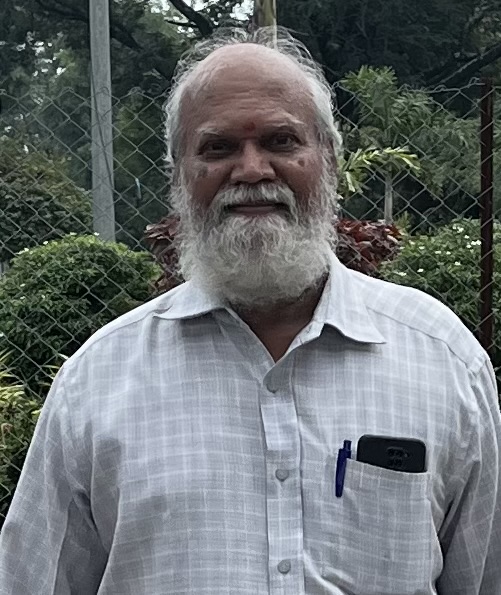
    Though the younger generation may not recognize this tall, slender man with a long white beard, who is aging gracefully, his eyes shine with a passion that reflects his profound love and respect for MGIMS.

    “I will never forget Gajanan Ambulkar,” he continued, his voice thick with gratitude. “He knew how to manage me—intense, passionate, and short-tempered as I was. He was not just a mentor but a guru, who had the gift of calming my fiery heart while bringing out the best in me.”

    As I listened to Sitaram, it was clear that his journey at MGIMS was about more than art; it was about the deep connections he made. His passion for teaching and creativity continued to inspire those around him.

    Sitaram’s legacy lives on, not in titles, but in the lives he touched and the community he built.

  • On Doctor’s Day

    𝟭

    On Doctor’s Day, with pride we stand,

    At 𝗠𝗚𝗜𝗠𝗦, we guide medicine’s art firsthand.

    Through patient care and hands-on grace,

    We nurture skills that that time can’t efface.

    *****

    𝟮

    India has 700 medical schools, is MGIMS just one of them?

    No, we boast a five-decade tradition of fame and name.

    MGIMS? Shakespeare would have shrugged, “What is in a name?”

    We would say, “Plenty—Satya, Karuna, and Prem.”

    *****

    𝟯

    Has medicine turned into just a profession, losing its calling?

    This thought makes the oldies both sad and worrying.

    In a world where commerce drives testing and intervention,

    We must remember our true purpose and intention.

    *****

    𝟰

    At MGIMS, we teach and train medical students and PGs,

    Guiding them through vast medical mountains and seas.

    Through constant mentoring, they acquire the healing art,

    MGIMS doctors heal patients with both head and heart.

    *****

    𝟱

    So what if they’re not paid what they’re due,

    On money matters, they dont crib or rue.

    Through nights of toil, our doctors, skilled and bright,

    They bring light where darkness once cast its blight.

    *****

    𝟲

    Knowledge forms the bedrock of our care,

    Ethics, compassion, empathy, all are there.

    We acknowledge that technology is crucial,

    But heartfelt clinical care remains just as essential.

    *****

    𝟳

    In a world where doctors often seek fame and wealth,

    MGIMS stands apart, prioritizing true health.

    Here, we embrace both the art and science of healing,

    Isn’t it the reason we find Sevagram so fulfilling and appealing!

    *****

    𝟴

    The wards are bustling, patients in deep repose,

    Yet I must rouse them, with vows I chose.

    Many lives to touch before I rest,

    I must stay vigilant, giving my best.

    *****