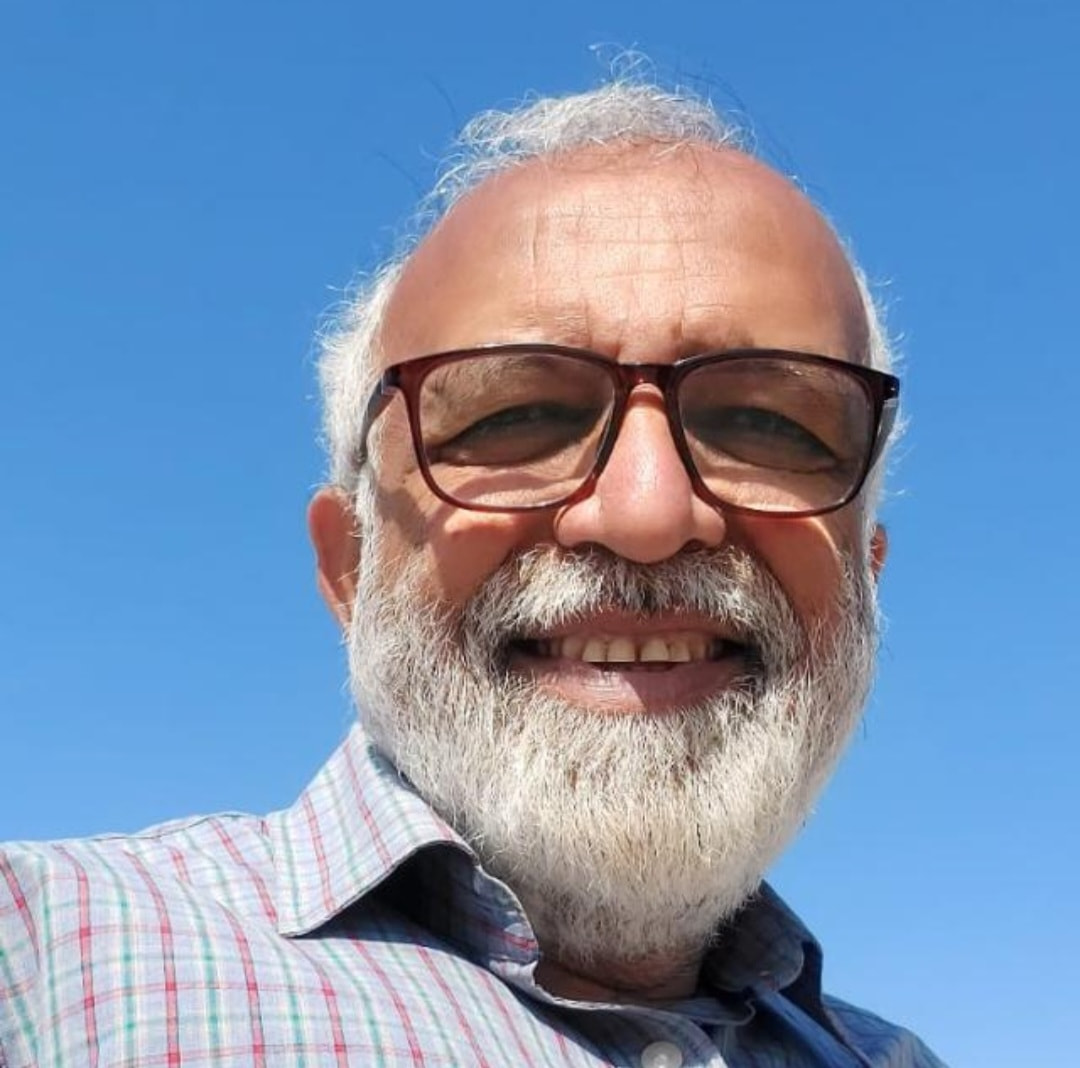
In the consulting room on Badnera Road, Amravati, the question comes up often enough that Waqar Taji has learned to expect it. A patient — or a colleague, or an old acquaintance — will look at him with barely concealed puzzlement and ask: “You did your MBBS from GMC Nagpur. Why Homeopathy?”
Waqar does not bristle. He has answered this question for four decades and has distilled his answer to its essentials. “I was fortunate,” he says, “to discover Homeopathy early in my student life. With an open mind and an adventurous spirit, I ventured into a field that would shape my life and career.” What began as curiosity — how could small sweet pills produce such effects? — became study, then conviction, then vocation. The puzzlement of his questioners does not trouble him. He has seen what he has seen.
The Boy Who Came Second in Vidarbha
Waqar was born in Amravati to a high school teacher. He is, in the most precise sense, a product of his city — he schooled there, practised there, and has never left. His early education moved through Municipal Primary School No. 6, then Academic Secondary High School, then Zilla Parishad Ex. Government Higher Secondary School. For his pre-medical year he chose Vidarbha Mahavidyalaya, Amravati, completing it between June 1972 and March 1973. He finished second in Vidarbha in the Nagpur University examinations — a result that opened the doors of GMC Nagpur.
He joined the GMC Nagpur batch of 1973 and, after graduation, completed his rural internship at PHC Karanja Ghadge in Wardha district — thirty kilometres west of Nagpur — paired with Dhulip Tajne. His urban internship followed at the District Hospital, Amravati. Then he came home.
The Long Turn Toward Homeopathy
He began, as most MBBS graduates do, as a family physician in Amravati, practising modern medicine. The turn came gradually. He encountered Homeopathy, studied it with the same seriousness he had brought to his MBBS, and found that it worked — in his hands, on his patients, consistently enough to matter. After a few years, he set aside modern medicine entirely.
In 1999, he formalised what had long been his practice by completing the MFHom from the Royal London Homeopathic College — one of the oldest and most respected postgraduate institutions in Homeopathy, offering its qualification specifically to graduates of modern medicine. The degree gave his conviction an institutional address.
His critics — and there are always critics — point to the absence of robust randomised controlled trial evidence for Homeopathy. Waqar is aware of this debate and does not pretend it does not exist. What he points to instead is his consulting room: the patients who arrive after years of investigation, multiple specialists, and mounting expense, carrying diagnoses that modern medicine describes but cannot resolve — chronic, medically unexplained, treatment-resistant conditions. “These patients,” he says, “exhaust their resources — financial and emotional — searching for an elusive cure. A well-trained and experienced Homeopath can significantly alleviate their suffering and offer them a good quality of life.”
For Waqar, the philosophical distinction is fundamental. “Allopathy, to me, seems like a broad generalisation. Homeopathy is about grand individualisation. Each new patient presents a learning experience and a puzzle.” He has been practising for over four decades and still describes himself as a student of Homeopathy. It is not false modesty. It is the posture of someone for whom the subject has not run out of questions.
Taji Homeopathy Clinic
The clinic sits next to Harwani Eye Hospital on Badnera Road, Rajapeth, Amravati. His wife Dr. Hamida, herself a Homeopath, practises alongside him. The family that Waqar and Hamida have built carries medicine forward into the next generation, though in different directions. Their son Mohammad Saif holds a BDS and an MDS in Endodontics from China, and is married to Dr. Zahra Farooqui, an Endodontist at Gulf Asian Medical Center in Jubail, Saudi Arabia. Their son Mohammad Faiz holds an MD and BHMS and practises as a Homeopath — his father’s path, chosen freely. Their daughter Soobia rounds out the family. Three grandchildren — Mariyam, Mariya, and Sarah — complete the picture.
The GMC Nagpur batch of 1973 produced physicians who went into surgery, academic medicine, administration, and research. Waqar went somewhere else — down a road that his batchmates may have found eccentric, that the medical establishment regards with scepticism, and that his patients, for four decades, have kept coming back to. He does not ask to be vindicated. He asks only to be understood on his own terms.
“I still consider myself a student of Homeopathy,” he says, “continually striving to assist my patients through this gentle healing method.”
That, in the end, is the answer to the question they keep asking him on Badnera Road.