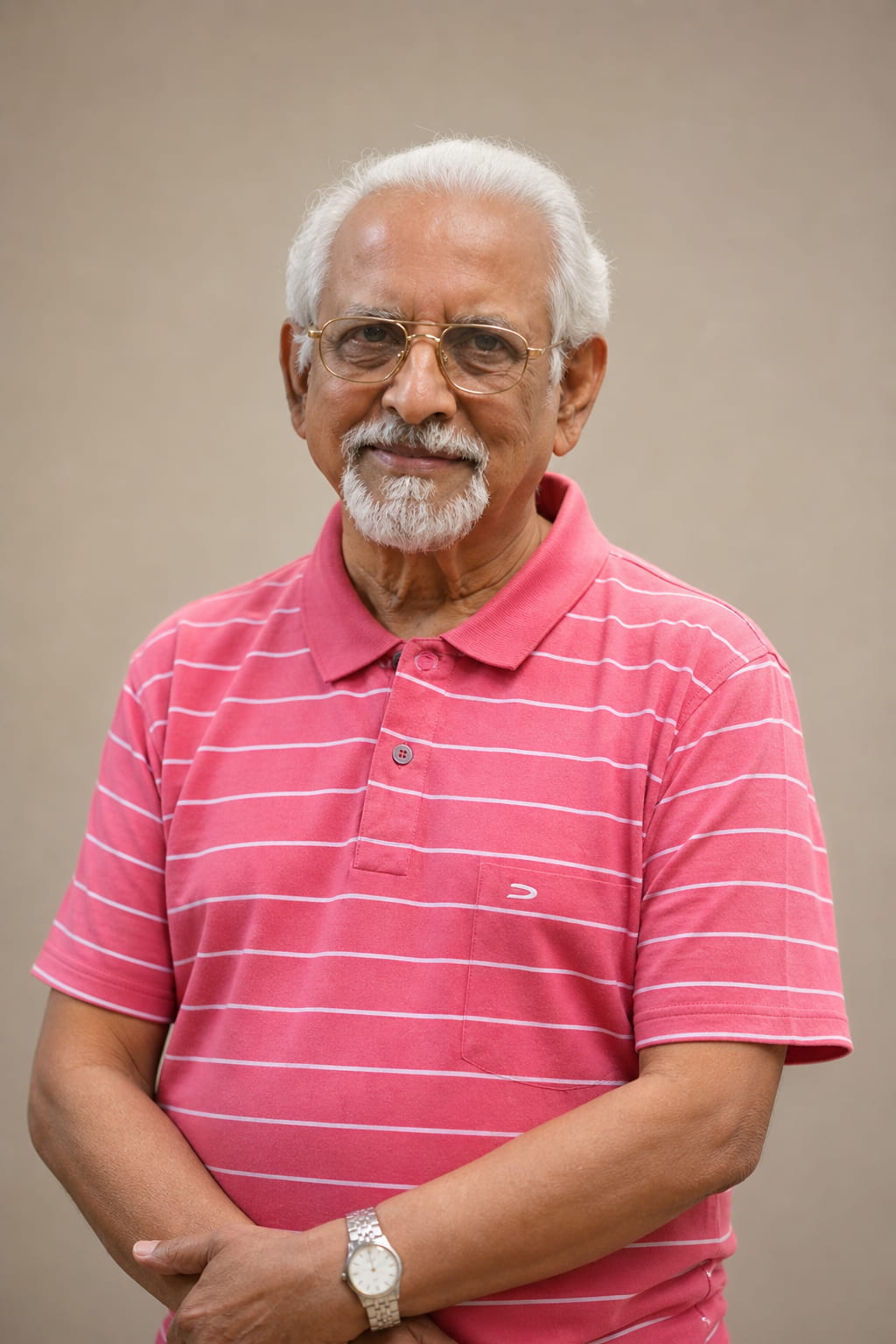
The book that made Sanjeev Saoji a psychiatrist was not a textbook. It was The Passions of Mind by Irving Stone — a novel about Sigmund Freud, read soon after his internship, which left him with an idea that would anchor his career: that emotions are not mere reactions, not instincts to be managed, but meaningful and intelligent engagements with the world. He left Nagpur for Mumbai the following year. He has been explaining that idea to patients, students, and communities in and around Aurangabad ever since.
Nandu
Sanjeev was born in June 1955 in Mehkar, Buldhana district, 100 kilometres southwest of Akola, where his father worked as a civil engineer in the Public Works Department of the Government of Maharashtra. His mother kept the house. His parents gave him the nickname Nandu, and his batchmates have used it ever since.
His schooling tracked his father’s postings across Vidarbha and beyond: Zilla Parishad School, Murtijapur; the Municipal School, Chandrapur; Jubilee High School, Chandrapur; Hadas High School, Nagpur; and New Era High School, Akola, where he sat his tenth standard. He completed his pre-medical education at RLT College of Science, Akola, in 1972–73, and arrived at Government Medical College, Nagpur in 1973. After graduation, his internship took him to Akola Civil Hospital for the urban rotation and to the primary health centre at Tiroda — 110 kilometres east of Nagpur — for the rural posting, alongside Sudhir Sathe, Deonath Nimje, and Madhukar Lanje.
Mumbai and the Turn Toward Mind
The book, the idea, the decision. Sanjeev went to Topiwala National Medical College, Mumbai, and obtained his DPM and then his MD in Psychiatry in 1983. He returned to Aurangabad on 31 December that year and opened his private practice as a consultant psychiatrist — one of the first in the region.
The India of the 1980s treated mental illness as it had treated it for decades: with stigma, silence, and a thin provision of institutional care concentrated in a handful of government hospitals. A psychiatrist in private practice in a city like Aurangabad was working not only against illness but against the conditions that kept illness hidden. Sanjeev joined Mahatma Gandhi Memorial Medical College in August 1998 as a faculty member, eventually becoming professor and head of the Department of Psychiatry — a position he held for two decades. He then joined Government Medical College, Aurangabad as Professor of Psychiatry on 25 January 2019, and more recently has moved to the newly founded Ramchandra Institute of Medical Sciences at Aurangabad.
The Width of His Work
Nandu is not easily contained by a single role. He has practised as a psychiatrist at Saoji-Tupkari Hospital on Garkheda Road, Aurangabad, and served as honorary psychiatrist at Dr. Hedgewar Rugnalaya. He has published extensively in newspapers, magazines, and academic journals, and written two books. He is a much-sought speaker on stress management, parenting, child development, and personality development, and has organised numerous psychiatry workshops and conferences.
He founded the Academy for Development of Insight and Personality. He founded Omkar Balwadi Prakalpa, a school that enrols children from the early years through to the sixth standard, taught in what Sanjeev describes as a scientific approach to educating young children — and he runs a second school taking students through to grade ten. He is president of the Indian Psychiatric Society, Aurangabad, and president of Vidwat Parishad, Deogiri Prant; president of the Dr. Babasaheb Ambedkar Research Society; member of the RTE Committee, Government of Maharashtra.
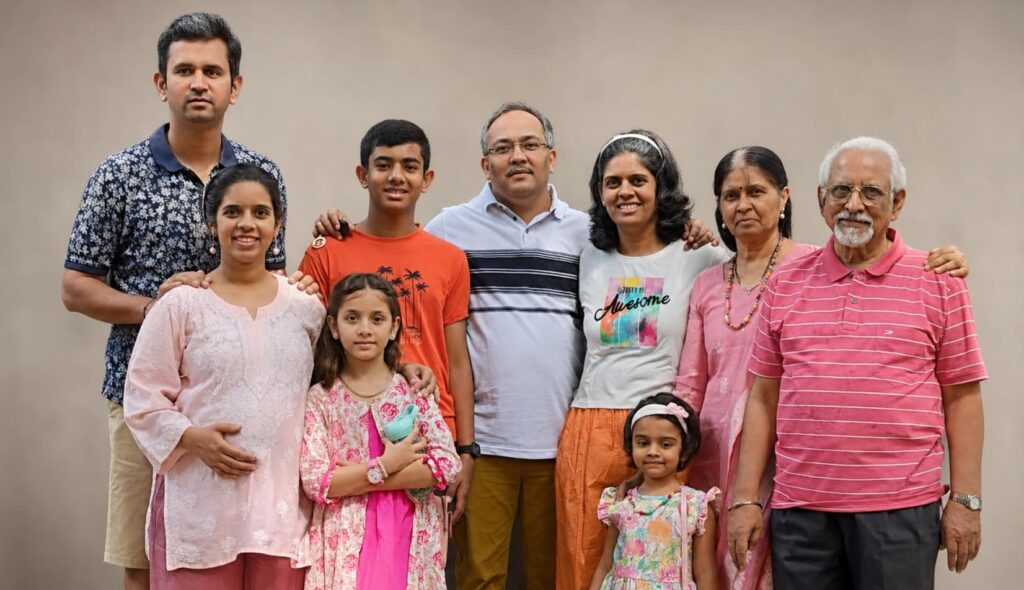
His wife Dr. Madhushree Saoji practised as a sonologist before retiring five years ago. She is now National Joint Secretary of Vidya Bharti, Deogiri Prant, and president of Vidya Bharti — working as a volunteer in education with the same commitment Sanjeev brings to psychiatry. Their daughter Gauri is a dental surgeon married to Dr. Mahesh Deshpande, a consultant cardiologist at Dr. Hedgewar Rugnalaya, Aurangabad; they have two sons, Shantanu and Sumedha. Their younger daughter Gayatri holds an M.Arch in Urban Design from CEPT, Ahmedabad, teaches Urban Design in Solapur, and is married to Aniket Kulkarni, also an architect from CEPT; their daughter Shubhada is three years old.
What the Book Said
At the GMC 1973 reunion in December 2013, someone asked Nandu how he had chosen psychiatry. He told them about the book. “I decided to opt for psychiatry after reading it,” he said. The answer had the directness of a man who had, for forty years, understood exactly why he was doing what he was doing. Emotions are rational. They are meaningful, moving, intelligent engagements with the world. He had read that in a novel about Freud, sitting somewhere in Nagpur in 1978 or 1979, and had found in it a career, a vocation, and a way of living.
After leaving MGM Medical College, I joined Government Medical College, Aurangabad, as Professor and Head of Psychiatry. Those years remain significant, not least because we were able to start the MD (Psychiatry) programme—the first of its kind in a government medical college outside Mumbai and Pune.
I later moved to R.K. Damani Medical College and Dr Hedgewar Hospital in Chhatrapati Sambhaji Nagar, where I served as Professor and Head until September 2025, stepping down on completing 70 years of age.
Even now, work continues in a quieter but steady form—as a consultant at Dr Hedgewar Rugnalay and through my private practice. Alongside, Omkar Vidyalay and Omkar Balwadi keep me engaged in a different, but equally meaningful, way.
Over the years, public engagement has remained a constant thread. My association with Kutumb Prabodhan, Vidya Bharati, and the IMA continues, as does my participation in the “One Week for Nation” initiative. Spending time in remote tribal areas, working alongside young medical students, often brings a sense of perspective that routine practice does not.
My wife, Dr Madhushree, continues her work with Vidya Bharati, travelling widely across the country. Watching her work unfold at that scale has been both humbling and inspiring.
The days now find their own rhythm—part work, part engagement, part reflection. Perhaps that is what this stage of life offers: not withdrawal, but a quieter continuity—of purpose, of involvement, and of simply remaining connected.