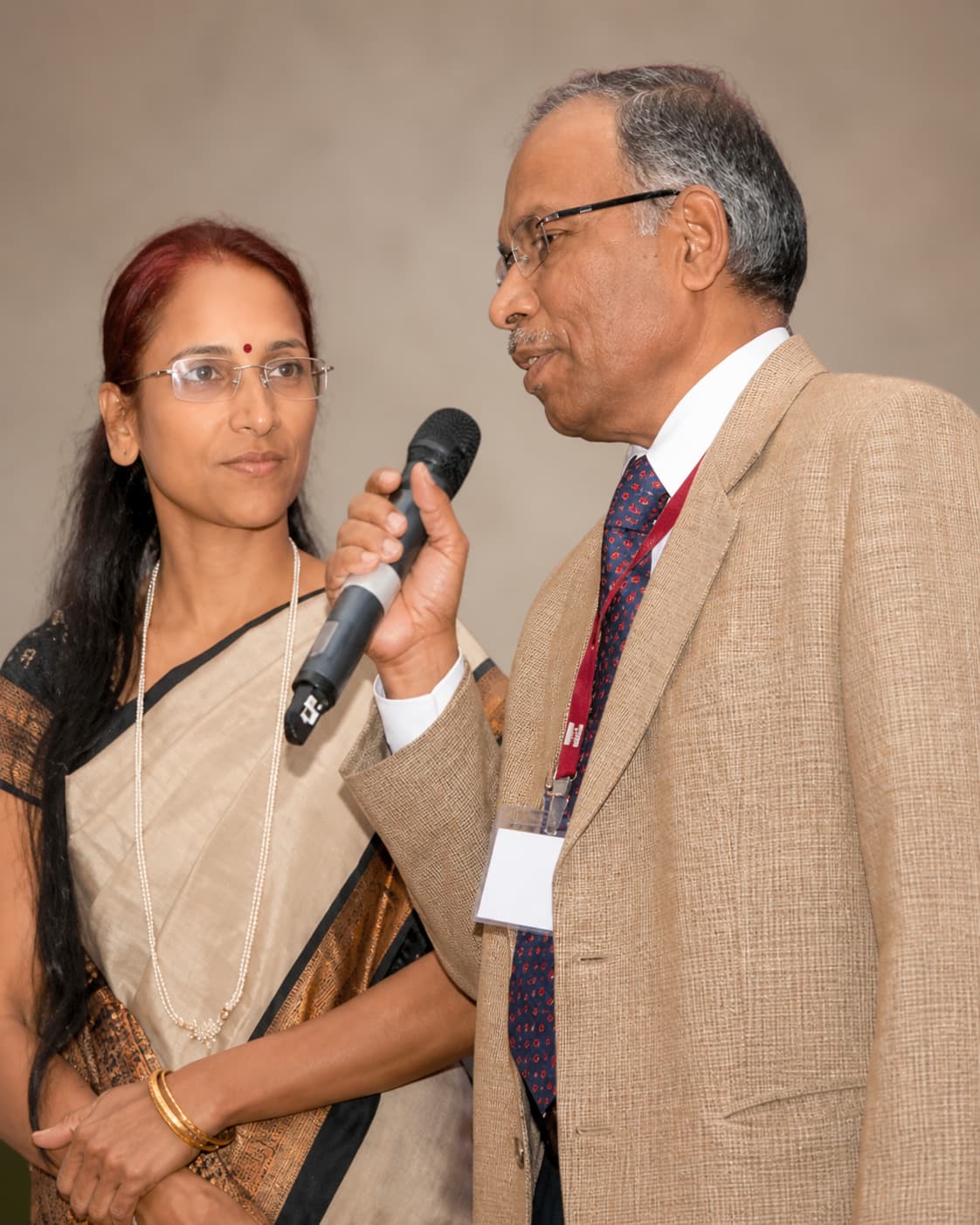
The mark of an administrator, someone once said, is not what they build from scratch but what they fix when everyone else has stopped believing it can be fixed. In 2011, Prakash Wakode was asked to lead Indira Gandhi Government Medical College, Nagpur — an institution that had accumulated years of neglect, stalled construction, and a reputation for institutional inertia. He accepted, rolled up his sleeves, and got on with it. Buildings that had sat incomplete for years were finished. Human resource databases were built. A ranking system for government medical colleges was designed. None of it was glamorous. All of it mattered.
He describes this period, quietly, as learning to survive “like the proverbial cactus” in adverse conditions. He says it without bitterness. He had been learning that skill his whole career.
From Jalka Bhadang to GMC
Prakash was born on 12 September 1955 in Jalka Bhadang, a small village in Khamgaon Taluka, Buldhana district. His father was a postal employee. The family was modest; the village was small; the schools were whatever the local government provided.
He attended school in Shegaon and completed his premedical education at GS College, Khamgaon, before entering GMC Nagpur in 1973. At GMC, he lived briefly with his elder sister in the SE Railway Colony near the TB Ward before moving into the hostel in 1975. His internship took him to Bramhapuri — with Adesh Gadpayle, Ashok Ganjre, and Ganesh Ramteke — and then to the civil hospital in Buldhana.
He chose ENT for his postgraduation. He obtained a Diploma in ENT from GMC Nagpur in 1981, followed by his MS (ENT) in 1982. For his thesis, he studied the clinical profile of cancer of the maxilla, supervised by Dr. Mahore. After completing his postgraduation, he joined GMC Nagpur as a Lecturer.
The Long Climb
Prakash moved steadily through the ranks of Maharashtra’s government medical system — Lecturer at GMC Nagpur from 1981 to 1985; Associate Professor from 1985; Professor from 1992. In 1988, he received a Commonwealth Medical Fellowship sponsored by the British Council, using the year in the United Kingdom to acquire skills in laser surgery.
In 1992, he was transferred to Shri Vasantrao Naik Medical College, Yavatmal, where he spent a decade. He returned to Indira Gandhi Government Medical College, Nagpur in 2002. Two years later, he joined the Indo-Nepal Project at BP Koirala Institute of Health Sciences, Dharan, Nepal for faculty development — a year that expanded both his clinical perspective and his understanding of how medical institutions function across different resource environments.
After a spell leading the ENT department at GMC Nanded, he was asked to serve as Dean of Indira Gandhi Government Medical College, Nagpur in 2011 — the assignment that would become, in retrospect, the defining chapter of his administrative career.
What a Dean Does
Prakash arrived at IGGMC with a brief that any sensible person might have found daunting: bring the college up to Medical Council of India norms, fix long-stalled construction, and improve faculty morale in an institution where the accumulated grievances of years had not been addressed. He did all of it, methodically and without fanfare.
His approach was direct. He listened to faculty and staff, understood their problems, and helped them think through solutions. “It is possible to make people work,” he has said, “provided we listen to them, live with them, and work with them.”
In July 2015, he moved to Mumbai as Joint Director of the Directorate of Medical Education and Research, where he made the directorate’s systems digital-friendly, introduced performance ranking for government colleges, and built databases of human resources and equipment. The work was unglamorous administrative reform — the kind that has no ribbon-cutting moment, but that future administrators rely on.
He is now Additional Director at Rashtra Sant Tukdoji Regional Cancer Hospital and Research Centre, Nagpur.
The Writer, the Traveller, the Cactus
Outside administration, Prakash has written extensively. His published works include Clinical Methods in ENT, MCQs in ENT, a travelogue about Nepal, and a book on medical scientists for children, written in Marathi. He has also edited and published Kalptaru Chya Parambya.
He has spoken plainly about the resource constraints facing government hospitals. “In developed countries, 18 percent of GDP is spent on healthcare. In India, it is a paltry 3 percent. If we need a workforce of 100, we have 50. We need 190 beds per 10,000 people; we have just nine.”
The figures are familiar to anyone who has worked in Indian public health. What is less common is the administrator who states them aloud, without softening them, and then goes back to work anyway.
Some years after retirement, Shri Shankaracharya Institute of Medical Sciences, Bhilai, approached me with a request to join their institution as Professor of ENT. I accepted rather reluctantly, believing that my years of active institutional responsibility were largely behind me. Yet, within a few months of joining, the management requested me to take over as Dean of the medical college—a responsibility I eventually agreed to shoulder.
I served as Dean of SSIMS, Bhilai, from 2022 to 2025. On completing 70 years of age, I decided to step down and return to a quieter life. However, the institution has recently approached me once again, this time with an invitation to join as Professor Emeritus—a proposal I am seriously considering.
My years in Chhattisgarh were both professionally engaging and personally unsettling. Having spent most of my career within government medical institutions, working in a private medical college exposed me to a very different educational environment and to a generation of students shaped by very different social currents.
Many students were bright and capable, but I often sensed a growing emphasis on degrees and credentials rather than the deeper pursuit of knowledge and discipline that defined our own years in medicine. A small but visible section appeared emotionally unprepared for the demands of the profession. Encounters with issues such as substance abuse among students troubled me deeply and forced me to reflect on how rapidly social values and aspirations have changed.
At times, the experience was genuinely disorienting for someone of my generation and temperament. Yet, in retrospect, it also became an opportunity to understand the anxieties, distractions, and pressures shaping younger lives today. Perhaps every generation feels the next one is changing too quickly. Still, those years left me thoughtful—not only about medical education, but also about the wider society we are collectively shaping.