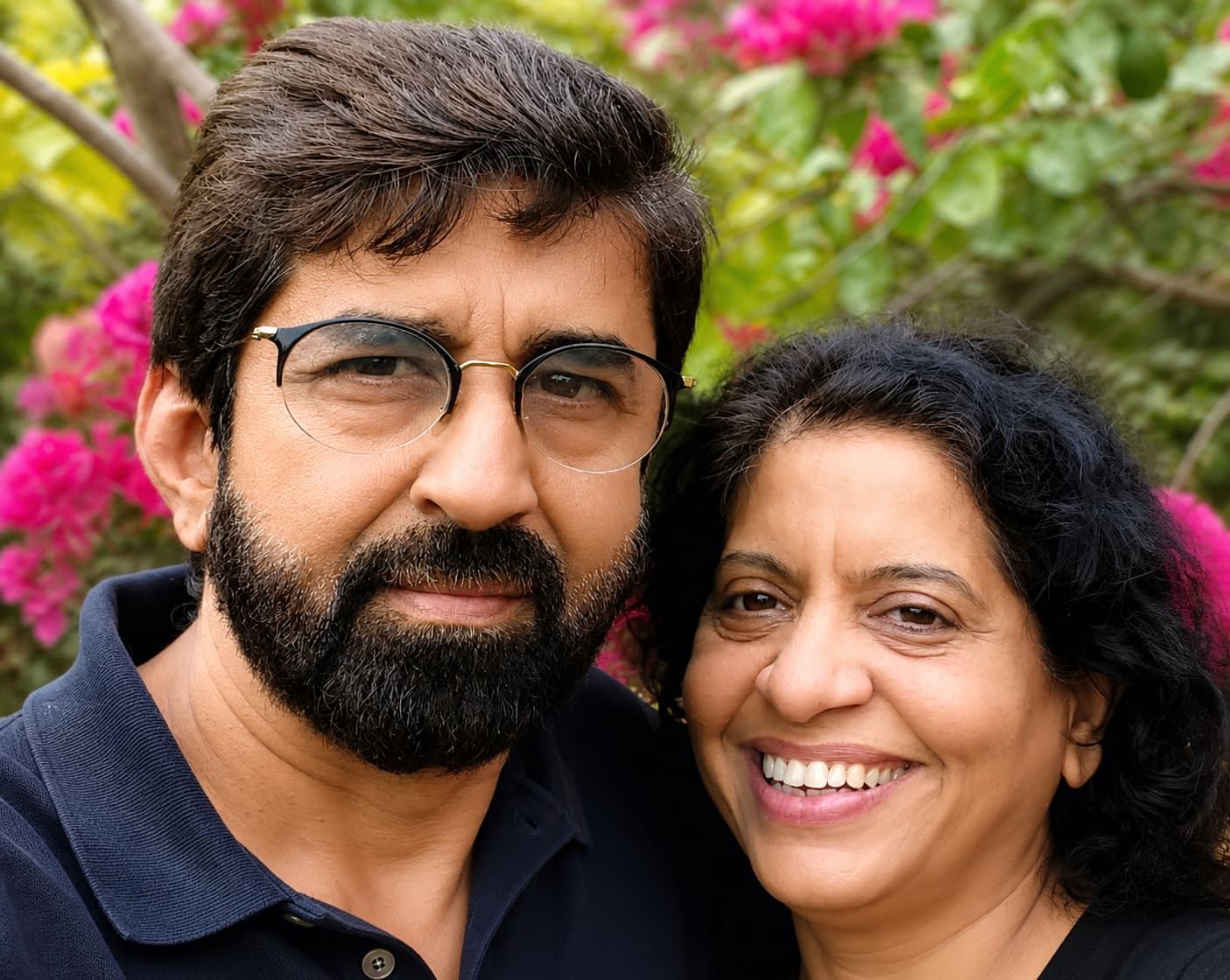
There is a story Vinayak Sabnis tells about the early years of his postgraduation. He had been made a lecturer in Pathology at GMC Nagpur in September 1979 — before he had even completed his MD — because the 1977 Raj Narayan batch had flooded the college and the institution needed teachers urgently. Then, in 1980, before he could finish his degree, he was transferred to Grant Medical College, Mumbai.
For the next year, he commuted between Nagpur and Mumbai every month. General coach. No reserved seat. He cleared MD (Pathology) in his first attempt in 1981.
That is, in miniature, the story of Vinayak Sabnis: a man who found a way to finish what he started, regardless of the conditions underfoot.
From Nagpur to Mumbai, and Back Again
He was born in Mumbai, the son of Arvind Sabnis, who served at Bharat Petroleum. His schooling ran through St. Ursula Primary School, Nagpur — where he shared classrooms with Shashikant Khaire, Hari Paranjape, and Shriniwas Shelgaonkar — then Carmel Convent, Gwalior, Holy Cross Convent, Akola, and Dharampeth Junior College, Nagpur. He entered GMC Nagpur in 1973.
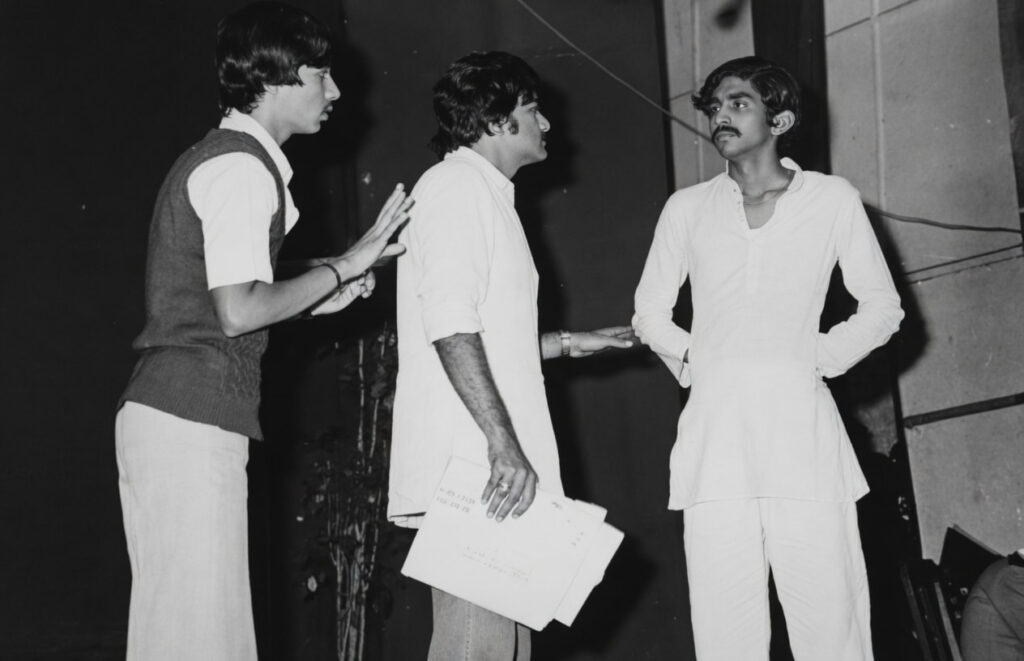
After graduation, he did his rural internship at Saoner, alongside Vivek Kulkarni, Vilas Tambe, and V.D. Deshpande, and his urban internship at GMC.
Pathology found him before he found it, which is sometimes how the right subject arrives. When the Raj Narayan batch of 1977 swelled GMC’s student numbers, the college advertised lecturer posts in the paramedical subjects. Sabnis and Omprakash Bohra became lecturers in Pathology before either had earned their MD — an unusual circumstance that gave both men a head start in academic medicine even as it complicated their path to the degree.
After completing MD, Sabnis served as a lecturer at Grant Medical College, Mumbai until 1987. He then left government service, started a private practice at Mulund, and married Geeta, a Gujarati woman from Karad whom he had met at Cama Hospital. In February 1995, he joined K.J. Somaiya Medical College and Research Centre, Mumbai — initially part-time, then full-time. He rose to head the Department of Pathology, took over as Medical Superintendent of the 500-bed hospital in April 2014, and became Dean of the medical college in 2016 — a trajectory from unplanned lecturer to dean that took nearly four decades and crossed every rank in between.
He retired from Somaiya in September 2020 and has since joined N.Y. Tasgaonkar’s Rural Medical College near Karjat as Dean.
The Laboratory at Mulund
Alongside his academic career, Geeta built and runs Sabnis Laboratory and Diagnostic Centre at Mulund. The division of labour is precise: Geeta manages biochemistry and microbiology; Vinayak handles histopathology and cytology. It is a working partnership in the truest sense — two people who have spent their professional lives in the same field, in the same building, thinking about the same problems.
“All through our professional life, we did an ethical practice — no kickbacks, cuts, commissions or doctored reporting,” Sabnis says. “We refused to do tests when they were not needed and made it a point to explain to patients what the test results really meant and how they shaped their doctor’s diagnosis and their prognosis.” Geeta agrees. The joy, she says, of counselling patients and easing their unvoiced anxiety adds a satisfaction that no billing figure can replicate.
This is a stance that sounds easy to take and is difficult to sustain across four decades in private practice. Sabnis has sustained it.
The Storyteller of Roll Nos. 91–95
Among the batch, Sabnis is known as a storyteller. He has preserved in memory hundreds of anecdotes from the GMC years — the peculiarities of the hostel rooms, the eccentricities of teachers, the slow unfolding of friendships across the 1970s. He is particularly close to Uday Gupte, and can recount, with precision, the distinct characteristics of each of the five consecutive roll numbers — 91 to 95 — as if the five of them formed a chapter complete in itself.
The Indian medical profession that Sabnis entered in 1973 was still one in which a government lecturer’s post was a reasonable career option, in which the public medical college was the primary site of both teaching and research, and in which private practice operated outside the frameworks of corporate medicine. The privatisation of medical education that gathered pace through the 1980s and 1990s produced new pressures on ethics and standards in pathology — a field in which over-reporting and unnecessary testing are particular temptations. That Sabnis chose, in private practice, to refuse tests not needed and to report exactly what the slides showed places him in a generation of pathologists who held a line that later became much harder to hold.
As Dr. Sabnis prepares to hang up his professional mantle in September 2026, he stands at the threshold of a new fixation. Most classmates have opted for the familiar stains of retired life—reading, travel, or the sepia-toned scroll of social media. Yet, for a man who spent decades distinguishing the subtle hues of life under a lens, one wonders if he will accept these common reagents. Will Sabnis find a unique contrast to the “also-rans,” or will he too blend into the quiet background of the morning-message mist? The slide is set; the world awaits the final mounting.
What Remains
His son Shwet completed his MBBS at Sir Seewoosagur Ramgoolam Medical College, Mauritius, and went on to MD in Geriatric Medicine at MGM University of Health Sciences, Mumbai. He is now Assistant Professor in Geriatric Medicine at MGM Medical College, Navi Mumbai. His wife Sayali is also an MD in Geriatric Medicine. A father who spent his career building institutions one department at a time; a son who chose a speciality concerned with the end of life. There is a coherence in that, even if it was not planned.
The monthly general-coach commutes between Nagpur and Mumbai ended long ago. The degree they were made to accommodate has, by now, produced a career that the young lecturer of 1979 could not have mapped in advance. It has, by any measure, been worth the journey taken in unreserved coaches.