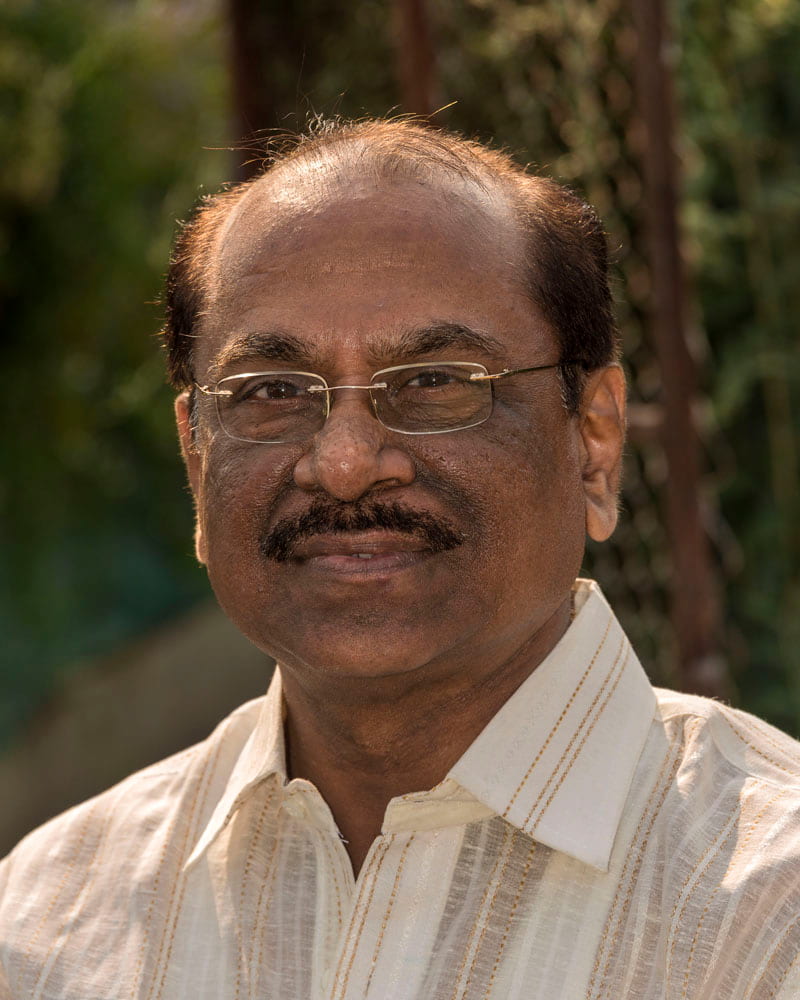
Every morning in Parbhani, Indra Ostwal performs a ritual of adjustment. In his clinic, he adjusts the slit lamp to a fraction of a millimeter to observe the crystalline lens of a patient. A few hours later, he is adjusting the life trajectory of a “throwaway” child—an orphan or a street kid—who has been pushed to the margins of the district. For Indra, the science of sight is merely a prelude to the act of seeing. He has spent four decades realizing that while a surgeon can fix an eye, it takes a citizen to fix a community’s vision of its own most vulnerable members.
The Saptrishi of the Cotton Belt
Indra’s story begins in Khamgaon, a commercial hub in the Buldhana district known for its cotton trade. Born into an agricultural family, his early world was defined by the seasonal rhythms of the soil. He was a product of the local GS College of Science, a feeder for the medical ambitions of rural Vidarbha. When he arrived at GMC Nagpur in 1973, he did not come alone; he was part of what became known as the Saptrishi—a group of seven boys from the Akola and Buldhana belt.
This group, which included Vijay Kherde, Kailash Murarka, and Nandkishor Taori, functioned as a mobile support system. They were small-town boys navigating a city that was rapidly modernizing. They shared rooms, notes, and the specific anxiety of the first-generation professional. This bond was a microcosm of a larger historical movement: the sons of the soil entering the Nehruvian temple of medical education. They were being trained to lead a public health revolution, yet their personal loyalties remained anchored to the parched, black-soil towns they had left behind. Indra’s association with the Saptrishi was his first lesson in collective action—a lesson he would later apply to the social landscape of Parbhani.
After graduation, Indra’s path was a tour of the Maharashtra hinterland. He interned at Wadner in Wardha and the district hospital in Akola. He moved to the Swami Ramanand Teerth Rural Government Medical College in Ambajogai for his house jobs, a place that tested the mettle of any young doctor. It was here that he chose Ophthalmology. In the early 1980s, specialized eye care was a luxury in rural areas. By the time he completed his residency at MGM in Mumbai and earned his MNAMS, Indra had become a specialist with a metropolitan pedigree and a rural heart.
The Architecture of the Street
When Indra settled in Parbhani in 1985, he was a pioneer. He introduced contact lenses and modern cataract surgery to a region that was largely dependent on mobile camps. But as his private practice grew, Indra became increasingly preoccupied with what he calls “the factors of push and pull.” He noticed children on the streets of Parbhani—not just the poor, but the abandoned. These were the “throwaways,” children aged zero to eighteen who existed in a state of permanent transit.
Indra began to study the sociology of the street. He realized that a child on the street is a medical emergency of a different kind. These children were subject to physical and sexual abuse, the predatory reach of the drug trade, and the ever-present threat of human trafficking. He saw that the state’s response—shelter homes and juvenile centers—often inadvertently increased the social and emotional marginalization of these children, undermining their ability to cope with the world after discharge.
He decided to intervene. He did not merely donate money; he became a coordinator of care. He joined hands with NGOs, observation homes, and shelter homes to organize a delivery of service that was holistic. He began supervising a network that grew to include nearly 70 NGOs. His center concentrated on development from age one until college entry. He used drama, song, and dance—not as entertainment, but as tools for mainstreaming.
This work needs collaboration with like-minded people. We ensure they provide the home and shelter, care, education, and development these children deserve. We must deconstruct the myths about street children and make people aware of their rights and the responsibility of rehabilitation. In doing so, we ensure that shelter homes do not become islands of isolation.
The Rural Specialist’s Choice
Indra’s career reflects the central tension of the GMC 1973 batch: the choice between the corporate “ecosystem” of big cities and the grit of regional practice. In the decades following the 1970s, Indian medicine underwent a seismic shift. The rise of corporate hospitals in Mumbai and Pune drew the best talent away from districts like Parbhani. Indra stayed. He represents the era where a single specialist could become a civic institution. His practice was the anchor, but his social work was the sail.
His wife, Anita, shared this vision. A popular social worker and a member of the Consumer Court, she handled the legal and social complexities that Indra’s medical training hadn’t covered. Together, they built a life that was a rebuke to the idea that professional success requires an urban zip code. Their son, Karan, followed the medical path to GMC Aurangabad, specializing in Microbiology. He now manages the Ashtvinayak Diagnostic Center in Aurangabad, married to Dr. Shweta Ranka, a pathologist.
Today, Indra continues to bridge the gap between clinical precision and social chaos. He remains a man who understands that sight is a biological function, but vision is a moral one. His return to the image of the street child at the end of each day completes the circle he began as a Saptrishi boy: he is still looking out for those from his own soil, ensuring that the light he restores in his clinic is reflected in the lives of those the world had forgotten.