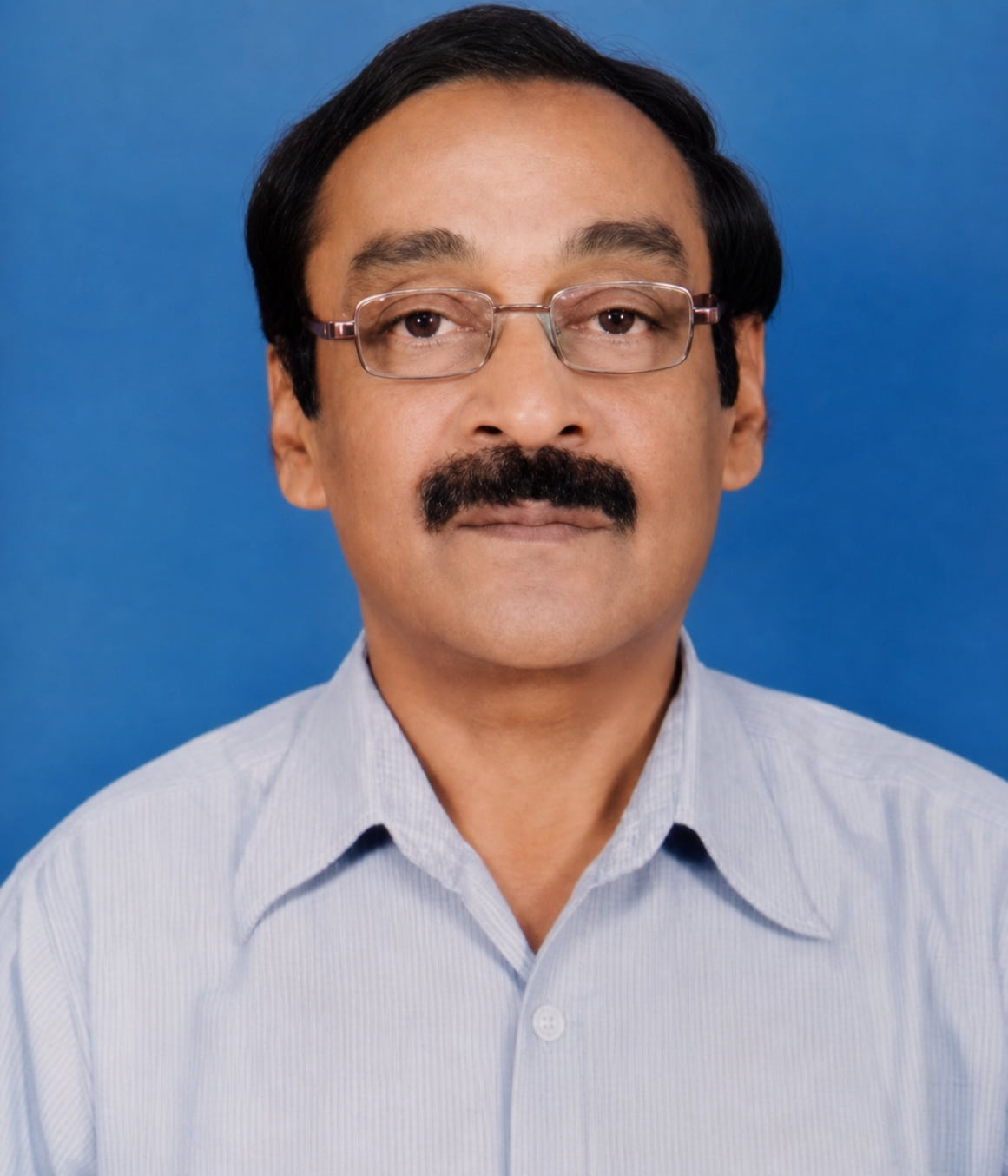
The Latin phrase Primum Non Nocere — first, do no harm — is among the oldest precepts in medicine. Most doctors know it. Satish Bhaskarwar lives by it, in the particular and demanding sense that he has never allowed the pressure to do more to override his judgement that doing less is sometimes the correct choice. In Pusad, a small town in Yavatmal district where he has practiced chest medicine for more than four decades, this is not an abstract principle. It is the texture of every consultation.
He started his practice on 3 June 1981. He is there still.
Roots in Pusad
Satish was born in Pusad to a radio mechanic — a father who worked with his hands and knew the satisfaction of fixing what was broken. He attended Koshetwar Daulatkhan Vidyalaya, sharing school days with Deepak Bahekar, Shyam Bawage, and PD Deshmukh. He ranked sixth in the HSC Board examinations and went to Vidarbha Mahavidyalaya, Amravati for his pre-medical education before entering GMC Nagpur in 1973.
After graduating, he completed his rural internship at Adyar, a village 14 miles south of Bhandara in Pavni Tehsil, alongside Sharad Adoni and PD Deshmukh — a posting that the three of them used, characteristically, to do more than the minimum required. They conducted a door-to-door survey across a village six kilometres from their primary health centre, examined 4,000 people, took night blood samples, and found that one in six tested positive for microfilariae. The study was published in a WHO bulletin and in the International Journal of PSM. Satish Bhaskarwar was 23 years old.
The episode is revealing. He has never needed a prestigious address or an institutional mandate to do rigorous work. He needed, then as now, a question worth answering and the discipline to see it through.
A Practice Built on Listening
In 1981, Satish obtained his Diploma in Tuberculosis and Chest Diseases (DTCD) from GMC Nagpur alongside Mahendra Sawarkar, Dilip Tikkas, and Balkrishna Tayade. That June, he returned to Pusad and opened his practice. He has not left.
Pusad is not a place that features in accounts of Indian medicine’s modern transformation. It has no corporate hospital, no specialty chain, no academic medical centre drawing patients from across the region. What it has is Satish Bhaskarwar — a physician who has spent four decades learning the particular respiratory illnesses of this population, in this climate, with these comorbidities, in these living conditions.
His familiarity with local culture is not incidental to his practice. It is the practice. He knows when a patient is minimising symptoms. He knows which families come late, which come early, which do not come at all. He knows the local patterns of tuberculosis, the grain dust of harvest season, the smoke from poorly ventilated kitchens. This knowledge was not taught in a classroom. It accumulated, consultation by consultation, over forty-three years.
The generation of doctors that Satish represents — MBBS-trained general specialists working in towns of 50,000 or fewer — held rural India’s health system together through the 1980s and 1990s, often without equipment, without specialist backup, and without the referral systems that urban medicine depends upon. They did so not from idealism but from simple necessity: there was no one else, and the patients were there.
Soft-Spoken, Low-Profile, Still There
Satish Bhaskarwar does not seek attention. His colleagues describe him as soft-spoken, unpretentious, and entirely uninterested in the limelight. His work speaks for itself — a phrase often used to excuse mediocrity, but which in Satish’s case is simply accurate.
His elder son Shreesh is an orthopedic surgeon practicing in Chiplun, western Maharashtra. Younger son Abhinav works in Bengaluru in technology. His wife Sandhya manages the household in the way that countless doctors’ spouses across India have managed households: with the steady competence that makes everything else possible and receives almost no acknowledgement for doing so.
On 3 June 2024, Satish Bhaskarwar completed forty-three years of uninterrupted private practice in Pusad. He opened his clinic that morning, as he does every morning, and saw his patients.