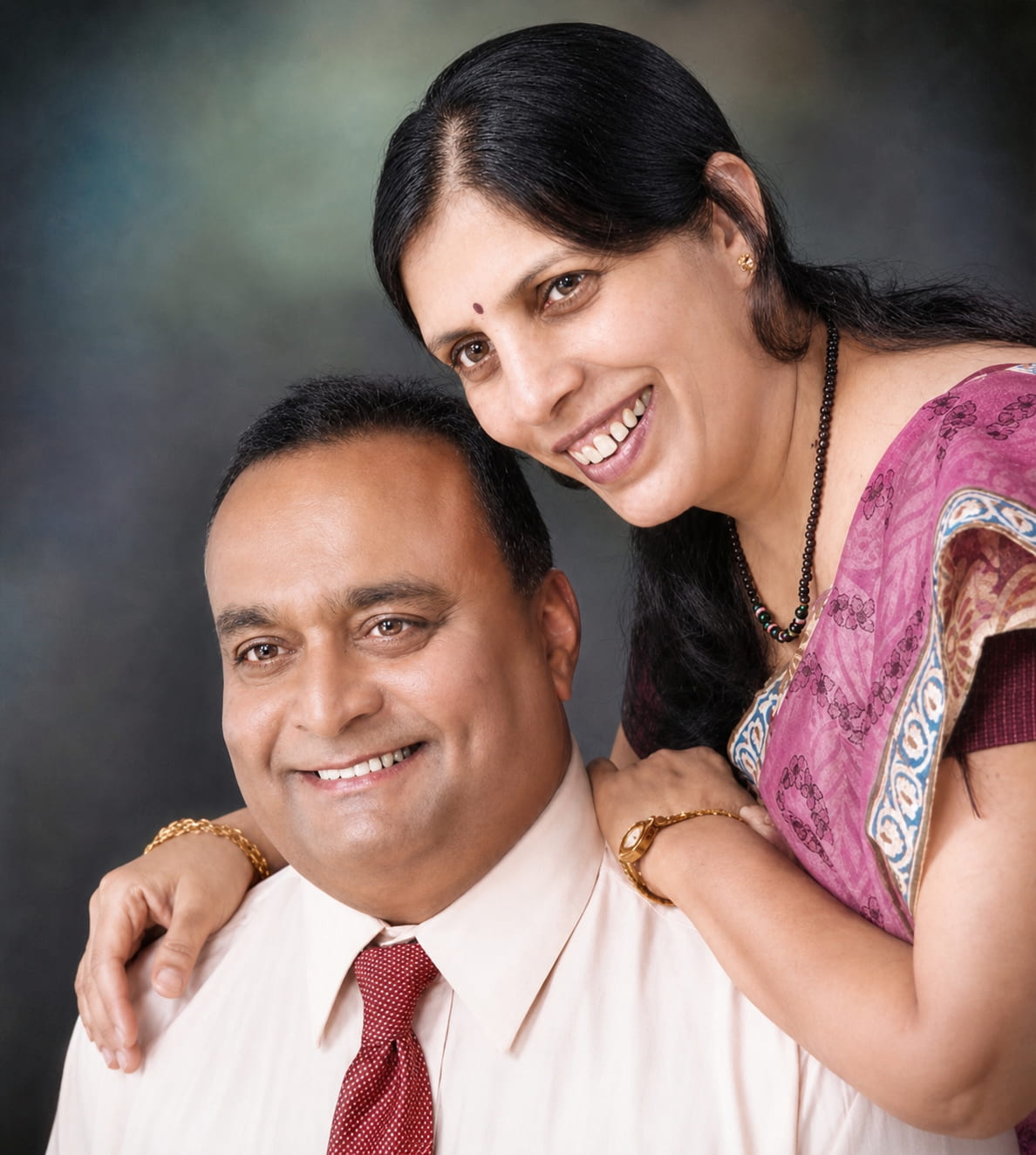
In June 1983, Ravi Kasat drove back from Nagpur in the early hours, having watched India play West Indies in the World Cup Final on the big screen. Somewhere on the road to Amravati, his car hit a truck. He came away with close to a dozen fractures — serious enough, his doctors said, to have killed or permanently disabled him. He spent months in hospital. He emerged, took up his scalpel, and within months had opened a nine-bedded nursing home. He also, in the aftermath, gave up cricket and took up lawn tennis.
This small recalibration — injury, recovery, pivot — captures something essential about Ravi Kasat. He does not linger. He moves.
The Boy Who Could Have Played IPL
Ravi was born in Amravati, the youngest of nine children, to Ratnibai and Hiralalji Kasat. He attended Municipality School No. 4 at Ambapeth and Manibai Gujarati High School before entering GMC Nagpur via Vidarbha Maha Vidyalaya, Amravati.
At GMC, he was an opening batsman and off-spin bowler of real quality. He paired with Sanjay Warhadpande to open for the college, and those who saw him play still speak of his high action, brisk pace, and precise control of line and flight. He represented the Post and Telegraph department in the Gazdar League and was called to Nagpur University trials — the only GMC student selected — but politics and bad luck kept him from the final fifteen. “Had Ravi been playing cricket today,” a close friend said, “he would definitely have played IPL.” Ravi was distraught at the time. He said very little, as was his habit when things went wrong, and moved on.
In the corridors and hostels of GMC, he was known for his bell-bottoms, his compulsive pranks, and a laughter so unrestrained it carried through walls. He walked with jhatkas — a sideways swagger — and smiled with a disarming ease. He formed, with Satyanarayan Rathi and Laxmikant Rathi, what batchmates still call the laughing triumvirate: three men whose collective belly laughs seemed to hold the corridors together.
The Surgeon Amravati Found
After graduating from GMC Nagpur, Ravi completed his internship at Karanja Ghadge with Prahalad Jajodia and his urban posting at Civil Hospital, Amravati. He then did house jobs in Surgery and Plastic Surgery at MGM Hospital, Mumbai before returning to Nagpur for MS (Surgery), training under Drs Sitaram Agrawal and SR Joharapurkar, writing a thesis on testicular functions in hydrocele.
The car accident of 1983 interrupted the start of what was meant to be a straightforward surgical career. It also, in the way that near-death experiences sometimes do, clarified it. Ravi put away cricket and replaced it with tennis — courts every morning, the discipline now physical rather than competitive. On 26 January 1984, three months after the accident, he opened his nine-bedded facility in Amravati. The timing was deliberate, the date symbolic.
Over three decades, Ravi built a surgical practice at Laxminarayan Hospital that grew steadily through the quality of its work. He attached himself to Amba Devi Hospital and Roop Bhajan Hospital, where he offers endoscopy services. He joined the Lions Club International and held its secretaryship and presidency, running eye camps, diagnostic and surgical camps, and blood donation drives across the region.
The generation of doctors that India produced in the 1980s — trained in government medical colleges, sent to district towns, left largely to their own resources — built their practices without corporate infrastructure, without managed care networks, and without the institutional referral systems that urban specialists relied upon. Ravi Kasat built his in a city where he had grown up, operating on patients who knew his family, accountable in the way that only a home-town doctor can be.
The Poet Who Claims He Cannot Write
By his own admission, Ravi is neither a poet nor a person who has ever written poetry. And yet he has attended kavi sammelans across Vidarbha for decades — not as a spectator but as a participant, reciting poems in regional cultural programmes, anchoring events, moving between the world of the operating theatre and the world of the spoken word with an ease that surprises those who know only one side of him.
It is not, perhaps, a contradiction. Surgeons who work with their hands sometimes need the voice. Ravi Kasat found his — not in writing, but in recitation, in the pleasure of someone else’s words delivered well.
His daughter Neha is an anaesthesiologist with a fellowship in Paediatric Anaesthesia; his son Rohan is a Senior Consultant at Deloitte, USA. The next generation has scattered — to Mumbai, to Pune, to Seattle — while Ravi stays in Amravati, on the tennis court in the morning, in the operating theatre through the day, and at a kavi sammelan whenever he can manage it.