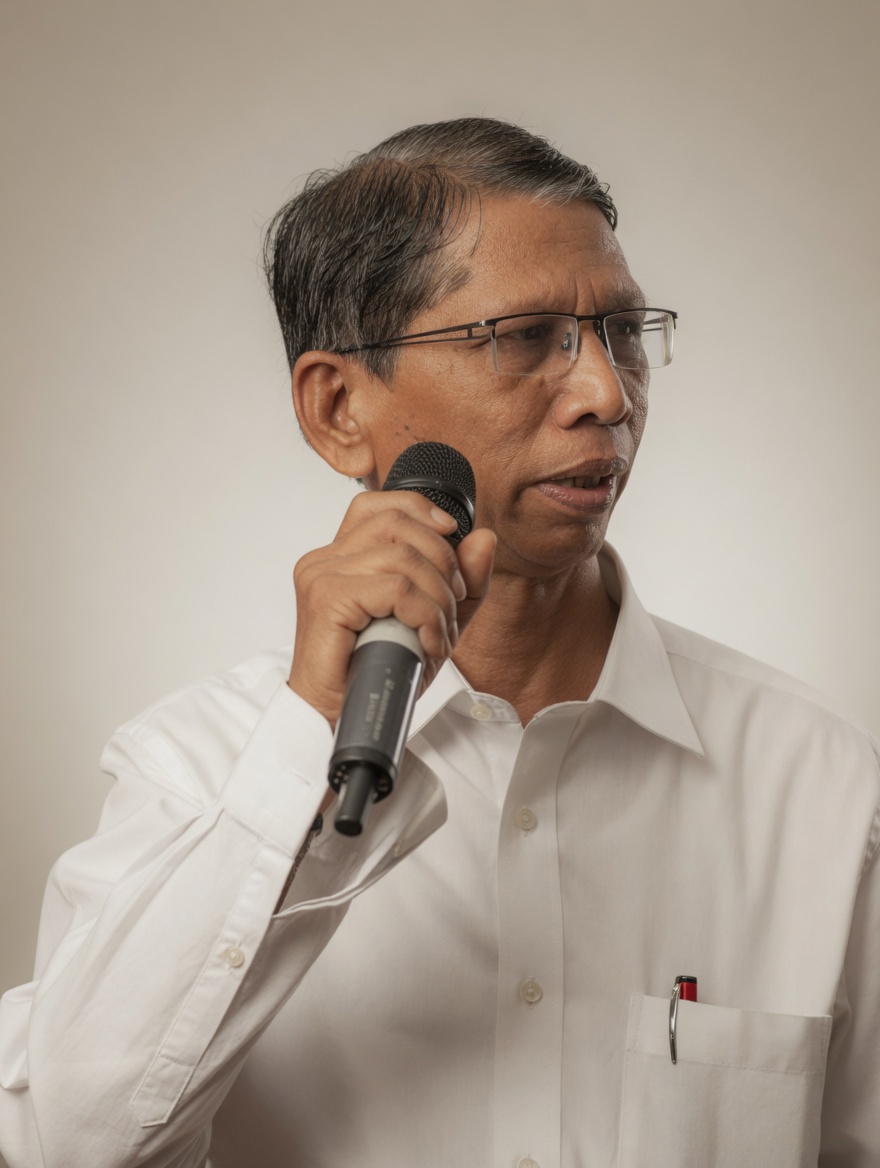
At the Kanhere Pathology Laboratory on Deendayal Nagar, Nagpur, two microscopes were almost always in use. Uday sat at one. His wife Uma — Ranjana Kulkarni before their marriage, a classmate from the 1979 GMC Nagpur batch, also an MD (Pathology) — sat at the other. Their son Aaditya, who completed his own MD (Pathology) at Jawaharlal Nehru Medical College, Sawangi, in due course joined them at a third. It is an unusual domestic arrangement: a family that chose the same speciality, the same institution, the same microscope. Uday would not have thought it unusual at all. Pathology, to him, was simply the discipline that made the rest of medicine legible.
He died on 3 October 2016 of cholangiocarcinoma. He was sixty years old.
Tatya
To his classmates, Uday was always Tatya. He was born in Agra Cantonment, the son of a Chief Controller of Central Railway, and he grew up in Nagpur — St. Francis De’ Sales High School for primary and middle years, Somalwar High School for secondary, and then Shri Mathuradas Mohota College of Science for his premedical year. He was one of 13 students from Mohota who entered GMC Nagpur in 1973, a cohort that included Harshvardhan Sheorey, Vilas Tambe, Siddhartha Kumar Biswas, and Rajshree Chaturvedi, among others.
He was not a student given to flamboyance. He was careful, steady, and at ease with detail — qualities that would serve him well in a discipline built on close observation of tissue and blood. After graduation and his rural internship at Balharshah with Pramod Bangde, he entered the Department of Pathology at GMC Nagpur. Under Dr. Asha Kher, he wrote his MD thesis on eye and adnexal tumours, completing the degree in 1983. The following year, he set up his laboratory in Deendayal Nagar.
The Laboratory on Deendayal Nagar
Pathology in private practice means something specific: patients you rarely see, families that arrive to collect reports, a discipline practiced largely in the absence of the people it serves. Uday worked steadily at this remove for three decades, building a reputation for accuracy and reliability that brought doctors from across Nagpur to his reports.
Ranjana — Uma, as she was known after their marriage — worked alongside him. They had met at GMC Nagpur, six years apart by batch, two pathologists by training. The laboratory was their shared world. When Aaditya chose pathology too, it became something else: a three-generation enterprise, though Uday would have been reluctant to call it anything so grand. He was not a man given to retrospective significance.
He died before he could see what the laboratory had become with all three of them at work.
What He Left
The cholangiocarcinoma that killed Uday Kanhere was not, in the end, something his own expertise could help him with. Pathology can diagnose such things with precision. It cannot always resolve them.
He left behind Uma, Aaditya — now practicing pathology at Nagpur alongside Dr. Neha Deshpande, his wife — and Kedar, who went into engineering. He left a laboratory that continues under the name he gave it. He left classmates who still call him Tatya.