Category: Heritage & History

Documenting the legacy of MGIMS, Sevagram heritage, and medical history.

  • A Brush With History
    A Brush With History

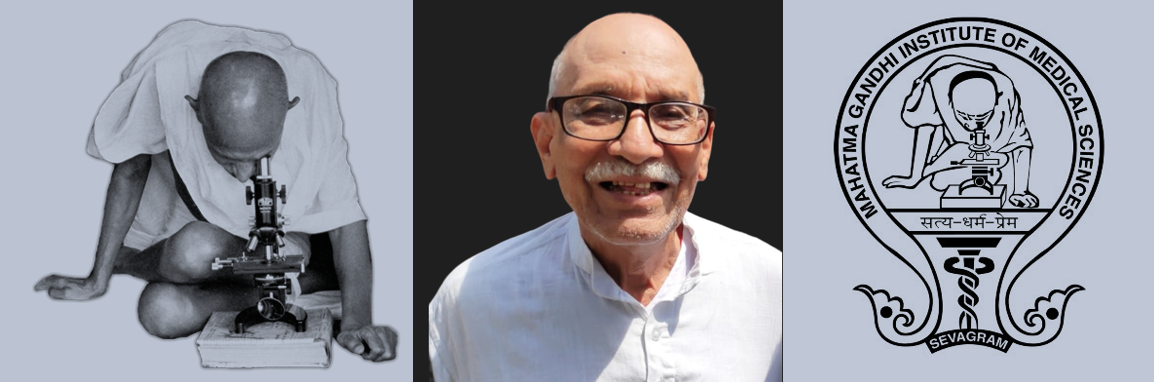
    The ๐— ๐—š๐—œ๐— ๐—ฆ emblemโ€”a symbol that not only mesmerizes with its beauty but also holds a compelling tale of history within its design.

    At its centre, Mahatma Gandhi gazes intently into a mono-ocular microscope. It is a profound image that captures his deep connection with the instrument, evoking the image of an experienced microbiologist immersed in her work. He is peering at the malarial parasite, from his own blood sample during a time when he battled malaria in Sevagram.

    At its core, the logo portrays the iconic Mahatma Gandhi, his gaze fixated intently on a mono-ocular microscope. This image encapsulates his connection with the instrument, reminiscent of a seasoned microbiologist fully immersed in the pursuit of knowledge. It is said that Gandhiji himself peered through the lens, examining the malarial parasite found within his own blood during his time in Sevagram.

    *****

    ๐—š๐—ฎ๐—ท๐—ฎ๐—ป๐—ฎ๐—ป ๐—”๐—บ๐—ฏ๐˜‚๐—น๐—ธ๐—ฎ๐—ฟ, a resident of Sevagram all his life, stands as the visionary behind the iconic MGIMS logo, a tale as remarkable as it is inspiring. In the year 1971, he took on the momentous task of designing this emblem that would forever embody the essence of MGIMS.

    However, before delving into the creation of the emblem, let us first explore the pivotal sketch that allowed the photograph to be enlarged. It was a crucial step in bringing the vision to life.

    The photograph that inspired this remarkable emblem dates back to the late 1930s. Proudly displayed within a small laboratory, it was Punjab Rao Deshmukh, a skilled Pathology technician, who carefully showcased this historic image. The laboratory itself resided within the distinguished walls of the original Kasturba Hospital, nestled within the Birla guest house in Sevagramโ€”also known as 52 Darwaja, aptly named for its impressive count of 52 windows and doors. This 15-bed hospital was personally blessed by Mahatma Gandhi when it was started by Dr Sushila Nayar in 1944. Eventually, in 1969, it grew into MGIMS- Mahatma Gandhi Institute of Medical Sciences.

    Measuring no larger than a small postcard, it held within its frame a profound significance.

    *****

    As the foundation ceremony of MGIMS approached, Dr. ID Singh, the Dean of MGIMS, and Mrs Manimala Choudhary, the Secretary of Kasturba Health Society, yearned for an enlarged version of the photograph. Yet, Wardha, a small town, lacked the necessary facilities for such an undertaking.

    However, fate had other plans in store. Manimala Choudhary, having recently hired Gajanan Ambulkar as an artist cum modeller in the Anatomy department, found herself facing a predicament. She turned to Gajanan, entrusting him with the task and expressing her hopes. Fearlessly, Gajanan accepted the challenge, assuring her that he would deliver precisely what she desired.

    Gajanan, a local boy, had spent his formative years in the ๐˜•๐˜ข๐˜ช ๐˜›๐˜ข๐˜ญ๐˜ช๐˜ฎ School nestled in Sevagram, a place of inspiration that was envisioned by the great Mahatma Gandhi himself. With passion and dedication, he had honed his artistic skills in Sevagram, Khamgaon, Benares, and Bombay, leaving a trail of awe-inspiring creations in his wake. In June 1969, just weeks before the inaugural batch of medical students would step foot in the halls of MGIMS, Gajanan joined the institution, ready to start a new chapter of his journey.

    Gajanan accepted the challenge. Undeterred by the absence of resources, Gajanan embarked on a tireless endeavour. He dedicated an entire night to bring forth the solution, undisturbed and fully focused on his task, seeking solace within the walls of an obscure room near Mahadev Bhavan, Sevagram.

    Equipped with his cherished charcoal pencils, he kindled an earthen pot lamp, the flickering flame casting a soft glow upon his workspace. Utilizing the rich black ash from the lamp, Gajanan prepared his charcoal pencils with meticulous care, sharpening them upon a slate.

    With the tools of his craft in hand, Gajanan began the arduous process of sketching, delicately manoeuvring the charcoal upon half of a 22*28 inch drawing sheet. Stroke by stroke, he meticulously recreated the photograph, preserving its essence and depth on the canvas.

    The night pressed on, with Gajanan’s unwavering dedication guiding each mark he made. The image began to take shape, emerging from the blank sheet like a masterpiece in progress. The lines and shadows danced under his skilled hand, capturing the essence of the original photograph with remarkable precision.

    As the dawn approached, Gajanan completed his labour of loveโ€”a stunning, enlarged version of the cherished photograph. Little did he know that this sketch, born of determination and passion, would pave the way for the creation of the iconic MGIMS logo itself.

    It was this very sketch that would capture the attention of Dean ID Singh the next morning, as he discovered Gajanan Ambulkar sleeping peacefully on the floor. Barely able to suppress his anger, the Dean asked if Gajanan had even started his job, only to be met with a breath taking surprise. Gajanan, calmly awakening, presented the Dean with a stunning image, a faithful representation of the original photograph.

    Dean ID Singh could not believe his eyes.

    *****

    With the enlarged photograph in hand, Gajanan Ambulkar embarked on a new artistic journeyโ€”to create the emblem that would forever represent MGIMS.

    Inspired by the awe-inspiring arches of the Ajanta and Ellora caves, he let his imagination flow.

    Using his skilled hand and creative vision, Gajanan meticulously sketched an elegant arch, framing Gandhiji’s penetrating gaze as he observed the microscopic world. The arch, adorned with intricate wings on either side, exuded a sense of grace and balance. Within its embrace, Gajanan carefully inscribed the words “Mahatma Gandhi Institute of Medical Sciences,” paying homage to the revered namesake of the institution.

    Below the captivating image, Gajanan added a touch of profound meaning. He remembered what Vinoba Bhave, a spiritual disciple of Gandhiji residing in Pavnar Ashram, once told Dr. Sushila Nayar about the purpose that her medical college should strive for. With care and precision, he delicately inscribed the words “๐˜š๐˜ข๐˜ต๐˜บ๐˜ข, ๐˜‹๐˜ฉ๐˜ข๐˜ณ๐˜ฎ๐˜ข, ๐˜—๐˜ณ๐˜ฆ๐˜ฎ” โ€“ truth, duty, and love. These virtues, envisioned by Vinoba Bhave, became the guiding principles for MGIMS in its noble pursuit of the medical profession.

    To give the emblem a final touch of finesse, Gajanan sketched the Caduceus, the iconic symbol of medical science, beneath the inscription. It symbolized MGIMS’ unwavering commitment to healing and the pursuit of knowledge in the medical field.

    With the completion of the emblem, MGIMS acquired a distinct emblem that would grace its official stationary and website for generations to come.

    Though Gajanan Ambulkar retired from the Anatomy department two decades ago, his words today afternoon transported me to a realm of enchantment and wonder. Through his narrative brushstrokes, the 82-year-old artist vividly painted the extraordinary genesis of the MGIMS emblemโ€”a captivating tale forever etched within the annals of history.

  • Old Man and the Intern

    Old Man and the Intern

    In 1938, in the quaint village of Sevagram, a young intern found herself facing an extraordinary task. Just 24 years old and armed with her MBBS degree, she was entrusted with the crucial responsibility of recording, treating, and monitoring the blood pressure of none other than the father of the nation himself, Mahatma Gandhi.

    The intern was Dr. Sushila Nayar. She had just obtained her MBBS from Lady Harding Medical College. She had gone to the All-India Institute of Hygiene & Public Health in Calcutta for studying lessons in public health.

    Gandhiji was returning from Kolkata to Sevagram, and his blood pressure was known to frequently exceed safe limits. Dr. B. C. Roy, Gandhiji’s physician, recognized Dr. Sushila Nayar as the perfect candidate for the task. Without hesitation, she took a month’s leave from her studies to accompany Gandhiji and provide him with care in Sevagram.

    She was tasked with managing Gandhiโ€™s blood pressure, not in the hospitalโ€” neither Kasturba Hospital, nor MGIMS was born thenโ€”but in Sevagram ashram.

    The weight of the situation was immense. Gandhiji’s blood pressure readings would often soar to astonishing heights, reaching as high as 194/130 mm Hg. And 230/110.

    In those times, the only available medicine was Sarpgandha, later known as Reserpine. None of the modern pills โ€”amlodipine, metoprolol, enalapril, telmisartan and chlorthiazideโ€”had been developed then.

    Undeterred, Dr. Sushila Nayar armed herself with nothing more than a stethoscope and a BP apparatus. The young intern faced the revered Mahatma with determination and dedication. Both the patient and the physician took those numbers in stride. She treated him without fear or anxiety, relying on the pharmacology and medicine she had learned at Lady Hardinge.

    Mahatma Gandhi, known for his belief in the power of natural therapies, followed a regimen that he thought would work for himโ€”fasting, enemas, long walks, and meditation.

    He placed his trust in Dr. Nayar’s abilities, and she, in turn, rose to the challenge, steadily managing to bring his blood pressure under control.

    One cannot help but wonder if a person of such stature would entrust a young, freshly graduated MBBS doctor with the task of treating their blood pressure in today’s world.

    Likewise, would the young intern possess the confidence to accept such a monumental responsibility?

  • Capturing Life in Rural India: The Making of the MGIMS Mural

    Capturing Life in Rural India: The Making of the MGIMS Mural

    Capturing Life in Rural India: The Making of the MGIMS Mural

    Dinesh Gudadhe and Ashok Wahiwatkar.

    Two talented artists at MGIMS transformed a real photograph into a magnificent work of art that now proudly stands on the MGIMS hospital campus.

    Along with Hitesh Chappanghare, the trio completed an incredible eight-month-long journey of creating a stunning mural.

    Crafting a mural takes time, talent, and tireless tenacity. Let me share with you the backstory of this magnificent marvel.

    Every year, MGIMS medical students adopt families in a village to gain insight into how social factors influence healthcare practices in real communities.

    The year 2014 was no exception. That year, the entire batch of medical students spent two weeks to living with, learning from, and serving the people of Dhanora, a village located 8 km from Sevagram.

    One Sunday, Dinmesh Gudadhe, a 44-year-old artist from the Community Medicine department of MGIMS, was inspired to snap a photograph of a medical student sitting at the doorstep of a family in the village. 

    Little did he know that this mortal photograph, out of the hundreds he had taken, would one day be transformed into an immortal mural. The photograph sparked inspiration for the mural and also became the cover of the 2014 MGIMS annual report.

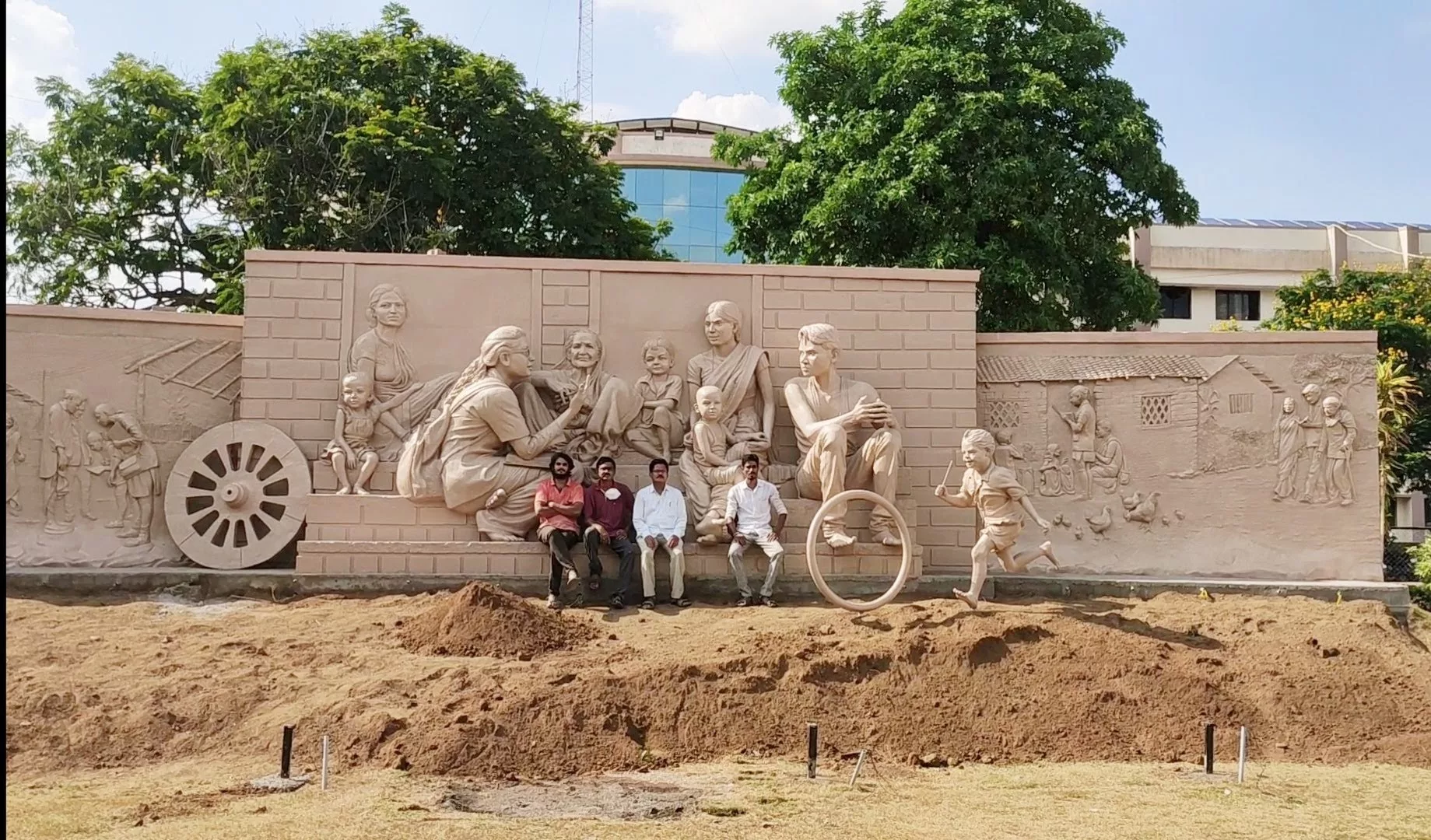
    The mural, 12 feet high and 48 feet wide, features a female first-year medical student from the MGIMS 2014 batch, seated at the doorstep of a humble hut in the village, adorned in a white medical apron and spectacles. Her eyes are brimming with curiosity as she endeavours to understand what makes the villagers ill and how they cope with illnesses. Her hair is neatly braided and cascades over her shoulders, while a large backpack rests on her back, symbolizing her eagerness to learn and serve.

    Beside the medical student, a white-haired old lady, dressed in a vibrant green blouse and an eye-catching orange and yellow-bordered saree, sits contentedly on the doorstep of her humble abode. The old lady is flanked by two young women, both of whom are attentively listening to the conversation between the medical student and the old lady.

    Just a few steps away from the medical student and the group of women, a young man in trendy jeans sits on a small wooden stool, holding a mobile phone in his hand. In the lap of the old lady, a young infant gazes directly into the camera, capturing the innocence and purity of youth. Nearby, a one-year-old girl and a two-year-old boy sit blissfully unaware of the scene unfolding around them, basking in the warmth of the sun and the love of their community. The mural is a stunning representation of the interconnectedness of life in Dhanora village and the importance of community in rural India.

    As the viewer’s gaze wanders over the mural, they will notice a young boy standing next to a tire, his feet playfully kicking up dust as he runs after the tire, which rolls ahead of him. The sheer delight on the young boy’s face is evident, as his wide grin radiates pure joy. The simple tire toy brings him boundless excitement and happiness, exemplifying the unbridled innocence and simplicity of life in the village. 

    The front brick wall of the humble hut is rugged and unplastered, with the natural texture of the bricks clearly visible. The steps the medical student and the family members are sitting on are also rough and unfinished, with the mud between the bricks showing through. The contrast between the raw, unpolished quality of the wall and steps, and the intricacy and detail of the figures creates a striking visual impact in the mural.

    Dinesh, Ashok and Hitesh dedicated eight months of their time and effort, getting their hands and clothes dirty with clay, plaster of Paris, and paints to craft this masterpiece.

    The mural is not just a work of art, but also a powerful symbol of MGIMS’s commitment towards providing a holistic education that is grounded in real-world experience and community service. The artists said, “It captures a special moment of human connection and curiosity, reminding us of the beauty and richness of life in rural India.”

    The addition of Lao Tzu’s poem added a meaningful touch to the artwork’s display in the garden. 

    Dinesh and Ashok are humble. They won’t boast about their artistic achievements. It was difficult to get them to talk about it. They prefer to let their brushwork do the talking, a rare trait in today’s era of artists relying heavily on social media to hype the beauty of their work.

  • ๐— ๐—š๐—œ๐— ๐—ฆ ๐— ๐—ฒ๐—ฑ๐—ถ๐—ฐ๐—ถ๐—ป๐—ฒ ๐——๐—ฒ๐—ฝ๐—ฎ๐—ฟ๐˜๐—บ๐—ฒ๐—ป๐˜ ๐—ถ๐—ป ๐˜๐—ต๐—ฒ ๐Ÿด๐Ÿฌ๐˜€: ๐—ง๐—ต๐—ฒ ๐—ฅ๐—ฒ๐—ถ๐—ด๐—ป ๐—ผ๐—ณ ๐˜๐—ต๐—ฒ “๐—ฃ’๐˜€

    The early 80s were a golden era for the Medicine department at MGIMS, and it was all thanks to the “P’s” – ๐—ž๐—ฃ, ๐—๐—ฃ, ๐—ฆ๐—ฃ, ๐—ข๐—ฃ, and ๐—”๐—ฃ

    Dr. Kamal Pervez (KP) and Dr. JP Sharma (JP) were dynamic young lecturers who were always in tune with their patients. SP Kalantri (SP), a senior registrar with a fresh MD from GMC Nagpur, eagerly sought the guidance of his colleagues, determined to excel in his profession.

    But it was the “P” professors, Dr. OP Gupta (OP) and Dr. AP Jain (AP), who were the true powerhouses in the department. Their contributions were invaluable, and their personalities loomed large over the entire institute. Together, the “P’s” were an unstoppable force that propelled the department to new heights of excellence.

    Dr. Pervez was the epitome of elegance and sophistication, exuding a Lucknow aura that left everyone in awe. His blend of Hindi and Urdu was like music to the ears, and his bedside teaching was legendary. Dr. JP Sharma was the cool dude in the department with his UP-Hindi and practical approach to patient care. His unpretentious personality won the hearts of his students.

    Despite the spartan and frugal setup of each unit, with just one consultant, one lecturer, and one house officer/resident, the department worked with remarkable efficiency, never missing out on anything – from OPDs to ward admissions, consultations across the hospital, PG activities, and even the dreaded death meetings.

    Looking back, the “P’s” were instrumental in driving the success of the Medicine department. Their unwavering commitment to excellence, along with their elegance, suavity, and synergy, set a standard that has inspired generations of medical professionals.

    As one of the “P’s,” I (SP) feel a sense of pride and accomplishment, but am also humbled to have been part of such a talented and dedicated team. The legacy of the “P’s” lives on, and their impact continues to be felt in the department to this day.

  • ๐—ฆ๐˜‚๐—ฟ๐˜ƒ๐—ถ๐˜ƒ๐—ถ๐—ป๐—ด ๐˜๐—ต๐—ฒ ๐— ๐—— ๐—ง๐—ต๐—ฒ๐˜€๐—ถ๐˜€ ๐—๐—ผ๐˜‚๐—ฟ๐—ป๐—ฒ๐˜† ๐—ถ๐—ป ๐—ฆ๐—ฒ๐˜ƒ๐—ฎ๐—ด๐—ฟ๐—ฎ๐—บ: ๐—ง๐—ฎ๐—น๐—ฒ๐˜€ ๐—ณ๐—ฟ๐—ผ๐—บ ๐˜๐—ต๐—ฒ ๐—ง๐˜†๐—ฝ๐—ถ๐˜€๐˜๐˜€

    ๐—ฆ๐˜‚๐—ฟ๐˜ƒ๐—ถ๐˜ƒ๐—ถ๐—ป๐—ด ๐˜๐—ต๐—ฒ ๐— ๐—— ๐—ง๐—ต๐—ฒ๐˜€๐—ถ๐˜€ ๐—๐—ผ๐˜‚๐—ฟ๐—ป๐—ฒ๐˜† ๐—ถ๐—ป ๐—ฆ๐—ฒ๐˜ƒ๐—ฎ๐—ด๐—ฟ๐—ฎ๐—บ: ๐—ง๐—ฎ๐—น๐—ฒ๐˜€ ๐—ณ๐—ฟ๐—ผ๐—บ ๐˜๐—ต๐—ฒ ๐—ง๐˜†๐—ฝ๐—ถ๐˜€๐˜๐˜€

    The MD thesisโ€”a daunting challenge that separates the strong from the faint-hearted. It is like a visa that grants access to the MD examination, a grueling rite of passage filled with challenges and obstacles. As the deadline looms, the pressure intensifies, and the postgraduate students start desperately hunting for two playersโ€”a skilled statistician to generate P values and a talented typist to work alongside them through the wee hours of the night.

    As a retired PG guide, I was eager to delve into the final steps of the thesis writing process, as my former students had experienced these struggles, yet I rarely had the chance to fully understand the emotions and challenges involved in delivering a completed thesis.

    So, when I had the chance to speak with a diverse group of MGIMS students about the final act of their thesis journeyโ€”getting it typedโ€”I was all ears. From the early batches in the eighties, who submitted their theses to Nagpur University in the form of four paper-based bound volumes, to the more recent ones who submitted their work in an incognito electronic format, I was eager to learn about their experiences.

    I also had the chance to speak with several typists who played a crucial role in the thesis writing process since the early nineties. They recounted their tales of the emotional rollercoaster from nail-biting moments of typing and formatting to the helplessness caused by carrying wet bound theses to the guide, the nerve-wracking phase of getting the guide’s signature, and the joy of finally submitting the thesis to the university.

    The advancements in technologyโ€”Microsoft Word, Excel, EndNote, Stata, personal laptops, laser printers, and mobile internetโ€”have undoubtedly made the process of typing and compiling theses easier. However, the emotional response to the final act hasnโ€™t changed a bit.

    *****

    In 1980, MGIMS offered its first MD programme in Sevagram, with a few students from the previous year’s batch sneaking in. At that time, only a handful of typists were available to undertake such an arduous task. Sevagram had Shantanu Dawande, (late) Kuljeet Singh, Sanjay Bawse, Ashok Udhoji, CJ Mathai, Mahendra Chaudhary, Prashant Raut, and Yogesh Khond. While in Wardha, typists like Prashant Thakre, (late) Sachin Yugaonkar, (late) Mahendra Yengde, Abhijeet Deshpande, and Sachin Chiddarwar, were the go-to people for thesis typing. Later Nandkishore Dawaitkar, Parsodkar, Marvel Computers, Gadhwani, Sandeep Mehta, Sachin Thete and Vasu joined the bandwagon. Occasionally, Manilal Pathak, and (late) CD Gokulachandran would also chip in. Sevagram also had a Sharad Typing Institute equipped with several typewriters that provided typing training to students, and many MD theses were typed in this institute as well.

    Up until the mid-nineties, most students handwrote their theses. This made life difficult for typists, who had to decipher the doctors’ handwriting and try to incorporate their guide’s corrections. Moreover, many typists had poor spelling skills and made frequent typos, particularly when it came to medical terms. There were no spellchecks or tools like Grammarly at that time, which only added to the problem. For instance, Pradeep Vyavahare’s typist must have typed “hydrocele” as “hydrogen” or “hydrocarbon” countless times, requiring Pradeep Vyavahare (1985) to maintain a calm and patient attitude while correcting the errors repeatedly.

    In the 1980s, postgraduate students writing their theses often had to borrow typewriters to type their work. Some typed with only two fingers, while others were more skilled and could let their fingers dance on the keyboard. Kishore Shah (1974) directly typed his thesis on his Remington Rand manual typewriter with a black ribbon and three carbon papers, pounding the keys hard to ensure the fourth copy was legible. Arvind Ghongane (1979) had to borrow a typewriter as he couldn’t afford a typist. He was a two-finger typist and often made mistakes, using whiteners to correct them.

    Hariom Ahuja (1974) recalls,” Sanjay Bawsay ended up typing my thesis because Kuljeet, the popular typist on campus, was too busy, but despite the superstition that whoever got their thesis typed by Sanjay would fail their MD, I refused to believe in such beliefs and got it typed anyway, and even though I did end up failing, I refuse to blame it on superstition.”

    Monica Ahuja Sinha thesis was one of the first to be computerized and printed using a dot matrix printer in Sevagram. The trend at the time was to get theses typed by typists like Kuljeet Singh, as computers were just starting to find their way into India and PCs and laptops had yet to arrive. Monica (1982) had a handwritten thesis and a friend in GAIL who offered to help with the typing. With her mother as chaperone, she went to Baroda and over 3-4 days, a team of 4 friends helped her print her thesis on a dot matrix printer.

    A decade and a half later, MGIMS purchased and distributed 300 laptops, iPads, and Macbooks to faculty and residents on interest-free loans. Thus, most residents started typing their theses on their own devices. However, prior to this initiative, many PGs had already purchased their own computers, despite the high cost and low memory capacity at the time.

    In 1999, Rajnish Joshi (1982 batch) owned an assembled desktop computer that had a floppy and CD slot but no USB port. The computer ran on Windows 1999-2000 and was valued at Rs. 30,000. Devashis Barick (1991 batch) owned the Pentium 2 CPU introduced by Intel in 1997, as well as an HP inkjet printer. In contrast, Rahul Narang (1987 batch), was fortunate to have access to a PC in the Microbiology department which he used to type his thesis.

    After 2005, residents not only owned computers but also developed typing skills during their residency. They knew how to use Microsoft Word and Excel. Medicine PGs learned how to use EndNote, which allowed them to automatically create and format citations and bibliographies in various citation styles.

    *****

    ๐—ง๐—ฟ๐—ถ๐—ผ ๐—ผ๐—ณ ๐—ง๐˜†๐—ฝ๐—ถ๐˜€๐˜๐˜€

    From 1980 to 1995, most theses in Sevagram were typed by a trio of typists: ๐—ฆ๐—ฎ๐—ฟ๐—ฑ๐—ฎ๐—ฟ ๐—ž๐˜‚๐—น๐—ท๐—ฒ๐—ฒ๐˜ ๐—ฆ๐—ถ๐—ป๐—ด๐—ต, ๐—”๐˜€๐—ต๐—ผ๐—ธ ๐—Ÿ๐—ฎ๐˜…๐—บ๐—ฎ๐—ป๐—ฟ๐—ฎ๐—ผ ๐—จ๐—ฑ๐—ต๐—ผ๐—ท๐—ถ, ๐—ฎ๐—ป๐—ฑ ๐—–๐— ๐— ๐—ฎ๐˜๐—ต๐—ฎ๐—ถ. Among the three, Kuljeet Singh was the go-to typist for candidates in Surgery, Medicine, and Obstetrics and Gynaecology. Dr Ravinder Narang’s candidates, in particular, would rely on Kuljeet to type their manuscripts.

    As he sat before his Facit typewriter, his fingers would dance over the keys with unparalleled grace. He was like an uncrowned king of the typing world, reigning supreme before the arrival of the 486 processors and Pentiums in Sevagram.

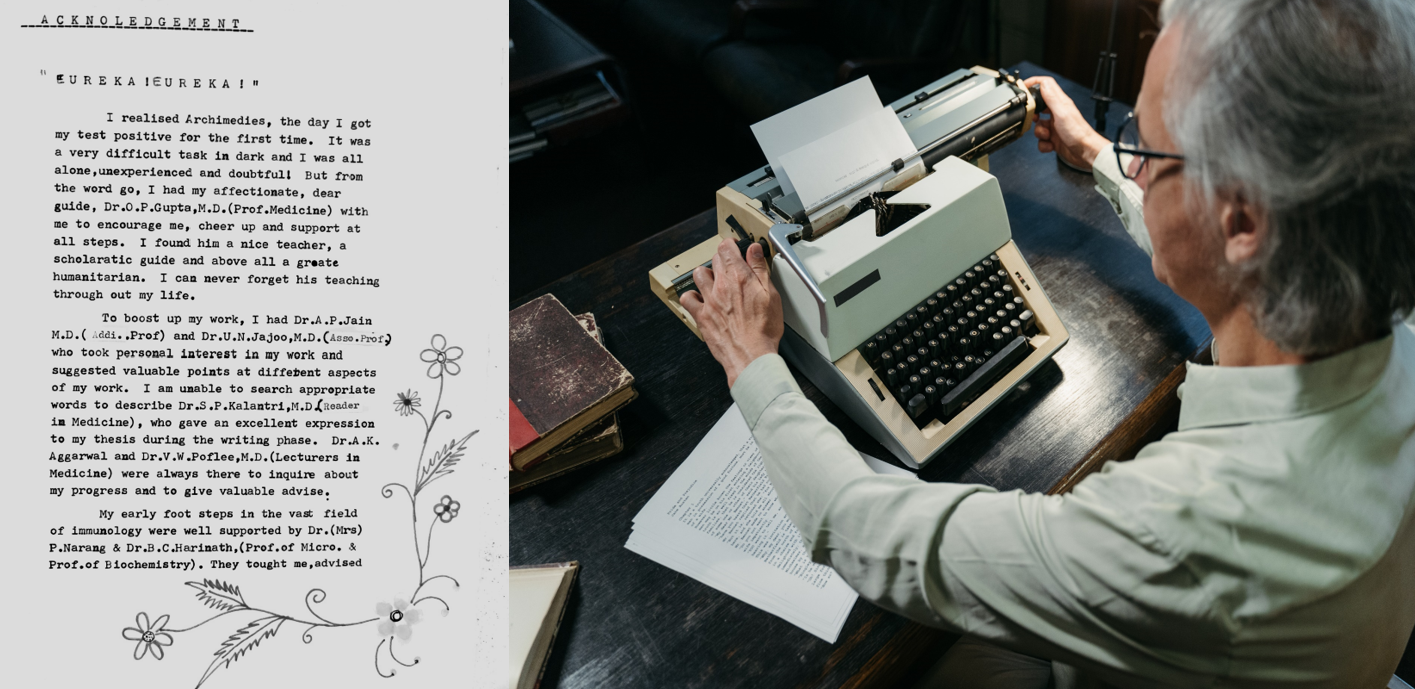
    Kuljeet was not just a skilled typist but also a master at drafting acknowledgements. He would ask for the names of the people the PG wanted to acknowledge and then use his creative flair to describe them with the most vivid and flattering adjectives, making them feel much greater than they really were.

    *****

    I interviewed a couple of individuals who once upon a time typed MD theses.

    ๐—ฆ๐—ต๐—ฎ๐—ป๐˜๐—ฎ๐—ป๐˜‚ ๐——๐—ฎ๐˜„๐—ฎ๐—ป๐—ฑ๐—ฒ was the first to offer computerised thesis in Sevagram. In 1995, at the age of 24, Shantanu started Excel Computers, a computer shop in Sevagram Square that provided various services including typing MD theses. While pursuing his MBA, he got the idea for this business from his late sister Dr Savita Borle and brother-in-law Dr Rajiv Borle. Shantanu’s first computer was a 386, which he bought for a whopping Rs 85,000 in 1995. The 386 processor was equipped with 1 MB of RAM, a 20 MB hard drive, a 5.25-inch floppy disc drive, and a VGA graphics card. This computer system operated on MS-DOS, a command-line operating system prevalent at the time.

    Initially, no one came to get their theses typed on computers as students found it difficult to imagine what thesis typing on computers entailed. At that time, all theses were typed on typewriters by typists like Kuljeet Singh, Mathai, Udhoji, and Sharad, and Shantanu was the first to offer MD theses on computers. Finally, the first PG came from Biochemistryโ€”Dr Pati, and Shantanu carefully typed his thesis on his 386. As the years went by, computer technology kept evolving and Shantanu made sure to stay up-to-date with the latest advancements. He started off by performing statistical tests using a calculator and drawing graphs by hand with sketch pens. However, he soon acquired SPSS and started using the software to perform statistical tests for the theses.

    Gradually, he began doing five to six theses a year. He remembers Nandkishore Banait (1988), Manu Kishore, Shreevidya Venkatraman (1989), Pramod Jain (1990), Anu Gupta (1990), Rajesh Gandhi and Manish Jain (1991) Chandan Tikku (1996) were among those who did their theses with him. โ€œWe sat all night trying to decipher their handwriting and working through the several avatars of their manuscripts. “Some of theses had to be redone after they were bound because the guides identified errors after receiving the final bound copy and refused to sign until it was a clean copy,โ€ Shantanu recalled.

    ๐— ๐—ฎ๐—ต๐—ฒ๐—ป๐—ฑ๐—ฟ๐—ฎ ๐—–๐—ต๐—ฎ๐˜‚๐—ฑ๐—ต๐—ฎ๐—ฟ๐˜†, an accomplished typist who has been serving MGIMS since 1993, fondly recalls his work typing the theses of Dr VK Mehta’s students. Impressed with Mahendra’s exceptional typing skills, accuracy, and eye for fonts and typesetting, Dr Mehta recommended him to all his students. Mahendra typed over fifty theses across departments, and in 1994, he purchased a Pentium computer for Rs. 42,000, paying a down payment of Rs. 20,000 and the remaining amount in monthly instalments. The MD theses he typed in the nineties are like indelible ink on paper, leaving an unforgettable impression that endures.

    ๐—ฃ๐—ฟ๐—ฎ๐˜€๐—ต๐—ฎ๐—ป๐˜ ๐—ฅ๐—ฎ๐˜‚๐˜, who currently serves as an ECG technician in the Medicine department, remembers tackling some of the most challenging theses of all. He worked with Shantanu for three years to develop a grip over the keyboard, mouse, and monitor. Like several others, he also typed close to a hundred MD theses. “The Ob Gy theses I specialized in had 10 to 15 versions of the manuscript,” he says. “As the manuscripts changed, they began to resemble their earlier versions so much that the final version bore an uncanny resemblance to the first draft.” โ€œHowever, at that time, I was unaware of the importance of saving the initial drafts and would keep typing until my fingers and the PGs’ brains became numb. It was like climbing a steep mountain with no end in sight.โ€

    A guide wanted manuscripts to be typed triple spaced so that she could insert her handwritten edits between the lines. This further increased the load of dot matrix printers.

    Prashant did theses for Ashish Varghese, Rajiv Gambhir, Shambhu Baitha, Snehshis Bhumika, among others. He was a great help to many Medicine PGs, teaching them how to type, format, and produce manuscripts that looked impressive and professional.

    Back then, the cost of printing a page on a laser printer was Rs 15, which was quite expensive. Consequently, residents opted to get their four-page documents photocopied from Kushal Zerox, a popular photocopier in Wardha, which charged Rs two per page.

    Both Prashant Raut and ๐—ฌ๐—ผ๐—ด๐—ฒ๐˜€๐—ต ๐—ž๐—ต๐—ผ๐—ป๐—ฑ grew up in Sevagram. Yogesh, now a HIS network engineer, started doing theses from his home and later from a shop he rented in Sevagram Square called Shree Computers. The year was 1998. He was 22 when he purchased a Pentium 1 for Rs 52,000 along with two Celerons for Rs 28 000 each and a laser printer for Rs 18,000. He completed theses for PGs in Medicine, Ophthalmology, and Community Medicine, including names such as Arvind Nath (Community Medicine), Nitin Chavan (1989), Manoj Singh, Bhavesh Chauhan (1990), DrAnand Palimkar, Lobsang Tsetim, and DrPriya Palimkar (1991), Laxmi Singh (1992), Ajab Dhabarde (1994), among others, totaling around fifty. Yogesh was also skilled in PageMaker, which he used to produce copies that left a lasting impression on both the mentor and the mentee.

    Prashant Thakare graduated from Sevagram Engineering College in 1994 and began typing theses for postgraduate students the following year. His shop was located at Wardha. He remembers, โ€œMy first computer, which I bought for Rs. 55000, was equipped with the original Pentium processor, also known as Pentium 1, that Intel introduced in March 1993. In addition to the computer, I purchased a laser printer and an inkjet printer. I also had a multimedia kit.โ€ Later on, Prashant began to attract several postgraduate students from Sevagram every year and, as was the tradition, he worked until the wee hours of the morning to type their theses. With his aesthetic sense and creativity, he ensured that the theses were well laid out.

    *****

    Despite technological advancements, typing a thesis was still an arduous and time-consuming process that often left students feeling frustrated and overwhelmed. Mahendra Chaudhary recounts a particular incident where a student, exhausted and fed up, fled in the middle of his thesis writing. The student’s father, who also taught at MGIMS, had to enlist the help of friends to find him and bring him back home. In some cases, theses had massive sample sizes of up to 7,000 to 8,000 patients, requiring the creation of a master chart to list all of them. This often resulted in the use of illegible fonts, and the theses would weigh 5 to 6 pounds due to the sheer number of pages. To compound the problem, students had to get their theses laser printed from another printer in Wardha who charged Rs. 7 to Rs. 15 per page. As a result, students had to pay anywhere from Rs. 10,000 to Rs. 25,000 per thesis in the nineties.

    Boys and girls alike found themselves staying with the typist until the early hours, as the process of writing a thesis proved to be quite the adventure. Sheetal Bodkhe Ghuge (2005 batch) remembers the experience vividly, saying, “Thesis in itself is an adventure but riding on a Scooty from Wardha to Sevagram at 2:30 am was surely something I remember even today.”

    Vishakha Jain Rao (1996) agrees, โ€œThe binding shops and the printers used to be bustling with activity during nights in the period of thesis submissions.โ€ The buzz around the thesis typing and binding shops spoke volumes about the pressure and desperation felt by postgraduate students to complete their theses on time.

    DrRamesh Pandey (1989) recalls: “In the early days, I used to write most of the drafts by hand, around 90%, and for the remaining 10%, I would carry printouts and dictate the underlined sentences to a printer who owned a computer, making the editing process easier. However, he lived in Ramnagar, on the far side of Wardha, and was only available at night after I had completed all my ward work. I would start from Sevagram around 11.30 at night and reach his house around midnight, where he would type for 2-2.30 hours, and I would return to Sevagram around 3.00 am.”

    “Occasionally, he would lock his door from the outside, sleeping inside, and since there was no phone, I had to return home empty-handed. I still remember a rainy day when I went on a scooter with a raincoat, only to find his door locked. Even though I knew he was inside, he didn’t respond to the bell, and I had to return home with a heavy heart.โ€

    I remember a particular incident,” recalls Prashant Raut. “The guide was leaving the country for a few weeks, and she asked the student to bring her thesis before she left for Nagpur airport. Unfortunately, the student missed her by a few minutes. Undeterred, the student and her father quickly drove to catch up with the guide, who had been held up by a road barrier due to passing trains. When they finally caught up with her, the student approached the guide with shaking hands and offered her a pen to sign the final copy. The guide hurriedly signed it, and then sped off to the airport. The student was overwhelmed , wondering who she should be grateful to-the guide or the destiny.

    ***

    After the final copy of the thesis was corrected and approved by the guide, the next task was to get it bound. There were only three binders in Wardha who could bind the typed thesis: Mr. Vijay Thakre in Ramnagar, Vijay Ashtankar at Badhe Square, and Madhukar binder near Rajkala Talkies. Often, students would rush to the binder just a few hours before the thesis submission deadline, carrying almost damp copies to the guide for signature on the four copies, and then run to the Dean Office to submit their thesis. They knew that Wasudeo Devadhe would be waiting for them in his vehicle. Desperate to meet the submission deadline, they were eager to get their theses approved by the dean and handed over to Mr. Devadhe for submission to the university.

    At this stage, students were often exhausted, both physically and mentally, and had no energy left even to talk or eat.

    โ€ฆโ€ฆโ€ฆ

    ๐—ง๐—ต๐—ฒ ๐—ฐ๐—ฎ๐—ฟ๐˜ ๐—ฏ๐—ฒ๐—ณ๐—ผ๐—ฟ๐—ฒ ๐˜๐—ต๐—ฒ ๐—ต๐—ผ๐—ฟ๐˜€๐—ฒ

    The conventional format for an MD thesis included an Introduction, Subjects and Methods, Results, Discussion, Summary and Conclusion. However, a guide insisted on putting the cart before the horse, wanting the conclusion before the discussion. The poor PG had already completed the arduous task of writing the thesis and was drained and exhausted. But the guide refused to sign off unless the sequence was corrected.

    Although known to be kind and compassionate, the guide was also strict and uncompromising. The PG was so distraught that she wept uncontrollably, her tears soaking the pages of the already-bound thesis. The thesis had to be unbound, pages were shuffled around like a deck of cards, and everything was retyped and reassembled, all while the PG grappled with stress and exhaustion.

    ***

    As each student sat beside the typist, dictating their manuscripts, their faces showed intense feelings of anxiety, depression, and panic. Their brows furrowed and their eyes were red and puffy from tears. Late-night visits to the typist’s shop or home after finishing ward rounds were common, with students fighting hunger and sleep to stay up until the wee hours of the morning. The stress was overwhelming, and the typists often acted as counselors, offering food and reminding them that โ€œthis too shall passโ€. It was a difficult and painful process, akin to delivering a baby obstructed in the birth canal, with the typists acting as obstetricians who had to use every tool at their disposal, including medicine, forceps, and even Caesarean sections, to help deliver the “baby” of the thesis.

    Despite the toll that the thesis writing process took on their personal lives, the residents were fortunate to have a steady source of supportโ€”their families, friends, and colleagues in the department. Without their help, many may not have been able to navigate the challenging swim-or-sink situation.

    As I interviewed several typists who stayed up late with MGIMS students to help them achieve their goals, I couldn’t help but think of the perfect analogy to describe their struggle: “Typing a thesis is like taming a wild horse – it takes patience, skill, and determination to make it submit to your will.”