Category: Heritage & History

Documenting the legacy of MGIMS, Sevagram heritage, and medical history.

  • 𝗠𝗲𝗱𝗶𝗰𝗶𝗻𝗲 𝗶𝗻 𝘁𝗵𝗲 𝗘𝗮𝗿𝗹𝘆 𝟭𝟵𝟴𝟬𝘀: 𝗔 𝗚𝗹𝗶𝗺𝗽𝘀𝗲 𝗶𝗻𝘁𝗼 𝘁𝗵𝗲 𝗣𝗮𝘀𝘁 𝗮𝘁 𝗠𝗚𝗜𝗠𝗦 𝗦𝗲𝘃𝗮𝗴𝗿𝗮𝗺
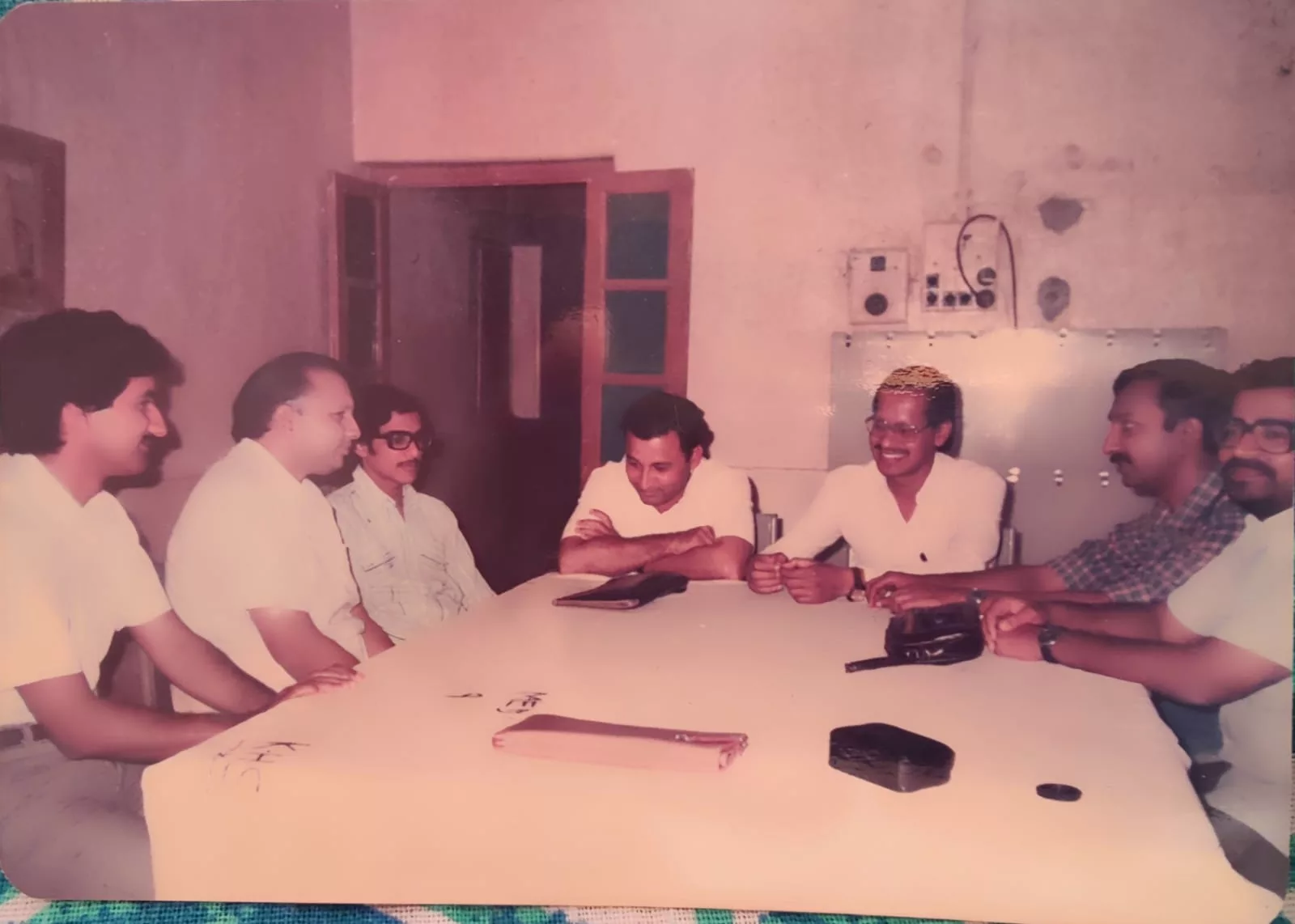
    𝗠𝗲𝗱𝗶𝗰𝗶𝗻𝗲 𝗶𝗻 𝘁𝗵𝗲 𝗘𝗮𝗿𝗹𝘆 𝟭𝟵𝟴𝟬𝘀: 𝗔 𝗚𝗹𝗶𝗺𝗽𝘀𝗲 𝗶𝗻𝘁𝗼 𝘁𝗵𝗲 𝗣𝗮𝘀𝘁 𝗮𝘁 𝗠𝗚𝗜𝗠𝗦 𝗦𝗲𝘃𝗮𝗴𝗿𝗮𝗺

    It was a scorching afternoon on May 4th, 1982, when I first stepped into the medicine ward at MGIMS in Sevagram. Unlike the bustling government medical college in Nagpur where I had trained, this hospital felt serene and peaceful. As I walked in, I noticed a dishevelled resident performing a pleural tap at a patient’s bedside. He wore a stethoscope around his neck—a Littmann stethoscope that never left his neck throughout his life.

    He looked at me with a puzzled expression and asked who I was and what I was doing there. Feeling self-conscious under his gaze, I explained that I had been appointed as a senior resident in the Department of Medicine and that I wanted to meet Dr OP Gupta, the department head. A sweet smile spread across his face as he peeled off his gloves, shook my hand, and introduced himself.

    “I’m Krishan, but you can call me Kissu,” he said with a grin that radiated both sheepishness and childlike innocence.

    I had no idea at the time that meeting Kissu would be the start of a lifelong friendship. Our paths would cross again and again over the years, and we would share innumerable moments of laughter, joy, and even some tears. But in that moment, all I knew was that I had met a warm and friendly soul who would become an important part of my life.

    He was Dr Krishan Aggarwal, whom we lost on 17 May 2021.

    How was the Medicine department in early 1980? The building, a guest house constructed by Mr GD Birla, was a two-storey structure that had seen better days. As I joined the department on that fateful afternoon of May 1982, I walked down the creaking floors and peeling walls of the ground floor, I could see a few general wards that resembled dormitories, illuminated by dim tube lights.

    It was a simpler time, and medical equipment was scarce. The ICU had no mechanical ventilator, no multipara monitor, no infusion pumps, and no central oxygen, suction or air. There was no dialysis machine either. The most coveted investigation was the ECG, and every morning at 8 am, the trio of Dr OP Gupta, AP Jain, and Ulhas Jajoo would arrive at the head of the department chamber to correct the ECG findings that the residents had reported.

    Every morning was a race against time as the clock struck 8 am, and the trio of Dr OP Gupta, AP Jain, and Ulhas Jajoo would make their way to the head of the department chamber. It was the most sought-after event of the day, where residents reported their ECG findings for correction. The tension in the room was palpable as the professors scrutinized each finding with eagle-eyed precision, looking for any potential errors or oversights.

    “Why hasn’t this resident calculated Estes’ score for diagnosing left ventricular hypertrophy on the ECG?” Dr OP Gupta would ask, with a hint of frustration in his voice. Dr AP Jain would chime in, “And why can’t our residents remember the causes of tall R waves in lead V1?” “The residents still haven’t mastered the vectors and do not know how to calculate the axis,” Dr Ulhas Jajoo would barely conceal his angst. The three medicine consultants would exchange disapproving glances, clearly expecting better from their students.

    Dr Gupta couldn’t help but let his administrative side show as well, “The residents seem to be wasting ECG paper. I had sanctioned two rolls a month ago, and they have already exhausted them.” He couldn’t stand such waste in his department. When the administrator in Dr OP Gupta took over, the frustration of wasting ECG paper became all too apparent.

    These three physicians were like an unstoppable force, and nothing could deter them from ensuring that every detail was perfect. It was a daily spectacle that the residents had come to dread and respect in equal measure. The ECGs may have been the coveted investigation, but the morning correction sessions with the terrific trio were the true highlight of the day.

    But despite the lack of modern amenities, the passion for medicine burned bright in the hearts of the residents and doctors, and they worked diligently to provide the best care they could with what little they had.

    The Medicine OPD was nestled atop a hill in the newly built hospital complex. Dr Jain and I would amble up the hill after our rounds, taking in the fresh air and walking past the Sevagram General Store and the Madras Hotel. Once there, we would attend to around 30 to 40 patients over a leisurely three-hour period. The pace of life was slow and tranquil, allowing me to examine each patient and Dr Jain to delve into the psychiatric world of the patient.

    In the afternoons, we would gather for our journal club, where we eagerly discussed the latest articles from medical journals. Residents would project them onto the overhead projector and we’d dive deep into the nitty-gritty details. But that was just a warm-up for the Wednesday morning death meeting—an intense academic activity where a resident would present a case of a recently deceased patient. And we did grill them! Every word, every diagnosis, and every decision was scrutinized with fervour by the professors and lecturers in attendance. The tradition continues to this day, 45 years later, in the new building.

    To get any diagnostic tests done, a ward attendant had to cycle up the hill to deliver the blood samples to the biochemistry and microbiology labs. And as for X-rays, patients had to be transported in a small ambulance to the radiology department in the new building.

    When I first joined, the old hospital building was a bit of a relic, housing only the medicine wards. It was as if we were in a time warp, with its peeling paint, old floors, and tube lights flickering overhead. Meanwhile, the Surgical, Eye, ENT, Orthopaedics, Paediatrics and Ob Gy wards had already moved into the shiny new building down the hill. It wasn’t until 1986, a good five years later, that we finally made the move to the new building ourselves. Finally, all the facilities were under one roof, making it so much easier to see patients, admit them, and test them.

    Dr OP Gupta and AP Jain lived just a stone’s throw away from the medical wards in the MLK colony. Dr Gupta was a man who commanded huge respect – he was strict, and he wouldn’t tolerate any slacking off when it came to patient care. Whenever he got bored at home (which was often, considering there was no TV, cell phone, internet, or social media back then), he’d sneak into the wards unannounced, just to make sure everything was running smoothly.

    Dr Jain’s Sunday morning rounds were the stuff of legend. He would have all the patient case records meticulously collected and placed on his table, taking pleasure in writing revised case summaries in handwriting he seemed to have developed a fondness for.

    Dr Ulhas Jajoo, on the other hand, was a more relaxed presence on the ward. He was known to be friendly and almost a comrade-in-arms to his residents, providing them with a sense of camaraderie and support. He’d start and finish his ward rounds on a Sunday morning like a quickfire spell of T20 cricket. By 6 am, his rounds would be finished, and he’d be off on his scooter to nearby villages to be in the midst of farmers and labourers trying to understand what makes them sick and what they do when they fall sick.

  • 𝗦𝗽𝗲𝗮𝗸𝗶𝗻𝗴 𝘁𝗼 𝗮𝗻 𝗘𝗺𝗽𝘁𝘆 𝗛𝗮𝗹𝗹: 𝗟𝗲𝘀𝘀𝗼𝗻𝘀 𝗟𝗲𝗮𝗿𝗻𝗲𝗱

    𝗦𝗽𝗲𝗮𝗸𝗶𝗻𝗴 𝘁𝗼 𝗮𝗻 𝗘𝗺𝗽𝘁𝘆 𝗛𝗮𝗹𝗹: 𝗟𝗲𝘀𝘀𝗼𝗻𝘀 𝗟𝗲𝗮𝗿𝗻𝗲𝗱

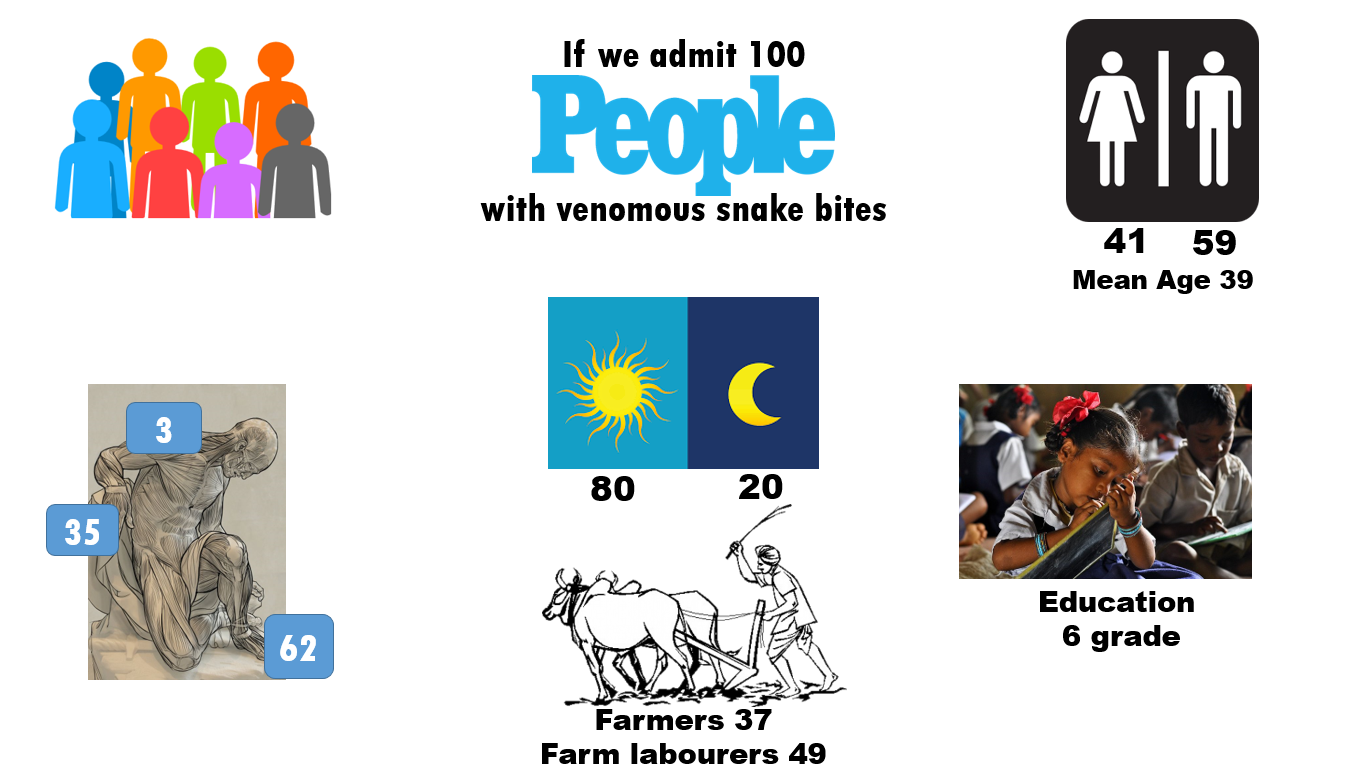
    A few years ago, I was invited to speak about snakebites at an annual conference in Nagpur. As a physician who had treated hundreds of patients with venomous snakebites, I was excited to share my experience.

    On that Sunday morning, as I arrived at the conference hall 15 minutes early, I found only two people in attendance: my friend who had asked me to speak and a cook preparing breakfast for the attendees. The venue was quiet and empty. As the minutes ticked by and no one else arrived, my concern grew. Perhaps it was the early hour, or the fact that it was a Sunday morning, but the empty seats seemed to speak volumes. We waited for half an hour, hoping that the others might be running late, but as the clock struck 9:30 am, I knew that we couldn’t wait any longer.

    By the time I began the presentation at 9:30 am, I was already thirty minutes behind schedule.

    As I stepped onto the stage to deliver my presentation on snakebites, the venomous creatures on my PowerPoint slides appeared to come to life—cobras hissing and striking, vipers coiling and rattling, and kraits slithering silently. However, as I gazed out into the cavernous hall, which had the capacity to hold five hundred people, only six attendees sat in the front row.

    Undeterred, I spoke with a fiery passion, hoping to make an impact on those who bothered to show up. I finished my presentation, and the venomous creatures on my slides disappeared, replaced by a disheartening reality: the number of attendees had not even reached double digits after twenty minutes.

    As I made my way to the breakfast venue, the contrast couldn’t have been starker. The conference hall was almost empty, with just a handful of attendees. But here, the bustling breakfast area was overflowing with people eager to eat, talk, and network. The aroma of fresh coffee and the clinking of silverware filled the air as hundreds of attendees enjoyed their breakfast, sharing stories about their practices and exchanging patient referrals.

    And amidst this lively scene, dozens of medical representatives from various pharma companies were present, their eyes fixed on the attendees, ensuring that their physicians got what they wanted. It was a stark reminder that while the presentation may have been about life and death, for many, the real action happened at the breakfast venue.

    The contrast between the empty conference hall and the bustling breakfast venue was striking. I couldn’t help but think that these conferences are not just about making presentations, but also about networking, renewing old friendships, making new ones, spreading your practice, enjoying wine and sumptuous meals, and blowing your trumpet.

    I learned that day that it’s not just about the size of the audience, but the connections you make with those who are present. Conferences are not only about academics but also provide opportunities for networking.

    As a pathologist would say, sometimes the milieu outside the cell is more important than inside the cell.

  • The Bread Man of Sevagram: A Journey of Passion and Dedication

    The Bread Man of Sevagram: A Journey of Passion and Dedication

    As the Bible says, “By the sweat of your brow you will eat,” but as I spoke to Devidas Modak this morning, I couldn’t help but wonder if a new adage was more fitting: “By the sweetness of your bread, you will live.”

    Imagine waking up to the sound of Devidas’ voice ringing through the streets of Sevagram every morning. He’s been selling his fresh bread for as long as anyone can remember. With his iron box carefully strapped to the back of his bicycle, he navigates through the winding streets, the aroma of his freshly baked bread wafting behind him.

    Devidas visits our colony almost every day, come rain or shine. With a booming voice, he calls out ‘Bread!’ and we come out of our homes to reach for our daily dose of deliciousness from his bicycle. The eggs, delicately packed on the back of his bike, are a special treat for the people.

    I couldn’t resist the urge to learn more about him. So, I invited him for an interview, and we agreed to meet at my home on a Friday morning. “This is the only day I can spare for you, I need to focus on my business the rest of the days,” he said.

    When Devidas arrived, I welcomed him in and offered him a cup of tea and biscuits, but I couldn’t bring myself to offer him a bread sandwich made from his own bread—that’s his speciality, after all! Instead, I settled for enjoying the delicious aroma of his freshly baked bread.

    We exchanged pleasantries, and I expressed my interest in hearing his life story.

    Without hesitation, he began to narrate his journey from the very beginning, starting with his birth in Warud on 14 September 1959, to a family of daily labourers. Devidas grew up in poverty and spent most of his life in the village. He attended Yashwant High School in Sevagram, where he managed to complete his education up to the eighth grade.

    “I had to take on odd jobs from a young age because of my father’s poverty and the uncertainty of earning during the rainy season,” Devidas recounted. “During summer vacations, I worked as a daily wage labourer with the masons and earned a meagre Rs 3 per day, while this hospital was being constructed in the early seventies,” he added.

    Alongside this, he also began selling bread on a cycle that he would buy from Nirmal Bakery in Wardha. It was through his sales of bread that Devidas began to establish himself as a bread seller.

    Despite the hard work and low profits, Devidas loved the bread-selling business. He took great pride in delivering fresh bread to his customers every day. He also enjoyed the freedom and independence that came with being his own boss.

    Devidas told me that he used to buy bread from Nirmal Bakery in the evenings and return around 10 pm. The next morning, he would wake up early, ride his cycle through the streets of Sevagram, and call out his signature phrase, “Bread! Fresh bread!” His customers would come out of their homes and buy his bread, which he would deliver to their doorstep.

    As he spoke, I could see the passion and dedication in his eyes. It was clear that bread-selling was not just a means of earning a livelihood for Devidas but a way of life.

    Devidas reminisced about the early days when he first started selling bread in Sevagram. He recalled how Mr. Khubchandani had been instrumental in helping him get started. Khubchandani had lent him an iron box to carry bread from Wardha to Sevagram, which could hold 70 to 80 pieces of bread. During those days, Devidas would rent a bicycle from Zitruji Kulkarni and Chavan at 60 paise a night.

    Devidas cherished the wax paper-wrapped bread for its unique taste. He bought each loaf for 55 paise, earning a small profit on every sale. He held the Khubchandani family at Nirmal Bakery in high regard—not forgetting Vithalrao, the manager—recalling the love and affection they showed him throughout the years.

    Despite the challenges of getting completely wet during the rainy season and not having spare clothes, Devidas found purpose in his bread-selling business. In the late 1980s, Dr and Mrs Ghuliani were impressed by Devidas’ work ethic and offered him a regular job at the hospital, but he declined, content with his bread-selling business. To him, selling bread was not just a job but a source of pride and joy. It was a way for him to provide for his family. After all these years, Devidas still rides his 20-year-old Atlas bicycle through the streets of Sevagram, selling bread with a smile and a strong determination.

    Devidas’s loyal customers appreciated his hard work and dedication to delivering fresh bread to their doorstep every day. His presence in the morning was a welcome sight for many, and people would often wait eagerly for him to arrive. Devidas knew his customers by name and would chat with them as he made his way through the colonies, always wearing a cheerful expression.

    His daily routine starts at 6 am when he begins selling bread and eggs in Guru Nanak colony. From there, he cycles to the nurses’ hostel and then proceeds to the homes of almost all the doctors, nurses, and paramedics who live in the area, where he is always greeted with warmth and affection. His daily rounds take him almost three hours, but he enjoys every moment of it.

    Devidas said, “Despite my children’s requests to stop selling bread and cycling house-to-house, I continue with my work because it is not just my livelihood but also my passion.” He has grown overweight and now finds it a bit difficult to carry these loads on his bicycle, particularly in harsh winters and scorching summers. Nonetheless, seeing his customers happy with his bread gives him immense satisfaction, and he has developed a loyal customer base over the years. He said, “I take pride in serving my customers every day. The personal touch I add to my business is something that cannot be replaced by big stores or franchises.”

    For over 40 years, rain or shine, Devidas has been cycling through the streets of Sevagram, his basket of bread in tow. Every morning, people in Sevagram wake up to the sound of his signature call, eagerly awaiting their daily dose of fresh bread from their beloved local, who has been with them since the 1970s.

    “Three generations of families have grown up on my bread, and a morning without Devidas and his signature “Bread!” call is unthinkable to many,” he said. His signature call is a nostalgic memory for many; his personal touch and warm smile have brightened up the lives of his customers.

    Little wonder that Devidas is more than just a bread seller to the people of Sevagram!

  • The MGIMS Library

    Where did the idea come from?

    Shailaja Asawe, a niece of Bhavana’s mother, often shares a proud and cherished memory with me. She recounts the day Bhavana was born, proudly exclaiming that as a 10-year-old girl, she was one of the first to lay eyes on the newborn. Every time we meet, Shailaja fondly reminisces about that day, relishing in the joy and wonder of witnessing the arrival of a new life into the world.

    Shailaja’s father, Shri Ramnarayan Manudhane, passed away in 2012. In his memory, the family established a trust named the RG Manudhane Foundation for Excellence, which funds education, healthcare, and community work for women. The foundation is commonly known as the Motivation for Excellence Initiative (MFE). It was created as a legacy to society by the late R.G. Manudhane (1921-2012), a self-made man who exemplified values-based excellence in his life’s work.

    Shailaja, along with her younger sister Nilima Raghavan, a Stanford-based paediatrician, and her brother Aninash, a New York-based finance professional, oversee the foundation’s activities. MFE focuses on ‘Education & Training’ and ‘Health-Care & Well-being.’ The foundation selects and funds programmes in these areas, typically run by partner organizations such as NGOs.

    Suman Tai Bang, Shailaja’ aunt and resident of Alodi village in Wardha, passed away at the age of 93 in 2020. She was a dedicated and selfless activist who spent her life working on women’s issues in villages. She was a prominent figure in the freedom struggle, having been jailed during that time, as well as during the emergency. Shailaja frequently visited Suman Tai in Wardha, and I have known her for a long time since I got married to Bhavana. Shailaja would visit her aunt regularly and also spend time with us during her visits to Wardha. Once, she was on the verge of taking over as secretary of the Kasturba Health Society but ultimately didn’t.

    Shailaja, a well-read and widely travelled philanthropist with astute finance and management skills, expressed her interest in funding the MGIMS library during one of her visits to Wardha. She set aside 2.5 crores for the project. As it turned out, Ms Sheetal Gandhi, a conservation architect with over two decades of experience in architectural restoration and preservation, was a close friend of Shailaja and lived in the same area at Hiranandani Gardens in Powai. Shailaja was impressed by Sheetal’s previous works such as St Thomas Cathedral in Mumbai, IIIM Ahmedabad, and Rajabai Clock Tower and the University of Mumbai Library. Thus, she approached Ms Sheetal to design, plan, and monitor the library work, and Sheetal readily agreed to take on the task.

    Thus, the construction of the state-of-the-art library began, with Ms. Sheetal Gandhi at the helm of the design and planning process. I was thrilled about the project, as ever since I joined MGIMS in 1982, the library had become my second home. I had spent countless hours in the library, pouring over textbooks and journals. In fact, it was a popular rumour on campus that if I was not found in the hospital or at home, I could surely be located sitting at my favourite desk in the library, browsing through one of the many medical journals.

    The library had been a constant source of knowledge and inspiration for me, and I was eager to see it transform into a state-of-the-art facility.

    Sheetal Gandhi was thrilled to be tasked with designing a state-of-the-art library in the space once occupied by the Ob Gy ward at MGIMS. Her goal was to preserve the old architecture while introducing new concepts and designs that would create a space that was not only functional but also visually stunning.

    Summing up

    On her website, she explained her approach to designing the library:

    “This project involved the conversion of a four-decade-old Obstetrics and Gynecology department into a modern-day library, the Dr. APJ Abdul Kalam Library. The project was conceptualized in 2016 and implemented over the course of two years, concluding in 2018. I dedicated countless hours over this period to closely monitor the entire process. Additionally, I was intricately involved in every aspect, from the design and concept to the actual use of the library.

    The library spans over 16,000 square feet and has been designed to meet the requirements of 21st-century users with a focus on incorporating technology and flexible spatial design. In addition to providing individual reading spaces, the library also includes lounges and collaborative spaces to accommodate up to 400 scholars. Other features of the library include an audio-visual room, a computer section with seating for 50, a reprography area, a secure archival storage space for books, theses, and journals, and a cafeteria. With the electronic RFID system in place, scholars can easily check in and check out books on their own.”

    Older order Changeth, Yielding Place to New…

    Harshal Deora, a new addition to the engineering and maintenance department of the organization, proved to be the perfect choice to assist Sheetal during the library construction project. With his young legs, inquisitive brain, and hunger for learning new things, Harshal was always ready to go the extra mile to meet the project deadlines and solve any unexpected problems that arose. He often provided innovative ideas that impressed Sheetal and helped to improve the project’s outcomes. His contributions were invaluable to the project’s success.

    To begin, Sheetal made sure to retain the original features of the space, such as the high ceilings, arched doorways, and large windows that allowed ample natural light to flood the room.

    As the library construction project began, the team faced the daunting task of transforming the old Gynecology and Obstetrics ward into a modern library. Months of work lay ahead, as they set about dismantling everything in sight. They started by taking apart the labour room, one brick at a time, until nothing but rubble remained. The operating theatre was next, its once sterile walls and floors now a distant memory. The team dismantled the faculty chambers, stripping away the layers of paint and plaster that had accumulated over the years.

    The private wards were next, their once comfortable beds and curtains now removed. The team worked tirelessly, dismantling every last piece of furniture, leaving only the bare walls standing. Even the old toilets were not spared, dismantled and removed to make way for the new library.

    As the dismantling continued, the noise and dust became unbearable, making the Pathologist who worked downstairs become furious. They repeatedly complained, asking that labour work only during the night to avoid disturbing their work. The team kept on working, knowing that it had a goal to achieve.

    The process was long and arduous, requiring several trucks to clear the debris. The dust and debris that filled the air made it difficult for the team to see and breathe. But they soldiered on, fuelled by their determination to create a state-of-the-art library for MGIMS.

    As the final walls came down, the team looked back at what they had accomplished. The old Gynecology and Obstetrics ward was gone, replaced by an empty shell, ready to be transformed into a modern library. The team knew that their hard work had paid off, and that their efforts would benefit the students and faculty of MGIMS for years to come.

    Sheetal got small and dingy old windows of the library removed and replaced them with large, expansive windows that flooded the library with natural light and views of the surrounding lush greenery. The library was now transformed into a spacious and inviting space.

    Renovation

    The lighting in the library was designed to be versatile, with natural light utilized during the day and artificial lights used at night. The air conditioning system was also carefully planned to maintain an optimal temperature, especially during hot summer days.

    She selected elegant chairs and desks from Amardeep Agencies, Mumbai that were not only comfortable but also functional for studying and research purposes. The Italian-inspired concept was tailor-made for MGIMS, with vivid colours incorporated into the design. She chose shades of green, orange, and blue to designate specific areas for graduate students, postgraduates, and faculty members. Each desk was equipped with Wi-Fi connectivity and charging ports for laptops, ensuring seamless access to technology.

    To accommodate the vast collection of thick medical textbooks and journals, Shailaja incorporated large, open bookshelves that were so inviting. Additionally, she asked Godrej to design mobile compactor storage systems that could store close to 20,000 hard-bound medical journals and theses dating back to as early as 1970. The storage systems were specifically designed for the MGIMS library. A designated computer area was also added to provide students and faculty with access to online resources and databases. To ensure optimal comfort, the library was equipped with carefully planned air conditioning and adjustable lighting systems.

    Sheetal hired Amar agencies from Mumbai to create signages for the library. She carefully selected the colours and fonts to ensure that visitors received clear directions and knew what lay ahead.

    To further enhance the user experience, a small, inviting cafe was added to the library, where visitors could take a break and grab a quick bite to eat. The restrooms were designed to be spacious, well-lit, and easily accessible.

    The library was situated on the first floor of the hospital building, and the staircase leading up to it was 30 feet high. Sheetal’s design was aimed at reducing the effort required to climb the stairs. Each riser was 30 inches wide, allowing visitors to place two steps on it, making the climb considerably easier.

    Murals

    Sheetal got help from Aparna Bangia and Pooja Bangia to design the outside of the library. They used a concept called the “Golden Ratio”, which means two things are in perfect proportion if the bigger thing divided by the smaller thing is the same as the sum of both things divided by the bigger thing. Sheetal designed two beautiful murals called ‘The Sacred Spiral’ and ‘Seeds of Light’ to decorate the library. ‘The Sacred Spiral’ mural was made to attract good energy from the universe and create a peaceful environment. The ‘Seeds of Light’ mural had circles or seeds that showed the blueprint of the universe, and it was placed on the wall along the main staircase leading to the library. The murals had metallic hues that reflected sunlight and were beautiful to see at night. They gave a peaceful feeling to the students and people visiting the library.

    The murals served as a wonderful introduction to the vast knowledge and exciting exploration that awaits inside the library.

    Gardens

    We went beyond just the interior design and also tackled the areas surrounding the library. The ground leading up to the library was in a state of disrepair and looked unkempt. We had it thoroughly cleaned and carefully laid Kota stones on the ground, making sure to place the rough side up. A strip of lush lawn was placed between the stones, providing a natural break that enhanced the overall aesthetic of the space. To add more visual appeal, we planted three vibrant Frangipani trees in the centre of the lawn.  We didn’t neglect the corners – lining them with Lantana, adding a touch of greenery and colour to the area.

    Overall, Sheetal is extremely proud of the library she designed for MGIMS. The space successfully blends modern technology with the charm of heritage architecture, creating a beautiful, functional, and inviting space—perfect for learning and research.

    ***

    What is in a name….

    On 17 April 2018, on behalf of MGIMS, I invited suggestions for the name of newly renovated library. We were looking for a name that inspires and motivates our students, faculty, and healthcare workers.

    My Facebook post, targeting MGIMS alumni, read:

    Names. They are important. For, they conjure up feelings, emotions, and even expectations.

    We, at MGIMS, are about to offer a new library to the medical students, members of the faculty and our healthcare workers. We are excited the way the library is shaping. Now that we are almost all set to deliver the baby—the gestation period of the re-designed library was no less than that of an elephant— we would like the MGIMS library to be named after. The choices are— a scientist, a researcher, an academician or a physician—not necessarily in that order.

    We are seeking a name that enthuses and motivates the bibliophiles, as they climb the staircase of the library. A name that evokes respect and reverence among book lovers. 

    Naming is difficult. We are aware of the challenges and difficulties that this task is associated with. Nevertheless, we shall be happy to see all those associated with MGIMS helping us name the library.

    After considering popular choices such as Anandibai Joshi, Kadambini Ganguli, Y Subbarao, Dr Sushila Nayar, Dr VN Chaturvedi, Dr MVR Reddy, Dr ML Sharma, Babasaheb Ambedkar, and Dr. A. P. J. Abdul Kalam, we decided to name the library after Dr APJ Abdul Kalam.

    *****

    Inauguration

    The library was officially inaugurated by Dhirubhai on July 24, 2018, but unfortunately, neither the donors nor the architect were invited to attend the event. Shailaja had expressed her wish for Suman Bang to represent her family and participate in the inauguration ceremony on her behalf. However, the management did not agree to this request and did not extend an invitation to the donors.

    It was indeed unfortunate that the donors and the architect were not invited to the library’s inauguration ceremony. This decision weighed heavily on my mind, and I felt embarrassed about it. I regretted that the individuals who had contributed significantly to the library’s creation were not acknowledged. I found it hard to understand the reasoning behind these decisions and wished that the donors and the architect had been recognized for their efforts.

    The local newspaper quoted me saying, “A library is like a beautiful, verdant island in the midst of a vast sea of ignorance. The right mix of books and digital resources, along with the relaxed ambiance, beauty, and aesthetically designed spaces of the library, would surely whet the medical students’ appetite and inspire them to visit this repository of information, knowledge, and wisdom.”

    As the Charge d’affaires of the project, I had worked tirelessly to achieve excellence, and the positive

  • Beyond Coffee: Uncovering the Charm of Sevagram’s India Coffee House

    Beyond Coffee: Uncovering the Charm of Sevagram’s India Coffee House

    Have you had the pleasure of trying Domelette? It’s a delectable creation—an omelette perched atop a dosa. This delectable dish was quite popular amongst MGIMS medical students who craved something novel yet affordable and filling.

    In the golden days of the 70s and the 80s, it’s just one of the many mouthwatering delights you could find at the India Coffee House in Sevagram. ICH for short.

    “Throwback to the good old days of the seventies when I was a medical student at MGIMS. After watching a late movie in Wardha, we’d head over to ICH for a budget-friendly and gratifying meal. Our go-to was the Domelette, an omelette served on a dosa. As soon as the waiter set it down on our table, we’d gobble it up in no time. The memory of that delectable omelette perched on a dosa, which left us feeling content without burning a hole in our pockets, is still fresh in my mind. Ah, the joys of being young, broke, and hungry!” Memories flooded the alumnus’s mind as he retraced the paths of his past when he came to his alma mater for the batch reunion.

    The Evolution of ICH in Sevagram: A 48-Year Journey

    Dr Kishore Shah, an Ob Gy Consultant located in Pune and an MGIMS class of 1974 alumnus, recounts a captivating story about the beginnings of ICH in Sevagram.

    “There was a popular Riddle during our time. Why was such a tall wall built between the boys and the girls’ hostel?

    The answer to that was: So that more customers would come to ICH.

    Yes, ICH was the oasis between two barren deserts. On one side was the boy’s hostel and on the other, was the ladies’ hostel. In between was this fertile blooming land of romance, where sweet nothings were exchanged over a cup of coffee.

    ICH Coffee

    When we joined MGIMS in 1974, the ICH did not exist. There was a small hotel there called Anand Restaurant, but almost everybody identified it as the Sindhi Hotel, named after its owner who was Sindhi. In June 1973, Parmanand Adwani and Jethalal Jotwani established the hotel with the assistance of Pramila Upadhyay. The fat, bald, white-haired owner used to sit at the cash register and serve crisp samosas and hot tea; there was no other item on the menu. The Sindhi Hotel followed the same template as the other hotels in Sevagram at that time, including Babulal and Madras Hotel, all of which had rickety wooden tables and creaky chairs. A cup of tea cost 35 paise, and a samosa cost 50 paise.

    Then, suddenly, out of the blue, the Sindhi Hotel closed down in February 1975, leaving us at the mercy of Babulal and Madras Hotel.

    The largest benefit went to the Madras hotel. All students made a beeline to the Madras hotel and overnight they had a tripling of business. However, this was short-lived.

    In March 1975, Professor GS Digmurthy, who served as the vice principal of MGIMS and also headed the Paediatrics department, accompanied Dr RN Shetty (Head of the Department of Anesthesiology) and Dr DT Kolte (Warden of the Boys’ Hostel) on a mission to explore the Indian Coffee House at Sadar and negotiate terms and conditions with Nagpur ICH Society. Despite making four trips to Nagpur for this task, he was denied reimbursement for his travel expenses because he had submitted them late to the management.

    For six months, there was nothing there. Then suddenly, signs of life started appearing at the closed Sindhi hotel. On 25 July 1975, the ICH Co-Operative Society in Sadar, Nagpur entered an agreement with MGIMS to operate a cafeteria serving South Indian snacks and non-alcoholic beverages to students, staff, and employees. The canteen paid monthly rent of Rs 450 and operated from 7 am to 10 am, with a break in the afternoon. A board was put up. Shiny new words announced Indian Coffee house.

    About two to three months after the renovation, the hotel started its business in 1975. For the first time in our life. We were served water in clean glasses. Tea was given in sparkling white China. The menu had more than 10 items. The only snag was that it cost us a bit more. Tea suddenly jumped up to 50 paise. The dosa was a princely one rupee and 25 paise. Surprise, surprise! Items like omelettes, bread and butter were also there. But the first time we saw waiters dressed in crisp white coats. And after our tea or breakfast, we were handed over small bills measuring. 1 ½ inch by 1 ½ inch almost as if we were royalty. Sparkling cutlery adorned Sevagram plates for the first time.

    ICH Head bearer

    The Indian Coffee House was not just any ordinary food joint. It had a unique dress code hierarchy that added to its charm and made it a memorable experience for all who visited. The waiters were dressed in white shirts, white trousers, and khadi caps while the bearers wore green belts and turbans with green bands. The head bearer, who was easily identifiable, wore a turban with a red band and golden border, and a red patta or slash. The supervisors wore crisp cotton shirts and trousers. Every worker involved with the ICH must undergo the same rigorous process to advance to the top position.

    Dr Hari Oam Ahuja, MGIMS class of 1974, reminisces that the first time he and his friends entered ICH, they wondered if they were walking into a five-star hotel in Sevagram.

    The ICH bearer.

    However, there was one thing missing from the new hotel. The staff were all from South India. So they were unfamiliar with the local Marathi or Hindi language. Due to the difficulties in communication, they seemed to be less friendly. However, they more than made up for this deficiency with, good clean service and tasty South Indian fare.

    One tea cost us 50 paise. However, two teas. Cost us ₹1.00 and five paise. Because five paise was the service charge for any amount above 50 paise up to ₹ 1.50. This was the first time in my life that I was taught split invoicing. If you ordered separate teas, there was no surcharge. However, if we ordered tea together, we had to pay 5 paisa extra.

    We had a peculiar waiter called Vishnu, in the early days. In today’s cyber terms, we would have called him a low-speed processor and small RAM. Whenever 2 or more guys gave him an order, he just remembered the last item and brought only that. Thus, if we ordered a dosa, idli, a Vada and a cold coffee, Vishnu would rush to the kitchen and bring only cold coffee. Thus, we had to repeat the order 3 more times to get everything. We called him Vishnu single naam, a parody of Vishnu सहस्त्र नाम.

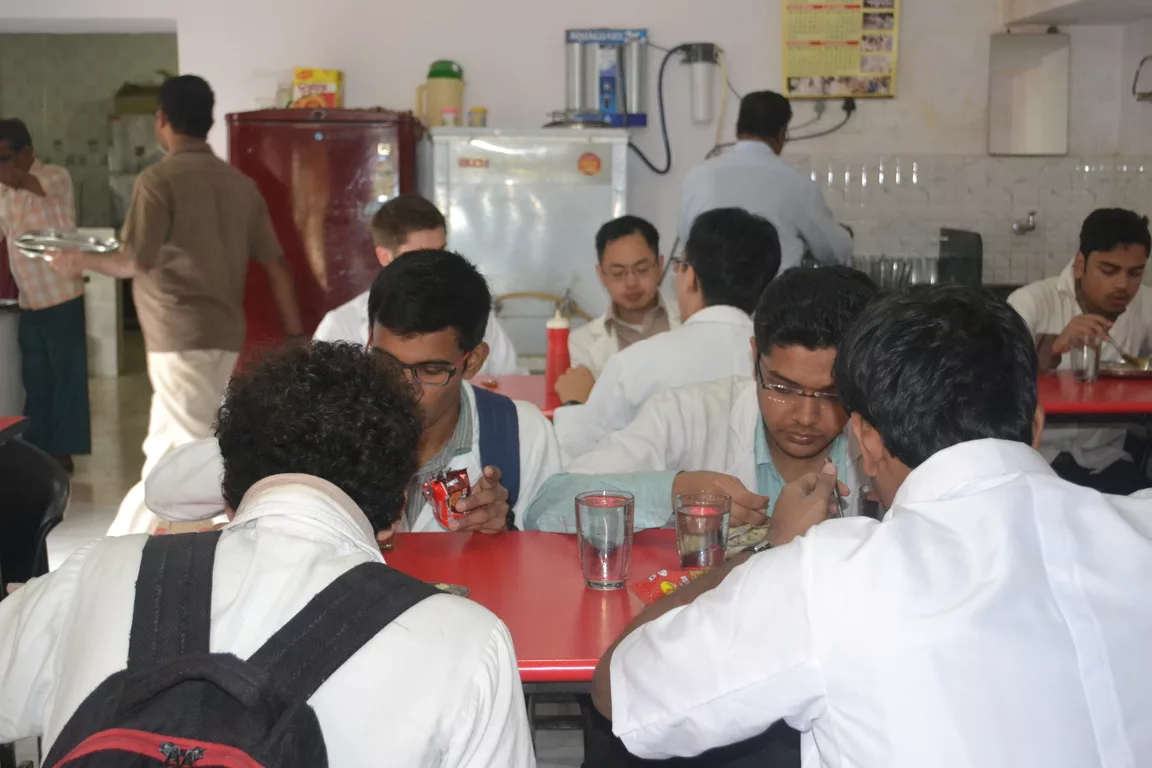
    MGIMS 1985 batch. Coffee House, Sevagram. 1993. Photo Credit: Dr Sadhana Bose.

    The one enduring image of ICH that is engraved in my mind is that of the Khadi gang. Sitting in the middle of the courtyard of the ICH sat Dr Tyagi and his beautiful wife Punam 72 batch. Punam was fond of Khadi jackets with beautiful embroidered designs. They were always accompanied by 5-6 of their friends. like Avinash Shankar and Premkumar Sinha.

    Frequently late in the evening, the boss from our batch 74, Dr Deepak Fuljhale (we lost him in 2001), used to saunter in and sit stylishly at a table. Then, with a casual sweep of his hand, he would produce a cigarette from the thin air, just flick the cigarette in the air and grab it with his lips lightly. And then, almost like a religious ritual, he would brush the match against his high heels and gently light the tip of the cigarette. This was a performance not to be missed. Elegant, beautiful and mesmerising!

    One particular ritual we followed was after winning heavily at a card game the previous night, we used to regally sway into the canteen and order a Domelette. This is basically a dosa with an omelette. But in those days, the cost was a princely sum of four rupees, which. In that bygone era, only a person who won heavily at a card game could afford it. Hence, this was a very rare treat for us.

    One particularly memorable incident occurred in the late 70s. Some businessmen from Nagpur in a car would come regularly to the ICH canteen.  And stare greedily at the girls. They were particularly fond of one Punjabi junior and would ogle at her in a most ungentlemanly manner. The students went to the authorities and complained. However, the authorities did precious nothing. Then the students decided to take things into their hands. They quietly gathered hockey sticks and bricks and waited patiently in the bushes. The hooligans from Nagpur came at the usual time. Immediately, a huge horde of students rushed towards them waving hockey sticks and dangerous-looking bricks in their hands. The terrified gang fled hastily towards their car and rushed in reverse gear towards the main gate. After that day, they were never seen again in Sewagram. Fortunately, no one was hurt that day. But a few pants probably must have required urgent change probably.

    MGIMS 1985 batch. Coffee House, Sevagram. 1993. Photo Credit: Dr Sadhana Bose.

    Soon ICH became the favoured destination of all love birds. We, mere mortals, would just gawk at them longingly over our cups of coffee. However, on one exciting day, a very prominent couple had a falling apart. Lots of chinaware lost their lives in this fracas. We, the mute spectators, could just watch with amazement at how a once beautiful couple could turn so vicious and ugly in a moment. The angry girl finally looked witheringly at the hapless guy and asked, “I don’t know what I saw in you?” This is exactly what all of us unfortunate types were asking ourselves over the last few months.

    She looked piteously at him and sneered, “There are so many other good-looking and better-behaved gentlemen here.” Immediately, all of us sat up straight in our chairs and flicked imaginary dirt off our cheeks. Though that girl hardly glanced at any of us, all of us hopeful aspirants had passed on the most innocent expressions on our respective faces.

    Another thing that I remember ICH for is the bitterly fought elections of the student council. 15 days before the actual elections, even close friends stopped talking to each other because they belonged to different parties. 15 days after the election, this also continued. Later, of course, all this dissolved and the old camaraderie appeared again. But just when the results of the elections were announced, the winning party would hold a grand Tea party in the evening at ICH. It was an occasion for rowdy dancing and raucous singing. Everyone around was offered free cigarettes, whether he was a smoker or not.

    When I look back, I am surprised to see so many inanimate places having such a reservoir of memories.

    ICH may be long gone and replaced by shiny modern eateries. However, it lives on in the hearts of all of us of that era, who sat there discussing which questions were likely to come in tomorrow’s exams.

    *********************************

    2

    SP Kalantri interviewed several alumni and staff members of ICH, many of whom currently reside in Kerala, and peeped through old records to build up the story…

    Reminiscing about the ICH Days

    Dr VK Gupta, the Allahabad-based pathologist who graduated from MGIMS in 1980, recalls the ICH days of the late seventies. “In those days, the older students tried to get the attention of the first-year female students. However, the young women were smart and would only accept invitations if they could bring along a few friends, much to the chagrin of the hopeful Romeos, whose wallets and courage were put to the test. The canteen was not only a place to eat but also a popular hangout spot.”

    Dr Tarvinder Singh Uberoi, a Nagpur-based pathologist, reminisces about his days as a medical student at MGIMS in Sevagram. As a newcomer, he and his peers were wary of senior students who might subject them to ragging. The ICH became their go-to spot for breakfast as the hostel mess was often a mess in itself and failed to provide palatable meals.

    As the years passed, evenings at the ICH became a diverse affair, with some students idling away their time, while others had fun. A unique tradition at the coffee house was that if students from different batches shared a table, the seniors would generously foot the bill. Dr Uberoi remembers an audacious junior from the ’77 batch who would loiter around the open area of the coffee house, trying to catch the attention of seniors. If the seniors took the bait and called him over to rag him, he would endure it willingly. Afterwards, when asked if he wanted anything to eat, he would exploit the generosity of the seniors and order the most expensive item on the menu, enjoying the free meal.

    “There was the ever-smiling Balkrishna or BK, and then there were others who were ever-ready to lend a helping hand. Together, they wove a distinctive ambience in the cafe. The staff at ICH were so welcoming and kind that they would often end up staying past the closing time of 10 pm because they didn’t want to leave yet.”

    “KP Madhusudanan was from Kerala and belonged to the class of 1977. He started studying at MGIMS just two years after the ICH outlet opened in Sevagram. Madhusudanan became close with the coffee house staff, especially Balkrishna, and often had dinner with them during festivals,” wrote Dr Rakesh Sood, his classmate.

    Kindness and Camaraderie: Memories of Mr George Kutty
    Mr. George Kutty took over the Indian Coffee House during the winter of ’85. This happened because the ICH cooperative society in Sadar, Nagpur was struggling to keep the business running due to financial issues, and decided to step down. Mr. JKG Kurup, who was the secretary of the society, handed over the canteen to George Kutty.

    Interestingly, this wasn’t just a Sevagram problem. Even in Nagpur, the chronic customers of the 50-year-old coffee houses in Sadar and Dharampeth were heartbroken when they had to shut down because of financial difficulties.

    But Kutty wasn’t one to give up so easily. He took charge of the Indian Coffee House and completely transformed it into an iconic establishment, providing unparalleled personal service and generosity for the next decade.

    George Kutty. In Kottayam. 2023

    George Kutty began running the canteen on January 1, 1986. To those who knew him, Kutty was the very embodiment of the Indian Coffee House. He had grown up with ICH, having worked with the ICH for almost twenty-five years before he decided to be his own master. A stalwart presence, a tireless worker and a man of the people. An alumnus from the class of ’85, Dr Ragu Krishnan fondly recalls how, with his brother-in-law by his side and his son Santosh in tow, Kutty ran the show with exceptional ease and efficiency. From the kitchen to the front desk, no task was too great or too small for the trio.

    MGIMS 1985 Batch. Photo Credit: Dr Sadhana Bose.

    Kutty and his team often ran out of money. But that did not deter them from serving the medical students. He would even go above and beyond by operating the Coffee House for 366 days in a leap year, an effort that earned him the admiration and gratitude of the students.

    Yet it wasn’t just their work ethic that endeared Kutty and his team to the medical students. It was their boundless generosity. Dr Devashish Barik of the 1991 batch remembers Kutty’s kindness with great fondness. “He would extend credit to those who couldn’t afford it,” he recalls. ‘It wasn’t about the money for him. For him, the ICH was not a business but a calling. It was about serving the people.”

    Despite the changes that came in the late ’90s, the Indian Coffee House remains a cherished part of the college experience for many alumni. Dr Rajnish Joshi, an alumnus from the 1992 batch, recollects the fear he felt when he first entered the Indian Coffee House, a period when the freshers were not allowed to enter the ICH. “Passing by without being called for ragging was a stroke of good luck,” he muses. But over time, he came to appreciate the warmth and camaraderie that permeated the hallowed halls of the Indian Coffee House.

    And so, the legacy of George Kutty lives on. A man who dedicated his life to serving others, who embodied the spirit of the Indian Coffee House like no other. “We can only hope that one day we’ll have the chance to thank him for all that he did,” writes Dr Ragu Krishnan.

    Back-and-Forth: Kutty and MGIMS’ Correspondence

    Each year, the MGIMS management would evaluate Kutty’s performance before deciding whether to extend his contract for another year. The Secretary of the society that runs the medical school, the Dean, the Medical Superintendent of the hospital, the Warden, a few Professors, and the Presidents of the Student Council were among those who would decide Kutty’s fate. Sanjeev Kishore (1984), Sharad Sharma (1986), and Onkar Hossain Roykar (1987)—all presidents of the council—were some students who played a vital role in supporting Kutty’s cause.

    Over the course of ten years, Kutty and MGIMS engaged in a stimulating exchange of letters. While the administration often expressed dissatisfaction with the food quality and service efficiency, Kutty consistently responded with well-crafted and neatly typed letters, offering logical explanations for each issue. The students, in turn, strongly supported Kutty and his cooking, which they adored for its delicious taste and the care and warmth he put into every meal.

    ICH Rates. 1989

    George Kutty also voiced his discontent about what he thought was an unauthorised canteen in the girls’ hostel. “This was not in line with the terms of his contract and was beginning to eat into my business,” he would repeatedly argue. Despite raising the issue with MGIMS, the organisation seemed reluctant to address the problem and opted to remain silent instead.

    Kutty was always diligent in paying his monthly rent of Rs 450, and everyone at Sevagram appreciated his responsible behaviour. While there were occasional delays, Kutty always made sure to apologize and ensure that he would not repeat the delay in the future. This continued for ten years without any default in payment, demonstrating Kutty’s reliability and commitment to meeting his obligations.

    In 1996, Kutty repeatedly sought permission from MGIMS management to start an STD booth near the Boys’ hostel. MGIMS eventually agreed, but it’s unclear whether his proposal was realised.

    Changing Tides: Mahila Mandal Takes Over the ICH Canteen
    The year 1997 marked a significant turning point for the canteen space. On 21 June 1997, George Kutty called it a day. It came under the management of Mahila Mandal, a group of women in Sevagram. For the first time in the annals of ICH, women began to handle the counters, making it more inclusive and welcoming to everyone. However, this change also meant that the much-loved Domelette was no longer available, and the ICH featured the same items as the Mahila Mandal canteen in the hospital—poha, bread pakoda, and aloo bonda. As a result, the once-vibrant ICH canteen began to lose its charm.

    ICH: A Beacon of Simple Pleasures in a Fast-Food World

    The history of ICH in Sevagram is one of dedication and hard work. Four years later, Mahila Mandal realised that running the ICH was not its cup of tea, so it stepped down. The ICH Co-Operative Society of Sadar, Nagpur took over the canteen in July 2002, effectively operating it for five years. Sadly, the canteen had to shut its doors on August 31, 2007, but this marked the beginning of a new chapter as the previous staff returned to keep the coffee brewing.

    Coffee House Sevagram Kitchen

    KK Sundaran, a skilled manager, assumed the role of the coffee house’s head in September 2007. With over thirty years of experience at ICH, Sundaran’s expertise was particularly beneficial to the Sevagram coffee house, having joined the Sevagram ICH team in September 1977. Although the Sevagram outlet is no longer under the management of the Coffee House Co-operative Society and has been renamed The Refreshment Coffee House, it remains a cherished part of the MGIMS community.

    M Vijayakumar. Current Coffee House Manager. 2023

    George Kutty, who left Sevagram for Kottayam in 2010 after suffering a stroke in 1998, and KK Sundaran, who retired to his hometown of Thrissur after managing the coffee house for decades, are just two examples of those who have made contributions to the ICH’s legacy.

    N.Manikandan,K.K Sundaran,and M.Vijayakumar

    As Vijayakumar wakes up and heads to the coffee house, he knows he has some challenges to overcome. Firstly, the new hostel blocks are situated far from the coffee house. Secondly, breakfast is now being served within the hostels. Thirdly, new eateries have emerged in Sevagram. Lastly, the availability of fast food in Wardha city is a concern, as the ICH cannot offer it.

    KK Sundaran and N Manikandan

    Despite the challenges, the ICH outlet serves medical students and staff with dedication and passion. Vijayakumar takes pride in the outlet’s unbeatable price of just Rs 35 for a dosa, but he also acknowledges the difficulty in resisting the alluring popularity of fast food. However, he remains committed to serving the students and staff with passion and will continue to do so for as long as he can.

    Coffee House, Sevagram. 2023

    ICH may lack the glitz and glamour of modern cafes, but it holds a special place in the hearts of medical students at MGIMS. It’s more than just a place for coffee and snacks; it’s a place where time seems to stand still and one can enjoy endless hours of chatter over endless cups of coffee. It’s a testament to the efforts of those who have maintained the establishment’s legacy that ICH remains a beacon of community and connection, reminding us of the value of simple pleasures like sharing a cup of coffee with friends.