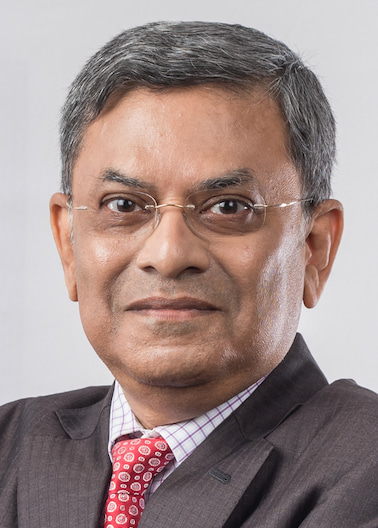
In 1982, while still a resident in internal medicine at Government Medical College, Nagpur, Siddhartha Kumar Biswas designed a new biopsy needle for kidney and liver biopsies. He filed for a patent. The Government of India granted it. His professor, Dr. B.S. Chaubey, was impressed enough to ask his residents to begin using it. Siddhartha was, at the time, in his twenties, working in a government teaching hospital in Nagpur. Kolkata — where he would eventually build one of that city’s most recognised neurology practices — was still a decade away.
From Calcutta to Nagpur, and Back
Siddhartha was born in Calcutta — it was still Calcutta then — to a father who served as Divisional Medical Officer with Central Railway, Nagpur, and a mother who was a homemaker. The railway posting brought the family to Nagpur, and Siddhartha grew up there, attending Bishop Cotton School from 1965 to 1971. He did his premedical year at Shri Mathuradas Mohota College of Science — part of a group of 13 or 14 Mohota students who entered GMC Nagpur in 1973, a cohort that included Harshvardhan Sheorey, Vilas Tambe, Arvind Dani, Hari Paranjape, Uday Kanhere, C.L. Sonkusare, and others.
He graduated from GMC Nagpur — bagging the gold medal in Preventive and Social Medicine in the final MBBS in the winter of 1977 — and completed his internship at the primary health centre in Tirora with Sharad Jaitly and Abhimanyu Kapgate, followed by an urban internship at GMC.
The Resident Who Filed a Patent
His MD thesis at GMC Nagpur, under Dr. B.S. Chaubey’s supervision, examined the role of prophylactic antibiotics in preventing urinary tract infections in women. It was solid, careful work. But what defined the residency was the needle.
Siddhartha designed the biopsy needle not because he was asked to, but because he saw a problem and worked out a solution. Kidneys fascinated him; the instrument available at the time evidently did not satisfy him. Dr. Chaubey recognised an inventive intelligence when he saw one, and put the needle to use. The patent followed. It is the kind of early signal — the resident who does not just pass examinations but makes something — that separates a certain type of doctor from the rest.
He secured first rank in DM (Neurology) from Bombay University in 1985. His DM thesis, at Grant Medical College, Mumbai, under Dr. B.S. Singhal’s guidance, investigated autonomic nervous system function in Guillain-Barré syndrome. By the time he left Mumbai, he held an MD, a DM, a gold medal, a patent, and a first rank. He was ready for Kolkata.
Building a Practice in a City That Already Had Doctors
Kolkata in the mid-1980s was not short of neurologists. It had medical colleges, teaching hospitals, established consultants. Moving there to set up a private practice required either confidence or stubbornness, and Siddhartha appears to have had both.
He served as Associate Professor of Neurology at the Institute of Child Health, Kolkata, from 1986 to 2000 — a 14-year academic appointment that gave his practice both credibility and continuity. He joined Belle Vue Clinic as Chief Consultant Neurologist in 1986. Over the years he added visiting appointments at the Calcutta Medical Research Institute (1990), Duncan Gleneagles Hospital — later Apollo Gleneagles — (1997), and the Institute of Neurosciences (2009). He founded his Neurology Clinic in 1991, established Biswas Neurology Clinic Private Limited in 2019, and has published more than 30 research papers in national and international journals. He reviews for more than ten.
The clinic at 201 Sarat Bose Road is now a known address in Kolkata neurology. Patients come for the usual catalogue of neurological illness — and for the unusual ones, the cases that other physicians have not been able to place, the rare conditions that require a doctor who has read widely and thinks carefully.
The Family
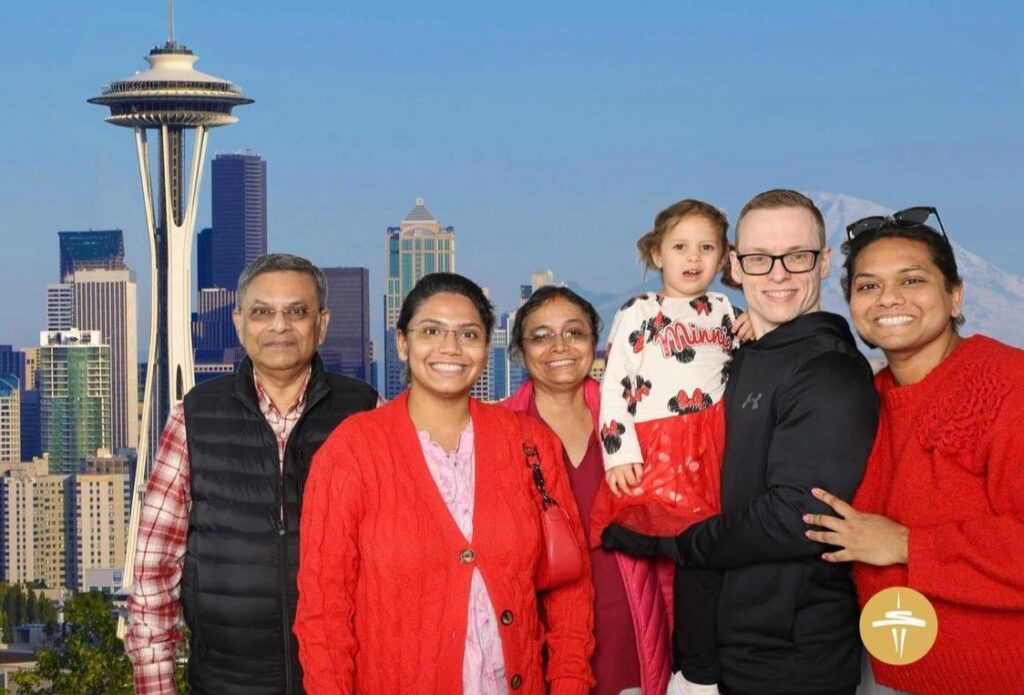
Siddhartha’s wife, Sujata, holds BSc, MSc, and PhD degrees in Biochemistry and runs Kolkata Pathological Centre. Their elder daughter, Debjani, completed her BS and MS in Electrical and Computer Engineering at Carnegie Mellon University and works as a Senior Software Engineer at Oracle in Boston. She is married to Dr. Wolfgang Richter, who holds a PhD in Computer Science from Carnegie Mellon University and heads Infrastructure and Cybersecurity at SOROCO.
Their younger daughter, Indrani, is an MBBS graduate from Kolkata. She has passed the USMLE examinations, is ECFMG certified, and works as a Research Scholar in Neurology at UPMC, Pittsburgh, USA. They have a granddaughter, Anuradha.
The Needle, and What Came After
A man who designs a biopsy needle in his twenties and patents it does not stop being curious at thirty. Siddhartha Kumar Biswas has spent four decades in neurology — a field that, as he has watched it change from the inside, has moved from clinical observation and lumbar punctures to molecular medicine and gene therapy. He has stayed current with all of it. The resident who filed the patent became the consultant other physicians call when they have run out of explanations. That trajectory, from the wards of GMC Nagpur to the clinic on Sarat Bose Road, was set early.
Update: 14 May 2026
Dr. Siddhartha Kumar Biswas shared this update via email.
Over the past five years, he has remained actively engaged in the practice of Neurology while continuing to participate in national and international neurological conferences as a speaker, attendee, and academic contributor. Alongside his professional commitments, he has travelled extensively and devoted time to family and close friends.
Now based in Kolkata, he continues to lead a busy and professionally fulfilling life as a Senior Consultant Neurologist at his own Neurology Clinic. He is also associated with Belle Vue Clinic as a Visiting Neurologist.
Even after crossing the age of seventy, he has maintained a vigorous academic and clinical schedule, balancing patient care with lectures, conference presentations, and international professional engagements. Outside medicine, he enjoys travelling, reading, discovering new places, and spending meaningful time with family and longtime friends.
Looking back, he regards a lifetime devoted to Neurology—with continued involvement in clinical care, teaching, research, and global academic exchange—as among the most fulfilling aspects of his professional journey.