Category: Heritage & History

Documenting the legacy of MGIMS, Sevagram heritage, and medical history.

  • At the helm: MGIMS Student’s Section Chief
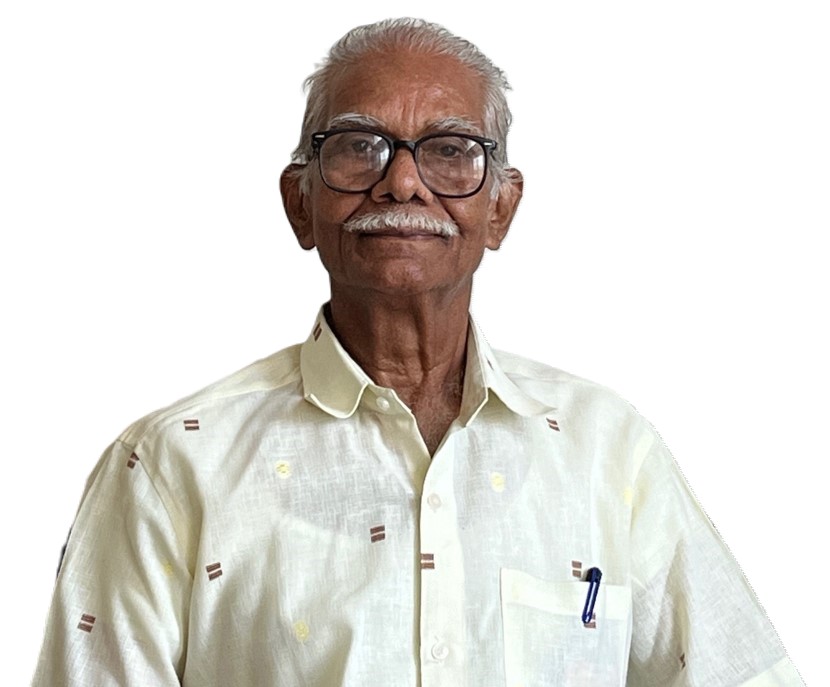
    At the helm: MGIMS Student’s Section Chief

    In the early seventies, when MGIMS was just beginning, many people, not just doctors and administrators, played important roles in its growth. Now, as these pioneers retire, their stories are at risk of being forgotten. It’s crucial to record and preserve their contributions for future generations.

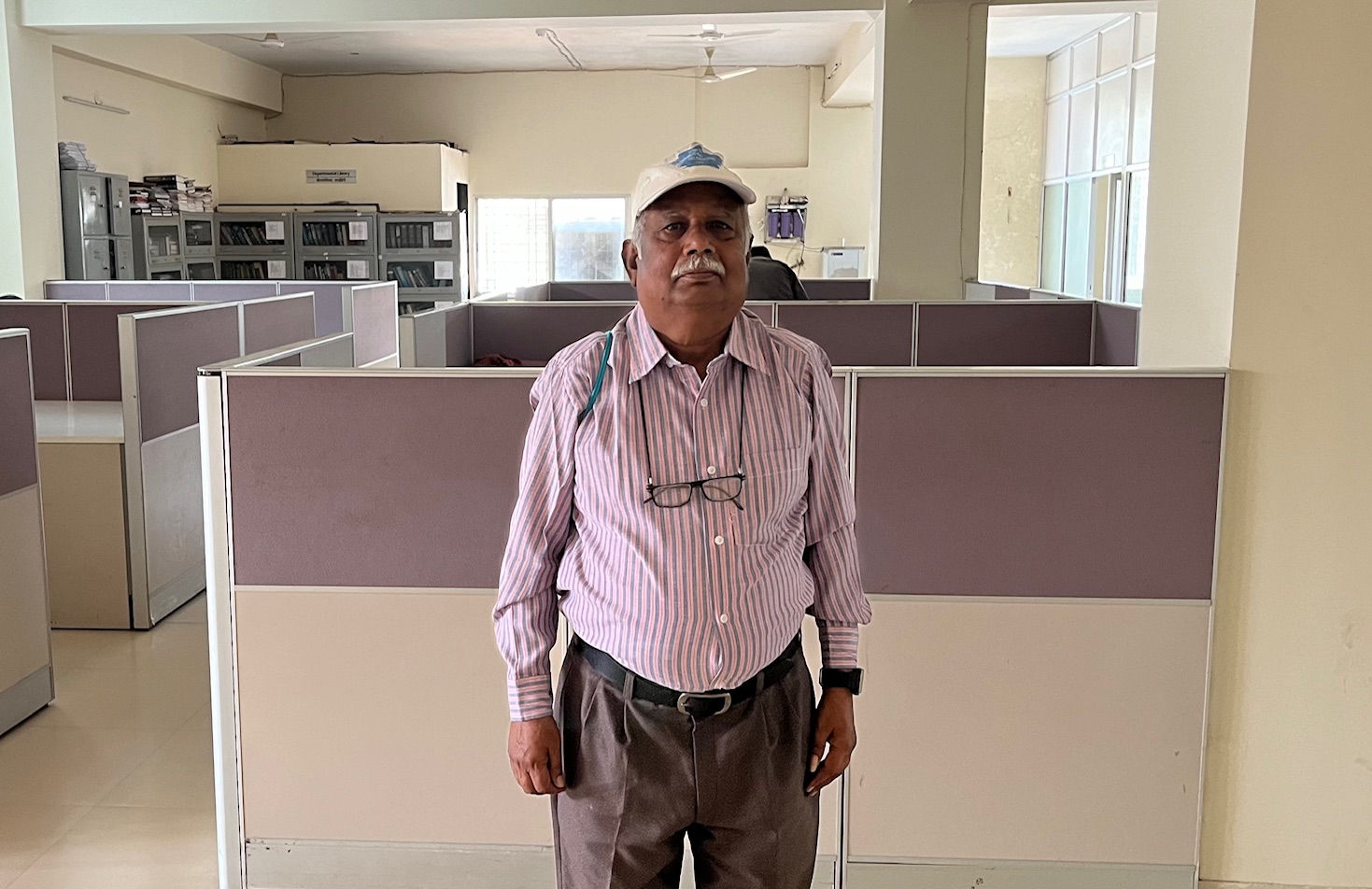
    Dr. Bipin Amin (1975) recently requested me to write about Mr. Gavli’s story. ๐— ๐—ฟ. ๐—š๐—ฎ๐˜ƒ๐—น๐—ถ supervised this section for an impressive 24 years, from 1970 to 1994, offering vital support for students.

    From a worker earning wages each day to becoming a teacher, and then rising to lead the student section, this journey is truly amazing and worth sharing.

    Throughout their academic journey, students relied heavily on the student section for various needs. This man was a cornerstone of their support. For a quarter century.

    I interviewed him this morning in the Medicine department, uncovering valuable insights worth sharing.

    ________________________________

    Bapurao Krishnaji Gavliโ€”known as BK Gavli to MGIMSoniansโ€”was born in February 1946 to Krishnaji and Vithabai, a hardworking couple in Ashti, 100 km northwest of Sevagram, in Wardha district.

    Second among four siblings, Gavli attended Hutatma Rashtriya Vidyalaya in Ashti, completing his education up to the tenth grade. He not only passed his exams in first class but also achieved distinctions in Chemistry, a notable feat for the era.

    With no funds to spare, he worked as a clerk at his school for a year. Then, he went to Aurangabad to pursue further education, balancing studies with a part-time job. Even with a scholarship, money problems continued, and Gavli struggled to cover expenses.

    Back home, the family endured abject poverty. There was often not enough food, and often the family went to bed hungry. To support his studies, young Gavli toiled as a wage earner at the local ginning factory during the night.

    ________________________________

    How did Mr. Gavli come to be the head of the student section at MGIMS?

    In 1966, a friend, whose name he has now forgotten, invited him to Sevagram. The friend mentioned a workshop in Gandhiji’s ashram that provided lessons to local children. Mr. Satyanathan was the principal of the workshop, and his wife, Shanti Sheela, ran Anand Niketan School.

    There was a vacant spot in the school: that of a science teacher. Mrs. Satyanathan asked her husband to find someone suitable from the workshop.

    “I came first in the exam for the teaching job,” Gavli recalled. “They hired me as a teacher for Rs 100 a month. Students enjoyed my teaching, and the administrator appreciated my discipline,” he added.

    “The school closed after two years because of no grant from the government,” Gavli explained. “I asked Mr. Murthy from the Gandhi Ashram for help. When I had no job, I did any work I could findโ€”digging wells, weaving charpoys, and teaching students.”

    ________________________________

    In 1969, MGIMS started, and the first students joined in August. Mr. Murthy talked to Manimala Chaudhary, who was the secretary of Kasturba Health Society at the time. She told Gavli to meet Mr. Shibendu Lahiri, who was in charge of the office at Kasturba Health Society, which managed MGIMS.

    Mr. Shibendu Lahiri then introduced him to Dr. BC Harinath, who had just come back from the USA with a Ph.D. Dr. Harinath wanted to start the Biochemistry department at the institute. He asked if Mr. Gavli could learn to work as a technician in the new biochemistry lab.

    But, the Government Medical College in Nagpur, where people trained for this job, closed that year. So, Gavli came back to Sevagram without a job.

    Mr. Shibendu Lahiri then helped him find a new job. With 60 medical students admitted in 1969 and another batch on the way, MGIMS needed someone to handle student affairsโ€”admissions, paperwork, fees, and attendance.

    He told me I could work under Bhausaheb Deshmukh. “But he’s not easy to work with. I’ve sent four boys to him, and he fired them all. You’re the fifth. I don’t know how long you’ll last,” he warned. “Sir, I’ll do whatever his office wants me to do and make sure you won’t have to find a sixth boy for him,” he replied.

    ________________________________

    So, Mr. Gavli found himself at the principal’s office. There was no Dean then, only a principal, and the office was near the old hospital, close to the entrance gate.

    Mr. Gavli learned the ropes under Mr. Bhausaheb Deshmukh’s guidance. In those early years, he did everything asked of him, from sorting papers to organizing files on shelves.

    He also mastered the art of drafting. Throughout his life, he meticulously hand-wrote communications, never relying on a typewriter. Initially, Mr. Deshmukh reviewed and corrected his drafts. Then, one morning in the mid-eighties, Mr. KS Sachdeva, the MGIMS dean, was impressed by his drafting prowess. He entrusted Mr. Gavli with the independent task of drafting letters, circulars, and communications for the student section.

    In the mid-seventies, the dean and secretary offices relocated to an area previously occupied by the Charkha Sangh, where cotton was spun and woven. Today, these offices remain in the same building.

    Mr. Shibendu Lahiri left in the early 1970s, and Mr. DC Jha, father of Bhavana Jha (1980) and Archana Jha (1982), took over the admin office. He was surprised to find Mr. Gavli in a role called sub-junior clerk, which didn’t really exist, and he was paid only Rs 75. Mr. Jha then helped him get promoted to junior clerk and receive a higher salary.

    ________________________________

    In the following years, Mr. Gavli climbed the career ladder, progressing from clerk to senior clerk, head clerk, and eventually becoming the in-charge of the student section. He held this position until 1994 when he was transferred to the hospital side to oversee the registration OPD. From 1994 to 2004, he managed the registration OPD until his retirement in 2004.

    Mr. Gavli served under several deans: Drs. ID Singh, ML Sharma, KS Sachdeva, BR Prabhakar, JS Mathur and BC Harinath. And administrators such as Mr. Shibendu Lahiri, DC Jha, and Bhausaheb Deshmukh. When asked about his experiences with them, he smiled and replied, “Almost all of them were nice and kind to me. I enjoyed working with them all.” Despite retiring and the deans having long since retired, Gavli opted not to share their personal quirks or challenges.

    His discretion and respect for his former colleagues were evident. I admired his strong character and the enduring bonds forged during his tenure at MGIMS.

    ________________________________

    “I did almost everything related to medical students, both undergraduates and postgraduates,” Gavli shared. “From checking application forms for PMT and running exams to collecting papers and making lists, I was very busy. I also admitted students, took their fees, handled university stuff, and kept their records in order. For 23 years, I worked hard, getting to know every student, especially those from 1970 to 1976. They mean a lot to me.”

    “I frequently helped students who couldn’t pay their tuition or hostel fees. I ensured that they didn’t miss exams due to unpaid fees. I also knew that many students struggled with the admission fee of Rs 18,000 in the late 1970s, so I gave them extra time to pay their dues. No student during my tenure was denied admission to MBBS because their parents couldn’t arrange enough money at the time of admission. Many students depended on me to help them through their time at MGIMS. That’s why the first 25 batches always remembered to reach out to me during their reunions. They would thank me for the help I provided.”

    “I remember walking to the stage,” I would begin, my voice thick with emotion. “My eyes would almost tear up and my throat would feel tight. As I stepped forward, they would garland me and speak such kind words about me. It was overwhelming.”

    ________________________________

    Interestingly, Gavli never learned to use a computer or type. Instead, he relied on his neat handwriting and strong math skills, never using a calculator. This was before Nasik University existed, and before computers and the internet were available there. The student section had many old files, some damaged by moths and time, making it hard to find certain papers. Still, Gavli made sure to get everything spot on.

    Despite time passing, the strong connection between students, faculty, and Mr. Gavli stayed solid. His hard work, honesty, and dedication never faded.

    In Sevagram, Mr. Gavli, now 78, lives happily, surrounded by his favorite memories. Though he’s not tall, he walks with energy and stands straight. When he speaks, he chooses his words carefully to make sure they’re just right.

    Grateful for his time in the student section, he looks back on those years with fondness, savoring each memory with eager delight.

  • Memories in Monochrome: Prime Minister’s Visit to Adhayan Mandir

    Memories in Monochrome: Prime Minister’s Visit to Adhayan Mandir

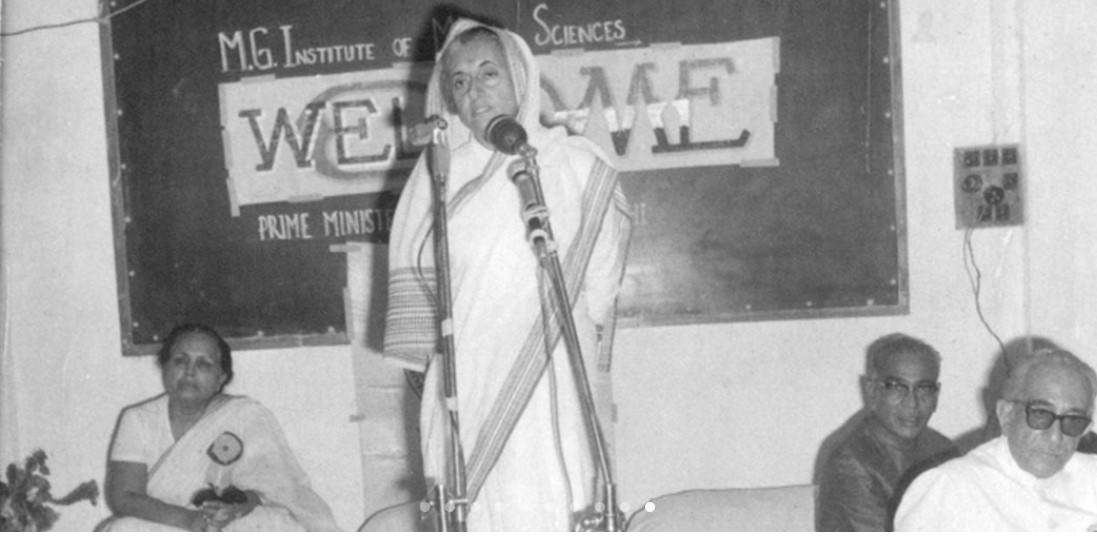
    In 1969, Prime Minister Indira Gandhi visited MGIMS. She spoke to a small group of medical students in the Adhyayan Mandir near the old Kasturba hospital.

    I’m unsure about the occasion of Indira Gandhi’s visit, as I was only a ninth-grade student at Swavalambi Vidyalaya in Wardha at that time. This morning, I stumbled upon a historical photograph on the MGIMS website, and found myself captivated by its simplicity.

    Hereโ€™s a picture that has captured that moment. Let me describe it:

    In front of the old hospital, which housed OPDs, wards, and offices, stood the Adhyayan Mandir, a humble “temple of knowledge.” Teachers taught here, events were held, and Friday prayers took place.

    The hall could hold just under a hundred people. The floorโ€™s rough stone contrasted with the soft Khadi mats. The roofโ€™s ๐พ๐‘Ž๐‘ฃ๐‘’๐‘™๐‘ข tiles cast gentle shadows, creating a play of light that added to the roomโ€™s charm. Thick whitewashed walls lent a sense of purity.

    The setting was sparse.

    The walls were bare except for the blackboard. On the blackboard, a simple chalk-written message greeted visitors: “MG Institute of Medical Sciences welcomes the Prime Minister.” Nearby, black switches were mounted on a wooden board with a wire dangling downโ€”a humble reminder of the basic amenities of the time.

    During the 1969 Congress Split, Dr Sushila Nayar opposed Indira Gandhi. However, when the Prime Minister visited Sevagram, Dr Sushila Nayar hosted her graciously. Mrs Gandhi, in turn, reciprocated with warmth. Setting politics aside, they focused on medical education and public health.

    Sixty students of the 1969 batchโ€”46 boys and 14 girlsโ€”sat cross-legged on a sturdy Khadi mat on the unpolished stone floor. They had their eyes fixed on Prime Minister Indira Gandhi and they listened intently to her. It was their first time seeing her in person, and they were visibly excited and in awe.

    Mrs. Gandhi looked a bit tired, perhaps from traveling extensively before coming straight to the Adhyayan Mandir to fulfill a promise to Dr. Sushila Nayar.

    She stood at the front, her presence commanding yet calm. To her side was Dr. Sushila Nayar, her face showing quiet pride. Vasantrao Naik, the chief minister of Maharashtra and Nawab Ali Yawar Jang, the governor of Maharashtra, sat nearby, engaged and attentive.

    Dr Sushila Nayar and the guests sank comfortably into the plush cotton mattress, covered by the cool white Khadi sheets. Against the wall, large bolsters stood tall.

    She stood at the front, her presence commanding yet calm. To her side was Dr. Sushila Nayar, her face showing quiet pride. Vasantrao Naik, the chief minister of Maharashtra and Nawab Ali Yawar Jang, the governor of Maharashtra, sat nearby, engaged and attentive.

    Dr Sushila Nayar and the guests sank comfortably into the plush cotton mattress, covered by the cool white Khadi sheets. Against the wall, large bolsters stood tall.

    No grand podium, no fancy decorations. No exotic flowers. No visible guards, cameras, or media. No excess, no distraction. Just people, a shared space, and a moment in time.

    The simple ethos of the seventies ruled, just like all of Sevagram.

    Simplicity and authenticity guided every event in Sevagram. Even with VIP visits, grandeur was absent. The air held a quiet grace.

    That was Sevagram in the 1970s: simple yet endlessly profound, sparse yet rich in values, bare yet remarkably beautiful. It’s no wonder that former students remember it so vividly, even to this day.

  • MGIMS Hostel Chronicles: The Tale of Premdas

    MGIMS Hostel Chronicles: The Tale of Premdas

    After sharing Bele’s story yesterday, several MGIMS alumni requested that I describe Premdas. Today, I had the opportunity to interview him, and what I uncovered is truly fascinating.

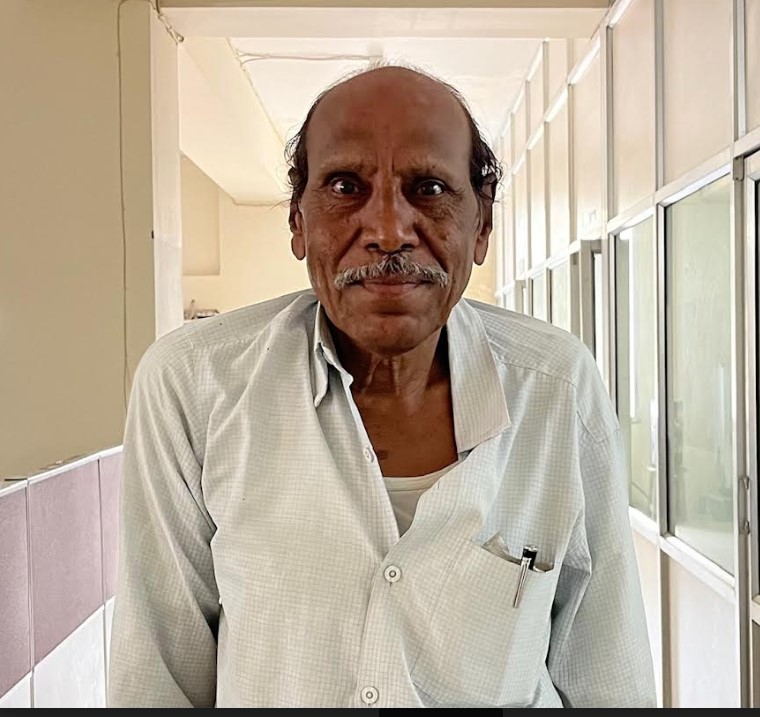
    Like Bele, Premdas entered the MGIMS hostel in ’72, originating from Pujai village. Before discovering his place in the Boys’ hostel, he also worked as a daily wage laborer in the gardens, much like Bele.

    Born in February 1950, Premdas Charbhe hailed from the Kadajna village, just 3 km from Hinganghat. His father’s labor at Mohta Mills anchored the family. Premdas attended Bharat Vidyalaya in Hinganghat, completing ten years of schooling.

    In 1968, the family resettled in Pujai, 5 km from Sevagram, where his father tilled rented land. Yet, financial woes soon plagued them. Just out of his teens, Premdas bore the weight of responsibility, laboring to provide for his kin.


    In 1969, when Indira Gandhi visited Sevagram with several Congress delegates, Premdas was there, volunteering. He moved swiftly, attending to the delegates’ needs. His diligence caught the eye of Narendra Bhai, the boys’ hostel warden. Impressed, Narendra Bhai offered him a job in the Sevagram gol gardens near the old hospital, now the community medicine department. For two years, Premdas toiled in the gardens, planting, pruning, and tending to every task with care.

    Narendra Bhaiโ€™s ailing mother watched Premdas from her window, noticing his worn-out clothes and weary expression. One evening, she called her son over and whispered a request. Shortly after, Premdas found himself with a new role as an attendant in the boys’ hostel.

    Without a written order, he became the unofficial chowkidar of the newly built blocks A to F. Living in Room No. 1, Premdas jingled a large ring of keys as he made his rounds, often finding an empty room in the hostels to sleep in at night. Narendra Bhai made sure Premdas didnโ€™t go hungry, arranging for him to eat in the hostel mess free of charge during those first few months.


    One night, as the hostel lay silent, Dr. Madhavan Govinda Pillaiโ€™s bicycle, parked in front of Room No. 4, disappeared. Premdas, the chowkidar, dozing off in the adjacent Room No. 3, heard nothing. The next morning, the bike was found, mangled and discarded. Dr. MG Pillai, now a renowned cardiologist based in Mumbai, belonged to the class of 1969.

    Mr. Gir, father of Rukhmini Gir Karad (1972 batch), served as the chief security officer at that time. Renowned for his strict discipline and no-nonsense attitude, this military figure commanded awe from both the boys and the hostel staff.

    Premdas dreaded the possibility of being fired for his lapse in duty, having fallen asleep during his assigned hours.

    Premdas stood before Narendra Bhai, the warden, his face etched with fear. Narendra Bhai leaned in, whispering urgently. โ€œSay you saw nothing. It was too dark. And you had gone to start the water pump.โ€ Premdas nodded, repeating the words to himself. His job was saved, but the weight of the lie settled heavily on his shoulders.

    After Narendra Bhai left, Dr. D.T. Kolte, the head of Anatomy, stepped in. Premdas often found himself on the receiving end of Dr. Kolteโ€™s warm smiles and kind words. In 1976, Dr. Kolte handed Premdas a letter. It was his permanent job appointment as a hostel attendant.

    Back then, the work never stopped. Premdas would be mopping floors one moment and running errands the next, his day stretching endlessly into the night. There were no fixed duties, only an unspoken rule to get things done whenever and however needed.


    Premdas and Laxman Bele, both from Pujai village, fell into a routine. Each morning, Bele pedaled off on his bicycle, returning with bags of groceries. Meanwhile, in the evenings, Bele’s door-to-door campaign to collect mess bills would begin, often stretching past midnight. Premdas, on the other hand, remained indoors, in the hostel office, his fingers dancing across the typewriter keys, sifting through stacks of handwritten notes.

    Premdas and Laxman Bele shared a bond forged through shared experiences. They were inseparable, akin to the iconic duo Viru and Jai from the early seventies.

    Their bond didn’t go unnoticed. Dr. Deepak Telwane, from the class of ’78, called them “Love and Bailey,” like the Surgery Textbook. Another nickname, “Laurel and Hardy,” echoed through the corridors. Dr. Narendra Samal, with a twinkle in his eye, dubbed Premdas the “English Man,” while Dr. R.K.C. Gupta saw him as a “He-Man.”

    But the best description of this duo came from Kishore Shah (1974), who said, “Bele and Premdas were the Munna and Circuit of our times.”

    โ€œWe were a team,โ€ Premdas recalled, a hint of pride in his voice. โ€œBele outside, me inside. And those typing lessons at Sharad Typing Institute? They turned me into a clerk of sorts. I could read the handwriting of several wardens whose writing nobody else could decipher, and I typed letters for them.โ€


    Among the early batches, he recalled the names etched in the annals of time: Subhash Shrivastava, Dilip Chotali, Madhav Panara, and Dilip Sarnaikโ€”all from the class of ’69. Dr. Deepak Fuljhale (1972) and Milind Wable (1979)โ€”their youthful faces and distinctive styles remain vivid in his memory even today.

    “Let me tell you about Dilip Sarnaik from the class of ’69. When the warden was away, he’d step in quietly, keeping watch over the hostel’s affairs,” he whispered.

    As Premdas delved into the past, he painted a picture of a time when scooters were a rare sight, affordable only to a select few. He vividly remembered Dr. Subhash Patil, Suleman Khan with his Bullet, K. Shankar Raman, and Akil Teherbhai (all from 1970) zipping around on their motorcycles. And then there was Sanjay Khot (1975), who proudly parked his Fiat in the Boy’s hostel, setting a new standard of luxury.


    “For the first-year medical students who arrived at the boys’ hostel, I was often mistaken for the chief warden,” Premdas recounted. “They would address me with respect as ‘Premdasji.’ A year later, I became just Premdas. But as time passed, they became more like friends and began adding a playful slang before my name.”

    “We always looked forward to the studentsโ€™ elections,” said Premdas. “Winners celebrated with drinks, and losers drowned their sorrows in what was forbidden here. We mingled with both groups, always getting our share of the tempting indulgence. Wins or losses didn’t matter to us,” he added with a grin. “We always came out ahead, enjoying a taste of the forbidden elixir.

    Premdas served under various wardens, from Mr. Narendra Bhai to Ramji Singh, each leaving a mark on his journey at the boys’ hostel. However, the wardens he remembers most, with a teary eye, are Narendra Bhai and Dr. DT Kolte, the warden of the early seventies.

    In 2000, he left the hostel for the hospital and became a registration clerk in the OPD. That’s when the hospital switched from paper to electronic health records, and he was one of the first to learn computer skills and test out the new system.

    Ten years later, in 2010, he retired at 58. Now, at 75, he enjoys spending time with his son and daughter in Bengaluru, reminiscing about the good old days. He divides his time between Sevagram and Bengaluru, cherishing moments in both places.

    “I can recall each student of the first ten MGIMS batches by their roll numbers,” Premdas said, a smile playing on his lips. “The love they gave me then and still give nowโ€”it fills my heart with joy.”

    Truly, those were the daysโ€”filled with challenges, friendships, and cherished memories.

  • Bonds Beyond Time: Memories from MGIMS Hostels

    Bonds Beyond Time: Memories from MGIMS Hostels

    MGIMS sprang to life during the monsoons of 1969. In the early years, there were no proper hostels. Boys stayed in the Patel hostel, and girls in the nursing hostel. These were not true hostels, but simple shelters that provided a roof over their heads.

    In 1972, eight hostel blocks were built, labeled A through H. Each block had 51 single rooms for students. Five blocks were for boys, two for girls, and one for interns and postgraduates. The first four batches admitted 60 students each, with only 66 girls in total. Shri Narendra Bhai was the boys’ hostel warden, while his wife, Vidya, supervised the girls’ hostel.


    During this time, a tall young man entered the hostels. Despite his limp from polio, he moved with a confident swagger, towering above those around him.

    His name was ๐—Ÿ๐—ฎ๐˜…๐—บ๐—ฎ๐—ป ๐—ง๐˜‚๐—ธ๐—ฎ๐—ฟ๐—ฎ๐—บ ๐—•๐—ฒ๐—น๐—ฒ. He came from Pujai, just 5 km from Sevagram. After two years as a daily wage laborer in the garden, Bele joined the boys’ hostel.

    There, he became a jack-of-all-trades: a mess boy, ๐‘ ๐‘Ž๐‘“๐‘Ž๐‘– ๐‘˜๐‘Ž๐‘Ÿ๐‘š๐‘Ž๐‘โ„Ž๐‘Ž๐‘Ÿ๐‘–, security guard, and billing clerk.

    Always on duty, he wore a constant smile. He knew every student by name and hometown. He had an uncanny ability to anticipate their needs and often went out of his way to fulfill them.


    In 1974, Bele earned a promotion to clerk. Dr. D. T. Kolte, the new head of the Anatomy department and Warden of the Boys’ hostel, made this possible. He saw Bele’s talent and helped him advance from attendant to clerk.

    Before this, the warden, Narendra Bhai, saw Bele’s potential. He encouraged him to take typing lessons at the Avthankar Typing Institute in Wardha. Narendra Bhai even lent Bele money to buy a bicycle.

    Bele enjoyed running errands for the medical students. His bicycle made it possible. He zipped through the streets of Sevagram and Wardha several times a week.

    He always finished tasks for the students swiftly and efficiently.


    In the early seventies, the hostel buzzed with life. Two groups emerged: Maharashtra + Jhansi and North Indians + Maharashtra. “During student elections, their battles were intense,” Bele said. “They rivaled the fierce political contests we see today.”

    They picked candidates, planned campaigns, crafted strategies, courted voters, and even resorted to mischief. Kidnappings, bribes, and threatsโ€”all in the pursuit of victory. He told me this today as we sat in the Medicine department, recalling the good old days.

    “Yet, once the dust settled and a winner emerged, all animosity vanished. They lived together in perfect harmony.”

    In the beginning, the hostel mess was set up. A five-member committee handled everything from buying groceries to planning menus and supervising the kitchen. Students could have lunch and dinner for just Rs. 60โ€”only one rupee per meal. Milk or curd cost extra.

    Bele had a unique task. Each evening, after sunset, he went door to door in the hostel to collect the mess fees. With smiles and persistence, he coaxed, cajoled, and convinced the students to settle their dues.

    Not everyone complied at first. But Bele had his ways. Eventually, they all paid up. Later, he teamed up with Mr. Premdas. Together, they became beloved figures in the hostel’s history. More about Premdas, later.


    Dr. D.T. Kolte taught Anatomy in Sevagram from 1973 to 1976. In those three years, he made two major contributions to the Boys’ hostel. He promoted Bele from attendant to clerk and brought the Indian Coffee House to the campus. This change, in 1974, stopped the hostel mess from providing breakfast and evening tea.

    Three decades later, in 1995, Bele moved to the MS office. He worked there in various sections until February 2005. Now 78, he still walks tall and speaks with passion, vividly recalling his days in the hostel.

    “Ah, those were the best days,” Bele smiles, memories flooding back. Students from ’69 to ’89 still remember him. They are always happy to see him, whether at their homes or clinics. The bonds they formed back then have lasted.

    Time hasn’t changed a thing. They still love and cherish Bele.

    At reunions, they always make a fuss over him. Their heartfelt words always move him. Just hearing his name brings back so many memories for the students who passed through the hostels with him.

    Bele, his name resonates like a bell, ringing loud and clear, echoing through the corridors of their minds.

    Yes, those were the days!

  • ๐—™๐—ฟ๐—ผ๐—บ ๐—ก๐—ฎ๐—ด๐—ฝ๐˜‚๐—ฟ ๐˜๐—ผ ๐—”๐—ฑ๐—ฒ๐—น๐—ฎ๐—ถ๐—ฑ๐—ฒ: ๐—ง๐—ต๐—ฒ ๐—ฅ๐—ฒ๐—บ๐—ฎ๐—ฟ๐—ธ๐—ฎ๐—ฏ๐—น๐—ฒ ๐—ฆ๐˜๐—ผ๐—ฟ๐˜† ๐—ผ๐—ณ ๐——๐—ฟ. ๐— ๐—ถ๐—ต๐—ถ๐—ฟ ๐—ช๐—ฒ๐—ฐ๐—ต๐—ฎ๐—น๐—ฒ๐—ธ๐—ฎ๐—ฟ

    ๐—™๐—ฟ๐—ผ๐—บ ๐—ก๐—ฎ๐—ด๐—ฝ๐˜‚๐—ฟ ๐˜๐—ผ ๐—”๐—ฑ๐—ฒ๐—น๐—ฎ๐—ถ๐—ฑ๐—ฒ: ๐—ง๐—ต๐—ฒ ๐—ฅ๐—ฒ๐—บ๐—ฎ๐—ฟ๐—ธ๐—ฎ๐—ฏ๐—น๐—ฒ ๐—ฆ๐˜๐—ผ๐—ฟ๐˜† ๐—ผ๐—ณ ๐——๐—ฟ. ๐— ๐—ถ๐—ต๐—ถ๐—ฟ ๐—ช๐—ฒ๐—ฐ๐—ต๐—ฎ๐—น๐—ฒ๐—ธ๐—ฎ๐—ฟ

    ๐—™๐—ฟ๐—ผ๐—บ ๐—ก๐—ฎ๐—ด๐—ฝ๐˜‚๐—ฟ ๐˜๐—ผ ๐—”๐—ฑ๐—ฒ๐—น๐—ฎ๐—ถ๐—ฑ๐—ฒ: ๐—ง๐—ต๐—ฒ ๐—ฅ๐—ฒ๐—บ๐—ฎ๐—ฟ๐—ธ๐—ฎ๐—ฏ๐—น๐—ฒ ๐—ฆ๐˜๐—ผ๐—ฟ๐˜† ๐—ผ๐—ณ ๐——๐—ฟ. ๐— ๐—ถ๐—ต๐—ถ๐—ฟ ๐—ช๐—ฒ๐—ฐ๐—ต๐—ฎ๐—น๐—ฒ๐—ธ๐—ฎ๐—ฟ

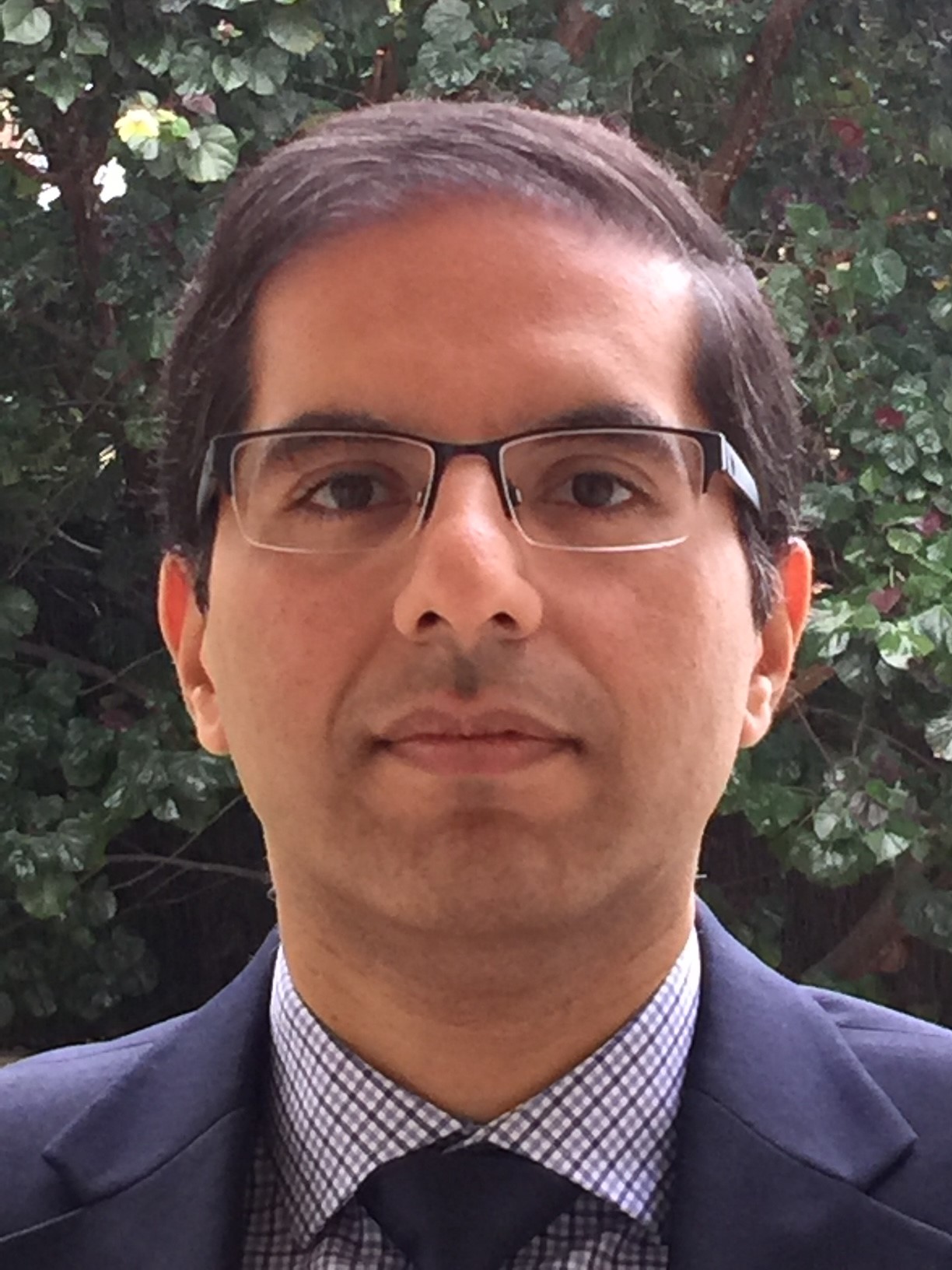
    A fortnight ago, Dr. Mihir Wechalekar, an alumnus of MGIMS, class of 1992, received the prestigious 2024 Mid-Career Excellence Award in Australia.

    This honour was bestowed upon him at the combined New Zealand Australian Rheumatology Association Annual Scientific Meeting in Christchurch, New Zealand.

    This award highlights his thirst for knowledge, passion for research, and dedication to patient care. His journey is truly inspiring.

    So, how did Mihirโ€™s journey in medicine begin?

    Mihirโ€™s love for medicine runs in the family. Dr. Dilip Wechalekar, an internal medicine specialist, and his wife, Devi, a hematologist, were Mihir’s parents. Distinguished doctors in Nagpur from the mid-1950s to the 2000s, they spent five decades leaving a big mark on the medical community. Known for their academic brilliance, philanthropy, generosity, and devotion, they set a remarkable example for their son.

    His brother Ashutosh is a distinguished hematologist based in London, acclaimed for his research on multiple myeloma. Mihir’s wife, Dr. Harsha Panicker, also his classmate at MGIMS, pursued her PhD in Neuroanatomy in Australia. Together, they share a profound dedication to academic excellence.

    After obtaining his MBBS from MGIMS in 1996, Mihir completed his MD in Medicine. His training at MGIMS was unique. He learned to care for rural, often illiterate patients in resource-limited settings. This experience shaped his approach to medicine and research.

    But what happened next?

    Two decades ago, Mihir moved from India to Australia, marking the beginning of a new chapter in his life. In 2011, he earned his FRACP, and five years later, he completed his PhD, adding several prestigious tags to his name along the way.

    Today, he is a full-time rheumatology consultant at Flinders Medical Centre in Adelaide, Australia. He is also an Associate Professor at Flinders Universityโ€™s College of Medicine & Public Health.

    His primary focus lies in studying synovial membrane pathology, both in health and disease, with a particular emphasis on early rheumatoid arthritis. As the leader of Australiaโ€™s only synovial tissue biobank, he spearheads groundbreaking research in this field. While blood banks, milk banks, and eye banks are familiar concepts to me as a seasoned physician, the idea of a synovial bank was entirely novel.

    His research lab includes a team of grant-funded post-doctoral research associates. His work focuses on translating research from bedside to bench and back. He aims to understand rheumatoid arthritis and develop targeted therapies.

    But thatโ€™s not all.

    Mihir has raised over AUD 13 million for his research. He has collaborated with top institutions like Brigham and Womenโ€™s Hospital in Boston and the National Institutes of Health. His research has greatly influenced the field and is widely appreciated.

    As a practicing rheumatologist, Mihir manages a busy schedule. He conducts half a dozen clinics each week and covers hospital services for three to four months a year. His work brings hope and relief to many patients with rheumatological conditions.

    Lofty and towering, Mihir exudes a commanding, and yet, calming presence. Behind his spectacles, his sparkling and inquisitive eyes reveal volumes about his personality. They reflect his humility and insatiable thirst for knowledge.

    They lend him an unmistakable scholarly aura.

    His impeccable English, which impresses academics and language enthusiasts alike, enhances his scholarly demeanor. Despite his numerous achievements, Mihir is unfailingly polite. He remains soft-spoken and self-effacing, choosing to prioritize his work and research over seeking the spotlight.

    Mihirโ€™s journey from MGIMS to the global stage is a source of immense pride for MGIMS teachers. Dr. OP Gupta, who guided Mihir on his PG thesisโ€””The Association of the Ankle Brachial Index with Coronary Artery Diseases”โ€”in 2002, must feel incredibly proud.

    His education at MGIMS and training in the Medicine wards laid the groundwork for his successful career. It provided him with a deep understanding of healthcare challenges in rural areas, driving him to innovate and excel.

    We congratulate Mihirโ€”and Harshaโ€”and look forward to his continued contributions to medical science and patient care. May he ease the pain of those who come to him dis-eased.

    Mihir works in Adelaide, a city where Virat Kohli made history by scoring centuries in both innings of his captaincy debut in the 2012 test, dazzling spectators with his spectacular shots. I strongly believe that just as Kohli captivated the cricket world, Mihir has the potential to astonish the field of rheumatology with his profound knowledge and far-reaching impact.

    #MGIMSAlumni #MedicalExcellence #Rheumatology #GlobalRecognition